The “Brilliant Victory”
Wednesday, July 19th, 2017We’ve fallen a little behind on our World War I series. Over the next few months, we’re going to work to get caught-up to the calendar.
Night had only begun to settle over Gaza for the ANZAC Mounted Division on March 26th, 1917. The division, part of a 22,000-man operation to build upon the British victory at Romani in the summer of 1916, had accomplished its objective of defending the main advance of British infantry against any Ottoman counterattack. Only 12 hours into the offensive, Gaza had been effectively surrounded, and by dusk, units such like the Mounted Division had even captured outlying portions of the city.
Despite the ferocity of some of the German-led Ottoman counterattacks, the Commonwealth units held their ground. The British infantry had captured the hill of Ali al Muntar, overlooking the rest of Gaza, while holding over 460 German and Ottoman prisoners, including a divisional commanding general. The British held the high ground and all the access points to the city. The campaign for Palestine might be over before it even started.
Instead, the ANZAC Mounted Division – along with the entire defensive screen of forces – were told to retreat. The threat of 12,000 Ottoman soldiers to the battle’s east had been deemed too great a threat to the British supply lines. Rather than risk a fight, the Egyptian Expeditionary Force (EEF) command chose to disengage. The irate men of the Mounted Division cursed that “victory [had been] snatched away from them by the order to withdraw.”
In addition to the elements and the Ottomans, Britain would have to confront its own generals in the Middle East.

The Ottomans on the march – the Empire was in retreat on all fronts and their men were asked to hold Palestine against a growing British force
With revolution in Russia, and strategic inertia in France, the Middle East appeared to be the only front that saw the armies of the Entente victorious at the start of 1917.
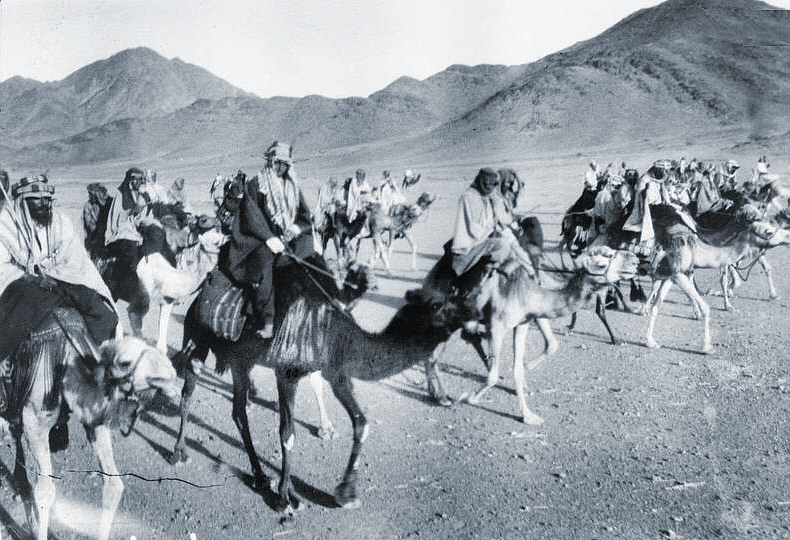
Following the debacle at Kut, a joint British/Indian army had successfully marched to Baghdad by the spring of 1917, putting a practical end to the Mesopotamian campaign with the capture of the city in early March. And the Arab Revolt of the summer of 1916 had managed to drive the Ottomans out of a series of coastal towns dotting the Red Sea, while sowing rebellion among the various tribes of Arabia.
Yet these campaigns, while providing much need victories for a war-weary Entente, had proved themselves to be little more than costly distractions. The Arab Revolt had to be completely underwritten by London, and (thus far) hadn’t been able to win without British support. Baghdad had been the first prominent capital within the Central Powers to fall, but the operation had required over 800,000 men with 250,000 casualties – and the Ottomans looked no closer to surrender as a result. (more…)