Without a Kluwe

The foot of the Minnesota Vikings’ punter will no longer be in his mouth.

Chris Kluwe: so focused on his job

There is a truism in all professional life that your cost, real or perceived, cannot outweigh your value.  Once that threshold is crossed, there is often little incentive for an employer to maintain such an employee.

Of course, that truism seems to take an extraordinary beating when it comes to being applied in the world of professional sports.  Athletes are excused all manner of crimes and statements while staying employed.  Kobe Bryant hardly suffered despite allegations of rape.  Michael Vick emerged from jail for the cruel practice of dog fighting and resumed his NFL career.  Mike Tyson’s been in and out of jail three times.  If he goes back a forth time, apparently it’s free.

Chris Kluwe: so totally focused on his job

In that light, the Minnesota Vikings’ expected release of outspoken punter/gay-marriage advocate/musician/video-game enthusiast/Deadspin contributor/gameboard store owner/all-around stunted adolescent Chris Kluwe hardly seems fair.  Kluwe has maintained a decent-to-high punting yards average since joining the NFL (notwithstanding his drop to 22nd in the NFL in 2012). And in a league that doesn’t even have a punter in their Hall of Fame (another source of Kluwe-influenced controversy), Kluwe may be the most relatively famous punter in history.

The problem?  None of that notoriety comes from his actions on the field.  The Star Tribune’s Chip Scoggins danced around the elephant in the stadium when he wrote Kluwe’s Vikings career post-mortem in advance:

Kluwe’s departure will make the Vikings locker room a lot more dull because he is incredibly intelligent, articulate and passionate about societal issues. He’s a fascinating individual in a sport that breeds conformity. The NFL has become so big and so powerful that players often cling to political correctness for fear that a ripple might swell into a tidal wave. Kluwe is that surfer dude on top of the wave, hanging 10 on any issue that stirs his emotion.

“No single thing that I do defines me as a person,” he said. “Just because I play football, that doesn’t define me as a person.”

Chris Kluwe: like so very focused on his job

The message is unmistakable – Chris Kluwe’s gay marriage advocacy cost him his job.  And Scoggins et al are correct…sort of.

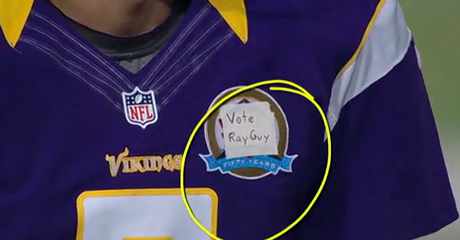
Kluwe’s value to the Minnesota Vikings was as a $1.4 million a year player at a reasonably expendable position.  Simply put – you don’t get to be a distraction if you’re easily replaceable.  And by every definition, Chris Kluwe is a distraction.  Kluwe has run his mouth on issues beyond gay marriage.  He’s been fined for “campaigning” for Ray Guy to get into the Hall of Fame.  He’s appeared on the website Deadspin several times over the 2011 NFL Lockout where he attacked numerous players over their views.

Chris Kluwe: so super duper focused on his job

Worse, Kluwe’s tactics are the epitome of his generation – foul-mouthed personal attacks against anyone who disagrees.  Pro-lockout players are “douchebags” who stand for “pretty much the definition of greed.”  His opponents are “a**hole f**kwits”, which also suggests he’s a plagiarist since I’m sure he stole that from Oscar Wilde.

In truth, the media needs Chris Kluwe’s release to be about his vocal and abusive activism.  Because admitting to solidarity with Kluwe’s political views, and his ability to deliver good copy to sportswriters and sports radio networks, is harder than portraying the SoCal punter as a victim of a 1st Amendment NFL crackdown.  Does anyone seriously believe that if Kluwe had come out passionately against gay marriage (ala Matt Birk), and saw his production dive, that those arguing against Kluwe’s release today would be defending his penchant to “hanging 10 on any issue that stirs his emotion”?

Chris Kluwe: so focused…on finding his next job

Kluwe mocked even his own Special Teams coach for suggesting the punter needed to focus on his job with the hashtag “so focused.”  Here’s hoping that Chris Kluwe finds the time to focus on realizing that being a public relations bully to those who don’t share his worldview isn’t the best way to advance what’s left of his career.

Chávismo

Hugo Chavez: Pining for the Fjords

Hugo Chavez is dead.  Will his political philosophy be far behind?

He was the ubiquitous face of Venezuela, both domestically and abroad, for over 12 years.  Bombastic, dictatorial and often paranoid in style, Hugo Chavez signified, in his own words, “Socialism for the 21st Century,”.  In reality, his political orientation (known as Chávismo in his home country) was little more than a mixture of traditional Bolivarianism with sprinkles of nepotism and populism for good measure.  Or perhaps to more bluntly put Chavez in his proper context, he was just another Latin American dictator who was more interested in projecting his power than his philosophy.  He was also among the relatively few left-leaning leaders that human rights groups publicly challenged.

In short, Hugo Chavez will not be missed on the international stage.

The news of Hugo Chavez’s death has prompted the usual obituary postings recapping the Venezuelan leader’s life.  His attempted coup in 1992, his rise to power in 1998, the coup against him in 2002, and his attempt to become a counterweight to the U.S. in Latin America, aligning himself with China and Iran while promoting socialist agitators in other countries.

What been less discussed is what Chavez’s passing means for his country and Chávismo.

In the immediate term, the answer is, well, nothing.  Chavez had already appointed his successor, the radical Nicolás Maduro, as vice-president, ensuring the continuation of Chávismo and its political patronage.

Maduro has also continued the other tradition of Chavez’s reign – bizarre pronouncements.  Hours before Chavez’s death, Maduro proclaimed that Chavez had been somehow given cancer by “established enemies” (the U.S.), followed by expelling two U.S. attaches:

The U.S. government may be mum so far, but Latin American experts were quick to dismiss Maduro’s speech as wild and nonsensical.

“This clown show demonstrates that these guys are amateurs and play their hands too easily,” said Chris Sabatini, an analyst for America’s Society/Council of the Americas, a think tank in New York City.

It’s poorly executed plan for a post-Chávez Venezuela, Sabatini said.

“This is a desperate government peddling in absurdities,” he said.“They needed some sort of cover and now they don’t know what to do.”

Despite his likely backing of those who supported Chavez, Maduro is not the only viable option.  Opposition candidate and former mayor Henrique Capriles Radonski is likely to run again, having lost to Chavez in October by only 11%.  Capriles is most certainly the anti-Chavez, having been jailed for joining the coup attempt in 2002, while opposing most of Chavez’s high profile policies, including backing away from alliances with Iran and the Colombian rebel group FARC.  Worst for Chavez’s legacy?  Capriles would embrace the economic policies of Brazilian President Luiz Inácio Lula da Silva.

Despite the reputation of Latin America falling further into the Socialist clutches of Chavez and his followers, the real trendsetter has been Lula.  Initially feared to be a Chavez clone when he came to power in 2002, Lula’s more moderate economic policies have turned Brazil from being the largest debtor among emerging economies to a net creditor, while moving more Brazilians out of poverty and into the middle class.

Lula wouldn’t be recognized as moderate or conservative north of the Rio Grande, although his successor’s plan to privatize airports, ports, and roads is more conservative than policies here.  Nevertheless, ”Lulismo” represents a definite turning of the political tides in Latin America.

Is it a pipe-dream to believe that Chavez’s policies could follow him into the dustbin of history?  Perhaps not.  In the days before Chavez won re-election against Capriles, the polls showed another outcome was possible – Capriles would beat Maduro by six points if they faced off.

Just as Every Cop is a Criminal…

Pleased to meet you, can you guess my name?

Plenty of sympathy (and a $1 million reward) for the devil in Southern California.

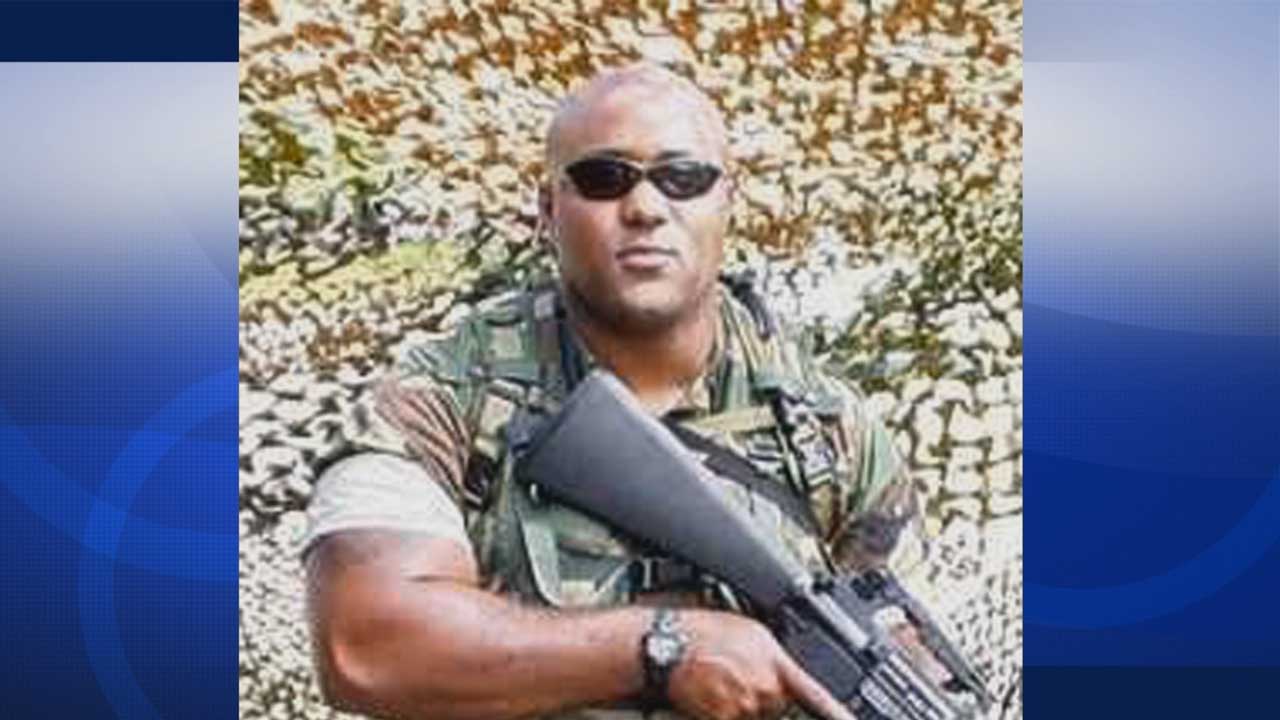
Former Marine and LAPD officer Chris Dorner promised to wage “unconventional and asymmetrical warfare” against his former employer in his bizarre manifesto.  Five days into Dorner’s declaration of war against the LAPD, starting with murdering the 28 year-old daughter of a police officer and her fiancé, it appears Dorner has made good on that threat as there has been little “conventional” in the reaction to his crimes.

If Dorner believed that gunning down two innocent people, and two other police officers, would result in greater scrutiny of the LAPD, it was a bloody gamble that’s paid off.  In a matter of days, the LAPD has gone from dismissing Dorner’s account of the reasons behind his firing to re-opening the investigation.  LA Police Chief Charlie Beck denied the move was an attempt to “appease” Dorner.  It’s more likely an attempt to appease the public amid an ever-growing series of errors in the Dorner manhunt.

Who might have guessed that the LAPD would be Dorner’s biggest ally in his murderous attempt to move public opinion?  Thus far, the LAPD has managed to shoot one older woman in the back, terrify her daughter, and shoot at a thin white man in a supposed case of mistaken identity with a large black man.  Much was made in the media of Dorner’s military experience as a rationale for why authorities have been unable to find him in the resort community of Big Bear, where Dorner is said to be hiding.  But there’s little rationale for a trigger-happy police force that seems to be playing right into Dorner’s hands.

And Dorner most certainly seems to have some sense of the media impact of his actions.  Writing in his manifesto screed, Dorner claimed:

“The department has not changed since the Rampart and Rodney King days. It has gotten worse,” Dorner wrote. “I know I will be vilified by the LAPD and the media. Unfortunately, this is a necessary evil that I do not enjoy but must partake and complete for substantial change to occur within the LAPD and reclaim my name.”

Apparently part of the “necessary evil” was taunting Monica Quan’s father Randall with a phone call in which he said Quan ”should have done a better job of protecting his daughter.”  Don’t worry, Dorner didn’t “enjoy” that.

What Dorner might have had a harder time anticipating was a vocal minority insistent on turning him into a folk hero:

Supporters of Christopher Dorner, the former LA policeman turned “cop killer,” have shown up online, with tweets and fan pages on Facebook. Some call Dorner a “hero” for writing a nine-page manifesto alleged on racism and corruption within the LAPD.

Numerous supporters on Twitter are calling the alleged murderer a “Dark Knight.”One Facebook page calls him ”the hero LA deserves, but not the one it needs right now … He’s a silent guardian, watchful protector against corruption, he’s our Dark Knight.”

There’s even a “I support Christopher Jordan Dorner” Facebook page with over 7,000 “likes.”  The page’s creator is already promising “t-shirts, buttons, stickers + bumper stickers” because nothing says respectful, intellectual debate like mass marketing a psychopath.  Hey, it worked for Che Guevara.

If Dorner really was the “whistleblower” he wants to define himself as, there were a myriad of ways for him to get his message out other than with a gun.  But his entire narrative of the LAPD is at odds with perception of the department.  After the disgrace of the Rampart scandal in the late 90s, where 70 officers were implicated in misconduct with a gang strike force, the LAPD has seen a surge in popularity.  A 2009 poll put the LAPD at a nearly 80% approval rating.

Most of Dorner’s criticisms of the department aren’t exactly Serpico-level indictments, but rather tales of harassment and bureaucratic lethargy.  Hardly grounds for a killing spree.  Unless, of course, Dorner isn’t the “Dark Knight” wish fulfillment figure for some in Southern California but at heart just a deranged, vengeful man.

(Not So) Magic Mike

The bourough’s au pair

Michael Bloomberg dresses up as Ray Nagin for Halloween.

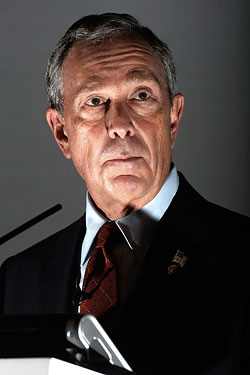
Perhaps the symbolism is apt.  As New Yorkers and assorted guests from around the world gather in Staten Island to race in the New York City Marathon, Gotham’s Mayor finds himself running for his political life.

With the Eastern seaboard in shambles, power and transportation cut off to some boroughs in New York, and 19 dead at the Marathon’s starting line alone, it’s not hard to see what Mayor Michael Bloomberg thought he was accomplishing by pronoucing that the run would continue, Sandy or not.  The Marathon has been held every year since 1970 (a relatively short time for a city with a history stretching into the early 17th century).  A continuation of that tradition could project a calming influence on a battered city and provide Bloomberg the sort of popularity boost badly needed amid his sagging approval ratings.

Instead, Mayor Mike is being seen as diverting police and rescue resources from a city in dysfunction while simultaneously diverting his attention to Barack Obama’s re-election campaign.  That Bloomberg has couched his work in the latter as due to Obama’s nearly nonexistent work against “climate change” might strike Gothamites as a sick joke from a Mayor whose lack of flood preparation has submereged their city while unleasing an estimated 8 million-plus rats from the sewers.  Bread and circuses might be the order of the day, but rat-traps, canned goods and diesel might be required.

Gotham hasn’t suffered this much since Tom Hardy donned a goatse mask.

Writing in The American Interest, Walter Russell Mead has penned what might be the penultimate political obituary of Michael Bloomberg, save for whatever New York’s technocrat-in-chief plans for the remainder of his term.  For if its anything like his third, it won’t be much:

The Mayor decided to run for a third term, but he was caught by his own term limits. The hacks on the City Council made clear that they wouldn’t give him an exemption from term limits unless the limits were lifted for everybody else. Disgracefully, Bloomberg took the deal and helped the corrupt political class destroy his greatest achievement….

The third term saw the Mayor struggle for a theme. His issues grew smaller and smaller: saturated fats, Big Gulp sodas—did Bloomberg really think it was worth wrecking term limits to campaign for these things? The air leaked out of his national political ambitions and the city waited patiently for his tenure to end.

Left unspoken in Read’s otherwise expansive review of Bloomberg’s legacy are the series of public-service failures that predated Hurricane Sandy.  The late 2010 snowfall that bedeviled most of the country snarled NYC’s traffic for days, leading even Bloomberg to sheepishly declare that “we’ve looked at some things that we probably could have done better.”  A city that had made significant progress against crime (a holdover from the Giuliani days), reversed itself in 2012 as crime stats rose for the first time in 20 years.  One of Bloomberg’s few public successes had been handling Hurricane Irene; the lessons of which apparantly weren’t taken to heart a little over a year later.

It is those failures, and many smaller ones, that strike at the heart of what was once Michael Bloomberg’s appeal – results-oriented governance.  Bloomberg may have been a cold, aristocratic figure who lacked much of a “common-touch” with the plebs of NYC, but he stood between many average New Yorkers and the army of liberal partisans who saw City Hall as Grand Central Station for a variety of socioeconomic engineering ideas.  So what if Bloomberg liked to chase grandoise ambitions of national office or dabbled in Nanny-state legislation that brought him media acclaim?  As long as the power stayed on, the trains ran on time, and crime was down, who cared if your fried chicken tasted like crap since it wasn’t cooked with trans-fats?  For most New Yorkers, it was the small price of electoral business.
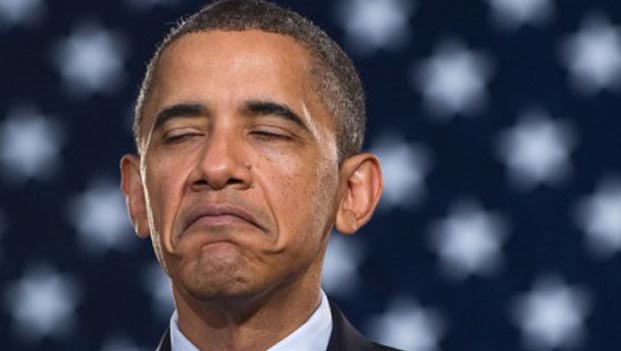
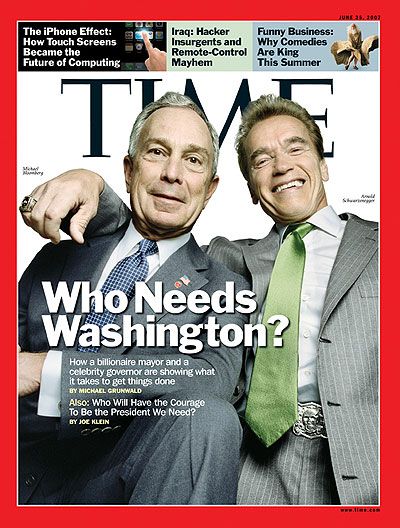
In politics, like business, people are willing to pay for flaws as long as they outweigh the perks (witness the long lines for the latest iPhone).  Today, few New Yorkers will be thinking about sodium intake or banned salt shakers.  But they will be asking themselves if Michael Bloomberg cares more about his agenda than the city’s.

ADDENDUM:  Mayor Mike listens – sort of – and cancels the NYC Marathon.  But not without casting a few stones at those who criticized his decision to Keep Calm & Run On:

“We would not want a cloud to hang over the race or its participants, and so we have decided to cancel it,” Mr. Bloomberg and the organizers said in a joint news release. “We cannot allow a controversy over an athletic event—even one as meaningful as this—to distract attention away from all the critically important work that is being done to recover from the storm and get our city back on track.”

Race to the Bottom

Ebony & Irony

The media begins to chum the political waters for race-baiting.

There was little doubt that race was one of the larger underlying narratives of the 2008 presidential campaign.  The election of the country’s first African-American president, by the largest popular vote margin in twenty years, was widely hailed by Barack Obama’s supporters as a sign that racial relations had truly improved.

And now, what of the electorate that gave Obama 69 million votes, 365 electoral votes, and an 8% margin of victory?  According to the polling analyst du jour, America has not only returned to being a land of racist voters but, in fact, always was:

Though many people believe that our first African-American president won the election thanks in part to increased turnout by African-American voters, Stephens-Davidowitz’s research shows that those votes only added about 1 percentage point to Obama’s totals. “In the general election, this effect was comparatively minor,” he concludes. But in areas with high racial search rates, the fact that Obama is African American worked against him, sometimes significantly.


“The results imply that, relative to the most racially tolerant areas in the United States, prejudice cost Obama between 3.1 percentage points and 5.0 percentage points of the national popular vote,” Stephens-Davidowitz points out in his study. “This implies racial animus gave Obama’s opponent roughly the equivalent of a home-state advantage country-wide.”

Apparently Obama was supposed to have won by 11% or even 15%.  Or maybe simply by acclamation.

Where is this thesis of latent racism coming from?  Seth Stephens-Davidowitz, a doctoral candidate in economics at Harvard University, who gleaned his insight from that fount of all wisdom – the Internet.

Stephens-Davidowitz coupled internet search histories with racially charged words with searches for “Obama”, compared them to results for the 2004 election, and faster than you can google “the Bradley effect,” surmmerized that Americans are actually super secret racists.  And if you believe the liberal-leaning polling outfit, Public Policy Polling, you may need to add roughly one-quarter of African-American voters to the ranks of the racists since they’ve soured on Obama in North Carolina.  Perhaps Stephens-Davidowitz is saving that study for after he get his doctorate in an unrelated major.

There are a few issues within Stephens-Davidowitz’s thesis that most people wouldn’t contest.  Racists still do exist in some places in America and the electorate’s view on the condition of race relations has plummeted since Barack Obama’s election:

A new Newsweek poll puts this remarkable shift in stark relief for the first time. Back in 2008, 52 percent of Americans told Pew Research Center that they expected race relations to get better as a result of Obama’s election; only 9 percent anticipated a decline. But today that 43-point gap has vanished. According to the Newsweek survey, only 32 percent of Americans now think that race relations have improved since the president’s inauguration; roughly the same number (30 percent) believe they have gotten worse. Factor in those who say nothing has changed and the result is staggering: nearly 60 percent of Americans are now convinced that race relations have either deteriorated or stagnated under Obama.


Whites are especially critical of Obama’s approach: a majority (51 percent) actually believe he’s been unhelpful in bridging the country’s racial divide. Even blacks have concluded, by a 20-point margin, that race relations have not improved on Obama’s watch.

A myriad of reasons explain such stark polling data, but it doesn’t help that the media consistently attempts to propagate stories that seek to find racists around every corner.  Especially in political coverage which implies that to oppose President Obama is to oppose him based on the color of his skin.  It’s false and deeply insulting.

It’s also an attempt to prepare the battlefield post November.  As Stephens-Davidowitz concludes:

The state with the highest racially charged search rate was West Virginia, where 41 percent of voters chose Keith Judd, a white man who is also a convicted felon currently in prison in Texas, over Obama just this May. Louisiana, Pennsylvania, Mississippi, Kentucky, Michigan, Ohio, South Carolina, Alabama, and New Jersey rounded out the top 10 most-racist areas, according to the search queries used.


What does this mean for this year’s contest? “Losing even two percentage points lowers the probability of a candidate’s winning the popular vote by a third,” Stephens-Davidowitz explains. “Prejudice could cost Mr. Obama crucial states like Ohio, Florida and even Pennsylvania.”


The narrative is set.  If Barack Obama loses re-election, the nation of progressive, racially-harmonious voters will have suddenly become extras in a remake of “Deliverance.”  But is this exactly a wise political strategy?  It’s bad enough when one party blames their defeat on the electorate being stupid enough to fall for the rhetoric of the opposition, but what is there to be gained from inferring that voters are racists?

Do Republicans need to counter that if you vote for Barack Obama, you’re secretly a religious bigot who hates Mormons?  Sheesh.

Breaking News that Gives Me Joy

I was in Chicago last week and the papers there were headlining the huge lead Rahm Emanuel has had in Chicago’s mayoral race. The Democratic machine was running at redline to keep their scum at the top of the cesspool that is Chicago politics.

…and then it blew a gasket.

An appeals court said Rahm Emanuel is not allowed to stay on Chicago’s mayoral ballot, a blow to the former White House chief of staff who has already raised more than $10 million in his bid for mayor.

…I think Hillary still has campaign debt. Maybe Rahm could exhibit some chivalry and help a lady out.

The three-judge Illinois Appellate Court, which heard oral arguments last week in the case, issued a split decision Monday afternoon saying that Mr. Emanuel is not eligible to run for mayor. Two of the three judges reversed a lower-court decision that had given him permission to remain on the ballot. One judge dissented.

Lawyers for Mr. Emanuel said last week they will appeal the decision to the Illinois Supreme Court. The state’s high court can decide whether or not to hear the case.

But there may not be time for that…the election is in a month.

Bummer [Cheshire Grin].

What To Do If It Happens to You

Unfortunately, much of the advice available on the web is downright ridiculous.

You mean like this:

STEP #8: Play Dead. If you’re shot, lie down and play dead.  With any luck, the shooter will not come over and finish you off.

Uh, no. If I’m shot, and it’s possible, I’m going with:

STEP #7: RUN! If the shooter actively shoots at you, run away in a zigzag pattern.  You’d be surprised how difficult it is to hit something that’s moving like that.

I’ll play dead when I am.

What Can We Do

I originally wrote this after the Virginia Tech shootings and adapted it to current events. In light of the frenzy going on only hours after the shootings in Arizona, I feel it is no less relevant now.

What can we do?

…regarding the shootings yesterday in Arizona?…nothing.

You can’t make sense of something like this. You can’t ban guns. You can’t promote guns. Not today. Not ever.

You can’t make this about policy, religion or politics. Not today. Not ever.

We’ll hear all the angles, all the speculation, the second it’s politically acceptable – probably sooner. In the context of an isolated tragedy like this no one will be right.

You can’t lock down public places. You can’t arm everyone everywhere, even if they wanted to be, and a gun law won’t stop a person intent on harming another person.

You can’t prevent everything.

We want to try to make sense of it. We want to try to mitigate the pain by somehow surmising that there is an upside. Something to be learned. An opportunity to capitalize. A way to prevent someone intent on harming others. But there won’t be.

All we can do is support and pray for the families…and for the shooter’s family…and for the victims of similar past tragedies for whom this will be an excruciating reminder.

Hug your loved ones, your husbands, wives and kids.

That’s what we can do.

When I heard about his shooting I thought about the congresswoman’s husband and what he must be going through. I thought about what it would be like to lose a nine-year-old daughter in such a horrible way. I thought about how I would feed if the shooter were my son.

It didn’t occur to me to think about the political motivations of the killer or the culpability vis a vis a policy stance or voting record on the part of the congresswoman or her staff, let alone the bystanders who are no less or no more innocent in this context.

I think it’s sad that there are those that have already done that, even before all the facts are in; as if it would be appropriate even if they were.

There is only one person to blame. Whether he used a gun, a knife, a car or a baseball bat, it is of no import. Whether he was a Republican or a Democrat or of the Tea Party, it is of no import. Whether he was sane or not, it is of no import.

Senseless acts of violence can not be explained or rationalized.

No one in the interest of any affiliation should condone or attribute a senseless act of cruelty.