Archive for the 'Music' Category

Totally No Good, Very Bad Weekend

Monday, March 3rd, 2025

It was a lousy weekend in the world of music – one of what promises to be years of them, for fans of music that came out 40-60 years ago. 

Joey Molland passed away over the weekend.   He was the last surviving member of Badfinger – protegés of the Beatles, and one of the most glorious pop groups of the seventies.

Also one of the most snake-bitten, tragedy-wise:  after relocating from Swansea, Wales to London, they attracted the attention of George Harrison and Paul McCartney.  They signed Badfinger as the first clients of their new “Apple” musical label. Over the next 5-6 years, Badfinger released some of the best music ever, for my money. 

It’s hard to pick a favorite.  This one is one of the most perfect guitar parts of all time (contributed originally by George Harrison):

One of the best hooks ever? Sure – lip-synched here in all it’s seventies-licious glory:

Want something that’s just transcendant?  Gotcha (piano courtesy Leon Russell):

As Iris Dement said, nothing good ever lasts.  The band’s lead singer Pete Ham committed suicide 50 years ago,  at the peak of the band’s influence. Bass player and singer  Tom Evans, wracked with grief, followed suit 10 years to the day later.

The two survivors – Joey Molland and drummer Mike Gibbins- moved to the Twin Cities, and were based out of deep Haven for most of the last 40 years, were they carried on with a revived version of the band until drummer Mike Gibbins died (checks notes) 20 years ago.

Joey Molland has been carrying the banner since then. He’s stayed in the Twin Cities, running various versions of rebooted “Badfinger” revivals ever since. 

Molland passed away last Friday, after suffering from unspecified, but very serious health problems for the last three months or so.

This has been a particular kick in the head, to be honest. I met Molland (and Gibbins), back in 1986, when I booked him on the old “Don Vogel Show“. . I’ve always tried not to act like an obnoxious fanboy around musicians I admire – but it was not easy with Molland

David Johannson:  Arguably from the opposite extreme from Molland, David Johannson. started out as one of the prime movers of the American punk and new wave scenes in the ’70s.,  As leader of the New York Dolls, he (and the Ramones and the Dead Boys) were the bands that the soon-to-be future punks in the UK, the Pistols and the Clash, were listening to when they were figuring their way out of the pub rock ghetto. 

Unlike his more nihilistic counterparts both in the New York Dolls (Johnny Thunders) and elsewhere in the scene (Stiv Bators), Johansen became a musical omnivore – digging through basic three-chord post-punk rock and roll (including this personal favorite):

…and taking some definitive tours through the roots of that genre…

If you’re not a punk rock junkie, you may only know Johansen from his flukey side-hustle in the late ’80s, “Buster Poindexter” – which yielded the biggest hit of his career, a song he later called “bane of my life”:

Johansen died on Saturday of complications from the brain cancer he’s had for the past four years or so.

Ooof.  That was a rough weekend. 

The Way You Groove

Thursday, January 9th, 2025

Jimmy Page turns 80 today.

And what better a way to pay tribute than – a Jimmy Page solo.

Literally:

Just So We’re Clear

Friday, January 3rd, 2025

I detest the term “Yacht Rock”.

No.  Detest.

I never could quite articulate why – it was one of those definitions I figured I’d get around to someday when I had a moment. 

Fortunately, Rick Beato did it for me:

Like Beato, the term is hereby and henceforth expunged from my life.

Solo

Sunday, August 18th, 2024

Tonight’s the anniversary of my first. night ever “soloing” on the radio. I’d been at KEYJ, learning the job a couple of weeks; I’d worked a couple of shifts with DIck Ingstad over my shoulder making sure I knew what I was doing.

And tonight, I was on my own, working the evening shift.

The following Saturday, I’d switch to my regular shift – Saturday mornings from sign on (in the studio at 5AM, start broadcasting at 5:55AM, on the air to 3PM).

But I needed to get through this evening first.

KEYJ’s control board.

And for whatever reason, I remember the first three records I played.

First up – this pretty obscure Art Garfunkel solo effort.

I guarantee you, the only reason I remember this song at all is the fact that it was the first song I ever played on the air.

Then? Cliff Richard’s last Top 40 single:

Which, I”ll be honest, I still kinda enjoy.

And then came Dan Peek – former member of America, who’d turned into a solo, Christian artist:

It occurs to me, I may be the only person who remembers any of them.

The Greatest

Thursday, August 8th, 2024

When Rolling Stone occasionally bothers to write about music, it can actually be…

…readable.

For example, this article, making and supporting the case that Creedence Clearwater Revival is the biggest thing in pop music today:  

I mean, it’s not wrong:

CCR are the most awesomely bizarre case of a classic band that’s bigger than ever right now, without anyone really noticing. But their greatest-hits collection Chronicle is riding high on the Billboard 200 every week, always somewhere in the thirties or forties. It’s currently Number 39, right ahead of the new Ariana Grande album. It’s higher than anything by the Beatles or the Stones or Zeppelin or Queen. It’s crazy because there’s no star power involved, no cult of personality, no Freddie Mercury, no Stevie/Lindsey, no backstory or drama or charisma, no biopic or TV placement, and God knows no sex appeal. Just four anonymous flannel dudes and a bunch of perfect guitar songs about rivers.

Of all the “classic rockers who stay famous forever” stories, this is the one where there’s nothing but the songs. Of all the fans who bought/streamed/whatevered Chronicle this week, I doubt half could give the leader’s name, or tell you a thing about him. But only a hardcore fan could name the other three. Anyone who can tell Stu Cook from Doug Clifford probably is Stu Cook or Doug Clifford. You couldn’t pick any of these dudes out of a police lineup. There’s no hero worship, no narrative, no stars. There’s no love story, no death story. Only the songs.

For the record, I can tell the difference between Clifford and Cook.  Most of the time. 

The “why” is the interesting part:

But ironically, there’s plenty of dramatic lore in the Creedence story, if anyone knew or cared. There’s two brothers hating each other — after big brother Tom Fogerty quit the band, they never reconciled before his death. John was one of the very few rock stars to get drafted in the Vietnam era — he did his time in the Army, waiting out a year of misery, then returned to fight his way back into the Bay Area bar-band scene. None of his peers had a struggle like that to boast about, but it was a cred card he refused to play, even when he was protesting the war in “Fortunate Son.” There’s even the hilarious lawsuit after his 1985 solo hit “The Old Man Down the Road” — it sounded so much like Creedence, his ex-label took him to court, making him the only rock star ever to get sued for plagiarizing himself. He had to take the witness stand with a guitar, to show the jury why his songs sounded like John Fogerty. During cross-examination, he snapped, “What am I supposed to do, get an inoculation?”

Great stories — but only hardcore fans know them, because Fogerty had zero knack for talking about himself. Since the band broke up, he’s never stopped railing at his ex-bandmates, stewing over business injustices he never had much luck convincing anyone else to care about. His 2015 memoir is a barely-readable pity party. Even in their heyday, the group’s interviews were nothing but drab complaints about not getting taken seriously enough. As Cook groused to Rolling Stone, “People know about our music but they don’t know about our heads.”

I haven’t said “worth a read” about something in Rolling Stone in a long, long time.  And it’ll probably be a while before I do it again. 

But here you go.

The Curmudgeons For The Win

Monday, July 1st, 2024

“Why does music today suck?”

It’s been a cultural punch line ever since music started splitting on generational lines (which is actually a fairly new thing).

But today, it’s actually true, in economic and sociological terms.

Rick Beato explains a lot of things in the world of music very well, and he gets this one right:

It’s not only easier to produce, it’s much easier – almost trivial – to consume.

I’m not sure how to even explain to a Zoomer the contortions we – or some of us – had to go through to hear the music in the first place. It was a particular experience growing up in rural North Dakota – where getting great music on the radio wasn’t easy in the late ’70s and early ’80s, frequently involving staying up late to tune in WLS in Chcago, until I got an FM boombox that could get Q98 in Fargo.

In even more economic terms? I talked about my experience discovering Tom Petty; staying up late to watch SNL (my parents had given up trying to get me to go to bed on Saturday nights), then racing to White Drug to buy a copy of Damn the Torpedoes between sunday school and church. That record cost $7.98 before tax – which, with taxes, came to two and a half hours working at KEYJ.

For eight songs.

Today a month of AppleMusic costs me a fraction of one hour’s pay – knock wood – and I use free Spotify (sorry, artists). Which is one thing for people who cut their teeth with the experiences Beato, and I, list.

But for people who have access to a constant Amazon River of music (the metaphor cuts both ways), at a time when music is not only trivially easy to access, but to produce (even for curmudgeons like myself – I did most of the recording of my album at home on GarageBand, only doing the vocals and mixing in an actual studio)?

It’s worth a watch.

Perhaps Saint Paul’s Sole Political Upside. Sort Of.

Monday, May 20th, 2024

Minneapolis is increasingly run by showy, shrill, demogogic “Democrats Socialists of America” radicals intent on rebuilding the city in their image.

Saint Paul, as long as I can recall but even moreso in the past 15 years has been run by an informal assembly of white NIMBYs from the various Parks (Highland, Merriam, Irvine, Saint Anthony) and Crocus Hill. They mostly bring ideals from the sixties and money from the fifties to the 2020s.

I’ve long joked about them – but darned if they aren’t generally just a tad less oppressive

I said “a tad”.

I did mention they are NIMBYs, right? These are the people who shut down the “Back to the Fifties” hot rod cruise on Snelling and University, because while they want all the amenities of living in a major city, they also want it to as quiet and placid as an Iowa pasture. They jammed down the city’s “Tony Soprano”-style trash collection system because they – who don’t apparently need to leave home much – got tired of hearing different trucks going through their alleys and down their streets every week. Given a choice between every other possible option willing to redevelop the old Snelling Bus Barn, they wanted a soccer stadium, and got…a soccer stadium (surrounded by a vast vacant field).

Crime – while significantly lower than Minneapolis, then and now – is a serious problem.

There’s a perception among some who don’t live here that people, especially business owners, are either OK with that, or helpless to fight it. Neither is true. For example, one property owner along University Avenue has taken to playing classical music, outdoors, on loudspeakers. It’s a measure that actually has an effect on crime where it’s been tried.

Which, for the NIMBYs, isn’t good enough, as a friend of the blog points out:

The Hamline Midway Facebook page was lit up with hyperbolic comments about the classical music coming from some parking lot, “it startled my cats!’ “it’s not good for the birds” “we have young kids” “those businesses are so rude”-

Turns out the decibel level was only 70. About as loud as a vacuum cleaner.

Did sound travel a bit with the wind, the air of the particular night? Possibly. Were the NIMBY neighbors likely piling on the hate and hyperbole because of who was playing the music and why? Most definitely.

No word yet on how many sleepless nights these very same neighbors have when some crazed homeless person is screaming through the night, or some gang banger is ghetto blasting the stereo, or any of the many other normally heard sounds way above 70 dbs in Hamline Midway. No, if anyone would be as hysteric over those noises, there’d be a slew of anger bestowed on that person. The rage would find its way to the poor soul’s boss and the person would be fired because who wants and angry mob screaming “fire the bigot” showing up at any business?

The path between dotty but well-connected Merriam Park biddies (aged 30-90) and policy in Saint Paul is short, paved better than any Saint Paul street, and has no bike lanes or speed bumps.

Til I Shine In The Dark

Friday, May 3rd, 2024

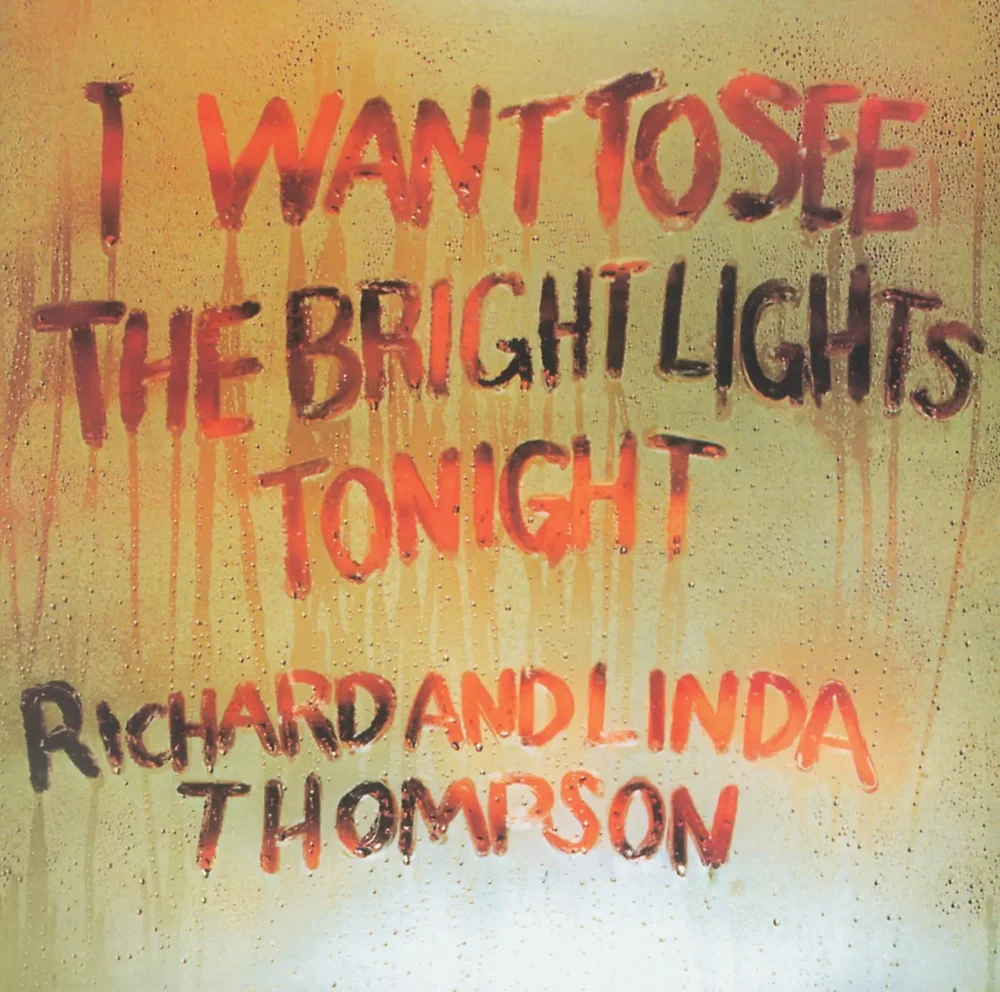
This year is the fiftieth anniversary of one of the best albums you’ve never heard – I Want To See The Bright Lights Tonight by Richard and Linda Thompson.

How do describe the record? Let’s take a run at it: Eccentric Celtic folk-rock via the Byrds?

Their marital breakup was inadvertently chronicled eight years later on Shoot Out the Lights – but this was their breakthrough, creatively if not commercially.

Anyway – for those who are in the know, here are the Thompsons (their daughter does the talking for Linda, who’s suffered from dysphonia for quite a while now – a serious tragedy for one of the best singers of her era) talking about the making of the record:

If you’ve never heard the album? You’re not alone. Do yourself a favor.

Call On Line 5 From The Dixie Chicks

Monday, April 22nd, 2024

John Mellencamp, who turned his real-life persona – “an American kid who grew up in the Heartland” – into his show-biz persona, is shocked that other American kids from the heartland aren’t having his Los Angeles politics:

“Love the art, ignore the artist” is an aphorism that’s served me well over the years. Uh Huh, Scarecrow and Lonesome Jubilee were three of the best albums of the 1980s, especially for another “American kid growing up in the heartland”.

As to Mellencamp’s politics getting rejected? To cite the sage, there is indeed “no free ride. Nobody said it’d be easy”. Some guys put you in your place. Some day hopefully we can look back and remember when.

Hot Gear Friday: The Swiss Army Guitar

Friday, April 19th, 2024

The word “iconic” is overused these days. I try to avoid it.

It’ll be hard in this next bit.

If you are not a guitar player, and someone says “electric guitar”, it’s more than a little likely the first guitar you picture in your mind is a Fender Stratocaster.

There are other electric guitars – but if the world had to explain “electric guitar” to an alien, this would likely be the example of choice.

The Fender Stratocaster turns 70 this year.

Radio repair man turned inventor Leo Fender could not possibly have known what he was starting when he began designing the Strat in the early 1950s. Perhaps because he wasn’t a guitarist, he approached the design differently, with an eye on not just manufacture but also repairability. Hence the bolt-on, rather than glued-in, neck. He had hit the mark a few years earlier with the Broadcaster, later renamed the Telecaster due to a legal wrangle with rival manufacturer Gretsch. He also designed the Fender Precision bass. Both were instant successes, popular with western swing bands, but the Telecaster was and remains a slab-like, utilitarian workhorse – two pickups, no nonsense. And as much as musicians loved its sound, they often complained that its square edges dug into their ribs and banged their hip bones.

The Strat, with its neatly nipped navel and two-horned cutaways, is probably what first comes to mind when anyone hears the words “electric guitar”. Millions of players have learned on a Strat – whether made by Fender, its budget Squier imprint, or one of the numerous companies producing copies. Many others dream of owning a top-of-the-range model from the Fender custom shop, costing a five-figure sum. Then there are the secondhand Strats with one previous famous owner. The black 1969 model that Pink Floyd’s David Gilmour played on The Dark Side of the Moon, Wish You Were Here and The Wall went under the hammer for almost $4m, in aid of a climate change charity.

They are famously versatile – their electronics provide thinner tone than the beefy Les Paul, but the three pickups are out of phase with each other, which helps give the Strat a dizzing sonic variety.

There’s reedy and out of phase:

https://youtu.be/tkkYEnqwDGY?si=Va3qWPcButRnRdax

To piercing, with tones you didn’t know existed until you played them:

To pretty much anything you want:

I finally got one, three years ago. It’s a Squier – but it gets the point across.

News To Me

Thursday, April 18th, 2024

Forget the Mariah Carey you’ve known for the past 20 years – the diva shenanigans, the Tommy Mottola and Nick Cannon drama, the most expensive penthouse in New York.

Remember, rather, the Mariah Cary who broke out into the music world in 1989 – 19 years old, a voice like a laser, the work ethic of a sled dog…

and so very versatile and talented across genres.

And a curse upon her label at the time.

Cycle Of Trivia

Wednesday, March 6th, 2024

Not everyone knows the song.

But if you do, you know the song.

Including some covers.

Or some other covers.

But while I know music trivia forwards and backwards, I’m not even remotely up on motorcycle trivia. I do better at sports trivia than motorcycles.

So this was actually an education:

Now, the only education I need is finding out how James and Red Molly fit on that bike…

Do It Yourself

Friday, February 2nd, 2024

Tomorrow is the 65th anniversary of “The Day The Music Died” – the plane crash in Clear Lake IA that killed Buddy Holly, Richie Valens and Jiles “Big Bopper” Richardson.

I’m a huge music trivia nerd – and even I was unaware of the impact Holly made, not in terms of songs, but in how rock and roll was made.

Buddy Holly’s impact on music in his 22 years is scarcely understood even by a lot of serious fans of music, but indeed of Holly himself – myself included.

I learned a lot from this writeup:

In many ways it’s a shame that Buddy spent most of his short career fighting for the things that would help rock and roll music to thrive in the decades to come.

They told him only producers can produce music, not musicians.

He proved them wrong.

They told him that a four piece band consisting of two guitars (rhythm and lead), a stand up bass, and drums wasn’t enough instrumentation to create a hit record.

He proved them wrong

They told him that songwriters only wrote songs, and musicians only played music. You can’t do both.

He proved them wrong.

They told him he would never become a rock and roll star because you had to be good looking like Elvis Presley. Plus he could never make it by wearing glasses.

He proved them wrong.

They told him orchestral arrangements and double tracking vocals in rock music could never work.

He proved them wrong.

They told him that no one from a one horse town by the name of Lubbock, Texas could ever become famous. You had to be from a big city like Los Angeles or New York.

He proved them wrong.

They told him that no musician had the right to question a record label about copyrights, promotion, or ownership of one’s music.

He proved them wrong.

Don McLean was a little wrong – the music died when the iPod was invented.

Anyway – here’s celebrating Buddy Holly:

By the way, September 7 would have been Holly’s 88th birthday .

Bach To The Future

Friday, January 19th, 2024

Peter Schickele – better known to decades of music geeks as the author of the “PDQ Bach” music history saga – has passed away. He was 88.

It occurs to me that calling. him the “Spike Jones of Music Satire” depends on a generation of people who know who Spike Jones was.

“They were playing a record in the store,” Mr. Schickele recalled in a 1997 interview for the NPR program “All Things Considered.” “It was a sappy love song. And being a 9-year-old, there’s nothing worse, of course. But all of a sudden, after the last note of the song, there were these two pistol shots.”

That song, he learned, was Mr. Jones’s “A Serenade to a Jerk.”

“I’ve always felt that those pistol shots changed my life,” Mr. Schickele continued. “That was the beginning of it all for me.”

Maybe the “Weird Al Yankovic of Classical Music”?

The music majors in college were all into PDQ Bach – and I eventually figured out why. He really, really did classical music satire – perhaps the most esoteric form of satire there is short of lampponing ancient Greeks in ancient Greek – really, really well. He not only nailed the punch line – the funny jab – but the setup, the keen understanding of the milieu he was sending up.

This one made me laugh so hard I had a hard time breathing.

Maybe you had to be there. But as I was there, there are no regrets.

One of the things that gave me the odd chuckle was Schickele’s constant North Dakota references. Clearly the guy knew something about the state – but he was a New Yorker.

An accomplished bassoonist, the young Mr. Schickele played in his local symphony, the Fargo-Moorhead Symphony Orchestra, when he was in high school.

Years later, he would pay tribute to his North Dakota roots by bestowing upon himself, in his role as P.D.Q.’s earthly representative, an august academic title: professor of musical pathology at the University of Southern North Dakota at Hoople. (There really is a Hoople, N.D. There really isn’t a University of Southern North Dakota there — or anywhere.)

So I learned something new:

RIP, Peter Schickele. .

December 8, 1980

Friday, December 8th, 2023
Haven’t posted here in a while. About time I did. So herewith, a memory.
 
True story: on the day John Lennon was killed, I had turned in a paper I wrote for my high school sociology class concerning gun control. And as a young smartass and White Album fan, I had titled the paper, “Happiness is a Warm Gun.”
 
I had just turned 17 and I was a senior in high school. I learned the news as I sat at the dining room table, which was where I typically did my homework in those days. I had lugged out the massive, cobalt blue IBM Selectric typewriter my dad had brought home from the office. I was typing up a paper for my Honors English class that was due the next morning; if I remember correctly, it concerned Eugene O’Neill’s play “The Hairy Ape.” I could see the television set in the living room and Monday Night Football was on. Then ol’ Howard Cosell told us: John Lennon had been shot dead in New York City.
 
It’s easy to forget now, but it was the beginning of a very violent 10-month period. At the end of that long winter of 1980-81, President Reagan nearly died at the hands of an assassin. Not long after, Pope John Paul II nearly met his maker. By the fall, Anwar Sadat was felled.
 
My generation was too young to really understand the events of the 1960s, especially the toll of the assassins that blighted the decade. We had come of age in the 1970s, a time that seemed simultaneously grim and silly. It was easy for me, and for a lot of my classmates, to adopt a mask of adolescent cynicism and to sneer at what we saw in front of us.
 
When Lennon was killed that night, I was thinking the cynicism I felt about my life and my future prospects was somehow justified. I felt constrained by the town I had called home. I kept thinking to myself — I can’t wait to get the hell out of this place. It wasn’t for me, this Appleton, Wisconsin. There was no way I would ever come back to Podunk and I sneered at those who were content to stay and settle for the blandishments of a boring little town, a suburb without a city attached to it. Once I left, I did not return. That much was true. Still, I was wrong about my town, though you couldn’t have convinced me otherwise.
 
The thing was, that cynicism had a very thin veneer. I remember when we were discussing the murder in school the next day, one of my friends reported the reaction of Mick Jagger, who purportedly called Lennon’s murder “a good career move” or something like that. I didn’t know if Jagger actually said it (and it turns out he didn’t), but we were all convinced it was the worst thing we’d ever heard and some of my friends vowed to get rid of their Stones albums in protest. They didn’t, as I recall.
 
Adolescents are often like that — simultaneously full of dreams and full of crap. Many, many things have changed in the 43 years since John Lennon died. One thing hasn’t — I still write at the dining room table. And, in 2023 at the age of 60, I’m actually less cynical than I was in 1980 at the age of 17. No matter how rotten the world might look at any given moment, there are always opportunities if we choose to see them.

Got To Be A Better Way Home

Monday, December 4th, 2023

It’s “Southside” Johnny Lyon’s birthday today.

He’s (checks notes)…uh, 75 today.

Unlike their Asbury Park pals in the E Street Band, the Jukes never really hit it big; their last album to really. move the needle was in 1978.

But let’s be clear – Hearts of Stone didn’t move the needle, it pinned the needle to the right of the deal:

nd their one Top 40 single, in 1991, was a group effort by Springsteen, Jon Bon Jovi and Steve Van Zandt to get their friend across that particular finish line. Of course, I was working at KDWB at the time, and the competition was, well, Vanilla Ice, so it was a welcome respite:

Johnny hasn’t lost a step in concert, of course.. This is his pretty stunning cover of David Ruffin’s “My Whole World Ended”, which he started rolling out about the time he last played the Dakota in Minneapolis in 2019:

Happy Birthday, Southside.

And FFS – come back to the Dakota. We’re burning daylight here.

Shane MacGowan

Thursday, November 30th, 2023

Well, I’ll be. Something can kill Shane MacGowan.

MacGowan, the lead singer of the legendary Irish punk-folk band The Pogues, passed away overnight. He was 65, going on 110.

He was a Keith Richards/Ozzy Ozbourne-level drinker, a brilliant songwriter, an irreplaceable bandleader…

…and, like most British punks of the era, full of political hot air:

“We just wanted to shove music that had roots and is just generally stronger and has more real anger and emotion, down the throats of a completely pap-oriented pop audience,” he told NME in 1983 as the band was getting off the ground.

He frequently wrote about Irish culture and nationalism, as well as the experiences of the Irish diaspora — including his support of the Irish Republican Army (IRA).

“I was ashamed I didn’t have the guts to join the IRA — and the Pogues was my way of overcoming that,” MacGowan admitted in Julien Temple’s 2020 documentary “Crock of Gold: A Few Rounds with Shane MacGowan.”

MacGowan was celebrated by many of his peers as one of the greatest songwriters of his generation. But he was also known for his heavy boozing, often leaving him stumbling and slurring his words at shows. 

Love the art, ignore the artist.

And at their best, the Pogues were one of the things that made the early-mid eighties such a blast

So what was “their best”?

I’d start with the title cut of their 1985 classic album, If I Should Fall From Grace With God,

Featuring the shreddingest Mandocello solo in rock history.

I’ve always been partial to this one, from the previous album, Rum, Sodomy and the Lash:

This one pops up on the NARN once in a while – and likely will again soon:

Most Americans who are familar with the Pogues at all know them from this, a song that is to Christmas music what Die Hard is to Christmas movies:

MacGowan’s been suffering healthl issues for a while now, and was reportedly wheelchair-bound since 2015.

Probably a decade ago, a story circulated that scientists were studying some of the most legendarily indestructible rock stars – Keith Richards, Ozzy Ozbourne, MacGowan and a few others – to try to figure out how they could survive decades of chemical abuse at a level that’d kill entire 70s funk bands or squads of Marines, and keep on going.

It’d seem they found a data point.

The Bolt From The Blue Redux

Wednesday, November 29th, 2023

This is an update of a piece originally from 11/20/2018

It’s gone through every musician’s mind.

You’re at a show – from a club gig to an area show – and you watch the musicians doing their thing, and the thought crosses your mind; “What if (fill in a member of the band) were to keel over in a faint right now, and the band called for someone in the audience who knew the material, and I jumped on stage and totrally rocked it“?

Yeah, I’ve had that.  At a Springsteen or Asbury Jukes or Richard Thompson or Warren Zevon or Gear Daddies or Los Lobos gig, thinking “If Nils or Gary Thompson or Pete Zorn or David Landau or Cesar or whoever the guitar player is gets the flu and faints away, I could jump up there and totally take over!”

It remains a fantasy for almost everyone.  1

Almost.

It was 50 years ago last Friday, every musician’s fantasy came true, for one Scot Halpin, of Muscatine Iowa, who’d been living in the Bay Area for about a year.

He was at a Who show at the Cow Palace in San Francisco.

After playing an hour and a half, Keith Moon – the Who’s manic drummer – passed out behind the drum kit.  Roadies revived him after another song or two, before he passed out again.

The rest of the band – singer Roger Daltrey, bass player John Entwistle and guitar player Pete Townsend, continued for another song (“See Me, Feel Me”) without a drummer.

Then, Townsend asked the crowd if anyone could play the drums.  Halpin’s friend ignored the fact that Halpin hadn’t touched a drum kit in the year since he’s left Iowa, and got the attention of a roadie, who got the attention of promoter Bill Graham.   And one thing led to another.

As Halpin told the story to the San Francisco Examiner  years later:

When Townshend called out, “Can anyone play the drums?” Halpin and Danese were already at theedge of the stage.

“And my friend starts saying to the security guard, `He can play,’ ” Halpin says. In truth, he hadn’tplayed in a year, but that didn’t slow the braggart Danese, who made such a commotion thatpromoter Bill Graham appeared. “He just looked at me and said, `Can you do it?’ ” Halpin doesn’trecall his answer, but Danese assured Graham that he could.

“The story was that I stepped out from in front of the stage, but that’s not what happened,” Halpinsays. “Townshend and Daltrey look around and they’re as surprised as I am,” he says, “becauseGraham put me up there.”

With a shot of brandy for his nerves, Halpin shook hands with Townshend, then sat down at his firstdrum set since he left Iowa, in front of 13,500 critics. “I get onto the stool. Was it still warm? Whoknows. I’m in complete shock,” Halpin says. “Then I got really focused, and Townshend said tome, `I’m going to lead you. I’m going to cue you.’

“I’m laying down the beat. They’re doing all their `Live at Leeds’ kind of stuff, and then I don’tremember what happened. I guess I played a couple more songs. It was such a weird experience.”

The bootleg reveals that Halpin drummed through the traditional “Smokestack Lightning” and”Naked Eye,” from “Odds and Sods,” closing with the anthem “My Generation.” He wasonstage for about 15 minutes. “I played long enough with them that no one booed and no one threwanything at the stage,” he says.

After the show, Halpin got to party with the band backstage; Daltrey gave Halpin kudos in the press later – and bootleg tapes showed that he did a decent job.   And he won a special, one-time-only “Best Pickup Player Of The Year” award in Rolling Stone‘s critics’ poll at the end of the year.

And until his death fifteen years ago of an inoperable brain tumor, he was probably the luckiest pickup drummer in history.

1 As it largely has for me.  Although in the summer of ’18, I went to a show at the Seventh Street Entry making the 40th Anniversary of Springsteen’s Darkness on the Edge of Town, with a Springsteen tribute band, “Tramps Like Us” (possibly now defunct, more’s the pity – and if it’s for lack of a guitar player, have their people call my people).   They did a good show, by the way.   But they were doing “Something In The Night”, one of the more obscure deep cuts on the record, and the lead singer was flloundering for the words.  And I was singing along at the foot of the stage, so rather incredibly, he handed me the mic and I finished out the last verse for him.  Not exactly pinch-hitting for David Hidalgo on “Will The Wolf Survive”, but it was fun, and I thank that lead singer, whoever he was…

Soundtrack, Part 9

Friday, October 13th, 2023

Of all the music I’ve talked about this past two weeks, this one may be the closest thing to an emotional time machine.

My own baggage notwithstanding, if you built a time capsule and wanted to put “The perfect 1980s song” in it, this would be a candidate; the shufflying synth drums and faux orchestra skirling about with Mike Campbell’s ultra-minimalist punctuation on guitar (which is backwards rock and roll!) – it tied the whole decade together.

And the song itself – all about getting your arms around what you’ve lost? It felt perfect then.

And a couple of decades later, it still does.

Back to more regular blog material Monday.

Soundtrack, Part 8

Thursday, October 12th, 2023

My first couple of weeks in the Twin Cities, I spent a lot of time in the car.

And Twin Cities radio stations spent a lot of time playing this song.

I’m not sure if it ever went to #1, but in a month of memorable music, it was perhaps the most chant-along-worthy thing on the radio…

…which led us to hours of racing around freeways or sitting in traffic, rocking back and forth and singing “Shout…Shout…””, and waiting impatiently for the reward of the fat, glorious guitar solo at the end.

I still feel like I”m in traffic, and don’t mind that much, when I hear this one. .

Soundtrack, Part 7

Wednesday, October 11th, 2023

Throughout this series, I’ve focused on memories triggered by music that is cemented into my brain as sublime.

But it wasn’t all good.

There was plenty of music that ranged from awkward to awful. And the more I write about it, the more of it comes back to me..

This was the second or third song I ever saw on MTV:

I gave ’em extra points for sneaking Christian imagery onto MTV (at a time when it wasn’t quite as uncommon as today) – and removed a few for it being…it.

But I never could find a reason to give this then-MTV staple any points at all…

…and am somewhat distressed to say I hear the one on the radio waaaaay more than I should.

It wasn’t all bad, per se. Some of it was just background music. This one was on the charts around this time in 1985:

Have you ever wondered what it looked like to watch two music legends deflate before your eyes, early October of 1985 brought that as well;

Of course, all of the above build up – or, rather, sink down – to the level of this song, which was peaking on the charts around this time…

…and remains , by acclamation, the worst song in pop music history.

Not all nostaliga as good.

I’ll get back on track tomorrow.

Soundtrack, Part 6: Notes From Underground

Tuesday, October 10th, 2023

Long ago, I told the story of my first Sunday in the Twin Cities. It was a free day, without job hunting or much of anything to do.

So I drove downtown. I visited First Avenue, had a burger, looked at Murray’s and vowed that someday, when I had a cool job and an awesome girlfriend and had made it in the Twin Cites I was going to get a butterknife steak at Murrays.

And I bought a tape – my first tape in MInneapolis, from my first Minneapols band. The Replacements.

And given my situation, this song seemed apposite…

…and I may have played it a few hundred times in the first week, and thousands more since then.

And this article reminds me – I gotta get down to Murray’s.


While we’re talking underground? REM hadn’t quite graduated to annoying me completely yet. This song came out too:

And, since we’re on less well-known music that bobbed up on the radio during this, perhaps the most exciting and diverse period in top forty music radio, there were these two songs, also rattling around MTV at the time:

“Whisper to a Scream” by Icicle Works,

And “Litarny” by Guadalcanal Diary:

As I kicked this series off, I allowed it might be possible that my situation was what welded the music from this entire series into my brain.

That’s probably true. But dang, there was a lot of good music.

Not all of it, of course . We’ll visit music tomorrow that was memorable in all the wrong ways.

Soundtrack, Part 5

Monday, October 9th, 2023

Nothing about my first week in the Twin Cities ever smacked me upside the head quite as hard as my first rush hour.

I drove Cedar to 494 to try to get to 35W, to drive from Burnsville to Vadnais Heights for an interview.

And 494 during the morning rush hour is still a cardio workout.

Back then? In a barely roadworthy car, learning the few rules that the road had?

I flipped on WLOL. This song started:

The buildup, in my memory, went hand in hand with the traffic, the weaving and ducking and lane-changing, built up around me, mirroring the mental frenzy I’d just merged into.

I’m sure my blood pressure and heart rate still rise when this song come on, anywhere.

Soundtrack, Part 4

Friday, October 6th, 2023

Yesterday’s (and Tuesday’s) entry was a bit of eighties apocrypha, meaningful maybe only to me.

Today’s? Sublime, and a pretty universal pop culture reference.

Do I even need to introduce it?

The video isn’t just representative of the golden age of music video. The rotoscope noir-in-color is the golden age of music video. MTV would certainly have existed without it – but nobody would have cared nearly as much.

And the song itself – the bubbling syths and synth drums, the descent into the choruses, and of course Morten Harket’s iconic falsetto in the chorus?

I heard and saw this for the first time sitting on a friend’s couch, watching MTV for the first time. On top of everything else, this song says “Welcome to Minneapolis, and the Rest Of Your Life” to me.

Whevever I am, I feel “1985” down to my marrow.

Soundtrack, Part 3

Thursday, October 5th, 2023

My first couple of days in the Cities, I was staying on a friend’s couch in Burnsville, working through my list of job leads (which was short) and going through the want ads to try to find some kind of income.

Which left a little time for watching that new toy I’d found, MTV.

And I’m fairly sure this was the first song I ever saw:

It was Simple Minds’s followup to “Don’t You Forget About Me”, their megahit from earlier in the year.

And it was peak SImple Minds; arty, ingenious, pretentious, memorable, full of Jim Kerr’s preening, roiling with Charlie Burchill’s insidious guitar and Mel Gayhor’s sublime drumming.

I heard it on the overhead at happy hour the other day – for maybe the second time since 1990. And it transported my brain back to that living room in Burnsville.

But rather than waiting for a phone call that never came, iti promped me to write…

…well, this entire series.

--> Site Meter -->