Archive for January, 2012

Sea To Blazing Sea

Wednesday, January 18th, 2012

One of the major lures of America has always been its isolation.

For centuries, people tired of the constant bickering and warring between Europe’s myriad princes and petty nobles were drawn to America, snug behind its two immense ocean ramparts.

And for over a century and a half, the idea of seriously attacking America verged on science fiction.

Oh, it happened; British troops sacked Washington DC in 1812 – but that was when Canada was a serious military base for the British.

British troops burning Washington DC in 1812. Some liberals claim this was the Tea Party.

But as Canada receded into relatively pacific independence and various other powers’ attempts to turn Mexico and the Caribbean into bases succumbed to America’s enforcement of the Monroe Doctrine (and, mostly, tropical diseases), America’s position as a great, isolated, isolationist power gradually coalesced.

Not that other powers didn’t want to take a run at it.

Germany in particular was fascinated with cracking America’s invincibility  Back in 1899, a German naval captain, Adolf Golzen, drew up a plan to blockade New York and Long Island and, as a coup de grace, land German infantry on Long Island to create a bridgehead.  These troops would consolidate a foothold on the then-sparsely-populated island, while raiding into Manhattan.  It seems far-fetched, and it was, although not perhaps for the reasons you’d think; the force the Germans planned to land may have outnumbered the entire regular US military at the time.

During World War I, the Germans pondered building Zeppelins that could bomb New York – but those plans were shelved at the end of the war.

Hitler pulled them out of the file cabinet when he started planning his war.  New York in particular obsessed him; seeing it as a major Jewish population center, he dreamed of pounding New York into rubble.

He sent the German aircraft industry onto a long quest to build a bomber that could carry a ton of bombs to New York and return – and had his planners develop lists of targets for them to hit once they were built.

The Messerschmidt 264 "Amerika", designed to be able to reach targets in America as well as prowl the Atlantic to find targets for the U-boats. Oddly - for a nation known for great cars and engineering - the Germans never developed an aircraft engine capable of reliable long-range performance. .

To his last days, as the Russians poured into Germany, his scientists worked on fanciful guided missile and long-range jets capable of bombing the city.

But as the Japanese bombed Pearl Harbor, the Germans had a much more practical means of attacking the US.  The fall of France had given their U-boats – Unterseeboote, or submarines – bases only 2,000 miles from the US coast.

And the commander of the German U-boat force, Admiral Karl Dönitz, saw the opportunity.

But at the beginning of 1942, he had only five boats available that could easily reach the east coast of the United States.  Obsessed with choking off Britain, Hitler had ordered the construction of hundreds of smaller “Type VII” U-Boats, capable of about thirty days of cruising, enough to patrol to the mid-Atlantic without much support.

German Type VII (top) and Type IX U-boats. Note that the Type IX was about twenty feet shorter than the typical American submarine of World War II, which were designed for the even longer ranges of the Pacific Ocean.

There were fewer of the larger, longer-legged Type IX boats – a few dozen, in early 1941 – and many of them were busy prowling the South Atlantic and even as far afield as the Indian Ocean to raid British commerce.  Of the entire German U-Boat fleet, only five Type IX boats (U-123, U-130, U-66, U-109, and U-125) were available when Germany declared war on the US..

The U-505, on permanent display at the Museum of Science and Industry in Chicago, was a Type IXc boat that spent its 11 war patrols in the South Atlantic and Caribbean - but also patrolled off the US East Coast, sinking a few ships. One of few U-boats to survive the war, it was captured by US forces in 1944; we'll come back to that in a couple of years. And if you've ever taken a tour of the cramped, claustrophobic U-Boat, do try to imagine what it was like riding the thing for 80-days at a shot -a typical patrol for a Type IX boat.

The Admiral called it Operation Paukenschlag – “Drumbeat”.

Dönitz gave Drumbeat a big patrol area – from the Chesapeake Bay up to the Saint Lawrence – and told them to focus on on bigger ships. over 10,000 tons.

And so in late December of 1941, the five boats sallied forth.

It may seem incredible in retrospect, for those who remember the fleets that the US and Britain sent forth later in the war – the thousands and thousands of ships that carpeted the English Channel on D-Day, the thousands of warships and thousands more support and supply ships that carried the war across the Pacific – but the US east coast was very sparsely defended in early 1942.  To watch the entire US coast, the Coast Guard had a few dozen aircraft, mostly obsolete, and three operational cutters, along with a polyglot collection of WWI-vintage patrol boats, converted yachts and wooden “sub-chasers”.  The Army Air Force had a few dozen bombers based on the East Coast.  And on any given day, the Navy would have two destroyers, and the AAF a couple of short-ranged B-25 bombers, on duty to guard the entire Eastern Seaboard.
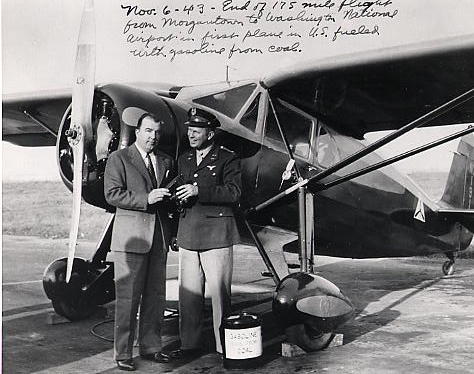
So short was the US of aircraft to watch for U-boats on the East Coast, the Army Air Force was forced to enlist civilian aviation enthusiasts. So was formed the "Civil Air Patrol". Today, they focus on finding wayward hunters and snowmobilers; seventy years ago, they scoured the ocean for U-boats. A U-boat couldn't tell the difference between a private plane and a patrolling bomber loaded with depth charges - so they'd submerge, greatly shortening their range and hampering their search for targets. And occasionally the CAP would radio a target to the Air Force, which could take more aggressive action. Ro so went the theory; while coordination improved with time, inter-service rivalry and focus on other areas of the war hindered such coordination.

Naturally, inter-service rivalry being what it was, these units could not communicate with each other, much less coordinate their efforts.

It was 70 years ago today, about 75 miles off the coast of Kitty Hawk, North Carolina – directly east of the spot where the Wright Brothers had made their first flight a little over 38 years earlier – that U66, commanded by Korvettenkapitän Richard Zapp, stalked the American tanker Allan Jackson,  a 7,000 toni tanker loaded with 72,000 barrels of oil and bound for New York.  (We’ll encounter the U66 again in a couple of years).

The SS Allan Jackson.

Zapp hit the tanker with two torpedoes and slipped away.  13 of the ship’s crew of 35 were picked up the next day by an American destroyer.

Zapp returns from patrol, atop the conning tower of the U66. The boat would be sunk in one of the most bizarre incidents of the war (well get to that in 2014). But although over 3/4 of U-boat crewman would die during the war, Zapp survived the war.

In and of itself, the sinking of the Jackson was a minor event – one of thousands of ships sunk by U-boats during the war.

But the episode was the first in what became an epic – and largely unreported – bloodbath along the East Coast, and one of the greatest examples of bureaucratic incompetence in the history of this country.

A freighter, down by the stern off the US coast, viewed from the conning tower of the U-boat that had just torpedoed it.

The British – who, remember, were reading Germany’s U-boat communications in very nearly real-time by this point, thanks to their code-breaking operation that we talked about six months ago – had warned the Roosevelt Administration at the highest levels that Paukenschlag was underway, and to expect U-boat attacks.

Over the course of 1942, a total of forty U-boats carried out missions along the US coast, sinking ships with wild abandon, almost unopposed by any US forces.  Between January and June, they sank 400 ships, totaling 2,000,000 tons (not counting their cargos), killing a total of 5,000 of their crew and passengers.  The pickings for those six months were so  easy, they went down in German U-boat lore as the “Happy Hunting Time”.  Ships were being sunk within sight of American cities…

…which, due to an incredible bit of bureaucratic and political fumbling, remained brightly lit and, more importantly, pretty much uninformed about what was going on.  The Roosevelt Administration didn’t want to create excessive panic on the East Coast – and so for the first month of Paukenschlag, it was business as usual along the East Coast.

But between the Administration’s political desire not to panic the entire East Coast – or to admit America was too vulnerable in what was, after all, a mid-term election year where Roosevelt rightly feared Republican backlash from the surprise attack at Pearl Harbor (which, indeed, led to the GOP’s best showing since the debacle of 1936), and the Army and Navy’s inability and unwillingness to either coordinate their efforts or divert forces from what they saw as their real missions – attacking Germany and Japan – virtually nothing was done.

So as the sinkings skyrocketed, the US didn’t institute a convoy system until February, and didn’t start truly devoting enough resources to the job until summer.

The USS Roper - a World War I-vintage destroyer plucked from the reserve fleet to patrol the coast for subs. In a controversial incident in 1942, Roper sank one of the few U-boats actually sunk during Operation Drumbeat. In an unrelated incident, I met one of Roper's crew at the dedication of the World War II memorial in Saint Paul, in 2007.

The U-boats got so bold that they were actually able to land agents and saboteurs on the US coast.  They didn’t have any great effect – indeed, the first batch of them landed smack-dab on one of the few stretches of shore that was regularly patrolled by the military, and were promptly captured – but it was a sign that the US’ vaunted isolation, our ocean rampart, was porous.

Which is something Americans learn every few generations – in 1812, or 1942, or 2001 or…

…well, who knows?
One Day At The Ministry Of Truth

Wednesday, January 18th, 2012

SCENE:  At the executive offices of the Alliance For A Better Minnesota.  Executive Director Carrie LUCKING sits near the center of the head table, next to an absurdly-large fake throne.  Her research director , Stephanie FORSTER, sits on the other side.

LUCKNIG:  It’s a gorgeous day out there, isn’t it?

FORSTER:  Um…(steals a glance out the window)…it’s below zero, and the wind is howling…

LUCKING:  (Glares chillingly at FORSTER):  Why do you hate the children?   I SAID it’s a beautiful day.

FORSTER:  It’s a beautiful day. (She slumps silently into her seat, looking abashed).

(Deputy Director Joe DAVIS opens the door into the chamber)

DAVIS:  Our Board!   Announcing Mr. Grebner, Mizz Beadle, Mizz Bergstrom, Mr. Elliott, Mister Blodgett, Mzz Lewis and Mister Goldfarb.

(Jon Grebner (AFSCME),  Kelly Beadle (America Votes), Greta Bergstrom (TakeAction) MN), Brian Elliot (SEIU), Jeff Blodgett (Win Minnesota), Connie Lewis (Planned Parenthood) and Ben Goldfarb (Wellstone Action) file silently into the room.   They file into small seats at small tables arranged  diagonally on either side of a central aisle).

(DAVIS again announces)

DAVIS:  Our legislative guests, Senator Bakk and Representatives Thissen and Dinkler!

(BAKK, THISSEN and WINKLER file into the room.  WINKLER steps over to DAVIS)

WINKLER: Um, it’s “Winkler”, not “Dinkler”.

LUCKING (leaping to her feet) SILENCE!

(DAVIS backhands WINKLER, who sits silently, rubbing a sore jaw)

DAVIS:  Womyn and Gentlemyn, Alita Messinger.  All rise!

(The doors swing open, and Alita Messinger enters the room, borne on a sedan chair carried by eight purple-shirted SEIU employees.  They maneuver careful up the aisle and set the sedan chair on the ground.  LUCKING motions to BAKK, THISSEN and WINKLER, who leap to their feet and lay on the ground between the sedan chair and the makeshift throne at the head table.  MESSINGER steps across them and takes her seat).

DAVIS:  You may be seated!

(All sit).

(Purple-jacketed Latino waiters maneuver through the room, filling glasses in front of each seat with a clear liquid).

(LUCKING rises)

LUCKING:  A toast!  To rigorous grassroots independence.

ALL (in unison): “To rigorous grassroots independence!”

DAVIS:  Miss Messinger, I present to you our new executive director, Carrie Lucking.

LUCKING: My name’s not Carrie Lucking.

FORSTER: Actually it is.

LUCKING:  Yes, it is.  Yes, Ma’am?

MESSINGER:  Very well, Mizz Lucking.  Proceed to the…

(MESSINGER glares at DAVIS).  Ahem.

(DAVIS grabs palm front, begins fanning MESSINGER)

MESSINGER:  Very well.  It reports on the progress!

LUCKING:  We are telling the people that a $3,000 one-time tax credit will create 25,000 jobs.

MESSINGER:  That’s absurd.  Only an idiot would believe that.

CARDINAL: Precisely!  It is useless and has no chance of passing – but if it gets voted down, we accuse the Republicans of killing jobs.

MESSINGER:  Only a moron would believe that.

LUCKING:  We know.  I even admitted as much on Almanac last week!

MESSINGER:  This is a campaign that could appeal only to morons.

(ALL are silent).

MESSINGER: And as your 2010 campaign showed, there are 8,000 more gullible morons than smart people in this state.  Well done!  You may kiss my ring.

(CARDINAL and LUCKING kneel at MESSINGER’S feet kissing her pinky ring as SCENE fades to black).

———-

It’s almost time for another campaign season – which means it’s time for another wave of misleading, usually lying, always context-mangled propoaganda from “Alliance For A Better Minnesota” (ABM) – the people who brought you the false claims that “Target Hates Gays” and “Tom Emmer campaigned to reduce penalties for drunk drivers”.

The thesis is this: you can tell ABM is lying when their lips are moving or their fingers are touching keyboards.

And we will be dedicating a good chunk of this next nine months to making sure that none of ABM’s lies goes undebunked.

It’s gonna keep all of us conservative bloggers busy.

Stephanie Fenner


Founding Director


Denise Cardinal

Carolina On My Mind

Wednesday, January 18th, 2012

It’s starting to become a trend in the 2012 Republican primaries – the vote may be days away, but the outcome (seems) to have already been decided.  Much like SITD did for the Granite State,  let’s take a look at Saturday’s Coming Attractions for the Palmetto State.

  • Romp-ney:  He won’t win by New Hampshire-styled margins, but Mitt Romney isn’t going to win by an Iowaesque 8 votes either.  The Real Clear Politics average shows Romney with a healthy 10% lead and the only candidate in the field trending up (Gingrich, Santorum & Paul have all flatlined in recent days).  Nor does there seem to be much of a battle for second place.  Gingrich has held steady around the low 20s and will more than likely hold off Paul who despite polling in the mid teens, admittedly has less organization in SC than in Iowa or New Hampshire.  Everyone appears to be waiting for a shoe to drop to change the dynamic of the campaign…and two events this week have perhaps the last best chance of doing it…
  • He Turned Her Into a Newt!:  Sarah Palin’s quasi-endorsement of Gingrich’s SC upset bid was the best news the former Speaker has had in weeks.  But despite the South Carolina-qualified nature of her “endorsement”, Palin’s comments might have a better influence on Gingrich’s candidacy down the road as he attempts to coalesce conservatives and define himself as the race’s sole “anti-Romney.”  With Santorum’s numbers stalling in SC (and elsewhere), a reasonably close second place finish for Gingrich might not entirely clear the field but could likely change the narrative from conservatives needing to rally around Rick (even if we now know he actually finished ahead of Newt in NH).  Good thing for Gingrich that Santorum didn’t have his own major endorse…oh wait…
  • Divine Intervention:  While Gingrich has been attempting to rally conservatives to his cause, Santorum was making headway in rallying social conservative support with the endorsement of 114 evangelical leaders in a lopsided vote.  Even better for Santorum, Focus on the Family leader James Dobson ignited controversy over Newt’s social values with his comment that Callista Gingrich had been Newt’s “mistress” for eight years.  Unfortunately, Rick may need an Act of God to finish higher than fourth in SC, have squandered his Iowa showing by trying to win, place or show in New Hampshire.  Like Gingrich, Santorum’s 11th hour endorsement might play better post SC, but unlike Gingrich, Santorum doesn’t look likely to have much momentum after Saturday.
  • Little Mr. Sunshine State:  Will South Carolina’s outcome even matter if Romney wins as expected?  Romney leads in Florida, the next state in the primary calendar, by 26%.  That number isn’t likely to get worse in light of a South Carolina win, meaning Romney might enter Feb not only undefeated but by winning by margins that would make him the nominee if the system was designed by the BCS.
  • Perry-kiri:  Ah, the obligatory Rick Perry comment.  Despite having performed political seppuku on his candidacy months ago (and confirmed by his 10%, $4 million Iowa showing), Perry has soldiered on.  There are three reasons for Perry’s decline: high expectations, poor debate/stump speech performance and….oh crap…uh….uh…the EPA?  Perry’s running third in Texas polling now, which should pretty much say everything that’s left to say about the one-time GOP front-runner.
  • Raising Cain:  Well, he promised an endorsement by January 19th.  And he delivered…kinda.  Herman Cain is endorsing his own bid on the South Carolina ballot, aided by “comedian” Stephen Colbert’s Super PAC.  Cain will be on Colbert’s conservative-bash-a-thon TV show and Colbert will supposedly “rally” for Cain, trying to drive independents and Democrats to the polls.  Cain says critics of the move should “lighten up.”  Cain’s political influence certainly has.

Open Letter To Senators Franken And Klobuchar

Wednesday, January 18th, 2012

To: Senators Franken And Klobuchar

From: Mitch Berg, Potential Target

Re: SOPA Pillaging

Senators,

Everyone from Wikipedia to Keilth Ellison is blacking out their sites today to protest the idiotic “Stop Online Piracy Act”, which would “stop piracy” by giving the Executive Branch the ability to wantonly shut down websites for linking to sites that had so much as one pirated file among thousands of others, even inadvertently.

I don’t have time to muck with this site’s code to that extent, but I’ll give an excerpt:

We know – your Hollywood backers want this bill.  They want their man Obama to be able to crush anything that saps their revenue.  And they paid good money to get you both elected.

So go work for them.  In Hollywood, not DC.

Ditch the bill and take your lumps.

(And yes, even if you do withdraw SOPA, I will dog you about it until you leave office, and beyond; you deserve it.  But them’s the breaks)

That is all.

Democracy Flowing Like Polish Sausage Grease

Wednesday, January 18th, 2012

It’s time for us all to unite behind that solitary democratic tradition that separates us from the animals; the election for Mayor of the MInnesota Organization of Bloggers.

Go to Kool Aid Report, and cast your votes immediately.

Demcocracy needs you!

Chanting Points Memo: Bring A Shovel!

Wednesday, January 18th, 2012

If the local leftybloggers have it right, the Governor apparently wants to staff up a bunch of do-it-yourself projects.

I first saw it on Minnesota “Progressive” Project last night – Governor Dayton has announced his “bonding plan”.

And here was the claim:

In contrast to the upcoming ballot measure open season the Republicans will be envisioning instead of working on a bonding bill, Gov. Mark Dayton released his bonding bill proposal today. Dayton’s plan would put 25,000 Minnesotans to work in every corner of the state. It would cost $775 million.

The reverberations throughout our economy of putting 25,000 people to work would be significant. These people would spend money in their communities, increasing the income of people in the service industries.

These are the almighty “infrastructure projects” that Libs are talking about these days.


But after our experience last week – where Dayton’s “Jerbs Plan” turned out to be a meaningless deduction equal to about a month of $15/hour employment – I remembered the great dictum one must always observe when reading liberal commentators:

Distrust, but verify.  Then, almost inevitably, distrust some more.

So I ran the “numbers”, such as they are.

The “plan” calls for $775,000,000, and will supposedly provide 25,000 jerbs.

So when you divide $775,000,000/25,000, you get $31,000 per job.

That’s a little under $15 an hour, on average (and probably lower, since presumably some of those 25,000 people will have to be DFL/union-connected bureaucrats to manage everything, who are just a little  more equal.

And when Eric “Big E” Pusey gushes (or, presumably, takes dictation from some Dayton Administration spokesbot the Alliance For A Better Minnesota) that…:

The projects included in his proposal are ‘shovel ready’ and would improve our state’s infrastructure.

…perhaps he should add that the workers will actually need to bring their own shovels – because creating 25,000 $14-and-change/hour jobs out of $775,000,000 leaves no money left over for shovels.  Or concrete.  Or macadam, asphalt, aggregate, or even paint.

Pusey’s number, in short, is baked wind.

Just like every number the Dayton Administration Alita Messinger and the Alliance For A Better MInnesota have put out so far this year.

Yeah, I know – Pusey’s probably conflating the phantom jobs in the Jerbs Bill with the fantasy numbers in the Bonding Bill.   I’m probably jumping on the wrong thing, because he’s probably writing taking dictation about the wrong connection.

More on that later today.

(With a tip ‘o the hat to Sarge, who did the math just about the time I was thinking about doing the math…)

Hamlined?

Tuesday, January 17th, 2012

Did Hamline’s faculty break the law when they ganged up to prevent Tom Emmer’s hiring?

Law professor Eugene Volokh wonders:

Minn. Stats. Ann. § 10A.36 makes it a gross misdemeanor for “[a]n individual or association” to “engage in economic reprisals or threaten loss of employment or physical coercion against an individual or association because of that individual’s or association’s political contributions or political activity.” There is an exception for “compensation for employment or loss of employment if the political affiliation or viewpoint of the employee is a bona fide occupational qualification of the employment.”

In other words, Steve Sviggum could lose his gig as GOP Senate spokesman if he went all liberal on us.

But for non-political jobs?

(All jokes about the staff at Hamline, St. Olaf, St. Thomas, Carlton etc claiming the “viewpoint of the employee is a bona fide occupational qualification of the employment” are noted, laughed at, and disposed of in advance)

As I read this, the statute criminalizes pretty much any boycott or other economic retaliation against a person because of his “political activity.” Is this a just law? Or should people have the right to take their business elsewhere, whether on their own or together with others, and whether as customers, contractors, or employers, if they disapprove of a person’s political activities?

It’d seem to be a key part of that whole “Free Association” thing we conservatives support.

So so far I’d say “no, not illegal” – just as it should not be illegal for me to write “The State of Minnesota should not spend one dime of research money at institutions of higher education that are shown to discriminate politically.

Volokh:

Many states impose such restrictions on employers’ firing employees for certain kinds of political activity, and South Carolina law also bans landlords from evicting their tenants for political activity, but the Minnesota statute is the only I could find that bans “economic reprisals” more broadly…I should note that, under NAACP v. Claiborne Hardware (1982), speech encouraging a boycott is protected by the First Amendment. But this law prohibits the actual economic reprisal, not the speech urging it.

I suspect it’s make some lawyer pretty wealthy, trying to litigate it – at least on the basis of the law Volokh cites.

But Katherine Kersten, writing for the Center of the American Experiment, notes that some litigation is starting to worm its way through the system.

Given his rejection by Hamline (after he thought he had a job), Emmer might be pleased to know that some aspiring conservative faculty members who are victims of political discrimination are gaining new traction through the courts.

Take Teresa Wagner, whose case was recently considered by the U.S. Eighth Circuit Court of Appeals, which has jurisdiction over Iowa, Minnesota and other Midwestern states.

Some might question Wagner’s sanity, since she applied—and was turned down for—a position at a law school whose 50-member faculty includes only one registered Republican.

Was this hotbed of liberalism Berkeley, or an Ivy League university where (one suspects) conservatives risk being burned at the stake?

No. The school in question was in the heart of Corn Country: the University of Iowa.

As a conservative, Wagner was guilty of several “venial” sins that the high priests of faculty diversity might have forgiven had she confessed and begged for absolution.

The Eighth Circuit is going to hear the case:

The court’s reasoning was revealing. First, the court drew a discriminatory inference from the law school’s grossly skewed 49-to-1 ideological composition. If this is a suspect ratio that may justify hiring lawsuits on First Amendment grounds, then most public education institutions in America may be vulnerable.


Second, the court noted the incestuous nature of the hiring process at the University of Iowa Law School.


While deans and the hiring committee technically have some authority in this respect, in reality, an ideologically homogenous faculty wields authority and creates cookie-cutter replicas of its ideological biases in its new hires. The court found this constitutionally problematic.

Read the whole thing.

And boycott everything to do with Hamline Universtiy [THIS STATEMENT HAS BEEN RULED INPERMISSIBLE UNDER MINNESOTA STATUTE]

The Light Rail Money Pit, Part II

Tuesday, January 17th, 2012

Dave Osmek – who’s a businessman, a city councilman in Mound, and is running for the State Senate, either to replace Gen Olson or to run against Terri Bonoff, depending on how redistricting works out – got curious about some of the Metro Transit’s numbers on how light rail’s been working out financially.

Now, as I noted yesterday, I’m not anti-rail-transit, per se; I’m anti-anything that eats up two taxpayer dollars for every dollar it generates in user fees, with no end in sight, to serve a very dubious purpose.

I thought the current taxpayer subsidy of $4 for every $2 fare – which the Met Council admits as the current operating subsidy – was unconscionable.

As Dave notes, those numbers are too pollyannaish.

Using numbers from the Met Council website, he crunched together the numbers for the Hiawatha Line.

And they’re not pretty:

The “Total Expenses” column is what it costs to run the line for a year.  They’ve jumped 50% since the line’s first full year, by the way – way faster than inflation.

The “Rider $$$” column?  That’s how much they collect via fares.  Note that if you divide it by 2 – the $2 you pay for a fare – you do not get the correct ridership numbers; Dave included a “Ridership” column; you’ll note that the average rider pays something close to 96 cents; between special student and senior fares, promotions (like “Ride home for free on Saint Patrick’s Day”), and the many, many turnstile-jumpers that ride the line, the line gets less than a buck per rider.

And so the “Public $$$” column comes in; that’s the subsidy we pay to make the “Total Revenues” column match the “Total Expenses” column.

And that leads us to the “Subsidy Per Ride” column; that’s how much public money it takes to make the revenues cover the expenses.  For the fares the rider pays – a little over ninety cents a ride, on average – the taxpayer is tacking on an extra $1.60.  Put another way, every $2 fare that is actually paid is covered by another $3.50 or so.

But that’s really just the tip of the iceberg.

The line was paid for with bonds – $715,000,000 in bonds floated at an average of 4%.  They were floated at all levels – state, Met Council, the Feds – and eventually it’s all money that goes to the Chinese.

These bonds, like a huge mortgage, get paid every year over the course of their 30 year life.  And the annual bond payment on $715,000,000 comes to about $41,348,521, give or take.

That’s on top of the line’s operating expenses.

So if you add each rider’s share of the bond payment to the price of the subsidized ticket, it means the actual public subsidy for each ride comes to an average of $6.41 for every $.90 cents they raise in fares; put another way,  each $2 paid by the ripe sucks, the 45% who actually pay for fares, costs the taxpayers a little over $13.50.

That is an awful lot of money.

So – how about the Central Corridor?

It’s worse.  Much worse:


Assuming an average of $.99 a ride (same as Hiawatha using the Met Council’s ridership numbers – and I think both are generous),it adds up to a $17 million annual subsidy – that is, revenues will be $17M short at covering the annual nut.  Every year

Add the $55 million in annual bond payments; divide it by the ridersihp, and you’re talking a public subsidy of $8.77 per ride – or $17.54 per paid $2 fare.

And the Southwest Light Rail?

Again – using the Met’s ridership and bonding numbers, and carrying over the Hiawatha’s actual revenue per rider, it’ll actually get a little closer to covering its operating costs – but the $1.2 billion in bonds have to get paid.  Which means the subsidy per ride is going to be $10.97 – or almost $22 per full $2 fare.

Worse? The Met’s philosophy seems to be “sell at a loss, make up for it in volume”.  None of the three lines will come within 60% of breaking even – so the taxpayer will be on the hook to subsize the lines to the tune of over 60% of the budget:

  • Hiawatha: $15 million
  • Central Corridor  $17 million
  • Southwest: $12 million

Of course, that’s not all.  Not counting the annual bond payments of over $175 million (which is spread over all levels of government, from city through federal, so it’s not all coming out of the state budget) – but tacking  on the annual operating subsidy for the Northstar line ($13 million), and you get a grand total of well over $55 million dollars a year just to cover the four lines’ operating losses.

Every year.

Forever.

Even after the bonds are paid off.  Not counting for inflation or – let’s not forget – the inevitable need to replace rolling stock or stretches of line.

And barring gas jumping to $20 a gallon, it’s just not going to change – not to the tune of blasting rider revenue up by 250%.


Perspective

Tuesday, January 17th, 2012

This explains it pretty well:

Any questions?

Dialog

Monday, January 16th, 2012

For the past fifty years, it’s been one of the most consistent, constant themes in American politics; the media trend left, and when in doubt shades conservatism; conservatives in turn distrust media and its motives.

For the past forty years, National Public Radio has added the cherry of prim, smug elitism to the sundae of media bias.  From Nina Totenberg wishing AIDS on Jesse Helms to the excision of Juan Williams for thoughtcrimes to everything to ever pass the lips of Bob Garfield or Brooke Gladstone, to their burgeoning involvement with George Soros, NPR has been an audio museum of the recent history, mores and prejudices of the American center-left mid-to-upper class for two generations.

For the past thirty-plus years, Minnesota Public Radio has been the soundtrack of Minnesota’s relentlessly-earnest, Volvo-driving, free-range-alpaca-wearing, St. Olaf-educated, Wellstone-worshipping set.  From Garrison Keillor’s corrosive bigotry to the inexplicable employment of Catherine Lanpher to Keri Miller’s on-air toenail-painting of DFL politicians to the incessant, clubby assumptions (my favorite a few weeks ago; my neighbor, Marianne Combs, responding to the fact that four male GOP Senators announced the caucus’ response to the Amy Koch flap with a giggly “well, of course they were all men – it’s the Republican Party!”), MPR is broadly regarded as the new source of record for upper-midwest progressivism,  Of course, this blog owes a fair chunk of whatever prominence it has to Garrison Keillor, if indirectly; It was almost ten years ago that pointing out the screechingly obvious about Garrison Keillor put this blog on the map; my first Instalanche, 30,000 hits or so  back in November of 2002, drove Shot In The Dark’s traffic from 30 visitors a day to 300 a day, literally overnight.  Shot In The Dark is the blog that Garrison Keillor built, in a sense.

And so conservatives and the media – public and commercial – sit like the Hatfields and the McCoys, behind their parapets, winging the odd zinger at each other, secure in their assumptions.

———-

So let me step outside the fortress for a moment and wave a white hanky of truce, and walk back just a tad of orthodoxy.

Because for a good chunk of this past twenty years or so, Minnesota Public Radio’s  newsroom (as opposed to their programming department) has done a decent job of trying to do a balanced, or at least a detached and apolitical, job of covering the news.  It’s not been perfect – but they’ve taken a much better run at it than, say, the Strib’s editorial board.

In and among the bureaucracy down at the Taj Ma Kling, nestled amidst “American Public Media”, is the “Public Insight Network” (henceforth “PIN”), an ongoing project to develop a broader, more diverse set of sources and feedback for their news coverage and programming.

Last week, a PIN producer, Melody Ng, contacted me.  Part of her job – and a very frustrating part, apparently – has been to develop more conservative sources.

And according to Ng. it’s been slow going.

Conservatives apparently like to keep the mainstream media at arms’ length – public or private.

We had a great talk about the whole relationship between conservatives and the media.  My theory – some conservatives are wary of the Jane Goodall-like anthropological approach to some journalists’ approaches to conservatism, in addition, many of us who’ve had some dealings with the mainstream media have seen our words yanked out of context and turned into something we didn’t intend.

(For what it’s worth, my experience with MPR – I’ve been interviewed a few times by Jess Mador, have been a guest on the late, lamented “In The Loop“, and have gotten one of the most flattering comments my writing has ever gotten from Bob Collins – has been good)..

Anyway – I said I’d be happy to help.

And along those lines, I thought I’d toss a few questions out to my audience.

  • What do you think about conservatism’s relationship with the regional media, and most specifically Minnesota Public Radio (and, naturally, vice versa)?
  • Is engagement with the mainstream – especially (in this case) public – media worth it if your’e a conservative?
  • What persuades or dissuades you to/from engaging with an effort like, to pick an example, the Public Insight Network?
  • Indeed – had you heard about this particular APM effort?

By the way, Melody has been running a series of surveys over at the PIN’s site for quite a while now, trying to gauge peoples’ opinions.  She’d love to get some feedback on them from you.

Depending on the answers we see, I may do a survey of my own here, soon.  Stay tuned.

And by all means, sound off!

Civility

Monday, January 16th, 2012

Perhaps the funniest bit of political/media commentary I’ve ever seen.

Ever.

And I’ve seen a lot.

I apologize, “Daily Show”. All – well, much – is forgiven.

At least on its surface.

But as I watch this, something just doesn’t pass the sniff test.

This blog has attacked Froma Harrop – she of the “Civility Project” who called Tea Partiers “Terrorists” even as she called for “civility” – not a few times in the past.

She’s an idiot, but she’s not stupid.  She can’t be stupid enough not to figure out she’s been shown as a bobble head at least, a corrosive hypocrite at worst?

Can she?

I mean, I don’t know why:  is she trying to push her way past the flap with a little incongruous humor?  Or is the world of the media so utterly insulated that she believes nobody will call her on it?  Or is it just when you’re part of the “elite” media, nobody that matters ever really will call you on it?

I guess “c”.

The Light Rail Money Pit

Monday, January 16th, 2012

The Met Council has started making the same rumblings about building a new LIght Rail line to the southwest suburbs that they were making ten or so years ago about building one connecting the downtowns – the sort of noises that really mean “we’ve decided to do it, and we’re in the process of getting our political ducks in a row” – sort of like teenagers saying “I’m thinking about going to a party…”

Now, let’s be clear on one thing; I don’t oppose rail transit for the sheer sake of opposing rail transit.  And I don’t oppose it just because all the other conservative kids are doing it – far from it.  If it were shown that rail transit in any of its forms could, someday, be a fiscally-responsible form of transportation, I’d support it.

I’ll give you three examples:

  1. At one point in the study process, there were numbers that suggested that Northstar, and its companion concept (at the time, they were both concepts), the Red Rocks line (would would connect Hastings with the two downtowns via existing rail right of way in the East Metro) could have been revenue neutral (if you left the bonding out) – provided the Met Council observed a couple of caveats (bought used rolling stock, kept the stations on the austere side, and kept religiously to existing rail right of way without buying up any new land) and, of course, provided the paid ridership numbers were pretty strong.  And at the time – provided that the money, the logistics and the ridership tracked the way the report said it would (and my sniff test told me it was cooked bureaucratic books even then, but for purposes of argument, I ran with it), I figured Northstar and Red Rocks  could be wise investments.  Experience has proved those estimates…well, we’ll get back to that.
  2. The Central Corridor was going to be an expensive money pit no matter what.  But the Met Council could have gone two ways to make the line, if not a money-maker, at least less of a debacle.  They could have built it through the existing rail right of way in Northeast and through the Midway, and made it a much faster train; “Light Rail” trains are designed to go 55 miles per hour between stops that are spaced about a mile apart, and give you some actual speed advantage over riding a bus.  Or they could have built a trolley – literally, a vehicle that is intended to chug along at street speeds and stop every block or two, and replaced the 16 bus and served the traffic that really does use University, people who are carrying groceries home from Rainbow or coming home from the U of M or Concordia, or who live in the middle of St. Paul but work in one of the downtowns.  (Seriously – does anyone think that anyone travels between the downtowns for anything but business?  And if they do, why would they not drive?  And if they don’t drive, why would they not take the 94 express, which gets you back and forth faster than the train likely will?)
  3. If you just have to have a light rail train – one that zips along at 55 miles per hour between stops that are a mile or two apart – at least build one from where people are to where they want to be.  This, of course, rules out both the current trains; outside of Twins and Vikings games and a  thin film of people who commute from the eastern reaches of South Minneapolis to Downtown, the trolley connects destinations that people would mostly much rather drive to.  And the Central Corridor is the wrong train designed to do the wrong job.   But the Southwest LRT?  A line intended to connect Minneapolis to the booming southwestern suburbs?  That almost seems like it could make some sense.  It connects where people are – the bedroom burbs of the southwest, the tony garrets and apartments in the city – with where they want and need to be, the jobs downtown or at the booming IT, insurance, service and light manufacturing businesses of the southwest.  If you have to have a train, this would seem to be the one to start with, if you are focused on building a train to, y’know, do something useful.

But that’s not how or why our trains were designed.  

I’ve opposed the current rail transit “strategy” largely because it’s designed not to move people from where they are to where they need to be – something that could, hypothetically, be a less-profligtate waste of taxpayer money than what we have.

And as “profligate”, I’ve accepted on faith the numbers that the Met Council released a few years back that showed that a single passenger ride on the Ventura Trolley costs $6 – of which the passenger fare pays $2, and the taxpayer pays $4.  

If you were running a business that was losing $4 on every $6 transaction, you might hang in there for a while until you found a market.  If you ran a business that ran those kind of losses and connected places where people weren’t with places they largely didn’t want to go (at least in numbers to generate the kind of ridership that would support the numbers you used in your business plan, the one you used to buffalo your investors), you’d have been lucky to go into business in the first place.  Or unlucky.  Hard to say.

I mean, paying 2/3 of the cost of all of our current rail transit just seems like a waste. The whole story seemed bad enough to me, as it was.

That’s where Dave Osmek comes in.

Dave’s an old friend of this blog, a city councilman in Mound, and now a State Senate candidate.  And he’s been grinding some of the numbers regarding the state bureaucracy’s mania for light rail.

And it turns out I was being too pollyannaish.

More tomorrow.

Is It Real, Or Is It Iowahawk?

Monday, January 16th, 2012

The new Newsweek cover:

On the one hand, it’s only Newsweek – which will be a shopper by 2015.

But it sort of sums up what will be the media’s approach; Obama smart, critics smash.

Attention, Wahhabi Atheists

Saturday, January 14th, 2012

Tim Tebow gettingi knocked out of the playoffs is not “proof God doesn’t exist”.

It doesn’t matter how loudly you repeat it, or how much spittle flies out your mouth when you do.

In addition, it is wrong to say “Religion is losing” the game, as Christianity has no actual theological stance on the outcome of a football game, and you’d have to be a demented narcissistic douchebladder to suggest it (and, indeed, you are).

That is all.

We Learned More From A Three Minute Record Than We Ever Learned In School

Saturday, January 14th, 2012

 Today, the Northern Alliance Radio Network goes on the road – to the Restoring Excellence in Education forum at Saint Cloud State!

Ed and I will be there from 1-3, with a variety of guests talking about how, exactly, we fix our system of education.

And of course, don’t forget…:

  • Brad Carlson’s show – “The Closer” – is on from 1-3 on Sunday.
  • The King Banaian Show! – King is on AM1570, Business Radio for the Twin Cities!  Join him from 9-11!

(All times Central)

So tune in to all six hours of the Northern Alliance Radio Network, the Twin Cities’ media’s sole guardians of sanity. You have so many options:

  • AM1280 in the Metro
  • streaming at AM1280’s Website,
  • On Twitter (the Volume 2 show will use hashtag #narn2)
  • UStream video and chat (at HotAir.com or at UStream) .
  • Good ol’ telephone – 651-289-4488!
  • Podcasts are now available on the AM1280 page!  (Ed and I are #2 – Brad is #3).
  • And make sure you fan us on our new Facebook page!

Join us!

Don’t Forget!

Friday, January 13th, 2012

If you’re in Saint Cloud tomorrow, join Ed and me as we broadcast from the Restoring Excellence in Education forum at Saint Cloud State.

And if you can’t make it to St. Cloud – well, that’s why we’re broadcasting live!

More tomorrow.

Question For President Obama

Friday, January 13th, 2012

The President wants to slash the size of the regular military

…which isn’t, in and of itself, a bad thing, provided that there’s been a rational assessment of this nation’s strategy, and the military will be sufficient to cover the real needs that we see occurring.

Which is not a trivial process, and furthermore not something this nation has excelled at by habit.

If that rational reassessment has taken place – as opposed to Obama seeking an illegitimate “peace dividend” – then fine.

But one symptom that that assessment has not taken place is that while the Administration wants to slash the regular military, it wants to create more Special Forces.

Where, precisely, does President Obama think Special Forces come from?  Does he think you just go out and grab some underemployed Georgetown graduates, give them berets and teach them how to fast-rope?

About That Whole “Peeing On Corpses” Thing

Friday, January 13th, 2012

You’re nineteen years old.

And you’re a US Marine.

You’ve been trained to kill the enemy.  Not to be a wanton slaughterer, naturally – we do shoot for better than that.  But if the word comes down the chain from the President to the Commandant to the Brigade commander to your Battalion CO to your Platoon Sergeant that Achmad Taliban is the enemy, subject to the rules of engagement, your job is to shoot him.  To kill him, not injure or scare him.

And Achmad Taliban is trying to kill you.  He’s killed plenty of your buddies, and other nineteen year old guys in your unit, going back to when you were ten years old   He wants you dead, and it was a roll of the tactical dice – a roll loaded by your training, you and your squad-mates’ tactics, and maybe a little luck – that left Achmad lying in the dirt with a bunch of holes in him, rather than you with a hole in your head or a couple of missing legs.

But you (and your buddies) got him first.  Before he could get you.  And you know that if the situation had been reversed, and Achmad had gotten ahold of your corpse, there’d be no liberal weenies in Pakistan wetting their pants over the ghastliness that’d ensue.  Because there are no liberal weenies in the Wahhabi world.

So, hyped on adrenaline and the same 19-year-old hormones that the USMC carefully cultivated to teach you unnatural things like running toward machine gun fire and shooting other humans (but only the right ones, heaven forfend), you and your buddies relieved yourself on the remains of a guy who’d just been trying to off you.

And the usual suspects here in the US are caterwauling about it.

Was it right to whiz on a corpse?  To someone sitting in a warm, tasteful, fluorescent-lit office in the US, of course not.  And even your chain of command would probably frown on it; time you spent whizzing on a corpse was probably time that a sniper could have been lining you up for a shot of his own.  I dunno – I’ve never served, much less as a combat infantryman.

Which is why I’m not going to join the crowd second-guessing you.

Because I have a hunch that if someone came barging through my front door with a gun, and tried to kill me, and I got him first, and he were lying on the floor, whizzing on him would be, um, impossible.

Chanting Points Memo: A Tax Plan Masquerading As A Job Plan

Friday, January 13th, 2012

Yesterday, we took a look at Dayton’s jerbs plan.

It’s a sham.

It’s a piddling little one-time tax credit equivalent to what you’d pay a $36K/year employee for a month (in salary alone – not capitalized cost (liberals, as a conservative to tell you what that is); if you count that in, it’s more like a month at $12/hour, plus benefits and other costs), offered for one year, cut in half for people hired the following year.  In other words, it says “Quick!  We know you don’t know what’s going to happen to the economy, or with Obamacare, or with the payroll tax, or with consumer demand, but never mind that;  hire someone right now, and you’ll get 8% of that credited in taxes in a year.

It is, of course, not a serious “jobs plan”.  It is a campaign slogan.  Nothing more.

Of course,  there’s more to this “plan” – and since the “plan” comes from Dayton Alita Messinger and the unions, you know it’s gonna rhyme with “flexes”:

Invest in Infrastructure: A new bonding bill, to be announced next week, would provide $775

million for new investment in infrastructure, allowing primarily private-sector employers to put tens

of thousands of Minnesotans back to work.

What this means is that the state is going to spend nearly a billion dollars to hire union temp workers to fix the things that should have been fixed with all the money we’re pouring into trolleys on University Avenue – presuming it’s “infrastructure” that’s needed at all.  “Infrastructure” is moving from buzz-phrase to slush fund in Minnesota.

The bill would also include $20 million in bonding requests by the Department of Employment and

Economic Development specifically designed to help businesses expand in Minnesota. These

initiatives would provide grants to cities for business infrastructure, help local authorities renew old

property for business development and aid in the development of transportation improvements

focused on businesses.

Which is both a meaningless drop in the bucket and, of course, more code words for “construction union temp jobs” and “enabling more government spending at all levels”.

Here’s the cruncher:

Internet Sales Tax Fairness—Affiliate Nexus: Under current law, out-of-state retailers that do not have a physical presence in Minnesota are not required to collect the sales tax on online purchases used and consumed in Minnesota. As a result, a large portion of the taxes due on sales by large internet retailers—such as Amazon—go uncollected. This results in a loss of state revenue and

gives these remote retailers an unfair competitive advantage over Main Street Minnesota retailers.

Passing the Internet Sales Tax Fairness bill would level the playing field for Minnesota businesses and generate about $3.5 million in FY2013.

In other words, new taxes.  To enable new spending.

Has it ever occurred, in Governor Dayton’s Alita Messinger and the SEIU’s fevered and obsessed little minds, that perhaps a better way to help “main street Minnesota” “level” the “playing field” would be to lower our ridiculous sales taxes?  And business taxes?  And income taxes?

And wait on the “infrastructure” until the economy switches back to puree, and they money can come from a budget that is as big as it needs to be and still a smaller percentage of this state’s domestic product?

I’m going to guess that’s a big no.

If I Were Speaker Zellers…

Friday, January 13th, 2012

…and it’s a good thing I’m not

…but if I were Speaker Zellers, and Governor Dayton Alita Messinger and the SEIU brought Dayton’s Jerbs Bill to the House of Representatives to submit, I might respond something like this.

“With all due respect to Governor Dayton, there are laws against using the Legislature for campaign purposes.  And that’s all this bill is; a meaningless campaign slogan dressed up as a tax bill.  If this bill goes forward, the Campaign Finance Board will have to investigate the House of Representatives for making an illegal in-kind contribution to 134 DFL house races this fall.  Because that’s all this bill is, and that’s all it was ever intended to be”.

Again – it’s probably a good thing I’m not the Speaker.

Shiny Happy Person

Friday, January 13th, 2012

Riordan Frost, writing for the MN2020 site, just loooooves the Central Corridor:

After spending a semester at graduate school in Washington, DC, I returned for the holidays to find a pleasant surprise in front of MN2020: Central Corridor light rail tracks in the ground, flanked by smoothly paved roads, attractive pedestrian-scale streetlights, and aesthetically pleasing bus stops. This stretch of University Avenue looks good, and I don’t know if I ever expected to say that.

We’re on tap to spend over a billion dollars (to put in a train that will solve virtually none of University Avenue’s problems, and exacerbate some new ones.

Can you imagine how nice the street would look if we spent ten billion on it?  Fifty billion?  We could gold-plate the whole street.

Mr. Riordan’s remark illustrates the “progressive” fixation with focusing not only on outcomes, but the fairly shallow “progressive’s” focus on fairly shallow views of those outcomes.

University Avenue desperately needed reconstruction, and while the loss of on-street parking has inconvenienced some businesses, the additional foot traffic from light rail will more than make up for these spots—which, by the way, were constantly underused.

Really?

Where – outside of Twins and Vikings games and pub-crawling twenty somethings – has any “foot traffic” erupted on the Hiawatha line?

Are the people who travel University – local shoppers and people who work in the area – prone to climbing on the train and meandering about for the fun of it?

Or does Mr. Frost expect Uni to become a destination for casual wandering?

Current residents and current businesses on the corridor will benefit, of course,but new businesses and residents are quickly arriving.

Let’s place a little bet here – for bragging rights, anyway (I never gamble money); in five years, the “current businesses” within two blocks of the stops will largely be gone, replaced by Caribou and Patagonia and Dunn Brothers stores.   And the “current businesses” outside those radii will be on life support or long gone, from the lack of either parking  or foot traffic.

And five years beyond that?  Most of those gentrified businesses around the rail stops will be pretty much stagnant – because like the “festival mall” craze of the eighties, and unlike “Field of Dreams”, when you build it, unless there’s a good reason, they will not come.  And there is just no reason for a rail line down University Avenue.

We have enumerated the mobility, environmental, and economic benefits of light rail many times at MN2020, but as the progress moves to other doorsteps, we are looking at another good reason for Central Corridor: a reconstructed, aesthetically appealing avenue. One which just so happens, mind you, to now contain multimodal infrastructure, safer crosswalks, and better lighting. Now that’s progress.

Heh.

Yep. It’s progress.  And progressivism.

Because Mr. Frost has just described a bunch of outcomes, and means to an end that is nowhere evident in the Met Council’s planning for this rail line.  Aesthetics are nice; multimodal transportation is one of those things urban planners yawp about…

…and they’re all being implemented for a project that has no rational reason to exist.  VIrtually nobody who needs to go between the downtowns is going to take the train.  Virtually nobody who lives in the neighborhood and wants to shop at a store on Uni wants to schlep their bags from the infrequently-spaced stops to wherever they live (or a half mile to a store that’s not practically on top of a stop; the light rail trains, designed to blaze down mile-long stretches of right of way at 55mph between stops, are woefully overbuilt for chugging down the street in the middle of an urban area and stopping ever half mile (the line should have been a trolley, if you just have to have a train on this route at all; the “light rail” should have been built through the rail yards south of Como, which would have been faster and cost a lot less).

And – as we’ll discuss early next week – the cost of all this aesthetic rah-rah is astronomical.  As in, much worse than they’ve told you.

More later.

Open Thread For Business Owners

Thursday, January 12th, 2012

Question:  In this economy, with Obama and Dayton’s regulations strangling you, with Minnesota’s and the IRS’ already-high business tax rates on top and Obamacare looming in the near future, please tell us:  will Dayton’s proposal of a one-time $3,000 tax break in 2012 (and half that in 2012) to hire a veteran,unemployed person or recent graduate have a drastic effect – or any real effect at all – on your hiring decisions?

I’d especially like to hear from businesspeople – people who make payroll and do the actual hiring.

If In St. Cloud This Weekend

Thursday, January 12th, 2012

The NARN will be occupying St. Cloud State this Saturday from 1-3PM for the Restoring Excellence In Education forum.

The forum will deal with the need for, and avenuies of, reform for primary/secondary and higher education.

Ed and I will join our friend, former radio colleague, talk show host, professor and state Rep. King Banaian and an array of other great guests on the subject “Why is the education system broken, and how do we fix it?”

It’s a hot topic for most of us.

Hope to see you there.  If not, tune in!

Chanting Points Memo: “Tergeted Jerbs”

Thursday, January 12th, 2012

With much fanfare from the media and the DFL’s press-release bloggers (most of them), the Dayton Administration released its “jobs plan”.

Call it “porkulus with a side of lefse“.  It’s a dumb plan – and there’s language in here that shows the DFL knows it (emphasis added):

Saint Paul – Governor Mark Dayton and DFL Legislators together today announced a plan that if passed by the legislature, will put thousands of Minnesotans back to work this year.

And there’s the tell.  This “plan” – more below – will come to the legislature bundled with some of the other nonsense Governor Dayton couldn’t get through the GOP-controlled legislature last session.  The legislature will toss it.  The DFL/media (ptr),the Strib editorial board and the chanting point bots will say “The GOP took your jerbs!” in November.

This plan is intended for no more.

To encourage businesses to hire new employees, Governor Dayton and the DFL Legislators propose offering a New Jobs Tax Credit. This would be a one-time $3,000 tax credit to any Minnesota business for each veteran, unemployed worker or recent graduate they hire during calendar year 2012, and a $1,500 credit for each new hire through June 2013. This $35 million program would create over 10,000 new, private-sector jobs this year.

Which is a great way to create a bunch of low-wage temporary jobs.

Business owners, I’d love to hear from you.  $3,000 is better than a kick in the teeth.  But given the other uncertainties in the economy.- Obamacare and the coming tax hikes and all the other regulatory nonsense that’s been pecking you to death and all the rest that’s looming in the next two years, not to mention Minnesota’s already-miserable business taxes  – isn’t it more like whizzing in the wind?

Like- a chanting point?

It’s a sign that the DFL has learned one lesson – sort of.  They’ve learned that “eat the rich”, in and of itself, isn’t a strategy for a session.  They have to put a meaningless veneer of “job creation” on top of it.

Other proposals in the plan include a new bonding bill with details to be announced next week, a proposal that will help Minnesota compete for business expansion through the Minnesota Investment Fund, an expansion of the FastTRAC program to provide career-specific training to prepare adults for the jobs of the future and the creation of the Minnesota Opportunity Grants Pilot Program which will help Minnesotans get the training required for high-demand careers.

Read:  a) Construction jobs for Dayton’s union backers, b) spending to try to convince businesses that the tax climate isn’t so bad, and c/d) more spending that benefits Dayton’s supporters in the education industry, coupled with platitudes, as if government has ever successfully predicted about what anything will be tomorrow. 

Dayton:

“From day one, my top priority has been to get Minnesota working again.

No, Governor Dayton.  With all due respect, from day one,  your priority has been to do what the Alliance for a Better Minnesota, Win Minnesota,and the unions have told you to do.  Last year, they told you to Eat The Rich.  Class warfare bombed.

With that out of the way…

Our jobs plan will help businesses create good jobs for thousands of Minnesotans who are looking for work.

No, it won’t.  It’s of little value alive – at $3K credit is bupkes – but of value as a wedge issue dead. Which is why you have your chanting-point bots yapping so hard about it now.

We need to focus on what we know will work: investing in infrastructure, providing incentives to private sector businesses to create more jobs, and training workers for high-demand careers.

Again with the code words.

Look- if you slash business taxes and cut regulations, the economy improves.  Revenue booms based on economic activity.  Then you build the infrastructure. Then you needn’t worry about training, because companies will train their own workers,on their own dime (although they’re happy to let the state pay for it, too).  That is the only “incentive” you need.

And it’s the one the GOP’s been talking all along.

And it’d hardly do to campaign on that, if you’re the DFL,now – would it?

The important part, of course, is preventing Minnesotans from getting fooled by this Potemkin plan.

Crocodile Tears

Wednesday, January 11th, 2012

Democrats and the DFL have been trying to kill off charter schools ever since the idea hatched in Minnesota in the late eighties.

This effort has taken so many forms:

Now, as part of trying to balance the budget, the GOP in the Legislature “borrowed” money “from the schools” – i.e., pushed back state payments to the schools. Which is an inconvenience to public schools – and a brutal smack to many charter schools.

It was too much for on charter – General John Vessey School in Inver Grove Heights, which closed after Christmas break.  I’m familiar with Vessey – whose model was to bring a military-style education focusing on discipline, hard work and self-respect (as opposed to self-esteem) to students, some of whom commuted from Monticello and Taylor’s Falls to attend.  The school will be sorely missed.

But the closure prompted one “Alec”, writin at the Minnesota Progressive Project, to have an attack of unjustified self-righteousness:

The obvious and inevitable result happened again as Vessey Leadership Academy Secondary School closed its doors unexpectedly over the winter break.

As a Charter that leased their facilities, Vessey has no collateral to secure a loan. A loan they needed because the state was withholding 40% of their funds.

Wow. That sounds like a great argument to allow charter school boards the same financial flexibility that district boards have to bond for buildings?  And most of the other restrictions on charters?

No worries – if “Alec” suggested that at a DFL meeting, he’d have his giblets removed and stuffed into his chest cavity.

Which is a shame – for the DFL.  Because charter schools’ biggest proponents are the thousands of traditional DFL constituents –  latino, asian and especially afro-American families – in the cities.  It’s an un-tapped opportunity for the GOP.

Anyway, “Alec”, great to see you’re suddenly a “charter school supporter”. It’d be about the first positive thing anyone on MPP has ever said about charter schools

…presuming you have the foggiest idea what you’re talking about.

We’ll see,  huh?

--> Site Meter -->