Archive for the 'St. Paul' Category

Killing The Competition

Friday, June 8th, 2012

I read yesterday that the Met Council is going to start whacking bus lines along the Central Corridor, to make sure that the infernal train is the only option the rider has.

I was going to write about it – but Joe Doakes of Como Park beat me to it:

Since we’re already building the Damned Train, this makes half-assed sense, I guess.

Right now, there are three busses to get from downtown St. Paul to downtown Minneapolis:

  • 16 – runs every 10 minutes on University, stops at every corner
  • 50 – runs down University but only stops at major corners
  • 94 – runs on I-94 but gets off a few places on University [and long I94]

We’ll eliminate the 50 entirely because that’s exactly what the train will do – run down University and hit major intersections. Sensible.

We’ll cut back the freeway bus to weekdays only. If you want to rush from downtowns on weekends, take a taxi or ride the train. That makes sense.

We’ll cut back on local bus service to every 20 minutes. This doesn’t make sense.

First, where’s the bus going to drive? In the parking lane? But we took out the middle of the street to install the train and that meant we changed the parking lane to a driving lane. But now we’re going to leave a bus in the parking lane? Why do we need a bus blocking up traffic on University when there’s a perfectly good train right next to it?

Second, as every bus rider knows, 20 minute departures that means the bus departs downtown every 20 minutes but traffic lights and delays make them bunch up on the route. If you want to ride from Frogtown to Walmart, wear warm clothes: the next three busses will all come in a big pack and if you miss them, you’re standing for an hour. Unless you take the train. Which, if you were going to take the train anyway, then why bother with busses?

Do we really need a simultaneous and parallel public transit system to stop at every single corner on University?

Joe Doakes

Como Park

That, of course, is the big problem – well, the second-biggest problem, behind “it’s a huge waste of money that will cost $10 in public money for every $2 ticket that’s sold” – with the Central Corridor:  it’s the wrong kind of train for the street.  “Light Rail” is supposed to zip along at 55mph between stops that are a mile or so apart – not chug along at the speed of traffic along University between stops.  And the “mass transit” traffic along University is not people zipping between downtowns; they mostly drive or take the 94 or the 50.  The traffic along Uni is people going from WalMart or Rainbow or Cub or CVS or Plasma Hut to home, where “Home” isn’t a condo along Washington in Downtown Minneapolis, but a house or apartment on Sherburne or Thomas or Iglehard, tucked away close to University.

It’s the wrong kind of train – it should have been a trolley, if you had to have a train; a “light rail” train should have gone down the median on I94, or ducked through the existing rail rights-of-way between Northeast Minneapolis and Frogtown.

This is what central planning does to peoples’ lives.
Time For A Change

Friday, June 8th, 2012

I posted about this yesterday – but it came out in the afternoon, after most people have read my blog for the day.

So I’ll try this again:  I would like to ask you a favor.  Get out on Twitter and “Follow” Tony Hernandez’ Twitter account.

Tony’s running for Congress in Minnesota’s Fourth CD – my district, the district of Betty McCollum, who has been taking up space in the US House for a long, long time.

Conventional wisdom says the race can’t be won – that the 4th is just tooooo Democrat.

It’s not true, of course; it can be won.  Redistricting shaved down the DFL advantage from 70-30 to maybe 60-40.

And the Dems’ ugly secret – Betty McCollum isn’t even that popular among DFLers.  Her vote totals just keep dropping.  Oh, she raises all sorts of outside money – but her “passion index”, even in 2008., was pretty low.

I live in CD4, and I’m not going to lie – I’m ready for it to take ten years to make the GOP in CD4 a viable party.

But with a little help, we juuuuust might be able to jump-start things a bit.

Whaddya say?

If In Saint Paul Tonight

Tuesday, June 5th, 2012

The Tony Hernandez campaign is holding its Taco Party fundraiser.

It’s $30 per adult for homemade tacos and beer (for those over 21, naturally).

It’s from 5:30-7:30 this evening.  Details are available at the Hernandez Campaign website.

Questions

Monday, June 4th, 2012

I’m supporting Tony Hernandez for US House in CD4.

Someone asked me “what is it you’re trying to accomplish by campaigning against long-time incumbent Betty McCollum”  Are you just trying to move the needle?  Force the DFL to spend money on McCollum so they can’t spend it against Bachmann, Kline, Paulsen and Cravaack?

No.

I mean, yes – all of that.  But that’s all vastly subsidiary to the real goal.  And that real goal isn’t “vanquishing Betty McCollum” – although driving her from office in a humiliating defeat this fall, sending her back to work as a receptionist at Alliance For A Better Minnesota, would be a great start.

No, my goal is this:  Within ten years, I want the DFL to be the minority party in Saint Paul.  I want the children of today’s DFLers to mock, taunt and revile their elders for their depraved short-sightedness in ever having backed such a addlepated party, a party that played such a pivotal role in trying to leave them in generations of debt.  In 2022, I want Democrats to quietly soft-pedal their party endorsement, lest they be pelted with rocks and garbage from a community that regards them as the petty authoritarians they actually are.

In short, I don’t want to just beat the DFL; I want to begin (or continue) an arc at the end of which is the complete extinction of – not the DFL, really, but the entire idea of “progressivism” as they practice it – the thinly-veiled authoritarianism of the centralized, bureaucratic, interventionist government (and if it’s a dead issue here, really, where will they be viable?).

Any questions?

Quixote Was Right

Thursday, May 31st, 2012

One of the most difficult jobs in politics is running for office as a Republican in Saint Paul.  You’re in a city that might, in a good cycle, be 30% Republican, and where a fair chunk of the city depends on government for a living, one way or another – university faculty, government workers, teachers, and of course many,. many clients.

It’s an uphill road.

And most years, what that means is districts with no GOP campaign – or, almost worse, “campaigns” that are intended to be warm bodies on the ballot to make it look like there’s some kind of contest going on.  The GOP in Saint Paul has no money, gets not much response.   There is currently not a single elected Republican in office anywhere in Ramsey County, and precious few conservative-ish Democrats (and even they are being purged, bit by bit).

Which leads, over the course of a few decades, to a debilitating ennui.  There are Republicans in Saint Paul; 30% of my Senate district voted for Tom Emmer and John McCain.  If every last one of them had turned out to vote in the SD66 Special Election last year, the GOP candidate would have won, and won big.  But Republicans in Saint Paul don’t turn out for local elections.  It’s my theory that they believe that their vote only really counts when it’s for a statewide or national office.  It’d be an easy thing to believe.

Last year, when I was “the establishment”, I figured it’d be a ten year job not only to make the 4th District GOP – which, after redistricting, covers St. Paul, Ramsey County, and the ‘burbs east of St. Paul all the way to the St. Croix – a functional party unit, but to get some sort of tradition of not losing badly all the time established, barring some sort of upheaval.

It’s too early to tell if the Ron Paul surge in Minnesota is that upheaval – but as I noted around convention time, there is at least the raw material to build some hope.

Six GOP candidates in the Fourth CD are getting together to hold a joint press conference at the Capitol today to push for a repeal of the stadium deal:

Meeting on the steps of the Minnesota State Capitol on the morning of May 31, 2012, a coalition of six GOP candidates from the Twin Cities area announced their candidacy by setting the “Repeal of the Vikings Stadium Funding” initiative as their key legislative objective. Citing the irresponsible decision to use public funds for a private business and imposing new taxes and fees on the citizens of Minnesota without their consent, the legislative candidates expressed their frustration with the Minnesota legislature. If elected they plan on making their first legislative action the immediate Repeal of the Vikings Stadium Funding.

The press release for the event quoted Andrew Ojeda, the candidate from the Mac/Groveland area:

“Although a full repeal of the stadium bill (HF2958) appears politically infeasible at this moment, the 88-page document represents the fiscal irresponsibility that has engulfed much of the legislature. It is not based on honest T-Charts and balance sheets, but rather on ambitions of the here-and-now.”

And, more pithily, Carlos Conway, from 65B:

“This is nothing more than legislation that keeps the rich, rich and the poor, poor!”

Which puts them (and the other four, and yes, I’ll list ’em in a bit) squarely in the wheelhouse with the freshmen in the Legislature that fought so hard to keep this abomination off our tax rolls, and keep it from gutting what had once been due process in taxation in this state.

Quixotic?  Sure.  But as Lincoln said, “The probability that we may fail in the struggle ought not to deter us from the support of a cause we believe to be just.”

A little more – OK, a lot more – follow-through like this and maybe this can be an interesting campaign season.

I’ll stick by everything I wrote last spring – if everyone that bum-rushed the caucuses for Ron Paul turns out to support this wave of candidates who are putting their shoe leather today where there mouths were at caucus and convention time?  And by “support” I mean “donate time for lit-dropping, phone-banking, door-knocking, sign-planting and, of course, money”?  And if the “establishment” buries its grudges for next caucus and convention time and turns out (as, I should add, it largely is)?   This could be a lot of fun.

Will we win?  The odds are very, very long.  In this election, barring a Cravaack-like miracle (which, like most “Miracles”, was built from hard work and organization), success will likely be measured by moving the needle.  And in two years, moving it some more.  Lather, rinse, repeat.

And that’s good in and of itself – because the DFL knows that if the GOP gets above 40% in Minneapolis and Saint Paul, they can never win another statewide election.

There are two sides to that knife, by the way; if the GOP is ever to turn this state red, we need to find new voters.  And we’ve pretty much gotten all the GOP voters we can out of Maple Grove and Isanti and Benton counties; the new GOP voters are going to come from the Iron Range, and the West Side of Saint Paul, and the scrappy little businesses along East Lake Street, if they’re going to come from anywhere.

By the way, as we noted last week, campaigns have until July 30 to meet their fundraising thresholds – $1,500 for House races, $3,000 for Senate, and only the first $50 of any donation counts toward the threshold – to qualify for campaign aid from the state.  Yeah, it’s not very libertarian, but you’ve already paid for it – why not help it go to a better cause?

The six candidates out there on the steps today were:

If you’ve got a few – even $10 – to spare, it’d go a long way.

Place Your Bets

Tuesday, May 29th, 2012

How long before Lori Sturdevant starts clucking and exuding victorian vapours that there seems to be no room for “moderates” in the DFL?

Of course, only in a place like Saint Paul could Senator and former police chief John Harrington be considered a “moderate”.  The guy’s got the ABM chanting points down as pat as he ever had the Miranda statement:

“Show me one example of where somebody had fraudulently voted here. Oh, you don’t have one. You have no evidence.

Other than tens of thousands of provisional voting cards – the cards filled out when their vote is questionable, and their ballot is already in the hopper – being returned because the listed person didn’t live at the address?  Other than people listing laundromats as residences?   Dozens of felons convicted?  Hundreds of other cases found, but tossed because, under Minnesota law, “I didn’t know” is an excuse?

Nope.  No evidence at all.

Harrington said he was similarly disheartened during debate this year on the “castle doctrine” self-defense bill, which would have given Minnesotans greater freedom to defend their homes with deadly force. Law enforcement objected to the proposal, saying it could endanger officers, and Dayton ultimately vetoed it.

Of course, there, there’s no evidence.

But while Senator Harrington would be considered, by the vast majority of the US between the Hudson and the Sierra Mare, a “flaming liberal”, he was just tooooo moderate for the whackdoodles of the eastside DFL:

Harrington faced two challengers — Tom Dimond and Foung Hawj — for the party’s endorsement. After four ballots, Harrington had a slight lead over Dimond, a carpenter and former city council member. Delegates decided on no endorsement because it was clear neither candidate could capture the 60 percent needed for the party’s backing. Harrington had 46 percent, Dimond 40 percent, and Hawj had no votes on the last ballot.

Dimond seemed to resonate with delegates who thought Harrington was too conservative for his district and has done little to reach out to Democratic-Farmer-Labor activists since his election. Harrington, however, insisted he was politically attuned to his constituents.

And it’s pretty likely he was.  The East Side is a largely run-down area, hard-hit by the recession, perpetually in transition.  It’s been a destination for new Americans since, well, it existed; wave after wave of immigrants, from German to Irish to Swedish to Italian to Black to Latino to Vietnamese to H’mong to Somali, have coursed through the area, learned to do the American thing, and then moved – first north of Maryland, then out to the ‘burbs.  Most of them are conservatives – they just don’t know that means “republican” in this country.

The DFL “activists”, on the other hand, are vastly more radically left-leaning than their constituents – and farther left than the GOP is to the right.  Harrington – pragmatic local fixer that he is – didn’t pass the progressive purity test.

I’ll await the hand-wringing from the media.

Critical Ass

Friday, May 25th, 2012

One of the things I miss about my current job is that I can’t bike it to work.

Not that’s too far – the distance would be a nice challenge, and there are some park ‘n rides halfway there for days when I don’t want a challenge.

But there’s no place to take a shower at the office, or anywhere near it – the only gym close enough to even think about is still 3-4 miles away and, worse, would involve a pretty challenging route to get from the gym to the office, which means I’d need another shower when I got there.

Anyway, apropos not much, Joe Doakes of Como Park writes:

Driving downtown St. Paul this morning, it occurred to me there was one nice thing about the rain – it would keep the bicycle riders away. No sooner had the thought entered my head than a bicycle rider appeared.

It’s 7:15 a.m. It’s raining. It’s gloomy. I’m on Wabasha Street at 7th – smack downtown in rush hour traffic. This simple soul rides off the curb into traffic on a black mountain bike wearing a black helmet, black jacket, black pants and black shoes. Then he “splits” traffic riding up the dotted lines between cars stopped for a red light before sticking his black-clad arm out and swerving left in front of a truck to turn onto 5th, causing an accordion of nose-dives and brake lights cascading back toward the Capital.

He had a grubby yellow saddlebag slung on the portside of his rack and one tiny red light on his saddle, blinking like a firefly possessed by a demon; that’s it, that’s his safety system. Everybody else was supposed to be watching out for him between the sea of taillights, the drops on the windshield, the smear left by the wipers.

What.

An.

Idiot.

Smear – that’s about what I expected when he cut off that delivery van. I honestly think I would have stopped to get out and spit on him.

Joe Doakes

Como Park

That’s the problem with those Critical Mass riders; they try to do their same schtick when they are not a critical mass…

Just So We’re Clear On Things

Tuesday, May 22nd, 2012

Joe Doakes from Como Park – who has been getting used to driving down Como and Hoyt rather than University, just like the rest of us lately – writes:

A federal court judge has ordered the light rail agencies to do this study – twice – and two years later they’re finally going to START it?

http://www.twincities.com/stpaul/ci_20648864/central-corridor-constructions-impact-businesses-be-studied

At this rate, the study ought to be done about the same time as the construction.

Near the end of the article:

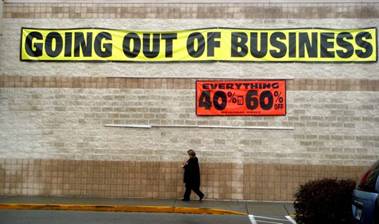
“Many businesses have reported losing months of revenue, and some have relocated from University Avenue or closed their doors. The 2011 assessment stated it was impossible to separate the impact of construction from “external factors” such as the economy and “world events.”

Dude, let me help you out here. This is “the economy”:

Photo courtesy the Instapundit archives: http://pjmedia.com/instapundit/category/photos/

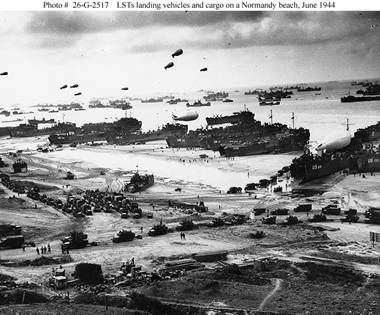
This is a “world event”:

Photo courtesy US Navy: http://www.history.navy.mil/photos/events/wwii-eur/normandy/normandy.htm

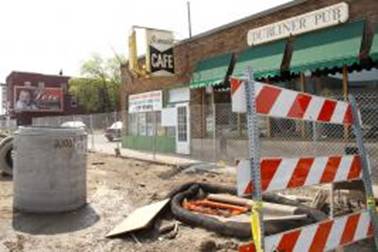
This is the “impact of construction”:

Photo courtest Minnesota Public Radio: http://minnesota.publicradio.org/display/web/2011/05/13/central-corridor-university/

Are we clear? ARE WE CLEAR???

Joe Doakes, Como Park

Oh, Joe.  If people were clear, we would not  be in this mess.

It just occurred to me – the great Saint Paul tradition of cruising the hot rods down University Avnenue – is now, forever, completely dead.  A hundred shrieking DFL-supporting biddies in Merriam Park can now rest easy; one more bit of fun in Saint Paul has been extinguished.

By world events.

Submitted With Neither Reason Nor Comment

Tuesday, May 22nd, 2012

I have no idea why I’m posting this.

Honest.

It just jumped at me out of nowhere.

Really.

The DFL War On Small Business: Communique From The St. Paul Front

Wednesday, May 16th, 2012

Joe Doakes from Como Park writes:

After nearly killing Cupcake on Grand, the city is finally considering whether Mega-Mall-style parking lots are really necessary in St. Paul.

The City Council wants citizen input on the parking rule change, so a public hearing will be held at 5:30 in the Council Chambers in downtown St. Paul.

Because that’s a handy place for people to meet. Plenty of convenient parking. Easy to get to. Easy to find. Everybody knows where the council chambers are, and how to get there, and where to park, and how much it costs . . . during rush hour . . . right?

Look, if you want the public’s opinion, you ask the public at a time and place where the public is likely to show up, not just P&Z staffers. If you don’t actually want our opinion because you’re going to do whatever you want to do anyway, the cut out the nonsense and get on with it.

Businesses like Cupcake who plan to invest tens of thousands of dollars in St. Paul will roll with the punches or they’ll go somewhere else. And then you can have all your precious street parking for non-profit welfare agencies and low-income apartments.

Joe Doakes

Como Park

Manipulating public hearings is a DFL oldie but goodie.

My favorite example:  back in 1987, when then-Senator Alan Spears was proposing a ratcheting-up of gun control laws, they scheduled public hearings on the bill.

And then proceeded to move it, constantly, so that outstate human-rights supporters could come and testify against the orcs – or at least stand up against them and be counted.  The DFL counted, then as now, on being able to manipulate the system to keep as few dissenters as possible from attending.

Real Minnesotans still outnumbered the orcs 600-24 – but that was state-level Second Amendment legislation, not Saint Paul parking.

Plan on the City Council being able to say “The public told us they hate having enough affordable parking”.

Of Interest To Ocean-Front Property Owners On Grand Avenue

Wednesday, May 16th, 2012

Joe Doakes of Como Park writes:

Mayor Chris Coleman once said in his State of the City Address that the greatest threat facing St. Paul was global warming; hence, the need to build refrigerated outdoor ice rinks.

Here’s an interview with an actual scientist talking, not a politician. It shows.

Joe Doakes

Como Park

Joe hasn’t gotten the memo; Libs only care about “science” that ridicules the GOP.

More Eggs!

Wednesday, May 9th, 2012

Joe Doakes from Como Park writes:

NAACP sued over the Central Corridor Light Rail project’s impact on businesses. The federal court twice ordered an analysis of lost business revenues as an adverse impact of the projects construction.

The government entities instead told the court there would be “no significant impact” on businesses due to light rail construction.

Photo taken this morning from the parking lot of McDonalds at University and Marion.

Just another vacant building, right?

 You see the old Saxon Ford dealership, abandoned in 2004, completely rehabbed by Dr. Vang, a Vietnamese dentist and local hero.

Wrong! It used to be the Hmong MN Professional Building!

“No Significant Impact.”

Joe Doakes

Como Park

You gotta break some eggs to make an omelet, right?

And if those eggs don’t look like the kind of eggs they have where the white liberals who plan things like Central Corridors live?

Eggs is eggs!

Thanks Again, Light Rail

Friday, March 30th, 2012

Caribe Bistro is the latest casualty of light rail construction and the disruption it’s foisted on University Avenue.

They’re hoping to re-open – in a neighborhood not marked for being “blessed” with light rail.

Best of luck to the Panellis, two of the nicest restauranteurs you’ll ever meet.  Check out the page; if you’re looking to invest in a new restaurant, they’d love to talk…

Because We’re Paying For Enough Grandiose Plans Gone Awry Already

Wednesday, March 28th, 2012

St. Paul mayor Chris Coleman announced in his State of the City address he’s got the city’s mighty plannin’ wheels a’churnin’ to get a stadium built downtown for the Saint Paul Saints:

Arguably, the biggest announcement came midway through the mayor’s annual State of the City address at the James J. Hill Library: He said the St. Paul Port Authority had secured a land deal with the real estate investment trust that owns the old Diamond Products building off Broadway Street.

The vacant building, which is across from the St. Paul Farmer’s Market, could become the site of a future regional ballpark for the Saints and amateur baseball leagues.

The Port Authority plans to swap the Lowertown property with the city, and in turn take over the Saints’ outdated Midway Stadium site off Energy Park Drive for future business development. Midway Stadium is city-owned.

“We’ll own the land,” Coleman said. “Now let’s build the ballpark.”

Sure, Mr. Mayor.

Feel free to get your buddies to pony up for it.  I just got my property tax bill.  I’m done paying for your plans.

A “handshake deal” has been reached with the Florida owners of the Diamond Products building to buy it for $2.4 million, said Tom Collins, a Port Authority spokesman. Details will be made final when the two sides get together next week.

Every time Chris Coleman shakes someone’s hands, he wipes ’em off afterward with a fiver.

State Of The City: A Response

Tuesday, March 27th, 2012

It’s customary after the State of the Union address for a member of the legislative opposition to the President to give a response.

But Saint Paul is a one-party city. There is, currently, not a single elected Republican in any office anywhere in the city. Indeed, there is only one relatively conservative Democrat – Janice Rettman, on the County Commission – anywhere in Ramsey County.

Yep, this is the Saint Paul my heart still sees. From atop the High Bridge, on a beautiful day.

So it falls to me to give the conservative response to Mayor Coleman’s State of the City address.

I fell in love with Saint Paul when I first really encountered it, 25 years ago. I’d moved to Minneapolis, it’s true – and had little real clue what Saint Paul was. Over the next year or so, I set myself straight; as I biked and drove around the city, I came to love the city’s distinct neighborhoods, each of which reminded me of a different place, built by a different group of newcomers.


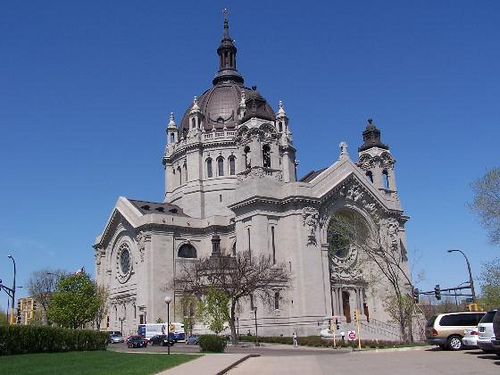
The Cathedral looks out over an increasingly empty downtown.

And so I moved here in 1987, and I’ve lived here (with two years worth of temporary exceptions) ever since.

I stayed here because it was easy to get a nice house on a budget, because the neighborhoods were such nice places – someone once called the city “fifteen small towns with one mayor” -because you could live here much less expensively, because the crime rate was lower, and because the schools were, so we were told, better than in Minneapolis.

Yep.  I fell in love with the place.  A lot of us did.

And the relationship has become a classic case of Battered Spouse Syndrome.

You pass laws that catastrophically devalue our property, and then you jack up property taxes.

Was it the smoking ban? Was it the decline of the neighborhood? Was it too many fights, too fast, that ran it afoul of the cops? Who cares? It's gone! And it ain't coming back! And if you say "oh, it's just a seedy little corner bar?" Then you don't get it. Little corner bars and other little downmarket neighborhood quirks ARE Saint Paul. And they're disappearing!

You acquiesce in the use of the city as a warehouse for the poor – and pour on the spending, heaping the burden onto those of us who actually pay taxes.

And the schools?  I’m disgusted by what the Saint Paul Public Schools have become.  I use “disgusted” because I don’t want to use a more colorful term.  What a bottomless waste.  And our kids are ones being robbed – or at least, the kids whose parents are misinformed enough to trust them to the district.   And I know – that’s not the mayor’s job.  But it’s a function of the one-party dystopia that this city has become.


It's the Endicott Building. Historic? Impressive? Beautiful? Yes. And utterly empty, since maybe 2004. On a good day, the skyway lobby doesn't smell like bum urine.

Saint Paul has become dull.  Hopeless.  Depressed.  After decades of cheerleading, downtown is sleepier than ever, but for the odd flashes of overcrowding during Wild games, concerts, Ordway shows or the Lowertown Art Crawl.   The office vacancy rate is kept out of the three digit range only by the few remaining major employers – Hartford, Ecolab, Securian, USBank – and, of course, all.  Those. Government. Offices. And. Workers.

The once-vibrant neighborhoods, outside the gentrified whir of Grand Avenue and the downmarket, multi-culti scrabble on Payne, are wondering where the next hit’s gonna come from.

The Train to Nowhere.

Some may call this sour grapes from someone whose party is far out of power.  OK – so what does the Coleman Administration have to brag about after seven miserable years in office?  Cheerleading about community outreach education.  A train that will do nothing useful for this city or the metro area – at best, gentrifying a few tiny islands while accelerating the rot in between.  And maybe, just maybe, an expensive downtown stadium we can’t afford (which will be built by Mayor Coleman’s union underwriters, using labor that largely drives in from Inver Grove Heights and Elko).  And spending.  Always, always, more spending.

The buck - really, every buck they can find - stops here.

The state of the City of Saint Paul is atrocious.  Deadening.  Depressing.  Dismal.  Dingy.  Bordering on Dire.

And there is no hope – none – on the horizon, because this is a one-party city, and the party in power, and that it appears will be in power for my kids’ lifetimes, is committed to fighting rot and blight with more rot and blight.

That’s the real state of Saint Paul.  You’re welcome to it.

I still love my adopted city.  But I doubt more than ever that it can survive its government.

Less Than Zero

Thursday, March 22nd, 2012

Redistricting didn’t treat Speed Gibson kindly:

It just occurred to me that with my home being redistricted from CD 3 (Paulsen) to CD 5 (Ellison) I now have no representation whatever in Washington DC. My Representative, both Senators, and my President are all hard Lefties, none with any record of generating serious thought.

The jury is out on my new State Senator (Eaton) who replaced the late Linda Scheid, who could think. My State Representative (Hillstrom) went hard Left in 2007…Mike Opat is my County Commissioner and Official Bagman of Target Field…[my] School Board (281) comprises seven Democrats, all committed to living in the past whether they know it or not.

My only bright spots are my Mayor and City Council. Two are new, so again, the jury is out. All are Democrats, but the three veterans think Brooklyn Center first, DFL second. Partly it just proves again why local decision-making works best. Partly these happen to be three great incumbents. But it’s also that as a mature first ring suburb with limited resources, we just can’t afford the flights of fancy that celestial suburbs and core cities think they can afford.

Well, he’s got that.

Me?  I think I’ve reached less than zero representation at any level.  I share Speed’s opinion of The One, Stuart and A-Klo.  In the House, I’ve got Betty McCollum, who is even dumber than Ellison.  What’s the difference between Betty McCollum and a  pile of mulch?  The mulch doesn’t have Nancy Pelosi pullilng its strings.

In the State House?  I didn’t think it could get worse than Mary Jo McGuire (who just replaced Ellen Anderson) and Alice Hausman.  I was wrong; I am now “represented” by the loathsome Sandy Pappas and Rhea Moran, whose mouth is connected to a microphone in Javier Morillo and Elliot Seid’s offices.

Ramsey County?  I’m juuuuuust across the street from the utterly defensible Janice Rettman’s district.  Which means I’m in Toni Carter’s district.  And she’s utterly not defensible.

For Mayor?  Chris Coleman, who’s like a teenager who keeps coming up to you saying “I know you gave me money to buy lunch, but I spent it on Pokemon cards, and I’m still hungry”, and Russ Stark, who yells “Off What?” when Cathy Lantry says “Jump!”.

If I were starting a blog today, I’d call it “Midway Samizdat”.

What’s In A Name

Thursday, March 1st, 2012

Joe Doakes from Como Park writes:

Asian businesses along University Avenue, seeing their livelihood destroyed by Light Rail, came up with a marketing plan for their neighborhood. They’ll call it “Little Mekong” after the famous river in Southeast Asia that runs through many of the residents homelands: Thailand, Vietnam, Cambodia, Laos and China.

Makes perfect sense to me.  “Frogtown” predates the Asian influence in the neighborhood by a solid 100 years.  They have pretty much redefined the area.  More power to ’em, I say!

Not everybody likes the plan.

“Irna Landrum, executive director of the Summit-University Planning Council, said it makes sense to have a strong identity around each of the light rail stations. But she said Frogtown already has one.

“I’m not immediately convinced it has to be this big cultural branding. People know where Frogtown is. You know there’s a lot of natural curiosity for people who don’t live in these communities about what these strong community names mean,” Landrum said.”

I’m not sure that the curiosity about “Frogtown” goes much beyond “why is it called Frogtown?”, and I live here.  (Answer;  Maybe it was frogs in the long-gone swamps.  Maybe it was the French settlers.  We may never know).

No matter.  As it was, it shall be evermore!

Doakes:

The Summit-University Planning Council got left out and they’re miffed. I wonder why they were left out?

Could it be because they are most city planner types who support light rail and urban renewal, living on grants and government handouts while spreading their gaze over such a large and diverse area as University Avenue and Summit Avenue that they can’t get anything useful done?

So local business people step up and do it themselves.

And get criticized for it.

Welcome to St. Paul.

Joe Doakes

Como Park

That’s part of it.

The other part?  Community councils in Saint Paul have tended to draw the kind of people who love to exert petty, passive-aggressive power over others.  The Summit-University council seems to do little but fuss and phumpher over things like names and numbers in zoning formulas, and while they create little of value, they certainly destroy much.


Dear East Metro: Welcome To Hell

Tuesday, February 21st, 2012

A quick look at the redistricting map shows that the Fourth Congressional District – “represented” by Betty McCollum, the dumbest person in Congress – now extends straight east all the way down Highway 96 (?) through the parts that are now part of the Sixth.

All of you folks who moved to Woodbury, Lake Elmo, Afton and Stillwater to escape the DFL?  David Gilmour said it best; no matter how you tried, you could not break free.

That includes the city of Stillwater.  Which means it looks as if the big donnybrook the DFL wanted, pitting idiot McCollum against Mchele Bachmann, is in the cards.  Unless Michele moves a few miles north to Marine on St. Croix to stay in the Sixth.

To tell you the truth, it’s hard to say what I’d hope for.  I think it’d be fun fun fun to have Michele pull off what’d have to be an epic upset (not out of lack of her own merit, but because most of the DFL voting bloc in Saint Paul is so invincibly dim in its voting habits); it’d be even better to have her sitting as a foiuth-term incumbent with what’ll be a 20 point margin in the Sixth.

Update:  John Marty and Mary Jo McGuire will have to compete for SD66, and Mindy Greiling and Alice “The Phantom” Hausman for the new 66A.  On the other hand, my new representative-for-life is John Lesch.

Doh!  My side of the street is HD65A!  Senator Sandy “Foul-Mouthed” Pappas and Rep. Rena “The DFL Vote-Bot” Moran.

Meet the new DFL drones, same as the old DFL drones.

Desperate Impact

Wednesday, February 15th, 2012

It’s one of liberalism’s most cherished tenets; “If you define what’s “for everyone’s good”, and force people to do it on pain of forfeiting property and liberty, nothing bad can happen”.

The City of Saint Paul – which is such a one-party state that North Koreans feel sorry for us St. Paul residents – has been practicing that bit of preaching for a couple of decades now.

Like most liberal-dominated cities, Saint Paul has for decades used its poorer neighborhoods – the lower East Side, Frogtown, the North End, and the pre-gentrification Selby-Dale, all formerly decent working-class neighborhoods that were gutted by other liberal, interventionist policies like “Urban Renewal” and the drilling of interstate freeways through the vacuum of political clout from which they suffered – as “warehouses for the poor”, convenient places for the DFL-run bureaucracy to put public housing and the welfare recipients who live in it.

Property values eroded by the freeways and the bureaucratic attention, property owners fled to the ‘burbs, leaving lots of property available for people to snap up at bargain-basement prices.  Which led to the city’s plague of “absentee landlords” in the eighties and nineties.

As often happens in neighborhoods blighted by liberal policy, crime rose.  Minneapolis’ Phillips and North Side neighborhoods, along with Saint Paul’s neighborhoods (and the remaining shards of unfashionably-black Rondo, which was almost completely wiped out by I94), with the departure of the people who’d made the neighborhoods ticked, fell into blight, decay and crime; as the “war on drugs” gave those people an outlet for their suppressed and unfashionable entrepreneurship, the crime wave grew big ugly teeth.

The City of Saint Paul decided to fight back by…attacking the “absentee landlord”.  The number of private, small landlords in the city – people owning less than ten rental units – dropped from thousands in the eighties to, by some estimates, hundreds today.

Crime didn’t abate – although it didn’t swell by quite the same numbers that it did in Minneapolis.

And so in the early 2000s, the city took another approach; fighting all landlords.  Thanks to eighties-era regulations, it’s very difficult for landlords to evict problem tenants, or do much of anything at all about them.  Nonetheless, the city discovered that it was simpler to go after “problem properties” extrajudicially, using the city’s Department of Safety and Inspections, than via using the police.   Landlords who objected were smeared as “slumlords” by an elaborate and extensive whispering campaign by city-government-affiliated DFL activists – sometimes accurately, often not, and in context a fairly shabby defamation.

And in 2004, a group of those landlords sued the city.  In Magner v. Gallagher, the landlords’ lawyers argued the theory that the city’s efforts had a “disparate impact” on the poor – which, indeed, they did.  Saint Paul’s policy – demonizing landlords – was precisely the same one at a policy level (and in most of the mechanics) that has made places like Manhattan, Boston, Philadelphia and Washington DC such idyllic places to be poor.

“Disparate Impact”, of course, is one of the tools by which the Johnson-era federal bureaucracy has browbeaten banks, cities and landlords.  The Wall Street Journal gives a brief history lesson on the subject (emphasis added), which includes the fact that the theory is alive and well…:

The Justice Department started a special unit in 2010 to pursue disparate-impact claims, which don’t require proof of intent. Lower courts have loosely interpreted the Fair Housing Act to allow for disparate-impact analysis, which ignores other factors that affect lending decisions.

Bank CEOs have tended to settle these cases rather than risk bad publicity, and Justice has pocketed the cash to distribute to its political allies. The Department of Housing and Urban Development is also pushing a new rule to codify disparate-impact analysis under the Fair Housing Act, and the Consumer Financial Protection Bureau is making such lending enforcement a priority.

…which ends in the fact that now, Saint Paul is the big bad banker.  The 1%er, the Daddy Warbucks on the wrong end of a “Disaparate Impact” suit.

If Saint Paul won the case – which has burbled up to the Supreme Court over the past eight years – it would weaken the use of “disparate impact” as a tool to blackmail and browbeat banks and the private sector.

And so the Obama Administration stepped in and pressured Mayor Coleman to drop the city’s response to the lawsuit:

St. Paul released a statement Friday saying it “likely would have won” at the Supreme Court but that “such a result could completely eliminate ‘disparate impact’ civil rights enforcement, including under the Fair Housing Act and the Equal Credit Opportunity Act. This would undercut important and necessary civil rights cases throughout the nation. The risk of such an unfortunate outcome is the primary reason the city has asked the Supreme Court to dismiss the petition.”

To sum up: St. Paul has spent taxpayer money for almost a decade fighting a case to force slumlords [See?  The city’s PR campaign made it all the way to the WSJ!] to provide the poor—including minorities—with better housing. But just as it was on the cusp of what it claims would have been a victory at the Supreme Court, the city withdrew its appeal under pressure from the Obama Administration and liberals who feared they might lose a weapon of dubious legality that they want to use to tell banks how and to whom to lend.

The piece concludes:

It’s enough to recall the old joke that liberals love the poor in theory—it’s the actual poor they have a problem with.

The poor are just another tool by which the left achieves and maintains power.  When they’re of use, good for them.  When they’re impediments, the join the Constitution, liberty and genuine fairness under the bus.

If there is a case that spotlights the cynicism of the American left at all levels better than this, I’d love to hear about it. 

Bob Johnson at the A Democracy blog has been covering Saint Paul housing issues, and especially Magner v. Gallagher, long before anyone else could figure it out.  He’ll be covering it long after they leave.

Government By Remote Control

Tuesday, February 14th, 2012

Joe Doakes from Como Park writes:

The City intends to change the zoning of properties along Front Avenue between Dale Street and Rice Street. That means you can’t sell your land for as much money. Naturally, landowners are upset.

Here’s why: if your land is zoned for Industrial Uses and the building on it is a warehouse, you have a Conforming Use and any future owner can continue to use the land for a warehouse. But if the city changes the zoning of your land to Residential, then your warehouse becomes an Existing Non-Conforming Use. You – and future owners – are severely limited in what you can do with it. You can’t expand. If it burns down, you can’t rebuild. You can’t even guarantee the future owner will be allowed to keep using it as you did. So naturally, the future owner won’t pay as much for it as he would have before the zoning change.

Yes, the City has the power by law to do it. But destroying people’s land values through regulation is not a trifle. It shouldn’t be done lightly.

Key line in the article:

“Because no one who lives or does business in that area was involved in the current planning effort, community members and city officials agreed that the plan needs a second phase of study.”

Nobody who knows anything about the neighborhood was involved in the plan. It was dreamed up by urban planners in government and academia.

The crux of the piece – and it ties into so much about living in Saint Paul and Minneapolis, and any one-party autocracy:

This is how liberals think. We’re so smart we don’t even need to VISIT the neighborhood to know what to do in it. We have a plan for an ideal neighborhood so tough luck to you.

This is classic Saint Paul government in action; make a grand sweeping change “for the good of the peasants” – and then sit back and look amazed as the unintended consequences mount.

Another great – and bigger – example; almost four years ago, the city passed an ordinance requiring most vacant properties to be brought up to the latest building codes before they could get back their certificates of occupancy.  This means a foreclosed house with a bubbled-up paper value of $200.000 in Frogtown, the North End or the lower East Side, which might net $40-50K today, mostly on the value of the land it sits on – would need an additional $100-150K to make it actually salable – meaning the banks would be into properties for $300-350K apiece, guaranteeing a loss of a quarter million dollars on each property they sold.

I asked a few sitting members of the City Council about this.  They didn’t respond “the banks will make up for it with volume!”, but close; one councilperson said – I’m paraphrasing here – the  mortgages are owned by companies with lots and lots of money, so it’d all be OK.

In other words, money came from unicorns.

The results?  The Saint Paul housing market is worse than most.  There is a glut of property on the market; as mortgage companies opt to let properties go into tax default rather than  take quarter-million-dollar baths on them, they revert to state ownership; the state then generally hands them back to the city, which then either sells them to non-profits for a pittance, hands them over to public housing, or sells them on occasion to remodelers who meet the city’s absurdly high qualifications for a nominal amount, sometimes a dollar.

So do you want to pay $188,000 for a property on the private market, or do you want to pay a buck?

Saint Paul is a beautiful city with an incredibly ugly government.

“But How Does Excessive Regulation Kill Jobs?”

Monday, February 6th, 2012

The GOP’s plan to help the economy by, among many other things, dialing back regulation, makes intrinsic sense if you have the faintest sense of how business works.

Most liberals do not.  They think jerbs are created when government submits a funded work order, all too often.

Worse?  When you talk to too many libs about reducing regulation, they say “Hey!  Regulation gives us safe water and clean air!”

To which one is tempted to reply “Yes, and we’re not talking, largely, about those regulations, and would it be possible to have enough government and the right amount of regulations, rather than too much of both?”

Joe Doakes from Como Park writes:

You thought that because the City approved all your permits, you could spend tens of thousands of dollars to open a business here?

SUCKER!

I followed the link to a PiPress story; one Kevin Vanderaa, owner of a Minneapolis bakery called “Cupcake”, wanted to open another location on Grand Avenue.  He had everything squared away – or so he thought.

We pick up with the PiPress story:

Vanderaa signed a lease in July to open in the former Wonderment Toy Store, between Lexington Parkway and Dale Street. Unlike the Minneapolis Cupcake location, this one was to have a 32-seat wine bar along with a bakery and cafe. At the time, he didn’t know that because he was going to serve beer and wine he would need more parking spaces. The city held up the business license until he could secure a shared parking arrangement or a parking variance for seven spaces required by the Board of Zoning Appeals.

“But people gotta park…!”

Have you been to Grand Avenue lately?

Bear in mind, these are jobs.  Not “infrastructure” jerbs, like the jerbs Governor Dayton is yapping about in his pork-laden bonding bill, temporary jobs that’ll go to Dayton’s union buddies and disappear as soon as the “infrastructure” is built.  Real jobs, that last as long as the business lasts.

The kind of jobs that the DFL extinguishes with gay abandon.

For your own good, of course:

“Everyone wants Cupcake on Grand Avenue,” said McLean Donnelly, vice president of the association. “But there’s a right process of setting up parking with businesses on Grand Avenue, and if the correct process had been in place, we’d be enjoying cupcakes right now.”

Let those unemployed people eat process!

In December, Vanderaa got a signed lease from nearby Anderson Cleaners for the parking spaces. The Zoning Board approved it Dec. 27 with a 10-day period for appeals. Vanderaa said he thought the appeal period began the day it was approved by the board. When 10 days had passed, he began construction. The floor was ripped out and pumping and electrical were started.

But at 5 p.m. Jan. 19, even though the Zoning Board already had given its OK, the Summit Hill Association filed an appeal, citing that Vanderaa should have had a shared parking agreement instead of a lease with Anderson Cleaners. Vanderaa was stunned because he thought the appeal period had passed. Later, he found out it hadn’t actually begun until Jan. 9, when the lease was officially voted on and signed off by the St. Paul City Council. The city then notified Vanderaa that his permit was being pulled.

Did you follow that?

Now, you might say “that’s just a bunch of city regulations” – and you’re right.  But DFL government behaves like liberal government, at all levels; regulations have boomed under Obama, under Dayton, and of course in Saint Paul under 60 years of DFL rule (with a 12 year break under Coleman and, to a lesser extent, Kelly).

Take the problems facing Mr. Vanderaa at “Cupcake”, and apply them to something in the state’s kill zone – say, the Polymet mine project up on the Iron Range.  Like Saint Paul, the Iron Range desperately needs jobs.  Like Saint Paul, there are markets to be filled on the Range; yuppie fans of cupcakes (which, MPR tells me, is the latest pop-culture fad) on Grand, a world hungry for industrial minerals like Polymet will produce).

And on the Range, as in Saint Paul, regulations – controlled, inevitably, by political as well as bureaucratic interests – stymie Polymet with every-bit-as-tight a stranglehold as they do “Cupcake On Grand”.

Donnelly said the information provided to the Board of Zoning was inconsistent and there were several unresolved technical questions the board hadn’t pinned down.

“People think we’re singling out this business,” Donnelly said. “But if Vanderaa gets a parking variance, it can impact other businesses on Grand Avenue. And a variance stays with the property and not ownership. If the parking situation is a mess, we’re stuck with it.”

Look at the bright side; nobody’s building a train down your street.

But the real point is, regulation kills jobs.  And while most of our society accepts some regulation – speed limits, pollution limits in water and air, medical licensure and the like – there’s a thick gray line between “The government and regulation we need” and “Government and regulation that really exists only to give government something to do at best, and serve as the policy manifestation of some special interest or another at worst”.

And that kills jobs faster than any “infrastructure” project can possibly replace them.

No Stadium Taxes

Monday, January 30th, 2012

Don’t forget – if you live in Ramsey County, they’re collecting petition signatures against a stadium tax at Donatelli’s in White Bear today from until 6PM.

Let’s kill this idea but good.

Our Brave New Rail-Based World

Friday, January 27th, 2012

A few years ago, on a brutally-cold winter night, I was standing at a bus stop on University Avenue at Oxford with a bag of groceries. An older – or older-looking – guy, wobbling from a day of drinking, wobbled around on the sidewalk behind me (It was 7PM, although dark as midnight in mid-January).  The guy wasn’t feeling the cold.  He was muttering something under his breath.  He seemed agitated.  I kept my guard up.

I heard a car engine accelerate behind me – fast.  I turned, and saw a Saint Paul police cruiser, pouring on the steam and pulling across two lanes of traffic and heading straight toward the bus stop.

I noticed the drunk guy had started to amble north up Oxford Steet.

The cops slammed on the brakes and hit the whoopie lights just as they pulled around onto Oxford and squalled to a hard stop.  The two cops bailed out, fast, and pulled their clubs as they raced toward the old guy.  They took him down, hard.

Two more units pulled up in the next thirty seconds or so.  Whoopie lights blazing, the corner felt warmer all of a sudden.

This being University, the 16 and 50 buses were both late – so I watched as the cops cuffed the guy, bundled him into the first cruiser, and drove away.  Being a good blogger, I asked one of the cops what was up.

The cop motioned toward a bar further down University.  “He beat a guy with a chair.  Put him in the hospital, probably in critical condition”.

They took off.

And still I waited for the 16.

I thought about this when I got an email from Joe Doakes this morning:

These are the prospective riders of the Light Rail.

The link is to a piece in the PiPress about a shooting on Uni:

A man was injured in a shooting at a University Avenue bus stop in St. Paul on Thursday evening, and police believe there were multiple witnesses who have yet to come forward.

The victim, who was taken to Regions Hospital with a gunshot wound to his leg, was at a bus stop at the southeast corner of University Avenue and Dale Street when he was shot about 6:45 p.m…Anyone with information should call St. Paul police at 651-266-5650.

According to the story, three guys including the shooter crossed Dale Street, opened fire as cars sat at the light, and hit the victim.  They helpfully point out that the cops don’t believe it was a random shooting.

Back to Doakes:

Do you still think people will come from Woodbury to ride that train?

And if they don’t, who will shop at the newly renovated stores?

That’s always been my big question about the Central Corridor – especially about the choice to make it a “Light Rail” train rather than a trolley which, if you just have to have a freaking train, makes a lot more sense.  “Light Rail” is for people who whiz through the neighborhiood on their way from one downtown, or one of the colleges, to the other.  It’s not people going from WalMart or Rainbow with a bag of groceries who are trying to get down to Grotto for the four block walk to their house.  It is designed, scaled, and stationed to carry people through the Midway and Frogtown with as little interaction with the neighborhood as possible.

And the more I look at this boondoggle, the more fanciful – almost Jetsons-like – the “development” scenarios for the stretch between Cleveland and the Capitol seem.  What – someone en route from their legislative assistant job at the Capitol to their apaartment on Washington is going to stop at UniDale for a mocha?

Huh?

The train is going to largely cut the north side of the street off from the south side.  What does that do to neighborhoods that are, as urban planners euphemize, “in transition?”  It does what it did when they drove a freeway through Phillips (the part of Minneapolis between Franklin/Lake and 35/Hiawatha), or Frogtown (St. Paul from Lexington/Western and Como/94).

Any takers?

Ten Miles Of Money Pit

Wednesday, January 25th, 2012

Joe Doakes of Como Park covers some familiar territory:

The Met Council announced it wants to spend $32 million to build light rail and low income housing along transit lines, because they believe the population is changing to more seniors, minorities and smaller households so these projects are not only necessary, but wise.

That’s precisely the wrong approach. Instead, they should put smaller busses on the routes and vary the number by ridership (more during rush hour, fewer mid-day). They should work with cities to strip down housing codes so foreclosed properties can be resold cheaply as starter homes.

But the infallible alliance of government and its non-profit hangers-on has decided that’s what it needs; “low income housing” and hideously expensive rail transit!

Doaks touches on something that hit a little close to home:

Example: in 2007, Twin Cities Habitat for Humanity and the Greater Frogtown Community Development Corporation built Dale Street Townhouses, a 16-unit row house fronting on Dale Street near Thomas Avenue, five blocks North of the light rail station to be built on University Avenue. It’s supposedly “affordable housing” but a neighbor told me yesterday there are unsold units because the asking price per apartment is well over $100,000. And that’s the subsidized price for low-income applicants who qualify, that’s not the cost of building the unit. For the same money, they could have bought twice as many foreclosed homes, slapped a coat of paint on them and resold the houses to struggling families who then could have built their own sweat equity.

I worked on those houses, when I did “Habitat” for a local company, back in 2008.  The townhouses – basically stacked-up rowhouses – cost waaaay more than $100,000 to build, even with all the freebie labor.  And this was right after St. Paul passed its idiotic vacant building ordinance, which on the one hand ensured a glut of vacant buildings ensuring all of our houses’ values would plummet without cease, and on the other hand made it virtually impossible to put most of those homes on the market without an absurd amount of expensive repairs.

And I asked the Habitat guy – a supremely earnest young guy – what sense it made to be spending this kind of money on a building like this in a city clogged with vacant buildings.

He just shrugged.  It was above his pay grade.

The Met Council’s plan is precisely the same plan they’ve always had – to create a densely populated urban center to mimic New York City, whether the population wants it or not. Theirs should be the first budget slashed when the Legislature reconvenes.

It’s got my vote.

Shiny Happy Person

Friday, January 13th, 2012

Riordan Frost, writing for the MN2020 site, just loooooves the Central Corridor:

After spending a semester at graduate school in Washington, DC, I returned for the holidays to find a pleasant surprise in front of MN2020: Central Corridor light rail tracks in the ground, flanked by smoothly paved roads, attractive pedestrian-scale streetlights, and aesthetically pleasing bus stops. This stretch of University Avenue looks good, and I don’t know if I ever expected to say that.

We’re on tap to spend over a billion dollars (to put in a train that will solve virtually none of University Avenue’s problems, and exacerbate some new ones.

Can you imagine how nice the street would look if we spent ten billion on it?  Fifty billion?  We could gold-plate the whole street.

Mr. Riordan’s remark illustrates the “progressive” fixation with focusing not only on outcomes, but the fairly shallow “progressive’s” focus on fairly shallow views of those outcomes.

University Avenue desperately needed reconstruction, and while the loss of on-street parking has inconvenienced some businesses, the additional foot traffic from light rail will more than make up for these spots—which, by the way, were constantly underused.

Really?

Where – outside of Twins and Vikings games and pub-crawling twenty somethings – has any “foot traffic” erupted on the Hiawatha line?

Are the people who travel University – local shoppers and people who work in the area – prone to climbing on the train and meandering about for the fun of it?

Or does Mr. Frost expect Uni to become a destination for casual wandering?

Current residents and current businesses on the corridor will benefit, of course,but new businesses and residents are quickly arriving.

Let’s place a little bet here – for bragging rights, anyway (I never gamble money); in five years, the “current businesses” within two blocks of the stops will largely be gone, replaced by Caribou and Patagonia and Dunn Brothers stores.   And the “current businesses” outside those radii will be on life support or long gone, from the lack of either parking  or foot traffic.

And five years beyond that?  Most of those gentrified businesses around the rail stops will be pretty much stagnant – because like the “festival mall” craze of the eighties, and unlike “Field of Dreams”, when you build it, unless there’s a good reason, they will not come.  And there is just no reason for a rail line down University Avenue.

We have enumerated the mobility, environmental, and economic benefits of light rail many times at MN2020, but as the progress moves to other doorsteps, we are looking at another good reason for Central Corridor: a reconstructed, aesthetically appealing avenue. One which just so happens, mind you, to now contain multimodal infrastructure, safer crosswalks, and better lighting. Now that’s progress.

Heh.

Yep. It’s progress.  And progressivism.

Because Mr. Frost has just described a bunch of outcomes, and means to an end that is nowhere evident in the Met Council’s planning for this rail line.  Aesthetics are nice; multimodal transportation is one of those things urban planners yawp about…

…and they’re all being implemented for a project that has no rational reason to exist.  VIrtually nobody who needs to go between the downtowns is going to take the train.  Virtually nobody who lives in the neighborhood and wants to shop at a store on Uni wants to schlep their bags from the infrequently-spaced stops to wherever they live (or a half mile to a store that’s not practically on top of a stop; the light rail trains, designed to blaze down mile-long stretches of right of way at 55mph between stops, are woefully overbuilt for chugging down the street in the middle of an urban area and stopping ever half mile (the line should have been a trolley, if you just have to have a train on this route at all; the “light rail” should have been built through the rail yards south of Como, which would have been faster and cost a lot less).

And – as we’ll discuss early next week – the cost of all this aesthetic rah-rah is astronomical.  As in, much worse than they’ve told you.

More later.

--> Site Meter -->