When Making Your Weekend Plans
Thursday, July 26th, 2018My band “Elephant In The Room” will playing Friday and Saturday at the Eagles in Stillwater
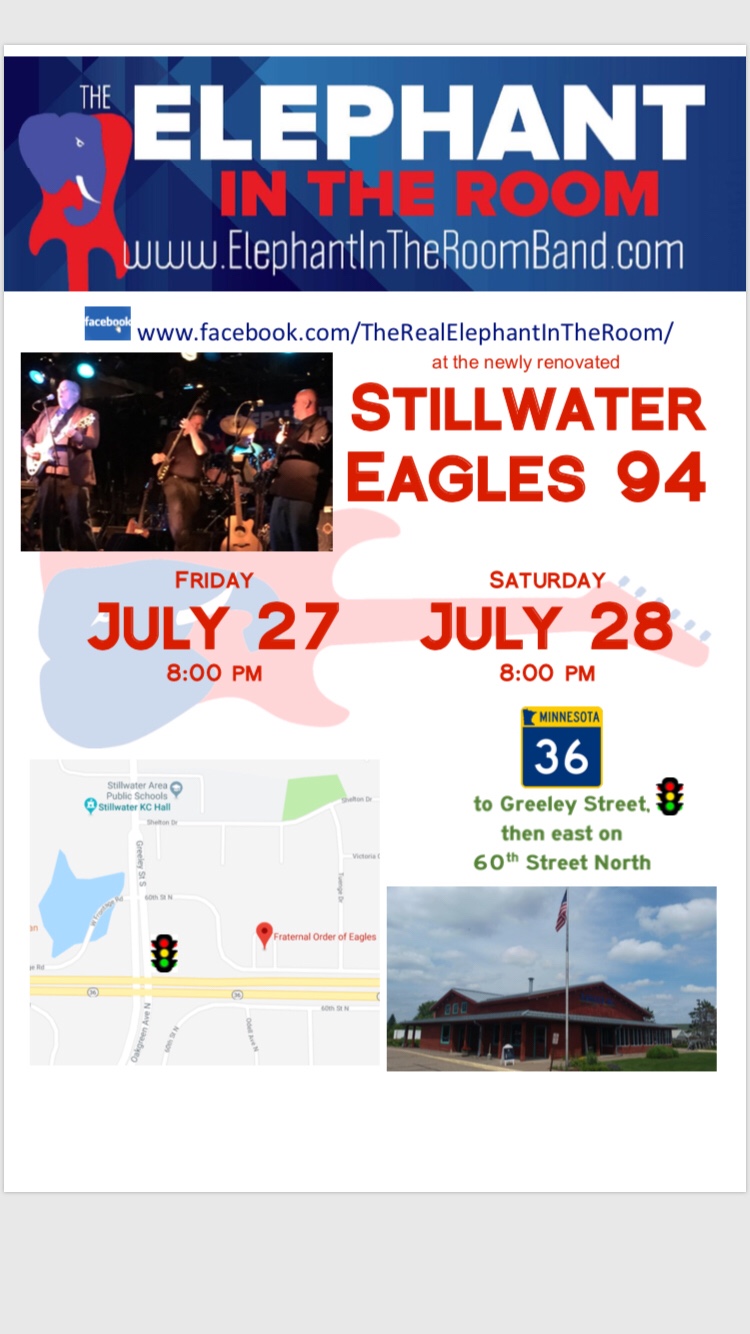
It’s the former Famous Dave’s.
We’ll be on from 8 to Midnight both nights.
Stop on out!
My band “Elephant In The Room” will playing Friday and Saturday at the Eagles in Stillwater
It’s the former Famous Dave’s.
We’ll be on from 8 to Midnight both nights.
Stop on out!
Johnny Rotten – lead singer of the Sex Pistols – joins the Velvet Underground’s Mo Tucker among punk icons supporting Trump:
“What I dislike is the left-wing media in America are trying to smear the bloke as a racist, and that’s completely not true,” the 61-year-old said. “There’s many, many problems with him as a human being, but he’s not that, and there just might be a chance something good will come out of that situation, because he terrifies politicians.”
Mr. Lydon said Mr. Trump is like a “political Sex Pistol” whose purpose is to rattle the status quo. After co-host Piers Morgan described Mr. Trump as “the archetypal anti-establishment character,” Mr. Lydon added: “Dare I say, a possible friend.”
Back in the glory days of blogging, one of our sayings was “conservative is the new punk”. In our society, the way it is today, standing for a fairly timeless establishment against an utterly temporal one certainly qualifies
Prince’s Paisley Park has almost literally become a Prince museum – and it should, most likely; it’s a fascinating product of a fascinating guy.
But at least commercially, Flyte Tyme Studio (which became Runway Studio after Jimmy Jam and Terry Lewis moved to LA fifteen years ago) may actually have been the Twin Cities’ biggest musical export.
And it‘s closing down in October, to make room for the Twin Cities’ current biggest import, “affordable housing”:
“It’s bittersweet because this was a dream for us to purchase part of music history of not only Minneapolis, but the world,” said Richard McCalley, the owner of Runway Studios.For 15 years, the building was the base for Jam and Lewis, where they produced songs for everyone from Janet Jackson to Mariah Carey to the Sounds of Blackness.
Janet and her brother Michael Jackson recorded their duet “Scream” inside these walls and it’s where Janet gave her iconic shout out to Minneapolis in her hit “Escapade.”
It’s just one more bit of the Twin Cities I moved to in 1985 slowly fading away.
The Strib’s Jon Bream interviews Bruce Springsteen on his ongoing Broadway performance.
During which nobody ruled out the thought of taking the whole thing out on the road.
Time to start warming up the credit card…
I don’t say this nearly enough – indeed, I may never have said it – but Scott Johnson may be the most overlooked music critic in town.
As we see in his review of Shawn Colviln’s four-night stay at the Dakota.
Speaking of which: I see the Dakota starts booking acts about six months out. That means I’ve got about three months before I need to jump on tickets for the next Southside Johnny and the Asbury Jukes show at the Dakota, which seems to have become a March tradition at the Minneapolis stop.
I saw Southside Johnny and the Asbury Jukes at the Dakota last night
First things first – the Dakota is a great place for an evening out. They make a mean old fashioned.

A Dakota Old-Fashioned. I drink them so you don’t have to. Although you might want to anyway,
And just to make sure quality of the first one wasn’t a fluke, I had two more. All of ’em checked out.
The food is pretty righteous, too – although oddly enough, the french fries that came with the outstanding House Burger were cold and not very tasty.
Can’t win ’em all, I guess.
Anyway – if you’ve been reading this space for a while, you’ve familiar with Southside Johnny and the Asbury Jukes. They hit their commercial peak in 1978 with the album Hearts of Stone – sometimes called “the best album Springsteen never recorded”, which is a bit of an overstatement; Springsteen wrote half of it (and a great half it was; I reviewed the album ten years ago in this space).
The Jukes have been together since the early seventies – although “together” is kind of relative, since over a hundred musicians have been members of the Jukes at one point or another, including Miami Steve Van Zandt, who produced their first two albums and only left to join the E Street Band in 1975.

The Jukes raving it up during the opening song, “Until the Good is Gone”.
Even in their heyday, of course, the Jukes were something of a retro anachronism – a band specializing in horn-driven Stax/Volt soul during the height, respectively, of the singer-songwriter era, Disco, punk, New Wave, synth pop, heartland rock, hair metal, new-jack hip-hop (which dominated the charts when the Jukes had their solitary Top-40 single in 1991, thirteen years after their commercial heyday, with “It’s Been a Long Time”, a musical favor called in with “Southside” Johnny Lyon’s pals, Springsteen, Van Zandt and Jon Bon Jovi) and on and on; by the time they grazed the top forty, they were a borderline nostalgia act. Not only is Lyon the only member left from their seventies glory days, he’s the only member left from twenty years ago.

“Make yourself at home”. Keyboard player Jeff Kazee and a very comfortable fan in the Dakota’s, er, intimate setting.
But don’t let that fool you. They do a fantastic show. Lyon, 69, has always been one of rock and roll’s better lead singers, and while his voice has an extra dollop of gravel after fifty years of leading bands, he hasn’t lost a note (of power, anyway; he joked about his range “I’m a little like Tom Waits these days”.
The setlist was thick with old favorites, with a generous helping of R&B museum pieces delivered with a galloping, sloppy affection, and a few of the band’s newer songs thrown in for good measure.
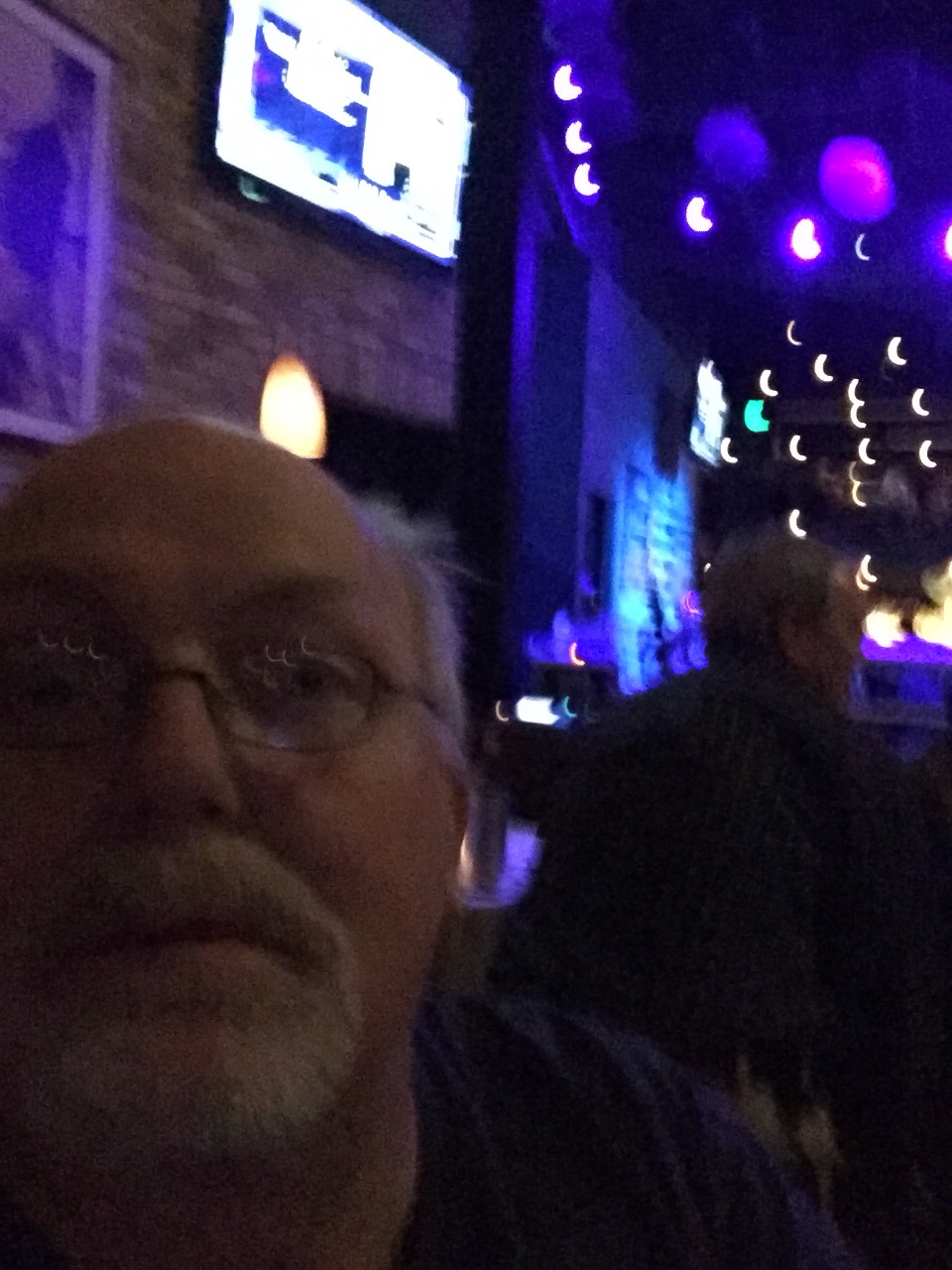
I don’t wanna go home.
The Jukes have been making the Dakota an annual stop – they’ve appeared there the last two years in March. I bought my tickets for this show in September; I may do it earlier next year.

A friend of mine noted on Facebook “When I hear the Asbury Jukes, I expect to hear the scratch on the vinyl, and an ID for WMMS radio (the Cleveland station that was the greatest rock and roll station ever – the station that broke almost every band that was worth breaking in the seventies). It’s a great description.
Gibson – one of America’s iconic guitar makers – is spiraling toward a massive restructuring:
Less than six months out from those crucial deadlines, the prospects for an orderly refinancing — Gibson has hired investment bank Jefferies to help with that — look slim, observers say. And the alternative scenarios look likely to sideline longtime owner and CEO Henry Juszkiewicz.
“At the end of the day, someone will take control of this company — be it the debtors or the bondholders,” Debtwire reporter Reshmi Basu told the Post this week. “This has been a long time coming.”
The culprit would seem to be corporate overextension – going into debt to buy subsidiaries like Baldwin Piano, and an assortment of home and pro audio marques – rather than the guitar business itself, which is still a good home base:
Gibson needs to report by next week its final numbers for its fiscal third quarter to stakeholders. One thing bond owners will be watching for is an improvement in the company’s electronics business, which has been built up in the past few years via debt-fueled acquisitions but has seen sales slump of late.
Still, even a solid turnaround on that front won’t be enough for Juszkiewicz to avoid difficult conversations.
“Some type of restructuring will be necessary,” Cassidy said. “The core business is a very stable business, and a sustainable one. But you have a balance sheet problem and an operational problem.”
If this results in a fire sale of Les Paul Standards, on the other hand, that could improve my fundamentals…
Pat DiNizio of the Smitherens is dead at 66.
“The who?”
Siddown, kid.
The Smithereens, from Carteret, NJ, need no introduction to anyone who was listening to the radio in the mid-eighties. Crisp, taut melodic power-pop with just enough garage to make it fun and just enough polish to make it memorable,
And against the stereotype backdrop of eighties music – glossy stylied synth-pop, slick hair metal, and of course the golden age of the Big Arena Rock Anthem, it was defiantly retro, not as a stylistic statement, but for the sheer love of the sound.
“Blood and Roses” was first:
“Only a Memory” was probably my favorite:
“A Girl Like You” was, if memory serves, their biggest hit:
But I’ve learned the hard way; never ask if it could get worse.
These days, a lot of the “classic rock” bands that were the stuff we all sang along with at parties in the seventies and eighties – Styx, Journey, REO Speedwagon, Def Leppart, Poison, Motley Crue, Boston, Foreigner, Rush, Head East and the like – are playing the State Fair circuit. They haven’t put out albums – or at least serious albums – in years, maybe decades. There’d be no real point to it; do you want to hear anything Boston did after “Don’t Look Back?”. That Foreigner did after “Jukebox Hero?” They are playing the nostalgia circuit, slopping the trough with the stuff their fans want to hear.
Now, that can never happen to the first-generation punk rock crowd. Because we were iconoclasts wouldn’t never, ever..ever…
Oh, who am I kidding.
If the Sex Pistols ever play the Minnesota State Fair, it’ll sound – and look – something like this:
And I’ll probably buy a ticket.
After about 32 years of trying to write music, a year of recording stuff, and a few months of frantic planning, it’s here: the debut (and who knows, likely final) album by my band, The Supreme Soviet of Love.
See Red goes onsale today at your favorite music online music retailer:
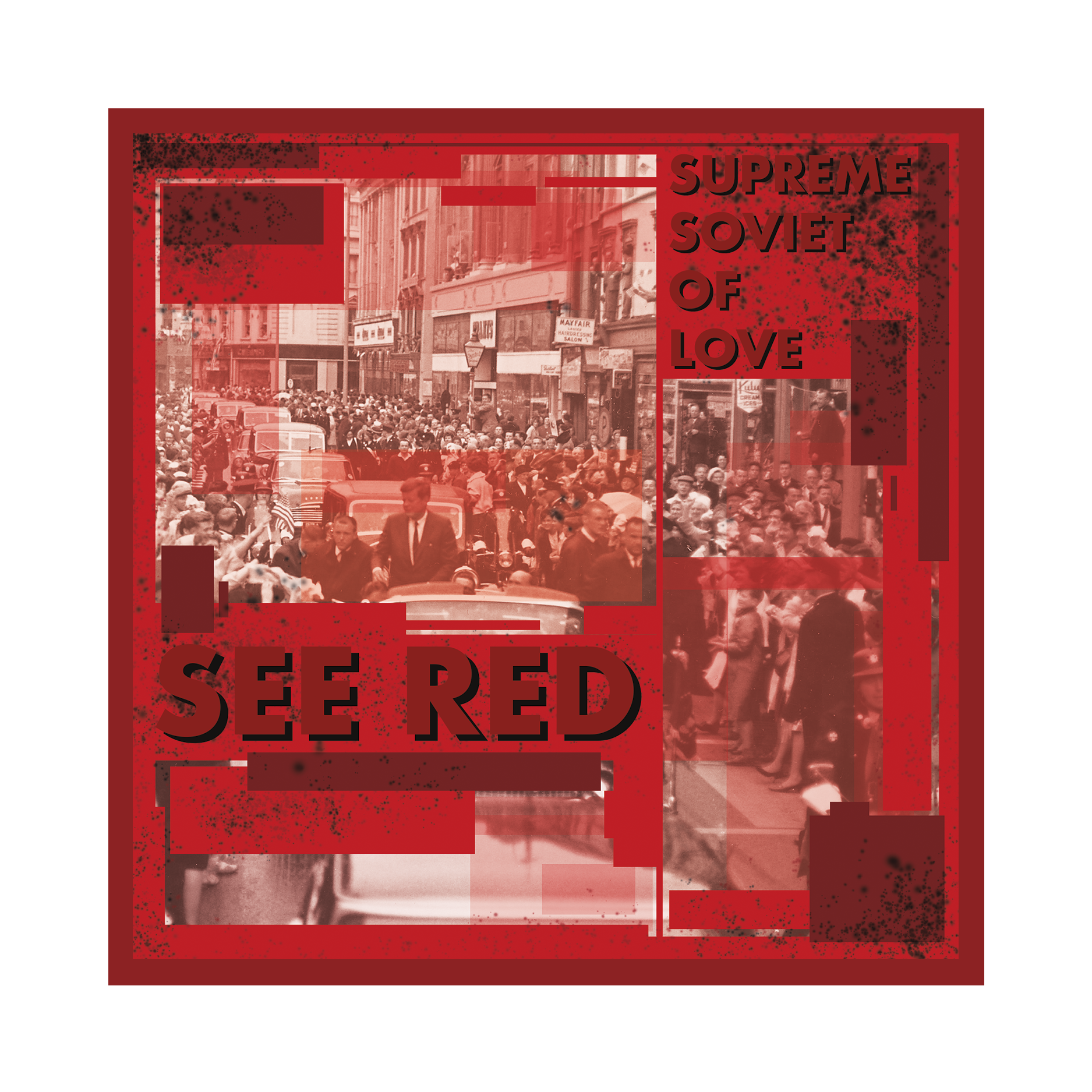
The album includes a few songs that date back to the eighties – “Fourth of July”, “Chicago” and “Great Northern Avenue” are songs I used to play with bands back at the Seventh Street Entry way back when.
Others – “The Wonders Each New Day Brings”, “Almost Monday” and “Snake”, among others – are things I wrote in the past year, largely to prove to myself that the whole thing wasn’t just a nostalgia exercise.
And a couple others – “Shotgun”, “The Ugly LIghts” – split the difference; they’re lyrical reboots of ideas that’ve been knocking around my head for years, sometimes decades.
Anyway – the album is on sales as of today:
Coming soon (like, probably today) on:
And hey – it’s priced to move!
And I’d be remiss if I didn’t remind y’all one last time:
Tomorrow (Saturday) Night: Elephant in the Room (rock and roll covers, ’50s-’90s) at the Sundance in Maple Grove
8-12PM. No cover.
Sunday Night: Album Release Party; The Supreme Soviet of Love at O‘Gara’s in Saint Paul
5-9PM: $5 cover.
Hope to see you there!
Waaaay back last summer, when I planned to release a Supreme Soviet of Love album, I picked a date: November 12. A Sunday night. Few conflicts, start and finish times early enough to get everyone home for the evenings news – perfect!
My other band, “Elephant in the Room”, after taking taking a few months off to learn new material and change lineup, on the other hand, spent most of the year looking for a gig.
Any gig.
So between scheduleing a Supreme Soviet of Love gig for November 12 way back in July, and today, what happened?
Of course Elephant in the Room landed a gig for November 11.
So talk about this weekend!.
Saturday, November 11 – the Sundance in Maple Grove
Elephant in the Room will be playing at the Sundance in Maple Grove from 8 to midnight.

EITR does classic rock covers from the 1950s through the 1990s – a grab bag of Elvis, the Kinks, Ian Hunter, the Cars, Bad Company, the Stones, the Who, Jimi Hendrix, the Eagles, Steve Miller, Tom Petty, John Mellencamp, Johnny Cash…
…well, pretty much anything that grabs you from that entire forty year period.
And the Sundance – which I just visited for the first time last weekend – is a nice place; bowling, golf (probably not much of that ’til spring), good pizza, decent beer selection, “Steak Night” on Saturdays ’til 8PM (just $10!), and, of course, live entertainment. That’d be us, of course. No cover that I”m aware of, which makes it even nicer.
It feels like it’s way out there – but it’s actually super easy to get to:
It should be a fun night and a fun gig.
Hope you can make it!
Sunday, November 12 – O’Gara’s in Saint Paul
This gets complicated, so stick with me, here:
“The Supreme Soviet of Love” will be having the album release party for its first (and wjho knows, maybe only) album, See Red this coming Sunday at O’Gara’s.
See Red includes a bunch of songs – a couple of them going back to the 1980s (we’ve encountered some of them here), and a whole lot more that I wrote in the past year just to prove to myself that the whole thing wasn’t a nostalgia exercise.
Who knows – it may have been both. I don’t know. And I don’t care!
The Supreme Soviet of Love will go onstage at 8PM, and come hell or high water we’ll be out of there by 9PM; you’ll be home in plenty of time for the 10PM evening news, or the 10PM rerun of Walking Dead if that’s what you prefer.
There’s a $5 cover – 100% of which goes to pay the rest of the band. Me? I’m hoping to sell CDs (and they’ll be on sale there, as well as available for download on iTunes, Amazon or wherever you like to get your music from.
And by the way, the opening act, going on stage at 6:30ish, will be…
…Elephant in the Room. Yep. I’ll be opening for myself. That’s one way to save money!
I’ll be hanging out after loadout until they kick me out of there, for anyone who wants to talk politics, music, beer, food, or whatever you got.
So I hope, in an ideal world, you can make both shows; the Sundance could become a regular gig if we draw a lot of people, and of course the album release party has been on my bucket list since Ronald Reagan was president.
Either one would be great, though!
As I noted last March, I’ve been playing guitar for 40 years.
I moved to the Twin Cities 32 years ago, largely to try to be a musician.
And since either or both of those events, I’ve been dreaming about making this announcement:
My first single [1], “The Wonders Each New Day Brings”, is out today. It’s on most of your major music vendors:
(It’s also on Pandora, Spotify and any number of other music services)
The album See Red is also available for pre-order; it will be released 11/10.
[1] OK, it’s technically a “Teaser Track”, not a single. I don’t care.
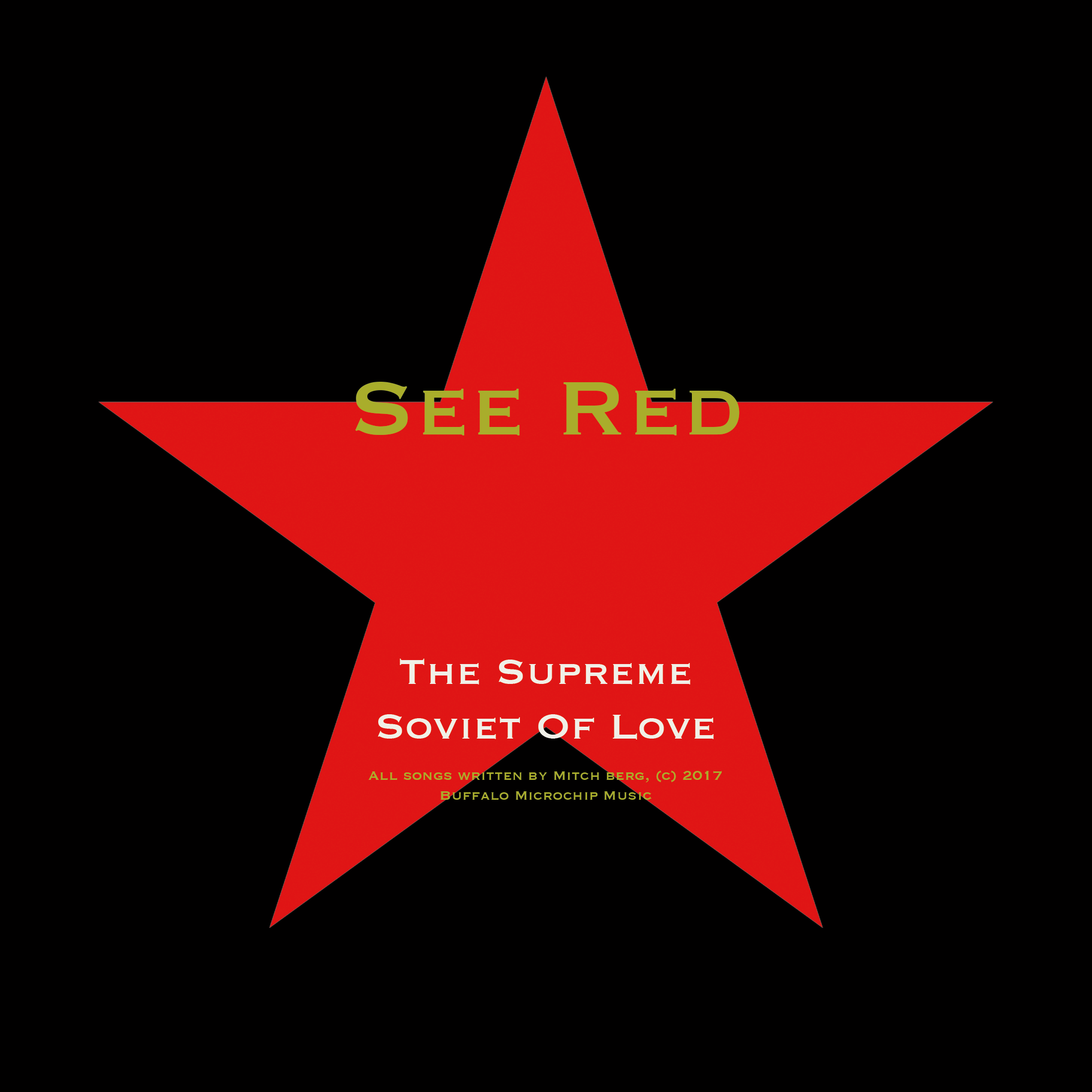
So the Supreme Soviet of Love’s first album, See Red, is off to the printers. My son Zam – who’s in school for graphic design – did the front cover art:
So I’m committed now. The album goes on sale on November 10 (I hope), on both CD and digital download; with a little luck the “teaser” (they used to be called “Singles”), currently a song called “The Wonders Each New Day Brings”, should come out a week from today, if all goes well.
So – hope you can make it to the Release Party for “See Red”, November 12 at O’Gara’s in Saint Paul!
I ‘m shocked and a little depressed to see that Caleb Palmiter died over the summer.
“Caleb who?”
Caleb Palmiter has been in a “who’s who” of seminal Twin Cities bands-that-made-it-regionally-big-but-never-broke-out; a founder of the Jayhawks, Bash & Pop, as well as stints in the Mighty Mofos and the Magnolias.
I remember him best for a couple of bands well before that; The Law and A Single Love, both of which heavily featured his quirky, claw-hammer finger-style guitar style that was too articulate to be Doc Watson but was simpler and less ornate than the obvious comparisons, Richard Thompson and Mark Knopfler. Whatever you want to call it – I’d catch every gig I could, entranced by his mesmerising guitar style.
Here’s a sample: he was always this good:
He died of heart failure, says the Strib. Decades of booze and drugs. Same old same old.
And now I feel a lot older.
Boy, is the weekend of November 10-12 going to be busy.
First – one of my bands, “Elephant in the Room”, is going to be playing at the Sundance in Maple Grove:
If you’re in the Northwest Suburbs that night, I hope you can stop by!
And then the next night, November 12, my other band, the Supreme Soviet of Love is having the release party for our first album, “See Red”, at O’Gara’s:
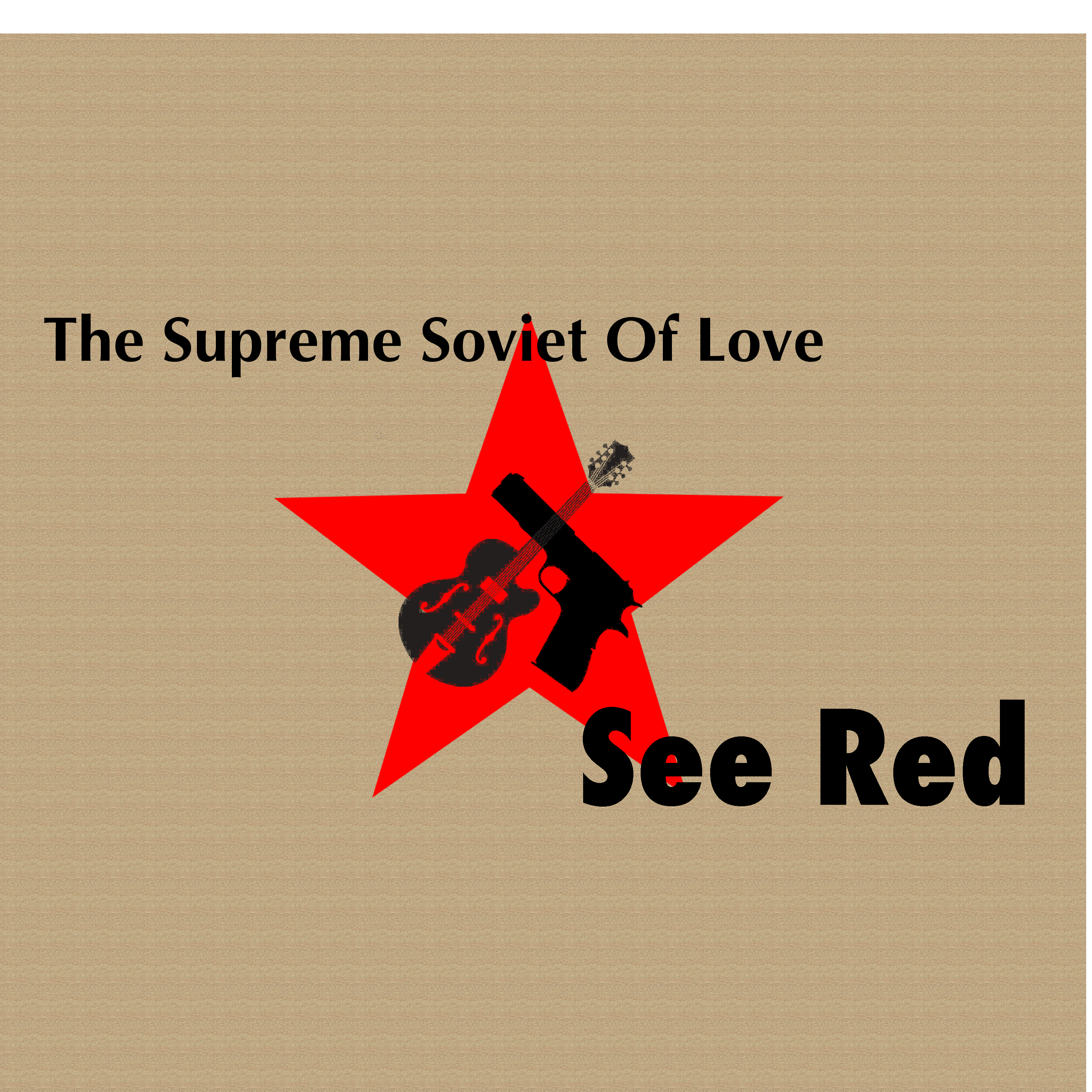
Doors open at 5PM, and the Supreme Soviet of Love goes on at 8PM. Come on down, have a beer, enjoy a few tunes, hang out after for the closest thing to a MOB party I’ve been able to put together in a while!
Maybe I’ll print tour t-shirts…
Variety does a two-part cover story on Bruce Springsteen. And it’s worth a read, if you’re an uberfan.
And I guess I am.
Others are not – and among this blog’s audience, that’s in large part due to Springsteen’s limo-left politics. I’ve always figured I care as much about musicians’ politics as I do about politicians’ iTunes playlists; I’ve also noted that if I limited my music by politics, I’d be listening to nothing but country-western and Ted Nugent.
But on the subject of politics:
I’m ambivalent about … sort of getting on a soapbox. I still believe people fundamentally come to music to be entertained — yes, to address their daily concerns, and yes, also to address political topics, I believe music can do that well. But I still believe fundamentally it’s an affair of the heart. People want you to go deeper than politics, they want you to reach inside to their most personal selves and their deepest struggles with their daily lives and reach that place; that’s the place I’m always trying to reach. I’d never make a record that’s just polemical, I wouldn’t release it if I did. To me, that’s just an abuse of your audience’s good graces. But if I’m moved, I’ll write, say, something like “American Skin” [inspired by the 1999 shooting death of Amadou Diallo by New York City Police officers — who were later acquitted]. That just rolled very naturally for me, and that’s as good a topical song as I’ve ever written. And when it comes up, I write ’em. If I felt that strongly, I’d do it now. But I watch myself, because I think you can weigh upon your audience’s indulgence in the wrong way.
Someone tell Katy Perry. mu
Anyway – worth a read, if you’re a fan.
When I was a kid, the cosmology of the musical world was Pete Townsend, Joe Strummer, Bruce Springsteen, Ray Davies, Tom Petty (Bono and the Edge joined when I was in college)…
…with everyone else trailing far behind.
Strummer passed 15 long years ago; Springsteen is alive and kicking, but it’s not the same without The Big Man and the Phantom.
But now Tom Petty is dead at 66.
When I heard that he’d been found in his Malibu home unresponsive, with a cardiac arrest mere days after the end of what was reputed to be the last Heartbreakers tour, I couldn’t help but think of Charles Schultz, the “Peanuts” comic artist who passed away mere hours after the last panel of his seminal strip ran in papers around the country; their life’s artistic work over, they retired for real, for good.
I wrote about Tom Petty years ago; my abrupt conversion from doubter to fan 38 years ago next month. I was watching Saturday Night Live, looking to mock and scoff at the singer I’d heard about – for reasons I can’t begin to remember four decades later. Buck Henry introduced Petty; by the time they got three counts into “Refugee”, I had reconsidered my skepticism, and become a fan
(NBC blocked access to that original SNL video years ago; someone needs to die in a grease fire. This one is close):
. The next morning, after sunday school, I skipped church and ran to the drug store to pick up Damn the Torpedoes; me andMike Aylmer and Matt Anderson and Keri Kleingartner listened to it on a record player in one of the classrooms. And that night, I sat down with my guitar and started learning every single song, every lick Mike Campbell played; every flourish Benmonth Tench played on the organ; I didn’t so much listen to it as I absorbed it.
Because when you were a little too tall and coulda used a few pounds, and were hardly renowned, it was revelation to know that even the losers – tramps like us – could get lucky sometimes:
It was like a musical flash-bang grenade went off in my brain, blowing it open to a phalanx of new influences: the Byrds, Del Shannon, the whole canon of post-Beatles American rock and roll – it was all there.
Indeed, given that Petty, like his contemporaries Bruce Springsteen and Bob Seger was such a traditionalist, it’s hard to remember sometimes what a radical departure from the 1970s’ mainstream he was. Music radio lumped him in with the New Wave (as they did with many acts and artists that didn’t fit neatly into 1970s’ radio formats, from Dire Straits to AC/DC to The Police); in a half-decade of American pop music dominated by disco, sixties-holdovers from the “singer/songwriter” genre like James Taylor and Jackson Browne, arena acts like Styx and REO Speedwagon, and top-40 machines like Fleetwood Mac, Linda Ronstadt and the Eagles, the idea of a singer doing perfectly crafted homage to the Byrds, Stax/Volt (Duck Dunn sits in on bass on Damn the Torpedoes’ “You Tell Me”) and all that was great about early-sixties American rock and roll, and turning in into something vital, funny, crisp, fierce, was kind of radical.
It sure felt radical at the time.
His cardiac arrest yesterday was Petty’s worst medical problem, obviously – but it wasn’t his first medical issue, as he relates in this stunning 1985 version of “The Waiting”:
And as the years unwound, he had the same personal issues a lot of us fans had when we grew up; the girl who Petty told not to do him like that, did him like that in 1999, leading to one of his best albums (and the one from which he never played anything live), Echo, full of world-weary anthems about profound loss:
But maybe my favorite thing Petty did? He wore that Dixie chip on his shoulder with pride – and wrote one of the best songs every about that chip:
And that – the idea of putting the chip on my own shoulder out there in the form of music, the one art form I ever failed to completely fail at – led to one of my life’s great adventures, writing music and playing it for people, an adventure that’s still going on today.
If you told me to take a Tom Petty song to a desert island, it’d be…well, “Even the Losers”. But I’d sneak “Southern Accents” along under the table anyway.
UPDATE: Mr. D adds his own musical obit.
UPDATE 2: Tor Sorenson, who plays bass in “The Supreme Soviet of Love” and “Elephant in the Room“, also has a tribute.
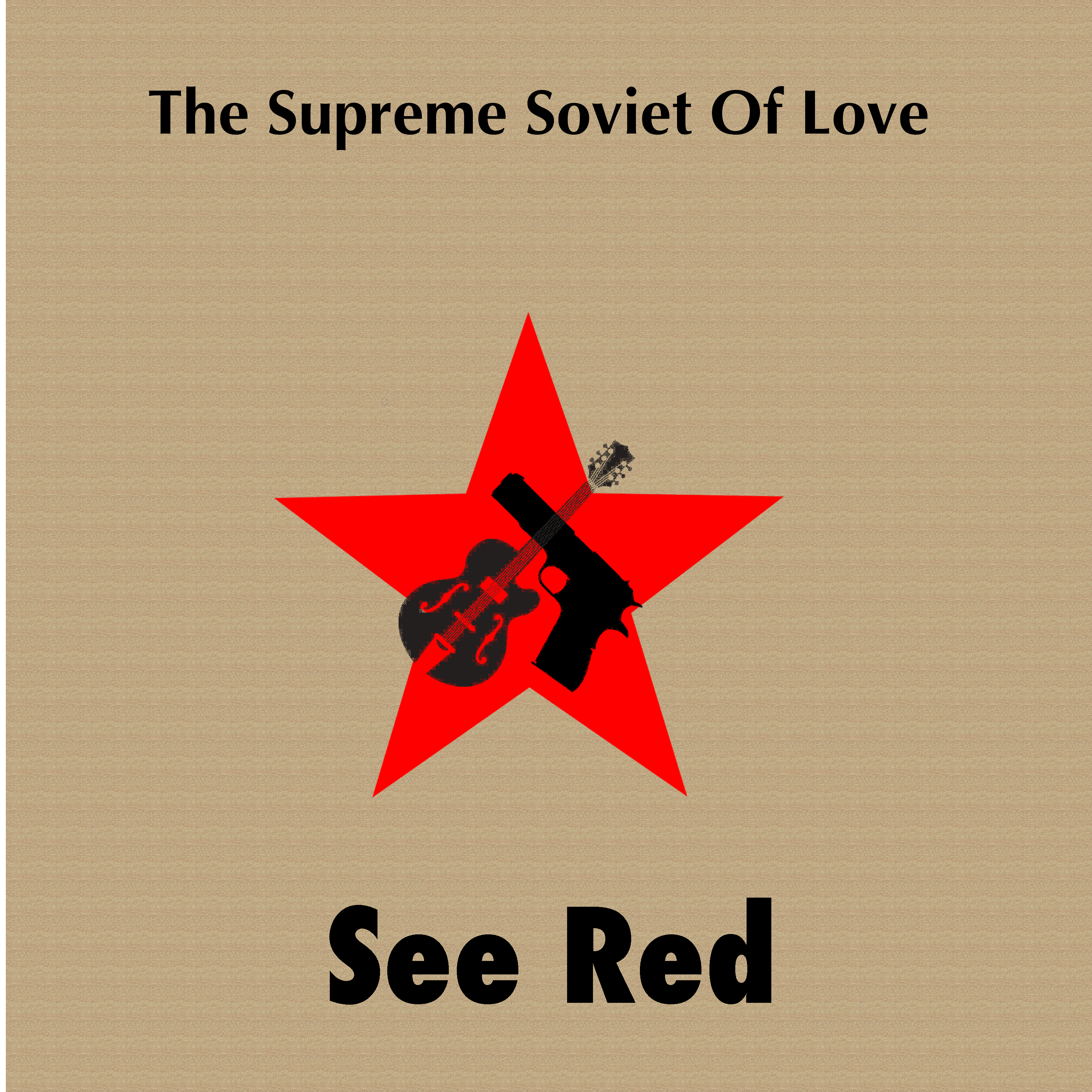
It’s the working cover…
Looking for an early Sunday night out? Block out the evening of November 12 at O’Gara’s in Saint Paul for my band, “The Supreme Soviet Of Love“, and the album release party (and only live date) for our first (and maybe only) album, See Red.
Doors open at 5PM. The opening act (“Elephant in the Room”) opens the show with a set of covers from the ’60s through the ’90s. The SSOLs set begins at 8PM sharp.
Need a sample? Here you go
Anyway – I’ll post the EventBrite later this month.
I’m not quite gonna call it “The MOB Winter Party” – but if any Mobsters wanna show up for a drink or two after the gig (and before teardown), I’m totally there.
So it was 20 years ago today that “Mmm-Bop” by “Hanson” reached #1 on the Billboard Hot 100.
You remember it:
I was married and had three kids to take care of at the time, so I didn’t have much time to be the music snob I’d been ten years earlier. I thought it was bubblegum – but bubblegum with enough of a groove that I couldn’t not like it, really.
And apparently I”m not the only one.
Because the Hanson brothers are doing a 25th anniversary show.
At the First Avenue.
And it’s sold out.
Why is it so hard to find old Bob Seger albums?
I mean, anything from before Night Moves?
It‘s a long story, and an interesting one if you lurk about the edges of music like I do.
Steve Van Zandt – or “Miami Steve”, “Silvio Dante”, or “Little Steven”, depending on the era where you first ran into him – has had a peripatetic career; from a freelance sideman and producer, to Springsteen’s long-time guitar player, to leader of several incarnations of his own band, to small-screen consigliere, to one of America’s better disc jockeys, to Netflix’s first binge material, he’s been all over the place.
Little Steven’s Underground Garage. I know it’s only a guy playing underground rock and roll, but I like it.
Along the way he hed a solo music career that spanned five albums – the first of which, Men WItbout Women, one of the great rock and roll records of all time, from 35 years ago. Featuring a band of “white soul” greats – Felix Cavaliere, Dino Danelli, the Miami Horns, and various menbers of the Jersey Shore musical mafia – the record was drenched with so much raw heart and energy the needle barely stayed in the groove.
It was one of the great records of the eighties – and was followed up by an ever-drearier series of collections of garage music and worldbeat which were fairly forgettable, and featured an ever-more-strident politics that seemed to dumb down the actual music.
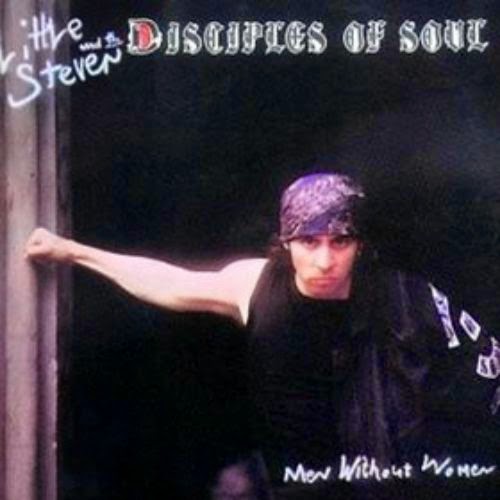
Flash in the pan? Or just 35 years early?
Well, we’re done with that.
“Soulfire” boasts a righteous blend of drums, back-up vocals and horns that pulse with Little Steven’s nimble guitar playing. The rocker unleashes an array of six-string tricks, from a steady disco-tinged vamp to an arena-sized solo, while his mighty vocal performance reveals tinges of Bruce Springsteen’s bombastic howl and Bob Dylan’s weary croon.
“I wrote it several years ago with one of the Breakers, a Danish band on my label Wicked Cool,” Van Zandt tells Rolling Stone of “Soulfire.” “And although this is my first album ever that is not overtly political, the lyric happens to be quite relevant. The song felt like the obvious centerpiece of an album that is conceived to not only reintroduce myself as an artist, but also serve as a summary of a lifetime of work. It’s the spiritual center philosophically on an album that contains many of my musical roots displayed for the first time like blues, jazz, and doo-wop. That combination ended up being a very accurate representation of where I’m coming from and who I am today.”
Yadda yadda yadda. Just book a damn gig in the Twin Cities already. And then shut up and take my money.
A regular reader writes:
Turns out it’s not just older working people who want earlier music shows. Though I do think it is ok to have late bar hours, but the bands can start and end earlier.
It links to a CBC bit suggesting that maybe, just maybe, starting music earlier in the evening will help buck up the attendance at live music shows:
Not the same market, perhaps, but I’ve noticed that one of my bands (website here, for your band-booking pleasure) draws acceptable enough audiences when we start playing at 7 or 9 – but starting at 9:30 is pure death.
That might have something to do with the fact that the only young people at our show are the children of some of our audience members.
Anyway – more on the subject to come.
Ten years or so ago, during the heyday of the political blog, some of us – conservatives with fond memories of the punk era in music – quipped “conservatism is the new punk”.
In places like Minneapolis and Saint Paul, it’s still pretty true; conservatives and conservatism are the counterculture, the disruption, the sound of the gleeful underdog that makes the establishment froth with rage.
If you remember my “Twenty Years Ago Today” series from way back when, you may recall that one of the things that drew me to the Twin Cities, 32 years ago this fall, was the music scene. While I had not the foggiest idea at age 22 what I wanted to do for a career (and happened back into radio by blind luck), I did know I wanted to be a musician. And so the fact that Minneapolis had a thriving music scene in 1985 played as much into my decision of where to move after college as anything.
I’d been writing music like a madman ever since I moved to the Cities; between December of 1985 and the following Christmas, I probably wrote 60-70 songs, and probably cut demos of 30-40 of them on my Fostex X-15 four-track cassette deck.

A Fostex X-15 tape deck. With it, a cheap drum machine , and a bass and my guitars, I recorded dozens of fairly elaborate demo tapes for the music I was writing like a madman at the time.
Eventually I worked up the nerve to take out an ad in the City Pages, and start an actual band.
That November, I found three guys. That December – 1986 – we had our debut gig, and the old “McReady’s Pub” in downtown Minneapolis (where the Gateway parking ramp now stands).
And thirty years ago today, the gig that, ever so briefly, made me think like I’d made the right call, and might just be on my way.
The band was “Tenant’s Union” – and we’d gotten booked to play “New Band Night” at the Seventh Street Entry.
The Tuesday night gig was normally a dead end for bands; you got $20, and you played in the reverse order that the band showed up in. We got there first, so we were the last band up -which ordinariy meant you just played for the dumbest drunks.
But this wasn’t just any night.
For starters, it was the day U2’s The Joshua Tree came out.

Which didn’t really bear on the gig, so much – it was completely unrelated. However, I’d picked it up on my way to work at KSTP that day, and had jacked my brain up into an expanded level of adrenaline-soaked frenzy listening to “Where The Streets Have No Names” and “In God’s Country” and “Bullet The Blue Sky” all day.
So I was pretty jazzed.
Second – and much more important?
It was Saint Patrick’s ‘Day.
Part of that meant that half the band – a couple of brothers from a large family of 100% Irish descent – were on an emotional tear.
And part of it meant that “Boiled in Lead”, the legendary Twin Cities traditional Irish band – would be playing the main room.

Now, Boiled In Lead was a great band. Indeed, they still are.
But I don’t care who you are, and I don’t care how Hibernian you fancy yourself or how much Guinness you drink or how much you say “ting” instead of “Thing” – people can only stand so much Bodhran drum and uilleann pipe music before they need a break.
And the only place to take that break that night was over to the Seventh Street Entry.
And so by the time we got on stage, the place was packed to its capacity.

High-budget stuff, huh? It’s our poster for our Saint Patrick’s Day 1987 gig at the Entry. From left to right, it’s Matt on bass, Corey on guitar, WIlly on drums, and me over on the right on guitar, harmonica and occasionally keyboards.
I have no idea what that “capacity” was. I’m sure the number has grown over the years; in my mind, there were a solid 200 people there that night.
It took me a bit, but I remembered the set list from that night:
And we were smokin’ hot. The sloppiness of our first two gigs had been replaced by a fearsome tightness and confidence…
…although we’d still not gotten over the nerves entirely. We played very fast that night. Between the speed, the tightness, and the fact that we were very loud, some thought we were a speed medal or thrash band; some people started moshing out on the floor.
This I didn’t expect.
It was a spectacular success. Musicians who saw us asked us to open for them. Other bars started booking us. People paid a little bit of attention.
It didn’t last – it rarely does.
The band soldiered on in one form or another until 1989 – and did a one-off gig under a different name in 1996, at the Turf Club. Then came marriage, kids, careers, adult life.
There’s never much point in dwelling on the past. But taking five to remember one of the highlights can’t be all bad.
Postscript: One of the songs – our big finale, as it happens. It’s a different band, here, but it’s basically the same song, all full of country-mouse chip on the shoulder and carpet-bombing “wall of sound” guitars that I put on that four-track cassette back in the summer of 1986.
And you might surmise there’s another musical project underway. And you’d be right.
More on that later.
It was a wet, cold, slushy March evening in Jamestown, ND. I was in the basement of the FIrst Presbyterian Church, at a church youth group meeting.
Notable fact about the group: one of the group’s leaders, a student at Jamestown College, would eventually have a son named Jared, who’d become an all-star defensive tackle for the Vikings. The guy who eventually became Jared Allen’s father was no slouch of an athlete himself; he was one of the very few people from that NAIA Division III school ever to get a walk-on tryout with an NFL team – I think it was the Rams, and I think he got as close to making the cut as anyone from an NAIA III school ever did.
But the story’s not about him or his future son.
The kids in the group were what passed for my “best friends” at that socially awkward time of my life, probably, sort of. Which isn’t to say that cliques didn’t find their way into the group. Immune to cliqueishness as I’d always been, some teenage angst was inevitable.
And for whatever reason, I had a nemesis at the youth group. Her name was Cindy. She didn’t like me, and the feeling was mutual.
And I watched, teeth clenched, as Cindy uncased a guitar and started strumming out a song of some kind or another.
I will play guitar. And I will play it better than Cindy, I resolved to myself.
I went home that night, and dug through the closet in the room I shared with my little brother. There, I muttered. The guitar.
It was a guitar that someone had left in my dad’s classroom back in the mid-sixties. It’d sat in Dad’s locker, forgotten, for several years, before he brought it home – this on the day of the first moon landing, as I (possibly falsely) remember.
And after a little dilatory plinking, it spent the next eight years doing what most guitars do in the hands of little boys; it served as a machine gun, a fort for toy soldiers, an aircraft carrier for toy planes – pretty much everything but a guitar.
But those days had passed. I needed a guitar, and a guitar it would again be.
It’d take all my stingy, cheapskate resourcefulness to make that happen. The guitar had been a very cheap guitar even when brand new – a “May-Bell”, the kind of thing you got in the Sears catalog for $19,99 back in the sixties; it was apparently part of a long line of cheap instruments.

Not my guitar, but close.
Its years of abuse had left it the worse for wear; there was a crack in the back and another in the front; it had two remaining strings, and it was missing three tuning heads.
I wasn’t completely green at this; I had played cello since fourth grade, and had picked up a few tricks, and had a few contacts. I gathered my paper route savings and went to work.
And so on Monday, March 14, 1977, I walked into Midwest Music – a tiny little hole in the wall on main street in Jamestown. I bought a pack of strings, dug through an odds and ends box for some parts to assemble some one-of-a-kind tuning machines, and a little tube of wood glue to try to repair the cracks.
I also bought a copy of the Gene Leis “Nexus Method” guitar book – basically a chapter on how to hold the instrument, a chapter on how to read chord frames, and then 20 pages of photos of chords.

Gene Leis, who passed away in 1993, but whose advice -make your chords automatic – are words to live by If you can find a copy of Leis’ “Nexus” guitar method book, you could do a LOT worse.
It was a fortuitous choice; the book’s tag lines said “If you don’t know your chords you’ll never play enough guitar to be dangerous”, and I took it to heart. It was a brilliant maxim, and it served me well. And I had one huge benefit – four years on the cello had taught me out to keep time, what intervals and chords were, and how music fit together.
The maxim was good. Unfortunately, for all my cheapskate ingenuity, the MayBell was another story. While I did a serviceable job repairing it, it was pretty much a disaster of a guitar. It wouldn’t stay in tune (the wood glue didn’t really fix the cracks, and more importantly didn’t give the structure enough rigidity to stay in tune at all).
It was there that serendipity stepped in.
My dad had spent the previous year on sabbatical from his job at the high school, teaching in the education department at the college up on the hill. One of his students was a young woman who was a music and education major from rural northern Californnia, who had just dragged her fiance – who, in a fun example of the circularity that seems to plague my autobiographical stories in this blog, was the future father of Jared Allen (whom you met in the second paragraph above). They had broken up; Mr. Allen had a new girlfriend and a new best friend from the football team (a guy from Crystal, MN named Mick Burns, who is now a Presbyterian minister in Virginia) who asked him to come down and help with the youth group at the church…
…but I’m digressing. Jared Allen’s future father’s ex-fiance, Jenny, who’d become a bit of a friend of the family, noticed how gamely I was wrestling with the jury-rigged MayBell, and noted that she had a Yamaha classical guitar that she’d tried learning to play once upon a time, and didn’t have time for, and that I could borrow until she graduated from college.
And so I set to work with a vengeance and, armed with the knowledge of what a guitar sounded like when it could actually stay in tune, and 20 pages of chords to learn, I started learning music.
And ran quickly up on a reef of ignorance; I just didn’t know that much music, other than the classical stuff I played on my cello at school. My parents, God bless ’em, weren’t musicians, much – and when the radio was on around the house, it was usually tuned into CBW in Winnipeg, because it was the closest thing to NPR you could get in rural North Dakota at the time.
I had heard a few songs by one artist, though – John Denver. And so I grabbed a copy of the sheet music for his Greatest Hits album.
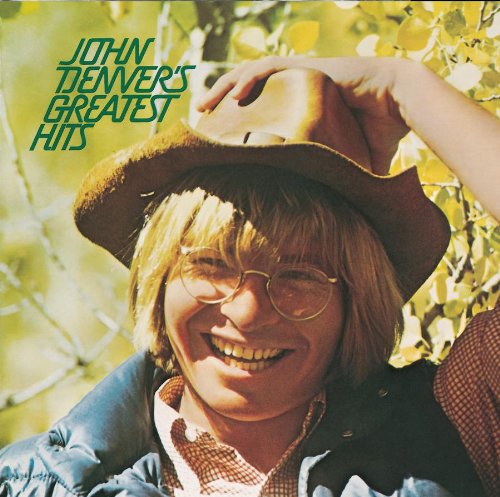
And for probably six months, I sat in my room most every night and woodshedded on that album. “Follow Me” and “Leaving on a Jet Plane” were the first songs I ever managed to play coherently – and from there, my musical world kept expanding; “Back Home Again” was where I had my “ah hah!” moment on how fourths and fifths play together, and how to do a rolling sixth (which you use in every Chuck Berry song, and thus most everything the Rolling Stones and Mike Campbell ever played). “Take Me Home, Country Roads” taught me how relative minors work – and you can’t play anything on Born to Run without relative minors! I got to “Sunshine On My Shoulders” – and discovered the perfect song for learning the basics of fingerpicking. The whole thing is a languid eighth-note pattern – like drumming your fingers on the table, once you learn your chords. And “Rocky Mountain High” is a great little workout on how chords fit together.
And so by the middle of that summer, I could play…a bunch of John Denver songs. It seemed like it took forever – and occasionally felt like it. My fingers did, occasionally, literally bleed. In retrospect, it was blazingly fast; anger was a great motivator!
But even then, I knew – knowing how to play John Denver wasn’t going to land me any babes. And so I started branching out.

I found a copy of the sheet music for “Sundown”, by Gordon Lightfoot, and learned how to play moving chords fluidly in a progression.
And right after that – in July of ’77 – while sitting and listening to the radio in my room, I heard Styx’s gloppy, pompous faux-art-rock classic “Come Sail Away”. It was inescapable back then, let’s be honest.
And as I played along with the big, climactic guitar part, I strummed a “C” – and then an “F”, and a “G”, and then back to the “F” – and it all clicked; that’s how the song went together. I learned it by follow a standard chord progression (1 to 4 to 5 – the progression you use for everything from “Louie Louie” to “Wild Thing” to “Twist and Shout” to “Born to Run”), and back, without needing to buy sheet music for it
And it was like the floodgates opened. By that fall, I would sit in the chair in the corner of the room I still shared with my brother, doing homework, with my guitar at my feet, and listen for any songs to cross the radio that I wanted to learn; I’d pick apart the chord progression, faster and faster, and pretty soon be playing along pretty fluently; by early winter, I knew most of the KFYR “Torrid Twenty” every week. I learned hundreds of songs – some that I still remember;
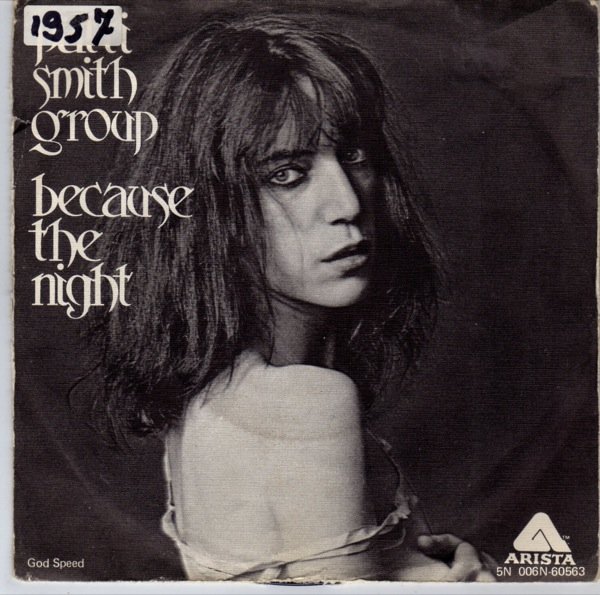
Why yes – learning this song DID make me edgy back then. And it’d be months, maybe a year, before I learned who “Bruce Springsteen was”.
“Hot Child in the City” by Nick Gilder, “Fooling Yourself” by Styx, “Logical Song” and “Give A Little BIt” by Supertramp, “Help Is On Its Way” by the LIttle River Band, “Three TImes a Lady” by the Commodores, “Miss You” by the Rolling Stones, “Baker Street” by Gerry Rafferty, “Two Out Of Three Ain’t Bad” by Meatloaf, “Dancing Queen” by Abba, “Dust in the Wind” by Kansas (fingerpicking and all), “Magnet and Steel” by Walter Egan, “Still the One” by Orleans, “Night Moves” and “Hollywood Nights” and “Mainstreet” and “Still The Same” by Bob Seger, “Don’t It Make Your Brown Eyes Blue” by Crystal Gayle, “Because the Night” by…Patti Smith (it’d be months before I learned who Bruce Springsteen was), “Running on Empty” by Jackson Browne, “Wild Fire” by Michael Murphy, “Werewolves of London” by Warren Zevon – and learned them so indelibly I can play all of them, note for note and word for word, today – even the one hit wonders (Nick Gilder? Really? Yes. Yes, I can).
And sometime in the next year, it led me to my next big project; learning how to be a lead guitar player. And after hours of trying to decipher how it was done, I had my first victory; the solo from “More than a Feeling”, by Boston.

If you were an adolescent in 1977 and this song doesn’t make your heart go “poing”, I’m not sure you were an adolescent in 1977.
And once that fell into place, the whole musical world opened up to me; by tenth grade, I was not just a greasy-haired dweeb. I was a guitar player. I had an identity, and it was damn fine.
And it started forty years ago this past Tuesday.
One thing that ended not long after that anniversary was my junior-high enmity with Cindy. We actually became friends through high school and then college. And around college graduation, I mentioned to her that she was the reason I started playing guitar in the first place.
“Huh”, she responded “I think I quit the guitar right after that”.
Anyway – I got hooked. About a year after I rebuilt the Maybell – just before Jenny graduated and needed her guitar back – I bought my first guitar, a Ventura acoustic that I still have (although it needs some TLC). Then, the summer after 9th grade, my first electric, a 1961 Fender Jazzmaster. I still play that one; God wiling, I’ll hand it down to my son, also a guitar player, someday.
And eight years later, it led me elsewhere.
More later today.


You are currently browsing the archives for the Music category.


