Nothing sets off an ad that says “this a car for a responsible parent who needs to haul a bunch of kids around safely” like…
…the “If I Should Fall From Grace With God” by The Pogues, a band led by Shane MacGowan, an alcoholic so prodigious he makes Keith Richards, Pete Townsend and Ozzy Osbourne look like Phyllis Schlafly.
Not that I don’t love hearing the Pogues on prime time TV, don’t get me wrong…
Among Springsteen addicts, it’s one of the great unanswered questions; if Bruce had not gotten into his lawsuit with Mike Appell – his first manager, the guy who got him his first audience with the legendary John Hammond at CBS record, and who went on to allegedly mismanage his career over his first two albums – what would the followup to “Born To Run” have sounded like?
NPR brings us the first look at and listen to The Promise – which is much more than an odds-and-sods collection of outtakes. It’s a reconstruction; what might Son Of Born To Run have been?
It was sometime in early November, 1980. It was my senior year of high school. I was visiting friends in Watson Hall at Jamestown College – which, in a few years, would be my own home for three years.
I was keenly aware of a bunch of things; that I was on the brink of having to go out and take on the big world, on the one hand. On the other, I had no idea what I was going to do. Ideas swirled through my head – college, the Army, moving somewhere else and joining a band and playing guitar for a few years, the usual stuff…
…that’s faded with the years, of course; “what am I going to do with my life?” has pretty much answered itself over the past few decades.
What happened next hasn’t faded a bit over thirty years, though.
I was walking down a hall on the second floor, heading toward the bathroom. The place smelled like a guys’ dorm – dirty laundry and disinfectant. There was a low din of voices and TVs and boomboxes.
And echoing down the hall on someone’s stereo through an open dorm door came a sound that stopped me in my tracks; a howling, mournful harmonica over a foreboding, minor-key acoustic guitar part. I turned toward the sound as the vocal started:
I come from down in the valley, where mister when you’re young,
they bring you up to do like your daddy done.
Me ‘n Mary, we met in high school, when she was just seventeen.
We drove on out of the valley, out to where the fields grow green…
We’d go down to the River, and into the river we’d dive,
oh, down to the River we’d ride…
“Valley? Doing “what your daddy done?”
In that way that adolescents find to link everything to their own situation, I found resonance. Jamestown was a valley! Everyone expected I was going to be a high school English teacher, like Dad!
I leaned up against the wall and listened some more:
Then I got Mary pregnant, and man, that was all she wrote
and for my nineteenth birthday I got a union card and a wedding coat.
We drove down to the courthouse, and the judge put it all to rest,
no wedding day smiles, no walk down the aisles, no flowers, no wedding dress.
That night we went down to the river,
and into the river we’d dive.
Oh down to the River we did drive.
This was…well, friends of mine, anyway.
I choked back my (believe it or not) crippling shyness and walked to the open door as the harmonica solo kicked in. “Er – ‘scuze me – sorry, but what’s this playing?”
“The new Springsteen!” said the guy (who in two years, it turned out, would be my next-door neighbor), hunched over a nursing textbook. “Great, ain’t it?”
He had no idea.
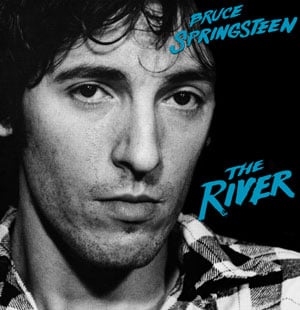
It was thirty years ago today that The River came out.
The last of what Springsteen fanatics call “The Holy Trinity” (along with Born to Run and Darkness On The Edge Of Town)
The lasting impression of The River for me, though? In some ways, it’s Bruce’s most satisfying album.
Greetings from Asbury Park and E Street Shuffle were both fun, funky, disjointed romps that swerved from Bleecker Street to the Jersey Shore, from Greasy Lake to Puerto Rico, all full of shadowy characters and inside jokes. Born to Run was a classic, of course – but in much the same way that the Beach Boys were classics, drenched in the culture of young lower-middle America; it raced at full throttle, but covered a small piece of turf. Darkness On The Edge Of Town, still and always my favorite Bruce record notwithstanding, is an album about finally growing up.
The River? It’s about being a grownup. It’s about ups and downs, joy and depression, faith and abandonment. It’s about pulling up your pants and moving on with your real life.
It’s a double-album – which, it occurs to me, means nothing today. Back in the seventies and eighties, when vinyl records were still king and were complex enough that their manufacture required the clout of a huge record company, complete with pressing factories and huge distribution operations, a single vinyl disc held about 30-40 minutes worth of music. The double album was the sign of huge commitment on the one hand, and huge motivation on the part of the artist.
And so it was with The River. Springsteen had grown over in the previous five years into an amazingly prolific songwriter. Steven Van Zandt told the story; when they recorded Born to Run, Springsteen had maybe one extra song written. By the time the legal wrangling with his previous management ended and he released Darkness on the Edge of Town three years later, he had dozens, including a couple of albums’ worth that were candidates for inclusion. He started giving music away; he gave Patty Smith his live staple “Because The Night”, recorded for Darkness but not included; it became her only Top Forty hit. Likewise “Fire” (Robert Gordon and the Pointer Sisters), “Hearts Of Stone” (Southside Johnny), “This Little Girl” (Gary “US” Bonds), and a slew of others.
And by 1980, when Springsteen had his legal, fiscal, artistic and personal houses in order for the next big step? He had hundreds of songs. It’d be more accurate to say he had hundreds and hundreds of pieces and clips and riffs and lines, which he’d combine and break apart and recombine with other riffs and lines and passages in various combinations, into songs where different lines would pop up over time in different songs. Listening to his four-CD box set “Tracks”, released in the late nineties, you can hear lines and passages in songs you’ve never heard, that popped up much later on other songs…
…and the sessions for The River (and for the next two albums, Nebraska and Born in the USA) were like tsunamis of music.
At any rate, torn between making an upbeat rocker about growing up and getting on with one’s life and a darker, harder “Son Of Darkness”, Bruce released both.
Disc one starts with the glorious, redemptive “The Ties That Bind”…:
…which is, truth be told, among my favorite Springsteen songs ever. Thirty years later, I’m not sure if I can even pin down why; “you walk cool, but darlin’ can you walk the line/to face the ties that bind/ you can’t break the ties that bind”; it’s a little bit of emotional tough love combined with the single most infectious chorus hook I had heard in my life to that point, and still one of the best.
There was also the joyous romp, “Two Hearts”…
…which has been a live, top-of-the-lineup staple at Bruce’s shows for most of the past thirty years,
Following closely, “Out In The Street” – the album’s homage to “Born To Run”…
…only for people who have to cut back on the “Suicide Machines” and keep their hands off other peoples’ engines because they’ve got to be at work in the morning.
And perhaps my favorite – at least at the moment – “Jackson Cage”, a dark-but-irresistably-danceable thrill ride about…well, growing up and watching doors starting to swing shut…
…albeit from a little bit of distance, yet.
Disc One was all about the hope and the joy – from the beach-bar singalong “Sherry Darling” to the gloriously cheery “I Wanna Marry You”, awash in faith in the whole boy meets girl thing.
It was on disk two that things start to unravel. “Fade Away” (my favorite back then, and the followup to “Hungry Heart”, which became Bruce’s first Top Forty hit single), a song that actually sparked my push to learn how to play the organ – was the flip side of “I Wanna Marry You”. The “boy meets girl” thing has by this point gone terribly awry:
Dave Marsh once described The River as an album full of upbeat songs about death, and down-beat, “downer” songs about hope and redemption. The bookends, of course, are “Cadillac Ranch” – a four on the floor barroom singalong raveup about mortality..:
And of course, the title cut…
…about shelving your dreams but holding on anyway. It resonates with me, thirty years later, like few pieces of music ever.
And for me, it all leads up to “The Price You Pay” – the song that ties all those themes together, and sends them off with a hopeful nudge (this version has an out-take verse that’s not on the album)…:
…that, truth be told, has stuck with me during the hard times as much as anything else Bruce has written:
Little girl down on the strand
With that pretty little baby in your hands
Do you remember the story of the promised land
How he crossed the desert sands
And could not enter the chosen land
On the banks of the river he stayed
To face the price you pay
Pretty dismal, really; everything Moses hoped for got yanked away at the last moment. Just like the guy in The River. Just like the lady in Jackson Cage.
And yet we soldier on:
So let the game start, you better run you little wild heart
You can run through all the nights and all the days
But just across the county line, a stranger passing through put up a sign
That counts the men fallen away to the price you pay,
and girl before the end of the day,
I’m gonna tear it down and throw it away
And that may be the great life lesson, here – or as close to one as a pop album ever gets. Life’ll kill ya. Wear a helmet and get out there.
The teenage years are huge, raw and dramatic. Hormones drive all that rawness to the surface and beyond, making (it comes as no surprise to parents with teenagers) everything – discipline, moralism, sex, food, music – immediate, dramatic and skin deep in way that’s both intensely powerful and utterly trite.
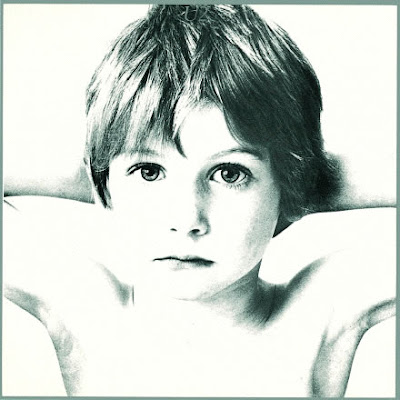
Boy by U2 was the perfect album to reflect that teenage reality. And it’s thirty years old today.
Boy introduced America to four 20-ish guys from Dublin – Adam Clayton, Larry Mullen, Dave “The Edge” Evans and Paul “Bono” Hewson – who seem improbably young today:
U2 in 1980 - Mullen, Bono, Edge, Clayton
They’d gotten together as teenagers (initially with Evans’ older brother Nik) in 1976 – and quickly discovered that they stank at trying to play covers, and started writing their own songs. After a year and a half of gigging around Dublin, the band won a contest sponsored by CBS records in 1978, and used the proceeds and exposure to CBS management to produce a three-song “extended play” record and a few singles that were largely heard only in Ireland and, with their first “big” single, “I Will Follow”, the UK.
“I Will Follow” is, of course, the album’s instantly recognizable, iconic anthem – and, really, the template for much of U2’s next ten years. It’s anthemic – you can’t not shout along. It’s ambiguous – is it about faith, or love, or politics, or…who can tell? (It’s actually about the death of Bono’s mother in 1974, but really, like all art, it’s about whatever the listener wants it to be about).
“I Will Follow” is just one of many cut from the same cloth: “The Electric Co” featured a Bono vocal that veered down the thin line between glorious and histrionic…:
…and “Out Of Control”, an infectious call-and-answer between Bono and Edge that set up three decades of one of the most distinctive lead/harmony pairings in the history of rock and roll.
So what was important about Boy? Other than being an album that gloriously captured all the joy, angst and brio of of being, well, boy?
Bono, the singer? The guy had pipes, all right – but his singing was often sloppy and undisciplined. He’d grow, by War in 1982, into one of rock’s most powerful singers – but on Boy, the promise of the future was liberally mixed with sloppiness on the one hand and unpolished histrionics on the other. Larry Mullen was a powerful, physical drummer – perhaps the band’s most conventially-capable musician in its early years, but not especially a standout.
Adam Clayton – reportedly the least proficient musican in the band when it had started? As U2 rose to prominence, stories circulated about how the band had built much of its stripped down, minimalist style around Clayton’s developing skill on the instrument. True or not, it shows in the arrangements on Boy; the bass lines really tie the songs together, powerful in their simplicity. My theory’s always been that the simplicity started out as lack of development – and evolved into style.
That would certainly explain The Edge. Also a newbie when the band started, Evans wasn’t, and has never been, a guitarist with raw pyrotechnic technique, along the lines of a Van Halen or a Randy Rhodes. He wasn’t one with a deep, developed style spanning genres, like Richard Thompson, Mark Knopfler or Nils Lofgren. And despite the first review in Rolling Stone, which compared his style with Neil Young in terms of unpolished ambiance, he wasn’t a raw, ragged improviser. What he is – or what he was starting to develop into, thirty years ago today – was a meticulous student of the tonal and harmonic possibilities of the guitar, its chordal structures, and the colorations of the guitar’s instrument/special effect/amplifier chain. Evans used the guitar sometimes as harmonic coloration (“Shadows and Tall Trees”, “An Cat Dubh”), sometimes as a borderline-percussion instruments (“I Will Follow”, “Electric Co”), in a way that was much, much more analytical and meticulous than Young, much less dependant on his own dexterity and fingerboard acrobatics than any of the guitar deities of the era or since. The Edge of the Boy era didn’t change the way people looked at the guitar just yet – that’d come in a couple of years, on War, The Unforgettable Fire and Joshua Tree (of which more in two, four and seven years, respectively). What would be instrument-changing by the middle of the decade still seemed lo-fidelity in 1980.
The album sounds like it was recorded in a garage – early reviews pointed out its raw, unpolished sound. It was a bit of an illusion – while far from overproduced, the album’s rawness was intentional and studied and, in its own way a work of art that’d become part of a vital idiom of the music of the next decade.
Because in a very real sense, and in more than one way, it was a template for the entire “Second British Invasion” of the eighties, of which U2 was one of the lynchpins.
And many of those groups – from the big, dramatic arena-rockers like Big Country, Simple Minds and Peter Gabriel, to more eclectic groups like Irish folk-punks The Pogues and girl-group memorialist Kirsty MacColl – had their sounds defined by producer Steve Lillywhite – who produced Boy, which became his first big international success, if you discount his work on Peter Gabriel’s Melt.
And the sound that Lillywhite would make into his trademark, at least through the eighties and into the nineties – big, raw, passionate, meticulously unpolished, clean yet cacaphonic – would define U2’s archetypical sound (as it did that of his other protegès) to the point where the band felt the need to escape it in the next decade, via its collaborations with Brian Eno and others through the nineties, before returning to him in the early ’00s. Lillywhite was, along with Jimmy Iovine, Jimmy Jam and Terry Lewis, Quincy Jones and Keith Forsey, one of the iconic producers of one of the great eras in pop music.
So in a real way Boy was not just U2’s debut, but the debut of the eighties’ style of anthemic, passionate arena-rock as we came to know it.
Dire Straits was, to me, the unlikeliest bunch of megastars of the Eighties.
And they were among the most interesting.
And it was thirty years ago today that the album that, to me, defined them as either “the most interesting megastars” or “the biggest interesting group” (*) was released.
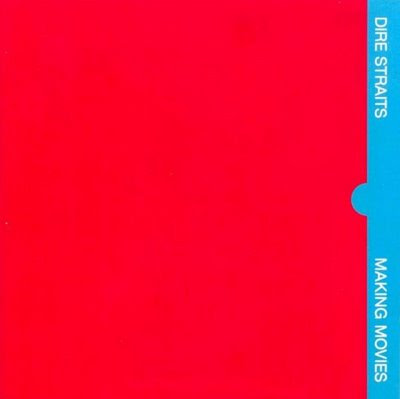
Today is the thirtieth anniversary of Making Movies.
Dire Straits had come out of nowhere in 1978 with the mega-hit single “Sultans of Swing”, which introduced the world to the guitar style of Mark Knopfler, a former schoolteacher and guitar virtuoso who’d melded the styles of Chet Atkins, Richard Thompson and Eric Clapton into a thrilling melange of rootsy beauty.
Still, the first two albums – Dire Straits and Communique – were unsatisfying. They had their moments, to be sure – but by the time one listened to them both back-to-back, it was easy to write them off as an eccentric hybrid of country and pop; niche players worth a listen, certainly, but nothing that was going to take over the world.
We know how the story ends, of course. After 1982’s EP Love Over Gold, which established the band’s chops as a makers of quirky but consequential pop, came Brothers In Arms, which made them into Europe’s biggest superstars, record-movers and touring machines in the same league as Michael Jackson and Springsteen at the peak of their games.
Connecting the quirky alt-country band and the international pop powerhouse was Making Movies.
In an era of great pop songwriting, Tunnel had complex, literary lyrics – the title cut’s mad chase between a pair of lovers and the soldiers in the amusement park, starting with Bittan’s Rogers and Hammerstein-via-E-Street Band intro…
…and swerving between invocations of Chuck Berry, a sly latin influence, and a backstory that reads like a Dashiell Hammett short story.
And in place of the four-piece pub band from the first two albums, Knopfler stripped the band down to a power trio – John Illsley on bass, Pick Withers on drums, and himself – and added some judicious keyboards from Roy Bittan of the E Street Band. And in place of the air-tight, three-minute guitar-centered song arrangements came a wide-open, almost symphonic sound, with songs that stretched out toward eight minutes on the title cut, allowing room for the band to stretch out, and use Knopfler’s guitar virtuosity for atmosphere rather than mere fretboard acrobatics. “Skateaway”, a six-minute streetscape built around a reedy Stratocaster improvisation, really showcased Bittan’s organ and piano work, which paid subtle homage to Irving Berlin and George Gershwin in using the piano to evoke the atmosphere of a busy New York street and its star, a coquette on a pair of skates.
The song, with its off-handed asides to conversations up and down the street as the rollerskating heroine skittles through traffic, is almost a prototype of “Money For Nothing”, four years later – a song about an overheard conversation.
And “Romeo and Juliet”, an exhausted, last-call love song and one of Dire Straits’ most enduring masterpieces, stars Knopfler playing…the dobro, an instrument that hadn’t poked its nose out of the world of bluegrass in thirty years.
(Recorded months before MTV debuted, the video in all its painful lock-step literalism shows how very much in its infancy the art of the music video was).
While the album led with a lot less of the “geez, what an amazing guitar player is Mark Knopfler” than the first two albums, his virtuosity is, if anything, more amazing for its subtlety. Check out the skirling timbres of the soloing in “Tunnel of Love” – the tone of the Strat fills out from the middle as the solo progresses, accentuating the sub-dominant notes in his slinky patterns in a way that, thirty years later, I’m still getting new insights into. Or “Skateaway”, which is an etude on the uses of the nuance of the out-of-phase pickup pair and the volume pedal. It may be one of the most subtly gorgeous albums in the history of the electric guitar.
Making Movies made the case that pop music could be literary, virtuosic – a work of layered, nuanced beauty. It’s one of the reasons that this part of the eighties was such a glorious era in popular music. Because I can see someone making an album like this today; I just can’t see it being the jumping off point for a huge popular success.
We didn’t grow up with a lot of “black” music in North Dakota. Part of it was that North Dakota is, well, about the whitest place in America. It was even moreso back in 1980.
So one just didn’t run across a lot of R and B in North Dakota back then.
Still, every once in a while you’d get little whiffs of it. Kids from the college would bring music from other parts of the country. Something like R and B would get on the radio once in a while.
And every once in a while, something would turn things upside down.
30 years ago today Prince’s Dirty Mind was released. And it probably wasn’t until the next year, when I was at college, that I actually heard it. But it changed everything.
I’ve written in the past – the period from about 1980 through about 1986 was one of the best in pop music history precisely because the traditional racial barriers in pop music dissolved; it was a stretch of time when white hard rock got spun by street-corner DJs into beats for rappers; where white musicians pillaged R and B for influences, and black guys played rock and roll…
…and nobody blurred music’s traditional distinctions better than Prince. 22 years old when Dirty Mind came out, it was a grab bag of things; one of the better rock and roll records of the year (pardon the atrocious dropouts in the video below) – like any “new wave” record of the era, but with soul…:
…while also doing R ‘n B in the same tradition as, say, Sly Stone, but accessible, but still very, very R’nB…
… while still turning on the funk, by way of showing that he did, in fact have…
…the album’s eponymous dirty mind.
28 years before Barack Obama’s fans started talking about “post-racial society”, Prince’s band was the real thing. Actually, the album featured Prince playing every single instrument – but the touring band, on a tour that really put Prince on the map as a performer, included Bobby “Z” Rivkin on drums, Matt Fink and Lisa Coleman on keys, and Andre Cymone and Dez Dickerson on bass and guitar, respectively.
I’m trying to picture that happening today; a great, half-white funk band; a great half-black rock and roll group; a group that just plain makes it all work, and does it memorably.
Given the stupendous success The Police achieved by the mid-eighties, it’s hard to remember that they started out as a very fringe-y band.
Outlandos D’Amour in 1978 was a hoot – a demented lashup of punky reggae or reggae-y punk, infectious and madcap fun and impossible not to dance to. Reggatta De Blanc was more of the same, but more confident and less elliptical.
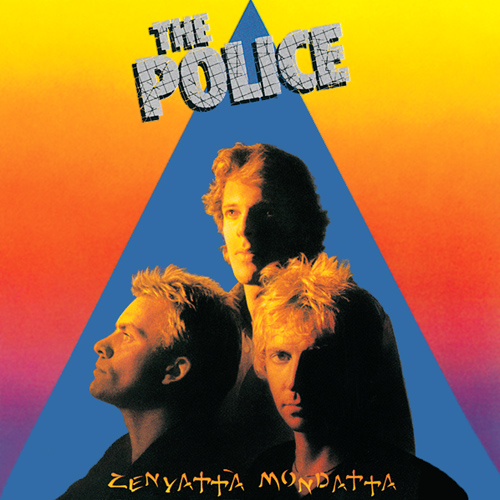
And so we – my music-geek pals in North Dakota, and music buffs in general – waited eagerly for The Police’s next effort, Zenyatta Mondatta.
And thirty years ago today, it came out.
And I reacted with a “huh?”
I had loved the first two albums.
And I would eventually like Ghost in the Machine, and especially Synchronicity.
But Zenyatta Mondatta, then as now, leaves me completely cold.
I was one of few, of course; the album made them superstars. “De Doo Doo Doo De Daa Daa Daa” and “Don’t Stand So Close To Me” were their first top forty hits in the US.
And it wasn’t because it didn’t showcase some really cool musicianship. Andy Summers was an amazing guitar player; Stewart Copeland was a tight, propulsive drummer. Sting was…
…well, Sting was a decent singer and a capable bass player. But he bugged me.
Now, the things that bugged me, the tics and voice and arrogance, would go on to make Synchronicity a great, great album four years later.
But on Zenyatta? It just bugged me.
And so I sat out the next year or two, Police-wise.
This week was still a great one, by the way. Stay tuned.
I could think of all the Bruce Springsteen songs I’ve covered in one band or musical lashup or another – “Born To Run”, “Born In The USA”, “Atlantic City”, “Cadillac Ranch”, “Darkness on the Edge of Town”, “The River”, “Thunder Road”…
…or the songs I just noodled demos of way back when I still had time and energy to noodle demos – “Love On The Wrong Side Of Town”, “This Hard Land”, “Janey Don’t You Lose Heart”…
…or even just the Bruce songs I’ve dreamed of covering if I ever got another really good band together – “Incident On 57th Street”, “Kitty’s Back”, “Rosalita, “Jungleland”, “Backstreets”, “I Wanna Be With You”, “Racing In The Streets”, “Something In The Night”, “Jackson Cage”, “None But The Brave”, “If I Should Fall Behind”, “My Beautiful Reward”…
…and on none of those lists does the latest Bruce song to undergo a rash over covers – “I’m Going’ Down“, easily my least favorite single from Born In The USA – appear.
Black Sabbath? Zzzzzz. Ozbourne’s nasal yawp combined with Tony Iommi’s guitar playing (he sounds he’s fingering notes with his nose) has always bored me stiff. Who cares?
The superannuated, drug-addled caricature on “The Osbournes?” I’ve seen maybe twenty minutes of the show. I regretted every one of them:
And his career in between? Nope. Largely don’t care about that, either.
But it was thirty years ago today that Osbourne changed metal forever. Today is the thirtieth anniversary of the release of Blizzard of Ozz:
Blizzard took Osbourne’s ageing, cartoonish persona and updated it with an approach that owed much (under the hood) to punk’s frothing energy. Seventies metal’s lugubrious plodding was tossed out the window; this was music you could mosh to!
The real star of the album, of course, was Randy Rhodes, a 24-year-old guitar phenom…
…and classical guitar buff who ushered in the age of the “guitar player who could do anything”.
Seriously. Check out “Crazy Train”:
That’s a plain, vanilla (figuratively and color-wise) Les Paul Standard. I’m seeing this for the first time as I’m writing this; he’s not using a Floyd Rose whammybar to get those howling glissandos. It’s pure freaking technique. And thirty years after it came out, and 28 years after Rhodes’ death in a plane crash at age 26, it amazes me now more than it did then – and it amazed me a lot back then.
With Eddie Van Halen, you always got the impression you were listening to someone who was pushing back the limits of what a guy could do on the guitar. With Rhodes, you felt that the guy just lived at the limits to enjoy the view, rhetorically speaking; he was less a pioneer than someone who’d internalized “amazing”.
Ozzy? Pfft. Who cares. Keep it all.
But Blizzard of Ozz still thrills me to listen to.
Back in the mid-eighties, country-western was trying to shake off the last of the detritus of its dismal “crossover” era – the wretched stretch starting in the mid-seventies when Nashville became obsessed with trying to conquer the Top Forty pop charts. It led to much of the worst, most banal, formless, most pre-processed country ever, bilge like Eddie Rabbit and Barbara Mandrell and such.
Into this vapid desert came a few performers who stubbornly stuck to the country’s traditional forms; Emmylou Harris, George Strait, Ricky Skaggs…
…and Holly Dunn. Dunn – a San Antonio native and preacher’s daughter.
It was still a few years before the likes of Garth Brooks would yank mainstream country back to its roots. In that interim, Dunn was a glorious little burst of unabashed honky-tonk twang.
Anything Gretchen Wilson does today, Dunn did twenty-odd years ago.
Dunn retired from music in 2003; she lives in the Southwest and works as an artist.
By one of those odd coincidences, today – the 30th anniversary of one of my favorite albums by a female singer, is also also the birthday of one of my favorite female singers. It’s Patti Scialfa’s birthday today.
Scialfa spent years as a journeywoman singer, writer and musician around the New York and New Jersey music scenes, recording with Southside Johnny and David Johannson (better known as Buster Poindexter, of “Hot Hot Hot” fame), before joining the E Street Band in 1984 on the virtual eve of the Born in the USA tour.
Which was where I saw her, unannounced, for the first time – on night two of the tour, turning The River’s “Out In The Street” into a virtual duet.
It wasn’t until 1993, with the release of her first of three solo albums, Rumble Doll, that Scialfa really stepped out on her own. And Rumble Doll is one of the most glorious overlooked gems of the 1990s:
The album has a lot of influences – and “Bruce Springsteen” is only obliquely and intermittently one of them:
Did I say “glorious gem?” Why, yes, I believe I did:
In the summer of 1982, I was 19, and the economy for teenagers wasn’t a whole lot better than it is today.
But I lucked out, and got a job – a full-time (48 hour a week) gig at a radio station in Carrington, North Dakota – a little town of about 2,000 people about forty miles north of Jamestown.
I held a lot of jobs at that little station over that summer; morning guy, afternoon guy, production guy, sometimes news and play-by-play guy…
…and in my “spare” time, “Music Director”; I added and pulled songs from the rotation, and kept things in some kind of rough order.
Now, I wasn’t a country-western kind of guy; I was more into Springsteen, the Clash, the Pistols, the Iron City Houserockers, that kind of thing.
And even if I had been a country kind of guy, it was a terrible time in the history of country-western music. The dominant subgenre of the era, “Country Crossover” – an extended attempt by Nashville to get country to cross over to the pop charts and audience – led to some of the most dismal, sterile, vapid country-pop music in the history of the genre. Kenny Rogers, Barbra Mandrell, Lee Greenwood, Crystal Gayle, Eddie Rabbit and a long slew of pseudo-pop crossover acts dominated the charts; the few “traditional” country artists – George Strait, Randy Travis, the Gatlins, and the just-emerging Judds and a very young Ricky Skaggs – were outlying curios, while the “Outlaw Movement”, the paleotraditional mob led by Waylon Jennings, Hank Williams Jr., Willie Nelson and Johnny Cash, were vaguely threatening (but extremely successful – which should have told somebody something).
Now, being a rock and roll guy who’d grown up in a not-overly-music household, most of that was pretty opaque to me at the time, and didn’t become clear to me for quite a while. Country, to the 19 year old me, had divided into two camps; poppy country and twangy country. And to me, there wasn’t much to tie either of them to the larger American musical tradition.
Hey, I said I was 19.
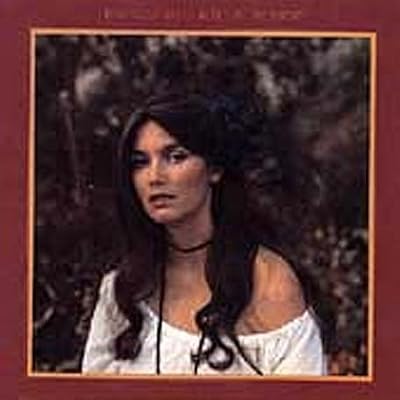
At any rate, on a boring Sunday afternoon I was flipping through the stacks of old albums – and I found a copy of this record:
Roses in the Snow, by Emmylou Harris, which was released thirty years ago today.
I slapped it onto a turntable.
It was something…not “unfamiliar”, per se; I’d learned a little bit of bluegrass while learning the guitar a scant four or five years before. But this wasn’t the generic rip-roaring “Hillbilly Techno” that I remembered; this was a meandering trip across middle America heard with a Kentucky accent with guitars and mandolins in the background.
And on about the second listen, it slammed into me like a runaway coal cart.
Emmylou Harris had had quite a career already; in the less-than-a-decade after she’d gotten into the music business (after starting out as a teacher), she’d played the Washington DC bluegrass circuit, recorded with and been the muse for former Byrd Gram Parsons, struck out on her own after his death, and had a brief but productive run at mainstream country chart success, doing ever-so-slightly traditionally-themed music that pushed country pop’s progressive envelope; Quarter Moon in a Ten Cent Town and Luxury Liner were brilliant, glossy records that had a sharp twang but an ear for the modern. Harris was on the far modern fringes of the genre.
Roses In The Snow was her “back to basics” effort; a return to the bluegrass form. But rather than diving straight back into traditional mountain music, Roses interpreted other genres – honky-tonk, pop, country swing, even top-forty pop – through a bluegrass lens. Recorded with an all-star cast of traditional musicians – Brian Ahern and Albert Lee on guitar, Emory Gordy on bass, Ricky Skaggs on a whole slew of instruments, and guest-vocal shots from Dolly Parton, Johnny Cash and Linda Ronstadt, and Willy Nelson sitting in on guitar – the album smoked with all the proficiency of her seventies-era “Hot Band”, but with a twang that came less from Texas than from up the holler.
And it was spectacular.
The title cut – a blistering-yet-poignant raveup written by Ruth Franks and featuring The Whites on backup vocals – set the stage; this was no dozey Barbra Mandrell record:
(This version from the early nineties, featuring her “Nash Ramblers” backing band)
The old traditional “Wayfaring Stranger”, the Stanley Brothers’ classic “The Darkest Hour Is Just Before Dawn”, a duet with Skaggs, and “Green Pastures”, with Skaggs and Dolly Parton, extend the title cut’s theme – traditional mountain country music is about the constant loss that pervaded rural American life until not all that long ago.
“I’ll Go Stepping Too” (sung with Skaggs and Tony Rice), Bill Halley’s “Miss the Mississippi” and the A.P. Carter paleocountry classic “”Gold Watch and Chain” are steps through the traditional country playbook; the traditional “Jordan”, featuring Skaggs, Rice and Johnny Cash, is an intricate, gorgeous standout.
But stuck at the end of Side 1 was the album’s standout; a cover of Simon and Garfunkel’s “The Boxer”.
(again, this is with the Nash Ramblers)
Where the original Simon and Garfunkel song was largely a vocal production piece that was both gorgeous and just a little bit hollow – nobody could possibly believe show-biz prodigy Simon could identify with the protagonist any way but literarily. Harris’ version rings with the weariness a million boys and girls from the holler, and every other corner of rural America, who went to the big city in search of something better, or at least different, for their lives. You can hear echoes of the Okies moving to California to find land and water andmountain folk moving to Cincinnati and Chicago for jobs, and World War II veterans knocking around port cities all over the place, “laying out their winter clothes, and wishing they were home”, awash in isolation and alienation…
It’s one of the rare cover versions that completely obliterates and excellent original.
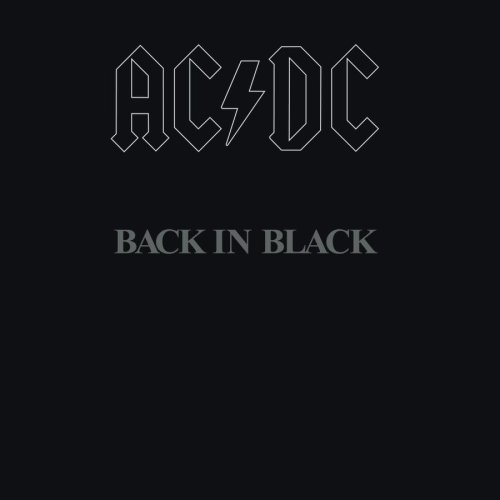
There are so many entries in the “it just doesn’t seem possible” file in realizing that today is the thirtieth anniversary of the release of Back In Black by AC/DC.
The album – the first after the death of Bon Scott barely 17 months earlier – was a gloriously snotty blues-rock romp, the kind of thing every garage band in the world – including mine – thought they could pull off.
Of course, few garage bands had a leather-lunged shrieker like Brian Johnson, or a blues-rock machine like Angus Young or – to me, the band’s signature – a metal-shredding rhythm player like Malcolm Young to base their sound around.
Here’s the part that blew my mind; Back in Black, with 49 million copies sold, is the second biggest-selling album of all time (that’d be worldwide; it’s #5 in the US), and the biggest ever from a band.
First it was Badfinger. Notwithstanding the fact that they were discovered and signed to Apple Records by Paul McCartney, were British, and were a four-piece band featuring tight-yet-raw vocal harmonies and jangly-yet-melodic guitars, they were a fun pop band with none of the Beatles’ baroque pretensions. But because their debut singles, “Come and Get It” and “No Matter What”, sounded just a tad like lost, pre-“Sergeant Pepper” Beatles songs, you – the assembled hordes of slavering Beatles fandom – sniffed and said “it’s almost like they’re trying to be the Fab Four”. And despite the fact that they managed to release some of the most glorious pop music of the seventies, at a time when the former Beatles were mired in tortured megalomania, dreary pop or labored soul-searching…
…they never quite escaped it. To the world’s eternal loss.
Then it was The Knack – the overwhelmingly infectious power-pop sensation led by the mildly-creepy and now-late Doug Fieger – the cover of whose debut album “Get The Knack”…
…was reputed to look sufficiently like “Meet The Beatles”…
…to start a nasty little whispering campaign against the band.
And then there was Oasis, who in the early nineties were rumoured (with a “u”, since they were British) to sound like the Beatles. The unreasoning parochialism of Beatles fans struck again (although I didn’t care so much, since it was only Oasis).
Lady Gaga’s stirring up controversy yet again — but this time all she did was play a little piano. A photo of the “Bad Romance” crooner seated at John Lennon’s famous white Steinway recently hit the Web, and Beatles fans are up in arms.
John’s son Sean Lennon posted the photo on Twitter with the caption: “With gaga at mom’s house, she’s belting on the white piano…” The instrument was a gift from The Beatles’ frontman to Sean’s mother, Yoko Ono, and it sits out in the open at Yoko’s home.
In the pic, the singer wears typically skimpy Gaga-gear (a skintight body suit and thigh-high fishnets) while singing and tickling away at the keys. The image drew an outcry from some Beatles fans who considered Gaga unworthy of the iconic instrument.
My only wish: that if it was the piano at which Lennon “composed” “Imagine” or “Merry Christmas (War Is Over)” or “Just Like Starting Over”, that Jerry Lee Lewis would get to go all ape-wild on it sometime before he dies (Wait – Jerry Lee’s alive, isn’t it? Why, yes, he is). Or maybe Pete Townsend.
OK, I have two wishes; that I am able to live long enough to have at least one moment of my life, even at the very end, without baby boomers caterwauling about how in-freaking-credible John Lennon was.
He was not!
And tell that Gaga chick to keep her mitts off Keith Moon’s drum kit.
Perhaps it’s because I’m fortysomething, and have found things in my life that yank on my emotions harder than music does – kids, relationships, divorce, stress – but it’s rare that new music jumps out and grabs me in my liver and says “Dance, MoFo!”
Just thought I’d say – I had one of those moments the other day. The band is “Jet”, and they had a hit about six years ago with “Do You Wanna Be My Girl”, which was a fun little rock and roll shuffle but not something to go to war over, capisce?
This song, “Goodbye Hollywood”, is totally different. It totally rocks my world.
And if the promise of a great rock ‘n roll song isn’t enough to make you listen, the fact that I couldn’t find a video version, so you’ll have to use this version featuring Kate Beckinsale writhing about the place as a substitute.
In a statement, Allman said he’d turned his life around, but liver damage led to doctors recommending a transplant.
“I changed my ways years ago, but we can’t turn back time,” he said. “Every day is a gift, and I can’t wait to get back on the road making music with my friends.”
I had a college professor who’d worked concert security during grad school in the seventies who remembered having to carry Allman onstage and prop him up on the stool behind his Hammond B3.
Ozzy Osbourne’s genome will be sequenced, in hopes that scientists can figure out how the notoriously self-destructive rocker is still alive.
“Sequencing and analyzing individuals with extreme medical histories provides the greatest potential scientific value,” Nathan Pearson, director of research at Knome, a leading gene-sequencing company, told the U.K. newspaper the Daily Mail.
Although the 61-year-old Osbourne has been sober for eight years, he spent the bulk of his life consuming legendary amounts of alcohol and hard drugs, as well as engaging in other high-risk activities.
Perhaps next “Knome” can analyze the genomes of people who thought Black Sabbath didn’t suck.




 B
B


