Archive for the 'World' Category

The Pacific – a Chinese lake?

Thursday, May 26th, 2022

Awhile back we touched on the arrangement China has entered into with the Solomon Islands, a deal which has sparked concerns that perhaps China has an eye towards an increased presence in the Pacific.

Starting today, the Chinese Foreign Minister is beginning a visit to several Pacific Island nations. From China’s Foreign Ministry:

From May 26 to June 4, State Councilor and Foreign Minister Wang Yi will pay official visits to eight countries, namely Solomon Islands, Kiribati, Samoa, Fiji, Tonga, Vanuatu, Papua New Guinea and Timor-Leste, and a virtual visit to the Federated States of Micronesia upon invitation. He will also hold video conference with Prime Minister and Foreign Minister of the Cook Islands and Premier and Foreign Minister of Niue, and host the second China-Pacific Island Countries Foreign Ministers’ Meeting in Fiji. 

Also today, the Chinese Foreign Minister met with his counterpart in the Solomons and outlined three principles behind their cooperation:

The first principle is to fully respect the national sovereignty of Solomon Islands. China-Solomon Islands cooperation is based on Solomon Islands’ needs and requirements, on the premise of Solomon Islands’ consent, and on the basis of equal consultation. It is never China’s foreign policy, nor is it Chinese style, to impose business deals on others, interfere in Solomon Islands’ internal affairs, or damage other countries’ interests.

The second one is to help maintain the social stability of Solomon Islands. China-Solomon Islands security cooperation includes assistance in maintaining social order, protecting lives and property in accordance with the law as well as conducting humanitarian relief and natural disaster response at the request of Solomon Islands. The aim is to help Solomon Islands strengthen police capacity-building, offset the security governance deficit and maintain domestic stability and long-lasting peace and security. China-Solomon Islands security cooperation is aboveboard and frank, not imposing on others, not targeting third parties and not intending to establish military bases.

The third one is in parallel with regional arrangements. China supports Pacific Island Countries in strengthening security cooperation and working together to address regional security challenges. China also supports the existing regional security cooperation arrangements. At the same time, China-Solomon Islands security cooperation and the existing regional arrangements complement each other, sharing the same objectives and interests. China-Solomon Islands security cooperation conforms to the common interests of Solomon Islands and the South Pacific region.


The last one is our topic for today. What “regional arrangements” are we talking about here? The AP provides some details on what China is up to:

(more…)

Cloak conceals dagger

Tuesday, May 24th, 2022


On Sunday, an IRGC Colonel, Hassan Sayad Khodai, was assassinated in broad daylight outside his home by two assailants on a motorcycle. There’s been no official claim of responsibility.

It’s a mystery why Khodai was targeted. It’s possible it was in retaliation for Khodai’s involvement in plots against Israeli officials. But, consider the history of high-profile assassinations inside Iran.

Between 2007 and 2012, five people associated with Iran’s nuclear program were assassinated in Iran. Several of these instances involved assailants on motorcycles. Another prominent figure, Mohsen Fakhrizadeh, the head of Iran’s atomic energy program, was assassinated in 2020. The complex operation involved smuggling in and assembling a remote-controlled gun.

A brazen Israeli intelligence operation in 2018 involving stealing thousands of documents related to Iran’s nuclear program from a secret warehouse in Tehran.

A Colonel doesn’t seem like a high enough profile target to risk such a daylight operation, especially if he isn’t involved with Iran’s nuclear program, the high profile, high risk target Israel is committed to spending valuable resources on.

If Israel was indeed behind it, clearly Israel has developed exceptional intelligence capabilities inside Iran. Who Israel works with is of course a closely guarded secret. Whether Israel smuggles in its own operatives, or works with natives such as the Mujahedin-e-Khalq (MEK), is not known.

The war in the shadows continues apace.

A good defense is a good defense

Tuesday, May 17th, 2022

The US-China Economic and Security Review Commission was established to “review the national security implications of trade and economic ties between the United States and the People’s Republic of China”.

Last week they held a day-long hearing with eleven witnesses on “China’s Activities and Influence in South and Central Asia.” Topics included China’s Interests in Afghanistan and Pakistan, China’s Reach in Central Asia, China’s Influence in Continental South Asia, and Competing Visions for the Indian Ocean.

As part of the latter, Christopher K. Colley outlined China’s naval goals, especially as they apply to the Indian Ocean, saying “the American navy is the driving force behind China’s security concerns in the IOR.” Written testimony is here.

The greatest structural change in the Chinese navy in terms of strategy and tactics is the transformation of a navy based on regional defense and access denial, to a force that is firmly inline with power projection and blue water capabilities. Such an evolution is a conscience decision by the top levels of the Chinese government to build a navy that has the ability to project sustained and meaningful power to locations thousands of miles from Chinese home ports. This transformation is one of the most critical developments in the security architecture of the Twenty-First Century.

Last week, before a full committee hearing of the House Armed Services Committee, Adm Gilday, Chief of Naval Operation, spoke about the growing strength of China’s navy. Written testimony is here.

Over the past two decades, the PRC has built a comprehensive sea-denial, anti-access system of sophisticated sensors and long-range precision weapons. Backed by a robust industrial base and the largest shipbuilding infrastructure in the world, the PRC has extensively modernized its military and tripled the size of the People’s Liberation Army-Navy (PLAN). It is also building next-generation strategic missile submarines, erecting hundreds of new missile silos, and growing its cyber and space capabilities.

Under the cover of this anti-access umbrella, the PRC has embraced the use of “gray zone” activities to turn incremental gains into long-term strategic advantages. Using a multi-layered fleet of naval ships, maritime militia, and coast guard, the PRC is undermining international norms by staking illegal maritime claims, militarizing geographic features in the South and East China Seas, and intimidating its neighbors regarding offshore resources. Additionally, the PRC is extending its global reach with its Belt and Road Initiative—leveraging predatory lending practices, aggressive mercantilism backed, and hard military power—to access critical maritime terrain, ports, and waterways.

Given China’s increased strength, Adm Gilday also tried to explain why the US Navy planned to scrap nine warships, some less than three years old.

“I refuse to put an additional dollar against a system that would not be able to track a high-end submarine in today’s environment,” Gilday told the committee. He said the main reason for the early retirement was that the anti-submarine warfare system on the ships “did not work out technically.” The decommissioning of the ships would save the Navy approximately $391 million, according to the service’s proposed FY23 budget. But that recoups only a fraction of the cost of the nine littoral combat ships, which totaled about $3.2 billion.

The arcs of Chinese and US naval strengths are heading in the wrong directions. As Conrad Crane writes about here, America’s ability to fight a major conflict, let alone two at the same time, for the first time in a long time can be questioned. Part of Russia’s strategic mistake in going into Ukraine is it revealed how weak Russia’s military really is. How long before someone decides to test how strong the US is these days?

Future History

Tuesday, May 17th, 2022

Joe Doakes from Como Park emails:

Story outline for my next novel:

Biden is declared unfit, removed from office two days into his third year, Kamala takes over just in time to serve out the remainder of Biden’s term and two full terms of her own

President Kamala (PK) orders US troops overseas to fight brush wars and orders private cars and home air conditioners in the US banned, because Climate Change

During the hot summer, riots break out in major US cities

PK invites the UN to send peacekeepers to maintain order in US cities

Un demands PK disarm the people to keep the peacekeepers safe from the people they’re keeping safe

Language barrier, cultural differences, resentment for past US wars: peacekeepers open fire on citizens, some of whom return fire (looking at you, Blade)

PK declares martial law, orders peacekeepers to round up those deplorable fly-over state residents bitterly clinging to their guns and Bibles, sends them to concentration camps ‘for their own good’

Deplorable people refuse to go, engage in guerilla war against peacekeepers, shortages of toilet paper, bottled water and SPAM, cities burning

PK blames Trump

Congress impeaches Trump again

Hey, this could be a decent Sci Fi story, if we added some aliens. Maybe they’re observing from the Moon saying, “What were they thinking, electing her?” before flying away to look for intelligent life on other planets

Joe Doakes

”Trulbert” is seeming less and less like satire these days.

Russia and Ukraine

Monday, May 9th, 2022

Last year Vladimir Putin authored this paper arguing that “that Russians and Ukrainians were one people.” The paper looks back at the historical commonalities between Russia and present-day Ukraine, starting with the Kievan Rus, a federation formed in the 9th century of Slavic people but ruled by the Varangian, people of Norse (Viking) descent.

Putin emphasizes that the people of the Kievan Rus shared a common language and, with the baptism of Vladimir in the 10th century, which Putin mentions, a common religion in the Orthodox Church. With this conversion, the Kievan Rus developed strong ties with the Byzantine Empire. Many Varangians served Byzantine emperors. (One of them, Harald Sigurdsson, was defeated by Harold Godwinson at the Battle of Stamford Bridge in September 1066, just a few weeks before Harold was defeated by the Normans at Hastings.)

The unity of Kievan Rus began to unravel in the 11th century, related in part to the decline of the Byzantine Empire, which in turn was related to the rise of the Turks. Putin specifically points to the Mongols, though, which devastated the region in the 13th century. Putin does not mention the 4th Crusade in 1204 which greatly weakened the Byzantine Empire even further.

From there, Putin traces the rise of the Catholic Polish-Lithuanian Commonwealth, and the pressure that put on what is now Ukraine, sandwiched between the Catholics and the descendants of the Rus now centered farther to the east.

The 17th century saw the rise of the Cossacks who carved out a state by rebelling against the Polish-Lithuanian Commonwealth, and the century saw considerable conflict between Poland, the Cossacks, the Russians and the Ottomans. Putin describes this conflict as a desire to maintain the Orthodox Church in the face of Polish opposition. Putin even uses the phrase “war of liberation.”

Ukrainians refer to this time as “The Ruin,” which is an indication of what they think of instability the conflict brought to the region. The conflict came to an end with the Truce of Andrusovo of 1667 and later the Treaty of Perpetual Peace in 1686. The result was Kiev and the “left bank” (which was actually the lands east of the Dnieper) were transferred to Moscow. On the “right bank”, ie west of the Dnieper, still held by Poland, Putin says “social and religious oppression intensified.”

Over the next two centuries, Putin says Polish influences fomented the stirrings of Ukrainian nationalism, and this in turn was used by the Austrian-Hungarian Empire in the World War I era. The chaos brought about by the Russian Civil War (see First Ringer’s recent post too) led to a declaration of independence in Ukraine. Putin says this “decision proved fatal for the ruling regime in Kiev.” Putin is not sympathetic.

Therefore, modern Ukraine is entirely the product of the Soviet era. We know and remember well that it was shaped – for a significant part – on the lands of historical Russia. To make sure of that, it is enough to look at the boundaries of the lands reunited with the Russian state in the 17th century and the territory of the Ukrainian SSR when it left the Soviet Union.

The Bolsheviks treated the Russian people as inexhaustible material for their social experiments. They dreamt of a world revolution that would wipe out national states. That is why they were so generous in drawing borders and bestowing territorial gifts. It is no longer important what exactly the idea of the Bolshevik leaders who were chopping the country into pieces was. We can disagree about minor details, background and logics behind certain decisions. One fact is crystal clear: Russia was robbed, indeed.

Putin’s argument throughout his paper is to emphasize the close ties in language, culture and religion between the people of Russia and Ukraine. He indicates that where there was separation between the two, the people who valued these close ties were not given a choice in the matter.

He goes on for a few paragraphs decrying this lack of choice, and he ends with this.

I am confident that true sovereignty of Ukraine is possible only in partnership with Russia. Our spiritual, human and civilizational ties formed for centuries and have their origins in the same sources, they have been hardened by common trials, achievements and victories. Our kinship has been transmitted from generation to generation. It is in the hearts and the memory of people living in modern Russia and Ukraine, in the blood ties that unite millions of our families. Together we have always been and will be many times stronger and more successful. For we are one people.

Today, these words may be perceived by some people with hostility. They can be interpreted in many possible ways. Yet, many people will hear me. And I will say one thing – Russia has never been and will never be ”anti-Ukraine“. And what Ukraine will be – it is up to its citizens to decide.

I don’t doubt that Putin does not think of Ukraine as a separate nation, with its own history and heritage apart from Russia’s own. But, Putin’s paper is conspicuous in its lack of acknowledgement that the Ukrainian independence movement in 1990 was a choice, as was the Orange Revolution of 2004. He instead continues to focus on how “the most despicable thing is that the Russians in Ukraine are being forced not only to deny their roots, generations of their ancestors but also to believe that Russia is their enemy.” He also reiterates that “Our spiritual unity has also been attacked,” as the Ukrainian Orthodox Church maintains a separation from the Russian Orthodox Church.

And yet, even if Putin truly believes that by invading Ukraine he is merely standing up for these Russians who want to maintain their historical ties to Russia, Putin is ignoring the fact that many people in Ukraine have looked to the wealth to the west, the oppression and poverty to the east, and have made their choice. Bombing them is only hardening them against Russia.
Wrong Poll?

Friday, May 6th, 2022

Joe Doakes from Como Park emails:

Poll says Americans would welcome 100,000 refugees from Ukraine. Sounds generous, not?

But why so few? Experts estimate 4 million Ukrainian refugees have fled the country since Russia invaded. Why aren’t we taking more?

As I pointed out here, we take in 200,000 illegal aliens across the Southern Border EVERY MONTH and nobody says a word about it.

I wonder what the polls would say if Americans understood the numbers?

Joe Doakes

Another question: I wonder what it would take to make Americans understand the numbers?

Russia debt repayments

Thursday, May 5th, 2022

Russia is spending a fortune in Ukraine, perhaps as much as $20 billion a day. In turn though, Europe is sending hundreds of millions of euros a day to Russia for hydrocarbons. Putting sanctions on Russia while funding Russia is not a comfortable position. So, the EU is contemplating phasing out its dependence on Russian, and that might have enormous implications for Russia’s economy.

Maximilian Hess of the Foreign Policy Research Institute looks at some of those implications:

On April 29, Russia’s finance ministry announced that it would pay some $650m to foreign creditors on two overdue Eurobonds. And by making the payments before the bonds’ grace period expired on May 4, the Kremlin has avoided falling into sovereign default.

Ahead of the bond’s formal maturity on April 4, the Kremlin announced that it would buy back the bonds in roubles – and pay those who refused to accept the rouble buy-back as well. Nearly 75 percent of bondholders (almost certainly all domestic) agreed to the new terms .

Russia’s recent decision to pay the bonds in foreign currency enabled it to avoid the all-but-guaranteed acceleration of other debts and lawsuits that would have followed a default and further impoverished the Russian people.

However, the move also left the Kremlin in a position of extreme hypocrisy and embarrassment. In the end, what Putin did was to repay domestic bondholders with roubles, which they cannot convert freely into hard currency to spend abroad. And pay foreign holders in full, in dollars – hardly a feat worthy of praise.

In case there is any doubt just how exposed the shipping sector is to Western sanctions, one just needs to look to the actions of Russian state-owned shipping company Sovcomflot. On May 3 specialist maritime industry publication Lloyd’s List revealed that Sovcomflot was looking to sell at least 40 ships from its 121 ship fleet before wind-down authorisations expire and it becomes fully sanctioned on May 15.

If Sovcomflot fails to raise enough cash to honour its debts before then, it will fall into default and creditors will go after its ships. Just like the Russian state, Russian businesses are still fearful of defaulting on Western creditors – even amid a war.

Russia in Africa

Thursday, May 5th, 2022

This podcast from the ICG takes a look at something that’s not often on the front pages, and that is Russia’s aims in Africa.

Over recent years, Moscow has bolstered ties with countries all over the continent, particularly those plagued by internal violence and disillusioned with Western powers. Russia remains a leading arms supplier and Russian private military contractors continue to expand their presence, most recently in Mali. Whether Russia is successfully pursuing a broader strategy, or merely engaging in tactical power plays, remains a matter of debate. Russia has long sought a naval base on the Red Sea and wields its permanent seat on the United Nations Security Council for influence on the continent.

This week on The Horn, Alan is joined by Samuel Ramani, author of an upcoming book on Russia in Africa. They talk about Russia’s historic goals and current strategy on the continent, differing reactions to the invasion of Ukraine, and why some African leaders pursue closer relations with Russia. They also discuss the new significance of African relations for Moscow today and how the war in Ukraine is already changing power dynamics on the continent.

The IRGC and Mahdism

Wednesday, May 4th, 2022

The Middle East Institute has put out a PDF entitled “IRAN’S REVOLUTIONARY GUARD AND THE RISING CULT OF MAHDISM: MISSILES AND MILITIAS FOR THE APOCALYPSE.” If you’re looking for evidence that Iran is coming to its senses and will soon join the league of nations and embrace the West as brothers, you won’t find it here.

It’s worth devoting the time for a read, this is from the conclusion.

The finding of this research paper reveals three visible trends in the IRGC. The first relates to indoctrination becoming an increasing focal point in the Guard. Khamenei and his hardline circle have sought to nurture a more radical IRGC generation by dedicating more time to ideological indoctrination of its members. The promotion system within the ranks of the IRGC also favors ideological conviction over technical expertise, ensuring the most zealous members rise up within the chain of command. The second trend relates to the increasing priority given to Mahdism within the IRGC’s ideology. From the post-2009 period onwards, the doctrine of Mahdism has become one of the main prisms through which the IRGC and affiliated hardline clerics would understand the world around them and the IRGC’s actions, as well as communicate that understanding. In turn, there has been greater emphasis on viewing the IRGC as the military vehicle to prepare the foundations for the reappearance of the 12th Imam, with policy objectives such as hostility toward the U.S. and the eradication of Israel being understood through this prism. This is consistent with the goal of Khamenei and his hardline allies, such as Ayatollah Alamalhouda, the supreme leader’s representative to Khorasan and President Ebrahim Raisi’s father-in-law, to transform the concept of Mahdism from a set of feelings into an “ideological belief.” The third and final trend relates to the IRGC’s younger generations becoming more radical and extreme. In this regard, efforts by Khamenei and the Guard’s Ideological-Political Organization to nurture a more radical generation among the IRGC has paid, and is paying, dividends.

Against this backdrop, the rise of devout followers of the militaristic doctrine of Mahdism among the senior ranks of the IRGC is not inconceivable and should not be ruled out. While there is hope that the IRGC’s senior leadership will act pragmatically, internal structures within the Guard — including its indoctrination and promotion system — certainly open up the possibility that devoted Mahdists could occupy senior leadership positions. Such a scenario could have far-reaching consequences as it would bring the three pillars of the IRGC’s foreign policy — militias, ballistic missiles, and the nuclear program — under their control. Even if a small number of devout Mahdists occupy senior positions in the Guard, it is possible that they may seek to facilitate and speed up the return of Mahdi. This would have major implications for some of the policies that are being understood through the prism of Mahdism, such as Israel’s existence being the “greatest barrier” to the reappearance of the 12th Imam.

Do you want China as your loan shark?

Tuesday, May 3rd, 2022

Monday we took a look at the unfolding economic crisis in Sri Lanka. Yesterday then, some news that India heaved a life vest into the water, while China tied a concrete block to it…

Sri Lanka has extended a credit line with India by $200 million in order to procure emergency fuel stocks, the country’s power and energy minister said on Monday, as China said it supported efforts for the island nation to restructure its debt.

Colombo was also in talks with New Delhi over extending the credit line by an additional $500 million, minister Kanchana Wijesekera told a news conference, with four fuel shipments due to arrive in May.

Beijing’s ambassador Qi Zhenhong told Sri Lankan Finance Minister Ali Sabry at a meeting on Monday that China – one of the island’s largest bilateral lenders having extended about $6.5 billion in loans – supports its decision to work with the IMF to restructure its debt.

“Ambassador Zhenhong also assured Minister Ali Sabry that as a major shareholder of the IMF, China is willing to play an active role in encouraging the IMF to positively consider Sri Lanka’s position and to reach an agreement as soon as possible,” Sri Lanka’s finance ministry said in a statement.

In other words, China is saying “Sri Lanka, you’re already into us for six and a half large. Before we send more good money after bad, you can go to the IMF, but as for what you owe us, we’ll see if we can come to an “agreement.””

In return for China playing the role of angel investors, what sort of repayment might China look for from Sri Lanka?

On the southern tip of Sri Lanka, China helped finance and build the Hambantota Port project. The port opened in 2010. Often cited as an example of China’s “debt trap” approach to its victims, er, partners, China lent truckloads of money to Sri Lanka in the decade that followed, and in 2017, China Merchants Port was granted 70% of the port, as well as a 99 year lease.

The port is part of China’s so-called “string of pearls,” a chain of China-financed ports stretching from Africa to Gwadar to Sri Lanka and around SE Asia and up to Hong Kong.

In addition to that, China is building and financing the Colombo Port City in the capital city, on the west side of Sri Lanka. The project, on reclaimed land, is meant to be an international finance and economic center. It will be interesting to see if China pushes for outright ownership of one or both of these projects as Sri Lanka’s ability to pay its debt plunges.

On Tuesday, the Chinese Embassy in Sri Lanka tweeted this.

This came right after a series of tweets celebrating International Workers Day, but this was the subject of the tweets.

Message received.

As goes Sri Lanka?

Monday, May 2nd, 2022

Sri Lanka is far away, it’s not an especially large country, but current events there may have lessons for us here at home.

Over the weekend, Sri Lanka’s president, Gotabaya Rajapaksa, agreed to remove his brother, Mahinda, as Prime Minister. The Rajapaksa brothers have been at the top of Sri Lanka’s government for nearly twenty years, but this move is the fallout of a serious economic crisis in Sri Lanka that is getting worse.

Sri Lanka’s 26-year struggle against the Tamil Tigers ended in 2009. (At the time, Mahinda was President and Gotabaya was Defense Minister.) That civil war was extremely costly, and the roots of the current crisis go back to the struggle to recover from the civil war. Sri Lanka borrowed what for it was a great deal of foreign money. Today, debt has reached well over 100% of GDP. Combined with a series of tax cuts under President Gotabaya a few years ago, Sri Lanka’s ability to pay back its debt became increasingly difficult.

Beginning in 2019, two shocks served to push Sri Lanka closer to the edge. The Easter bombings in April 2019 targeted several churches and hotels and killed 265 people. The Islamic State claimed responsibility for the suicide bombings. In the aftermath tourism, which is an important industry in Sri Lanka and and brings in a significant amount of foreign dollars which is needed to pay back the foreign debt, declined sharply, putting even more pressure on Sri Lanka’s distressed economy.

Then, COVID hit in 2020 which hurt tourism even more. By February of this year, inflation was running over 17%. There are shortages of fuel and electricity. Predictably, widespread protests broke out in March. On March 31 a large group of protestors tried to get to President Gotabaya’s home. A state of emergency was declared the next day.

Events have snowballed from there. Cabinet members began to resign as the Rajapaksa brothers were unable to hold a unity government together. The value of the Sri Lankan rupee dived, and interest rates have soared.

In mid-April, Sri Lanka said it would default on its foreign debt. Sri Lanka does not have the foreign cash reserves to make the payments due this year. What money Sri Lanka does have is needed for necessities.

Sri Lanka is seeking help from the IMF, and indeed from anyone who is willing. Sri Lanka has talked to India and China about loans as well as fuel shipments. Even medical supplies are starting to experience shortages. The social unrest is not going away any time soon.

Inflation, high debt, rising interest rates, shortages, social unrest. Are we looking into a crystal ball?

Roll out the gun barrel

Thursday, April 21st, 2022

At the battle of the Alamo in 1836, there were at least two Germans among the defenders, Henry Courtman and Henry Thomas. Why in the world, you may ask, were Germans at a battle in south Texas fighting Mexicans? Beginning just a few years before, and continuing over the next several decades, German immigrants came to Texas in increasingly large numbers, drawn by the prospects of farming and agriculture. Eventually Germans became one of the largest ethnic groups in Texas.

They brought with them their language and customs as well as the music they had listened to back home. One of the types of music they brought to Texas with them was a new sound, the polka.

There are various stories about the origin of the polka, but it seems to have originated as a Czech dance around 1830, and probably came out of the folk music of the region. The polka quickly spread in Europe, particularly in German-speaking lands, and especially in Poland, which all but made the polka its own. Polka even found a niche in Ukrainian folk music. The polka faded in popularity in the latter part of the 19th century, but the immigrants who went to North America brought it with them where it thrived. (It is the official state dance of Wisconsin, next door to SitD.)

The classic polka is in 2/4 time, and that contributes to the popularity of the dance. It is simple and fun. The 1-2-1-2-1-2 beat is easy to keep up with, and the typical oom-PAH oom-PAH in the bass line compels your feet to move. The accordion was probably invented in Germany in the 1820s, and it became a polka staple which the Germans brought with them to Texas.

Interaction among people across borders is part of the human condition. Languages typically influence each other across borders, but cultures also intermingle and music is a part of that. The polka music the Germans planted in Texas eventually made its way south across the border to northern Mexico, and from that Mexico’s Norteño music developed. This regional music retains the influence of the accordion and the polka beat. Here’s an example, a unique blending of Central European folk music and Mexican folk music.

(more…)

Maybe we can taunt the Taliban a second time

Wednesday, April 20th, 2022

More tragedy in Kabul, from the UN

The United Nations has condemned the deadly bomb blasts at two educational institutions in Afghanistan’s capital, Kabul, on Wednesday, which killed at least six people and wounded nearly 20 others.

The explosions took place at the all-boys Abdul Rahim Shahid high school and the nearby Mumtaz Education Centre, both located in the Dasht-e-Barchi area, a predominantly Shiite Muslim neighbourhood in western Kabul.

The attack at the Abdul Rahim Shahid high school reportedly occurred as students were coming out of their morning classes, according to the UN in Afghanistan. The blasts at the Mumtaz Education Centre followed shortly afterwards.

This Dasht-e-Barchi area is on the west side of Kabul and is a Shiite neighborhood largely populated by Hazaras. A sizeable minority spread across Iran, Afghanistan and Pakistan, the Hazaras speak a dialect of Farsi and have been persecuted in the past by the Taliban.

Here’s some brief footage from Twitter from the area of the school, which is here in Google Maps.

https://twitter.com/elyas_nawandish/status/1516312592888868877
(more…)

Remember Afghanistan?

Tuesday, April 19th, 2022

From the VOA, another sign that a troublesome group isn’t going away any time soon…

A regional affiliate of Islamic State on Monday said it had carried out a rocket attack on Uzbekistan from neighboring Afghanistan, the first strike by the terrorist group against the Central Asian nation.

Islamic State Khorasan Province fired 10 rockets at an Uzbek military base in the border town of Termez, the group said in a statement released Monday, according to Site Intelligence, which tracks terrorist propaganda.

IS Khorasan, first formed in 2015, is an affiliate of the Islamic State. Though the US and Afghan militaries did significant damage to IS Khorasan in the years following its formation, it has claimed responsibility for numerous attacks, including the bombing at the Kabul airport last August as the US was, uh, strategically advancing out of Afghanistan as fast as it could.

The site of this attack, Termez, is home to the Afghan-Uzbekistan Friendship Bridge. You may remember it as the bridge the last Soviet forces in Afghanistan used to exit the country.

The group even provided video footage to claim responsibility for the attack.

IS Khorasan has been openly hostile to the Taliban in the past and has clashed with them. The fact they can still operate within Afghanistan and now launch rockets at Uzbekistan does not bode well for peace in the region any time soon.

A Pakistani terror group, TTP, also operates within Afghanistan while launching attacks in Pakistan, such as an attack a few days ago that killed several troops. In response, the Pakistani military struck back inside Afghanistan.

The Taliban accused Pakistan on Saturday of launching cross-border military raids inside Afghanistan, which reportedly caused dozens of civilian casualties.

Local Taliban officials confirmed to VOA on condition of anonymity that Pakistani jets on Saturday bombed several villages in the border province of Khost, killing “at least 30 civilians, including women and children.”

Islamabad says the TTP, which is designated as a global terrorist organization by the United States and the United Nations, is plotting terrorism against the country from its Afghan sanctuaries.

Pakistani officials have acknowledged a recent spike in TTP attacks, particularly in northwestern districts on the Afghan border, which reportedly have killed and wounded dozens of soldiers.

The latest such attack took place Saturday when militants ambushed a Pakistani military convoy in the volatile North Waziristan district opposite Khost, killing seven troops.

The Pakistan government has repeatedly urged the Taliban rulers to rein in TTP activities since the Taliban seized control of Afghanistan last August, days before U.S.-led foreign troops withdrew from the country after 20 years.

Afghanistan is a basket case, and it’s getting basketier.

Beleaguered

Tuesday, April 19th, 2022

SCENE: Mitch BERG is standing in line at Kramarczuk’s Deli in Northeast Minneapolis, checking his email on his phone as he waits for an order. Distracted, he doesn’t notice Avery LIBRELLE walking in the door.

LIBRELLE: Merg!

BERG: Aaaaah, sssssschto Novovo, Aver…

LIBRELLE: Why are you here?

BERG: I’ve been coming here for 30-plus years.

LIBRELLE: What? You support the right of a beleaguered people who are surrounded on three sides by an authoritarian regime who has tried to murder them all in the past, who’ve launched yet another campaign of terror, and is carrying on a plucky campaign of resistance against overwhelming odds, tapping immense civil spirit to fight back against an authoritarian invader who vows genocide against them?

BERG: You’re referring to Israel?

LIBRELLE: (Mouth flaps open like a trout)

CLERK: (To BERG). Order up. (Puts wrapped sausage on counter. Turns to LIBRELLE). Er, your order sir…er, ma…(Looks at BERG, in a visible panic. BERG shrugs.)

LIBRELLE: (Mouth continues to flap)

BERG: Have a great day.

(BERG walks out. And SCENE).

Border Schmorder

Friday, April 15th, 2022

While the Biden Administration continues to install express check-in kiosks all across the southern border, this article from the Wilson Center points out there are other implications beyond just importing what the Democrats hope will be a compliant voting bloc and dependent class.

Russian aggression against Ukraine may jeopardize Mexico’s relationship with the United States. This is the opinion of many Mexican commentators, who are generally critical of President Andrés Manuel López Obrador (AMLO). It is a war (a word forbidden by the Russian government) that has universal repercussions, something that does not seem to be understood by a president who has not shown any personal interest in international relations, unless it is to complain to Spain, to the European deputies, or to Antony Blinken for his judgment on the murders of journalists.

That is why the organization Morena Youth (Juventudes de Morena) of the State of Mexico supports Russia and receives the gratitude of the Russian ambassador; that is why certain deputies of the government majority form a Mexico/Russia Friendship Group and invite the Russian ambassador to Congress (March 23, 2022). Mexico’s former ambassador to the US, Arturo Sarukhan expressed that this, “portrays full-length the stale, rancid and aimless left that Mexico does not deserve.”

On March 24, the commander of the United States Northern Command Gen. Glen VanHerck appeared before the US Senate Committee on Armed Services Committee, and he made this comment regarding Russian agents in Mexico (transcript here, comment from page 54, bold is mine)

General VanHerck: There are actors who are very aggressive and active all across the NORTHCOM AOR, to including the Bahamas and Mexico, China and Russia. I would point out that the largest portion of GRE members in the world is in Mexico right now. Those are Russian intelligence personnel, and they keep an eye very closely on their opportunities to have influence on U.S. opportunities
and access.

(The GRU is Russian military intelligence.)

A porous border unguarded by a feckless Administration will attract malignant operators. Increasingly, migrants crossing the US border come from outside Mexico and Central America, including, ahem, this from BusinessInsider… Do we know who they are?

In December, over 2,000 Russians and 300 Ukrainians made their way to the border. Axios reported most of them had either arrived or were found at a legal port of entry in San Diego, California.

By comparison, only 53 Russians were found at the US-Mexico border in December of the previous year.

The aforementioned Arturo Sarukhan writing at Brookings a couple days ago had a few pointed comments, shockingly so for a diplomat, on Mexico’s coy game of footsie with Moscow.

Now, with the president’s MORENA party and its allies in the lower house of Congress having unconscionably launched in late March a Mexico-Russia friendship caucus — inviting Moscow’s ambassador and providing him with a bully pulpit to disseminate lies and disinformation — Mexico is blindly playing with fire. López Obrador apparently believes he can have his cake and it eat too when it comes to ties with the United States and the EU, the United States-Mexico-Canada Agreement (USMCA) framework, and Mexico’s global and multilateral diplomatic footprint.

Over the years, a combination of navel-gazing and lack of purpose, ambition, budget, and overarching grand strategy have all meant that when it comes to global or even hemispheric affairs, Mexico’s diplomatic payload tends to be woefully puny, particularly compared with other emerging economies and regional powers. Now, with López Obrador’s disdain for foreign policy and his general austerity drive eviscerating Mexico’s foreign service corps and its footprint abroad, the nation is punching even further below its weight in global affairs. Not even the best-funded diplomacy could make up for decisionmaking like López Obrador’s.

Lies

Thursday, April 14th, 2022

Joe Doakes from Como park emails:

One of the most frustrating things about the Ukraine situation is sorting truth from lies, made harder ever-changing lies.

For example, Russia initially claimed it was invading because the US secretly funded bio-weapons research labs in Ukraine, a charge the US hotly denied as Russian propaganda. Until Saturday, when the US admitted it secretly funded bio-weapons research labs in Ukraine but they were not Offensive bio-weapons, only Defensive bio-weapons, so plainly Russia’s claims were mere propaganda.

For another example, Russia claimed it was invading to ‘de-Nazify’ the break-away provinces of eastern Ukraine, a charge the Ukrainians hotly denied as Russian propaganda. Until Saturday, when President Zelenskyy was asked about the Azov Battalion being Nazi-affiliated and shooting Russian prisoners, and he admitted “they are what they are” and justified their actions because they were defending Ukraine, so plainly Russia’s claims were mere propaganda.

The lies keep changing but not on Russia’s side. Doesn’t prove the invasion is legally or morally justified but it justifies asking hard questions of the liars. What else are they lying about?

Joe Doakes

The fact that the Azov Battalion was of European far right white supremacists sympathy was an open secret. The fact that they’ve been in action for eight years, and have been pressed into service by an initially fairly desperate Ukrainian military, is not a huge surprise, unfortunate as the fact is.

It’s also been, if not an open secret, at least not a complete shock that the US farmed out a lot of less savory activities – including CIA “black sites“ for interrogating terrorist suspects Dash to Eastern Europe, taking advantage of the lax or nonexistent laws on the subject.

Both are certainly moral defects that are easily turned into pretexts by even less above board regimes.Or at least that’s what it smells like to me…

The enemy of my Yemeni

Tuesday, April 12th, 2022

Almost two weeks ago a UN-brokered ceasefire in Yemen brought a glimmer of hope for a way out of the years-long war there that according to this UNDP report has taken just under 400,000 lives.

By doing so, we found that by the end of 2021, Yemen’s conflict will lead to 377,000 deaths – nearly 60 per cent of which are indirect and caused by issues associated with conflict like lack of access to food, water, and healthcare.

The UN Special Envoy for Yemen said:

I would like to announce that the parties to the conflict have responded positively to a United Nations proposal for a two-month Truce which comes into effect tomorrow 2 April at 1900hrs. The parties accepted to halt all offensive military air, ground and maritime operations inside Yemen and across its borders; they also agreed for fuel ships to enter into Hudaydah ports and commercial flights to operate in and out of Sana’a airport to predetermined destinations in the region; they further agreed to meet under my auspices to open roads in Taiz and other governorates in Yemen. The Truce can be renewed beyond the two-month period with the consent of the parties.

The war in Yemen has become a proxy war between Iran and Saudi Arabia, and much like the dog that didn’t bark, Iran’s reaction to the ceasefire announcement was upbeat despite the supposed prospect at losing its weapons training ground. Iran’s Foreign Ministry Spokesman said:

Iranian Foreign Ministry Spokesman Saeed Khatibzadeh has welcomed an initiative put forth by the UN chief’s special envoy for Yemen to stop military operations for two months and to allow ships carrying fuel and to partially reopen the Sanaa airport.
Khatibzadeh expressed hope that this move will be the prelude to the full lifting of the blockade on Yemen and a permanent ceasefire in order to find a political solution to the country’s crisis. The Iranian Foreign Ministry spokesman reaffirmed Iran’s policy to support a political and humanitarian solution in Yemen, saying, “We hope that on the eve of the holy month of Ramadan, humanitarian issues will be prioritized, the ceasefire will hold and we will see an improvement in the humanitarian situation and a prisoner swap between the warring sides.”

This excellent report by Katherine Zimmerman out of the AEI’s Critical Threats project goes into detail about Iran’s involvement in Yemen.

Shared interests underpin the relationship between the Houthis and Iran and the Axis of Resistance. Houthi leaders uphold Iran’s Islamic Revolution as a model to follow, and Iran’s revisionist ideas and efforts to reshape the regional order resonate with them. They thus have found common ground with other Axis members seeking to change the status quo through force, including Hezbollah and Iraqi Shi’a militias, among others. For Iran, the Houthis initially presented an opportunity to threaten Saudi Arabia’s southern border, and Iran has led an effort to cultivate the Houthis as part of its network. The Houthis now rely on Iran and the Axis to retain certain capabilities necessary for their ongoing projection of power from Yemen and have begun to support Axis initiatives from which they do not necessarily benefit.

The Houthis now form an integral part of Iran’s Axis of Resistance. Iran cultivates this network to expand its own influence, leveraging its partners in pursuit of its regional objectives: expelling the United States and establishing Iranian hegemony. Members, including the Assad regime, Hezbollah, some Iraqi Shi’a militias, Hamas, PIJ, and some Bahraini militias, benefit from Iranian state support and shared resources and capabilities among Axis members. The Houthis rely on Iran and the Axis to retain certain capabilities crucial to their continued success in Yemen and have begun supporting Axis initiatives that do not necessarily benefit them directly.

In this February 2021 speech, Biden announced an end to “American support for offensive operations in the war in Yemen, including relevant arms sales.”

As players in the region deal with a disengaged United States, this ceasefire is an opportunity to clarify negotiating positions. From the Asia Times:

Iran’s expected surge following any lifting of sanctions becomes an “X” factor for all regional states, which Saudi Arabia, the UAE and Egypt will have to handle in a different way than previously by taking into account the United States’ steady disengagement from the region.

Unlike former president Donald Trump’s administration, US President Joe Biden tends to regard the past uncritical support for the Saudi-led war as a delusional mistake. This is already a tipping point, where the Houthis will negotiate without having to surrender their weaponry. The advantage goes to the Houthis. Equally, Iran emerges as the regional player to gain the most. Its robust support for the Houthis has paid off.

If the Biden Administration buries its head in the sand when it comes to Iran’s wider aims, Zimmerman summarizes what the Administration might find when it comes up for air:

Yemen is now a single theater in a larger, regional war. The Houthis have developed extensive ties across the Axis of Resistance and have integrated Axis narratives into their own. Iran is waging proxy warfare through the Houthis, and Iran’s limited investment in them has expanded the scope of the conflict beyond Yemen’s borders. Weapons in the Houthis’ arsenal threaten Gulf states and Israel, as well as maritime traffic in the Red Sea and Gulf of Aden. Iran and its Axis of Resistance oppose the deepening of relations between Israel and Arab states, particularly the UAE, and have signaled they will contest these developments. Understanding the Houthis only within the context of Yemen misses this shift in regional security dynamics. The United States must change its approach to securing its interests in the Middle East given the new reality of the Houthis as part of the Axis of Resistance.

A slow boat to (or from) China

Friday, April 8th, 2022

I didn’t intend to make this “China Week”, it just sorta worked out that way as things caught my eye 🙂 That said, this interesting article from Prospect highlighted something that has probably flown under the radar as we go about our daily lives and wonder why our favorite Acme Widget isn’t on the shelf at Wal-mart this week.

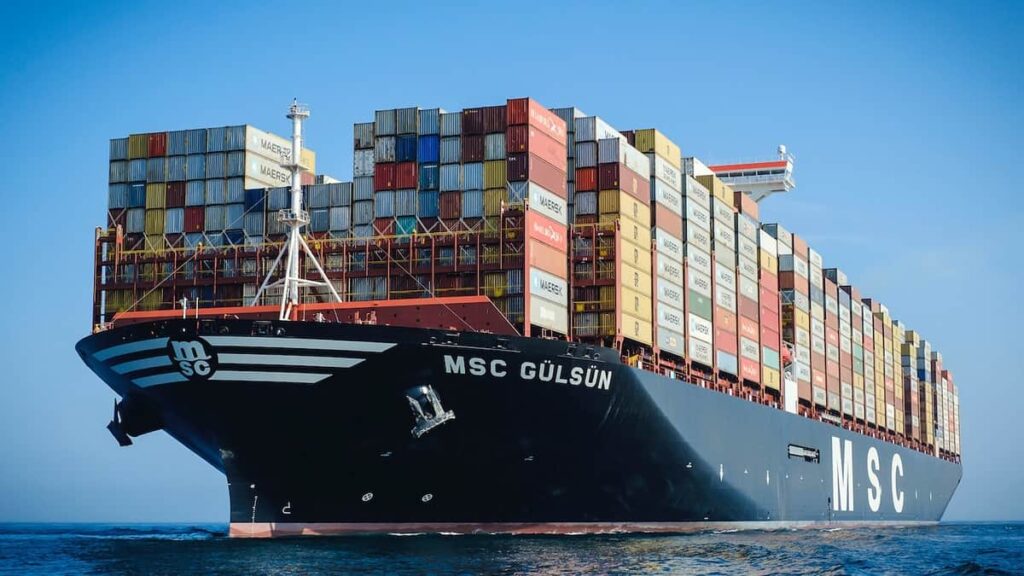
Standardized intermodal shipping containers have revolutionized the worldwide transport of cargo. When a container can be shipped to a port, then lifted off the ship by crane and placed directly on a rail car, then transported to another hub and lifted off the train and placed directly onto a truck trailer, all without unloading that container, costs are greatly reduced.


Guess who manufactures the lion’s share of those containers, though?

Three large Chinese companies—CIMC, Dong Fang, and CXIC—produce approximately 82 percent of all containers, according to the report. Combined with some smaller firms, China makes over 95 percent of these containers, and the only other ones produced are for specific regional markets or in nonstandard sizes.

So essentially all standard-sized containers used in global shipping, roughly 44 million boxes, were manufactured in China, as well as around 86 percent of all intermodal chassis. China’s state-owned container manufacturers benefit from large government subsidies and other benefits. And in seemingly coordinated fashion, they slowed production of new containers when demand initially rose during the pandemic, leading to prices nearly doubling from early 2020 to today.

China took control of container manufacturing in the 1990s, stealing market share from South Korea, according to FreightWaves. A coalition known as the China Container Industry Association, or CCIA, directs most of the activity, and it’s dominated by CIMC, the world’s largest container manufacturer, producing about 40 percent of the world’s containers.

(more…)

Paging Pappy Boyington and Lt. Cols. Edson and Chesty Puller

Thursday, April 7th, 2022

This year will see the 80th anniversary of the Guadalcanal campaign. Guadalcanal was at the end of a chain of Japanese bases radiating from their main bases at Rabaul and Truk. Japan pushed these bases out with the aim of interdicting supply routes between the US and their ANZAC allies. After relieving the threat to Port Moresby on New Guinea with the Battle of the Coral Sea, the US saw an opportunity to check Japan’s advance towards the New Hebrides. Guadalcanal’s strategic location was ideal for the airfield Japan had under construction. The Marines invaded in August 1942 and after a tough six month battle, the US had secured a base that set the stage for Operation Cartwheel, a major campaign aimed at neutralizing Rabaul.

Gudalcanal’s location in relation to sea lanes between the US and Australia is no less strategic today, which is why plenty of alarm bells are sounding after the government of the Solomon Islands announced a security agreement with China last week.

Solomon Islands Ministers of Foreign Affairs and External Trade Hon Jeremiah Manele and Minister of Police and National Security and Correctional Services, the Hon Anthony Veke jointly announced that officials of Solomon Islands and the Peoples Republic of China have initialed elements of a bilateral Security Cooperation Framework between the two countries today.

The draft Framework Agreement will be cleaned up and await signatures of the two countries Foreign Ministers.

Solomon Islands reiterate that the Framework of Cooperation is to respond to Solomon Islands soft and hard domestic threats. Solomon Islands continue to roll out the implementation of its National Security Strategy and uphold its Foreign Policy of “Friends to all and enemies to none.”

(more…)

Paper Tigers

Thursday, April 7th, 2022

Joe Doakes from Como park emails:

Richard Fernandez writes an uncomfortable column about Ukraine, and the United States.

Joe Doakes

As with pretty much everything Fernandez has ever written, it’s worth a read; in this case, a pull quote:

In a counterfactual world where the Russian president agreed with this site and continued to feint, where NATO was still in awe of the supposedly unstoppable Russian army and Putin still hitting Biden up for nickels and dimes to keep him from unleashing it, the Kremlin might still be the capital of a great power. But it would be no more substantial than a fleet-in-being that is nine-tenths shadow and one part solid is; a thing powerful only in narrative. For in truth, Russia fell a long time ago with its crashing demography; its uncompetitive, oligarch-ridden industries; its incompetent autocratic leadership. Ukraine was a mirror into which Putin dared look when a man of his mien ought not. But whether he looked or not he was ugly just the same.

If there’s any lesson in this for Washington, it must be to ask: how much of America’s power is a myth, like Russia’s? Dare we collapse the wave function? If too much is spin, then put it not to the test, but keep on bluffing until the reality is restored. You can’t live in the narrative forever.

I’m going to suggest you read the whole thing anyway.

The Tesla, my friend, is blowing in the wind…

Wednesday, April 6th, 2022

Leftism is all about harnessing the power of pixie dust and expeller pressed unicorn horn oil. I wish the laws of economics and of nature to be different, therefore they are. One way magical thinking manifests itself is the sun-dappled dream that we can get rid of fossil fuels, switch to electric vehicles, the changeover will be painless, and we won’t notice any change in our standard of living.

An electric car is, well, electric, and electric is easy because I can just plug in my Vitamix blender at home to make my artisanal kale smoothie and it just turns on and couldn’t be simpler. So having an electric car will be just as easy!

Michael Lind has a good article in Tablet outlining the difficulties in putting an electric car in every garage. Never mind how we’re going to “cleanly” produce all the electricity these vehicles would consume. Electric vehicles, and especially the batteries that power them, require the kinds of natural resources that don’t grow on trees.

But according to experts on global mineral production who belong to SoS Minerals, in a letter delivered to the British Committee on Climate Change:

The metal resource needed to make all cars and vans electric by 2050 and all sales to be purely battery electric [in the UK] by 2035. To replace all UK-based vehicles today with electric vehicles (not including the LGV and HGV fleets), assuming they use the most resource-frugal next-generation NMC 811 batteries, would take 207,900 tonnes cobalt, 264,600 tonnes of lithium carbonate (LCE), at least 7,200 tonnes of neodymium and dysprosium, in addition to 2,362,500 tonnes copper. This represents, just under two times the total annual world cobalt production, nearly the entire world production of neodymium, three quarters the world’s lithium production and 12% of the world’s copper production during 2018. Even ensuring the annual supply of electric vehicles only, from 2035 as pledged, will require the UK to annually import the equivalent of the entire annual cobalt needs of European industry. …

Challenges of using ‘green energy’ to power electric cars: If wind farms are chosen to generate the power for the projected two billion cars at UK average usage, this requires the equivalent of a further years’ worth of total global copper supply and 10 years’ worth of global neodymium and dysprosium production to build the windfarms.

There is not enough cobalt, neodymium, or lithium being mined and refined in the entire world today for Britain to meet its green transition goals in the next generation. And Britain has only 67 million people. The United States has 330 million. The world has nearly 8 billion. Do the math.

(more…)

This just in, Iran still pursuing ballistic missile program

Tuesday, April 5th, 2022

Last week the Treasury Dept imposed sanctions on an individual and four related companies that “procured ballistic missile propellant-related materials for the Islamic Revolutionary Guard Corps Research and Self Sufficiency Jihad Organization (IRGC RSSJO), the IRGC unit responsible for the research and development of ballistic missiles.”

This was in response to “Iran’s missile attack on Erbil, Iraq on March 13 and the Iranian enabled Houthi missile attack against a Saudi Aramco facility on March 25 as well as other missile attacks by Iranian proxies against Saudi Arabia and the United Arab Emirates.”

The individual had “been personally involved in high-level meetings and traveled with senior IRGC RSSJO officials and, in his role as the manager of Sina Composite, procured processing machines for nitrile butadiene rubber (NBR) from China using falsified shipping documents.”

One of the companies “has procured centrifuge spare parts used in the production of ballistic missile propellant valued in the hundreds of thousands of dollars from suppliers in China.”

In response, Iran’s Foreign Ministry said:

“This move is another demonstration of the ill-will of the US government toward the Iranian nation, which is a continuation of the failed policy of maximum pressure by that government against Iran, and this clearly proves the fact that the current US administration, contrary to what it claims, uses every opportunity to level baseless accusations against the Iranian people and impose pressure on them,” Saeed Khatibzadeh said.

“The US claims to be ready to return to full implementation of its obligations under the nuclear deal, while it continues to significantly violate the UN Security Council resolution 2231.”


2231 is the resolution (text here) in support of the original JCPOA. That’s a bit rich, accusing the US of being in violation. The resolution said this of Iran’s missile program:

Iran is called upon not to undertake any activity related to ballistic missiles designed to be capable of delivering nuclear weapons, including launches using such ballistic missile technology…

If you believe Iran isn’t trying to build a nuclear missile program, there’s a place for you in the Biden Administration. This would be the same administration currently trying to negotiate a return to the JCPOA with Iran. I always wonder if the Treasury Dept’s Office of Foreign Assets Control ever gets invited to the White House Christmas parties. They are diligent about keeping tabs on Iran. I’m always amazed the commissars in the White House let them issue all these sanctions. It makes all these negotiations in Vienna look rather silly.

What’s more, this Iranian missile program is proceeding with the assistance of China. Factor things like this in when you wonder why China was sliding stacks of dollars to the Bidens.

Hunter the Mighty Nimrod

Friday, April 1st, 2022

Yesterday we took a brief gander at China’s Belt and Road Initiative (BRI), an infrastructure project on a grand scale meant to ensure China has access to the natural resources it needs and to facilitate trade going the other way.

In a serendipitous development in the Hunter Biden saga, yesterday the Washington Post published a story accepting as fact the reporting the New York Post did back in October 2020 based on the contents of a laptop that Hunter Biden left in a repair shop.

(This would be the same reporting the fools at Facebook and Twitter tried to stop from spreading. In addition to the reporting the New York Post did, NY Post columnist Miranda Devine wove all the disparate threads into a coherent story of corruption in her book Laptop From Hell.)

The initial reporting on the laptop focused on Hunter Biden’s involvement in Ukraine and his position on the board of Burisma even though he had no experience in Energy etc… That was not the extent of Hunter Biden’s money-grubbing, not by a long shot. He was also chasing deals in China, and the Washington Post story focuses on the China angle.

The deal was years in the making, the culmination of forging contacts, hosting dinners, of flights to and from China. But on Aug. 2, 2017, signatures were quickly affixed, one from Hunter Biden, the other from a Chinese executive named Gongwen Dong.

Within days, a new Cathay Bank account was created. Within a week, millions of dollars started to change hands.

Within a year, it would all begin to collapse.

While many aspects of Hunter Biden’s financial arrangement with CEFC China Energy have been previously reported and were included in a Republican-led Senate report from 2020, a Washington Post review confirmed many of the key details and found additional documents showing Biden family interactions with Chinese executives.

Over the course of 14 months, the Chinese energy conglomerate and its executives paid $4.8 million to entities controlled by Hunter Biden and his uncle, according to government records, court documents and newly disclosed bank statements, as well as emails contained on a copy of a laptop hard drive that purportedly once belonged to Hunter Biden.

(more…)

The China-Pakistan Economic Corridor

Thursday, March 31st, 2022

Beginning Wednesday, China is playing host to a meeting in Tunxi ostensibly on Afghanistan and attendees include various neighbors of Afghanistan. Of greater interest are the side meetings taking place there.

China will host a series of meetings about Afghanistan on Wednesday, featuring representatives of Russia, the US, the Taliban, and South and Central Asian countries, as it ramps up diplomatic engagement with its troubled neighbour.

The meetings in Tunxi, in the eastern Chinese province of Anhui, will be a rare instance of officials from Moscow and Washington meeting since Russia invaded Ukraine last month.

The Chinese foreign ministry said on Tuesday that Yue Xiaoyong, China’s special envoy to Afghanistan, would host counterparts from the United States, Russia and Pakistan for the latest “troika plus” talks.

The four-way meeting will be held on the sidelines of a conference of ministers from Afghanistan’s neighbours, at which Foreign Minister Wang Yi will host ministers and officials from Iran, Pakistan, Russia, Tajikistan, Turkmenistan and Uzbekistan, the Chinese ministry said.

Out of one of those side meetings came this little item.

Foreign Ministers of Russia and Iran Sergei Lavrov and Hossein Amir Abdollahian at a meeting in China confirmed the desire of both countries to strengthen cooperation in all areas, despite the sanctions imposed by Western countries against Moscow and Tehran, the Russian Foreign Ministry said in a statement following the meeting.

Russia talking with Iran, in China. What could go wrong? Even though Lavrov has a shooting war on his hands, and has a hostile West to deal with, he still found time to fly to eastern China. A sign, I think, of the value Lavrov saw in making the trip.

What form this joint sanction-busting cooperation might take is unclear, but there are other interesting things to keep an eye on here. China made this comment at the conference (bold is mine)…

(more…)
--> Site Meter -->