Archive for the 'Geekery' Category

De Godenfar – The Norwegian Mob in America, Part IV

Thursday, December 10th, 2009

We continue with Andy DiLigio’s expose on the Norwegian Mob in America; the Capone years.

Inside The Norwegian Mob In America

Andy DiLigio

It was 1947; the funeral of mobster Alfonse Capone, at a cemetary in south Chicago.

In attendance were a small collection of ageing ex-gangsters, a few newspaper reporters, a couple of not-all-that-surreptitious Feds…

…and a single middle-aged man in a US Postal Service uniform.

——–

Colorful mob capo Al Capone had cut a bloody, flamboyant swathe through American organized crime.  He co-opted entire city governments, including those of Chicago and Saint Paul.  He took out bloody vengeance on friend and enemy alike for slights real and imagined, business and personal, up to and including the Valentine’s Day Massacre.

Of course, all of his power and influence traced back to legislation – Prohibition – engineered by a shadowy cabal of Norwegian-Americans; The Volstead Act was initiated by John Volstead, born “Vralstad” in the Norwegian-American community of Granite Falls, initiated into the Mob at Saint Olaf, the outwardly-bucolic campus in Northfield, Minnesota that has served as a training ground for so many Norwegian mobsters.

Eventually, Capone got too powerful.  The Feds made a great show of floundering about trying to shut down Capone and his gang.

And then – in the late twenties – the FBI plucked a young agent, Elliot Ness, from obscurity, and “tasked” him with trying to bring Capone down.

And on the surface, he was having absolutely no luck at all.

Capone, like most of the Italian, Irish and Russian/Jewish gangs that the Hartelowen family ran like puppets, lived large and flaunted his wealth and power.  And yet, he made certain to keep his legal bases covered.  He owned so many judges, prosecutors and cops in Chicago (as well as his summer home, Saint Paul) that nobody could ever bring a case against him.

Worse still?  Agent Ness noted in his diary that Capone was absolutely, rigidly punctilious about the one thing Ness had counted on to try to bring down other mobsters.  From a report to J. Edgar Hoover, in Ness’ handwriting, from the Ness personal papers:

My informants tell me that Capone lacks the one achilles heel of most mobsters; he is punctilious to the point of obsessive-compulsion about filing his taxes.  We have a recording of a conversation with one Capone staffer, a “consigliere” named Vittorio D’Amato; “that’s the Chicago way; you get five dollars in income, you put one of ’em in the bank; you get a tax form, you put it in the mail!”.

Mr. Hoover, if he is this punctilious about paying his taxes, I have no idea how we’re going to break this case.

Yours,

Ness

P.S. No, I have not seen a gladiator fight.

And yet, within the year, Ness was able to write to Hoover:

Mr. Hoover,

I just had the most extraordinary break on the Capone case.  An anonymous informant left me a message saying that Capone had not filed taxes for seven years.

And, oddly, the next morning, I came to the office to find that someone had left a Chicago Street Department barrel with dozens of un-postmarked manila envelopes addressed to the Internal Revenue Department, from Mr. D’Amato, Mr. Capone’s accountant.  Many of these envelopes were rain-damaged and heavily weathered and stained apparently by the effluvia of other trash, while others – newer ones – were relatively pristine.  In these envelopes were contained all of Mr. Capone’s tax documents for the previous eight years.

Mr. Hoover, I believe this gives us leave to prosecute Mr. Capone for tax evasion.

I’m not sure if you or “Mr. Giggles” believes in God, Mr. Hoover, but after this, I’m a believer.

With Warmest Regards,

Elliot Ness.

Within the year, the federal government sought and got a conviction against Capone, who served eleven years in prison.

Among those testifying at his trial was his postman, Lars Hartelowen.  Who testified that everything always seemed above-board at the Capone residence.

———-

As I sat, drinking Folgers and eating krumkakke at the Ace Cafe, Jeff Hartelowen indulges in a rare outburst of emotion – a mild chuckle.

“That was Dad’s (Lars’) greatest accomplishment; getting all them Italian mobsters to spend time in Saint Paul.  Right under our noses.  They thought they owned the place, ya?” he says, smiling in a way that seems to pull his face unnaturally, “but they didn’t make a move that wasn’t being watched by us”.  His Rådgiver Yetterboe and his son grin.  “And Elliott Ness?

“What about him?” I ask, not quite following. Yetterboe shakes his head.

“Well”, says Hartelowen, patiently, “who do you think Ness was really working for?”

Next week:  Gødfellås

De Godenfar, Part III – The Norwegian Mob In America

Tuesday, December 8th, 2009

Today, we resume with the third installment of Andy DiLigio’s “Inside The Norwegian Mob”.

Inside The Norwegian Mob

Andy DiLigio

After Bjørn and Gerda Hjerteløven got married, in 1895, the Norwegian crime syndicate grew to unprecedented power and influence in New York, by quiet but ruthless control of its proxies in the Italian and Irish organized crime syndicates.  The Italian, Irish, Jewish and other gangs made boundless money, and secured unlimited political power, second-hand, for Hjerteløven and his small, ultra-secretive band of Norwegian co-conspirators.   By 1910, Hjerteløvens had made millions, and concealed it with the same quiet but ruthless effieciency he did everything else; he subtly exploited their Italian/Irish leaderships’ taste for the ostentatious high life to distribute money to a cleverly-hidden network of modest, Norwegian-owned businesses – bakers, tailors, bartenders, gun merchants, pasta wholesalers and the like – in the most ingenious, bulletproof money laundering scheme in all of history.  Indeed, it wasn’t for nothing that North Dakota – heavily settled by Norwegians covertly linked to the mob – became the world’s largest source of the durum wheat used to make pasta; it both laundered money and exerted control over Hjerteløven’s mediterranean minions.

And whenever one of the Italian or Irish gangs got to be  “too big for its britches”, as Hjerteløven used to say, he’d engineer a bloody gang war that’d eviscerate both gangs’ leaderships.  In the rare more dire situations, Hjerteløven would subtly invoke government sanction, using his iron-clad Scandinavian passive-agression to turn the other non-Scandinavians’ own brutality and aggression against the more dem0nstrative, overtly-aggressive non-Scandinavians.

But Bjørna Hjerteløven’s greatest, most ingenious work was yet to come.

New York was getting too small for him.  He needed to expand the family’s horizons.

In 1917, as the US lurched into World War I (in which Hjerteløven’s three sons, Lars, Berndt and Knud all served), Bjørn and Gerda Hjerteløven took a trip via railroad (coach class, naturally) to Bemidji, Minnesota, ostensibly to visit Bjørn’s sister Helge.  But the trip included a side-jaunt to Granite Falls, during the 1917 Congressional recess, to visit Andrew Volstead, who was at the time one of Minnesota’s congressional delegation, and the chair of the House Judiciary Committee.

And who was, as it happened, the son of Jon Einartson Vraalstad, a Norwegian immigrant.  “Volstead” had been born Vraalstad or Vrolstad, and had anglicized his name before attending Saint Olaf College in Northfield – which has long been one of the great incubators of the Norwegian mob.

The details of the meeting are long lost to history –  if, indeed, the Norwegian mob’s legendary secrecy allowed them into history at all – but in the subsequent session, Volstead introduced the “Volstead Act”, which passed the following December, and was ratified as the Eighteenth Amendment to the United States Constitution within two years, prohibiting the production, distribution or sale of alcohol.

The investment of time paid off immediately.  Mobsters took over the illegal booze trade, kept in line behind the scenes by by Hjerteløven’s constant gang wars.

And as the Hjerteløven boys came home from the First World War, Prohibition had made their family the richest, most powerful and most feared family in the world – although virtually none of the world knew anything of it.

By 1920, with an organized crime empire that had exploded outward from New York with federal help, Bjørn Hjerteløven sent his sons forth to manage the rapidly growing empire.

Knud moved to rural Lindstrom, Minnesota, and opened a dairy farm – largely to provide land under which the family could bury hoards of cash.

Lars decamped for Chicago, and – per the norm for Norwegian mobsters – took an exceedingly modest cover job with the government.

Berndt moved to New Jersey, where he opened a small bar in rural Monmouth county.

But before any of that, Bjørn Hjerteløven changed the family name, anglicizing it to “Hartelowen”.

And it was as “Hartelowen” that the family (not “the Family”; too ostentatious) consolidated their iron grip on organized crime in America.

Thursday – the entirely-Norwegian-instigated rise and fall of Al Capone.

That’s The Spirit

Wednesday, December 2nd, 2009

I came across this on my cyber paper route today and it caught my interest as a Scotch/Whiskey/Bourbon drinker (in moderation, of course)…

We can make so much more of malt whisky as an industry,” said Thomson, 54, who submitted plans for local government approval on Nov. 12. “We haven’t even begun to tap into the potential interest.”

Economic gains in China and India are fueling a growth market for the better booze.

I like to sip Glenfiddich, Jack Daniels and recently started a bottle of Old Weller Antique 107 (thanks Dad).

What are your favorite malt spirits?

Patience Is A Virtue

Tuesday, December 1st, 2009

Our world today is just too hectic. Too pell-mell. People never stop and smell the roses.

Add to that the ethical and spiritual degradation that comes from expecting immediate gratification for your desires – which is one of the great spiritual cancers of our time.

So when people tell me Shot In The Dark is loading slowly for the past few days, I respond “You’re welcome”. I’m doing it for your own good.

Slow down. Smell the roses. Spend the time you wait for the site to load with your kids. Have a single malt and read a good book while the page loads.

I’m doing it for you.

(No, I think one of my ads is hanging up. I’ll try to figure it out this evening).

Brain Candy

Friday, November 27th, 2009

I tried this online game thingie – ten minutes to remember every country in Asia and the Middle East

I got 46 out of 48, officially – although one of the ones I “missed” I knew, but spelled wrong.

Things Newt Gingrich (Maybe) Never Said

Wednesday, November 25th, 2009

I came across this quotation allegedly by Newt Gingrich today:

“I am not so shocked that Obama was given the Nobel Peace Prize without any accomplishments to his name, but that America gave him the White House based on the same credentials.”

Hah, hah. It’s funny cuz it’s true, etc. etc. That’s not really my point.

My point is that I cannot for the life of me find any source cited for the quotation, even though it’s easy to find it repeated all over the Internet. It’s always attributed to Newt, but never linked to any source. This lack of sourcing is pretty unusual for a modern quotation in Internetland. And that bugs me.

So I’ve done a little more digging and it looks like I may have found the original source of the quote. Emphasis on the “may” here.

(more…)

Tis The Season

Tuesday, November 17th, 2009

Thursday, November 19, is National Ammo Day – a great day to not only restock the home arsenal, but to send a tacit, affirming message that your liberty is not here to be fed upon by vermin, whether in ski masks or wearing three piece suits.

Ammo is scarce, these days; every day’s been Ammo Day since Obama and his pack of gun-grabbers took office.

All the more reason to get out there on Thursday.

(And if you have a good line on .45ACP, by all means do holler…)

Preliminary Findings

Monday, November 16th, 2009

I’m not a big “sun ‘n beach” person; I’d be at least as happy touring the Highlands as vegetating on a beach in Cozumel.

But I am from North Dakota, so you know I’m a maritime kind of guy.  The salt water is in my veins.  And so while I’m not a “cruise” kind of guy, necessarily, I do love ships.  I think if someone refitted a World War II destroyer as a cruise ship – for a smaller, hardier, less BS-amenable passenger base, natch – I’d dig it.

As opposed to, say,  this thing:

The 16-deck Oasis of the Seas docked Friday at Port Everglades in Fort Lauderdale. It set sail from Finland to Florida in late October.

Sixteen decks.  It’s like the Riverside Plaza Apartments, at sea.  Ew.

The massive $1.5 billion vessel is nearly 40 percent larger than the industry’s next-biggest ship and five times larger than the Titanic. It has 2,700 cabins and can accommodate 6,300 passengers and 2,100 crew members.

And that, ladies and gents, is just too damn big. It’s like going to sea amid a Vikings game at the Dome.

The ship also features various “neighborhoods”—parks, squares and arenas with special themes. One of them will be a tropical environment that will include palm trees.

I’m wondering if the steerage “neighborhood” includes “crack cabins”?

Hot Plan Friday

Friday, November 13th, 2009

So I’ve had a Hot Gear Friday post written about my favorite bit of hot gear – my highly-hotrodded 1960 Fender Jazzmaster – for almost a year now.

But can I get my daughter – who has the family’s only camera – to take a Glamour Shot of it?

Grrrr.

Soon.  Really.

Open Letter To E*TRADE

Tuesday, November 10th, 2009

To: E-Trade
From: Mitch Berg
Re: The Kid.

To whom it may concern,

While I’ll allow that the line “Shankapotamus” is inspired and hilarious, I can’t get around the fact that doctoring a toddler to sound like a whinging, chick-drink-slurping late-twentysomething yuppie…

…gives me the serious creeps.

That is all.

A Mind Is A Terrible Thing To Waste

Monday, November 9th, 2009

Interesting webtoy from the NYTimes for figuring and visualizing unemployment trends by demography, age, gender and edumacation.

White college educated males (Mitch raises hand) over 45 are around 4.1% so far.  Which is up from somewhere around 2% two years ago.  Rates for women in pretty much every combination seem to be lower than for men, indicating that feminists can quit their whining about the unfairness built into the system.

Black males from 15-25 without high school diplomas are up toward 50%, unfortunately; the rate drops by about half with a high school education, and half again with college; the feminization of poverty would seem to have missed a spot.

Question:  I wonder if anyone’s done crosstabs for people who were home-schooled, charter-schooled, parochial-schooled or alt-schooled versus recent public school graduates?

Instant Huh? Voting

Friday, November 6th, 2009

Speaking of Instant Runoff Voting…

Who is it who actually “ranks” their choices, anyway?  Maybe my point of view is skewed because I am a guy who has – and my social circle is a lot of politically-aware people who also have – strong opinions who know who they’re voting for and why, but I can’t remember a single election where I had a second choice for any office.

I went back through the last several key, contested elections, and entered “ranked choices” for each race.

Saint Paul Mayoral Election, 2009
First Choice: Eva Ng
Second Choice: My dog, Clu.
Third Choice:  A jab in the eye with a sharp stick.

Minnesota US Senate Race, 2008
First Choice: Norm Coleman
Second Choice: My cat, Nosemarie.
Third Choice: Getting ripped apart by mice.

Minnesota Fourth District Congressional Race, 2008
First Choice: Ed Matthews
Second Choice: Being forced to sit in booth at Denny’s listening to Ken Weiner, Bill Pendergast and Eva Young frothing about Michele Bachmann for all eternity..
Third Choice: A “Spongebob Squarepants” marathon.

Minnesota Gubernatorial Race, 2006
First Choice: Tim Pawlenty
Second Choice: My other cat, Candy.
Third Choice: Gouging out my own eyes with a spork.  (This was almost a tie for third, by the way; Candy has this habit of biting my nose at 4AM that has her on my schvitz list today).

Minnesota Fourth District Congressional Race, 2006
First Choice: Obi Sium
Second Choice: Drinking a fifth of my own fermented sweat .
Third Choice: Going to “Drinking Liberally” and drinking heavily.
Fourth Choice: Gargling with Drano
Fifth Choice:  Going to “Drinking Liberally” and not being allowed to drink at all.
Sixth Choice:  Any cast member from “The Hills”.
Seventh Choice: Betty McCollum.

US Presidential Race, 2004
First Choice: George W. Bush
Second Choice: Brussels Sprouts
Third Choice
: Any random western European leader...

US Senate Race, 2002
First Choice: Norm Coleman
Second Choice: One of those gas-station burritos, after it’s been sitting on my car seat on a hot day.
Third Choice: Rick Kahn’s speech, on eternal loop, forever.

US Presidential Race, 2000
First Choice: Steve Forbes
Second Choice: Jack Kemp.
Third Choice
: Steve Forbes.

Now, like most people, I do believe most people are like me.  Or, rather, that most people who should be allowed to vote are like me.

Oh, that sounded so intolerant; what I mean is that I suspect most people who actually care enough about politics to care about their voting system at all, really don’t go into the polling place with any sort of “second choice” in mind.  We go into the polls wanting victory for the candidate who represents our beliefs the closest, and not a lot more.

Who actually has some notion of “ranking” choices in elections?  I’m curious.

class: Alley(TinPan)

Thursday, November 5th, 2009

One of the odd things I”ve observed in 16 years in one form of IT or another; many of the best programmers I have worked with majored in, of all things, music.

This seems counterintuitive to people whose primary background is engineering, mathematics,  software or other stereotypically left-brain activities, who tend to think music is far-right-brain and emotion-driven.  There’s something to that – but there’s much more to it.

Mastering an instrument, music theory, and especially any kind of serious composition, particularly jazz or “classical”, is a frightfully logical activity.  Those who do any of the above really, really well often have many of the mental tools needed to be good software engineers – not that the academic mainstream of either discipline brags about it much.

One of the examples of this – a colleague of mine from a dotcom we both worked at back in the nineties – extends the idea, classifying programmers in classical music terms:

For example, some engineers are Beethovens. Driven perfectionists, constantly refining and revising their code, never content for it to be just “good enough”. Beethovens are utterly fearless about using “revolutionary” new approaches and techniques. They aren’t motivated by what’s fashionable or lucrative; their only concern is to blaze new trails and create radically innovative solutions that nobody has ever seen before.

I’ve known a few of these.  In at least one case the programmer I’m thinkiing of (not the author that I’m linking to, just to be clear), like Beethoven, had no problem insisting it was everyone else’s duty to support him (in terms of organizational effort and project time rather than financially, in this case) as he worked on his grand transformation.  The Beethoven analogy seemed particularly apt.

Other engineers are Mozarts. Great software just seems to “pour” out of them, as effortlessly as breathing. They’re not so concerned with breaking new ground, but their code “just works” and is elegant and easy to understand and maintain. They are masters of the tools of the trade. They’re not always reliable though, preferring to avoid work, and don’t like producing on a deadline.

Then there are the Haydns. Steady, dependable, consistently cranking out one app after another like a machine. While the Beethovens and Mozarts work best on their own, Haydns are great delegators and collaborators. Their code isn’t likely to change the world, but neither is it likely to crash or contain bugs, and you can count on them to deliver on time and under budget.

It seems like I’ve been running into a lot of Neil Diamonds and Desmond Childs lately.  And I think at least one of the author and my mutual acquaintances might pass for Richard Wagner.

It’s too bad Music History isn’t taught in schools any more, because this would be a great software engineer interview question: “If you were a composer, which one would you be?”. I wonder how many recent computer science students could provide an intelligent answer?

Convinced as so many from both the “hard” sciences and the humanities are that never shall the ‘twain meet, mentally speaking, I’d suggest “zero”. 

And “Agile” development is the equivalent of the Brill Building.  And not in the Goffin/King sense of the term,  if you catch my drift.

Sitcom Interlude

Friday, October 30th, 2009

It’s Friday – the official day in the blogosphere when you don’t have to apologize for posting about frivolous stuff (Friday “cat blogging” comes to mind), even on supposedly “serious” blogs. To help SITD keep up with that glorious tradition, here is a post that has nothing to do with politics, elections, the economy, or geo-politics. This post is about the media equivalent of junk-food – television sit-coms!

I’m not the world’s biggest television junkie. In fact I go through long periods when I hardly watch the thing. However with the advent of online television show viewing I’ve actually been able to keep up with a few of this season’s shows. Here’s my mid-season report on some current sit-coms I’ve been following. Follow along if you care.
(more…)

Ideas

Friday, October 30th, 2009

I’ve never much cared for Halloween; being done with it is one of very, very few reasons I look forward to my kids both being over 18.

But Katie Kieffer has some costume ideas that might even rekindle some of that Halloween spirit.

Like, Obama Administration “czar”:

With about 32 personalities to choose from, you should easily be able to find one you can dress up like.

Hold a sign that says: “I’m a Czar and life’s too short to follow the Constitution.”

I was thinking about going as an angry, overtaxed middle class guy.

Where will I find a costume, though?

Bifecta of Cool

Wednesday, October 28th, 2009

What could possibly beat getting my first Instalanche in three years and change?

Getting linked from Backstreets.com, the official home of all things Bruce, that’s what!  The Jersey News Turnpike linked to yesterday’s piece on Garry Tallent’s birthday.

When I was in my twenties, ekeing out a living as a freelancer, and still trying to make it in music, I used to fantasize on how cool it’d be to get an article in Backstreets, back when it was entirely a paper production.  This works just fine, too!

(And I’m not gonna lie – there’s something just so fun about seeing that pageview counter sprinting into quintuple digits).

Anyway – thanks, newcomers, for stopping by!  Come back anytime!

That New Content Manager Smell

Monday, October 26th, 2009

So I installed WordPress 2.8.5 yesterday.  That is to say, I upgraded from WordPress 2.0.4 – which, in blog content manager terms, is kinda like going from a ’59 Buick to a ’09 Corvette.

Which isn’t to say the actual content is going to change or anything.  Just saying.

Strange Bedfellows; Great Cause

Sunday, October 25th, 2009

If there’s one thing that encourages me, it’s that people on both sides of the aisle are working against “Instant Runoff Voting”, which is going to get its first, sure-to-be-disastrous workout in Minneapolis’ next election.  There are elements in Saint Paul that also wat to institute “IRV” in Minnesota’s capitol city.

Of course, the NARN has has spoken with Andy Cilek of the Minnesota Voters Alliance for many years now.  The MVA states a pretty convincing case; IRV is a lousy idea.

And if you need to be convinced, still?  There’s opposition on the left as well.  It was my pleasure to interview one of my longtime political sparring partners, Chuck Repke of Saint Paul, yesterday on the NARN.  Chuck is with No Bad Ballots.  He and I disagree on just about every subject imaginable – and I imagine it’s at least mutual between Repke and Cilek.

But IRV is such a terrible idea, it’s hard to even know where to start.

  • While proponents say it’ll result in elections with true majorities, it’s patent rubbish; the experience in San Francisco shows that in the end, after all the “spoiled” ballots (ballots whose ranked choices never wind up including one of the finalists), the “Majority” can be south of 40% of voters.
  • For all the lefties who were caterwauling about the evils of electronic voting machines between 2000 and 2006, it’ll be comforting to know that IRV counting machines will use a highly complex algorithm, leave no paper trail, centralize all vote counting (and thus make skullduggery that much easier to conceal) and rely entirely on the integrity of the vote-counting authorities.
  • Oh, yeah – the machines don’t exist yet, so the Minneapolis election will be hand-counted, and not be certifiably until December.
  • And as a usability guy, the just plain usability issues involved with the ballots and the procedure for filling them out are – I’ll be diplomatic – mind-boggling.

I don’t care what  side you’re on.  IRV is just plain stupid, and needs to be gassed.  Three of the cities that adopted it with much fanfare over the past decade – including Tacoma Washington – are dropping it with extreme prejudice.

Let’s be done with this lunacy.

Everything That’s Old Is New Again

Friday, October 23rd, 2009

Well, that was interesting.

Honest – it worked so well in rehearsal!

An attempt to update the site display code ended pretty disastrously last night.  We backed up the whole site – which brought back our old template. 

(Shrugs).

Part of the problem is that I haven’t updated WordPress (the content manager, the program that does all the display-fu for the blog) since I installed it after the, um, 2006 elections.  Since there’ve been, er, three or four major releases since then, and there’s been no maintenance on this particular version in well over a year, it’s high time I updated things.

Which usually means things are going to break. 

But if it’s raining this weekend, I’ll be updating the code, and then getting to work on perhaps updating the site’s “look and feel” for the first time since, ahem, 2003. 

Self():=TemplesOfSyrynx(Priests)

Thursday, October 22nd, 2009
Is it pathetic that this made sense to me?

void tomsawyer() {
try {
assertequals(you.say(his_company), you.say(society));
}
catch (mist) {}
catch (myth) {}
catch (mystery) {}
catch (drift) {}
finally
{
Runtime.exit(TomSawyer.WARRIOR);
}
}

I’m tempted to compile it.

(Via Geekboy)

Only In Wisconsin

Monday, October 19th, 2009

Bear walks into liquor store, falls asleep in the beer cooler:

The bear stopped Friday night at Marketplace Foods in Hayward, about 140 miles northeast of Minneapolis, sauntering through the automatic doors and heading straight for the liquor department.

It calmly climbed up 12 feet onto a shelf in the beer cooler where it sat for about an hour while employees helped evacuate customers and summoned wildlife officials.

Officials from the Wisconsin Department of Natural Resources tranquilized the animal and took it out of the store.

So far, it’s almost like when Pack fans come to the dome – the “getting tranquilized and led out” bit, anyway.

But there’s evidence it wasn’t a Wisconsin bear after all:

Store workers say the bear seemed content in the cooler and did not consume any alcohol.

Also didn’t curse Brett Favre.

Mmmmm.

Tuesday, October 13th, 2009

Brisket, marinated 12 hours in Pepsi, rubbed with pepper and allspice, then 13 hours in the crock pot with potatoes, onions and carrots, served on Kaisers with Famous Daves’ barbeque sauce.

God Bless America.

Skål!

Friday, October 9th, 2009

Today is Leif Erikson Day, an actual national holiday named after the real first European to reach North America, nearly 500 years before Columbus.


The date has nothing to do with Erikson’s birthday or the date he discovered Vinland – both of which are lost to history. 

October 9 is, however, according to the Wikipedia article on the subject…:

…because the ship Restauration coming from Stavanger, Norway [from whence my mother’s maternal grandfather came about seventy years later], arrived in New York Harbor on October 9, 1825 at the start of the first organized immigration from Norway to the United States.

You’re welcome.

A Linux In Winter

Wednesday, October 7th, 2009

It was about six weeks ago that, frustrated by the reams of viruses that my kids unwittingly downloaded onto my home computer, I finally downloaded and installed Ubuntu Linux, after years (literally a decade) of thinking about it.

Reaction six weeks in?

What took me so long?

(Now I hope I haven’t jinxed myself…)

Piltdown Redux?

Thursday, October 1st, 2009

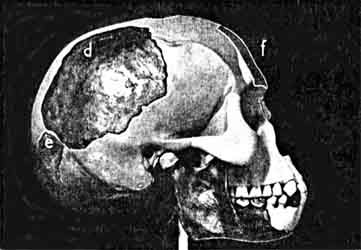
For about forty years the greatest scientific experts in the world were in broad agreement that the evolution of the human species included a critical phase involving a large brained but otherwise ape-like creature known as Eoanthropus dawsoni, or, more colloquially “Piltdown Man.” Piltdown man was discovered by amateur archaeologist Charles Dawson in a gravel pit in the village of Piltdown, in East Sussex, England. Dawson subsequently presented his find to the Geographical Society of London in 1912.

So broadly accepted was the existence of this creature as a critical step of human evolution that it was cited by famed lawyer Clarence Darrow in perhaps the most famous event in in the popular mind involving evolutionary theory since Darwin – the Scopes “Monkey Trial” of 1926. However in 1953 the world was stunned to discover that, far from being a critical step in human evolution, Piltdown Man had never existed at all. The fossil which lead to this belief was, in fact, a hoax.

But despite its notoriety there are useful lessons we can draw from the Piltdown hoax. One of the central lessons is that whenever a scientific problem beckons for a solution there is a predisposition within the scientific community to accept a certain kind of solution: the kind of solution which neatly fits the prevailing assumptions.

Piltdown was accepted readily despite flaws which were apparent from the start because it fit. It was not some groundbreaking revelation which caused scientists to rethink their assumptions about human evolution. Far from it. It was the very fulfillment of those assumptions. It was the long sought after “missing link” between man and the ape, and it looked exactly like they assumed it would – a big-brained ape. Mankind, so the thinking of the time went, first developed intelligence and afterward learned to walk upright and make tools and use language and the like. That was the story of human evolution as science was trying to tell it. Piltdown looked like it could have walked right out of that story book.

(more…)

--> Site Meter -->