Archive for the 'Election Integrity' Category

The Later Debate

Monday, October 3rd, 2011

Why, yes – I did spend a bit of time talking redistricting over the weekend, now that you mention it.

On the NARN, it was my pleasure to interview MNGOP Chair Tony Sutton and his deputy, Michael Brodkorb (punctuated by a surprise appearance by Wisconsin governor Scott Walker; I’ll be posting the podcast link as soon as I find it) about the redistricting process and all the outside money the left is pouring into Minnesota to try to skew the process in their favor.

And then, last night, I drove out to Ramsey to appear on “The Late Debate” with Jack Tomczak and Ben Kruse.  I was on a panel with Gary Gross of Let Freedom Ring, Mike Dean of “Common Cause Minnesota”, and Kent Kaiser, who is part of Draw The Line Minnesota’s (DTL-MN) “Citizens’ Commission”.  In the interest of accuracy, I’ll note that in my piece last week, I lumped Kaiser in with the Commission’s liberal hypermajority, because I personally didn’t know any better; Kaiser is of course well-known in GOP circles as one of the good guys; I regret the error…

…especially since he was the unquestionable star of last night’s debate.

I’m not going to try to reconstruct the whole thing from memory – you can check out their podcast at their site, and Gary Gross did an excellent rundown of the proceedings over atLFR.

I’ll recap this bit, though; I walked in there with two main points:  I walked out with four:

Who’s Politicized?:  As Kaiser noted, the GOP legislative majority’s proposal follows the letter of the law, and the spirit of the last several judicial decisions, pretty closely.  The DFL’s map was…well, nonexistant.  They never drew one up.

It was Governor Dayton’s veto that was, as Kaiser noted, exceptionally politically capricious.

And this entire process recaps a pattern we started seeing during the 2008 election, and rose to a crescendo in last year’s gubernatorial race; the DFL isn’t so much a political party as it is a political holding company, outsourcing its actual policy and boots-on-the-ground work to its “strategic partners” – the unions, and the array of astroturf pressure groups like “Alliance For A Better Minnesota”, “Take Action Minnesota”, MPIRG, and “Draw The Line”.

Outside Money: Behind all of Draw The Line and Common Cause’s noble chatter about getting people involved – nay, getting them interested – in the redistricting process, the fact remains that a raft of “progressive” organizations are doing their level best to try to jimmy the redistricting in their favor, in a census period in which GOP-leaning districts exploded and DFL-districts continued withering.  The demographics aren’t a state phenomenon – and either is the left’s effort; “Draw The Line” is a regional, not state, entity, focusing on trying to attenuate (at least) the gains the GOP should get from pure demographics.  More below.

Competition: One of DTL-MN’s priorities – because it’s one of the priorities of its supporting groups (Common Cause, the League of Women Voters, the MN Council of Non-Profits and Take Action MN), is “competitive elections”.  On a policy level, this goal – making sure that politicians are accountable to electoral pressure from their voters – is laudable enough.

It’s at the implementation level that it either breaks down or shows its ideological stripes, depending on your point of view.  Minnesota is a divided state – but not evenly or consistently divided.

Let’s look at the example of a hypothetical state of about five million people, which is closely divided on a statewide basis – but where the division stacks up as follows:

  • An urban core – three, really – of about a million people that votes about 70/30 Democrat.
  • An outer-suburban and exurban ring that votes, in a good year, maybe 52-55 percent GOP.  Let’s assume a huge year, and say it’s 55-45 GOP.
  • The rest of the state – about half the population – which, to arrive at the sort of dead-even split that the last three statewide elections have shown, would be divided about 52-48 in favor of the GOP.

Of course it’s not hypothetical at all.  Minnesota is exactly that; a couple of big blue boils, the Twin Cities and Duluth, two Congressional and 20 legislative districts that routinely deliver 70+% to the DFL, surrounded by an exurban ring that, in a blowout year, might go 55-45 GOP (only two GOP-owned legislative districts topped 70% GOP, as opposed to 20 for the DFL), and an outstate that tips a little bit GOP, but is close enough to send Tim Walz and Collin Peterson to Congress.

So to make Minnesota “competitive” across the board, the legislative map would have to look like a couple of bicycle wheels, with spokes radiating out from the Marshall-Lake Bridge (and Canal Park in Duluth) all the way out to the state’s borders; the Congressional map would look like a big Key Lime (mmm, Key Lime) pie.

That is, of course, not acceptable practice.  New boundaries must, as much as possible, preserve existing community boundaries.

The answer, of course, is that Common Cause want the Republican parts of Minnesota to be competitive, and to leave the DFL-dominated Twin Cities and Duluth, and their 20 districts, pretty much alone.

“When did you stop beating your minorities?”: As Gary noted at LFR last week, there is a noxious little bon mot tucked away in the DTL-MN’s site:  “Historically, redistricting has been done out of the public eye, without meaningful public input, and used to dilute the voting power of communities of color“.

The next sentence helpfully adds “Minnesota has a reputation for fair and clean government, but we believe we can do better“.

So if Minnesota has a “reputation for fair and clean government”, why mention trait that was a part of redistricting in Mississippi and Illinois and Alabama?  Because any thinking person knows that it’s immaterial to Minnesota’s history, right?

Of course; but the quote wasn’t included for the benefit of the thinking and literate audience; it was included to provide an inflammatory, polarizing soundbite for the ignorant – TV reporters and Strib columnists, for example – to latch onto.  Otherwise, if it has nothing to do with Minnesota’s history, why include it at all?

———-

That said, it was a fun time, and a generally good debate.  Up to the end, anyway.

I have been duking it out with Mike Dean of Common Cause for quite some time, mostly on Twitter.  I have been inviting him on the Northern Alliance to discuss Common Cause’s agenda and funding for a little over a year now; like many Twitter arguments, it’s been curt and acerbic.

And I’ll cop to the fact that I’ve had a bad attitude about Common Cause.  While they are disingenuous about being “non-partisan”, that’s fine; it’s a free country, you can say anything you want.  Hell, I can call myself “non-partisan” – but, of course, I don’t. More importantly, most of my impressions of Common Cause were formed in the early-mid 2000’s, when they agitated for a lot of really noxious policies, especially campaign finance reform speech rationing.

In person, Dean’s a heckuvva nice guy.  And he held his own pretty well, and stayed on his point, for the first 118 minutes of the show,. One of the points on which he stayed was an idea on which we all agreed at the beginning of the show; that we all wanted people to get more literate about and involved in the redistricting process, across the political board.

And so with that in mind, I reiterated my invitation to Dean to appear on the Northern Alliance one of these next weekends.

He turned it down – and then kept going.  “What do we gain from it?”  he asked, noting that in my blog’s coverage of Common Cause I (paraphrasing him closely ) published “fairy tales” and “made things up”.

Nope.  Never.  In almost ten years, this blog has published things I don’t reasonably believe to be true only when I’m pretty clearly writing satire.  No exceptions.

Oh, I may err at times, and on a point or two I was in fact wrong; as Dean noted, the Joyce Foundation doesn’t get money from George Soros.  But I can concede that point, without changing the conclusion that actually matters; while Joyce (and Common Cause MN, which is supported by Joyce) may not get money from Soros or his various shell groups, its’ goals nationwide are indistinguishable from those of the Open Society Foundation, Media Matters, the Center for Independent Media or any of the other Soros joints; to slap a phony “non-partisan” sheen on a partisan pressure industry.

So at the end of the day – literally, at two minutes to midnight – it became clear what the real mission is.  It’s not to reach out to people of all political stripes.  It’s to reach out to those who don’t know what their stripes are, but who can be inveigled into exerting themselves to fight against a vague, sorta-racist boogeyman.

And so the battle will continue.

Thank to Ben Kruse and Jack Tomczak for the invite – and to AM1280 for letting me appear off of Salem turf for an evening.
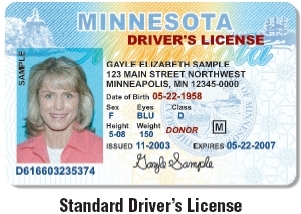
Just Keep Repeating To Yourself…

Monday, August 29th, 2011

…that “we have the best election system in the country“:

Six people have recently been charged in St. Louis County with a felony crime that is rarely seen on a Northeastern Minnesota court docket: “Voting while ineligible.”Its a felony punishable by a maximum sentence of five years in prison and a $10,000 fine, but a conviction most likely will result in a probationary sentence.Under Minnesota law, a person is ineligible to vote if his or her civil rights had not been restored after being convicted of treason, or any felony, or while under a guardianship in which a court order revoked the wards right to vote, or if found by a court of law to be legally incompetent.All six of the people charged – four at the St. Louis County District Court in Duluth and two at the St. Louis County District Court in Hibbing – are accused of being convicted felons when they allegedly voted in the November 2008 general election.”We discovered these cases left over from the previous administration,” St. Louis County Attorney Mark Rubin said. “Weve tried to address the backlog. We reviewed them all and charged those that were deemed to have probable cause to charge.”

And somehow, a Richfield man allegedly wound up voting up there:

Antonio Vassel Brown, 48, is being transported from the Minnesota Correctional Facility in Lino Lakes, where hes serving a 24-month sentence for the sale of crack, to make his initial appearance on the ineligible voter charge in Duluth on Aug. 30.

Best voting system in the country.  Best voting system in the country.  Best voting system in the country.  Best voting system in the country.  Best voting system in the country.

And remember – the only reason not to chant “Best voting system in the country” is that you’re a racist!

No ID Needed!

Monday, May 23rd, 2011

I think it’d be a great idea for any of you who are looking for work to get down to the DFL office on Plato Boulevard, and apply for a job.

And get hired.

And when they ask them to show your ID as part of the hiring process, tell them they’re disenfranchising you.

Just saying.

Instrumentation

Friday, April 22nd, 2011

Let’s say you need to measure the presence of a chemical in the atmosphere.   Since we’re talking politics, let’s say that chemical is methane gas.

You’ve been smelling methane in the air (because there are politicians nearby, or so you’re told).

You have a methane gauge.  You look at its specs; it says its sensitivity is down to 10 parts per million – which is fairly sensitive.  You take a measurement, and the gauge says zero.

Does it mean that there’s no methane in the atmosphere?

Or does it mean that there are 9.985 parts per million, which is just a tad too low for your gauge’s sensitivity?  Because if that’s the case, then your measurement does not mean there’s no methane – it means your instrumentation can’t detect it.

The point:  if you’re trying to measure something, your results will only be as valid as your instrumentation is sensitive.

Via Gary Gross, we see that Washington County is running a vote fraud investigation, focusing for the most part on 11 felons (so far) trying to vote even though they haven’t gotten that right restored.  There are other items of interest, of course:

[A WashCo prosecutor] said two more people were being charged late Tuesday afternoon. And there were other cases still being investigated. Investigators were also looking into allegations that the same person voted in both Wisconsin and Minnesota in the 2010 election.

Now, with the Voter ID bill coursing its way through the GOP-controlled legislature, the assembled Twin Cities leftymedia has been taking their shots at Voter ID and, more germanely (since 26 states already require some sort of ID to vote including “proressive” cesspools like Hawaii, Michigan, Connecticut,, Delaware and Washington, and two more will require it by New Years, and democracy seems to be standing) the notion that there is just no need for it because “Minnesota elections are already free of fraud”.

From the U of M’s Minnesota Daily:

Supporters claim requiring a photo ID to vote is crucial to prevent voter fraud and ensure the reliability of Minnesota’s voting system. But voter fraud is an extremely minor problem in Minnesota. In 2008, of the almost 3 million ballots cast in Minnesota, there were a grand total of 47 people charged with voter fraud, only four of which were charges of double voting.

Remember the methane gauge?

If you measure convictions, you’re measuring the extent to which county prosecutors and police troubled themselves to investigate claims of voter fraud.  Those 47 chargers of voter fraud were what remained from hundreds of cases referred to them in one county, Ramsey, by the Minnesota Majority.  Those 47 cases were the slam-dunk, open-and-shut cases where a felon had signed a piece of paper saying they acknowledged that they knew they had to stay out of polling places, and that they’d be breaking the law if they tried.

For the rest?  It happens that voter fraud is one of the areas where ignorance of the law is a defense; saying “I didn’t know”, and not having a parole form acknowledging that y9u really did know, is enough to make a county prosecutor close the folder and say “Well, fair enough then!”

Don’t try that with a parking ticket.

So Mark Rithie can say “there are only 47 cases of fraud” with a straight face – because, like the methane gauge, the system isn’t designed to detect and deal with fraud.

And saying “we have no fraud” is the same as our friend at the top of the article saying “we have no methane”.

Praying Like A Mofo

Thursday, April 7th, 2011

This just in;  computer errors and, no doubt, Wisconsin Democrat perfidy continue to change the vote totals in from yesterday’s SCOW vote.

Prosser now might be ahead by forty

The latest vote count in the state Supreme Court race in Winnebago County indicates incumbent David Prosser is leading Assistant Attorney General JoAnne Kloppenburg in votes.

A tally compiled by The Associated Press Wednesday and used by news organizations statewide, including the Journal Sentinel, indicated Kloppenburg was leading the race by 204 votes. Figures on Winnebago County’s website are now different from those collected by the AP.

Winnebago County’s numbers say Prosser received 20,701 votes to Kloppenburg’s 18,887. The AP has 19,991 for Prosser to Kloppenburg’s 18,421.

The new numbers would give Prosser 244 more votes, or a 40-vote lead statewide.

…or maybe 7,000:

After Tuesday night’s Wisconsin Supreme Court election, a computer error in heavily Republican Waukesha County failed to send election results for the entire City of Brookfield to the Associated Press. The error, revealed today, would give incumbent Supreme Court Justice David Prosser a net 7,381 votes against his challenger, attorney Joanne Kloppenburg. On Wednesday, Kloppenburg declared victory after the AP reported she finished the election with a 204-vote lead, out of nearly 1.5 million votes cast.

On election night, AP results showed a turnout of 110,000 voters in Waukesha County — well short of the 180,000 voters that turned out last November, and 42 percent of the county’s total turnout. By comparison, nearly 90 percent of Dane County voters who cast a ballot in November turned out to vote for Kloppenburg.

Prior to the election, Waukesha County Clerk Kathy Nickolaus was heavily criticized for her decision to keep the county results on an antiquated personal computer, rather than upgrade to a new data system being utilized statewide. Nickolaus cited security concerns for keeping the data herself — yet when she reported the data, it did not include the City of Brookfield, whose residents cast nearly 14,000 votes.

I’ll cop to it: I’m hoping for the 7,000.

Exploitation

Wednesday, April 6th, 2011

Last year, around election day, I posted a piece of video from Crow Wing County.  Monty Jensen, a disabled veteran, recounted seeing a group of disabled people being, he alleges, coached through the process of voting (not illegal), and, Jensen claimed, having their ballots filled out for them.  Which is not illegal if it involves assisting a voter with exercising their wishes re their own legal franchise – nobody, least of all Jensen, has ever argued this.

But it is illegal if it’s a case of glorified ballot stuffing – say, if someone “assists” someone who is mentally-incompetent and not legally allowed to vote.

Now, as we saw a while ago, Minnesota law may be a bit ambiguous about how guardianship affects someone’s franchise.

But when we last looked at this story, we met Jim Stene, a resident of the Clark Lake Group Home in Brainerd.   And according to his father, Al Stene, there is nothing ambiguous about the fact that Jim should not be voting.

Now Fox News’ Eric Shawn is on the story – and in the report, it seems there’s nothing ambiguous to Al Stene about his son’s state:

Minnesota resident Jim Stene voted last November — and thought he was casting his ballot for President Gerald Ford.

“He was exploited, plain and simple. He was exploited,” his father, Alan Stene, charges. “This is a moral and ethical issue.”

Jim Stene, 35, suffers from anoxic encephalopathy, severe brain damage caused by a lack of oxygen to the brain. He has lived with the condition since 1987, when, as a 12-year-old boy, he jumped into a river to save the life of his drowning sister, Heather.

Jim Stene’s story is tragic enough.

Stene had spent the last 15 years living in a group home in Brainerd, Minn. He and other residents of the home were taken to the Crow Wing County auditor’s office on Oct. 29 to vote by absentee ballot. Minnesota is among the states that offer early voting by absentee ballot days before Election Day.

In an affidavit, Stene’s father charges that “a voter crime was committed … because James is mentally incompetent and is very coachable.”

He fears his son, and others like him across the country, could be used to swing elections.

“They are a forgotten member of our society, I think, to where people can exploit them because nobody really knows what goes on behind the scenes,” Alan Stene said.

“I felt that he was used as a pawn.”

Shawn reportedly spent quite a bit of time with Jim Stene over a weekend in Brainerd in February.  I’ve added emphasis:

Fox News met Stene at a private residence, with his sister beside him, and asked him about voting. While his words came slowly, he clearly understood the conversation, smiling and trying to do his best to answer. When asked who he voted for, he answered quietly, “Ford.” Gerald Ford? Stene nodded in the affirmative.

He was unable to name the candidates or any current elected officials, and he said a worker at the group home where he lived told him for whom to vote. They didn’t move his hand or mark it for him, he said, “just told me who to vote for.” He “did not have a clue” about the person he voted for. And when asked to identify the current president, he said, “Bush, I think.”

The owner of the chain of group homes where Stene lived denies the charges:

“Did Clark Lake (Group Home), on a whim, decide to take this person and sneak them down to the poll? Absolutely not. It’s so ridiculous, it’s absurd,” [Lynn Peterson, owner of the Clark Lake Group Homes where Stene lived] told Fox News.

“As a provider, what did I do? I gave him a ride to the polls and I gave him a ride home.” Peterson says Stene and several others voted in full view of local county election workers, and he affirmed that he and his staff were supporting the legal right of their residents to cast a ballot, the same as people without disabilities.

“As a provider, my job is to provide assistance to handicapped people if they choose to vote,” said Peterson. “At no time were they to be assisted in how to vote.”

Stene – and Monty Jensen, and his girlfriend – claim otherwise.  Those claims would seem to warrant an investigation…

…which was done, more or less.  The Crow Wing County Sheriff’s department investigated the claims – in a line of questioning that led them to talk with Monty Jensen’s estranged father, with whom Jensen hasn’t spoken in years and who was utterly unconnected to the case, but somehow did not lead them to talk with Monty Jensen’s girlfriend.

[Peterson] added that he thinks a care provider should be “somebody that is going to be an advocate, a strong advocate for the people with a disability that have the ability to participate with the voting process or any other process in the community.”

But Stene’s family disagrees.

“Jim is not capable of making those type of decisions, to know what the candidates are and what the issues are,” his father said. And his sister said she “could not believe this was even an issue” and that he was taken to vote.

As she sat next to her sibling who saved her life, tears welled up.

“I just don’t think that he is competent enough,” she said. “I mean, he is my brother and I love him very, very much, and that’s why I personally go vote.”

She also said she “is glad it has gotten this far because there will be more recognition for other people, and for my brother. He has the right for who he wants to vote for, but I honestly don’t think he could vote.” Peterson says Jim Stene wanted to vote. Stene told Fox News he was not asked if he wanted to vote.

In Minnesota, only a judge can determine if a person is incompetent to vote and take away that right. That has not happened in Stene’s case.

So the question is not “was Stene disenfranchised”; the question is “was he exploited by the staff at his group home?”

Read the rest of Shawn’s story.

I Heard It On The NARN

Saturday, March 12th, 2011

Kevin Binversie is from Lakeshore Laments.

My original piece on the Crow Wing County case, and my first and second followups from last week.

Crow Wing County: Developments

Thursday, March 10th, 2011

In the wake of last Tuesday’s Crow Wing County Commission meeting, the Brainerd Dispatch has the latest on the story.

If you recall the video I ran yesterday, showing Monty Jensen, Ron Kaus and Al and Jim Stene speaking in front of the Commission, you’ll remember the powerful allegation that the staff at the group home (run by the Clark Lake group of group homes) had fraudulently gotten Jim Stene to vote; Stene himself – who suffered serious brain injuries in a near-drowning incident when he was 12 -alleged that the group home staff had coached his vote.

County Attorney Ryan was un-thrilled by this:

At the Tuesday meeting, Ryan took issue with Stene’s statements, saying Stene misrepresented their conversations when speaking to the board.

Ryan said when he sat down and spoke to James “he personally informed me he did want to vote not that someone made him to vote. …

Which will be an interesting he-said/he-said to work through.

But if – as the Minnesota Freedom Council has alleged – Jim Stene has been judged mentally incompetent to vote, and his name is on the absentee voter roll, then there’s a legal issue right there.

And even County Attorney Ryan agrees there’s some smoke (I’ll add emphasis):

“I think it’s a bad thing to come in and try to create an issue in an open forum setting and when it will be televised,” Ryan said. “There currently is an investigation pending into the exploitation of a vulnerable adult.”

In December, Ryan reported his office did not find evidence to substantiate a Crow Wing Township resident’s claim of voter fraud. On Nov. 1, Montgomery Jensen of Crow Wing Township filed a complaint with Ryan’s office.

I’m awaiting an update on when Fox will broadcast Eric Shawn’s report on the voter fraud allegations.

Crow Wing County: Update

Wednesday, March 9th, 2011

I’ve been pretty quiet about the Crow Wing County story that I covered last fall, around election-day.  Part of it has been that I’ve been too swamped with family and new job stuff to spend a lot of time trying to track down county officials and everyone else involved with the story. And part of it is that there have been other developments that just plain needed time to work out.

Which isn’t to say I haven’t done a little digging around.  I just haven’t written about it a lot.

In the original videos, taken the Saturday before election day, Monty Jensen – a disabled Army veteran who vigorously disclaims any history of  significant political activism – recounted his story; he and his girlfriend went to the Crow Wing County Courthouse to get absentee ballots (they both work and go to school in the Twin Cities, and wouldn’t be able to vote on election day).  They claimed to have seen a group of mentally-handicapped group home residents being herded through the Crow Wing County courthouse, and to have seen the group home’s staffers filling out the clients’ ballots for them – a clear violation of state law.

Jensen filed an affadavit on Election Day with Crow Wing County attorney Don Ryan.  The County Sheriff’s office carried out an investigation.  Ryan declined to prosecute; a source in the county courthouse speaking off the record said that Ryan acted under the discretion that Minnesota Statute 201.275 grants him.  There are questions about both the discretion – Ron Kaus is demanding a special prosecutor – and the investigation, which went as far as to interrogate Monty Jensen’s long-estranged father, but did not interview the second witness to the original incident, Jensen’s girlfriend.

When the story came out, there were three primary responses from the media and leftyblogs (other than the  usual “balderdash, our election system is the best in the nation hic best in the nation hic best in the nation…”):

  1. The Minnesota GOP is trying to disenfranchise the disabled!”:  This was an odd strawman; not only is Monty Jensen himself disabled, he’s restated endlessly that his only concern is the exploitation of the disabled; the use of the disabled as warm bodies to cast other peoples’ votes.  Which, Jensen has steadfastly claimed, was his singular concern.  Notwithstanding, Lynn Peterson – owner of the Clark Lake group of group homes, from which the residents in question allegedly came – went on a media spree, vigorously upholding the right of disabled people who have not been declared incompetent to vote, a right that nobody involved in this case has questioned in any way.
  2. Monty Jenson is a liar!“: Someone needs to tell Crow Wing County Attorney Don Ryan, who told a Crow Wing County Commission meeting in December that Jensen’s concerns were valid, and the sort of thing a good citizen should do.
  3. “The times just don’t add up!“:  There’s no way that Jensen’s complaint could be legitimate, say some, because the times in the various accounts – Jensen’s and the management at Clark Lake – don’t jibe.   But all it will take to scupper that claim is one Clark Lake resident to have been registered to vote, who had been declared incompetent.

And that resident has materialized.  James Stene, a man who suffered serious brain trauma after a near-drowning incident while he was trying to rescue his sister, and who has been judged legally incompetent – claims to have been dragged through the voting process by his staff member.  And he – and his father, Al – made the claim at last night’s Crow Wing County Commission meeting:

There are, of course, lots of new developments to this story.

Eric Shawn of Fox News was in Brainerd over the weekend shooting a story about the allegations of voting fraud in Crow Wing County this past election (previous stories here; the first in the series was this post).  The piece should air sometime in the next 3-4 days.

And we’ll be having Monty Jensen, Al Stene and Ron Kaus of the Minnesota Freedom Council on the Northern Alliance Radio Network this Saturday at 2PM.  Hope you can tune in.

CORRECTIONS: Stene, not Steen.  And I had originally listed Ryan in one place as a Crow Wing County Commissioner; that’s been corrected as well.

Monkey Do

Tuesday, February 8th, 2011

Two years ago, the Democrats in Washington used their eroding majority to jam Obamacare down over the American peoples’ objections.

The DFL in Minnesota has learned their lesson; notwithstanding that a crushing majority of Minnesotans support reforming our election system to proof it against abuse, the DFL is wheeling out its big guns most annoying Representatives and most specious memes to try to oppose Mary Kiffmeyer’s HF210.

Here’s Minnesota Majority’s video on the subject:

It’s in the DFL’s interest to oppose it, of course; a fraudulent and dishonest vote is pretty much invariably a DFL vote.

One Day At The House Minority Caucus Meeting

Thursday, January 27th, 2011

SCENE:  The House Minority Caucus is meeting around a table at the Road Apple Saloon, at the Kelly Inn near the Capitol.  Paul THISSEN, Minority Leader, sits at a table with Debra HILSTROM, whips Larry HOSCH, Phyllis KAHN, Melissa HORTMAN, Alice HAUSMAN, John LESCH and Terry MORROW. They are joined by the rest of the DFL caucus around the table.

THISSEN:  OK, the caucus will come to order.

LESCH: He said come to order, you pigs…

THISSEN: John, that’ll do.  The first order of business is, we have to figure out how we’ll take the battle to the enemy.

Jim DAVNIE: Er, “Enemy?”

THISSEN:  The GOP.

DAVNIE: I knew that.

THISSEN:  We are outnumbered, of course – and the governor is, well…you know…

(The table murmers assent)

Rep. Ryan WINKLER: Ooooh!   Oooh!  I know.

THISSEN: Yes, representative…er,…

HOSCH: Binkley.

WINKLER:  That’s “Winkler”.  (HOSCH rolls his eyes)   I’ll go and tell everyone that “the real voter fraud is believing that the GOP cares about election integrity”.

THISSEN (absentmindedly): Sure, whatever.  Now, Alice – there’s some work that needs to be done on transportation…

WINKLER:  Oooh, oooh!  I got another one!

THISSEN (a little impatient): Er, yes, Representative Winkie?

WINKLER: Winkler, sir. I’ll tell the media that the GOP wants to kill poor womyn!

THISSEN (wearily):  Sure, whatever.  Alice, what can we…

WINKLER:  Oooh!  Ooooooooh!  I got it!

THISSEN:  For the love of Goddess, what, Representative Twinkle?

WINKLER: It’s “Winkler”, sir.  I’ll tell them that Amy Koch eats dog poop!

THISSEN:  Er, sure.  Get right on that.

(Winkler rises from table, exits the restaurant).

HAUSMAN: OK, I’ll get to work on that…

HORTMAN: Oh, my Goddess.  Paul, look…

(THISSEN turns up the volume on the TV, which shows WINKLER talking with a fake news crew)

THISSEN: My god.  The little twerp did it.

MORROW:  Good Wellstone, what a tool.

LESCH: Should I have him eliminated?

THISSEN:  No.  Not yet.  He may serve a purpose yet.  What was he going to say about Senator Koch?

(And Scene).

———-

OK, OK.  It’s a dig at Rep. Ryan Winkler (44B), who took a pretty unconscionable dig at all Republicans yesterday, claiming that the only voter fraud in Minnesota is the notion that we Republicans care about election integrity.

Winkler has become the Eddie Haskell of the Legislature.

And the claim itself really doesn’t deserve a dignified response; it’s just stupid.  Minnesota’s statistics look good, because the system is designed to make the statistics look good.  And it’s Republicans, not Democrats, who are the most-documented victims of our state system’s weaknesses; military absentee ballots (which vote overwhelmingly GOP) have been systematically dispensed with since Mark Ritchie took office.

Republicans who seek election integrity have been a prime target for the DFL’s smear machine.  But you know what Gandhi said; first they ignore you.  Then Ryan Winkler mocks you.  Then they attack you.  Then you win.

More on the voter ID bill tomorrow.

Crow Wing County: Questions Unanswered

Thursday, January 20th, 2011

The day before this past election, I linked to a piece of video of a man – Monty Jensen, a Brainerd resident, disabled Army veteran, and government worker – who claimed to have witnessed what appeared at the very least to have  been some odd behavior – and at most appeared to be voter fraud.

The original video is here.   The story brought this blog among the biggest surges of traffic it has ever had.

The story seems to have stalled, for the moment – partly because it’s been on a lot of peoples’ back burners, and partly because…

…well, we’ll get back to that.

As noted in this space back in November, Monty Jensen filed an affadavit – sworn under oath to be truthful, under penalty of a potential charge of perjury – with Crow Wing County attorney Donald F. Ryan, on November 1 – the day before election day.  His affadavit recited what he’d seen, pretty much as he related the story to me – which is as concise a summary of what Jensen alleges as there is.  Go and read it and refresh your memory.

And for the next six weeks, not a whole lot happened.  The Crow Wing County Sheriff’s office did an investigation;  in due course, County Attorney Ryan said that there was no evidence of voter fraud.

And that was pretty much that.

Well, at least as far as official channels in Crow Wing County were concerned, so far.

But that’s not the entire story.

On December 17 – after the Crow Wing County Sheriff’s Office investigation had wrapped – the Minnesota Freedom Council sent a letter to then-representative Dan Severson, long-time Minnesota House rep for the area and recently defeated in a bid to replace Mark Ritchie as Secretary of State.

The crux of the letter was a list of 13 questions (any typos are my fault):

Questions that remain unanswered:

1. Were all parties interviewed for testimony?  Clearly this is not the case since no-one approached the other eyewitness (Mr. Jensen’s girlfriend).  How can this be a “complete” investigation?

2. Was the party or parties involved with the possible voter fraud positively identified by the two eyewitnesses?  If not, how can anyone be sure that the Crow Wing County Sheriff investigators are talking to the same suspect?  We have two conflicting testimonies; one says she was simply “filling in ovals where there were dots” on the ballot.  The other said the disabled voter didn’t say in the voting booth but a “few seconds” and never had a pencil or pen in hand and didn’t have time to talk to their assistant about their voting preferences.  Maybe there are two different people.  How do we know?

3. Why was there no official report that has been put forth stating the reasons for dismissal with the findings of fact that can be confirmed or contested?

4. Of the statements that were taken, were affidavits filed for each of those statement under penalty of perjury?

5. Was a list compiled of all the individuals who voted under this complaint, and were they identified as being eligible to vote?  (ie. did any of them have their voting rights revoked under court order ruling them “vulnerable adults”, and were they registered to vote in the district?)

6. Since this was four days prior to election day and Minnesota does not have early voting for elections, what statute was used to allow this early voting, and were any of the individuals that voted vouched for by any resident managers?  Many may have residency outside their group home (this is only acceptable on election day (MN statute 201.061 Subd 3)

7. Was it determined how may voters were helped by this group home workers?  Minnesota statute 204C.15 Assistance to Vot3rs states that “no person who assists another voter as provided in the preceding sentence shall mark the ballots of more than three voters at one election”.

8. Were there election judges present at the Crow Wing County Auditor Office?  Voters who need assistance may request aid from two election judges who are members of different major political parties.  All voters who need assistance should have this option availble.

9. Why hasn’t Mr. Jensen been asked to identify the Crow Wing County Auditor employee who stated “you don’t know the half of it, this was the fourth group today”.

10. When we asked (county auditor) Deb Erickson if she know if there were any disabled people or residents from group homes voting late on Friday October 29th, she said she didn’t know.  Why then did Deb Erickson contact Jared Peterson, on Monday November 1 after [Monty Jensen’s] affidavit was filed?  (According to KSAX article).  Seeing that the Auditor is not an “investigator”, this opens up a question of conspiracy.

11. Why were there two investigators assigned to the case interviewing Mr. Jensen’s estranged father?  Were they investigating Montgomery Jensen?  They had time to send investigators to interview someone who has no relationship to the case, but not the other eyewitness?

12 Under MN Statute 201.175, a grand jury must be called to present the evidence and let the grand jury determine whether ot proceed [with indictments].  Why wasn’t one called?  Did the Crow Wing County Attonrey usurp the power of the grand jury by ruling on his own?  Or did the Crow Wing County Attorney purposely avoid gathering enough evidence (including interviewing the other eyewitness) to force the calling of a grand jury?

13. There conflicting testimony by the eyewitnesses.  Crow Wing County Attorney said there is “no evidence” of voter fraud.  If two credible eyewitnesses can not convict someone guilty of voter fraud then how could anyone ever be convicted without an outright confession?  You cannot bring cameras or recording equipment and there is no one there at the county monitoring for abnormalities.

It is our opinion that this investigation brought forth even more questions than it answered in trying to resolve legitimate concerns in the voter fraud case involving the disabled.

If the worker was identified as stated by the County Attorney as the person in teh complaint, was that person compelled to submit an affidavit?   If she did and the statements are of conflicting facts (ie. “the person walked away and was pulled back to the booth only to wander away again at which time the worker filled out the ballot and put it into his hand” vs. “they told me the answers to the questions and I filled in the oval for them”. ) then the issue is to be forwarded to a Grand Jury for investigation.  If she did complete an affidavit then th issue should be forwarded to the Grand Jury to complete the in depth investigation by evenly weighted statements of fact.  It is not the County Attorney’s prerogative to simply dismiss the issue as not having merit.  Arbitration of issues of this importance are determined by a group of peer,s not that of an elected [official].

In short, the matters in question have not been adequately addressed, nor has a written report been forthcoming.  The gravity of the charges would dictate that not only is further investigation required nd should be forwarded to a Grand Jury, but that the State Attorney General’s Office should be advised in the matter and an opinion sought on whether Crow Wing County Attorney Mr. Ryan has violated statute by “refusing or intentionally failing to faithfully perform” his duties as County Attorney.v>Your immediate action is requested.

The questions raised in the letter make a useful framework for addressing the rest of this story.   I’ll be addressing one or two of these questions a week for the next couple of weeks.

At least one other Twin Cities reporter is working on this story.  It’s going to be an interesting week or two.

Bookkeeping

Friday, January 14th, 2011

On December 1, I published an excerpt from an email from a GOP recount observer.

Quoting myself:

This email, from a GOP election recount-watcher, has been making the rounds of local conservative activists.  I’m keeping the writer’s name off the record for now.

Emphasis is added by me:

Well, it’s been a good (better) day today here at Hennepin County for the recount. Lots of notable errors in judgment…

For instance, we found one precinct with ALL Dayton ballots challenged (103 total) that appeared to be a “mass” group of blank ballots run thru without a judge’s signature – all in a row. Shows how easily certain folks of a party’s persuasion can cheat so easily – and have it counted?

Let’s repeat that for those of you who glaze over:  103 votes, run through in a group, without a judge’s signature, apparently consecutively.

I asked the source of this email earlier this week what the resolution of this issue was.  The source wasn’t entirely clear on how things turned out: she or he sent me this message:

I think it was 102-103 ballots in Hennepin County (some precinct) that looked suspicious, and were run through the machine and counted in the total. What was believed was it happened after the polls (and machines) were closed and counted w/ a tape already generated…. Hence, the difference in the counts from registered voters vs. the machine counts…I was told the sequence and appearance of these ballots looked suspicious and forged, and now that I think about it, I remember one of the primary reasons they weren’t allowed was they were not properly signed off by the appropriate parties – yet, counted. If my memory serves me right, they were taken out of the totals once discovered.

Now, I’ve been getting regular, frequent emails for the past six weeks from a regular reader who is also a supporter of our current election system and, I’d suspect, of Secretary of State Mark Ritchie.   According to this person, it would be impossible for this scenario to have happened; that that’s just not how canvassing and recounts work.

That, of course, is one of the problems of blogging; when one is an actual, full-time, employed journalist, one has time to learn enough about the subject about which one is writing to comment on it with more literacy than when one has other things going on in life.

So OK, fair enough.  I’m way too buried with personal and day-job business to really dig into it all that much at the moment.  I guess, at least as regards this particular episode, the iron-clad integrity of the Henco elections staff, of Mark Ritchie, and of everyone involved is unimpeachable.  Until a better explanation drops into my lap. at any rate.

Which it’ll have to do, because – and this is an admission against interest – I have a hard time concentrating on that sort of anal-retentive, pointillistic, nit-picky, left-brain sort of thing.  God bless those who can – but I can’t.  Call it a learning disability, and a politically-imprudent one at that, but my brain just tunes out the finer points of the mechanics of recounts.  There’s a reason I’m not an actuary, an accountant, or a wedding planner.

And that’s that, I guess.

(more…)

Common Cause: “Transparent” As Mud, But Not As Truthful

Tuesday, December 14th, 2010

Common Cause Minnesota  (CCM) is a “non-partisan” PAC that exists, in its entirety, to advance liberal causes and, when they can’t manage that, to retard conservative ones.

Oh, they tart the message up like a twenty-dollar hooker:  “Common Cause Minnesota is a nonprofit, nonpartisan citizen’s lobby dedicated to improving the way state government operates. We have helped pass Minnesota’s most important ethics and campaign finance reforms“, is what they say on their website.  And everywhere, in all their communication – transparency.  Transparency, transparancy, transparency.  They want “Transparency” in government.  Or so they say.

We’ll come back to that.

As I pointed out last September, in the wake of  finding out that “Alliance For A Better Minnesota” was spending an avalanche of funding from not-so-transparent sources like Mark Dayton, his ex-wife and a slew of unions, through via a fiscal shell game that Derek Brigham mapped out as well as anyone – certainly better than anyone in the mainstream media…

…Common Cause had demanded an investigation of…

…Campaign for Minnesota’s future, and a donation it got from the Republican Governors Assocation.

And for this campaign, Common Cause went big, going to the state Campaign Finance Board.

CCM’s announcement certainly set the stakes high (emphasis added by me):

WHAT:           Common Cause has uncovered an elaborate scheme by three entities to hide political contributions.

WHEN:           Thursday, September 30, 2010
11:00 a.m.

WHERE:         Room 125, State Capitol

Common Cause Minnesota will outline a major complaint that it has filed with the Campaign Finance Disclosure Board alleging that three different entities circumvented Minnesota disclosure law and failed to properly disclose large contributions.  The parties involved could face civil penalties totaling $5.1 million and criminal prosecution.

###

Whew!  Scary!

And when the CFB released its results, CCM spun it like it was huge news; Mike Dean, CCM’s president, tweeted:

Campaign Finance Board finds that Minnesota’s Future, LLC Violated State Law:

Of course, like everything Mike Dean and CCM say and do, it was a bunch of twaddle.   The Minnesota Campaign Finance Board released its conclusions.

Among CCM’s many charges was that the Republican Governors Association didn’t disclose its donors according to Minnesota law.

It was true; they did it better than Minnesota law!

The Board notes that the RGA disclosed all of its sources of income to the IRS under the requirements applicable to organizations registered under IRC section 527. The timing of that disclosure is different than what is required in Minnesota but the level of itemization is greater than Minnesota requires. This observation is noted because it suggests that avoidance of disclosure was not a motive for the RGA when it made its contribution to Minnesota Future, LLC.

Conclusions from CFB investigation – again, with emphasis added:

Based on the above analysis, and the submissions of the Complainant and the other parties, the Board makes the following:

Findings Concerning Probable Cause

1. There is probable cause to believe that Minnesota Future, LLC, and State Fund for Economic Growth, both Minnesota corporations, operated as political committees as defined by statute and were required to register with the Board within ten days of accepting contributions or making expenditures in excess of $100.

2. There is no probable cause to believe that the failure of Minnesota Future, LLC, or State Fund For Economic Growth to register was done with the knowledge and understanding the corporation was, in fact, required to register.

3. Minnesota Future, LLC, and State Fund for Economic Growth have registered with and reported to the Board retroactive to the date they first accepted contributions in excess of $100. They have completed their registration and reporting obligations. Consequently, there is no probable cause to believe that an ongoing violation exists.

So there was no substantial violation of any kind.  It was a technical violation of a provision in state election finance law that’s not all that clear; no harm was done, no fines were levied (they very frequently are in these cases); Minnesota Forward didn’t get so much as a stern “you watch what you’re doing, now!”  No “criminal charges”, no “multimillion dollar fines”.

Nothing.

CCM’s selective complaining was incongruous enough to make even liberal-in-good-standing Paul Demko ask:

But Common Cause did not file a similar complaint against WIN Minnesota, a DFL-aligned organization that has been helping pay for attack ads against GOP nominee Tom Emmer. The group received a similar $250,000 contribution from the Democratic Governors Association (DGA).

Dean said WIN Minnesota is in compliance with the law because it’s organized under a different section of the tax code and has a broader mandate then simply influencing electoral politics. But he conceded that WIN Minnesota is no more transparent in revealing the source of the DGA money then its conservative counterpart. “The issue is one organization followed the law and the other organization did not,” Dean said.

Except that MNForward did, according to the Campaign Finance Board – and if WIN Minnesota (one of the maze of shell groups underwrting “Alliance for a Better Minnesota”) did, it was only by the stretchiest definition of “the letter of the law”, and I doubt even that.

So you might be reading this, and thinking – “Wow – Common Cause sounds like  a bunch of weasels”.

Now, now.  Not yet, they don’t.

Read this bit first (again with emphasis added):

At issue is a $429,000 contribution that the Republican Governors Association funneled to the group, which has been running television commercials bashing DFL gubernatorial nominee Mark Dayton. Common Cause argues in the complaint that Minnesota’s Future was required to disclose the names of donors who contributed to the Republican Governors Association.

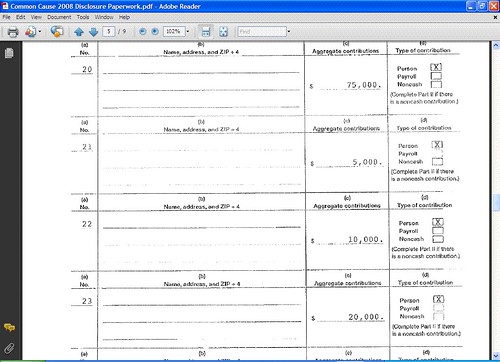
Leaving aside the fact that the Campaign Finance Board rejected the premise that Minnesota’s future did anything wrong, I’d like you to check this out.  It’s an excerpt from Page 4 of Common Cause’s 2008 IRS Form 990 – disclosures.

Can’t read the names?

Get used to it.  There are eight pages of donations, a total of 44 of them, totalling over $600,000.

For one year.

And not one name.

For a group that alleges itself to be all about “transparency in politics”.

The lesson from this?  Whenever “Common Cause” pops up in this state’s political discourse, they need to be pelted with rhetorical rocks and garbage.  They exist only as a front group for the DFL; they are fundamentally dishonest.

I’ve invited CCM “president” Mike Dean to appear on the Northern Alliance Radio Network to discuss his various charges, and defend CCM against the charge that they are lying to the people.  Repeatedly.  For almost three months.

I expect better from responsible adults with non-risible points of view.

Place your bets.

I’m No Lawyer…

Thursday, December 9th, 2010

…so I have pretty much held my counsel on Monday’s SCOM decision on Tom Emmer’s request for reconciliation.

Joe Doakes – of Saint Paul’s Como Park neighborhood – is, in fact, a laywer.  And he’s got an opinion.  I’ll be adding emphasis:

[Monday], the Minnesota Supreme Court issued its opinion explaining why it denied Emmer’s request to have the number of ballots cast verified against the number of eligible voters before the vote totals were certified by the State.

Refresher: a prospective voters goes to the first table at the polling place to sign the roster; then he gets a receipt and takes it to the second table where the receipt is exchanged for a ballot; then he marks the ballot and deposits it in the ballot box. At the end of the night, all three are counted – number of eligible voters who signed the roster, number of receipts given, and number of ballots in the box.

The Court said: “ . . . the legislative intent appears to be to design a process that would guard against more ballots being counted than eligible voters voting.”

Yes, exactly right. Only eligible voters should be able to vote.

So far, so good.

The Court said: “Petitioner has not shown how counting voter’s receipts, which are given to voters only after they have signed the polling place roster and which constitute proof of the voter’s right to vote [citation omitted] is inconsistent with this legislative intent.”

Well, duh. That should be obvious. If the signature-receipt-ballot system worked perfectly every time, we wouldn’t need triple-entry bookkeeping to weed out cheaters. But if 100 people signed the book as eligible voters and 110 receipts and ballots appear in the boxes, there’s no way to know who put the extra receipts and ballots in the boxes. Presumably they were NOT deposited by eligible voters or the vote totals would match the signatures; therefore, the statute requires election officials to throw out excess ballots. It’s precisely because we don’t trust the system to work perfectly that we build in safeguards.

It’s here that the problems start:

The Court said: “In responses filed to the petition, certain local election officials appear to have conceded that they are not removing excess ballots . . . The validity of this practice was not raised in the petition and has not been fully presented to this court. Therefore, this issue is not before us, and we do not discuss it further.”

And sure enough, the system did NOT work perfectly. There were indeed more ballots cast than eligible voters, precisely the problem the legislature intended to address. Voting fraud does exist. If we’re to fulfill the legislature’s intent, we ought to order the counters to toss out those excess ballots before certifying the results.

Of course, the intent of the legislature gets filtered through whomever runs the legislature…

And finally, “Our review . . . establishes that the legislature intends the processes [for removing excess ballots] to be based on either the number of signatures on polling place rosters or on the number of voters receipts.”

Whaaat? How’d you reach that conclusion? We admit there’s a problem, it’s precisely the problem the legislature intended to address with its triple-entry bookkeeping system, but now you’re saying the legislature intended us to ignore it? Now it’s okay to skip the first step in the security check, the one step that proves the fraudulent origin of those excess votes?

If you’re only going to count receipts and ballots – no matter how they got into the box – then what’s the point of proving voter eligibility?

How can disarming the security system be consistent with the intent of maintaining a security system?

It makes no sense – as a stand-alone decision.

As a bit of legalistic buck-passing, though…:

This opinion makes no sense to me. The fact it’s unanimous means either the entire Court understood something about the law that I simply can’t grasp; or they wanted no part of another election lawsuit and kicked the case out on the flimsiest imaginable grounds, knowing the real solution is for the legislature to rework and clean up the election law through the political process. I’m betting on the latter.

Joe Doakes, Como Park

So there you go, Legislature.  Tear it up!

Fifteen Minutes Could Save You Fifteen Percent or More

Saturday, December 4th, 2010

I have to believe that many Republicans and possibly even some fiscally-conservative Democrats are quietly hoping to themselves that the gubernatorial recount might actually drag on so long as to allow current governor Tim Pawlenty to preside over a Republican Legislature…if for even fifteen minutes.

It’s not without risks…

A lawsuit from Tom Emmer offers one obvious benefit. It likely would keep GOP Gov. Tim Pawlenty in office beyond his appointed term, giving the party more power when the state’s Legislature convenes next month under Republican control for the first time in decades. But some worry that it also risks damaging the party’s image if the lawsuit appears to be nothing more than a stalling maneuver to keep Dayton out.

Several influential Republicans are warning that unless new information emerges to question the integrity of the election, Emmer should concede soon to avoid hurting the party. It’s not an easy decision, especially in a polarized political environment where both sides had legal teams in place even before the election to prepare for a contested outcome.

…but imagine what could be accomplished.

And even if Emmer doesn’t prevail, that’s not really the point as long as you care about the integrity of the electoral process.

This egregious disregard for election laws calls into question the integrity of one vote per person,” Emmer said, “and is, I believe, an assault on the very principles of the American voting system, diluting every legally cast vote. Again, that’s when you have more ballots, than supposedly you have people that voted in the election.”

So I will come right out and say it, I’m all for expediency in the electoral process but let’s take all due care, and maybe a smidgen of undue care to make sure that the final tally reflects each and every voter’s sentiment.

In the end, even Democrats know full well that in the likely event that Mark Dayton becomes the bona fide winner, the Republican legislature is going to bounce Dayton around like a volleyball, which is to say for lemonade-loving conservatives this is something of a win/win scenario.

Our Extremist Overlords

Thursday, December 2nd, 2010

Just you remember when any liberal calls any conservative “extremist” for any reason short of, y’know, showing actual extremist activity, that these are the people the DFL is running for office:

Minnesota Secretary of State Mark Ritchie is regarded as a “non-party friend” by the Communist Party USA.

So highly does the Communist Party regard Mr. Ritchie, that he has been allowed to attend an high level “not to be publicized” Party meeting in Minneapolis.

Remember the fit the left threw over Todd Palin’s flirtation with a group that advocated – academically – Alaskan secession?:

Ritchie and three of the Communists had just returned from the “Battle in Seattle” – the mass riots that broke out around the World Trade Organization meeting in that city.

Though he was an official U.S. delegate to the W.T.O. meeting, Ritchie gloats that the rioting and protests “stopped the WTO,” and that “It is a tremendous victory”.

I’m not the first to run this story.  But apparently the regional media was too busy digging through Tom Emmer’s resume to bother with Mark Ritchie’s past.

Especially his past with groups that enshrine the ideal that the ends justify the means.

(Via the Random Candice, who really needs to attend the next MOB party)

Pay No Attention To The Fraud Behind The Curtain

Wednesday, December 1st, 2010

This email, from a GOP election recount-watcher, has been making the rounds of local conservative activists.  I’m keeping the writer’s name off the record for now. 

Emphasis is added by me:

Well, it’s been a good (better) day today here at Hennepin County for the recount. Lots of notable errors in judgment…

For instance, we found one precinct with ALL Dayton ballots challenged (103 total) that appeared to be a “mass” group of blank ballots run thru without a judge’s signature – all in a row. Shows how easily certain folks of a party’s persuasion can cheat so easily – and have it counted?

Let’s repeat that for those of you who glaze over:  103 votes, run through in a group, without a judge’s signature, apparently consecutively.

Whew.  Good things the Supreme Court ruled that we don’t need to reconcile vote totals against signatures, much less investigate our whole rotten system!

It will certainly (still) be an uphill challenge, but a worthwhile one. There are so many debatable and questionable ballots – it should concern all.

Of course there are.

Which is the whole, sole, entire reason the DFL/media have started the “Frivolous Challenge” drumbeat.

The REAL question and problem being anticipated is the ‘gross’ discrepancy statewide via ‘reconciliation’ of the precincts. I’m told there are a LOT of precincts statewide that don’t reconcile their registered voter lists (count) with the number of actual ballots cast… 8,700 doesn’t appear to be a lot of difference for 87 counties with this problem.

All for today…

But there will be more.

Foxes: “Relax, Hens”

Wednesday, November 24th, 2010

According to the Strib, Voter ID is just not needed

…according to a survey of people who’d have to work harder if it were implemented…

…conducted by two groups that benefit from inflated vote counts.

Minnesota does not need a law requiring photo identification at the polls because there have been relatively few cases of ineligible voting, two advocacy groups said Monday.

Citing data collected from county attorneys from the 2008 election, the two groups said that there were 26 convictions statewide of felons voting illegally – a figure representing 0.0009 percent of voters that year.

It’s a figure that also represents investigations in Ramsey, and only Ramsey, County.  The only county for which the Minnesota has done the County Attorneys’ jobs by doing all the investigating for them.

Allegations of felons voting represented 77 percent of voter fraud investigations, the groups said. The other 23 percent of the investigations from the 2008 election – which did not lead to any convictions – involved charges of non-citizens voting, double voting, voting outside of jurisdiction and impersonating a voter, the groups said.

Right.  That’s because under Minnesota law, pleading ignorance of the law is enough to get you acquitted.  Only paroled felons have to sign a form stating they know they’re not supposed to vote.

The study was conducted by Citizens for Election Integrity Minnesota and the Minnesota Unitarian Universalist Social Justice Alliance. The groups said the study was based on responses from 71 of the state’s 87 counties.

The “Center for Election Integrity of Minnesota“?  Sure sounds like an important group!

The Strib doesn’t see fit to mention that “CEIMN” is an offshoot of “non-partisan” liberal pressure group “Common Cause MN” (check out CC of MN’s and CEIMN’s addresses), whose motto is “Holding Power Accountable”, and which spent the 2010 election demanding accountability of conservative groups while ignoring the rafts of liberal special interest money.  They favor rationing speech to regular Americans, but exaggerating the influence of unions and liberal special interests.

One wonders if Strib reporter Mike Kaszuba didn’t feel this was relevant, or if he just didn’t know.

A Big Win For Bureaucrats

Tuesday, November 23rd, 2010

Yesterday’s ruling at the SCOM sums up about like this:  Bureaucrats trump legislators.

Gary at LFR puts it well:

When bureacrats’ ruling has more bearing on election law than legislators and governors, then it’s clear that bureaucrats have overstepped their authority. The minute that happens, the legislature needs to step in and limit the bureaucrats’ authority.

Hopefully, the new GOP legislators are writing that legislation as I’m writing this post. We pay legislators to write laws. We don’t pay administrative law judges to tell us that existing law isn’t relevant. Also, we don’t pay Supreme Court justices to write new law. Theoretically, we pay appellate court justices to tell us what the law says. PERIOD.

It disturbs me, personally, how frequently “administrative law” – law as interpreted by bureaucrats – overrides the law as passed by elected representatives of the people.

The worst example I’ve seen remains the City of Saint Paul’s administrative lynching of “Saint Paul Firearms”, a gun shop that briefly opened on Snelling Avenue.  The store obeyed all applicable laws – exceeded them, at least in terms of security, in every particular – but some of the religiously DFL-voting neighbors got the victorian vapors over the thought of sharing the neighborhood with a gun store.

So they didn’t bother with real courts; they went to the “Administrative Law” court.  And they got the ruling they wanted; the ruling that said “forget Minnesota law, to say nothing of the United States Constitution; bureaucrats see it the way you want to see it!”  And so the store was forced to close, destroying an honest entrepreneur’s investment of his life’s savings in the process.

I’m n0 lawyer – I have some standards – so I frankly don’t know what to think about the SCOM’s ruling yet.  It wouldn’t be the first time they’ve sided unconscionably with the bureaucrats against, y’know, the law.

We’ll see.

The Great Poll Scam, Part VI: The Hay They Make

Monday, November 22nd, 2010

We’ve been discussing the MPR/Humphrey Institute and Minnesota polls for the past two weeks.  Indeed, it’s been one of the ongoing “go to” subjects of this blog for almost eight years now.

Why?

Because while  the polls themselves are risible, they have an effect on elections in Minnesota.

Part of it is in terms of people – “undecided”, “independent” voters – going to the polls at all.  I’ve related on this blog several stories of people who’ve pondered not going to the polls this past year.  Part of it was  because of the overwhelming negativity about Tom Emmer portrayed by the media – negativity, partly driven by the “Alliance For A Better Minnesota’s long, Dayton-family-funded, largely dubiously-factual smear campaign, but pushed hard in the media via the “polling” that they, themselves, commissioned.

Larry Jacobs at the Hubert H. Humphrey (HHH) Institute is the most over-quoted person in the Twin Cities media.  And during the campaign, Jacobs was seen as relentlessly as always in the Twin Cities media, flogging the Humphrey Institute’s polling first during the primaries (where the HHH’s polls showed Dayton with a crushing lead even though Dayton won the primaries by a margin not a whole lot bigger than the one we currently have in the governor’s race) and, finally, during the run-up to the election when the HHH poll showed Dayton winning with a 12 point blowout.

We’re still working on the recount for the 0.4% race.

Jacobs defended the poll (quoted in LFR):

JACOBS: Well, you know, a poll is nothing more than a snapshot in time. We’ve begun the interviewing nearly 2 weeks before election day. Barack Obama visited and we talked openly about the fact that this would likely change. There are, of course, all kinds of other factors that happened at the end, including the fact the almost 1 out of 5 undecided voters in our poll started to make up their mind.

The other thing to remember is that there were alot of other polls being conducted that showed the race closing at the time, something we were watching at the time, also.

That’s right, Dr. Jacobs.  There were a lot of other polls.

And except for the HHH and Minnesota polls, all of them showed a “snapshot in time” that was something close to the reality that eventually emerged on election day.

All of them.

So what?

Because opinion polling has an inordinate effect on media coverage and, less directly, the money and effort that people put into campaigns.

As to the media?  The New York Times has absorbed Nate Silver’s “Five Thirty Eight” stats-blog for its election polling coverage.  And throughout the race, the Times ran with the idea that Dayton was overwhelmingly likely to win.

And that supposition was based entirely on a statistical tabulation of opinion poll results.  And the stats were heavily based on the Minnesota and Humphrey polls, especially through the middle of the race, when the tone of the campaign was being set.  All together, the crunching of the opinion poll numbers led Silver to claim the stats showed Minnesota would be a convincing 6.6 point victory for Dayton; since political statistics are an essentially weaselly “science”, Silver also ran with an eight point margin of error.

Naturally, the media ran with the 6.6 points; a little less with the margin of error.

Now, there’s some media attention – the Minnpost, the City Pages – to the ludicrous nature of the polls.  Jacobs:

“If a shortcoming is identified, we will fix it. If not, we will have third-party verification that our methods are sound.”

Dr. Jacobs:  take it from this third party; it’s flawed.  Flawed to the point of illegitimacy.

More on the Minnesota Poll later…

———-

\The series so far:

Monday, 11/8: Introduction.

Wednesday, 11/10: Polling Minnesota – The sixty-six year history of the Strib’s Minnesota Poll. It offers some surprises.

Friday, 11/12: Daves, Goliath:  Rob Daves ran the Minnesota Poll from 1987 ’til 2007.  And the statistics during that era have a certain…consistency?

Monday, 11/15: Hubert, You Magnificent Bastard, I Read Your Numbers!:  The Humphrey Institute has been polling Minnesota for six years, now.  And the results are…interesting.  In the classic Hindi sense of the term.

Wednesday, 11/17: Close Shaves: Close races are the most interesting.  For everyone.  Including you, if you’re reading this series.

Monday, 11/22: The Hay They Make: So what does the media and the Twin Cities political establishment do with these numbers?

Wednesday, 11/24: A Million’s A Crowd:  Attention, statisticians:  Raw data!  Suitable for cloudsourcing!

Irrelevant And In The Way

Monday, November 22nd, 2010

The story was presented without comment – three Minnesota county attorneys “blasted” the Emmer campaign and  GOP’s  request for vote reconciliation, the process which is required by state law which we discussed last week.

Hennepin County election officials argued that being forced to undertake a count of voter signatures, as Republicans want, would “add confusion, delay, and uncertainty in the service of an exceedingly suspect goal of randomly removing properly cast ballots of fully eligible voters.”

That’d be the Hennepin County Attorney’s office run by former DFL gubernatorial hopeful Mike Freeman.

Ramsey County officials called the GOP argument “fundamentally flawed” and based on “obsolete” information.

That’d be the Ramsey County attorney’s office, run by former DFL gubernatorial hopeful Susan Gaertner.

In Hennepin County, auditor Jill Alverson told the court that “randomly disenfranchising eligible voters after the fact is a statutory remedy that should be used only in the narrowest of circumstances and then only after careful, transparent and deliberate study.”

Other than that whole it’s the freaking law business, anyway.

Won’t Get Fooled Again

Thursday, November 18th, 2010

To: The New GOP Majority in the Legislature

From: Mitch Berg, once-bitten Conservative

Re: The 2011 Session Agenda

Dear GOP House and Senate Caucuses:

Congratulations on the big win two weeks ago.  

Now, we gotta talk.

You have a historic opportunity here; not only do you have the most power of any group of Republicans in recent Minnesota history, but you got there for all the right reasons – atop a swave of populist conservative discontent over the policies of Barack Obama and the Minnesota DFL.

Better still, even if we lose the recount, we’re up against a governor that’d be in a weak position even if he were Hubert H. Humprhey.  And Mark Dayton is no Hubert H. Humphrey.  I’ll be frankly amazed if we’re not reverring to “Governor Prettner-Solon” by 2014; in any case, you have the opportunity to drive this car.

So drive.

I’m just a schlemiel voter.  But since the holidays are coming up, I’d like to give you my legislative wish list.

Go Deep.  Tom Emmer ran on a zero-based budget promise.  It was a great idea; follow through on it.  Pass a budget – over the (rhetorically) dead bodies of the DFL left in the Legislature, if need be – that slashes the fat, initiates zero-based budgeting for the big entitlement programs, guts the pork, and holds the line on spending.  Freeze state worker employees’ salaries until the revenues start picking up (meaning all the rest of us are getting raises again).  

And then, let Dayton – or whomever – veto it. 

And pass it again, with just enough changes to make it fly.

And let him veto it again. 

And pass it again.

And let him veto it, and risk shutting down state government. 

Because the people who sent you to office aren’t the ones that are going to rebel over a government shut-down.

But the ones that sent Dayton to office – real or imagined?  They will.  So when that happens?  Dayton loses.

So do it.

Fix The Election System:  Adopt Voter ID; require some form of identification.  You know the drill – make identification safe, cheap and available – but require every voter to present an ID, and make sure that ID is enterered as part of their signing-in process.

And kill off vouching.  Now.

Wanna appear “bipartisan”?  Keep same-day voting.  With a valid, cross-referenceable ID.  Because if accessible same-day voting is what the DFL really wants, provided we can keep it accountable and fraud-proof, why not?

I don’t think that’s what they really value in same-day voting, but that’s just my opinion.  So far.

And if Dayton wants to get into a fight over the right to carry out invalid, fraudulent elections, so be it!  Let him veto that bill too! Let the DFL stand and fall, statewide, over the right to game the electoral system.

You have a huge opportunity here.  Let’s use it. 

That’s why we sent you there, after all.

UPDATE:  A highly-placed GOP source whom I will not name at the moment writes:

NO Photo ID until every name on the voter registration list is checked for citizenship. There are names on the list of people who are not citizens. They are supposed to be challenged: “Challenged: Citizenship” is stamped right next to their name. Make everyone who gets a voting photo ID card prove citizenship; make it a renewable card every 5 years; the renewal cannot be tied to a driver’s license renewal. The Dept. of Public Safety must clean up all citizenship issues: temporary (those who are supposed to have “status check” on their ids; permanent residents who are not citizens). MN Constitution requires citizenship to vote.

 Yes, eliminate vouching and eliminate same-day registration – zero compromise here…  

Yes, play hardball; show backbone; appeasement doesn’t work – the Dems will never appease – we hold the majority, use it.

Well, it was a rough draft. 

Like everything else on this blog.

Chanting Points Memo: Balancing The Books

Wednesday, November 17th, 2010

As we speak, the MNGOP is announcing that it plans to seek “reconciliation” of the state’s vote totals before the recount begins.

The DFL is going to spread a lot of, frankly, BS about this process.  Here are the facts.  For starters…:

It’s The Law: The DFL is going to portray this to the uniformed (which the media will do their best to ensure the entire state is) as a wholesale disenfranchisement of voters.

The simple fact is, it is the law.

Under Minnesota law, the vote totals and the total number of actual, identified voters – the registered voters that signed in at the polling station – are supposed to be “reconciled”, or  shown to be equal, by about six weeks after the election.  The deadline this year is December 15.

Naturally, Mark Ritchie has bobbled that job as badly as he has every other facet of his job as Secretary of State and chief executive of our election system.  In 2008, it took close to eight months for the reconciliation process to happen.

Which has potentially dire consequences, if you want a clean, accurate recount of an election.

We’ll come back to that.

How Reconciliation Works:  If  your precinct had 100 voters sign in, and there are 110 ballots, then ten ballots are picked out at random and discarded.

Really.  That’s the state law.

Now, you might say “but that disenfranchises the ten voters that got picked out of the pile”.  And there’s something to that.  But by another token the ten extra votes disenfranchise ten voters in and of themselves; if it happened through fraud, then ten legitimate voters were negated; if through administrative incompetence (because precinct election staff don’t know how to do simple things like tally numbers or test ballot-counters before the election), then those ten ballots are equally disenfranchised, not by decree of Tony Sutton or Tom Emmer, but under state law.

Stupid?  Maybe.  We’ll come back to that later.

So why bother?  Because there very well may be…

More Votes Than People: In 2008, the Minnesota Majority claimed that there were about 40,000 more votes cast than there were identified, signed-in voters in Minnesota.   Mark Ritchie – Minnesota’s Secretary of State – said in effect “No, no no!” – it was only somewhere under 30,000 votes.

That’s right.  Even Mark Ritchie, the chief executive of our electoral system, admitted that that out of a little over 2.75 million voters, there were nearly 30,000 more votes cast than there were identified, signed-in voters.  That’s a little over a percent of the entire voting pool.  Over one in a hundred.

That’s over double the margin between the candidates in this year’s governor race.

That’s an awful lot of votes that, at first glance – via incompetence or fraud, and it really doesn’t matter which at this point – seem to have no connection with real, signed-in humans that showed up at the polls.

By Minnesota law, this needs to be taken care of.  And it needs to be done before any recount takes place, to make sure that we’re dealing with real numbers, not inflated/mistake-driven/fraudulent ones.

Let’s make sure we re-iterate two things here:

  1. Discrepancies may or may not be fraud, and it really doesn’t matter what the cause is, because…
  2. Reconciliation is a legal requirement, regardless.

Are there more votes than identified, actual voters?  We don’t know yet.  And before we recount the votes for the office of this state’s chief executive, we need to find out.

If there is a surplus of voters, is it fraud? We don’t know – and in a sense, it’s irrelevant to the question.  Reconciliation is not a legal tactic; it is the law.

But the recount effort – led by former Supreme Court Chief Justice Eric Magnusson – has noticed that there seems to be an…

Odd Pattern: There appear to be quite a number of precincts – concentrated in Hennepin, Ramsey and St. Louis Counties – where Tom Emmer grossly underperformed the rest of the GOP ticket, and Mark Dayton significantly overperformed the rest of the DFL’s floundering line-up.

There also are reportedly a very large number of ballots listing nobody but Mark Dayton.  As in someone went in to the polls, registered, stood in line…and filled in only Mark Dayton.  Nobody else.

So the law calls for reconciliation.  Let’s reconcile!

“What a stupid system!”: Perhaps, but you don’t get to pick and choose the laws you want to follow (unless you have really good lawyers and your opposition doesn’t; see OJ Simpson.  Or if you fight a legal battle with furious intensity and your opponent does not; see Al Franken vs. Norm Coleman).

Don’t like the law?  Change it.  Better yet, replace it – with a photo ID system by which poll staff can match real voters with real registrations.  And get rid of vouching, and maybe same-day registration.  Why shouldn’t voting, the  most important of our civil rights, be reserved for those who pay enough attention to voting to actually register in advance?

But that’s a discussion for another day.

One Day At The Crow Wing County Courthouse, Part II

Wednesday, November 17th, 2010

When we left Monty Jensen, it was Friday, October 29.  He’d just seen a scene that disturbed him; supervisors from a Brainerd-area group home voting for their charges who, while they had the legal right to vote, didn’t seem to have much idea where they were or what they were doing (which, if I were much less sober and reflective than I am these days, I would say “makes them a perfect DFL constituency”.  But I am more sober and reflective these days).

Jensen chewed on what he’d seen overnight – and then took a shot in the dark.

“I called George Burton”, he says, referring to the Constitution Party candidate for Jim Oberstar’s seat.   Burton got Jensen in touch with the Minnesota Freedom Council, one of a small network of grassroots groups that is scrutinizing Minnesota’s election system.

Acting on their advice, Jensen started to work.  “About 10:30 Saturday morning (October 30), I looked up Don Ryan, the Crow Wing County attorney, in the phone book.   I tried him a couple of times, with no answer. ”

“Then I tried Ron Kaus, at the Minnesota Freedom Council.  I’d never heard of him in my life.  I spoke with him – and he got right on it.  They wanted all the information – and he asked me to meet at the courthouse and tell him  how everything went down.  When we got there, he asked me if he could record the conversation.  We didn’t talk for five minutes before the recording started; I told my story”.

Here’s the story, for those who missed it the first time:
Here’s part I of the video…:

…along with Part II…:

…and Part III.

Jensen recalls “We went through and did the video.  I was kinda on the hot seat.  And from there, we  started trying to do the investigation”.  He got some advice from Kaus;  “If you want this investigated, you need to do it as an affadavit; the complaint form will just get filed away”. 

So Jensen spent the weekend writing the complaint.  On Monday morning, he was ready to turn it in.

“On Monday morning, I brought four copies in.  The auditor notarized them, and kept one”.  Then, Jensen went to the County Attorney’s office.  “Being that it was Monday before election day…I handed it to him personally.  He said he didn’t know what he could do with the election the next day, so all the votes would count.  But he said they’d follow up with the investigation.”

Later on, Jensen said the County Attorney’s office called to say the Crow Wing County Sheriff’s office had assigned an investigator.  On Thursday, November 4 – two days after the election – Jensen met with that investigator for about 90 minutes.  “He stated that they’d been speaking with certain group homes, had a list of ballots turned in during the time frame, and had everything to back up the story”.

And that, for the most part, was the last Monty Jensen has heard from Crow Wing County.

———-

Toward the end of our conversation, Jensen reflected.  “The other day, I was talking with my girlfriend.  I asked “Am I crazy, or is something going on here?”

We’ll get the girlfriend’s answer straight from her, later this week.

--> Site Meter -->