Unsustainable
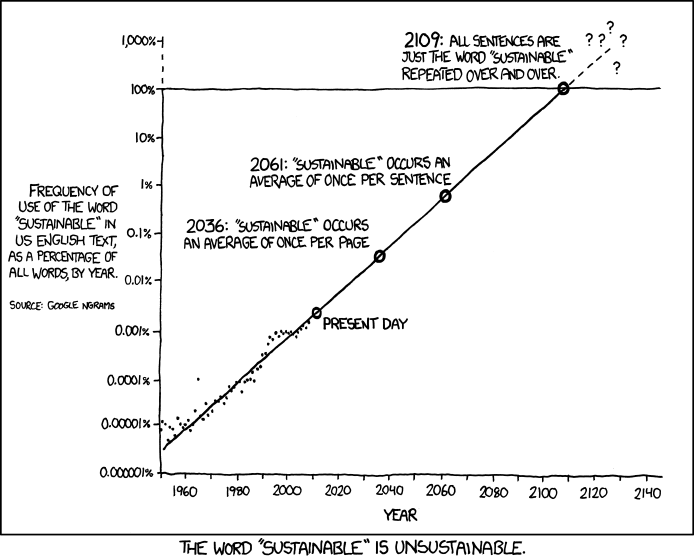
Wednesday, January 25th, 2012If you work in the world of business, you know that this isn’t even funny these days.
If you work in the world of business, you know that this isn’t even funny these days.
To: Certain Mitt Romney Supporters
From: Mitch Berg, Reagan Disciple
Re: Your “Ready, Fire, Aim” exhortation.
All,
I”m Mitch Berg. You may remember me; I was busy caucusing for your guy Romney four years ago. Let me refresh your memory; that was the cycle when a fair number of you geniuses insisted John McCain was the only viable option to run against Hillary Obama, and that we should not, could not, nominate a naif like Mitt Romney to run for office.
And eight years before that, I was the guy pushing for Steve Forbes, when you all insisted that George W. Bush was the conservative who could win. And 12 years before that, when I said Jack Kemp might make a much, much better custodian of the Reagan Revolution than George H. W. Bush – you got your way then, too.
Remember me yet?
Of course not. You’re the “establishment”. You rarely remember the dirty ugly lessons of four or eight years back. To many of you think “spin” equals fact.
And that’s fine – because you win your fair share of elections. You’ve got the money, the oomph, the organization, the experience in power. That counts for something.
And with that, I suppose you’re entitled to think of your agenda as “inevitable” in the party. The problem is, some of us peasants – the people who are allied to principle first, party second (not that they need be exclusive or in conflict) – keep getting uppity and in the way. It happened in 2006, when a knot of “establishment” figures in the Sixth CD GOP here in Minnesota got their undies in a toxic knot because Michele Bachmann flooded the various precinct caucuses with her supporters, making the local “establishment” – including many of you – claim that Bachmann “stole the nomination” when, in fact, she just did democracy and politics better than you did.
Ditto in 2008. Maybe the influx of Ron Paul supporters split the conservative vote so finely that Mitt Romney never had a chance, and your guy Mac coasted to the nomination. Maybe not – and it doesn’t matter much now, since between dual influences of the Ronulans and the Tea Party, the GOP finally, blessedly moved to the right. Far enough to turn the conservative of 2008 into the moderate of 2012.
And all of that grassroots activity has made some of you – you know who you are -profoundly uncomfortable. All us unwashed Tea Partiers make you nervous, like John Quincy Adams supporters beholding Andrew Jackson’s entourage moving into the White House. I’m fine with that, too.
But the reaction some of you are having to the “insurgency” (read: people doing the democracy thing) in the GOP is telling us some things that I really would rather not be hearing nine months before an election.
Hugh Hewitt, who is a great friend of the radio show I do with Ed Morrissey, said it loudest on his national talk show – “If Ron Paul gets nominated, I’ll vote for Obama”.
Let’s come back to that in a moment here.
When I interviewed Michael Reagan last summer at the Midwest Leadership Conference, he made a great – and lamentably overlooked – point; his father, Ronald Reagan, didn’t win because he was the purest conservative. He didn’t win because he had the most forward-looking economic vision. He didn’t win because he promised to end the Cold War with unconditional victory. And he didn’t win, in those days when people were still wondering what went into that seventeen minute gap in the Watergate tapes, because he was a pure establishment Republican.
He won because he convinced a whooooole lot of people who’d never have ordinarily voted for him, moderates and paleocons and RINOs and unemployed/patriotic Democrats, even – in the primaries and then in the general election – that he and his ideas were right.
Now, I don’t care if you say you’d stay home or even vote Obama if Ron Paul wins the nomination. I don’t care in the same sense that “I don’t care if Scarlett Johannson has a chive in her teeth during our first date”, because it’s almost purely academic. Neither is likely to ever happen.
But when you – the Establishment, with your Harvard degrees and your party apparatus and national media outlets – tell the 10-15% of the people who are coming out to GOP primaries, many for the first time, and the much larger percentage of younger voters and potential activists, “your guy, and by extension the principles for which he stands, and by further extension those for which you stand, are so risible that I’ll vote for the enemy first”, what’s that telling them?
It’s telling them that they and their beliefs, by dint of their association with a candidate who (holy hannah!) has a flaw in his past, are a bigger enemy than the President who is, by all of our mutual admissions, destroying this country.
We’re not talking about people who wrote racist rants thirty years ago; many of the people you are talking to weren’t born when Ron Paul wrote his racist screeds. We’re not talking about people who believe the Iranians have just grievances with us; in many case, you’re talking to people who’ve put their lives on the line to defend this country (Rep. Paul has a disproportionate share of the military vote), and have been getting bombed and shot at by Iranian proxies (and probably actual Iranians).
Your attachment to the establishment – to the process, the machinery, the access, your tee time with Karl Rove, whatever – leads you to demonize a candidate with no chance of getting nominated and, more importantly, alienate a huge mass of voters that would be much better served, and in the long run would serve the party much better, with a little convincing, even if it doesn’t work right away. People who are, in many respects, the future of conservatism and the GOP.
Ask yourself – What Would Reagan Do?
Let’s go back to the top and re-think this, shall we?
That is all.
To: Newt Gingrich’s Supporters
From: Mitch Berg, guy who really wants to like and support Newt, but juuuust can’t yet.
Re: No, the postscript in my “From” line really says it all.
All,
Loathe as I am to cite Hugh Hewitt, he did have an excellent point for all of you Gingrich supporters last night on his show. I’m going to turn that point into a question.
I’ll get to that in a moment.
William F. Buckley’s rule for picking a candidate was simple; pick the most conservative candidate that can win. I follow this – after doing what I can to make the candidate who can win more conservative (see Tim Pawlenty, 2002).
Now, let’s leave aside the troubling episodes in Newt’s career – older ones, like his creakingly convoluted personal life (and I’m disregarding everything Marianne said in her loathsome interview, by the way, and only going by stuff Gingrich has admitted to, or which is in court records), middle-term ones like his trading butterfly kisses with Nancy Pelosi, and painfully recent ones like his tossing all of capitalism under the bus and his adoption of Saul Alinkski’s tactics to try and eke out a lead in South Carolina (which is the very definition of politics in its worst form over principle); let’s even leave aside the fact that Newt is in many ways a conservative (fingers crossed) mirror of his would-be nemesis, Barack Obama – albeit with more actual real-world government experience. Forget all that.
Remember Buckley; pick “the most conservative candidate that can get elected”.
As Hugh notes, Newt has 100 percent name recognition, and 60% negative perception.
Why should I support him?
Don’t talk principles. Don’t talk history. Don’t talk 1994. Don’t talk policy. Talk numbers. Convince me.
That is all.
To: Ron Paul supporters
From: Mitch Berg, Former Big-L Libertarian, current small-l libertarian
Re: Your candidate
All,
I love a David and Goliath fight as much as anyone, and much more than most. So the idea that a candidate could come in out of nowhere, electorally speaking, and tip the GOP establishment up on its ear is something I just looooove. Seriously.
And not only do I totally get the principles Ron Paul is espousing – liberty, shrinking government, etc – I have run for office behind them.
I don’t support Ron Paul, personally, as a candidate, for many of the same reasons I bailed out of the Big-L Libertarian Party fourteen years ago; while I agree with its core principles and high-level beliefs, there is little about your candidate, like my old party, that makes me think he’s ready for prime time when it comes to trying to run a nation of 300 million people.
But this isn’t about Ron Paul or his principles, or the wrinkles in his past that many of you would have us ignore. This is about you.
Four years ago, you – or an earlier generation of “you” – bum-rushed the caucuses, with the intention of taking over the Minnesota GOP (as in other states). And of the ones that got elected to go to the House District conventions, some actually showed up. And of the ones that got elected to go to the Congressional District convention, some showed up. And of those few left who got elected to go to the state convention, fewer still showed up.
In short, when the time for writing resolutions and declaiming about “Doctor Paul” passed, and the time to try to do the hard, boring stuff started, you – the vast, vast majority of you – sat it out. And that’s notwithstanding the number of you that opted to sit out the election.
It’s easy – and your right – to say “If you don’t nominate my candidate, I’m going to sit this election out”. But this isn’t about the election – this is about the party of which Ron Paul is a member; the one to whose caucuses Paul and his organizers are going to send you in your thousands in two weeks.
Getting an agenda passed takes more than just noise, intransigence, and near-religious fervor. It takes persistence, a willingness to work within a party system (if only to co-opt it – and that’s not only not a bad thing, that’s actually how politics works!), the cultivated ability to sit in party functions and keep your ass from falling asleep long enough not only to get candidates who believe in what you do endorsed, but to keep the party in line with your principles as well. And as someone who just spent a year as a minor elected party functionary on a libertarian-conservative agenda, let me tell you – that’s the hard part.
So, Ron Paul supporters, please answer the question: are you ready to try to stick around, learn a few things, and try not only work with (and co-opt!) the party in which your candidate is running, and to which his son is committed?
Or are you going to collapse into epic disappointment again?
Because if it’s the former, I’d love to talk with y’all.
That is all.
To: Rick Santorum supporters
From: Mitch Berg
Re: Your Case
All,
Any of you Santorum people, please fill me in: other than…:
…what precisely is the case for your guy?
Don’t get me wrong – I support all these things, to one degree or another.
But what’s the case for nominating Santorum?
That is all.
To hear the media and the lefty chanting classes, you’d never know that the most recent poll that matters – November of 2010 – showed that Minnesotans support candidates who support lower taxes, lower regulation and less government.
And then there’s the crowd in the DFL and media (PTR) that believes the Minnesota GOP’s internal spasms have anything to do with what’s going on in the Legislature (which, don’t forget, was elected via the Caucus’ efforts; the state party has very little to do with electing legislators).
And they’re going to do their darnedest to try to negate that election.
Against that, as the session kicks off today, we have Speaker of the House Kurt Zellers and House Majority Leader Matt Dean, who h laid out their agenda in the Strib over the weekend:
What a difference a year makes.
Last January, there was more than a foot of snow on the ground, the state was facing a $5.2 billion budget deficit, and Gov. Mark Dayton and the DFL were calling for huge tax increases.
This year, we have no snow to speak of, there is an $876 million budget surplus, and Dayton and the DFL are declaring job creation the No. 1 priority of the 2012 session.
Zellers and Dean are too diplomatic to point out that Governor Dayton’s “Jerbs Plan” is, in every particular, rotting fly-covered suppurating bulls**t.
Fortunately, I’m not that diplomatic, and that’s exactly what the Jerbs plan is.
The GOP has the real jobs plan:
Our economic recovery is too important to become just another line item in the state’s biennial budget that is continually subject to change.
Republicans in the Legislature are focused on the long-term structural needs of our state. Our Reform 2.0 agenda was developed with the input of Minnesotans.
We spent the last five months traveling the state, driving thousands of miles to dozens of cities to meet with hundreds of job providers, local government officials, educators and citizens to listen to their ideas on what government can and should do better.
One of the most maddening DFL chanting points last session was “What is the MNGOP doing to create Jerbs?”, as if they expected the GOP tom, I dunno, pass a law requiring employers to hire people.
The GOP has a grasp on actual reality, fortunately:
In Minnesota, almost one-third of the new job growth in this decade will be in science and math fields. However, these new jobs will not exist unless we reform our education system.
As part of Reform 2.0, we will continue to push for strong teacher evaluations, pay linked to teacher and student performance, and the removal of barriers to get rid of bad teachers. Seniority privileges should not trump student achievement.
Can you see the Minnesota Federation of Teachers hiring assassins yet?
Well, this next section will fix that…:
We will also give serious consideration to granting the mayors in Minneapolis and St. Paul mayoral control of their respective school districts. In addition, we will support an aggressive plan to turn around the lowest-achieving schools in Minnesota and will allow for aggressive replication of high-performing charter schools.
While the idea of Chris Coleman controlling the Saint Paul Public Schools doesn’t exactly fill me with confidence, the point is that the administrative logjam does need to get broken, especially in the Twin Cities, if education is ever going to improve.
We are 20 years behind in streamlining government, and Minnesota taxpayers are paying for it every day. This session we will continue our push to make government more effective for the people it serves and those who pay for it.
From local government mandate relief and outcome-based spending to consolidation of administrative and back-office functions, our reforms will seek out and eliminate waste.
I’m looking forward to our next interview on the NARN.
We will also support a great idea we received while out on the road: require city and county governments to present budget and spending information in an easy-to-understand format designed to educate taxpayers and engage citizens in local government spending decisions.
I’m dying to see how the Rybak and Coleman react to the idea the people can actually read their budgets.
As a usability practitioner, I’d be more than happy to help. Have your people call my people.
In 2011, many good reform ideas were put on hold as we grappled with the budget (and the snow). Today we’re pledging to make 2012 the year of reform.
This is not a partisan agenda. It’s Minnesota’s agenda — an agenda we can’t let rest.
And I’m out to support that agenda.
Along with a few other things; let’s keep Zero-Based Budgeting in the spotlight. And let’s pass Tony Cornish’s “Stand Your Ground” bill – not just on Second Amendment grounds, but because if Dayton vetoes it, it’ll lose the DFL tens of thousands of outstate votes, and not a few in the Metro to boot.
It’s gonna be a fun session!
Congratulations to Mr. Dilettante, from Mr. D’s Neighborhood, on winning the 2012 Minnesota Organization of Bloggers mayoral election.
The office of the Mayor is a vital one; as award-winning journalist Karl Bremer once discovered, the mayor of the MOB has absolute editorial control over all blogs associated with the Minnesota Organization of Blogs, a position with editorial control equal to…
…no, I can’t go on with it. The Mayor has no power. The MOB, being expressly apolitical, has no agenda, beyond two drinking parties a year. Bremer is a frothing looney…
…Where were we? Oh yeah. Dilettante will take office at his swearing-in ceremony at the MOB Party on February 25. Make sure you reserve your seat at this historic event.
Hope to see you there!
A small gaggle of House Democrats, led by Dennis Kucinich, are proposing a “Reasonable Profits Board” to control corporate profits (in the energy sector, for the time being).
“But Mitch”, the liberals will respond, “it’s just Dennis Kucinich! It doesn’t matter!”
What, you think anything happens in Congress by accident? Without Nancy Pelosi and Steny Hoyer’s direct permission?
This is at best an attempt to launch a chanting point to throw at Republicans in the fall – “John Kline supports excess profits!” – and at most a testing of the legislative waters.
Chad at Fraters Libertas points out that there is, of course, nothing reasonable about it:
If the idea of a “Reasonable Profits Boards” run by unelected government bureaucrats doesn’t make you recoil in horror, you must be ingnorant of the long history of such previous efforts by the state to dictate economic activities. But don’t you dare call this socialism. ‘Cause then, YOU would be the extremist.
Elder gets to the nature of how the Progressive Noise Machine works. Like the “Dayton Jerbs Bill”, it’s not about jobs or excess profits; both are about creating chanting points for the left to trot out this fall.
If there’s been one constant in this ever-changing Republican presidential primary season, it’s that every candidate has looked like Icarus at one point or another, melting under the heat of media and voter scrutiny.
We remain roughly a month-and-a-half away from Super Tuesday, the date where traditionally the primaries have been resolved – if not in literally allocating enough delegates to produce a winner, than at least enough to leave the outcome less than in doubt. 9 states vote until then, and while the race will probably shift numerous times over the course of these upcoming dates, let’s take a look at where things stand now:
My only comment re: the whole “Patriots Vs. Giants” bit?
(BRIEF SOTTO VOCE ASIDE: Yaaaawwwwwwn)
Three weeks until pitchers and catchers report for spring training.
To: Arby’s Restaurants
From: Mitch Berg, rare customer
Re: Bad Mood
Dear Arby’s,
I don’t go to Arby’s much. While you have the odd good item on your menu – potato cakes are proof God not only exists but loves us – your restaurants are not usually the kind of place I go out of my way to get to.
But to the extent that it ever was, you’re rapidly blowing it with your current ad campaign, featuring “RB”, the annoying slacker who tags every spot by singing “It’s Good Mood Food”
It’s one of those notable ad campaigns that started bad – the line “we all look the same way nude” was not something I’d like to associate with fast food, ever – and got worse (the tortoise congo line and the “angry bank robber” bits)…
….reaching their nauseating nadir, the “Fisherman” spots. Which start out less obnoxiously (and more predictably) than most of the “RB” spots, it’s true – but that just lulls us into a false sense of hope. The spots end with “RB” singing “I’m on boat…”, through autotune.
Annoying? No. Justification for a rogue Iranian submariner declaring a unilateral campaign of no-quarter destruction against fishing craft? Yes.
That is all.
How many products built before the year 1926 are still in production, in their original form, today?
Cars? Here was a 1912 Ford Model T:

Toasters?

Telephones?
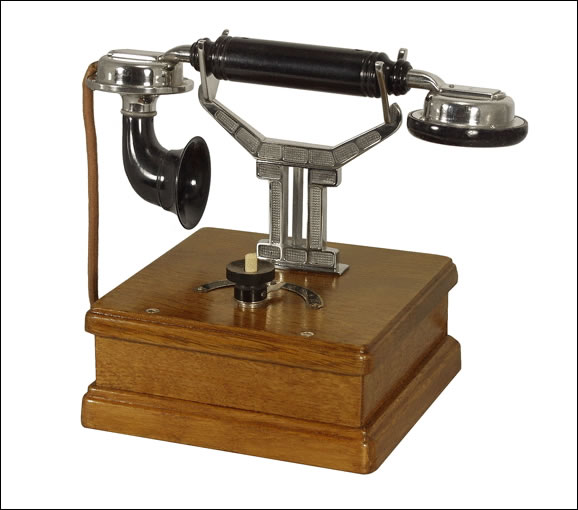
Computers?

Indeed, there are very, very few products built before 1926 that are built at all today, much less in almost exactly the same form that they were at the time.
But there’s a noticeable exception. John Browning designed no less than fifteen products before his death in 1926 that are still in production, in very nearly their original form, today.
Atop every American tank and armored personnel carrier in service from 1941 until the present has been a Browning M-2 .50 caliber machine gun, first produced in 1919.

The Model 97 pump-action shotgun has been in steady production since, well, 1897.

The “Woodsman” varmint pistol? Still cranking ’em out.

Even his Model 1885 single-shot varmint gun? It’s been in production, in one form or another, since, ahem, 1885.

And let’s not forget today’s guest of honor – the M1911 .45 caliber pistol, which was adopted for service by the US Army 100 years ago today.

Perhaps the greatest handgun ever built, the 1911 is doggedly reliable, and its .45 slug is a reliable fight-stopper. It soldiered through five major and countless minor wars, is still among the handguns of choice among soldiers who get to pick their handguns (special operations types, mostly), and it has not been out of production for any significant time in the past 100 years.

All of those firearms have one thing in common; they were all designed by John Browning, one of history’s great engineering and design geniuses.
Today is John Browning Day in Utah, the state of his birth back in 1655.
The Rally for School Choice is Thursday at 10AM on the Capitol Steps.
Today, the Northern Alliance Radio Network brings you the best in Minnesota conservatism!
(All times Central)
So tune in to all six hours of the Northern Alliance Radio Network, the Twin Cities’ media’s sole guardians of sanity. You have so many options:
Join us!
History is full of examples of the sort of evil that makes most people with living souls need to find a baby to look at to rouse their spirits.
Of course, evil on the dime-lot level surrounds us; everything from premeditated murder to child-abduction to terrorists blowing up innocent people to further political goals – when any person says “my ends justify my means”, and the “means” include depriving another of their liberty or their life, it’s evil.
There are greater, more spectacular evils; people crashing planes into buildings full of people, or blowing up buildings, or spree killings, or…the list is depressingly long.
Of course, most people know, or eventually learn, the great pinnacles of evil; when nations harness their governments’ entire political system and means to power to deprive people of their liberty, their property, their sanity and their lives. The title “Greatest Murderer in History” has several contenders; Lenin and Stalin killed anywhere from 40-60 million, maybe more, between them. Mao was probably not far off that pace. Both operated over decades, of course; there were a few great surges in killing (the Ukrainian Holodomor, the Great Leap Forward, several surges in purging), but all three of the great Communists plied their bloody trade over the course of a miserable generation or two. And they – and the other great mass-murderers, Pol Pot, Saddam Hussein, Kim Jong-Il, Robespierre, the Ottomans in Armenia and a grim list of others – as a rule did their killing the old-fashioned way; by various flavors of pseudo-judicial murder, with firing squads or destruction of food stocks or guillotines or pistols to the back of the head; with machine guns next to ditches; with mustard gas from the air; with government-induced mass-starvation.
All very slow, brutal and inefficient.
The fact is, killing people is difficult. People want to stay alive. They fight, hard, to stay that way. And while people under dictatorships learn to be docile in order to survive (especially in the absence of any other hope), they will occasionally rise up and throw monkey-wrenches in the works. And try as you may to indoctrinate your own followers to perform evil on your behalf, there will be some that will retain some innate good; they will interfere, or at least not participate in your plans with the enthusiasm needed to get the job done.
Any good engineer knows that, when you want an efficient process – an assembly line, a decision-making process, a nuclear power plant, the code for a Nintendo game, anything – you need to factor out as many variables as possible; to strip out the moving parts.
Germans are, stereotypically, great engineers. They build things. And when an engineer builds a complicated thing – a BMW or a camera or a system to eliminate a race of people – they’ll start with a prototype or two, to test out the theories and work out the bugs before going into mass production.
And so, with teutonic thoroughness, did the Germans.
In the eighteen months since they’d conquered Poland, the Germans had been testing out methods for killing people – Gypsies, gays, the mentally ill, dissidents and, of course, Jews. They’d been through the “traditional” methods; roving units of SS troops tried go from village to village trying to herd Jews to mass graves and machine-gun them; it was slow, manpower-intensive, and left too many loose ends (including a few survivors – a precious few of whom, unbeknownst to the Germans, would survive the war to testify against their would-be murderers). They settled on poison gas, of various varieties.
And like any good manufacturer, the Germans knew that the technical solution was only part of the job; the rest is logistics – in this case, the task of identifying, assembling and transporting all of those Jews.
The Germans, working with the sort of meticulousness we’d recognize in any good process engineer today, factored out the moving parts, and arrived at the solution for an industrial killing system; a series of centralized camps.
And to tie together all the pieces of this immense project, it was seventy years ago today that the Nazis held a conference at a villa at 56–58 Am Großen Wannsee, in the Berlin suburb of Wannsee.

The villa in Wannsee where the conference was held 70 years ago today.
At the conference, the senior leadership of the various bureaucracies in Nazi Germany were gotten up to speed, with the job at hand, given a mission statement and were directed to start planning.
The “Wannsee Conference” was the project kickoff meeting from Hell.
The goal of the conference – to take the “learnings” from eighteen months of “rehearsals” in the fields of Poland, and experiments at Chelmno and Treblinka, and start the actual execution of what the Germans called the “Endlösung”, or “Final Solution” to the “Jewish Problem”.

Adolf Eichmann's census of Jews. This list reflected the number of Jews already murdered. He was proud to note that Estonia was already "Judenfrei" - free of Jews.
The meeting was attended by a who’s who of Nazi leadership, and for an assembly focused on one of the greatest single acts of evil in human history, the proceedings were remarkably banal. From the Wikipedia entry on the subject – which, for Wkipedia, is pretty useful and concise:
Heydrich spoke for nearly an hour. Then followed about thirty minutes of questions and comments, followed by some less formal conversation.[33] Luther from the Foreign Office urged caution in Scandinavia, “Nordic” countries where public opinion was not hostile to the small Jewish populations and would react badly to unpleasant scenes. Hofmann and Stuckart pointed out the legalistic and administrative difficulties over mixed marriages, arguing for compulsory dissolution of marriages to prevent legal disputes and for the wider use of sterilisation as an alternative to deportation. Neumann from the Four Year Plan argued for the exemption of Jews who were working in industries vital to the war effort and for whom no replacements are available. Heydrich (keen not to offend Neumann’s boss Hermann Göring) assured him that these Jews would not be “evacuated”.[34] There were questions about the mischlings [mixed-race people of quarter-to-half Jewish anscestry] and those in mixed marriages: the details of these complex questions were put off until a later meeting.[35]
Finally Bühler of the General Government in occupied Poland [the German term for the administration of Poland] stated that:
“the General Government would welcome it if the final solution of this problem could be begun in the General Government, since on the one hand transportation does not play such a large role here nor would problems of labor supply hamper this action. Jews must be removed from the territory of the General Government as quickly as possible, since it is especially here that the Jew as an epidemic carrier represents an extreme danger and on the other hand he is causing permanent chaos in the economic structure of the country through continued black market dealings.”[36]
The meeting itself was of little note in the schedules of the men involved – it lasted less than two hours, one of many such meetings on the schedules of busy bureaucrats in a nation at war. No great decisions were made; the decision was in fact Hitler’s, and had been made years earlier. There was no “go/no-go” moment; the leadership, Hitler and Göring, Himmler and the rest, were already fully on board. There was no question of stopping the “Final Solution” – which was, in a sense, already well underway. The idea of killing Jews was well-enough known. but fairly oblique at the meeting; the actual killing was an internal matter for the SS.
In a sense, the meeting was a set-up; Heydrich’s way of making sure the civilian and petty-military leadership of the entire German bureaucracy was linked to the Solution, as accomplices. In a larger sense, it was to get the German bureaucracy’s buy-in to the idea of finding and deporting 11 million Jews from around the occupied world (Eichmann still planned on getting his hands on Jews in England and Ireland) to extermination camps in Poland.
Not a whole lot different than kicking of the adoption of an Oracle database, if you leave out the subject matter.
Which is, really, the point; evil is boring and banal. If evil came strutting onto the stage in a red cape with horns sticking out of its head and blood soaking its beard, it’d be easy to pick out and deal with.
Real evil walks among us, wearing a suit or a petty uniform or a Mao jacket, and speaks the same language you do.
And evil has meetings. Probably catered.
Joe Doakes from Como Park writes:
I know a guy who invested in real estate in the late 90’s and early 00’s, bought his last parcel in 2004 before any of the troubles began. Talked to him last night for a bit. Interesting story.
Like many honest, hardworking people, he’s been moderately successful in his career and had a 800+ credit score, but has been struggling to make payments on the real estate investment properties and can’t refinance or sell because of declining values. He finally admitted defeat last year and filed for bankruptcy, letting all the properties go. He owed no credit card debt, no consumer debt, only mortgages on the real estate; but the big lenders weren’t content to take the property back, they also wanted judgments to garnish his wages and levy his accounts. Bankruptcy was his only out.
He was astonished to learn that after filing for bankruptcy, all his other creditors cut him off, too. Credit cards that were fully paid up to date with a perfect payment history were canceled on the grounds that continuing to accept his payments was too risky. His bank – to whom he owed no money but instead had money in the bank – canceled his ATM card. He can’t even renew his cell phone contract! He didn’t intend to “go Galt” and drop off the grid – he’s been thrown off the grid by mindless computer programs that consider only the Fair Isaac score and not his personal history of prompt payments.
I think Fair Isaac and the three big credit-scoring agencies have been one of the biggest obstacles to the economy in recent years, and it’s only going to get worse, as millions of Americans, with their credit scores hammered by the abrupt deflation of their homes and Fair-Isaac’s absurd algorithm, become tray to the credit industry.
So now he cashes his paychecks and pays cash or buys pre-paid VISA cards at Walgreens. I wonder how many other people are in the same boat?
To what extent is mindlessly computer-controlled credit inhibit the entrepreneurial activity necessary for an economic recovery?
Perhaps lending needs less federal regulation and more one-on-one human contact?
Joe Doakes
Como Park
I think if I were President, I just might reform the credit reporting industry.
Maybe using the Air Force.
It’s a question I see from “progressives” all the time; what harm does regulation do?
Via BigGov, we have an example right here in Saint Paul:
Verlin Stoll is a 27-year-old entrepreneurial dynamo who owns Crescent Tide funeral home in Saint Paul, Minn. Verlin has built a successful business because he offers low-cost funerals while providing high-quality service. His business is also one of the only funeral homes that benefits low-income families who cannot afford the high prices of the big funeral-home companies.
It’s not a “shovel-ready” job, but it’s a business. One might think Minnesota’s DFL-strangled bureaucracy would appreciate another tax-paying business on the books.
Oh, no.
Verlin wants to expand his business, hire new employees and continue to offer the lowest prices in the Twin Cities, but Minnesota refuses to let Verlin build a second funeral home unless he builds a $30,000 embalming room that he will never use.
Why?
Minnesota’s law is irrational. Embalming is never required just because someone passes away and the state does not even require funeral homes to do their own embalming. In fact, it is perfectly legal to outsource embalming to a third-party embalmer. Minnesota’s largest funeral chain has 17 locations with 17 embalming rooms, but actually uses only one of those rooms.
In other words, state regulations force Stoll to build an embalming room even though state law doesn’t require anyone to be embalmed, or require him to do it in his own facility in any case.
But why?
So that the big, full-amenity funeral-home businesses can benefit from a law that drives up prices for consumers and operating expenses for competitors such as Verlin.
There you go. Too many regulations not only pick winners and losers – they allow the winners to pick themselves.
The government should not force Minnesotans to do useless things. That is why on January 19, 2012, Verlin and the Institute for Justice challenged the law in state court.
The Minnesota Constitution protects every Minnesotan’s economic liberty, which means that it protects entrepreneurs from being burdened by legal requirements that are either useless or designed to suppress honest competition.
A victory here will not only free Verlin from an unconstitutional restraint on his economic liberty, but protect entrepreneurs across the state from pointless laws and bureaucracy.
And when you bring up stories like this, “progressives” will inevitably snivel “so you want to abolish the FDA and allow bakers to put sawdust in bread and allow child labor and let rats roam through preschools…”
Well, no. We’re just wondering why we can’t have the government we need, and get rid of the parts we don’t? To have the right amount of government.
Via Amy Alkon
No, it’s not my opinion – it’s from a bunch of lefties. And I’m not talking your Twin Cities Leftyblogger chump kinda lefties – according to Althouse, it’s the big-time ones.
The first observation – and it’s one I’ve made, although perhaps not enough – was a fun one:
The Tea Party, [David Dayen of “Firedog Lake”] says, has “struck fear” into the Republican Party, but the Democrats don’t respond to their grassroots because “the progressive movement inspires laughter.” Quoting Kos:
Dayen:
You have an entire wired generation focused on this issue like a laser, fighting like hell to protect their online freedoms, and it’s F*****G REPUBLICANS who are playing the heroes by dropping support?
Those g*****m Democrats would rather keep collecting their Hollywood checks….
Al Franken – you smelling what we’re cooking?
I love it when lefties have no choice but to confront the dilemma that the “party of the people” really isn’t.
Althouse:
Fascinating. There’s long been this assumption that young people take their political cues from the entertainment industry, but it’s pretty obvious that no matter how much they like movies and music, they care more about what they personally do on the internet than the entertainment industry’s financial interests.
If the GOP doesn’t beat the Dems – especially Senators Smalley and Klobuchar – with this like a bunch of bongo drums, they don’t deserve to win.
Mindy Greiling (DFL Roseville) is also apparently tired of being in the minority, and is going to retire from the House after this session, according to the Strib: .
The 10-term lawmaker announced Wednesday that she won’t seek re-election in the fall. She first came to the Legislature in 1993 and became one of the Capitol’s lead voices on education.
Help me out here – has education gotten better in the past ten years, or worse?
Sorry, I digress.
Greiling, of Roseville, served as chairwoman of the House Education Finance Committee when Democrats were in the majority.
November’s election will decide who serves in all 134 House and 67 Senate seats. Republicans currently control both chambers by narrow margins.
That opens a potential opportunity for the GOP. While Roseville is traditionally liberal – they keep sending John Marty to the Senate – open seats and changing populations certainly help. Mark Fotsch has been running a campaign for the seat since early in the 2010 cycle, and hasn’t stopped; he’ll be running for the nomination, and taking his best shot at the seat this fall.
More in the near future.
“Everyone appears to be waiting for a shoe to drop to change the dynamic of the campaign…” – SITD 24 hours ago.
And since then? Imelda Marcos’ closet has spilled out all over the GOP primary. To recap 24 of the busiest hours of the 2012 primary thus far:
The Strib is usually pretty diligent, if not necessarily artful, about clothing its appeals to its institutional self-interest – but as they show in Tuesday’s editorial, they’re not above the naked appeals to self-interest, either:
(We hope the governor applies that thinking to the question of where a new Minnesota Vikings stadium belongs.)
Yep. I bet they do.
I bet there’s a parcel at 425 Portland they’d just loooooooove to have the governor “apply his thinking” to.
While the Democrats will yip like a bunch of over caffeinated Jack Russell terriers about the “jobs” “lost” in the inevitable rejection of Governor Dayton’s idiotic Jerbs plan – jobs that would have either existed without the Jerbs plan (because the $3K one-time deduction would merely confirm a big company’s plan to hire someone) or would never have existed were it to pass (for example, virtually any small business hiring), they are downright proud of Obama’s rejection of the Keystone Pipeline, a private-sector initiative that would have created thousands, maybe tens of thousands, of real private-sector jobs, and create an oil supply to prevent inflation that would kill even more jobs.
The Obama administration announced that it would deny a federal permit for the Keystone XL tar sands oil pipeline, which would run 1,700 miles across six US states bringing toxic, highly corrosive tar sands crude from Alberta, Canada, to refineries and ports in Texas.
The president stood up to Big Oil, backed by the voices of hundreds of thousands of activists just like you, who have built the movement to stop this dirty, dangerous oil project.
So there’s your message, American electorate: government-sponsored jobs good; private sector jobs, expendable.
If the GOP doesn’t pound that home in November, they don’t deserve to win.
I found this quote in yesterday’s Strib editorial about Governor Dayton’s bonding bill to be oddly revelatory:
“I learned from my father and my uncles, who were pretty successful job creators in Minnesota, the importance of focusing on downtown. … If you lose the core of the downtown, you lose the vitality of the region.”
He’s talking, of course, about spending bonding money downtown – the same kind of bonding spending (at various levels) that’s helped to bring all sorts of government-blessed downtown-saving ventures as Urban Renewal, the clearing of the Gateway, Riverplace, Saint Anthony Main, Mississippi Live, the Conservatory and Block E to Minneapolis’ core. And we all know how those worked, don’t we?
But there’s a germ of revelation in that quote. No, not that Dayton learned anything about business – clearly all business sense in the Dayton family passed on with the Governor’s ancestors.
But Dayton – and the DFL – learned everything they knew, and know, about the economy at about the same time that the Daytons chain of stores was at its commercial and social peak, in the forties through the early seventies.
It was a time when…:
So Dayton is right – if he climbs into a time machine and zooms back to 1955. Today? Not so much.
But the world views of Dayton, and the people and institutions that support him – labor, Alita Messinger and all her Rockefeller money, the Alliance for a Better Minnesota – all formed back then, in a time when American business, centered “downtown”, dominated a bomb-ravaged world; when government and business all had all the money they needed; when Minneapolis and Saint Paul towered above humble and prostrate prairies and poor hardscrabble mining towns.
The world changed.
The DFL and its minions didn’t. They got left behind.
And everybody knows it but them (and the 50% + 8,000 people who were gulled into voting for Dayton in 2010), and who apparently never figured out that Woodbury exists, that Germany and Japan and India and China have thriving economies, and that you can’t pay a guy $60,000 a year and a lifetime pension to bolt on headline bezels and expect to sell affordable cars anymore.
Michael Barone notes that some signs point to a bad year for incumbents – but mostly Democrat ones.
The theory is that vastly more Democrat incumbents have gotten under 70 in opposed primaries than Republicans; the gap gets wider when you leave out a few obvious cases (people running in hyper-safe districts, people running against ethics or moral issues.
The point?
These results suggest that the anti-Democratic wind is stronger than the anti-incumbent wind. Nearly half of Democratic incumbents with opposition ran under 70 percent, while only about one-third of Republican incumbents with opposition ran under 70 percent. More than half of Democratic incumbents had no primary opposition—there’s no telling how many would have run under the 70 percent mark if they had, but it’s possible quite a few of them would have. If all incumbents had had primary opposition, and the number running under 70 percent had been the same proportion as among those who did have primary opponents, some 38 Democrats would have run under 70 percent as compared to 19 Republicans.
The media is telling you it’s an “anti-incumbent year”. They’re right – but if this theory starts to bear fruit in the coming months, they’ll strenuously leave out Barone’s half of the thesis.
The Strib, mirabile dictu, reaches the same conclusion I did about Dayton’s “Jerbs Bill”, although a good deal more gently in this editorial:
Last week, Dayton dressed up his biennial bonding request as a “jobs bill,” and linked it with another short-term stimulus idea: a proposed one-time tax credit for employers who hire a new veteran or recently graduated or unemployed Minnesotan before June 30, 2013.
That credit — $3,000 this year, $1,500 the first half of next year — is probably too small to convince employers to shoulder the long-term commitment that hiring entails. Dayton would do better to focus on building long-term prosperity, and to cast his bonding bill in that light.
Which is exactly what I wrote on Friday. The tax credit – as Ed pointed out on the show on Saturday – might reinforce some larger companies’ decisions to make hires they were going to make anyway, but it’s not going to affect small-business hiring in any substantial way.
The Strib; last week’s criticism of Dayton, next week.
But they’re all aboard with the $775,000,000 bonding bill – which is actually on top of the $500,000,000 in bonds floated in the last session. They just think it’s the wrong argument:
But the argument Dayton made Tuesday as he unveiled his wish list was backwards.
“This bonding proposal is about putting thousands of unemployed Minnesotans back to work,” the DFL governor said at the top of his media briefing.
Only after touting the short-term gain for the construction industry that comes from state building projects did Dayton add: “The bill is also about investing in the future of our state.”
It’s not often I shrug my shoulders and say the Strib got something right. But they are; Dayton’s “Jerbs Bill” at best creates a few thousand temp jobs (almost entirely to benefit his construction union benefactors) that we’ll be paying for for the next three decades.
But the Republicans make a good point: Short-term construction job gains — even the 21,700 jobs Dayton says his proposal would create — aren’t sufficient reason for the state to shoulder 30 years of debt service.
Now, bonding is a perfectly legitimate activity for state government; we’ve always paid for our major projects with the even-year-session bonding. If we’re smart, that bonding pays for long-term capital expenses we actually need.
So what’s the shopping list of things that’ll foster all this long-term happiness?
For example, $42 million is devoted to clean-water infrastructure projects requisite to industrial expansion.
It’s worth looking at.
Higher-education buildings, many of them sites for science and technology education, comprise 22 percent of Dayton’s recommended total.
When the Strib throws in the “…many of them…” qualifier, it means it’s time to look the bill over; I suspect there’s a “Many more of them are site for administrative deadwood and PC fripperies”.
Investing $25 million to repair local bridges draws down $50 million in federal funds while keeping goods moving to markets.
Remember when the 35W Bridge collapsed? All the caterwauling the Dems did about the need to update the state’s most critical infrastructure?
That’s about 3.3% of the bonding bill.
And guess what is going to get exactly the same amount of money?
The biggest lever for federal and local funds is the $25 million Dayton asks the Legislature to authorize for the next leg of the Twin Cities’ light-rail network, running southwest from downtown Minneapolis.
That’s a sufficient match to net $225 million in local and federal funds, a major down payment on a 15-mile rail link between Minneapolis and Eden Prairie.
And so there’s your DFL priorities; as much money spent on a nearly-useless train (albeit marginally more useful than the two we’re already stuck with) that will shackle Minnesotans to generations of long-term spending (expense and capital) for virtually no benefit is exactly on par with repairing the bridges that the vast majority of us use daily, and that all of our commerce depends on.
Dayton’s package is unabashedly pro-downtown — not just downtown Minneapolis, but also St. Paul, Rochester, Mankato and St. Cloud. He’s backing Nicollet Mall’s renovation, a new baseball “regional sports facility” in St. Paul, and long-postponed business-backed civic center projects in Rochester, Mankato and St. Cloud.
History teaches the value of keeping downtowns strong, Dayton said.
History may show it, but it probably won’t show it for very long.
There’s a place for bonding bills; building the infrastructure this state needs.
The Strib editorial board points out several times that Dayton’s emphasis on the plan’s dubious job benefits is a “mistake”. Their intent is right, but their description is wrong.
The SEIU, AFSCME, Teamsters, MFT, IFO, MAPE, IBEW and the various trade unions all paid lots of good money to get Dayton into office.


You are currently browsing the Shot in the Dark weblog archives for January, 2012.