Archive for February, 2011

Dayton Dustbowl: Too Stupid

Tuesday, February 15th, 2011

Mark Dayton’s budget:  three billion in new taxes.

Minnesotans who make toward $200K – dentists, middle managers, car salespeople, a few really good, hard-working waitstaff, fairly capable software developers, and above all, successful enterepreneurs – will be paying 10.95%.  Over $500K ?  An additional 3% “surcharge”, meaning top-flight lawyers, successful doctors, quite a few upper managers, and above all Minnesota’s most successful entrepreneurs and job creators – will be paying just shy of 14%.

All for the privilege of living in Minnesota.

Even California and New York are smarter than this.

You can not tax your way out of a recession.  Government can not spend its way out of a recession; if it could, California and Illinois would be sitting pretty, and North Dakota would look like Michigan.

This budget should not be voted down in the Legislature.  It should be killed with fire.  Then voted down.

Chanting Points Memo: The Boy Who Cried Armageddon

Tuesday, February 15th, 2011

Remember the last Metro Transit strike?

The left and media (pardon the redundancy) predicted Armageddon. The poor, deprived of buses and – so the DFL and media (ptr) seemed to believe) – too stupid to adapt, would starve in their public housing.

“If you don’t get Happy To Pay For A Bigger MCTC Contract, the blood of the innocents will be on you!”

Now, in the first line of this piece, I ask if you “remember the transit strike”; it occurs to me that while it’s a rhetorical question, there might be a literal answer. The strike went (I had to look it up)  six weeks, and by about week three it was pretty clear that Metro Transit really didn’t command either the love or the market share that their press told them they did; people adapted, congestion lessened, and petty crime actually dropped.

The Teamsters wound up settling for less of a contract than they’d asked for – largely because far from the predicted Armageddon, the strike showed how generally superfluous they were in most peoples’ lives.

———-

I’m not the first to make the observation; a conservative sees government as a means to an end.  To have a free market, we need government to enforce the rule of law; to enforce contracts, to protect private property from the depredations of criminals (unofficial and otherwise), and to provide those precious few services that the private sector can not (defense, law enforcement) or, through decades or centuries of possibly-misguided tradition, just doesn’t (roads, schools) do.

Liberals see government as the end; the One Big Eternal that makes all subsidiary things possible.  Over the years, I’ve seen liberals characterize government as everything from a parent presiding over its’ children, society (that’d be us), or as the beating heart and ticking brain of society’s body.

And exactly where, in theory, these two currents collide and interact is, in normal times, the sort of thing Craig Westover and Dave Schultz can debate about in front of a packed room full of wonks, with a cash bar and hors d’oeuvres to make the whole thing more palatable.

But these aren’t normal times.  Perhaps you’ve heard – not only is our national economy a mess (our state economy a little less so, thanks to eight years of Tim  Pawlenty – not that the DFL didn’t try their darnedest), but we have a sharply split government – all the sharper because the two sides, the GOP legislative majority and Governor Dayton, were sent to Saint Paul with clear mandates from their constituencies; “tame government” and “make people give us stuff for free”, respectively.

And the two sides, platitudes about “reaching across the aisle” notwithstanding, are showing no interest in compromise; Mark Dayton vetoed cutting money from the current budget to help deal with the current crisis, for crying out loud.

So there is a chance that, if the two can’t reach a compromise – and it’ll be difficult – tbe government may shut down.

If you’re a conservative, you probably suspect that’ll end up more or less like the transnit strike.

If you’re a liberal – well, you probably already read Jeff Rosenberg at MNPublius.  Jeff is, naturally, less sanguine about the whole “Shutdown” thing– and he thinks we conservatives should be, too:

Less then two weeks into the legislative session, the MNGOP held a hearing about a possible government shutdown, a clear sign of how they see this legislative session ending.

Well, it doesn’t take a rocket surgeon to see that a strike is possible, given the circumstances.  I’d be mildly surprised if Dayton hasn’t done some contingency planning himself (although as out-of-his-depth as he seems, it’d only be a mild surprise).  The GOP contingent is drawn from people – businessmen, cops and the like – who actually have to plan for contingencies.  Cut ’em a break.

Governor Dayton, in a clear sign of his priorities, used his State of the State speech to ask that legislators pledge not to shut down the government:

I ask you, legislators; I invite you; I implore you — to join with me now, right here in our Capitol and pledge to the people of Minnesota that we will NOT shut down their government, our government — not next July 1st, not any July 1st, not any day ever.

Let’s let that one sink in a bit; the governor, “as a clear sign of his priorities” (Jeff’s phrase, not mine) asked the GOP to pledge…

…to blink.

In other words, when push comes to shove – and it likely will – to shut up and give the Governor his way.

Not a word on his own commitment to compromise.  Not a word on deferring to the wisdom of the legislature, directly elected by the people, over that of the union bosses and special interests.

As their hearing early in the session shows, Republican lawmakers don’t seem at all interested in making that pledge. In fact, they seem to be looking forward to the shutdown. Why? Conservative blogger Mitch Berg expressed their thoughts succinctly:

Long story short, DFL: We don’t NEED to compromise; if gov’t shuts down, *you* lose. Not us.

Jeff is nothing if not reliably imprecise; not “Jeff Fecke”-style “comically wrong”, but just not quite right.

The GOP majority was sent to Saint Paul on a mission; tame government.   Taking the governor’s “pledge” – saying “forget about our voters!  Forget our constituents! We’re her for you, Lord Fauntelroy!” before the Governor had released a single (workable) budget! – would be a deeply stupid thing to do under normal circumstances.

And the circumstances are not normal.  The GOP majority is faced by a very weak governor – whose strings are being pulled by a very powerful clacque of sponsors; the teachers’, government and service unions, the media, the state’s academic establishment from K through PhD, the whole phalanx of non-profits.  The weak governor is being inveigled to boost state spending by a solid 25%, and balance the spending orgy on the backs of the state’s most productive citizens.

And they’re supposed to take “the pledge” – and give up their ultimate bargaining chip, and basically tell their voters “sorry about all that “taming government” rhetoric, we didn’t really mean it that much!”?

But is he right? I think he’s miscalculating the potential impact of a shutdown.

Of course, to some extent, it depends on how Berg defines “lose.” Does he mean politically, or ideologically?

I mean, of course, both.

In terms of policy and the impact on the state, the DFL would lose. We believe the government is a force for good in many people’s lives [!!! – Ed]. So we would certainly see it as a loss if road maintenance stopped, if aid to the poor dried up, if thousands of people were denied healthcare, and so on. Today’s Republican party, on the other hand, would welcome that.

But that’s not what I think he means.

Well, not in the sense Jeff seems to intend – “Today’s GOP hates the poor and wants to destroy infrastructure and kill grandma while they’re at it!”.  Of course not.

But Jeff’s case  – and it is that of the DFL and its minions – is based on a couple of fundamental bits of rhetoric that are utterly illogical, but are being spun to try to inflame the maximum possible emotional response from voters.   They want the GOP to fold its hand now, before the budget is released (actually, it will have been released a few hours before this post appears – it is currently 5:30AM), and at all costs avoid all mention that the real choice – the choice that the Governor and his minions, Jeff included, are trying so hard to keep the voter from comprehending – is not between a 25% tax and spending hike and complete desolation, but between a 25% hike and a 6% hike – the $32 billion 2010-2011 budget that we’re living under, plus the forecast $2 billion in new revenue coming in from the Minnesota economy – combined with a fundamental realignment of how Minnesota government does its budgeting, so that we stop pretending that we, the taxpayers, were put on this earth to be the DFL’s ATM machine.

The Governor, the DFL, and all of their minions and stakeholders and hangers-on and Jeff Rosenberg too, want to make damn sure you, the voter, don’t see it that way.

I think he’s talking about the political fallout of a shutdown. And it’s not at all clear to me that the MNGOP would win that battle. The people of Minnesota have shown time and time again that they believe government has a vital role to play. Not only do they support that, they’re willing to pay for it.

Willing to pay?  Perhaps – to a point.

Willing to have that bill jacked up by 20+% per biennium? By 2-10x as fast as the economy grows?

Does Jeff think the people are that willing to pay?

You do remember how many DFLers got sent home last November, don’t you?

Actually, they already do pay for it. It’s the rich in Minnesota that still aren’t paying their fair share. Will Minnesotans support the Republican party going to the mat to keep the rich from having to pay the same percentage of their income in taxes as the rest of us do?

That paragraph is the consummate chanting point (“Chanting Point:  (Noun)  Similar to a “talking point”, but intended to be recited by rote (often as part of large real or virtual crowds) rather than critically analyzed”).   What it’s saying is “you people – the “rich” who make over $130K a year – have something we want; we want your hard work to benefit us – never mind that you already pay most of the cost of government at all levels from local through federal, while over a third of us pay nothing but sales taxes; you should feel shame, and donate your hard work to filling our needs”.

Do “the people” get that?  See last November 2 again.

Remember, although Americans often express our desire to cut government spending, there’s very little we actually support cutting when it comes to specifics. That’s why a shutdown is so overwhelmingly unpopular: everybody has programs they support, none of which are spared.

Leaving aside that it’s not true – the last “shutdown” actually only shut down around a third of state government operations – I think that’s one of the lessons of this past election; people, especially the ones that pay attention, are willing to do with less government, including “their” programs – and especially “their” programs staffed by people who get paid more than they do, and with gold-plated pensions who bitch to high heaven about being asked to pay a $5 copay to visit a doctor.

(“But wait – the people also elected Dayton!  They must like paying more taxes!” Well, some of them do – maybe the 20-25% that are genuine hard-core DFLers.  Dayton won on name ID, and as an uninformed response to the DFL’s toxic, sleazy anti-Emmer campaign, and most likely by not a few fraudulent votes; the voters “voted for taxes” with Dayton as much as they “voted for crazy and petulant” with Jesse Ventura).

Add to that a side of incompetence for allowing the government to shut down, and it’s a recipe for unpleasantness.

Just like the transit strike was.

So there certainly will be consequences. But on whom will they fall? They’ll fall on the party that refuses to budge, that protects the rich at the expense of the rest of us, and that chortles in glee as the government shuts down.

Nobody’s “chortling with glee”.

Just refusing to blink.

The Budget Game

Tuesday, February 15th, 2011

Yesterday in the blog, while discussing the holes I suspect we’ll see in Governor Dayton’s budget to be released this morning, commenter “MyGovIsNuts” proposed a bit of a game to figure out what the Governor will do in his budget:

#1: Blame Pawlenty

#2: NOT blame the previous House and Senate (in DFL control)

#3: Protect LGA for his buddies in Minneapols, St. Paul, and Duluth

#4: Raise income taxes on at least one bracket

#5: Open sales taxes to other items

#6: Blame Pawlenty again

#7: Refuse to defund or reduce one labor position in state government

To that, I’ll add:

  • Propose the new 10-11% bracket for “the rich” – couples making over $130K
  • “Cut contractors” – which will, inevitably, mean more union government permanent
  • All day kindergarten, more “early childhood ed”…
  • Lots of talk about “jobs” – for AFSCME, SEIU, MFT and Teamsters workers.

Your predictions?

It’s Not A Cut If It Costs More

Tuesday, February 15th, 2011

Most “Chanting Points Memos” refer to Minnesota issues.

But this is not only an issue for all of us – but it’s one where the Minnesota media and leftyblog clacque have been chanting especially aggressively.

One tweeted “Obama is doing the biggest budget cuts (as percent) since Eisenhower. What do #teabaggers have 2 say?”

I say what I usually say when lefties claim to have done the right thing; it’s just not true

Conn Carroll at Heritage has the story:

Since President Barack Obama was sworn into office total entitlement spending has grown 4%, total discretionary has soared 16%, and the national debt has exploded 43%. Over that same time the United States economy has lost 3.3 million jobs. President Obama cannot be blamed for the most recent recession, but he certainly can be held accountable for the failure of his deficit spending policies in response.

As Krauthammer noted yesterday, the “cuts” are only cuts from the last budget’s “porkulus-inflated spending.   After the cuts, Health and Human Services spending is up 30% or more since their already-inflated Bush-era numbers.  And those numbera are not anomalies in the budget.

Carroll notes that Obama “cut” discretionary spending using three gimmicks:

  • Redefining Pell grants as mandatory spending. Stripped of this gimmick, discretionary spending jumps by $14 billion in 2012.
  • Reclassifying $54 billion of surface transportation spending from discretionary spending to mandatory spending.
  • Spending the peace dividend. The budget proposal includes spending for military operations in Iraq and Afghanistan, referred to as “overseas contingency operations,” as discretionary spending and reduces funding for these operations by $38.2 billion in 2012.
  • If you live in a district with a GOP representative – the 2nd, 3rd, 6th or 8th, and maybe the 7th dependong on which way the wind blows – you might wanna contact them.  Obama’s budget needs to get sent, bleeding, to palookaville.

    Lori Van Winkel

    Tuesday, February 15th, 2011

    I’ve been writing for years about how Lori Sturdevant seems to be stuck in the 1970’s, a time when the Minnesota DFL stood for paying for whatever they believed was needed, and the Minnesota GOP pretty much went along to get along.

    Lori Sturdevant has always seemed – like our current governor – to be stuck in that era.

    Speed Gibson explored a manifestation of that dozey nostalgia yesterday.  By way of giving a synopsis of 40  years of Minnesota Senate History, Sturdevant…

    …profiles incoming Taxes Committee Chair Julianne Ortman, generally positive but clearly disappointed that Ortman just isn’t interested in raising taxes or even tax reform.  Doesn’t she understand the need?  Doesn’t she understand her role is to stabilize?  Of course, words like reform and stablize really just mean raise taxes.  For example, she notes:

    The lightly taxed services sector now accounts for 80 percent of gross state product. The production and sale of goods, taxed more heavily in Minnesota than in many other states, is down to a 20 percent share.

    Taxing the services sector relatively more to allow for taxing goods relatively less has much to recommend it — not least, I noted, the opportunity to shore up state revenues to help erase a big deficit.

    Uh, Ms. Sturdevant, there’s a fundamental truth lurking in these numbers: the sectors doing well are the least taxed.  Maybe if we lightened up the taxes on the sectors not doing so well, they also would improve.  Plus, if you go after services, many of which are quite mobile or available from outside Minnesota, we could easily see a net decrease in jobs, especially if the tax cuts you promise never materialize as so often happens.

    Not to worry, Sen. Ortman and the GOP will first, correctly, “put government on a diet.”  But this is not the language of “statesfolk” (sic), just politicians in LoriWorld.

    I’m finally feeling confident that our Legislature will back Speed up on that.

    The Dayton Dustbowl: The Count Is 0-2

    Monday, February 14th, 2011

    Mark Dayton is scheduled to present his budget tomorrow.

    The question, as I see it, isn’t so much “how will he balance the budget” as it is “how far off from balanced will his proposal actually be?”

    Let’s take a walk back through recent history.  We’ve been down this road twice before.

    The First Dayton Budget:  Immediately after the party conventions last spring, Mark Dayton released a “budget plan” that, a fairly casual examination showed, deserved the scare quotes I just gave it.

    It was  three billion dollars short of balancing the forecast shortfall – the $6.2 billion “deficit” in paying for the wish list the DFL kicked down the road after the 2010-2011 biennium – and that was only if you left out some gaping holes in his assumptions (that taxing “snowbirds” is legal, that the state can cut contractor expenses on work that is largely legally-mandated and for which by law no state workers can be currently qualified, that cutting “patronage” jobs will rack up a lot of savings, that the feds will look the other way when Dayton eliminates the testing that is the cornerstone of the feds’ accountability standards, that jacking up licensing fees would shake lots of money out of Minnesota businesses without driving them across the river into Wisconsin or the Dakotas, that the state could violate the law in setting up a teachers health insurance pool, and many other gaps.  Calling it three billion dollars off was a complete gift.

    Strike one.

    If At First You Don’t Succeed: And then – after Tom Emmer released a coherent, detailed, balanced budget plan – Dayton tried again.  And his second attempt was, by Dayton’s own admission, almost $900 million short; the real figure was well over a billion dollars short, and that’s even if all the assumptions above (before “strike one”) didn’t happen (they will), and the “wealthy” – Minnesotan couples whose income is over $130K a year – don’t move themselves (as “the rich” in Oregon did) or their money (as Mark Dayton himself does) elsewhere, which they will.

    So given that Mark Dayton has never once submitted a budget that came within a billion dollars of granting his supporters their wish list, and given that his State of the State address telegraphed a “spend like it’s 1972!” approach to the issue, what do you suppose the odds are that tomorrow’s budget will be ready for prime time – other than, of course, by lowering the defintion of “the rich” to “people with jobs?”

    Q: How Can You Tell When The Lefty Alt-Media Is Lying?

    Monday, February 14th, 2011

    A: They are uttering anything, in any form, via any medium.

    The lefty “alternative” media, exhibiting their traditional independence of thought, seem to have happened en masse, on the story that a group of “White Nationalists” were at the Conservative Political Action Conference last week/weekend.

    And – mirabile dictu – they all seem to be running the same bit of video!  What do you suppose the odds were?

    “Reporting” on the “story” were Tweedle-Dee, Tweedle Dum, Tweedle Dumber, Tweedle Dumbest, Tweedle Doh, Tweedlehead, Tweedlebobble, Tweedle Huh?, Tweedle Durr, and pretty much the entire Tweedle Nation.

    Unmentioned by any of the Tweedles – the “white supremacist” was sent running with his tail between his legs by CPAC’s conservative attendees.

    Further proof that leftyblogs – pretty much all of them – are to be distrusted, then verified.  Then, pretty much without exception, distrusted even more.

    Oops

    Monday, February 14th, 2011

    Bad enough: Us Magazine runs with a satirical blog post claiming Sarah Palin demanded Christina Aguilera’s deportation:

    In the comments — which were crafted by an Onion-like satirical Web site — Palin, in a radio interview with Sean Hannity, supposedly called Aguilera a “demanding beauty queen who’s clearly in over her head” and suggested she be deported because “spicy Latin princesses” shouldn’t be allowed to sing at the Super Bowl.

    “Unemployment is at nine percent, yet we have to suffer through a performance by a foreigner with a poor grasp of the English language,” continues the satire. “If I were president, I’d deport Ms. Aguilera back to wherever it is she’s from and give Amy Smart a call.”

    Worserer:  Time runs with the claim; John Hinderaker:

    Astonishingly, Time made the same error:

    Was Christina Aguilera’s Star-Spangled Banner slip-up enough to provoke war? Conan apparently thinks so.

    And you thought Sarah Palin went overboard by commenting that she wanted to deport the singer?

    Governor Palin responded by whacking Time with a two-by-four.

    Which see.

    Chanting Points Memo: “Piecemeal”

    Monday, February 14th, 2011

    The region’s DFL, media (pardon the redundancy) and the leftyblogs that fill in the very, very few gaps between them have been spending the past few weeks grousing impotently about the Legislature’s GOP majorities’ “piecemeal” approach to tackling the budget, including the $6.2 billion deficit that is not.

    The chanting point campaign reached its peak last week, with Governor  Dayton demanding in his State of the State that the GOP majority send him a unified budget proposal.

    The DFL/media/leftyblog (ptr) chanting has coalesced been commissioned along three lines:

    1. Let’s just tackle the budget in one fell swoop!
    2. The GOP needs to get their budget in front of the governor now (in the aforementioned fell swoop)
    3. Governor Pawlenty didn’t let the DFL submit a piecemeal budget!

    All three lines are, of course, absurd – the sort of thing you expect from a group fighting a rear-guard battle against logic itself.

    Let’s break it down:

    The Journey Of A Thousand Miles Begins With A Single Step:  If you hear a rattling under your car’s hood, what do you do?  Hoist the engine out of the frame and start whacking it with a sledgehammer?  Or start taking it apart, piece by piece, until you find what’s broken?

    If you’re a DFLer, apparently, “A”.

    The “one big budget” approach is of a piece with the Democrat strategy from DC all the way down to your local city council; submit spending bills that are so unimaginably huge that, to closely paraphrase Nancy Pelosi, “you have to pass them to know what’s in them”.

    We don’t have to do that.  The MNGOP caucuses could do it, but they do not have to.   There is no legal, ethical, moral or traditional requirement that the GOP submit a budget in one big, ready-to-veto blob.

    Indeed, since the GOP was sent to Saint Paul to kick ass and take names, it makes perfect sense for them to tear the budget, and its reforms, down into its component parts.  We’ve discussed this, and we will no doubt discuss it again.

    Long story short; it makes zero difference if the GOP puts forth a bill with a $34 billion budget, or (hypothetically) 34 billion $1 bills.  Or something in between.

    Zero.

    And if your co-workers or relatives say that there is, please ask them why.  And watch them melt down.

    Patience: The DFL is trying to pull the same infantile trick on the GOP majority (and, more germane, on The People) that they tried to pull on the Emmer campaign (and The People); trying to browbeat the GOP into putting its budget proposal (in the form of one and only one bill, thankewverymuch) in front of the governor now.

    There is no statutory reason for this.  There is no reason at all – save a political one.  The DFL knows that they are over a barrel.  They are facing an energized majority operating with a crystal clear mandate; cut taxes and spending.  And that majority has come out of the gate this past five weeks like the Green Bay Packers’ pass rush, and focused on the goal – balancing the budget through cuts and revenue growth.

    Against that, what do they have?  Browbeating and playing the spin game via their friends (and, often as not, future employees) in the media.

    The only requirement?  That the budget be in place this summer.

    And, caterwauling aside, the GOP was tackling budget issues the moment the first gavel dropped; King Banaian’s HF2 – the second bill on the agenda – will be, if not a revolutionary change in the way our government works, at least a walloping kick in the evolutionary pants.  It will set the status quo on its ear.  More on that in a separate post.

    The DFL’s bellyaching about the GOP’s timing is nothing but a diversion for the not-very-well-informed – and they already vote DFL.

    Get The Waaaaaahmbulance: “Governor Pawlenty didn’t allow a piecemeal budget – why should Governor Dayton?” is the other line of “reasoning”.

    The situations could hardly be different, of course.

    The DFL majorities in the last two sessions didn’t really try to submit “piecemeal” plans, as such; there were really two pieces.  The first, the DFL’s budgetary wish list.  They wanted to get that wish list passed first, to get it written into law bright and early.

    Then, later in the session, they wanted to actually come up with the money to pay for it all.

    Sort of like trying to buy a house first, and submitting your income documentation later.  We tried that in this country.  Notice how well it worked?  Governor Pawlenty sure did.  That’s why he sent the DFL majority back to the woodshed.

    The GOP is doing the exact opposite.  The majority is figuring out the money first, and winnowing down the “wish list” to fit inside it – trying to start, indeed, with money from the current budget that hasn’t even been spent yet (a proposal that the Governor vetoed last week, citing his disdain for “piecemeal” budgeting, and showing his fundamental unseriousness when it comes to really controlling the deficit as opposed to trying to buy time for the DFL).

    The rhetoric of the governor and the DFL minority is not the rhetoric of people who are interested in getting serious about this state’s economy.  Your job, and your childrens’ economic future in this state, comes in well behind making sure government wants for not the slightest thing.

    Wages Of The GOP Trifecta

    Monday, February 14th, 2011

    New Richmond Airport is on final approach to swipe business from the smaller Twin Cities airports:

    A marketing campaign taking off from the New Richmond Regional Airport, with help from the city’s economic development agency, is touting cheaper hangar fees and lower state aircraft registration costs.

    Lower…ahem, what?  State fees?

    “The way Minnesota has it set up, it really penalizes people who buy expensive aircraft,” he said.

    Until the DFL starts an “affordable aircraft” initiative, anyway…

    The cost to register a new aircraft in Minnesota is 1 percent of the sale price. The fee drops each year for six years until it reaches 25 percent of the original tax or $50, whichever is higher. The cheapest new Cessna single-engine aircraft costs $112,500, which would make the first-year registration $1,125, eventually falling to $281.25.

    In Wisconsin, registrations for new aircraft are valid for two years and are based on weight. For smallest planes, those fees range from $60 to $100, with that same Cessna coming in at the low end of the range.

    It’ll be interesting to follow up on this in a year or two.

    I’m making a note right now…

    Enchirpen Your Mind, And Your Abs Will Follow

    Monday, February 14th, 2011

    Ryan Rhodes’ baby, Zoey – who was born at about 24 weeks, weighing less than the serving of turkey you probably ate on Thanksgiving – finally topped two pounds the other day.

    Not quite ready to try out for Klondike Kate, but it’s a start.

    And Ryan’s mind – 1.5 months into the whole process of willing Zoey into growing up enough to be a newborn – hatched a brilliant idea:

    So, we’re poised to embark on a stretch of weather that should be above the freezing point, and that enchirpens the soul, to use a word that doesn’t exist, but totally should. In fact, I’m going to try to say “enchirpen” to a complete stranger during the next week, just to see if the person looks a tad more upbeat. I mean, I just said “enchirpen” quietly to myself several times, and I’m feeling pretty close to fantastic.

    Just the idea of coining not only a new word, but such a nifty one, enchirpens me.

    Please pass it on.

    Money Changes Everything

    Saturday, February 12th, 2011

    Today, the Northern Alliance Radio Network brings you the best in Minnesota conservatism from 9AM-3PM.

    • Ed is off on assignment; he’ll be calling in from CPAC.  I’ll be issuing my own State of the State address.   We’ll also have Congressman Erik Paulsen on to talk about his efforts against Obamacare and other tax reform issues on which he’s taking the lead.  Then, in the second hour, Speaker of the  House Kurt Zellers and (hopefully) Senate Majority Leader Amy Koch will discuss the real state of the State!  I’ll be on from 1-3PM Central.
    • The King Banaian Show! – King is onAM1570, Business Radio for the Twin Cities!  Join him from 9-11!
    • And for those of you who like your constitutionalism straight up with no chaser, don’t forget the Sons of Liberty, from 3-5!

    (All times Central)

    So tune in to all six hours of the Northern Alliance Radio Network, the Twin Cities’ media’s sole guardians of sanity. You have so many options:

    • AM1280 in the Metro
    • streaming at AM1280’s Website,
    • On Twitter (the Volume 2 show will use hashtag #narn2)
    • UStream video and chat (at HotAir.com or at UStream).
    • Podcast at Townhall, usually by Monday
    • Good ol’ telephone – 651-289-4488!
    • And make sure you fan us on our new Facebook page!

    Join us!

    Up Yours Oprah Opinions Vary I Guess

    Friday, February 11th, 2011

    Oh, sorry. Was that disrespectful what I just typed?

    Oprah called on President Obama’s critics on Friday to “show some level of respect.”

    “I feel that everybody has a learning curve, and I feel that the reason why I was willing to step out for him was because I believed in his integrity and I believed in his heart,” the influential TV host said on MSNBC’s “Morning Joe” in Chicago.

    First of all Oprah honey, you’re a daytime talk show host. The fact that millions of women follow your advice on anything beyond that is beyond me.

    And duh, of course there’s a learning curve…a huge learning curve for someone not yet remotely qualified to lead this country or any other entity.

    What would you say to the President’s own staff who have reportedly been leaking their disdain for his lack of competency or comprehension of issues abroad and domestic?

    Of the negative mood of the country, Oprah added, “I think everybody complaining ought to try it for once.”

    Try what? The tapioca pudding?

    If your boy doesn’t want the job no more, I’m sure we can find someone who does.

    She said the presidency is a position that “holds a sense of authority and governance over us all,” and that “even if you’re not in support of his policies, there needs to be a certain level of respect.”

    You mean like the level of deference and respect you and your ilk extended to President Bush?

    That’s what I thought.

    Into The Air – Or Over The Cliff?

    Friday, February 11th, 2011

    Mubarak is out; the Egyptian military finally staged a coup:

    The protest movement that began on Jan. 25 grew from small groups of youth activists organizing on the Internet into a mass movement that tapped into the discontent to become the largest popular uprising in the Arab world.

    Up to the last hours, Mubarak sought to cling to power, handing some of his authorities to Suleiman while keeping his title.

    But an explosion of protests Friday rejecting the move appeared to have pushed the military into forcing him out completely. Hundreds of thousands marched throughout the day in cities across the country as soldiers stood by, besieging his palace in Cairo and Alexandria and the state TV building. A governor of a southern province was forced to flee to safety in the face of protests there.

    This was the interesting part:

    His fall came 32 years to the day after the collapse of the shah’s government in Iran.

    Here’s the big question: the military is in control.  In the Moslem world, military rule frequently means stability – the Turkish constitution requires the military to depose a government that tries to junk the constitution’s secular rules.  And the military is, if not friendly to, at least closely linked with the US; those tanks you see in the streets were built in the USA.  Will the combination of stability and influence work to the long-term benefit of an Egyptian demcoracy?

    Or will it tamp a kettle onto any Islamicism fermenting in the country, allowing it to manufacture itself some martyrs and become an extremist movement?

    One things’ for sure; however it turns out, it’ll be a surprise to the Obama Administration.

    St. Paul Schools: Creating Strange Bedfellows

    Friday, February 11th, 2011

    It’s not often that I find anything to agree with over at Minnesota “Progressive” Project, Joe Bodell and Eric Pusey’s make-work project for bloggers with, let’s just say, opportunities for improvement.

    But every so often, one sees the faintest glimmer of recognition; the idea that someone over there has a working pilot light.

    First, it was Grace Kelly joining with pro-Second Amendment conservatives in supporting Bostrom for Ramsey County Sheriff.

    And now, “Blue Collar Daughter” (who I don’t know, but judging by her handle would seem to be the style reporter) attacks the same Saint Paul School District “reorganization” proposal that, if you recall, I attacked last month.

    When St. Paul Public Schools Superintendent Valeria Silva posted the district’s new Strong Schools, Strong Communities plan on the SPPS website February 1st, the immediate reaction was strong parental and public outcry. While Silva defends the proposal as a pro-student, community-building endeavor:

    We believe, the changes we are making will reconnect many students to the communities where they live – truly making the schools the heart of our community.

    ~Silva

    in reality it is a budget-trimming maneuver that ends access to or slates closure of many district magnate and charter schools for students city-wide, as well as effectively ends true open enrollment options in St. Paul, particularly for students in low-income neighborhoods of the city (where “neighborhood school” performances tend to be low and choices limited).

    BCD is correct.  While I’ve long held that “Neighborhood Schools” are a key part of reviving public education (because the evidence shows that, while class sizes matter little to student performance, school size has a big effect), Silva’s plan doesn’t really create them.   Rather, it does less busing of kids across the city to big-box schools, making them go to big-box schools closer to their home.

    And it’s the big-box schools that are a huge part of the problem for urban school districts from coast to coast, especially Saint Paul.

    BCD:

    A top priority of the plan is to cut transportation outside narrowly-defined “neighborhood school zones,” leaving an island of poor students trapped at less-desirable schools near their housing. Silva and SPPS also hope to transplant quality schools from their current locations to alternative facilities where the highest percentage of enrolled students live-this often means pulling a high-quality charter or magnet school from the transportation zone of a low-income neighborhood thus making it inaccessible to students who tend to have less options for mobility.

    BCD is partly wrong: the Saint Paul School Board doesn’t get to tell Charter schools where to go.  They have their own boards and superintendants.  It’s one of the reasons charter school parents love them; they are insulated from the madness and myopia of the Saint Paul district’s out-of-touch, DFL-and-union-controlled board.

    But as to the school the SPPS does control?  BCD is correct; last Saturday on the Northern Alliance, we talked with Krysia Weidel, a Saint Paul parent from the East Side who’s looking at having to haul her kid all the way to Highland Park if they want to stay in “L’Etoil Du Nord”, the city’s very effective, successful French-immersion school.  One of the district’s precious few success stories, the school is currently located in the East Side’s Phalen neighborhood, but is largely attended by kids from Highland Park,  Merriam Park, and other, tonier parts of town where parents have the time and bandwidth to bone up on the latest educational theories.  (Disclosure:  I am a huge proponent of language-immersion education.  It works, and works well, across class and racial divides, not “merely” as a tony humanity, but at helping kids wire their brains, ironically, for science and math).

    It makes sense, in a sense; it will save the district’s transportation office all kinds of money, putting the school in the heart of its prime attendance area.

    MPR news put this question to its online readers today: Should cash-strapped schools end mandatory busing?, citing Chuck Marohn’s Strong Towns Blog, in which Marohn calls for the abolition of Minnesota’s mandatory busing statute. What Marohn doesn’t address is that public school busing is about much more than, as he calls it, “door to door” service and provisions for isolated rural farm kids. It’s also about providing equal opportunity to students across the educational spectrum, and granting true access to the pioneering Open Enrollment program that Minnesota schools trail-blazed.

    And let’s be clear on this: the schools, as I understand, will still be open-enrollment.  Any parent can still enroll the kids in any of ’em; they’ll just have to transport them themselves.  Parents do it all the time; hundreds of Saint Paul parents have pulled their kids out of their assigned schools and bundle them off to charter schools (which don’t provide transportation) or even schools in other districts; many Saint Paul parents haul their kids to Roseville, Woodbury and Eagan.  And in turn, there are parents in Forest Lake, Elko and Prior Lake that haul their kids to charter schools and even a few of Saint Paul’s more successful district programs.

    Which is not, in and of itself, unreasonable – unless you’re a parent who has to be at work early, or has kids going to schools all over town, or you don’t have a car, or one that’ll support that kind of commitment to transportation.

    Which means, currently, that your only option is to go to the school that the District – and its sclerotic, terminally-irritating Placement Office – assigns your kids to.  And if you live in Frogtown, the lower East Side or the North End, it means a huge, crime-ridden warehouse school.

    And here, at last, we get to the part where BCD and I part ways:

    And if the heated debate at St. Paul school board meetings, the parental protest at work on local Facebook pages and community groups, or the crummy precedent of other U.S. school districts attempting the same sort of penny-pinching school shuffle are indicators, the answer is: No. We should not end mandatory busing. Find the cash to fund quality public education for everyone-in the classroom and on the bus.

    There is absolutely nothing to prevent a school district from providing a quality education, and one at an affordable price.  And when I say “absolutely nothing”, I mean nothing but…:

    1. …school districts’ mania for building huge factory schools,
    2. the idiotic fixation with requiring kids to be kept in school until age 16, whatever the cost – not only in terms of education, but in perverting “special education” into a form of shadow juvenile justice system
    3. Administrations – driven by the Teachers Union, via the DFL – and their hatred for charter schools, which largely already achieve the ideal of the neighborhood school – and do it on a budget, and
    4. those same Administrators, and the Educational Academy and the other metastasizations of the Educational/Industrial complex – and their fixation with creating “equality” by jiggering the numbers of students in schools so that the headcounts by race all even up, rather than by addressing how to actually teach kids.

    That the big, overpopulated factory school is a failure is obvious to anyone that’s not on the Saint Paul School Board; parents are voting with their feet.

    The answer isn’t in where you bus kids.  It’s in what kind of school they walk into when they get there.

    Game On!

    Friday, February 11th, 2011

    Mark Dayton vetoes the GOP’s $900 million budget proposal yesterday.  His stated reason – at least, the one for consumption by the not-very-well-informed was that Dayton didn’t want to “…force local government to raise property taxes”.

    Which is lunacy, of course; as we’ve discussed in this space many times, “Local Government Aid” is merely a money-laundering scam to fob city spending (by spendthrift DFL city councils cut from the same cloth as Mark Dayton) off on state taxpayers; since the largely-GOP-voting cities outside the top five – mostly outer ‘burbs and outstate – rarely actually get LGA. Minneapolis, Saint Paul and Duluth get vastly more LGA per capita than the rest of the state.

    Why shouldn’t cities be accountable to their own voters for their own spending?

    But I digress.  This is the game Dayton wants to play?

    Dayton wants to turn Minnesota into a cold California, taxing and spending and telling the taxpayers, especially the business and investing classes ,”like it or lump it”.

    Senate Majority leader Koch has the Governor pretty well dialed in:

    Dayton made a lot of noises during the campaign about “working across the aisle”.  I figured at the time it was just wind in sails; he figured he was going to have at least one friendly chamber in the Legislature.

    The Governor’s special-interest masters don’t want to give on a single dollar.

    Let’s get ready for a shutdown!

    The Racket

    Friday, February 11th, 2011

    If we’d played a drinking game during Dayton’s State of the State message that involved taking a hit every time the Governor mentioned education, and killing the container whenever he mentioned Early Childhood Ed, then none of us would have made it back to work.

    Matt Abe at North Star Liberty noticed this too (albeit maybe not in exactly the same terms).

    The governor’s seven-point education plan is not content with dedicating one or two of these points to early childhood education, he embeds “ready for K” goals into five of them:

    • Invest in Early Childhood and All-Day Kindergarten
    • Target All-Day Kindergarten
    • Expand existing K-12 system into a comprehensive pre-K-12 system
    • Adopt pre-K – 3 reading standards
    • Support early childhood teacher observation and development
    • Reauthorize Statewide Early Childhood Advisory Council and reestablish Children’s Cabinet
    • Charge Commissioner of Education with leadership of early childhood initiatives

    Considering the state’s barely ten-month old kindergarten-readiness study, this obsession with pre-K seems odd.

    The Minnesota School Readiness Study found that between 91 percent and 97 percent of Minnesota five-year-olds were In Process or Proficient in five developmental areas necessary for school success: physical development, the arts, personal and social development, language and literacy, and mathematical thinking. This compares to last year’s study with numbers between 87 percent and 96 percent. The increases are within the margin of error between the two years.

    When you couple these findings with national empirical studies on Head Start and other preschool programs that show little if any benefit to pre-K programs, you may wonder why Governor Dayton is so bent on a significant expansion of government pre-K and all-day kindergarten.

    But that “wonder” is purely rhetorical…:

    Dayton’s myopic focus on pre-K and kindergarten to the exclusion of other education reforms such as streamlining the process for sponsors of successful charter schools to open new sites, and education tax credits is a missed opportunity for much-needed education reform for Minnesota students and families. Dayton’s omissions provide an excellent opportunity for the Republican majorities in the Legislature to display some leadership in state education policy initiatives.

    The big worry:  If there’s an area where Republicans, especially some of the longer-serving ones, are vulnerable to getting browbeaten, it’s the broad subject of education.

    And this is an area where the GOP’s strategy of handling the budget in many small component pieces is going to be important.  Telling a wobbly legislator “why do you hate children” is one thing; trying to browbeat a legislator into supporting, say, a specific program with real-life empirical consequences is a whole ‘nother thing.

    Early Childhood Education is a particularly, cynically noxious fixation.  It just doesn’t work; we knew it twenty years ago, and we know it even more today.  The only thing is succeeds at…

    …is putting new Education Minnesota members to work, with lifetime pensions.

    Which is what it’s all about.

    I Don’t Want to Pay for your Wussie Car

    Thursday, February 10th, 2011

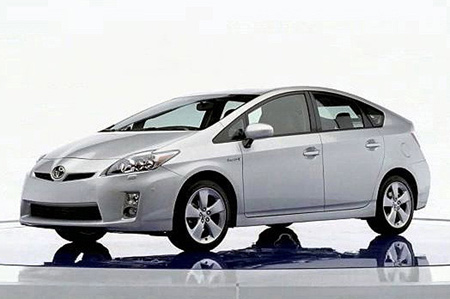
    Toyota has gone to great lengths to make their flagship hybrid conspicuously ugly.

    Don’t worry, we will all notice you if you buy one but it will take you years to make up the difference in price versus a similar mileage compact car and hybrids are widely known to come nowhere near stated EPA mileage estimates.

    So if you want to buy a Toyota Prius to make some sort of “look at me I’m greenier than you” statement, go right ahead.

    …but don’t ask the rest of us to pay for it.

    David Sandalow, the Department of Energy’s assistant secretary for policy and international affairs, said that changes will be made in order that the current credit can be claimed by dealers or others. He said that the consumers will be made to benefit from the credit, saying that this incentive will be more effective this way than if it is applied against income tax returns (which may mean waiting up to a year).

    Cash for Clunkers and Cash for Your Fridge were both busts. Cash for Ugly Cars is a bad idea too.

    Please Mr. President, don’t incent others to uglify the environment with those homely little loafs and get back to work creating jobs so more people can buy new cars.

    Mobilization

    Thursday, February 10th, 2011

    It was on a brutally cold February 10, in the middle of a long, cold prairie winter, seventy years ago today that the 164th Infantry Regiment – the largest part of the North Dakota National Guard – was activated by Franklin D. Roosevelt.

    There, they joined – for a time – the 34th Infantry Division, which would become known as the “Red Bulls” later in the war, with troops from Minnesota and Iowa.   That didn’t last long; being at a higher state of readiness than the rest of the Division, they were detached from the 34th in early 1942 and packed off to defend New Caledonia from a possible Japanese invasion; the 34th fought in North Africa, and with great distinction in the brutal campaign in Italy, while the 164th would spend the entire war in the South Pacific.

    More on that next year.

    The 164th Infantry was not the first National Guard regiment to be mobilized; it would not be the last.  It was just one of the most visible signs, here in the upper Midwest, of a term that has little meaning to people today, but was a life or death matter to young men of the era – “mobilization”.

    Today, warfare has a lot more in common with the way war was practiced in Europe in the 17th and 18th centuries; relatively small, elite armies of volunteers – professional soldiers (and sailors and airmen and Marines, naturally) for whom warfare is a job, a career, a calling.  Since the end of Vietnam, and especially the end of the Cold War, that ancient ethos has quietly re-established itself (making a convoluted exception for the American “Militia” tradition, via the highly-professionalized National Guard).

    Maryland National Guard airmen in 1940 - back when the Air Force was part of the Army

    But Napoleon introduced to Europe the idea of levying huge masses of conscripts, trained in the absolute basics (load, fire and stab on command and, above all, do not run away on pain of savage, ritualized death) and sent en masse to overwhelm the small, elite professional armies across the rest of the Continent.

    English cartoon pillorying Napoleon's conscription program

    The American Civil War added the full weight and might of a first-world industry to the mix; the Franco-Prussian War of 1870 tacked on the management principles of of enrolling the entire nation’s manpower and harnessing them toward the strategic goal; World War I rolled the whole idea of “Total Warfare”, with nation’s entire populations, economies and beings focused on the war, and targeted in turn, into one cohesive whole.

    A Union army supply depot. The Union was able to move supplies to its troops in a way no army had ever managed before; it was the first war where the logicistician was as important as the front-line general.

    And so the idea of “mobilization” was a term fraught with significance throughout the US, and every major country in the world.  It meant much more than calling up the reserves.  It means setting into motion the harnessing of the nation’s entire economy toward total warfare; starting to convert, or build from scratch, the industrial capacity needed to support the expansion of a military from under 300,000 men to millions; to not only build the rifles for the Army to carry, but their cannon and tanks, and the ammunition to shoot from them, and the fuel to move the men and the equipment around, and the food to feed them at home and in the field, and the trucks and trains to carry all the men and supplies hither and yon; to mine, smelt and form all the iron and steel and aluminum to build all the rifles and tanks and planes and ships; to build the factories and warehouses and barracks and blast furnaces and railroads to build, store, man and create all of them.  To build a Navy from hundreds of ships to thousands; an Air Force from a few hundred plans to tens of thousands; to build a Merchant Marine of thousands, plural, of ships to supply those troops, planes, ships, tanks, and everything they needed, worldwide – and train the millions of men (and women, eventually) it’d take not only to carry the rifles and fire the cannon and drive the tanks and fly the planes and sail the ships, but to maintain all the weapons and vehicles and ships and planes, and to carry the supplies not only to do the fighting, but all the maintenance, plus the men and women themselves, and to take care of administering it all so that the men, rifles, tanks, cannon, ships, planes, food, ammo, winter clothes, summer clothes, spare parts and every other needed by millions of people outside their natural environment got to the right place at the right time to actually fight the enemy.

    Barracks under construction at Fort Cronkhite, near Monterey, California

    It’s instructive to note that, for all of America’s industrial might and technological prowess today, we could not do what we did in World War Two again if we had to. Which, fortunately and God willing, we won’t.

    So even though Pearl Harbor was still a solid ten months in the future, Roosevelt had been getting ready for war for years.  He’d put the Navy – of which was a a former Assistant Secretary – on a crash rebuilding program in the thirties.

    A 16 inch gun for the new, fast battleship USS North Carolina, being hoisted into place at the Brooklyn Navy Yard, 1940

    It was in part a Depression-era stimulus program – but the program focused buying and building the things needed to fight a war over the vast expanses of the Pacific, again Japan, whom Roosevelt considered the most likely enemy at the time; aircraft carriers and the planes to fly from them; destroyers to escort them, with the range to sail the Pacific; submarines capable of carrying their crews thousands of miles across the trackless ocean and staying on patrol station for a month before making the voyage home, keeping men and equipment in a condition to fight effectively in freezing cold and tropical misery alike.

    Woman working at Douglas Aircraft in 1942. As men volunteered or were drafted, women started taking assembly-line jobs. Normal today; unheard of in 1940.

    And by the late thirties, as World War 2 started in Europe, the Army was in on the plan as well.   The Army’s “expansion” budget had multiplied sixteen-fold between 1936 and 1940, to eight billion dollars – which may buy you an aircraft carrier or two weeks of Obamacare today, but was an unimaginable investment at the time.

    USS Ludlow, one of the "Benson" class destroyers, one of hundreds of warships built in a frantic buildup between 1937 and 1941.

    The point?  Pearl Harbor was a tactical surprise – and a brilliant one.  But the war itself caught nobody by surprise.  The US was getting ready for it in every possible way – and in ways that pushed the edges of what was possible, given the technology and economy of the time.

    And the politics.  But we’ll come back to that this fall.

    As for today?  Seventy years ago, in the middle of the brutally cold winter of 1940-41, the orders went out; by telegram, phone call, good ol’ fashioned mail  – to hometown armories across North Dakota, from the Headquarters Company in Williston to Company H in Jamestown and a dozen or more towns in between.  And farm boys and city kids and a few middle-aged guys who’d been through all of this in 1916 (when parts of the 164th were called up to guard New Mexico against Pancho Villa) and 1917 (where the unit shipped out to France) started reporting to their armories, and got ready to ship out to the foetid malarial swamps of Camp Claiborne, Louisiana, carrying the same Springfield rifles their fathers and uncles – and in the cases of a few senior NCOs, they themselves – had carried in France in 1918.

    They’d have a very, very busy war, fraught with danger, full of distinction.  Of the 3,000 or so of them, about 325 would not come home.

    We’ll rejoin them in about a year and a half.

    Open Letter To Clear Channel Communications, Twin Cities

    Thursday, February 10th, 2011

    To:  Program Director, Clear Channel Twin Cities.

    From: Mitch Berg

    Re:  Your open position :  “Job Title: Morning Show Host – 100.3 FM”

    Dear Madam or Sir:

    I’m Mitch Berg.  Perhaps you’ve heard of me; I’m one of the guys who completely dominates the all-important weekend political talk market in this town.

    I’ve noticed that you are advertising for a new morning guy.

    Let’s go through the position, piece by piece:

    Employer: Clear Channel Radio – Minneapolis/St. Paul, MN

    Ooof.  Not a good start.  Clear Channel is known to be mercurial and just a little executive-driven.  But we can work that out.

    Onward:

    Job Title: Morning Show Host – 100.3FM News/Talk 100.3 FM (Minneapolis/St Paul) is looking for its next great morning host.

    And I’m going to help see to it that you find him or her!

    If you think you’ve got what it takes to propel a morning show into instant relevance in a highly competitive market, if you’ve got compelling and unique takes on the news of the day, if you love digging into and ‘owning’ local stories

    Wow.  That reads just like yours truly!

    if you truly ‘get’ social networking, unique online content, and the value it adds to your show

    As in “writing one of the region’s better-read political blogs, having a decent regional twitter following, and helping put the “social” in the  Twin Cities alternative social media?

    Wow.  It’s almost like an engraved invitation!

    plus a strong sense of humor to boot

    You think titles like this come from just anyone?

    – please email cover letter, resume and any other information to: [redacted]@clearchannel.com Subject line should read: 100.3FM Morning Show Host No calls please. Clear Channel is an Equal Opportunity Employer.

    Well, as much as it reads like kan engraved invitation, I gotta confess that it’ll take a lot to drag me away from Salem (owner of AM1280 The Patriot, where I do the Northern Alliance).  Because while I would love to get pelted with dead presidents for doing talk radio, in a way Salem pays me something that’s worth even more; the ability to do a great show without any pencil-necked execu-dweebs trying to tell me what to do.  I’ve got something that hardly anyone in the broadcast industry has; the freedom to kick ass; any ass I want, any way I want.

    At Salem, Ed and I report only to God.

    Well, no, I got a little carried away.  We do have some terrestrial accountability.  But in almost seven years on the air, we’ve not had a single Bill Lumbergh-like executive mince into the studio and go “aaah, riiight, why don’t you try to sound a little more…orange?”

    And that is worth more than gold.

    So thanks, Clear Channel.  But no thanks.  Nice try, though.

    (And shut up and hire Bob Davis permanently.  Jeez).

    Chanting Points Memo: The DFL Hides The Sausage Making Process

    Thursday, February 10th, 2011

    The Dems latest sweeping meme – predating the State of the State, although it certainly appeared in it – is “why won’t the GOP send one big budget bill.

    This is a meme – a chanting point – that can only be aimed at the ill-informed and not-well-read.

    Draw your own conclusions.

    At any rate, you see this from Democrats all up and down the food chain.  Small Democrats, like  Jeff Rosenberg at MNPublius, are carrying their masters’ water by telling us “Why A Piecemeal Budget Is Unacceptable“:

    A piecemeal approach limits our ability to negotiate. That, of course, is the Republicans’ goal. They hope to trap Dayton into agreeing to their cuts so they don’t have to negotiate. But that sort of political strategy is a terrible way to make policy.

    This is, of course, “2+2=5” material.  A piecemeal approach requires negotiation – on every bit and piece of the budget.

    The “piecemeal” approach – what Rep. Holberg calls “how you eat a hippo – one bite at a time” – takes the budget apart, down to all of its 32 billion pieces, or as close to it as has been done in recent years. It shines the light of legislative scrutiny on parts of our budget that have been on autopilot for generations.

    It requires stakeholders in every single piece of that budget to negotiate for it.

    The DFL, on the other hand, wants to take the Nancy Pelosi approach; they want to bundle up their whole, noxious $39 billion proposal and go at the whole festering mess.  Like Obamacare, it’ll be such a thick book of gibberish that “we’ll have to pass it to see what’s in it”.  And since nobody will read it all down to its most infinitesimal detail (other than King Banaian), and no legislative body can possibly sustain a debate on it, the “debate” will turn from the need for every single item in the budget to the imperative – invariably emotional (“why do you hate children and single mothyrs?  Why do you want to put dioxin in their formula?”), invariably ill-informed, invariably trite – all traits that favor easy media consumption,and hence the DFL.

    The DFL, above all, doesn’t want you to see how the budgetary sausage is made. They know the skeletons that are hidden deep inside the budget.  They want You, The People, to remain blissfully, bovinely ignorant, and just shut up and be Happy to Pay For A Better Minnesota.

    The GOP way shows Minnesotans how the sausage is made. That’s just gonna kill the DFL.

    Cognitive Dissonance

    Thursday, February 10th, 2011

    When you talk with public radio people about public funding, you notice there’s a certain schizophrenia.

    When The Legislature Isn’t In Session:  “It’s wrong to call us “Government Radio”; there really isn’t that much public funding!  It’s not all that important…”

    When The Legislature Is In Session And Cuts Are Proposed: “Write your legislator to help prevent massive cuts to the programmig you depend on!”

    Congress is talking about cutting $4 million from MPR’s subsidy.

    Lots of money?  Sure – enough to keep my station, AM1280, going for years.  And that amounts (according to Gary Eichten on the air yesterday) to 5% of MPR’s operating budget.

    Has your budget dropped by 5% in the past year?

    UPDATE: At least one wag on Twitter said I was “comparing MPR to AM1280 The Patriot”.  Well, that’s ludicrous.  There’s no comparison.

    Ed and I are better much interviewers than Keri Miller.

    Hopefully we’ve put that to rest.

    OK, seriously?  (I am serious about Miller, but it’s not my real point); I am an MPR News fan.  They come closer than most to approaching the news from a fair perspective.  They work fairly diligently to balance their coverage.  I’m not going to beat them over the head with the partisan stick (much as the likes of Keillor, or the loathsome “On the Media”,  or National Public Radio, deserve it, especially in the wake of the Juan Williams fiasco).

    Still, if losing their entire federal subsidy equals five percent of the nut, it seems less than unreasonable, in an environment where schools and the Pentagon and people in need are being asked to cut back, to stop considering MPR’s federal subsidy a sacred cow.

    State Of The State

    Wednesday, February 9th, 2011

    I’m reviewing Governor Dayton’s first “State of the State” address.

    Failure To Meet Me Halfway Is Like The Taliban Attacking Us, Or Something: Dayton kicked off with an invocation of 9/11 , and Bush’s invocation that “we are all united, and the nation has never been stronger”.

    Curiously, he jumped from there to scolding the assembled Republicans; “The challenges we face threaten to overwhelm us”.  He scolded us on even thinking about shutting down government, demanding a pledge not to shut down the state government. As if keeping government going at all costs is the sole goal.  “It should not happen, and it need not happen”, as long as we “compromise our wills for the common good”.   And if we do so, we can tell the people “we succeeded”.   “If we succeed, the people will win.  If we fail, they will lose.  It’s that simple”.

    Tax Cuts Equal Stagnation: Dayton noted that Minnesota’s per-capita income dropped, after the Ventura and Pawlenty tax cuts.  (Pay no attention the 2001 and 2008 recessions – or the fact that Minnesota started high up the list, and remains there.  Thanks, Governor Pawlenty!)

    Give The Teachers Union What They Want, Or The Kids Get It!: Dayton next turned to the need to “invest” in education, bemoaning the cutbacks in Lakeville and the ten districts that have had to put children to work in the coal mines.  Er, wait – have had to cut back to four day weeks.  My bad.

    He then went on to introduce the Teacher of the Year, and about 2/3 of Minnesota’s Superintendents, who seemed to be gathered in the gallery.  Interesting to note that the Teacher of the Year teaches at Maxfield, a school that has flunked its “No Child Left Behind” numbers for recent memory.

    He then reiterated his promise to “increase K12 every year, no excuses, no exceptions”.

    The Dayton Jobs Program: At this point in the speech, it seems to  largely involve schools; all-day kindergarten, early childhood education, and more.  He indulges in his regional snobbery – “how can Alabama have all day kindergarten, and we don’t?”  Should that be telling us something?

    “Don’t You Dare Criticize My Owners!”: “For too long, teachers have been battered by criticisms of their service”.   Battered?  By your leave, your highness, may I, a mere taxpayer, speak?

    Job Program Redux:  “We are falling behind in every key measure…” of transit construction.

    “Roads and public transit are to the state what arteries are to the body”.   Naturally, we should spend 40% of our medical bill on expensive but low-capacity “arteries”…

    Dayton is proposing bringing together more blue-chip panels of “experts” to come up with the real answer to fixing infrastructure.

    Kissing Babies, Recognizing Soldiers: The ovations – apparently bipartisan – for SSGT Wenzel, his PFC son, and Red Bulls commander Col. Krska (sp?), and Police Officer of the Year Adam Bailey were by far the longest of the day.

    I can go along with that.

    MPR’s Mike Mulcahy: “the governor is certainly taking advantage of his prerogative to invite guests; he has about a dozen in the gallery”.

    And…huh?:  Next came a screeching turn from defense and law enforcement to…health care?

    Dayton asks rhetorical question: “the most daunting challege: how do we improve services without spending more?”   He wants to “provide the best private sector practices with public sector expertise” to make Minnesota the best in the world.   That should be interesting.  “It’ll succeed best if we cooperate with our state employees…treating them with the dignity and respect they deserve will be essential to our success”.  I read that as “hands off all government employment, bennies and pensions”.

    And Now, More Job Program Talk!: “We need business to create more jobs…partner with education and government”.  “We are determined to streamlining permitting…while protecting the environment”.   Unfortunately, he notes, he was MPCA Commissioner Aussen on the case.  I call it a potemkin effort.

    We Need To Spend Money To Save Money:  Dayton plugged his billion dollar bonding bill.  “A key factor in holding back recovery is the lack of construction jobs”.  In other words, let’s get those Teamsters paying their dues again!

    We Want Business To Feel Appreciated: He notes that he’s asked the Depts of Ag, Tourism and, I dunno, Happy Thoughts to reach out to business.  I have a hunch it’ll be Dept. of Revenue that’ll be doing the reaching out…

    “I stand ready to go anyplace in the state, nation or world…” to bring jobs to MN.

    Want to emulate “Lean” business practices.

    The Chase:  Dayton asks for “forbearance” from business, while he deals with the financial crisis, “which we inherited” from President Bush Governor Pawlenty.  He basically apologizes in advance for the budget he’s going to be submitted next week.

    Because God Wants You To: Dayton cites bible verse, “to whom much has been given, much will be expected”, in leading up to his “tax the rich” proposal.  Mulcahy points out for the tenth time “more DFLes than Republicans” applauding…

    And In Closing: “We were lefty a horrendous fiscal mess, a declining economy, and badly-managed state agencies”.  But if we do things his way, “we’ll retain our former greatness”.

    Good thing that DFL legislature did such a spectacular job from 2009-2010!

    Let’s Condense The SpeechI‘m going to raise taxes, and keep spending just like the times are good.  If you disagree, you are spitting on Tim Burnett’s grave.  We inherited the problem, so don’t blame me; just pony up“.

    Response: Tim Pugmire interviewed Amy Koch afterward.  “When the governor called for tax increases, the response was nonexistent on the GOP side, and “tepid” even on the DFL side.  I think that tells us something about the reception he’ll get”.

    Speaker Zellers: “The governor is looking backward for his solutions…from California to New York, governors are not raising taxes.  We need to adopt this in Minnesota, and not keep going back to get more from society”.

    Pugmire talking with Paul Thissen: “I thought it was hopeful – that we can turn this state around again”.  Wow – we’re in the top of this nation on most rational measures; how much better do we need to be?

    “I think the majority is pushing through some extreme bills that are not where Minnesotans are”.  The polls on November 2 might suggest differently, Rep. Thissen.

    Times the word “Bipartisanship” (or similar) used: 5

    Times the word “Compromise” (or similar) used: 3

    Times the phrase “A Better Minnesota” – the PAC that his family, ex-wife and union masters – used: 6

    Times the word “Invest”/”Investment” used: 12

    Gary Gross liveblogged the SOTS here.

    Old And In The Way

    Wednesday, February 9th, 2011

    In the run-up to the State of the State address, MPR’s Gary Eichten is interviewing….Arne Carlson.

    We’re listening to him, of all people, lecturing us on how to balance budgets and build an economy.

    Tomorrow; Les Steckel on all the things the Packers did wrong at the Super Bowl.

    Forgive Me, Mr. Jobs, For I Have Sinned

    Wednesday, February 9th, 2011

    The Catholic Church has, um, given its blessing to a “ Confession” iPhone app:

    A Catholic bishop in Indiana has approved “Confession: A Roman Catholic App,” created by a company called Little iApps.

    For $1.99, Catholics can use their iPhone to help them examine their conscience as part of the sacrament of reconciliation.

    But there’s a catch: The application is not designed to replace going into the confession booth.

    You’ll still have to see a priest to be absolved from your sins.

    (CLOSED CIRCUIT TO I.T. GEEKS)

    The Catholic version uses a three-tiered architecture.  The Lutherans and Presbyterians are reportedly working on a two-tier version of the app.

    (END CLOSED CIRCUIT)

    --> Site Meter -->