Live The Dream
Wednesday, March 2nd, 2011America cried out.
And the cries were answered.
The Charlie Sheen Random Rant Quote generator is here.
America cried out.
And the cries were answered.
The Charlie Sheen Random Rant Quote generator is here.
Last Friday, Gordon “Gordy Walnuts” Hintz went all verbally Tony Soprano on his Wisconsin Assembly colleague, Republican Michelle Litjens, bellowing “You are f**cking dead” after the Assembly voted to pass Governor Walker’s Budget Repair bill.
Hintz – who has other issues going on – has apparently offered an apology:
An Oshkosh Assemblyman apologized to a colleague Monday for comments he made on the floor of the Assembly last week immediately following a vote on a contentious budget repair bill.
Litjens said she accepted the apology, but has asked the Assembly leadership to discipline Hintz.
Milwaukee talk show host and blogger Charlie Sykes broke the story – and wonders, accurately I think, if it would have ever been heard if not for alt-media attention.
Obvious exit question: would Hintz have apologized or even acknoledged the comment if I had not broken the story on my show/blog this morning?
Oh, what do you think?
Byron York tells the (national) GOP “Dont’ Fear The Shutdown“.
For starters, it wasn’t the “catastrophe” for the media that the GOP paint it as today:
One, if shutting down the government in 1995 was such a catastrophe, how come the GOP not only kept control of the House in the 1996 elections but remained the majority party in the House for a decade to come? The voter revenge predicted at the time did not happen.
That’s something wonks have a hard time with; probably 90% of voters don’t care about politics until mid-October before elections.
Two, even if the ’95 shutdown hurt the GOP — and there’s no doubt the party suffered wounds inflicted not only by Clinton but also by themselves — today’s voters are in a different mood. “We have fiscal crises at the federal, state, and local level, and voters understand that,” says Bill Paxon, a former Republican lawmaker and veteran of the shutdown. “Back in ’95, we were whistling into the wind — we were trying to preach fiscal discipline when voters were saying, ‘Hey, there’s not a problem.’ “
The 1990s were a cha-cha time when people could afford to be trivial bobbleheads; a time when Arne Carlson could seem like a serious leader, when Minnesotans could elect someone like a Jesse Ventura with a straight face.
Three, Republicans like House Speaker John Boehner have learned from their mistakes. “Our goal is to cut spending and reduce the size of government, not to shut it down,” Boehner said recently — a statement he has repeated many times. Contrast that to ’95, when, Paxon recalls, “We said we wanted to shut down the government, that it was a good thing, that it would get people’s attention, that it would advance our cause.” Now, it’s Senate Majority Leader Harry Reid and other Democrats who seem itching for a shutdown.
As far as York’s premise goes, that’s the dangerous one. This point is all about image – and the media creates – to a great extent – the images.
I said “great” extent:
Fourth, today’s media environment is substantially different. “In ’95 there was no Internet, no bloggers, no Facebook, no Fox News,” says Dick Armey, who was House majority leader during the shutdown. “The discourse of politics today is carried out in a media world that didn’t exist in 1995.” That doesn’t mean there wouldn’t be negative coverage of Republicans if a shutdown occurs, just that the overall media picture would be more balanced.
Are blogs and social media enough to affect the perceptions of that 90% that doesn’t pay attention until October of election year? This past Minnesota gubernatorial race was not encouraging. The Twin Cities media followed the usual pattern; ignore the skeletons in Mark Dayton’s closet, give breathless coverage to Tom Emmer’s – and enough of it stuck (along with the Dayton-funded “Alliance For A Better Minnesota’s” toxic, sleazy campaign) to buy Dayton 9,000 votes.
Still, York’s point isn’t that things have changed 180 degrees; it is different.
The fifth reason: Barack Obama is no Bill Clinton. “In ’95, Clinton was at the table working hard, sleeves rolled up, everybody knew we were having meetings at the White House and the president was engaged,” says Armey. “This president is seen as disengaged and aloof from the process. Barack Obama is a rank amateur compared to Bill Clinton.”
We’ll see.
Most “Chanting Points Memos” refer to Minnesota issues.
But this is not only an issue for all of us – but it’s one where the Minnesota media and leftyblog clacque have been chanting especially aggressively.
One tweeted “Obama is doing the biggest budget cuts (as percent) since Eisenhower. What do #teabaggers have 2 say?”
I say what I usually say when lefties claim to have done the right thing; it’s just not true
Conn Carroll at Heritage has the story:
Since President Barack Obama was sworn into office total entitlement spending has grown 4%, total discretionary has soared 16%, and the national debt has exploded 43%. Over that same time the United States economy has lost 3.3 million jobs. President Obama cannot be blamed for the most recent recession, but he certainly can be held accountable for the failure of his deficit spending policies in response.
As Krauthammer noted yesterday, the “cuts” are only cuts from the last budget’s “porkulus-inflated spending. After the cuts, Health and Human Services spending is up 30% or more since their already-inflated Bush-era numbers. And those numbera are not anomalies in the budget.
Carroll notes that Obama “cut” discretionary spending using three gimmicks:
Redefining Pell grants as mandatory spending. Stripped of this gimmick, discretionary spending jumps by $14 billion in 2012.
Reclassifying $54 billion of surface transportation spending from discretionary spending to mandatory spending. Spending the peace dividend. The budget proposal includes spending for military operations in Iraq and Afghanistan, referred to as “overseas contingency operations,” as discretionary spending and reduces funding for these operations by $38.2 billion in 2012.
If you live in a district with a GOP representative – the 2nd, 3rd, 6th or 8th, and maybe the 7th dependong on which way the wind blows – you might wanna contact them. Obama’s budget needs to get sent, bleeding, to palookaville.

Oh, sorry. Was that disrespectful what I just typed?
Oprah called on President Obama’s critics on Friday to “show some level of respect.”
“I feel that everybody has a learning curve, and I feel that the reason why I was willing to step out for him was because I believed in his integrity and I believed in his heart,” the influential TV host said on MSNBC’s “Morning Joe” in Chicago.
First of all Oprah honey, you’re a daytime talk show host. The fact that millions of women follow your advice on anything beyond that is beyond me.
And duh, of course there’s a learning curve…a huge learning curve for someone not yet remotely qualified to lead this country or any other entity.
What would you say to the President’s own staff who have reportedly been leaking their disdain for his lack of competency or comprehension of issues abroad and domestic?
Of the negative mood of the country, Oprah added, “I think everybody complaining ought to try it for once.”
Try what? The tapioca pudding?
If your boy doesn’t want the job no more, I’m sure we can find someone who does.
She said the presidency is a position that “holds a sense of authority and governance over us all,” and that “even if you’re not in support of his policies, there needs to be a certain level of respect.”
You mean like the level of deference and respect you and your ilk extended to President Bush?
That’s what I thought.
Yesterday was the centenary of Reagan’s birth.
A sweep through Twitter and the leftblogs saw the usual wave of fact-challenged, context-denuded twaddle the left always rolls out when the topic turns to Reagan; deficits, tax hikes, the debt, the Soviet Union would have fallen anyway, Iran/Contra (to which the answers are “the deficits paid for themselves, the hikes came to a small fraction of his cuts, hello Tip O’Neill, and nobody’s perfect”, respectively).
But just like during the glory days of the Cold War, when Sovietologists would pore over Soviet television broadcasts and reading Pravda and Izvestiya to find the subtle hints the regime would send via its official media, you can find a lot between the lines of the offical news organs of the American left as well. In this case, National Public Radio.
Over the weekend, NPR ran a piece on Reagan’s 100th birthday. The piece largely focused on…Barack Obama’s various mentions and tributes to Reagan, and the comparisons some (on the left) make between Obama and the greatest American president of any of our lifetimes.
Toby Harnden at the Telegraph notes the meme, by way of pointing out the cold water some of us are throwing on it:
Perhaps more surprising is that there is a new claimant to the Reagan throne this year: President Barack Obama. Having once routinely derided Reagan as, in the words of Democratic greybeard Clark Clifford, an “amiable dunce”, the liberal establishment is now seeking to embrace him.
Obama first tried to grab Reagan’s mantle three years ago when he cited the Gipper as a way of taking a shot at the Clintons by saying that the Republican had “changed the trajectory of America” in a way that Richard Nixon and Bill Clinton had not. Reagan, he added, responded to a feeling that “we want clarity, we want optimism, we want a return to that sense of dynamism and entrepreneurship”.
Harnden correctly points out what NPR wouldn’t; it’s just plain wrong:
Some Republicans fear that Reagan is facing a posthumous political emasculation by Democrats who play down his conservatism and recast him as a squishy conciliator.
There is little doubt that Reagan would have been dryly derisive of Obama’s policies and presidency. “Government is like a baby,” Reagan once quipped. “An alimentary canal with a big appetite at one end and no sense of responsibility at the other.”
Obama, by contrast, views government as a kindly nurse and the people as the baby. According to his mindset, the people should submit to those in government who know better and whose role is to make decisions and control the purse strings.
Comparisons between their speaking styles are both superficial (delivery is important – and still not the main point) and wrong (Reagan kept delivering great speeches from the beginning of his administration ’til the end; Obama’s fabled oratorical chops have seemed more rote and canned over time).
Just saying.
Yesterday, the Campaign Finance reports for the last Gubernatorial election came out.
And the media finally noticed – sort of – what you learned on this blog last July; Mark Dayton outspent Tom Emmer 2:1, and that most of the money came from “outside groups”.
MPR had the best report, at least compared to the rest of the Twin Cities media:
Democrat Mark Dayton and his allies spent significantly more than Republican Tom Emmer and his allies to win the race for Minnesota governor.
Alliance for a Better Minnesota, a group working to elect Dayton, spent $5.7 million in the race, helped by big contributions from labor unions and Dayton’s family. Most of Alliance’s money was spent on ads criticizing Emmer.
“Most of” it. Heh.
I’m going to add some emphasis here:
Labor unions spent more than $2.2 million to help elect Dayton, with money coming in both before the election and afterward to help the recount effort. The Democratic Governor’s Association spent $1 million, and Dayton’s family and his ex-wife gave more than $900,000.
Tom Scheck’s piece yesterday included a sound bite from Ken Martin, the head of “Win Minnesota”, a PAC that funneled money to “Alliance For A Better Minnesota” (ABM):
Ken Martin, who ran the umbrella group that financed The Alliance for a Better Minnesota, says donors were energized to elect the first Democrat to the governor’s office since 1986.
“People invest in politics on all sides, and it’s not for any other purpose than to support the candidates that they feel are going to best represent what they believe in,” said Martin. “Frankly, the payoff is a better Minnesota, and they believe Mark Dayton was the candidate to make that happen.”
Martin’s statement implies that there was some huge groundswell of grassroots financial support in $20 and $50 donations from Ma and Pa Minnesota. There was not; the money to run Dayton’s sleazy smear campaign came from big institutional donors, national Democrat sources, and Dayton and his family.
More emphasis added below:
Alliance for a Better Minnesota outspent the two groups backing Emmer — MN Forward and Minnesota’s Future. Minnesota’s Future, funded mostly by the Republican Governor’s Association, spent $1.4 million on the race. MN Forward, who received contributions from businesses like Target and Best Buy, spent nearly $1.8 million.
Catch that? That, of course, is why the DFL spent six months caterwauling (with the help of their kissin’ cousins in the media) about the “corrosive effects of corporate money in politics” Minnesota business managed to contribute all of 2/3 what unions did.
Can’t have that, can we?
By the way, it’s interesting that business donated $1.8 million to the conservative, pro-business Emmer, while…:
On the DFL side, companies including Kwik Trip, Anheuser-Busch, Pfizer and SuperValu gave a total of $88,000 to groups helping to elect Dayton and support him during the recount.
Unfortunately, I already patronize none of these companies.
Dayton’s campaign also outspent Emmer’s. Dayton spent $5.3 million in 2009 and 2010, helped by a $3.9 million in loans to himself. Emmer spent $2.8 million.
That’s a lot of Renoirs.
Naturally, the chattering classes’ objections about “the toxicity of money in politics” referred to corporate money. Not labor unions, and not trust funds from South Dakota.
Walter Russell Meade on why charter schools matter.
The big reason? They are a market solution – the intellectual market, rather than the financial one:
This isn’t because they are a magic bullet solution to our education problems. The research surrounding the effectiveness of charter schools is controversial and politicized. Some schools work better than others — and that is likely to be the case going forward. However we organize our educational system there will be good schools and bad schools, good principals and bad ones, good teachers and bad. And no type of school can consistently overcome the consequences of parental negligence and demoralization. A majority of New Orleans students may be attending charter schools these days, but that is not going to turn the Crescent City into the Athens of the Delta overnight.
So I don’t say charter schools are on the cutting edge because they are going to turn our inner city kids into Singapore-style math whizzes anytime soon. But they are doing at least as well as the schools we have — and they are pointing the way to the kind of political and social transformation that can take us past the stagnant and dysfunctional world of Big Blue Bureaucracy into something more sustainable and more hopeful.
And this being a conservative blog, I can be forgiven for seeing a silver lining for conservatism:
The first thing they’ve done is to open the first serious debate among Blacks about the deficiencies in the blue social model. The weakness at the heart of blue politics today is not the divide between people who love government services and those who want the government to shrink. That reaction is a problem for the blues, but it doesn’t split the blue coalition. The widening gap, however, between the interests of the consumers of government services and the producers of those services has the potential to split Blue America down the middle.
And when he says “Blue America”, he means in part the bluest Americans – black Americans:
The charter school movement has exposed the fallacy in this argument to increasing numbers of Black parents by showing that the dysfunction in urban schools is not simply a problem of money. It is also a problem of incompetent teachers who can never be fired, of dysfunctional work rules that give senior teachers a viselike grip on choice assignments, it is a whole system that all too frequently puts children last.
Black parents who have seen charter schools at work like school choice more than Democrats. In New Jersey, Blacks like charter schools more than Republicans!
Here in Minnesota, they are certainly more committed to them than the GOP is.
The whole thing is worth a read.
Gary Miller – late of the great, lamented Truth Vs. The Machine, from which this blog’s “First Ringer” is a refugee, has switched hos oeuvre to Facebook, a medium whose Ambrose Bierce he very clearly is.
And Gary notes something that had flashed across my mind as I listened to the State of The Union:
…the President’s continued references to Sputnik as a way to inspire young people would be much more effective, if: 1. They still taught kids in publik skouls about Sputnik. 2. The country which launched Sputnik, the Soviet Union, still existed and hadn’t collapsed under the burden of a socialist command economy similar to one which the President hopes to implement here. Other than that, heck of a story.
Heh.
President Obama is in Wisconsin.
Joe Doakes of Como Park is on the case. He writes:
It just occurred to me that with the President’s trip to Manitowoc, and considering he’s already visited Madison and Milwaukee (and still has time to hit Menomonie), we could be looking at the makings of a historic event in 2012: the first-ever clean sweep of every town in Wisconsin starting with M by a Black President who went on to fail of re-election.
Wouldn’t that be GREAT?
Joe Doakes, St. Paul
Makes perfect sense to me.
I’ll be live-tweeting over at my twitter account.

I was in Chicago last week and the papers there were headlining the huge lead Rahm Emanuel has had in Chicago’s mayoral race. The Democratic machine was running at redline to keep their scum at the top of the cesspool that is Chicago politics.
…and then it blew a gasket.
An appeals court said Rahm Emanuel is not allowed to stay on Chicago’s mayoral ballot, a blow to the former White House chief of staff who has already raised more than $10 million in his bid for mayor.
…I think Hillary still has campaign debt. Maybe Rahm could exhibit some chivalry and help a lady out.
The three-judge Illinois Appellate Court, which heard oral arguments last week in the case, issued a split decision Monday afternoon saying that Mr. Emanuel is not eligible to run for mayor. Two of the three judges reversed a lower-court decision that had given him permission to remain on the ballot. One judge dissented.
Lawyers for Mr. Emanuel said last week they will appeal the decision to the Illinois Supreme Court. The state’s high court can decide whether or not to hear the case.
But there may not be time for that…the election is in a month.
Bummer [Cheshire Grin].
Mr. D. on the Wellstone Tuscon memorial with the President, and on the left’s newfound love of “civility”:
Civility comes from mutual agreement. It cannot be imposed by one side on the other. And it certainly can’t come until those who were party to the baseless calumnies heaped in recent days step forward and accept their responsibility for it. We can have an honest debate if we have honest debaters.
President Obama gave his allies on the Left a chance to climb down from the untenable place they have chosen to occupy. It is my hope that those allies will see fit to use the opportunity he has provided. If they do, the debate that so many people claim to desire will happen. If not — game on.
For myself? I’ll sit in the back of the bus, and hide my knive so nobody brings a gun.
The state of Illinois is experiencing the fiscal shit storm of the century. Minnesota isn’t far behind.
The difference? There’s a chance Minnesotans won’t get the shaft like like our friends in Illinois just did.
Our hard-won and just-in-time GOP majority, if our elected representatives stay true to their mission, will force a different tact in the Land of 10,000 Lakes.
Illinois Gov. Pat Quinn defended a massive increase in state income taxes passed by lawmakers Wednesday and promised to quickly sign the measure to help heal the state’s ailing finances.
Lawmakers worked overnight to pass the increase to raise the personal income tax rate from 3 percent to 5 percent for four years — a 66 percent increase. Corporate income taxes also will rise, but Quinn rejected the notion that it would decimate businesses.
Then again, that’s not the point. The point is that governments both State and Federal will continue to spend beyond their means as long as they know that they can always raise taxes down the road.
The rate increase might be the biggest any state has adopted in percentage terms while grappling with recent economic woes. Nevertheless, Illinois’ tax rate would remain lower than in several other states in the region.
Some comfort that must be. They’re less worst.
“It’s important for their state government not to be a fiscal basket case,” Quinn told reporters outside his Capitol office.
Legislative leaders rushed early Wednesday to pass the politically risky plan before a new General Assembly was sworn in at noon, taking a slice out of the Democratic majority and removing lame-duck lawmakers willing to support the tax before leaving office.
Nice move. Screw the people and vacate.
The tax increase will be coupled with strict 2 percent limits on spending growth. If officials spend above those limits, the tax increase will automatically be canceled. The plan’s supporters warned that rising pension and health care costs probably will eat up all the spending allowed by the caps, forcing cuts in other areas of government.
Here’s a novel idea. How about a spending freeze? Everyone else has had to do so. Why not government?
House Speaker Michael Madigan said Republicans should have supported some parts of the plan instead of voting against everything. The proposal passed the House on Tuesday night 60-57, the bare minimum. No Republicans backed the measure there or in the Senate, where the measure passed 30-29.”They’re on the sidelines. They don’t want to get on the field of play,” the Chicago Democrat said. “I’m happy that the day has ended.”
But Republicans noted they were not included in negotiations. They also fundamentally reject the idea of raising taxes after years of spending growth.
…but there apparently weren’t enough of them to prevail. Luckily for Minnesota, we painted our House and Senate Red just in time.
“We’re saying to the people of Illinois, `For eight years we’ve overspent, now we’re going to make it your problem,'” said Rep. Roger Eddy. “We’re making up for our mistakes on your back.”
The increase means an Illinois resident who now owes $1,000 in state income taxes will pay $1,666 at the new rate. After four years, the rate drops to 3.75 percent and that same taxpayer will then owe $1,250.
Republicans predict the tax eventually will be made permanent.
That ladies and gentlemen is what we call “The Slippery Slope.”
“It’s a cruel hoax to play on citizens to say this is temporary,” said House Minority Leader Tom Cross, R-Oswego.
Funny how that works for liberals. Tax cuts are always temporary. Tax increases are always permanent.
Republicans also accused Democrats of doing irreparable harm to Illinois families and businesses. Business leaders decried the proposal as a job-killer.
“Based on this particular legislation the only businesses that will benefit are the moving companies that will be helping many of my members move out of this particular state,” said Gregory Baise, head of the Illinois Manufacturers’ Association.
I suppose having a sense of humor has served him well lately.
Governors of some neighboring states quickly jumped on the issue. Republican Wisconsin Gov. Scott Walker, who took office last week has already proposed a tax cut for businesses that relocate to Wisconsin from other states, invited companies to head north.
Atta boy. I’m still coveting.
“Years ago Wisconsin had a tourism advertising campaign targeted to Illinois with the motto, ‘Escape to Wisconsin,'” Walker said Wednesday in a statement. “Today we renew that call to Illinois businesses, ‘Escape to Wisconsin.’ You are welcome here.”
“And we won’t tax you up the wazoo!”
Quinn scoffed at the notion. “Lots of luck to them, but that’s not going to happen.”
Except for the fact that it already is.
Democrats also bristled at being blamed for the state’s financial problems, although they’ve controlled the governor’s office and both legislative chambers since 2003.
Thank God that never happens in Minnesota (crosses fingers).
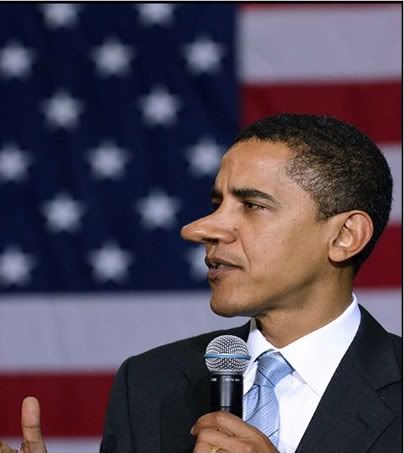
Barry is selling it but not everyone is buying his form of plagiarism.
President Barack Obama said U.S. job growth is improving after a government report showed employers added 103,000 jobs last month and the unemployment rate fell to 9.4 percent in December from 9.8 percent in November.
In his weekly radio and Internet address, Obama today credited steps taken by his administration to reduce taxes and encourage business investment with helping to restore economic confidence and boost hiring.
Really Barry? Steps taken by your administration are responsible for discouraging people from looking for jobs?
A little perspective might be indicated at this juncture, with all due respect, Mr. President:
Although the jobless rate dropped substantially to 9.4% in December from 9.8% a month earlier, the Labor Department said Friday, employers increased payrolls by only 103,000. Economists say that is barely enough to keep up with natural growth in the labor force. Much faster employment and enduring job gains—on the order of 200,000 jobs a month—are needed for lasting improvement.
The decline in the jobless rate, paradoxically, was partly a sign of economic weakness—many people have given up on finding jobs, and thus were not counted as unemployed. Some 8.4 million jobs were shed during the recession, and in 2010 just 1.1 million were added.
Between you and a Congress that was almost gutted of your ilk in November, you’ve spent billions and billions of dollars that we don’t have…sacrificing our nation’s very solvency to create a few hundred thousand jobs when millions and millions have been lost?
Employers in the U.S. added fewer jobs than forecast in December, confirming Federal Reserve Chairman Ben S. Bernanke’s view that it could take “four to five more years” for the labor market to completely mend.
…and that may be just as optimistic and his assertions that the latent, yet unrealized effect of the trillions of “quantitative easing” will be quite manageable down the road.
Payrolls increased 103,000, less than the median projection of 150,000 in a Bloomberg News survey, Labor Department figures showed yesterday in Washington. The jobless rate fell to 9.4 percent, partly reflecting a shrinking workforce as discouraged Americans stopped looking for work. [emphasis mine-JR]
Lest we not forget why those [JR does that thing with your fingers that denotes quote-unquote] “steps” were taken by [again] “his administration.”
Mr. Obama attributed increasingly optimistic economic forecasts in part to the deal he negotiated last month with Republicans to extend Bush-era tax rates for all, along with unemployment benefits, a payroll-tax cut and assorted other tax breaks.
A deal decried by liberals. A deal that was essentially forced upon him. A move that Obama could have made two years ago had he truly been focused on jobs then.
It is a product of the aforementioned “shellacking” (in the President’s words no less) in November coupled with a sashay to the middle to save what little is left in his political capital account.
President Obama may owe former President Bill Clinton a few finder’s fees, considering all the former Clinton aides he’s been bringing into his administration to help him get through the next two years and win a second term.
Maybe my title should be “Back-Peddler in Chief.”
Pat yourself on the butt Mr. President.
Mission Accomplished.
President Obama likes to pretend that he’s delivered on a good chunk of his agenda.
But as Salon notes, it’s just not so:
A few broken promises, like Obama’s pledge to shutter the prison at Guantánamo Bay, are well known. But there are plenty more campaign promises that have disappeared down the memory hole — and that Obama would prefer to stay there. Here is a sampling of five:
Read the whole thing, if you’d be so kind…
I joined the Minnesota Libertarian Party back in 1994. I’d been a conservative – ergo a Republican – for something like ten years at that point. But I was disgusted with what I saw as the pusillanimity of the GOP Congress in the face of Bill Clinton’s power grab. Not just Hillarycare; it was the widespread caving-in on the 1994 Crime Bill, with its noxious gun control provisions, that disgusted me with the GOP.
So I joined the Libertarian Party of Minnesota (LPM). Not as a super-active member, of course – my kids were one and three years old, at the time, so there was little enough chance of me being a full-time firebrand.
But I was hardly alone. The mid-nineties may have been the high-water mark for the Libertarian Party – the LPM and nationally. I don’t have the figures in front of me (and I don’t really care to look it up at the moment), but the Libertarian Party reached something of a high-water mark in the mid-nineties. The party was endorsing candidates for offices, from city councils all the way up to President, like it hadn’t at any time before or since.
The thing that appealed to many newly-minted Libertarians, myself included, was the absolute purity of Libetarian Party dogma. There was no compromise on personal liberty! Freedom ruled! Liberty was the Law!
Our enthusiasm had the advantage of being utterly unfettered by any sense of having to make any of the compromises that come from actually having to govern anything. The number of big-L Libertarians that had been elected to significant office, ever, was vanishingly tiny. Outside of ornery, contrarian environs like the rural West, New Hampshire and Alaska, it was rarer still.
The LPM – and the LPUSA – were a haven for a lot of people, like me, who were very, very clear on what they wanted. They – and I – were very very unclear on how the sausage was made. Politics is a two-stage process; Stage 1 is pulling like hell to get your beliefs – wrapped up in the form of a candidate – into the election. It’s the part that takes place within a “party”, usually – and includes all the various roots of the term “Party”; one is “particular” about which candidate ones’ “party” endorses, one exhibits “partisanship”.
Stage 2 is when that candidate is (hopefully) elected, and has to actually try to govern, either by sitting on a deliberative body like a city council, a county commission, a Legislature or a Congress, with people with whom you may disagree, to actually make the sausage. It’s when the various forms of the word “politics” start to apply; one must “politely” (by the standards of the governing body) work with other “politicians” to achieve enough “polity” to enact your beliefs as “policy”.
My fellow Libertarians and I had the Phase 1 bit down cold. We knew how to agitate!
We – I – were a little less clear on Phase 2, at least at the time.
It took me about four years to realize the LPM was never going to get to Phase 2, and that the GOP was my best bet for working for a party that would, someday, reflect enough of my beliefs to let me get behind it.
And today – 12 years later, on the eve of swearing in a new, conservative-with-tinges-of-small-“l”-libertarian legislature – I feel pretty well vindicated.
But some of the same dynamic I saw in the big-L Libertarian Party – the enthusiasm for the “Phase 1” process, the agitation and enthusiasm and the pulling like hell for ones core beliefs – is very much at play among the hordes of newly-minted conservative activists. We saw it in spades a couple of years ago, when GOP caucuses were inundated with Ron Paul supporters. They stormed the caucuses, full of piddle and vinegar, all fired up to enact “Dr. Paul’s” policies. Many got discouraged when the GOP – those who’d in the party for years, doing all that boring “Phase 2” stuff – didn’t embrace them with open arms. Some stuck around, long enough to see the Tea Party – a tidal wave of new activists that dwarved even the Ron Paul tide – sweep the GOP into power in a wave of “Phase 1” fervor.
Now we’re into Phase 2.
And some of the people who’ve had to do all that tiresome Phase 2 stuff – all the words that share their roots with “politics”, the ones that require persuasion rather than ardor, and even occasionally compromise rather than absolutism – are nervous.
And much as the Phase 1 firebrand in me hates to say it, some of them have a point.
Lori Sturdevant isn’t one of them – but she at least troubles herself to talk with some people who do:
U.S. Rep. John Kline, soon to be Minnesota’s most potent gavel-wielder in Congress, shared his take on the Minnesota mood when he paid the Star Tribune Editorial Board a visit last week.
“I don’t know the last time when we saw a mood like this. It’s amazing,” said the Second District Republican, who’s soon to chair the House Education and Labor Committee. People are frustrated, scared, angry, impatient, confused — “all, I would argue, with justification,” he said.
That’s the sound of lots and lots of people who are doing the “Phase 1” stuff, many of them for the first time in their lives.
About that last sentiment: Kline said he regularly hears mixed messages from his south-suburban constituents.
“On the one hand, people want Congress to get things done, to make things better, to get the economy going again, to do something about jobs,” he said.
But let him profess support for something favored by a Democrat — say, the Obama-Republican tax deal that took a bipartisan pounding on its way to enactment last week — and Kline is deluged with a different message: “I didn’t elect you to compromise.”
The wave that swept all those newly-minted Republicans into office is heavily made up of people who are new to caring about politics at all, much less about all the inside-baseball “Phase 2” stuff.
Maybe “you” individually didn’t. But “you” collectively did. Collectively, U.S. and Minnesota voters have elected divided governments.
So far.
It’s the will of the collective “you” that’s supposed to count in running a democracy. When voters put the levers of power into the hands of more than one party, governing isn’t Burger King. You can’t have it your way — not if you expect to get anything done.
Sturdevant displays a certain amount of wonky provincialism here; shutting down a tax-and-spend orgy, whether in St. Paul or in Washington, is “getting stuff done”.
From my perch in the Capitol basement, I’ll be watching to see whether the new crowd in charge of state government will be similarly devoted to accomplishment, rather than intent on keeping their respective bases satisfied.
Well, no. I mean, it sounds nice and all, but if you’ve been following Lori Sturdevant any length of time, you the only “accomplishment” she cares about is “enacting the DFL’s agenda”.
But what the heck, it’s the holidays.
They have ample reason to be. The statehouse gang lacks Congress’s opportunity to do relatively little immediate harm if they do relatively little. In state government, the constitutional requirement that the budget be balanced every two years presents an unyielding choice to DFL Gov.-elect Mark Dayton and the Republican majorities-elect in the Legislature: Make a deal, or shut down government operations come July.
Sturdevant makes that sound like a bad thing.
Kline correctly pointed out that in both parties, activists are “exceptionally vocal right now, and more engaged than they have been over time.” The Internet has given them all spyglasses and megaphones, which they train as eagerly on their allies as their opponents. Those tools leave a false impression with some elected officials about the activists’ political strength.
I”m going to suspect that this past November’s elections may have left a very, very accurate impression of that strength.
Dayton and the new GOP legislative leaders put on a fine show of bipartisan comity last week after their first private meeting. They said all the right words about searching earnestly for common ground on job creation and government streamlining.
But, on other occasions, they’ve also said they plan to stick to the policy guns they fired during the fall campaign. Dayton will assemble a budget proposal that emphasizes an income tax increase for the wealthy. Republicans will counter with budget bills built on “no new taxes.”
Quick side note here; watch that “no new taxes” talk. Sturdevant is going to be doing her usual job – the DFL’s bidding – in trying to make the GOP’s stance seem like an extension of the Pawlenty years. In fact, the GOP was sent to Saint Paul with an even clearer mandate; cut the spending.
If those base-pleasing, no-new-compromise exercises consume every legislative day from January until early May, my sense is that the mood of the Minnesota electorate is going to be quite sour.
Stuck as she is in her wretched ink-stained ivory tower at 425 Portland, perhaps it’s understandable that Sturdevant missed the news between Christmas Eve of 2009 and November of 2010; the mood is already sour. That’s how Barack Obama and the DFL both squandered overwhelming advantages in Congress and the Legislature in two short years. The peasants are pissed!
Last week, the Civic Caucus, a bipartisan group of seasoned policy wonks, began preparing a formal call for a change in the Legislature’s usual calendar.
And as a general rule, anything coming from “bipartisan” groups of “seasoned wonks” should go in the kill file immediately.
By law, Dayton must offer his budget proposal on or before Feb. 15. The Civic Caucus wants the Legislature to follow suit a few weeks later with at least its revenue and spending targets, said the group’s coordinator, Paul Gilje.
“Every session, everybody is so frustrated with the way everything comes out at the last minute,” Gilje said. “This time, the divide is so well-understood early on. Why not get the options on the table early? Why not open the way for an intelligent statewide discussion for how to reconcile the differences, rather than waiting till the end?”
Oh, I have a sneaking hunch you won’t have to wait all that long for the GOP’s proposal.
As it stands, the draft statement the Civic Caucus is circulating doesn’t specify a deadline for the Legislature to produce its budget. I have what may be a fitting suggestion: How does April Fools’ Day sound?
It sounds like someone had to dig into the cliche bag to find an ending for their column.
Look – the political establishment in this state – and Sturdevant is nothing if not their dutiful scribe – has been barbering for years about how badly they want more people to get involved, to be stakeholders, in their government.
Now they got it.
We just must all be the wrong kind of people.
Minnesota Public Radio’s Mark Zdechlik notes that Minnesota could very well see a lot more nail-biter races, because…
…well, we all know how this works, don’t we? Minnesota is more polarized, and the parties are more extreme. Right?
Analysts say elections have become so close because Republicans and Democrats share almost the same number of supporters and that both sides are becoming more extreme and more polarized.
And who’s the source?
You only get one guess! Hurry! (Emphasis added)
University of Minnesota Political Science Professor Larry Jacobs…
Oh, who the hell else?
I wonder – does the Humphrey Institute give some sort of spiff to reporters for quoting Jacobs in every single story about politics at any level anywhere in Minnesota?
If every single news outlet – MPR, WCCO, the Strib, the PiPress, the MinnPost – quoted Mitch Pearlstein of the conservative Center of the American Experiment, do you think someone would squawk that they were adopting a partisan point of view?
So given the largely monochromatic, left-of-center pedigrees of the Humphrey Center’s faculty, why does this monopoly on sourcing in the Twin Cities media pass unmentioned?
…said politics in Minnesota has been reduced to something akin to tribal warfare; most Democrats and Republicans are dug-in so deep they wouldn’t even consider supporting a candidate from the other side.
“You’ve got kind of the Hatfields on one side and the McCoys in another,” Jacobs said.
Far better, to some in the Twin Cities “intelligentsia”, to return to the seventies, when all politicians came to us in generic yellow boxes with black lettering, all spouting more or less the same center-left institutional twaddle? When you had your choice between John Marty and Arne Carlson – ergo no choice at all?
Jacobs said this year’s governor’s race is a good example of the polarization. He said that Republican Party candidate Tom Emmer was probably the most conservative statewide candidate we’ve seen nominated on the Republican side in the state’s history, or at least since World War II.
They always put this like it’s a bad thing.
He was nominated – they know that, right? It’s not as if Karl Rove flew in and gave the guy the nomination personally.
With the exception of DFL Sen. Amy Klobuchar’s lop-sided 2006 victory, the past three statewide elections have shown core Republicans and Democrats in Minnesota are evenly split.
Because winning with a majority has become so difficult, Jacobs said election strategy in Minnesota has become all about ripping the opposition and appealing to the base.
And, um, trying to scare off independents by showing that your guy is really ahead, appealing to the Bandwagon Effect. Right, Dr. Jacobs?
Question: If I had access to Lexis/Nexis, and could divide the number of stories on politics in the Strib, PiPress, WCCO, MPR and the MinnPost featuring quotes by Dr. Jacobs by the total number of stories on politics, would the result be over or under 25%?
With the new session coming up, all you liberals are going to be in for a new experience – being a legislative minority here in Minnesota.
It’s never happened, not in the political lifetime of any of you out there.
It’s gonna be a whole new feeling for all you libs – not being able to spin the wheels and levers of government to make it do what you want at will or, at the very worst, to be able to control a chamber of the legislature to bog down legislature. All you have is the veto (and of course DFL control of the state’s bureaucracies, which is not an inconsiderable power by itself). He’ll float his “Crack Whore With A Stolen Platinum Card Budget”, just like the people who paid for his election told him to. It’ll get shot down. He’ll turn around and veto the budget put forward by the responsible adults. That’s how it’s done.
So, speaking as someone who’s been in the legislative minority in this state as long as I’ve been in this state – 25 years, now – here’s some advice for all you DFLers.
You can thank me later.
The entire legislature was elected, not “Selected“: Yes, the people really did flush the DFL out of office. Buck up, little campers; 2012 is another election. Although I think we’re gonna clobber you then, too.
Stay Calm: Some of you people are nuts even when you’re in power. We conservatives are pretty good at tamping down our odd nutbar. You guys need some practice. You’ll probably get it.
Elections Have Consequences: The DFL used its temporary legislative supremacy to try to jam down a phalanx of spending and taxes over the past four years. They were stymied by Governor Pawlenty, who exercised his veto and conducted a masterful rear-guard job. And when he did, you – especially your pundit friends in the media – were downright heart-rending in your demands that Pawlenty also represent the Minnesotans who didn’t vote for him, and pass the DFL’s legislation. Now, as a conservative, I’m under no illusion that Dayton is going to vote my conscience when he takes office.
So I’m counting the hours until we get the first mawkish blog post or Lori Sturdevant column asking Republicans to remember that “you represent the majority of Minnesotans that didn’t vote for you”. In that way that the DFL always forget when they controlled all the knobs and levers.
Pack Your Bags!: I thought nothing could match Alec Baldwin and Susan Sarandon’s narcissistic solipsism in threatening to move to France if George W. Bush won his various elections (and naturally, neither did), until I heard Minnesota DFLers threatening to leave the state if Emmer had won the election. Well, controlling both houses of the legislature is arguably a better deal than having the governor’s office and one chamber.
So since I just bought a truck, do you and your crap need a ride to Hudson?
Get A Grip: No matter what the DFL, Tom Dooher, the Strib’s editorial board and DFL-pet columnists tell you, Minnesota isn’t really going to change all that much when the adults take over. Oh, keeping government fed will no longer be the primary stated mission of government (and if the GOP majority doesn’t change that, those of us who sent them there will be happy to bring them home), but the schools will stay open, the parks will still be there for, er, parking, there will still be libraries, cops and firemen will still respond (unless you live in a city where the DFL will hold those services hostage). Indeed, the schools will probably do better, you’ll be able to enjoy the park to relax from the job you don’t have now but are more likely to have then, you can spend your time at the library reading rather than job-hunting, and so on. But by and large, not all that much is going to change.
Except, it seems, your (plural) blood pressure.
Buck up, little vegan campers. We conservatives survived. So will you – if you choose to.
…for attorneys and consultants that is.
As for the rest of you, not so much.
Barack Obama just finished a summit with twenty US CEO’s urging them to get off the sidelines, spend their hoards of cash and start hiring.
President Barack Obama pressed 20 corporate chief executives Wednesday to suggest policies that would spur them to “start investing in job creating enterprises.”
Hey Barry, I got an idea for you if they didn’t come up with it: ask congress to repeal what is left of your shitty health care reform bill.
Big employers faced with incorporating the first round of health-care changes next month are grappling with how to comply with the long list of new rules.
Many companies are hiring consultants to help sort though the mountain of new mandates, which include extending dependent coverage to children up to age 26, and may eventually result in covering more employees. Some are also considering changes to their plans—including pushing costs to workers.
Might they have instead invested these resources in job creating enterprises or hiring new employees?
Maybe, just maybe had you focused on jobs instead of ramming socialized health care down America’s throat you wouldn’t be in such a pickle. How’s that national unemployment rate going for you Barry? Are you excited about your chances in 2012?
Today the national unemployment rate hovers near where it began the year, just shy of 10 percent.
It’s funny how liberals do everything they can to short circuit capitalism and then ask the capitalists to clean up their mess.
And in the end, those they claim to serve end up paying the price via lost jobs, wages, or both.

Last summer, I noticed a local leftyblog run by a couple of anonymous bloggers was trying to play lawyer.
They were gabbling about my friend, colleague and now Minnesota State Representative, King Banaian’s radio show on KYCR – also known as “AM1570 The Businessman”, sister station to AM1280 The Patriot.
King was a co-host of the Northern Alliance Radio Network on AM1280 – an overtly political show on an overtly political station – from March of 2004 until September, 2009. At that time – long before he announced any intention to run for office – he switched to the 1570, where he ran an expressly non-political show about economics.
The anonymous bloggers in question wrote a screed claiming that the 1570 needed to either pull Banaian off the air, or give his opponent equal time, notwithstanding the fact that AM1570 can not be heard in District 15B, a demand that caused me to wonder if Banaian’s opponent might want to just tell the anonymous bloggers to shut up and quit trying to “help” her; using the “equal time” would involve driving to Eagan from Saint Cloud every Saturday morning, or at the very least taking off a couple of hours of prime campaigning time per week to talk on the air on a station that has zero listenership – zero – in Saint Cloud.
Little did I know as I wrote my response that somebody had already filed a complaint [Warning! PDF File!] with the Campaign Finance Board! The CFB summarizes the complaint, saying the complainer believed there had been:
(1) a prohibited corporate contribution from the radio station owner to the King Banaian for House committee in the form of free radio air time;
(2) the failure to report contributions from the radio station owner to the King Banaian for House committee
(3) violations of the limits on contributions that may be accepted by a candidate’s principal campaign committee.
As I pointed out in my original response, the complaint was absurd: the show was expressly nonpolitical, and the station isn’t heard in the district in question anyway.
The complaint also gabbled on for quite a while about Banaian’s history – ending half a year before he announced his candidacy – on AM1280. Follow that logic there? Being on the air in the past is a form of campaign contribution? Did anyone file a complaint against Al Franken? Can any talk show host ever run for office?
It matters not – because the Campaign Finance Board reached exactly the same conclusions I did, and for exactly the same reasons.
As re the complaint’s, er, complaint that Salem “contributed” to Banaian via the “free” air time?:
For the purposes of analysis, the Board will adopt Complainant’s position and assume that Salem Communications provided services of value to King Banaian. In fact, the opposite may be true since King Banaian was a volunteer host with significant credentials and the radio station’ owners profited from commercials run during breaks in his program.
Heh. Don’t we all know it.
As re the notion that Salem was contributing to the Banaian Campaign, the CFB notes that the “contribution” would have required phenomenal ESP on the part of Salem’s execs:
Services provided by Salem Communications would be a recognizable and reportable transaction if those services constitute an “approved expenditure” under Minnesota Statutes Chapter 10A. An “approved expenditure” is an expenditure made by a third party for the benefit of a candidate with the approval of the candidate. Minn. Stat. §10A.01, Subd. 4. An approved expenditure constitutes both an in-kind contribution to the candidate’s principal campaign committee and an in-kind expenditure by the committee.
An approved expenditure is a specific type of “expenditure”. Thus, before a transaction will be considered to be an approved expenditure, it must fall within the definition of an expenditure.
Minnesota Statutes, Section 10A.01, Subd. 9, defines “Campaign expenditure” or “expenditure” as a payment or purchase “made or incurred for the purpose of influencing the nomination or election of a candidate . . .”. This statute clearly requires the existence of a specific purpose before a transaction is an expenditure for campaign finance purposes.
The program under consideration was ongoing prior to Mr. Banaian’s announcement that he would run for office. The program is aimed at discussion of economic issues. Although it discusses policy related to economics, it has not discussed Mr. Banaian’s candidacy for the House of Representatives.
In other words, the “campaign” to which the “contribution” was “made” didn’t “exist” when Salem put the expressly non-political show on the air – “air” which, need we remind you, ends at about the west end of Maple Grove:
The program’s broadcast signal does not reach the geographic area in which Mr. Banaian is running for office. While the online on-demand archive is available to anyone, there is no evidence that Salem Communications or anyone else has promoted the archive to voters in Mr. Banaian’s district.
(Or any other district. Don’t get me wrong – Salem rocks, and I thank them profusely for having me on the air for this past almost-seven years. But any “promotion” that any of us local hosts have gotten has been via word of mouth. Such is the nature of weekend radio).
The fact that Mr. Banaian may have appeared as a guest on broadcasts on WWTC, a political talk radio station, does not provide support for the proposition that Salem Communications made a political contribution to the King Banaian Committee. Minnesota Statutes Section Subd. 11(c) provides that a contribution does not include “the publishing or broadcasting of news items or editorial comments by the news media”. This exception is broadly interpreted in favor of allowing public discourse related to political campaigns. The fact that a candidate interview may have an effect on the candidate’s election is not sufficient to remove the interview from the news media exception.
The Board recognizes that any positive public exposure may have some effect on an individual’s chance of being elected. However, this possible collateral effect under the facts presented is not sufficient bring the broadcasts described by Complainant within the scope of expenditures that are considered to be for the purpose of influencing the nomination or election of Mr. Banaian.
Now, that’s an interesting proposition; considering “positive” interviews to be a “campaign contribution?” Can someone file a complaint against Keri Miller or Esme Murphy? Because if I have to listen to either of them painting Mark Dayton’s toenails on the air again, I’m going to herk.
The conclusions?:
Based on the information provided in the Complaint and the Response, and through the Board’s investigation, the Board makes the following:
Findings Concerning Probable Cause
1. There is no probable cause to believe that Salem Communications or KYCR Radio made a contribution to the King Banaian for House principal campaign committee by producing or broadcasting the King Banaian Show or other shows during which Mr. Banaian was interviewed.
Based on the above Findings, the Board issues the following:
Order
1. The Complaint of [the complainer] regarding King Banaian, KYCR Radio and Salem Communications is dismissed.
2. The Board investigation of this matter is concluded and hereby made a part of the public records of the Board pursuant to Minnesota Statutes, section 1OA.02, Subdivision 11.
Where have we heard that before?
Now, since the bloggers who originally wrote about this are anonymous, I obviously have no idea who they are, or if the CFB “complaint” was in any way related to the blog post I, er, addressed last August.
Still, I have a hard time thinking what the anonymous bloggers, or the complainer, thought they were going to accomplish with this complaint. Given that the station is not heard in Stearns County, and given that the show was expressly non-political anyway, the only remaining motivation would be to stifle conservative punditry on the air.
It’s not hard to imagine that it backfired, though. Indeed, it’s not at all difficult to believe any part of King Banaian’s margin of victory in this past election that didn’t come from people disgusted by the DFL’s clumsy, racist jape at Banaian’s consulting career might have come from St. Cloudians revolted by the bald-faced appeal to censorship from a couple of carpet-bagging (apparent) Twin Citians.
The DFL still hasn’t ponied up for its convention last April in Duluth.
From Minnesota “Progressive” Project:
Members of a local DFL unit in northeastern Minnesota who recently tried to book an event at the Duluth Entertainment Convention Center were stunned to hear that payment in full, up front is now required, a significant deviation from the previous policy of billing the party unit after the event. The cause of this major shift in policy was later discovered to be that the Minnesota DFL still has not paid the bill for the DFL State Convention held at the facility last April.
A reliable source affiliated with the Duluth Entertainment Convention Center has confirmed that the policy was indeed adopted as a result of a large unpaid bill incurred by the Minnesota DFL for expenses arising from the state convention.
Perhaps Brian Melendez thought that the convention results had a warranty, if Margaret Anderson-Kelliher didn’t win the primary?
Only the latest of many signs the wheels are coming off down on Plato.

Here I am, stuck in the middle with you.
Co-President Barack Obama just can’t get a break.
Between the Media, for whom Barry O. was their precious leg-tingling darling…
Leftist TV talking heads such as MSNBC’s Keith Olbermann and Rachel Maddow and the Nation’s Katrina vanden Heuvel have excoriated Obama for what they see as political perfidy.
…and his liberal peeps, his compromise has put him between a political rock and a hard place.
Given their overwrought reaction to President Obama’s tax deal, you’d think Democrats had no reason to compromise with the opposition. Have they already forgotten last month’s election?
Democrats have lashed out at Obama for “compromising ” with the Republicans on a tax bill. But all in all, agreeing to an extension of current tax rates for an extension of jobless benefits seems like a pretty fair deal.
Yet the reaction has been brutal.
After House Democrats voted Thursday to oppose Obama’s tax deal with the GOP, Virginia Democrat James Moran told the Hill: “This is a lack of leadership on the part of Obama. I don’t know where the f*** Obama is on this or anything else. They’re AWOL.”
…and then he has to come home to this at the end of the day:

I don’t think Barry’s having any fun…failing so spectacularly at presidenting.
Merry Christmas (or whatever it is that you celebrate) Mr. Co-President, and a Happy New Year.
As I worked in my office yesterday, over my shoulder the television set to Bloomberg, I heard President Obama step to the press conference podium. Blah blah blah, me me me, etcetera, and then I heard a familiar voice from the eighties and it wasn’t Michael J. Fox or Duran Duran.
With Mr. Obama standing largely silently at his side, Mr. Clinton took over the lectern to lend his backing to the tax compromise the White House reached this week with Republicans.
As the television buzzed in the background, I came to realize that Clinton had been talking for a while and yet went on…and on and on and on. I swung around to look at the screen, and President Obama…was gone! I wondered if Clinton has the nuke codes now too?

And then Mr. Clinton went on, for half an hour, answering questions and holding forth on topics from triangulation to Haiti to the mortgage crisis and the nuclear arms treaty with Russia.
…and cigars? No?
Hey Barry, at least your old teleprompter had an off switch.
Barack Obama is the man who swept America off her feet (and to complete the metaphor, slipped her a mickey and violated her as she lay unconscious). A scant two years later, his political capital is so deeply overdrawn that he needs a loan from Bill Clinton to sell his compromise to his own party.
But after Mr. Clinton began taking questions, the current president politely interjected that Michelle Obama was expecting him at one of the many holiday parties that presidents host during December.
“I’ve been keeping the first lady waiting,” Mr. Obama said.
Best not do that with Bill Clinton in the House. You might find him on your spouse.


You are currently browsing the archives for the Democrat Party category.


