Archive for the 'Music' Category

A Ticket To Passaic

Thursday, October 6th, 2011

In the world of the Springsteen Fan, strewn as it is with legendary concerts (including everyone’s first Springsteen show, let’s be honest), there are a few shows that are regarded in the canon as legendary.

One of those is the series of concerts on September 19-20, 1979, at the Capitol Theater in Passaic, NJ.  It was on Bruce’s home turf, as his commercial and critical rocket was starting to take off and the E Street Band was turning into one of the most legendary touring outfits in the history of the business.  It also was part of a tour that followed three years of litigation that kept him from recording and performing much after his initial breakthrough with Born to Run.

The shows were broadcast on the radio – and are thus among the most bootlegged live performances in history.

And now, via the miracle of YouTube, all the songs from both nights – 25 on the 19th, 22 on the 20th – are available on video.

And tomorrow and Saturday nights, I’m going to run them both, in their original order, here on Shot In The Dark.

Because I’m in the mood to go see Springsteen.

Saved

Friday, September 16th, 2011

For almost thirty years, the stories have been floating about among music fans; Steven “Miami Steve” Van Zandt – perhaps best known today as “Silvio Dante” – supposedly spent the “video” budget for his debut album on an abortive feature-length movie.

He did this when he was riding about as high as a sideman rides; coming off a couple of legendary tours (Darkness and The River) as one of Springsteen’s onstage foils, he left the E Streeet Band to go out on his own. He started a “band” of sorts – a collection of all-stars and unkowns he called “Little Steven And The Disciples Of Soul”.  And he recorded – mostly live, around a couple of mikes in one big room – a debut album, Men Without Women, which earned about every critical plaudit that mattered, and still is one of my three favorite albums of the rock and roll era.

Buit I have never seen the movie.  Even my old drummer, as enthusiastic a bootlegger as I’ve ever met, had never seen it.

And even though Youtube’s been on the air for years and years, only the tiniest bits of the video – a terrible transfer of the single, “Forever” – made it onto YouTube…

…until very, very recently.

Someone finally hit the jackpot.  They clipped out the segment for the song “Save Me”, which on any given day may be my favorite single song of the rock and roll era, and yes, that means up there with “Racing In The Street”, “The Card Cheat”, “Freedom Park” and “Have A Good Time But Get Out Alive”.

Ignore the pointless two-minute ramp, and the atrocious technical quality and, for that matter, the atrocious idea of basing a feature film around an album (which, as Van Zandt notes with a rueful chuckle these days, never actually had a script, and it shows); the song starts around 1:45 or so:

The thirtieth anniversary of the album is coming up in a few months.  More when we get there.

People remember all the wrong music from the eighties.

Straight Outta Freakytown

Tuesday, September 13th, 2011

So as some of you know, I use to be a nightclub DJ.  At one point, I was widely known as “the best bald, white, father-of-two rap DJ in the Twin Cities”, a distinction I wear – wore, anyway – with hard-earned pride.

Now, there’s not much about that part of my life that I miss (as I believe I’ve established).  Certainly not most of the music – indeed, I remember buying a car back in 1990; the seller said “you know, it doesn’t have a radio” and I replied “Good”.

But there are a few bits and pieces of music I miss.  Not many, but a few.

Gangster Rap is part of the noxious cocktail of debilitation that grips large swathes of urban culture in America (and by that I mean all urban culture; it’s not a racial code phrase), a cynical exploitive genre that enriches the very few by submerging the many in a toxic mental miasma.  And for the last twenty years, cynicism aside, most of it’s just been really really bad music.

Now, there’s no accounting for taste – but I gotta say that after all these years I still like “NWA’s” “Straight Outta Compton”, even with all its yappy violence and teenagey misoginysm. Here’s the video, from 1989 (But first, let me remind you…

…that the language is not remotely safe for work):

Now, the point isn’t really to re-play that particular video…

…as to answer the question I think we all have on hearing it; “how would that sound as a brooding Seatle-coffee-shop folk cover?

(That’s Nina Gordon, formerly of college-pop darlings Veruca Salt, who always bugged me).

And, my favorite so far, this impeccably-edited version of Barney, Baby Bop and BJ:

Anyway – I’m going to pour out a forty, where “forty” means “Coffee”, and “pour out” means “Drink a cup of”, and get to work.


Playing The Administration’s Tune

Thursday, September 8th, 2011

Gibson Musical Instrument Corp. CEO Henry Juszkiewicz will be at President Obama’s “Jobs” speech tonight, to remind His Excellency and the assembled, adoring media that the Administration’s politicized, idiotic policies – enforcing an arcane Indian law – are going to cost the company millions of dollars, and if followed through will cost the Nashville area 40 skilled, high-paying manufacturing jobs.

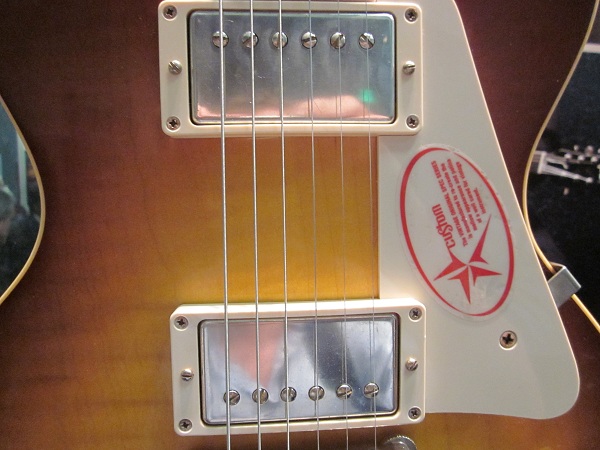
Close-up of the new re-issue "Eric Clapton 1960 Les Paul". Hint, Santa.

In solidarity with Gibson, I’ll supply them some free advertising.

Indian Freaking Rosewood, Administration Byatches!

I do endorse Gibson guitars (although, to be fair, most guitar players do – even lifelong Fender guys like me; I finally took the plunge on a Gibson product last year, and yeah, it’s niiiice).

Oooh - Gibson provides jobs all over the world!

Gateway Pundit writes:

Gibson CEO Henry Juszkiewicz told reporters today that the federal raid on the popular American guitar maker will cost the company $10,000,000. Juszkiewicz also said that he will attend Obama’s big spending jobs speech tomorrow in Washington DC.

Is that a gorgeous piece of work or what? It sounds even better than it looks. And guess what? Yep - made in the USA. One of those "American Manufacturing Jobs" that lefties are constantly barbering about. Outsource this? Why not outsource guarding the Tomb of the Unknowns to the Pakistani military, while you're at it?

Attorney General Eric Holder said the raid on the Gibson was not political.

And if you believe Holder you are an idiot here’s an excellent Fox News clip summing up the entire story so far.

Remember – the CEO of Martin guitars (sorry – while they make gorgeous guitars, and I also own a Martin product, they get no free ads from me), which builds guitars out of exactly the same Indian-grown, American-finished rosewood as Gibson, which is not illegal under US law and only vaguely-sanctioned under Indian law, is a big Democrat contributor.

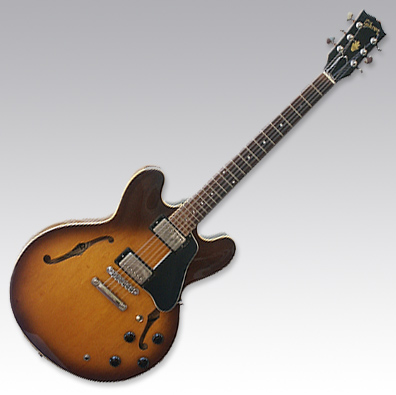
A Gibson ES335. A favorite of both jazz musicians and loud rockers who like the ES' excellent feedback characteristics.

Of course, Gibson is just one of many such stories – companies being harried, money being confiscated, jobs being destroyed by our rapacious, power-mad bureaucracy.

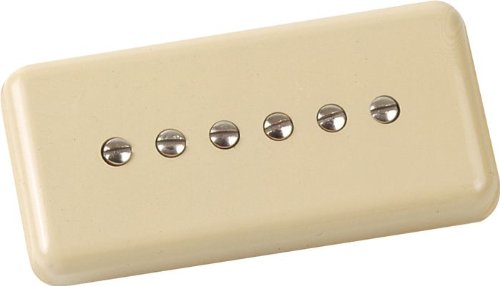
Yep, there's parts, too. This is a Gibspon "Soap Bar". I have one sunk into the middle position of my Fender Jazz, wired out of phase with the bridge pickup; when they play together, it sounds more like Mark Knopfler's Strat (think "Sultans of Swing") than Mark Knopfler's Strat does.

I’m working to get Mr. Juskiewicz on the Northern Alliance one of these next few weekends.  Keep your fingers crossed; if you’re a fan of limited government or music, it’ll be a great chat.

The Real Eighties: Johnny Clegg and Savuka

Friday, September 2nd, 2011

One of the things I miss the most about music in the eighties was that almost anything could score, with a little luck.

Some kinds, of course, had a head start.  South Africa was tres hip in the nineties – and for a brief spell, South Africa’s jumpy melange of pop styles got some airplay and mindshare in the west.

And one of the biggest sellers – to the extent that there was a big seller – was South Africa’s “Johnny Clegg and Savuka”.

Clegg – an Brit-Rhodesian whose mother’s parents were Polish/Lithuanian Jews – fronting a mixed-race group that pretty edgy stuff in apartheid-era South Africa – was a musical sponge, known as “The White Zulu” who mixed languages and genres like Emeril Legasse mixes spices:

<iframe width=”420″ height=”315″ src=”http://www.youtube.com/embed/diCyzQSkmyU” frameborder=”0″ allowfullscreen></iframe>

And while it was almost inevitable that the politics would beat you over the head – because politics were an inevitable part of South Africa’s situation at the time – it worked as often as not,and in any case, it was often great music…

<iframe width=”420″ height=”315″ src=”http://www.youtube.com/embed/KfTkD-XWOFg” frameborder=”0″ allowfullscreen></iframe>

…so who cares anyway?

And sometimes being beaten over the head could be fun!

But more of that tomorrow…


Jump Start

Wednesday, August 31st, 2011

To paraphrase Travis Tritt, “the coffee ain’t workin'” this morning.

Not by itself, anyway.

So it’s time to switch to backup:

There. Off to work.

A Brief History Of Rock And Roll (1552-2010)

Wednesday, August 3rd, 2011

The folks at “Zenergo”, a new pop-culcha website, have run my old piece, “Music Appreciation” – my brief chronology of the rock and roll era – as the inaugural piece in their “music” section.  With my permission, even.

It was kinda a fun read, then and now.  Glad someone else liked it!

Whilst Pondering

Friday, July 22nd, 2011

Summer – like any season, really – brings back a flood of memories.

When I think hot, dry humidity, I remember most summers in North Dakota, and being dry and hot – at baseball practice, caddying for my dad, sitting in the stands at baseball games craving a Coke.

But when it’s hot and the humidity is up near tropical, I think first about my time at International Music Camp, back in seventh and eighth grade.

Both years, I won scholarships to go to the camp, up at the International Peace Gardens, on the boarder between North Dakota and Manitoba.  The camp – about half a mile on the US side – was a summer program teaching a variety of genres of music in one-week chunks throughout the summer.  Being a cello player, I went for Orchestra both years.  It was a high-speed week, spent intensely rehearsing for a concert held every Sunday.  There were two full-group rehearsals a day, along with sectionals and small-group clinics to try to improve on the instrument.

Not being an especially good cellist at the time, I was in the “lower” of the two orchestras.  Both orchestras had guest directors brought in from hither and yon.  Both years, my director was a guy named Howard Leyton-Brown, an Australian native who was a violinist and conductor at the Regina Conservatory in Saskatechewan.  On the program, I noted that among his credits he listed having flown in the Royal Air Force during the war.

One day after a late rehearsal, I approached him, and asked what kind of plane he’d flown.  “I flew a Handley-Page Halifax”, he replied, seeming astonished that a bobble-headed American junior-high kid would ask – and moreso that I knew what he was talking about.

And apropos not much, it occurred to me to test the miracle of Google, and see if I could find any reference to Mr. Leyton-Brown.

And I did – in this case, an audio account of his time as a bomber pilot.

The Conductor

Wednesday, July 20th, 2011

It was a chilly, rainy night in March of 1983.

I had a horrible cold – but no matter.  I was standing on a riser in a tumbledown little church in Pendelton, Oregon, with 69 or so other college kids.   And by this time in the tour, cooped up on buses for day after day, most of us were sharing colds.

I had just finished a brisk walk up to the stage for the second of three sets of the evening’s performance.  It was our seventh or eighth concert in as many days and nights.

The house lights dimmed, and the stage lights came up, blotting the audience from view.  We focused on the conductor’s podium, where presently a guy in a formal tuxedo climbed onstage.  His cheeks were puffy and red, but his eyes were clear and sharp- “fierce”, I’d say, if the fashion industry hadn’t so devalued the word.  He smiled -partly greeting, partly saying “can you keep up with me?”

He lifted his hands, and brought them down.  And we sang – launching a capella and without fanfare directly into “Have Ye Not Known/Ye Shall Have A Song”, two movements from Randall Thompson’s oratorio “The Peaceable Kingdom”, a piece lifted from Isaiah 40:21:

Have ye not known?

Have ye  not heard?

Hath it not been told you from the beginning?

Hath it not been told from the foundations of the earth?

(Here’s a high school choir doing it).

I sang my part, nestled into the midst of seventy college kids who, for a couple of hours, felt like a single organism that was much better than the sum of our parts, as the conductor – listed on the program as Dr. Richard Harrison Smith, and never anything else – wrung the last little bit of execution, passion and yes, joy out of the evening.

And while I didn’t dare make any facial expression, or even take my eyes off the podium, I smiled inside.

———-

I remember “Dick” Smith, as my dad always called him, probably about the same time he moved to Jamestown, ND.  He and his family – his daughters, Kristin and twins Karen and Kathryn, all about my age – came by our old house in Jamestown, along with his wife, June, who’d just been hired as Dad’s colleague in the Jamestown High School English department.   Smith had just taken over the music department at Jamestown College, after earning a PhD in music and an MA in Biochemistry.  I wonder sometimes if academia today would know what to make of a guy like him.

But  I was years away from knowing any of this.  I was six years old.

Now, if there’s one thing people in small college towns appreciate – or appreciated, in those days before the internet and ubiquitous TV and travel – it’s whatever scraps of culture they can get.  And Dr. Smith quickly started producing some amazing culture.

In town, we noticed this mostly from the college’s annual Christmas concerts – which morphed from sleepy little affairs into six-night runs with choir, concert band and elaborate production, lighting and sets, that drew packed houses and TV coverage.  Packing into the college’s Voorhees Chapel, to the smell of pine boughs and scorched gels, is one of the most potent memories of Christmas as a child.

Unbeknownst to me – because I was years away from caring about such things – Dr. Smith, starting in 1969, built the JC Concert Choir into one of the premiere college choirs in the United States.  One review from the seventies – and no, I couldn’t find it if I tried – placed JC’s choir among the top three small-college choirs in the US – in the same league as the legendary St. Olaf Choir, in the (choir geeks will know this) Christenson era.    In 1972, the Jamestown College choir became the first American choir to sing at Notre Dame Cathedral in Paris.  In 1978, he engineered a visit to Jamestown by the Saint Paul Chamber Orchestra to accompany the choir in a concert – the highlight being Bach’s Magnificat, if I recall correctly.

You might be thinking “this is a small college choir that fought above its weight”.  It was – but that wasn’t even the amazing part.

The amazing thing about Smith’s choirs throughout their history?  While the other top-flight choirs, like St. Olaf’s, were made up of music majors and especially voice students, Jamestown just wasn’t that big.  In the seventies, the place had 600-700 students, maybe a couple of dozen of them music majors.   Over ten percent of the entire campus sang in the choir – less than a quarter of them music majors.  Imagine a tournament-grade basketball team that was 3/4 walk-ons from the Theatre and English and Nursing departments; it was the same basic idea.

And so year after year, for almost thirty years, Dr. Smith created top-flight college choirs from virtually nothing.

———-

When I graduated from high school.  I didn’t know what I wanted to be – but I knew I wasn’t going to major in music.  Still, I’d had some musical training – none of it involving singing.  I played guitar, cello and harmonica, and sang in a garage band, in a voice that was best suited for shouting out Rolling Stones and Clash covers.  That was all the singing I ever wanted to do.  I was an instrumental guy, and proud of it.

I’d known Dr. Smith and his family for about 12 years by that point – his wife June was my high school creative writing teacher; Karen and Kathryn were classmates at Jamestown High School (Kristin graduated a year before me).

My mom worked as a secretary in the nursing department at Jamestown College, which would net me a nice tuition break, so in the spring of 1981 I enrolled at “JC”.  Of course, every penny counted, so I seized on every scholarship I could find.  I got a grant to work as a stagehand in the theatre department and, late in the game, was recuited to play cello in a chamber group, and percussion and guitar for the concert and stage bands.

One day, my senior year of high school, I went up to the campus to close the deal on the music grants.  I walked into Voorhees Chapel for a chat with Linda Banister – and my spidey-sense started buzzing away; something seemed just a little bit off.

There were always plenty of women auditioning. then and always, for 35 or so soprano and alto slots – but in a school like JC, finding guys who could fill the choir’s 35-odd tenor, baritone and bass seats was a constant battle.   Smith, and his assistant, Linda Banister (a voice teacher who did double duty as the choir’s manager) prowled the campus, looking for guys who sounded like they that could be jury-rigged into instruments in a choral ensemble; they filtered through high school transcripts looking for hidden semesters in “choir”; they staked out football practice, listened in the cafeteria, and even (rumor had it) prowled the dorms, listening for guys singing in the shower.  The men’s sections – the tenors, baritones and basses – were a grab bag of football players, computer-department night owls, and just-plain guys who could, to their amazement, carry a tune, most of them with absolutely no musical training whatsoever, most of them enticed by having $1,000 a year  lopped off their $4,000+ tuition; such was the choir’s clout.

Anyway – after a too-short discussion that ended up with grant in hand way too quickly, Mrs. Bannister said “Now you need to go down to Dr. Smith’s office”.

“Er – to  talk about the instrumental stuff?” I asked, warily.

“Yeah, sure!” she said, fast enough to make me even more suspicious.

I walked downstairs into Dr Smith’s office, in the basement of the chapel.  He was already sitting behind the piano.

“Hi, Mitch”, he said – first names were fine, he’d known me forever.  Then, before I could respond, “OK, say “Mi Mi Mi” and sing along with this pattern”.  He pounded out a “C” arpeggio.

Nonplussed, I sang.  “Mi Mi Mi Mi Mi Miiii”, up and down the “C” chord..

He walked me through several more patterns, up and down the keyboard, figuring out my range.  “You have a good ear; we can work on the technique.  You’re a baritone!”

And that was pretty much it. I’d been shanghaied. Linda Banister was waiting outside the office.  “We really need you in the choir…” she said.  Being a small-town Scandinavian, my need to please others would have kicked in even had she not told me that singing in the choir was worth a $500/semester off tuition.

And so I joined the choir.  I’d be in the baritone section come the fall.

———-

Or would eventually, anyway.  Because before we could start choir that fall, Dr. Smith – and all of us, really – had a wrenching, existential diversion.

On top of being a great musician, arranger and director, Dr. Smith was also a footnote in medical history.  A very important one, actually.

In the summer of 1981 – the hot, arid three months before I started college – word made the rounds in Jametown that Dr. Smith had gotten very, very sick at the family’s lake cabin in northern Minnesota.  A very rare congenital enzyme deficiency had caused his body to start to destroy its own liver. He was in a coma and near death at a hospital in Fargo.

And at the metaphorical and literal last moment, the decision was made to fly him to the University of Pittsburgh for a medical procedure that teetered on the brink of science fiction at the time; a liver transplant.

At the time, liver transplants were almost as rare and difficult as heart transplants; the liver may be, after the brain, the body’s most complex organ.  The biochemical system that the liver manages is as convoluted as anything in nature.  And it showed, medically speaking; at the time, nobody had lived even a year with a transplanted liver.   The body inevitably rejected the tranplant, as if it was a bacterium or a splinter.  The way it was designed to do.

Liver transplants were so experimental, insurance companies were still years away from covering them.  The key to success – and it was an immutably elusive key, up until the spring of 1981 – was to quell the body’s immune system’s natural response of sequestering it off and killing it.

Shortly before Dr. Smith flew to Pittsburgh that summer, a new drug – Ciclosporin – was introduced.  Refined from a fungus found in the soil somewhere in Norway, it’d been used in treating a variety of other diseases – but it was going to be tried for the first time to prevent organ transplant rejection.

And Dr. Smith was Patient 1.

It wasn’t just the drugs.  Some of the very equipment and techniques that make the miracle of liver transplantation seem so commonplace today were invented as a result of Dr. Smith’s surgery.  From a Pitt Medical School publication on the transplant:

Fortunately, a donor liver became available. As Dr. Starzl  (the surgeon who pioneered the technique of the live transplant at Pittsburgh) pointed out in his book, the surgical team fought throughout the night to control the bleeding during Richard’s surgery.

Anesthesiologist Dr. John Sassano administered two hundred units of blood, pumping each unit by hand. When Richard survived the operation and Dr. Sassano’s job was done, Dr. Starzl reported that Dr. Sassano broke down and cried out of relief and exhaustion. Dr. Sassano went on to invent the Sassano pump, a rapid blood infusion system still in use today.

The surgery lasted 14 hours.

That I’m writing this article today should tell you it worked – all the pieces; the surgical skill, the brand-new, untried techniques and drugs, and of course the liver, from a 19 year old auto-crash victim.

———-

It was a solid semester before he came back to the choir.  The cocktail of drugs he’d been given, including the Ciclosporin, had played hob with his system.  He’d gained a lot of weight; his formerly hawk-like face was swollen.  And he could only direct for short periods, sitting on a stool, before he’d get tired and hand the choir over to his backup director.

But once he started, you could tell he lived for it.

And during the second semester of my freshman year, Dr. Smith gradually worked his way back onto the podium; by the time of our spring tour, he managed to direct (as I recall) every concert at every stop on the way.

I’ll let that sink in; in eight months, he went from comatose to doing his job (albeit not at 100% just yet), with a stop along the way for a gruelling, body-crushing, experimental, never-before-seen bit of beyond-major surgery.

We knew it was remarkable back then; having nobody to compare it with – every previous liver transplantee had died in that kind of time – none of us knew how remarkable it was.

———-

If my experience with high school music groups – orchestra, stage band and the like – was like Pop Warner football, choir with Dr. Smith was like suddenly walking into Vince Lombardi’s training camp.

Smith was a renowned arranger and conductor; his specialty, oddly, was traditional Afro-American spirituals; a Canadian paper once praised the Choir for being the most authentic-sounding choir of rural white kids they’d ever heard.

Beyond that?  The programming every year was very non-trivial.  It spun between spirituals, modern/avant garde choral work, and the classics of the repertoire – and by classics, I mean the hard stuff.

The highlights?  Every couple years, Smith would break out a new Bach double-choir motet.  My freshman and senior years, it was Motet Number 7, Singet Dem Herrn.  15 minutes and 90-odd pages long, it required the choir to split into two separate choirs, singing Bach’s, well, baroque composition in eight part counterpoint and harmony.

All from memory.  Smith allowed no sheet music on stage, and the choir was rarely accompanied (as in, one song that I recall in four years).

Go ahead and try it in the shower when you get a moment.

That took discipline.  All practices were mandatory; you got two excused absences a semester, and even those were discouraged (I don’t remember taking more than one in four years).  The rules on stage were simple and uncompromising; once Smith stepped on the podium, in concert or late “concert rules” rehearsals, you didn’t look away, at the risk of a ferocious tongue-lashing during the break.   If you got sick on stage, you did not walk offstage; you sat down on the riser and your neighors closed ranks around you.  If your nose itched?  You let it itch; scratching your nose, or anywhere on your face, inevitably looked like picking your nose.  You didn’t question Dr. Smith on any of this.

The choir practiced four days a week, over the noon hour, to accomodate everything from after-school football practices to afternoon chem labs.   You earned that $500 tuition break every semester.

To turn that throng of misplaced football players, dorm-potatoes, waylaid cross-country runners, computer science majors and the odd musician into a solid choir, Dr. Smith smacked us with something that most of us had never encountered before, and only rarely since; an uncompromising demand for excellence.

Excellence is a word that’s gotten abused horribly in the past thirty years.  A wave of business books perverted the terms into meaning  “a businessperson given him/herself license to be a prick”.

The word itself never came up, that I recall, in four years with the choir.  But it’s what Dr. Smith demanded of all of us.  Whoever we were – wrestlers, pre-meds and vocal majors alike, we had it in us to do great music – Bach, or spirituals, or avant-garde adaptations of Shaker liturgical chants alike – the way God himself intended them to be done.   Perfectly.

And he didn’t tolerate half-assed choral music, and he never cared who knew about it.  Botching an entrance or scooping a high note could earn a section, or a singer, a chewing out in front of the whole choir – and the privilege of singing the part yourself, solo, over and over, as the whole choir sat and listened, until you hit it perfectly.

So we – wrestlers, pre-meds, dorm-potatoes, phy-ed majors and voice majors alike – developed a keen ear and a sense of precision that was new to many of us, even if we had some experience with formal classical music.

He had no time for contemporary music.  At least once a year, he’d get frustrated by some bit of pop-music frippery, and bellow “Do you think people will be listening to the Beatles in 300 years?”  I was often tempted to respond “if there’s an entire academic discipline dedicated to seeing that it does, then sure!”, but he didn’t sound like he wanted a discussion…

Even other choirs felt his wrath.  A choir from another college performed an assembly before practice one day.  A “contemporary” choir with microphones and a PA and accompanists and a repertoire of mediocre modern choral music, they were also – by Smiths’ standards – unforgivably sloppy in their intonation and timing; they were also slow in tearing down their elaborate stage rig as we filed onto the stage for our noon practice, and milled about in the chapel, chattering away, getting ready to go back on the road themselves.   We saw Smith, fuming at both the late start and the sloppy music, and took our places quickly and silently as the other choir milled about the place.  We just knew this could not end well.

When Smith finally got the podium, his face was red with rage.  He uncorked one of his vein-bulging jeremiads about the worthlessness of sloppy, inferior music – he referred to “this…crap!”, as I recall, which shut the other choir’s kids up but fast.  He ran down their intonation, their entrances, their reliance on a mixer to balance their – shudder – microphones, their sloppiness – and compared some of our own traits with what he’d just endured.  Then he had us ready up one of our own songs, in a tone that strongly hinted we’d best blow the doors off that tune.

And we did, as I remember.  We didn’t dare not stick the landing.  We sang the hell out of that tune, as the other choir silently shrank from the sanctuary.

We were the JC Choir, dammit.

Of course, Smith’s temper was tempered with a sense of humor and an approachable affability.  Sitting in his office, or on the choir tour bus, or during a good rehearsal, he was quick with a joke – usually awful – and a smile and a word of encouragement.

And it’s worth noting that his relentless pursuit of precision and perfection didn’t cover every aspect of his life.  Navigation was a good example.  While on tour, generations of choir members learned the meaning of the”Smith block”, as in Smith ordering the bus to a stop in some strange city in a place where the bus had a hard time finding our destination, and telling everyone to grab their luggage and walk the rest of the way.  “It’s just a block”, he’d assure us.  I remember walking a solid mile through the streets of Basel, Switzerland, enjoying a warm, humid evening on a “Smith Block”-long stroll, lugging my backpack and my concert clothes down the Totengässlein, feeling like a tourist.

Smith could laugh about that along with everyone. There’s a reason generations of students loved the guy.

———-

Jamestown College was a small, private, Presbyterian-affiliated school – a sister-school to Macalester, although without the political implications, in those days.  And like a lot of small colleges, Jamestown went through some lean years.  Part of it was the farm crisis; lots of small colleges failed back then.  Part of it was bad management; the college had a really, really bad president for a few years there.

But the school excelled at three things; athletics (the football, basketball and track programs were at the top of the NAIA Division III standings), nursing (one of the best nursing programs in the US at the time) and the Choir.

And so part of the job was to go out and raise money for the college.  For four years, our “spring break”, every year, was to go out on the road on a national concert tour.  Tours involved long days on the bus, taking off often before the sun rose, arriving in a new town late in the afternoon, setting up our risers and lights (that was my gig – I was a stagehand, after all), suiting up for the gig, taking a deep breath, singing a couple of hours, and then going home with a host family from the church that was sponsoring the gig.  We got a free day at the apex of the tour.

As of spring break my Freshman year, the biggest city I’d ever seen was Fargo.  Tour changed all that; each stop in turn, St. Cloud and Madison and Toledo and Philadelphia and Washington DC, was the biggest city I’d ever been in.
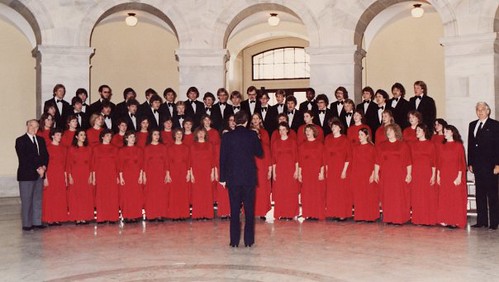
That’s us. We’re in the rotunda of the Cannon Congressional Office building, March 17, 1982. I’m in the third row, eighth from the left. Dr. Smith is conducting, natch. On the right is former longtime ND Congressman Mark Andrews.  Photo courtesy Katie Hall, who is “Doctor Hall” to you now, and lives in Fargo and is, I think, the far right girl in the front row.  

And in the three following spring breaks – Seattle, Denver and Phoenix, and every mid-sized city and tiny town with a Presbyterian church with a music-loving minister in between, we toured, ten or twelve days at a shot.

And the biggest tour of all – our trip to Europe, in 1983.  We sang in little villages – Uitgeest, Holland, and Altenburg, in Schwabia – and major cities, Basel and Mainz and Köln and, biggest and best of all, Notre Dame de Paris.

Where we stood, in a church nearly a thousand years old, built long before sound amplification systems were built, in a building designed to magnify the unamplified human voice, and sang at a mass stuffed with Bishops and Archbishops and other popery, and sang to packed houses, and thought for a brief moment that God had taught Man to build buildings like this just for choirs like ours.

And a few days later, in Köln, where we sang a duo concert with the Köln Polezeichor, the city’s police choir, themselves an excellent group.  After the show, the cops hauled us all and sundry to a bar frequented by Köln’s finest; our money was no good there.  And it was noted that Dr. Smith’s liver was now of legal age.  And as we partied into the wee hours, Dr. Smith had a beer (with his doctor’s blessing; Dr. Smith was as diligent with the gift that had saved his life as any human could be).  And as we walked – I was probably staggering more than walking – back to our hotel through the streets of Köln in the weeest hours of the morning, I looked at Dr. Smith.

And he was as happy as happy gets.  This – making music, and getting flocks of kids to make it, and make it very very well, was his happy place.

———-

The last time I sang with Dr. Smith was October, 1994.  The college threw a 25 year “All Choir Reunion”.  About 400 people – around half of the people who’d ever sung in the choir in those 25 years – came back to Jamestown to sing a concert with Dr. Smith.  It was such a huge event, we used the Jamestown Civic Center.   And people from my class in the choir sat with and sang among several generations of choir “kids”; some who’d been there at the beginning in 1968, and who’d been at that first “gig” at Notre Dame in 1972; some who’d just graduated, and hadn’t yet assimilated all that Dr. Smith had taught them.

And it was a joyous night – one of a short list of highlights of my own life.  I was able to tell Dr. Smith pretty much exactly that; how glad I was to make the reunion, and the impact he’d had on my life.  Of course, I had to stand in a long line; I think everyone was there to say the same thing, one way or the other.

Smith retired in 1998.  The travelling was harming his health.

———-

The average liver transplant holds out for ten years.  Partly it’s due to the whole “new liver” thing – all the risks attendant to transplants.

Partly it’s the drugs that bombard the body to make the transplant happen at all.  They take a terrible toll on the rest of the body – especially the kidneys.   Dr. Smith got a kidney transplant in 1997 – from his wife June, incredibly.   It bought time – and bought it for a guy who’d already run the account a lot further than anyone could reasonably expect.

Dr. Smith was the longest-lived person in the world with a liver transplant.  His transplant surgeon, Thomas Starzl, “the father of the transplant”, featured Smith prominently in his book Puzzle People – his own look into medical miracles and the people who live them.   Starzl chalked Smith’s survival up to many things – an iron-clad constitution, rock-solid faith, and a mission in life among other things- but at the end of the day, even that most gifted of medical scientists had little empirical idea how Smith had so clobbered the odds.

But the run ran out.  Dr. Smith died late last night; the kidneys, and the liver which had served two owners so well, finally gave out.  He was 73.  He leaves behind June – one of my favorite high school teachers – and his daughters, Kristin (a reproductive endocrinologist on Long Island), and the twins, Kathryn and Karen, my high school classmates, a teacher and nurse respectively, both in the Fargo area.  They’ll miss him of course – and so will the thousand or so of us whose lives he touched as director, and the hundreds of thousands who watched and listened to his work over the decades.

Yeah, me too.

Rest in peace, Dr. Smith.  And from the bottom of my heart, my condolences to June, Kristin, Kathryn and Karen.

———-

Back on that rainy night in Pendelton in 1983, the song turned into its homestretch; from the bombastic “Have Ye Not Known!” of the fanfare, through a turbulent middle section that seemed to represent the nagging doubts of the faithful, into the ending, the best part; a three-minute canon, simply repeating one line, over and over again:

And gladness of heart…

The line never changed – starting with the sopranos, quietly hinting it; the altos came in, more broadly, then the tenors, and then the basses, in a broad, three-minute crescendo.  But the song modulated through a circle of…fourths?  Fifths?  Mostly?  Big, broad, beefy resolutions  that just as suddenly modified into another set of fourths, like doubts resolving into answers and then into more doubts with even bigger, more satisfying answers.

I looked at Dr. Smith, on the podium, growing more animated as the volume swelled- because looking at the director, and nothing else in the world, what you did in the choir.  But as the song swelled, the diffusion from the stage lights seemed to me to form a corona of refracted light around the Conductor; maybe it was a trick of the light, or maybe it was my eyes getting every-so-watery from the sheer sonic glory of it all.  And as his arms thrashed at the air, wrenching more sound, more passion, more joy from the moment, Dr. Smith looked ecstatic; the song and the choir were like a natural phenomenon, like he was playing a pipe organ whose pump was driven by a hurricane, like he’d wrapped his arms around a tornado with a “speed” button that only he could control.

Like God Himself could hear his choir, so he’d better keep us on our A game.

And I stood in the middle of that swirl of spine-tingling modulating fourths and fifths and ricocheting parts and,  for one shiver-up-the-spine moment, felt as close to transcending the here and now as I ever had, or have, in my life.

And I think Dr. Smith did, too.

It may have been a first for me.

Dr. Smith?  With all the choirs of farm kids and wrestlers and business majors that he wrangled into musicians?  He was a regular there.

Kosciuszko

Tuesday, July 19th, 2011

I’ll grant you that Peter Garrett’s preening gets obnoxious at times. His far far far left politcs, ditto.

But I just love listening to the way all the many, many moving parts go together in this song without squeezing out all the raw power of the song.

Because anyone can do “angry” (and every Twin Cities leftyblogger does “smug). But musicianship? Like being able to sing in four parts competently as you play a song with that many consecutive changes (because this is no three-chord blues song)?

Sorry. I was just in the mood.

Siddown, Libs. This Is Gonna Hurt.

Thursday, June 30th, 2011

I decided I’d try to write a song.  It’s sung to the tune of John Lennon’s “Imagine:”

Imagine a right-winger,
in John Lennon’s skin
?
A hard-core tax-protester,
rooting for Reagan to win…
Imagine all the moonbats
whose worldview would come unglued

John Lennon was a closet Republican, who felt a little embarrassed by his former radicalism, at the time of his death – according to the tragic Beatles star’s last personal assistant.

Imagine him and Yoko
protesting in their bed.
Their Revolution was Hayek,
rattling round his head.
Imagine all the moonbats
stepping to the ledge…

Fred Seaman worked alongside the music legend from 1979 to Lennon’s death at the end of 1980 and he reveals the star was a Ronald Reagan fan who enjoyed arguing with left-wing radicals who reminded him of his former self.

You may say I’ve got delusions,
but it’s on the Internet!
So I picture him and Thatcher…
And we haven’t heard it all yet!

In new documentary Beatles Stories, Seaman tells filmmaker Seth Swirsky Lennon wasn’t the peace-loving militant fans thought he was while he was his assistant.

He says, “John, basically, made it very clear that if he were an American he would vote for Reagan because he was really sour on (Democrat) Jimmy Carter.

Imagine John and Yoko
standing proud and tall.
Standing next to Reagan,
Saying “all you need’s to tear down the wall!”
Imagine all the lefties
swallowing their nines…oh ooooooh….

“He’d met Reagan back, I think, in the 70s at some sporting event… Reagan was the guy who had ordered the National Guard, I believe, to go after the young (peace) demonstrators in Berkeley, so I think that John maybe forgot about that… He did express support for Reagan, which shocked me.

“He was a very different person back in 1979 and 80 than he’d been when he wrote Imagine. By 1979 he looked back on that guy and was embarrassed by that guy’s naivete.”

You may say that I’m a wingnut,
But seems that John was, too.
I hope someday someone will find out
that George Harrison was one too…

I’ve Always Wondered

Wednesday, June 29th, 2011

Music rights are a funny thing.

When I was in radio, I learned that music rights and royalties work something like this:

  1. To play music in public – on a radio station, television show, movie, in-store muzak, jukebox, elevator, nightclub, TV or radio commercial or whatever – you pay a fee to one of the big three music licensing agencies – ASCAP, BMI or SESAC.    The agencies distribute the fees to the songwriters (the names that used to be listed under the song title in incredibly tiny type on old albums and .45s)  via an incredibly complex (the better to hide the cheating) formula.
  2. If you didn’t pay the licensing fee, the songwriter and publisher could haul you in to court and charge “mechanical royalties” – better known as “a court judgment”.

And that’s pretty much it.

We’ll come back to that.   Rolling Stone is “covering”  Michele Bachmann’s campaign in…

…well, the same way all the media are “covering” it:

Michele Bachmann hasn’t exactly gotten her campaign off to the best start. It’s bad enough to confuse movie legend John Wayne with serial killer John Wayne Gacy and crazily insist that John Quincy Adams was a founding father at the age of nine…

Because goodness knows we can’t have a gaffe-prone president or vice president atop the executive branch…

…but now she’s gone and pissed off Tom Petty. The Minnesota congresswoman played “American Girl” yesterday when she walked onstage at a rally, and Rolling Stone has confirmed reports that Petty’s management team immediately sent the Bachmann campaign a cease and desist letter.

So I’m wondering – provided that Bachmann’s campaign paid her licensing fee, what recourse does Petty really have?

I mean, for over 20 years Rush Limbaugh has been using “My City Was Gone”, by the ultra-socialist Chrissie Hynde, as his theme song, right? Hynde can’t have been thrilled

Say, if I were to play “American Girl?”

Would he object? Even if I were to be a rebel…

…and reject his california-liberal politics?

Because I certainly won’t back down. (Wait – I don’t like that song that much).

Because a good chunk of the right is singing…

Anyway – this one’s for you, Mark Dayton and Tom Bakk and Paul Thissen:

…you knew that was coming, didn’t you?

RIP Big Man

Monday, June 20th, 2011

Clarence Clemons died on Saturday, of complications from a stroke.

It’s impossible to overstate how important Clemons was to Springsteen’s early mystique – and Bruce knew it; on a stage full of scrawny white guys (and, during David Sanscious’ two years on keyboards, one scrawny black guy), Clemons was a 250 pound former lineman; he’d played at Maryland State, and gotten signed by the Cleveland Browns before an injury from a car accident sidelined him.

Clemons' annual photo at U of Maryland

He spent a few years working as a social worker, moonlighting as a musician until his fabled meeting with Springsteen, almost forty years ago.

Springsteen’s early sound, heavily R ‘n B-based, leaned heavily on the sax; from the slinky uptown meandering of “Spirit In The Night” to Van Morrison-y raveup in “Blinded By The Light”, Clemons’ sound defined the first two albums, Greetings From Asbury Park and The Wild, The Innocent and the E Street Shuffle.    As the band grew on Born to Run, Roy Bittan’s piano joined Clemons as the keystone of the band’s sound; Clemons became less a background instrument and more a soloist.  His solo  from Jungleland – a long, jazzy intermezzo between the thundering bridge (driven by Danny Federici’s Hammond B-3) and the exhausted-sounding “dawn” scene, taped here in 2009 – was one of his greatest:

Clemons was not a virtuoso musician, in the sense that Nils Lofgren or Roy Bittan were; he was compared to King Curtis, and with good reason, but mostly as an inspired imitator, rarely more inspired than on “She’s The One” (here from one of the greatest treasures of Springsteeniana on the web, the gloriously complete video record of the band’s two-night stand at the Capitol Theater in Passaic, New Jersey on the Darkness on the Edge of Town tour):

But he was a performer above all; for forty years, he was Springsteen’s foil, the Abbott to Bruce’s Costello.

Scooter and the Big Man, 1985

Few people explain Clemons better than David Remnick at the New Yorker, whose obit is here. Money quote:

Clemons, who died Saturday of complications from a stroke, was not an entirely original player—he was a vessel of many great soul, gospel, and R&B players who came before him—but he was an entirely sublime band member, an absolutely essential, and soulful, ingredient in both the sound of Springsteen and the spirit of the group. Clemons will be irreplaceable; Sonny Rollins could step in for him and never be able to provide the same sense of personality and camaraderie. His horn gave the band its sound of highway loneliness, its magnificent heart. And his huge presence on stage was an anchor for Springsteen, especially when Bruce was younger, scrawny, and so feral, so unleashed, that you thought that he could fall down dead in a pool of sweat at any moment. At the brink of exhaustion and collapse, Springsteen could always lean on his enormous and reliable friend—an emblematic image that is the cover of “Born to Run.”

On the band’s most recent tour, one that celebrated forty years of music-making, Clemons was clearly hurting: bad knees, bad hips, long shows. Backstage he was ferried around in a golf cart; onstage he played a lot of cowbell and, like Pavarotti in his later years, gave his aching joints breaks when he could. But he was still capable of playing, note for note, his signature solos.

He made a joyful noise. Musicians as various as Jackson Browne and Lady Gaga called on him to record, to lend them some of the largeness and warmth of his tone.

Later in the obit, Remnick refers to the band’s performance of Thunder Road, from the Capitol show, as the classic Clemons performance – the measure of Clemons’ vitality to the greatest band in American rock and roll history, the circa-1978 E Street Band.

Here it is – the sax part kicks in around 5:30, as Bruce is pulling outta here to win…:

In the first draft of this post, I left it right there. But I found this the other day – one of my favorite E Street Band moments, one of my favorite songs from that period of Springsteen’s, after megastardom and before his new, purposeful post-9/11 voice of “the Rising”, a song and a performance that captures, like Thunder Road, the essense of the band – but a different essence, and in some ways a different band, both of them with Clarence Clemons as their respective soul:

It’s everything the E Street Band at its best really meant; the pure joy of the purest strain of American rock and roll, straining to get out, finally overwhelming out.

And now, the E Street Band is busted in half.

Style Points

Monday, June 6th, 2011

The citizens of Grand Rapids, upset at being called a “dying city”, responded with the gift of music video:

If you’ve ever worked on a film shoot – and who hasn’t? – the wild part is the whole thing was done in one take.

Roger Ebert called it the best music video ever. That’s an argument that could take days – but I’ll certainly give ’em style points.

Just Another Night On The Other Side Of Life

Friday, June 3rd, 2011

Today is Ian Hunter’s 72nd birthday.  We touched on this a couple years ago.

Of course, one of Hunter’s great proteges – Ellen Foley – will be 60 (huh?) on the 5th. I’ll reprise this piece on the subject from two years ago.

To observe ’em both?  Their greatest moment together:

Happy Birthday, Ian and Ellen!

All Of Fame-AH!

Friday, May 27th, 2011

Once you’ve gotten into the Rock and Roll Hall of Fame, where can you go?

If you’re James Hetfield of Metallica?  His high school hall of fame:

I mean, after that Rock and Roll Hall of Fame induction, the old high school alma matter’s induction was the next logical step.

Metallica frontman James Hetfield was inducted (last Friday) into the Downey High School 2011 Hall of Fame.

The school — located in Downey, California — started the Hall of Fame more than ten years ago, according to their site.

Rock on.

Lambert: “Art Is Politics!”

Thursday, May 26th, 2011

(SCENE:  Liam Branbert and his wife Slainte, midly disheveled, under the covers, smoking cigarettes).

LIAM: “So did the earth move for you?”

SLAINTE: “Sure, a little”.

LIAM: “But did it move in a progressive way, or kind of a conservative way?”

SLAINTE: “Um – I dunno?  Why?”

LIAM: IT’S IMPORTANT, DAMMIT!”

(And scene).

——————–

Absurd?

Well, on the left, nothing is too absurd.

Which brings us to Brian Lambert’s little poison-pen blog post about Scott Johnson’s observance of Bob Dylan’s 70th birthday.

Other than the melodies, I always wonder how conservative ideologues (ir)rationalize the work of people like Bob Dylan? (Likewise, T-Paw claiming to be a big Springsteen fan.)

Serious?

For starters, because a great piece of art – I’m talking everything from Bach to Darkness on the Edge of Town – connects with people on a way that is much, much deeper than politics.  Although with some on the left, maybe nothing goes deeper than politics.

But I digress.   Scott, my friend and former NARN co-host, is as articulate a music critic as there is:

“In his outstanding City Journal essay on Pete Seeger (“America’s most successful Communist”), Howard Husock placed Dylan in the line of folk agitprop in which Seeger took pride of place. Husock’s essay is an important and entertaining piece. Dylan is only a small part of the story Husock has to tell, however, and Husock therefore does not pause long enough over Dylan to observe how quickly Dylan burst the shackles of agitprop, found his voice, and tapped into his own vein of the Cosmic American Music. Looking back on his long career, one can discern his respect for the tradition as well as his ambition to stand at its head. On 1964’s The Times They Are A-Changin’ album, Dylan foreshadowed his break from the folk movement in ‘Restless Farewell,’ the album’s closing song.”

Lambert – for whom Randy Rhodes (the host, not the guitarist) may be the most evocative artist:

By his next birthday I’m guessing Johnson will have transformed Bob into the poet laureate of The Heritage Foundation.

Or – here’s a radical notion, albeit not a Radical one – he’ll enjoy it.

Happy Birthday, Bob Dylan

Tuesday, May 24th, 2011

Bob Dylan turns 70 today.

I’ve been rediscovering him lately; I’m pretty literate on some of his first-generation descendants, but for various reasons I never really marinated my head in Bob Dylan.

Yet.

So – may it please the unjustifiably-self-righteous Brian Lambert, here  he is.

Included mainly because I couldn’t find a Dylan version of “Ballad of Hollis Brown”.

(Lambert’s bout of madness? I’ll dispose of that tomorrow).

We’re Deadly Serious

Thursday, March 10th, 2011

Ed and I have had enough of the Fleebaggers.

Last Saturday, we took the entire catalog of Western popular music hostage – and we promised to kill a different song every week until the Fleebaggers returned to Madison, and stopped holding Democracy itself hostage.

And we meant it.

A week ago, we assaulted Tom Petty’s legacy with “Fleebaggin”.

Last Saturday, it was “Dems On The Run”, making John Lennon roll over in his grave out of sympathy for Macca.

And this Saturday?

“Lawyers, Cheese and Bratwurst”.

For Your Listening Pleasure

Saturday, March 5th, 2011

Last week’s song, “Fleebagging”, from the NARN broadcast:

It’s Anything Goes, Whatever It Takes

Sunday, December 26th, 2010

It was thirty years ago today that Warren Zevon released one of the five greatest live albums of the rock and roll era – and perhaps the best summary of his own career that he’s ever managed.  The album was Stand In The Fire.

Zevon, of course, died a few years ago, after a long battle with lung cancer.  Which was a jarring experience; rock stars aren’t supposed to die of long-term wasting diseases.  They’re supposed to flame out in car crashes like Johnny Ace, or drug overdoses like Keith Moon or Jimi Hendrix, or on epic drinking binges like Bon Scott, or drug-induced sudden flashes like John Entwistle, or suicides like Pete Ham or Kurt Cobaine, with enough loose ends and unresolved potential to do a romantic-era British poet proud.

Zevon certainly showed the potential to join that crowd; he floated to his commercial and creative peak on a cataract of booze, and a drug or two as well.

And sometime in the early eighties, he hit close enough to bottom to realize he needed to change his ways.  He gave up drinking, went into recovery…

…and, like a lot of artists who give up addictions, seemed to lose a bit of his spark for a few years, releasing albums that, for some time, didn’t quite have the same feel they’d had before.  Zevon got his muse back, of course – a different one than he’d had on Exciteable Boy and Bad Luck Streak In Dancing School – but he was writing some great music before his diagnosis with cancer, which led him to finish his final, Final album, The Wind, just before he died.

And I’m going to speculate that Zevon was very, very glad he had the twenty-odd years of sobriety after he went through spin-dry.

But I wondered – if Zevon had checked out after 1980’s Stand In The Fire, would he be regarded as one of the greatest untold stories in rock history?

Stand was recorded during a two-night engagement at The Roxy in Los Angeles.  Recorded with a group of obscure-ish but impeccably tight LA sidemen (David Landau and Zeke Zirngiebel on guitars, Roberto Piñon on bass, Bob Harris on keys and Marty Stinger on drums), the album featured an audibly blotto Zevon singing gloriously over-the-top versions of a slew of Zevon classics, and shoulda-been classics

The title cut is a big, brawny three-chord anthem featuring a simple but layered call-and-answer chorus that you can hang a side of beef from.   Next is “Jeannie Needs a Shooter”, which started life as one of many songs Springsteen didn’t use on The River; he gave it to Zevon, who rewrote it into one of the great “teenage death-rock” songs of all time.  A hilarious “Exciteable Boy” is followed by a taught, glorious “Mohammed’s Radio”, full of ad-libs (“Even Jimmy Carter’s got the highway blues!”) and ended by wonderful, four-part a-capella ending; the song, like most of this album’s highlights, eclipses Zevon’s studio originals.

“Werewolves of London” is big, boomy, sloppy, and full of drunken ad-libbing (“I ran into Jackson Browne drinking a Piña Colada at Trader Vic’s; his hair was per-feeeeect!“)

Side two (speaking in vinyl terms) was even better, opening with a brawny “Lawyers, Guns and Money” and “The Sin”, Zevon follows by steaking “Poor Poor Pitiful Me” back from Linda Ronstadt, who’d had a big hit the song) and the albums’ highlight, a jackhammer-y “I’ll Sleep When I’m Dead”, which had been a fairly perfunctory ode to la vida local on his 1977 major label debut, but turned into an over-the-top, anthemic foot-stomper here, and closing (in its original version) with a rafter-shaking cover of “Bo Diddley’s a Gunslinger”.

The album rarely pops up on “best-of” lists today.  It’s a shame – because it was one of the great achievements of the golden age of the “live album”, which, it occurs to me, is something you just don’t see anymore.  Stand in the Fire, like Cheap Trick’s Live at Budokan, showed the listener a side of the artists that they’d never have gotten otherwise, and captured the energy and spontaneity of great live performers doing what they did best.  In Zevon’s case, it sent off the seventies with a shout and a stomp and a double for the road.

If you can find it, it’s an amazing record.  Give it a shot.

It Was Thirty Years Ago Today

Wednesday, December 8th, 2010

It was about 3PM on a brutally cold Monday afternoon – deep in the middle of the sort of weeks-long, marrow-cracking, brutal deep freeze that I haven’t seen since I moved to the Twin Cities, but can still feel in my memory.  I was at the Wilson Ice Arena in Jamestown for my seventh-hour “Living Sports” class.   We were going to go skating.

I was in the middle of one of those bouts of frenzied overactivity that I was just starting to realize I was addicted to.  I was doing my usual load of classes.  My band had had a gig the previous weekend, at the “Teen Canteen”.  I was doing daily practices to play in a production of “Händel’s Messiah” at Dickinson State College that coming weekend (along with five of my classmates; we’d drive four or five hours through a snowstorm, do a solid day of dress rehearsals, and do the entire performance before driving back to Jamestown on Sunday).

On top of that?  My young, undeveloped but still pretty left-of-center mind was awhirl over the threat of our new President-Elect, Ronald Reagan.  While I didn’t like Jimmy Carter much – more later this week – Reagan scared the piddle out of me back then.

My eighteenth birthday was also coming up on Thursday.

And I was learning how to ice skate.

Well, no.  I knew how to skate, more or less.  But the lovely Lesa MacEwan didn’t need to know that; an accomplished skater, she volunteered to help me out.   She held my hands and towed me across the ice, showing me how to move forward, as I feigned appreciative ignorance.

Gimme a break.  It was as close as I ever got to having a social life back then.

It was chilly in the cavernous arena; not as cold as it was outdoors, of course, where I doubt it broke zero until April, but probably around 20 degrees.  The ice was pitted and worn from a day’s worth of  hockey practices, gym classes and open skating, , and badly in need of a Zamboni-ing.

The overhead PA was tuned to KFYR in Bismarck, the closest Central North Dakota came to a rock and roll station (Q98 in Fargo was just out of range, mostly, and WLS only came in on clear nights).  Springsteen’s single, “Hungry Heart”, from The River, was playing, and Lesa and I were talking music as I marveled at the feel of her hands through both of our mittens in that way seventeen-year-old guys do.

And at the end of the song, the afternoon drive guy – either “R. David Adams” or “Black Jack Dave Novak”, I think – announced that  John Lennon had just been shot and killed in New York, and they didn’t have a lot more details.

That day – and the past thirty years – the event has shown  me a bunch of things.

For starters, I am no baby boomer.  I had little connection to the Beatles; many other musicians, then and now, spoke to me more.  I liked the Beatles (although I cordially disliked most of Lennon’s solo career output, including the then-current Double Fantasy album).  The British Invasion was significant to me, of course – having worked in radio for most of the previous year,  and knowing my way around the history of pop music, you couldn’t ‘miss it.  But it was always The Who and The Kinks  – the bands that the Punks  modeled – that resonated with me.

And as a non-boomer who knew the Beatles’ heyday only as a historical exercise – my first knowledge of the Beatles’ existence was hearing on the radio that they were broken up – I had no idea what it was for a musical group to command that kind of loyalty from everyone.  Buddy Holly was amazing, but the music really died somewhere between the day Meredith Hunter died and the Beatles calling it quits.  Somewhere in that period, the hippie era ended, music split into “Black” R and B and “White” rock, the twain not to meet again until, ironically, about this time 30 years ago, but then only temporarily, like an aberration, for better or worse.

But I didn’t have to be a baby boomer to notice that the sometimes-joking, sometimes-serious calls and rumors and chatter about “Beatles Reunions” – a staple of the first couple of years on Saturday Night Live – took on a new urgency, which carried on another 20-odd years, until the death of George Harrison.

So where were you when you heard John Lennon had died?

Wages Of MTV

Tuesday, November 30th, 2010

After a couple of years of trolling Youtube, I realized something – it’s been close to thirty years since I’ve seen a Lip Sync show.

You know – the ones they had back in the sixties…

…and seventies…

…and very very very early eighties…

…where a band or singer would lip-sync along with a song or, in some rare cases, sing over the recorded instrumental track.  After about age 12, it was hard not to notice that the guitars weren’t plugged in; there were no string sections visible; often as not, the lips weren’t synched.

Now, with vids everywhere, I don’t know if I’ve seen any of these lip sync shows; I don’t miss ’em much.

But I used to wonder; why did artists never ever ever spoof the conventions of the lip synch show?  All those years, and I don’t recall it ever happening.

Until now:

Heh.

Today’s Earworm

Monday, November 29th, 2010

Yeah, I know.  It’s French.  Although since Sarkozy took office, that’s not been anywhere nearly as derogatory as it was for much of our adult lives.

And not only is it among the most aggressively bloodthirsty national anthems in the world (the choruses end “To arms, citizens!  Form your battalions!  We’ll march!  We’ll march, and water our fields with the blood of the impure!”), but it is a living artifact the French Revolution, a time when “liberal” populism was co-opted by “A Better France” into an epic horror, of show trials and pseudo-judicial mass-murder in the name of rule by men, not laws, of a type that served as a model for every blood-sucking tyrant, singular or group, that ever followed.

Still, this version of France’s national hymn, “La Marseillaise” (which is apparently French for “Yes, We Can!”) by Mireille Mathieu – “the Sparrow of Avignon” – has been my non-stop earworm for the past week.

And it’s a wonderful version of that vainglorious, blood-soaked tune for so many reasons.

Golly: It was recorded at the height of Charles DeGaulle’s Gallocentric era, when France may have marched to the beat of its own percussionniste, but in marched with a purpose.  It was a time when the French – including pop-culteur icons like Mathieu – could sing unabashedly patriotic music without slathering it with post-modern irony.

Rdrdrdrdrdrdrdrdrd – I never took French.  Oh, I hitchiked around France, getting by on my year each of high-school Latin and Spanish, my German accent, and my lack of fear of looking like an idiot in a foreign language.  I could read things pretty well, and when I tried to speak, people at best figured out what I was saying, and at worst heard my fluent German accent and at least figured I wasn’t a Yanque, so they cut me a break.  But real speakers of French have always tittered at my accent, especially since I roll my “r”s in a way that people who learn Parisian French – which is most of vous – do not.

So listen to Matheiu wrap that Avignon accent ardrdrdrdrdrdrdrdrdrdround the song, and rdrdrdrdrdrdroll those Rs. “Mardrdrdrdrdrdrdrdrdrdchons!  Mardrdrdrdrdrdrdrdrdrdchons! She sounds like a six-barreled minigun!  Glordrdrdrdrdrdrdrieuse!

Frappe-O-Licious!: The more world politics I see, the more I realize the sheer worth of enlightened self-interest, both for individuals and nations.  And yeah, I know – “enlightened” and “French” aren’t usually in the same Zip code.  But bonne golly, this is a version that’d make a gallic Chuck Norris or Jack Bauer or Audie Murphy sit up at attention, and jump-start the cold, post-ironic heart of the most cynical Sorbonne academic trash.  It makes me marginally less ashamed of my family’s own partly Quebecois roots.

It was the first time I’d seen this song delivered outside of a fundamentally American context – which I can also not stop humming, by the way, although I guess that’s fairly obvious, since it’s the same song…

Anyway – Vive le cul-coups de pied!

Lest I Forget

Monday, November 22nd, 2010

While I wrote about Steve Van Zandt’s (better known a “Miami Steve”, “Little Steven” and “Silvio Dante”) birthday on this date a year ago, I’ve been getting reminders that he turns sixty today.

Happy Birthday, Miami!

--> Site Meter -->