Archive for the 'Planes Trains and Automobiles' Category

Sustainable Train Of Thought

Monday, November 28th, 2011

Did you know I’m a clairvoyant?

Either did anyone else!

SCENE:  Tanya Grumpleman-Morriss, 21, a Grievance Studies major at Bard College, is making her new sign for the next day’s “Occupy” Rally.  The entire scene takes place in her head.

GRUMPLEMAN-MORRISS: My last sign was such a success…

I need to come up with something equally catchy, profound and cogent.

GRUMPLEMAN-MORRISS rips a big square out of a box for a big-screen TV.

GRUMPLEMAN-MORRISS:  Hm.  It’s a beautiful night.  The stars are like crystals.  Hm.  There we go!  “It’s a Crystal Night for the 1%”

She scibbles the saying frantically onto the sign.  Then she goes to the dorm fridge and grabs a Red Bull.

GRUMPLEMAN-MORRISS: (quaffing the Red Bull)   Hmm.  I’m on a roll.  What else?  I’m so tired of having to worry about the future.  We need to come up with a…a final solution!  

She frantically tears out another square from a Macintosh box.

GRUMPLEMAN-MORRISS: ” We need a Final Solution to rebalance our society!”  (Whispers sotto voce): Perfect!

She gets up and makes a cup of coffee with one of those Keurig individual coffee makers.

GRUMPLEMAN-MORRISS:  Maybe we need to ennoble the concept for working for a living…Hey!  Perfect!  

She frantically rips out another square.

GRUMPLEMAN-MORRISS: “Dear 1%: Work makes you free!”

She admires her handiwork.

GRUMPLEMAN-MORRISS: Goddess, those Teabaggers are culturally illiterate!

As Long As We’ve Got Our Priorities Straight

Thursday, October 20th, 2011

Joe Doakes from Como Park writes:

Bridges deficient. Millions needed for repairs. No money in budget because . . .

. . . the money was diverted to light rail.

Priorities, people. Focus on priorities.

Speaking of which, I wonder if they ever got that little problem with the Washington Avenue Bridge – as in, “is it and its old-fashioned truss construction, not too different from the old 35W Bridge, strong enough to handle trains zipping over it” – resolved?

Met Council: “Promises Are For Peasants”

Tuesday, October 18th, 2011

You’re hearing a lot of “right on time” happy-talk from the Met Council on the Central Corridor’s building schedule.

And it is a fact that the project seems to be on time in terms of getting track laid.

But carrying off a major rail construction project in the middle of a busy (work with me here) city is like creating and then raising a baby to adulthood; getting laid is the easy part; it’s the details afterward that’ll kill you.

And so it seems to be with the Central Corridor, according to an excellent piece in the PiPress from Frederick Melo earlier this week:

The front of Jack McCann’s University Avenue office buildings east of Raymond Avenue has been torn up since April. That’s when Central Corridor light-rail line work crews dug up his yard to get at water lines.

McCann said it was understood the crews would return to repair the broken sprinkler pipes now sticking out of the ground. But they haven’t.

“They didn’t come back and restore it,” McCann said. “It’s shoddy work.”

Instead, work crews installing the new transit line are focusing on meeting a Metropolitan Council deadline for reopening a three-mile stretch of University Avenue between Hamline Avenue in St. Paul and Emerald Street in Minneapolis.

By Nov. 30, they’re required to open two traffic lanes in each direction, or face penalties of $10,000 per day.

Will Walsh Construction reach the goal? Some business owners doubt they’ll get the four lanes open and complete related projects by that date.

And it’s looking more and more like if they meet it at all, they’ll meet the “letter of the law” – getting the streets more or less open – rather than tying up all the loose ends….

…which are killing business up and down University.

I’ll urge you to read the whole thing.

Skidding Past Every Point

Wednesday, September 14th, 2011

Dan Haugen, who we last ran into a few years back when we taught him a little about research, writes for “Midwest Energy News” – which is funded by an alt-energy pressure group – about Minneapolis’ new biking director, which recently survived a challenge in the Minneapolis city council even as the city lays off firemen.

The rationale is – well, both typical and mildly troubling (emphasis added):

‘An investment, not an expense’

Across the country, cities like Portland are hiring bicycle and pedestrian coordinators to help attract not only federal project dollars but also to make their cities a more attractive place for workers who want the option of living without a car, says Joan Pasiuk, director of Bike Walk Twin Cities, which promotes non-motorized transportation.

In other words, you have to spend taxpayer money to get other taxpayers’ money:

Chicago has had a bicycle coordinator for a decade and a half. Omaha hired its first bike coordinator last year. Even cities like Miami and Phoenix that probably don’t come to mind as major bicycling hubs have hired for similar positions in recent years.

“Cities are seeing this as an investment, not an expense,” says Pasiuk.

And there you see the spread; cities that are broke, or cities that are doing well enough that they can afford some of the petty luxuries like, well, biking coordinators.

It’s an odd set of priorities for a city that’s flirting with “broke”.

I had to mention this:

And then there’s the health savings. Researchers in the Netherlands found that despite being at higher risk for injury, cyclists enjoy “substantially larger” health benefits compared to drivers.

But if you read this blog, you knew that two years ago.

UPDATE:  I changed the reference to MN Energy News in the first graf; it’s “Funded by”, rather than “a front for…”, the pressure group.  It was pointed out to me – civilly, mind you – that the phrase “front” casts an unnecessary aspersion.  I’ve reworded accordingly.

Drama

Thursday, September 1st, 2011

See if you can detect the pattern:

  1. Republicans propose budget cuts decreases to budget hikes to some government service or another – whether it’s fire departments, public education, welfare…whatever.
  2. The bureaucrats and politicians – pardon the redundancy – warn of dire consequences; layoffs, drastic curtailing of “service”, immense dislocation.
  3. The cuts pass.
  4. The various bureaucracies adjust their budgets to the new reality and, somehow, manage to carry on.  Just like most of the families they “serve” manage to do.

Do you recognize the pattern?

Of course you do. Every single state, county and city bureaucracy went through that play during the last session.  At the faintest hint of budget cuts decreases to demanded increases, schools warn that they’ll have to lay off half their teachers and crowd 80 kids into a classroom;  police departments warn that they’ll have to turn criminals loose from jail; public works warns the streets will collapse into the sewers, meaning you’ll have to drive to work through sewers.

And MTC inevitably cavils that they’ll have to slash routes and double fares.  Indeed, that’s exactly what they did.

And now that the proverbial rubber has hit the road?

Enh.

The predictions were dire: [No!  D’ya think? – Ed] Twin Cities bus and rail fare hikes as high as $4 and a dramatic loss of riders.

But transit officials dropped threats of fare increases and service cuts as quickly as ink dried on a budget deal that cut state general funding for transit by 40 percent.

Do you smell a rat, too?

The quick reversal this week renewed suspicion by some critics of the Metropolitan Council that it had enough money to keep transit rolling without drastic measures, even with reduced state funding.

“They were overplaying their hand and being the drama queens,” said Rep. Mike Beard, R-Shakopee, chairman of the House Transportation Policy and Finance Committee.

Mike Beard is a smart guy.

The Metropolitan Council defends its contingency planning as valid because earlier versions of a transit bill called for even greater cuts in state funding than what was finally enacted.

“This was not drama,” said Met Council Chair Susan Haigh. “This was real.”

Of course it was.

And it was also theatre.  It’s part of negotiating.

And this blog is doing it’s little bit to make sure people know it when they see it.

The Lunatics Are Running The Metro

Wednesday, June 22nd, 2011

While the Legislative GOP warns Minnesotans about what DFL rule will bring, one group of Minnesotans is living it today.

Businesses along University Avenue in Saint Paul are learning what it means to be “Happy To Pay For A Better Minnesota”.

A business owner along Uni writes (anonymously, because businesses that offend the mother city tend to get more visits from city inspectors):

They (met council) finally have the loan application available for us businesses (that was mentioned in their April news release).

It’s late June.  Just saying.

Funny, it’s 13 pages of incredibly detailed information and requirements of us….but I don’t remember approving these folks’ use of my tax money to build their worthless light rail.

I have to prove my business is worthy of their loan, but they don’t have to prove their light rail is worthy of ruining our business.

Sigh.

Just keep repeating to yourself “I’m happy to pay for a better Minnesota”.

I say this still holding out hope that we will survive. There’s a chance we will. Things aren’t as dire as they could be…we’re hanging on…but barely these past couple months!

Here’s the loan app & info…just came out today:

Loan application:

http://stpaul.gov/DocumentView.aspx?DID=16866

Flyer about the loan program is attached.

And it’s interesting to see what a goverment bureaucrat’s idea of “help” for a businessperson is:

Max loan, by the way is $20,000. Last I checked we are $10,000 down this May compared with last May. That is ONE month. I mean, if we actually meet all their qualifications, we’ll gladly take the loan/grant/whatever, but it will help make a dent for maybe 2 months during the how-many-years construction? Again, not being ungrateful…just saying, I don’t think these people realize how much it costs small businesses, especially restaurants, to operate day-to-day. We need to average $20,000-$30,000 per month in gross sales to simply survive, if that puts things in perspective…we are the definition of small! lol.

Even better?  The bureaucrat’s idea of what it means to talk to businesspeople:

Business resources

http://stpaul.gov/index.aspx?NID=4533

But wait! They will save us with brochures!

This link goes to their “ready for rail checklist” to help businesses thrive during construction.

Array

It is insulting to my intelligence as a business owner. I read it an literally said to myself, “are you f-ing kidding me?”

How patronizing these people are! We have done every single thing on this list, except “attend their workshops” because, well, we are busy running our business. Nothing on their stupid check list will change the fact that nobody wants to drive near the mess that is University Ave. Nothing on the checklist will make customers choose to take a longer lunch break because it takes them so long to get to us.

Well, good thing they told us to simply “reduce overhead and operating costs in advance of construction.” Gee, really? I had never thought of trying to reduce costs until I read your brochure! Thanks! I suppose if we stop paying employees and stop buying food we can reduce costs (seriously…day to day we are forever working to never miss an opportunity to reduce costs….most businesses are…like I said…this checklist is insulting).

OK…enough venting again. I could go through every bullet point on their list & tell you how worthless it is….because none of their items actually reduces traffic congestion or creates parking.

To the bureaucrats in St. Paul ,Ramco, the Met Council and the State, empty buildings means cheap rent for non-profits!

Support your University Avenue businesses.  Goodness knows your state isn’t.

Limousine Liberals

Thursday, June 2nd, 2011

Number of federally-owned limousines Limous soars on Obama’s watcha;

Limousines, the very symbol of wealth and excess, are usually the domain of corporate executives and the rich. But the number of limos owned by Uncle Sam increased by 73 percent during the first two years of the Obama administration, according to an analysis of records by iWatch News.

In related news; Strib still biased.

The Train Has Left The Station

Wednesday, May 18th, 2011

I’ve written this before; I’m no anti-rail zealot.  I can see cases where rail transit can make sense.   I can see ery, very hypothetical case where some sort of rail line from Minnesapolis to, say, the southwestern suburbs might actually make sense; it’d take people from where they are (the bedroom suburbs, the inner city) and take them to where they want to go (commuter jobs in the city, all the jobs blooming in the ‘burbs).

I did say hypothetical.  Right?  Because that is as close as any of these projects ever gets to breaking even in a normal human lifetime.

The big case for “commuter rail” lines like the Big-Lake-to-Minneapolis Northstar Line – which differs from “light rail” in using regular rail tracks and right of way  – was that, given a few conditions, it could theoretically get to “revenue neutral” relatively quickly.  Theoretically.

The conditions:

  • No buying and rebuilding of right of way.
  • Buying used, or at least relatively inexpensive, rolling stock.
  • Building austere stations.
  • Having lots and lots and lots of riders.

These conditions, of course, are grossly offensive to Commuter Rail’s biggest stakeholders – the Urban Planning mafia.  Rights of way need to be built to further the grand sweeping visions they have (building the line all the way to Target Center), or to show the people who’s boss (the Central Corridor, which is rapidly turning Saint Paul into Cold War Berlin); used rolling stock seems faintly plebeian for fulfilling grand visions, plus the various transit consultants have to scratch the backs of the equipment vendors; urban planners must also build all stations to be monuments to their, and their patrons’, wisdom.

And as rail lines have shown over and over, people just don’t like to be herded into cars to be driven down a fixed route that may only incidentally match their own, if at all.  And usually for higher cost.  They stay away in droves.

And with the Northstar, that is apparently what they are doing:

While views vary widely over the wisdom of constructing Minnesota’s firstcommuter rail line, just about everyone agrees the number of riders for the first year of Northstar service fell far short of expectations— 20 percent and 185,000 riders short.

And that hits us all in the pocketbook.  Because the trains burn the same amount of diesel, and use the same amount of union labor, whether they’re half full or completely empty.

Guess what they are now?

When ridership comes up short, so do taxpayers, who were already expected to subsidize 79 percent of Northstar’s $16.8 million operating costs—before the shortfall. Passenger ticket sales were projected to pay for 21 percent of the cost of train rides, an operating deficit of more than $1 million per month.

Let’s chew on that figure for a moment.

The Northstar costs between $3.25 and $8 a ride; figuring an average of $6 a ride, that means the taxpayer is paying $20-24 for each passenger ride.  (Even at the lowest rate, we’re paying $13 per ride).

That’s on top of the $4 per ride we pay for every single ticket on the Hiawatha Light Rail – which is likely to be about half what we pay per ride on the Central Corridor.

And it’s getting worse:

But we already know that Northstar’s projected operating costs for 2011 will put even more of a strain on taxpayers to pick up the slack. Metro Transit lowered its projected number of passengers for 2011 by 147,000 riders, some 16 percent under its 2010 goal. As a result, Metro Transit raised the amount of its projected taxpayer subsidy to operate Northstar in 2011 to 84 percent, some 5 percent more than its 2010 goal.

You do the math.  Or I will; that $24 subsidy for a $6 ticket will grow to $30-36.  Per ticket.  Every ticket. Until such time as people decide they’d love to be jammed into metal tubes to go to work in a city where, by the way, most of us don’t work.

In 2011, Metro Transit hopes to attract 750,000 Northstar riders, about 40,000 more passengers than in 2010. Compared to last year’s less than expected passenger numbers, Northstar has posted modest increases in riders so far in 2011.

With fewer overall passengers expected to ride the rail service this year, Northstar’soperating budgetwas projected to decline slightly from $16.8 in 2010 to $16.5 million this year. Given the lower number of expected riders, ticket sales are expected to cover just $2.64 million of Northstar’s operating costs.

A rail system is one of those things that the Urban Planning mafia likes to call a characteristic of a “world class metro area”.

Apparently “world class” means “waste money like a crack whore with a stolen Platinum card”.

Some Problems Solve Themselves

Monday, May 9th, 2011

Chuckles Schumer demands a “Do Not Ride” list for Amtrak

Sen. Charles Schumer is calling for better rail security now that the raid on Osama bin Laden’s compound has turned up plans to attack trains in the U.S.

“Anyone, even a member of al-Qaida could purchase a train ticket and board an Amtrak train without so much as a question asked,” Schumer said. “So that’s why I’m calling for the creation of an Amtrak no ride list. That would take the secure flight program and apply it to Amtrak trains.”

Of course, except for the tiny fragment of America living in the congested mid-Atlantic strip, Amtrak is largely on Amerca’s “do not ride” list.  Amtrak is an epic money pit.

In vast swathes of the US, terrorists would be the only person on an Amtrak train.

This should really help!

Central Corridor: Picking The Winners, Telling The Fairy Tales

Wednesday, April 27th, 2011

Your tax dollars at work:  the Feds signed on to paying half the cost of the Central Corridor at a lavishly-covered pep rally yesterday, featuring…

…bureaucrats.  Like FTA administrator Peter Rogoff, who spoke at the rally yesterday:

“This project truly embodies the president’s vision for winning the future through infrastructure investment…”

“Gotta destroy the city to save it”, I guess.

It will create thousands of construction jobs now while paving the way for many thousands of jobs that will come to the Twin Cities through the economic development successes surrounding the new rail line,” [Rogoff] told an enthusiastic gathering of…

…of who?

…more than 100 local, state and federal officials…

I’m sure that some University Avenue businesspeople will show up in the story eventually.  Just positive.

By 2030, weekday ridership – projected to exceed 40,000 – will top Hiawatha LRT ridership as people gain new access to nearly 300,000 jobs in the two downtowns, at the University of Minnesota and in the neighborhoods in between.

“Central Corridor represents an historic economic opportunity to connect St. Paul residents to jobs, businesses, services and educational opportunities throughout the region,” said Mayor Chris Coleman. “At the same time, it’ll transform one of St. Paul’s most iconic streets and strengthen the communities that surround it.”…

…provided that those “jobs” decide to align themselves along a corridor where already-lavish mass-transit and freeway development hasn’t drawn them after fifty years of trying.  It’s a simple fact – cities aren’t developing the way they did fifty years ago.  The urban rim – the third-tier suburbs and exurbs, the Maple Groves and Woodburies and Elkos – are where the people, and the jobs, are going.  If you don’t believe me, believe Joel Kotkin.

Or believe neither of us; just try to find an example of a light rail development in the Twin Cities area that promised vast economic benefits, and delivered only slightly-altered patterns of decay.  That’s right – the Hiawatha Light Rail line.  Been on that route lately?  The brief spurt of condo development along the route deflated quickly when the housing bubble burst; the only real “development” anywhere along the route has been among bars (catering to the hordes of people who ride the train from the Mall to Twins and Vikes games, as well as the Hiawatha’s bar-hopping crowd) and some developments along East Lake that are more driven by changing demographics and lavish city investment than the light rail line, unless you want to claim there’s a surge of people riding the train to and from the East Lake Target Store or Pineda Burritos.

Anyway – let’s scan the list of other notables and see if there are any University Avenue business people (emphasis added by me):

“On this day that is 30 years in the making, we must recommit to making Central Corridor all that it can be: to heal the wound that a freeway opened in the West Bank decades ago, to fully integrate light rail with every mode of transit, and to connect transit-dependent communities to every opportunity,” said Minneapolis Mayor R.T. Rybak

…”We are turning into reality our vision of a network of interconnected transitways,” said Hennepin County Commissioner Peter McLaughlin.

Hm.  Just more bureaucrats, so far.

We’ll keep looking:

The Central Corridor light-rail line will revitalize University Avenue as a lifeline between Minneapolis and St. Paul. Streetcars operated on University Avenue continuously from December 1890 to Oct. 31, 1953. With a streetcar operating as often as every three minutes, there was an energy and vibrancy to the street life along the avenue.

Supporters expect Central Corridor line will rekindle that same kind of energy and enthusiasm as neighbors meet neighbors, students meet professors and business people meet customers aboard busy trains and at busy rail stops.

A reference to the glory days of the streetcar.  Let’s come back to that.

Let’s keep looking for businesspeople:

“When completed, this project will bring the community together in a way not seen since the age of the street car, but also in a manner modern and contemporary,” said Ramsey County Commissioner Jim McDonough.

McDonought is – I’ll be kind – trafficking in fantasy.  For starters, streetcars were simple little rattletraps, mechanically even simpler than buses, that stopped every block or two, more or less like buses.  Light Rail is big, heavy, “fast”, like little trains rather than buses on tracks.  Light Rail doesn’t bind communities.  It gets people through them in a hurry .

And that’s even if “communities” were the same as they were during the glory years of the streetcar, which they’re not. Urban development has changed in the past fifty years.  The big cities – all of them, not just Minneapolis and Saint Paul – developed at a time when the Big City was where the factories, bureaucracies and banks were; where the capital got invested.  Transit – the fabled streetcars – brought them from the “suburbs” (which, back then, were places like “50th and Bryant” and “Battle Creek”, not Wayzata) to jobs at Ford, Honeywell, the mills along the riverfront, the big banks downtown…

…all of which are now gone, or have radically realigned, taking the need for a big, centralized city with them.

“The federal grant commitment of $478 million is the largest federal grant ever received in Minnesota for a transportation project,” said Metropolitan Council Chair Sue Haigh.

Rep. Betty McCollum, whose district includes the rail line, collaborated with state and local officials to secure federal funding for Central Corridor as a member of the House Appropriations Committee.”Today’s federal commitment to the Central Corridor represents a great achievement for Minnesota,” McCollum said. “The Central Corridor is an investment in infrastructure that will help meet the demands of our growing community and create new economic opportunities for generations to come.”

“With this commitment, the federal government has recognized that the Central Corridor is not only an important part of an efficient transportation system in Minnesota, but also a vital piece of our efforts to ensure economic vitality in the Twin Cities and beyond,” Sen. Al Franken said. “This new rail line will offer a critical transportation alternative for commuters and create badly needed jobs in our region.”

Not a single University Avenue businessperson.  I wonder why?

It’s simple – the Central Corridor is going to be a disaster for businesses in the Midway.  That’s s given; even CCLRT supporters are saying so, now, after years of denying it, accompanied with that “you gotta break eggs to make an omelet” sneer and the same patronizing “change is scary to some people” you get from junior managers trying to make a budget cut turd seem like paté.   The death toll is rising every week; rumors have it the newly-remodeled Rainbow on Uni at Snelling will close, at least for the duration of the project; others are dropping, week by week.

Beyond that?  Even when (and if – remember the Hiawatha Corridor?  We’ve been waiting seven years for that dog to hunt; it’s still lying on the porch) the economic development takes off, it’ll be in the form of gentrification around the small number of stops on the line.  There, property values and rents will drive out the few businesses that survive the construction.  Chains, with their national and international capital depth, will move in; local businesses will get squeezed out.

Eggs will be broken.

Government is picking winners and losers – and trying to tell you it’s for everyone’s good, because soon we’ll go back to the fifties, the golden age of the lunchpail job and the bedroom community and the trade union, and everything will be all right.

And you know how fairy tales turn out, right?

“We’ll Make Them Sell At A Loss. They Can Make Up For It In Volume!”

Thursday, April 7th, 2011

Businesses along the Central Corridor are already suffering terribly – and not a single inch of track has been laid in Saint Paul.

But fear not; the city springs to the rescue with…a discount card.

As a business owner from University and Raymond told me, “Light Rail scares away customers, so we have to lose more money to lure them back”.

No word if the discount card will find you a place to park.

Focus

Tuesday, March 29th, 2011

“GOP cuts transit!” screams the agenda media and the DFL (pardon the nearly-inevitable redundancy).

Well, no.  The GOP is cutting local funding for the Central Corridor, the misbegotten, badly-designed boondoggle that has already started destroying business in Saint Paul:

The bill would prohibit spending $69 million in a special transit fund on light rail, commuter rail and bus rapid transit, which uses dedicated lanes. The money comes from a quarter-cent sales tax imposed on five metro counties for rail and bus rapid transit.

The initiative, which passed the House Transportation Policy and Finance Committee on a mostly partisan vote and was sent to the Ways and Means Committee, underscores the division between some GOP legislators, long critical of rail transit, and DFLers who support such services in Minneapolis and St. Paul.

It seems fairly elementary – when you’re in the middle of a crushing recession and trying to figure out ways not to spend in deficit, you try to find ways to spend less money on nonessentials.

Instead of the $69 million being used over the next two years on rail or bus rapid transit, it would replace $51 million cut from general fund money for regular bus operations.

And a rail line that will gut the business sector in a part of the city that has little enough of one, to build a rail line that will accelerate economic retardation, sounds like a good place to start.

The DFL rhetoric machine has gone from 0-60 on this one; claiming that the bill will raise fares to $4 and kill 500 jobs (and studiously avoiding the bit about replacing the funding with the money slated to be wasted on the Central Corridor).

Look – I don’t oppose rail just to oppose rail.  It’s possible some sort of rail or Bus Rapid Transit line could make economic sense.

But the Central Corridor isn’t it.  It won’t ever be it.  By design, it can not be it.  Kill it.

Abject Incompetence

Friday, March 18th, 2011

Being part of the ruling party in a one-party system means never having to say “oops, I screwed up” – because what are your citizens subjects going to do?  Complain to government?

Saint Paul is a one-party town.

And people are certainly trying to complain to government.

There may be no more beleaguered person in America – short of a Detroit mortgage broker – than a Saint Paul business owner.  As bad as property taxes are in Minnesota’s capitol city, business taxes (glopped onto the state’s already high rates) are even worse.  And the city’s bureaucracy is legendarily hostile to small entrepreneurs.

And it shows.  Downtown’s occupancy rate (after you leave out all the buildings government is leasing) is up from its already-high rates; the warehouse district isn’t housing a lot of wares; Saint Paul’s Fortune 500s have been doing all their growing elsewhere, from Ecolab’s big R and D facility in Eagan to 3M’s shadow headquarters in Austin TX to USBank moving its Riverbank operations to Bloomington.

Still, people take a whack at it.  In the past 25 years, two generations of immigrant businesspeople, Viet and H’mong and Somali and Eritrean, have turned University from Lexington to the Capitol into a gritty, scrappy, but bustling little strip of restaurants, hair and nail salons, grocery stories and all the other little businesses that a self-contained community will spawn.  It’s not Rodeo Drive, but it’s not the dismal, vacant blotch it was in the 1980s.

Not yet, anyway.  Give it time.

Saint Paul businesses are outraged that the city, the Met Council and the State apparently figure that they can either ride out the building of the Central Corridor on their own, or…

…well, nobody knows:

The owner of AxMan Surplus wondered Wednesday whether the troubled actor Charlie Sheen was somehow involved in the writing of a report on the construction impacts of the Central Corridor light rail line on small businesses along its 11-mile route.

AxMan’s owner, Jim Segal, was among owners of businesses along University Avenue in St. Paul who took sharp aim at the Metropolitan Council and the LRT project at a public hearing Wednesday.

I originally wrote “the report was a whitewash”, but the US Whitewash Council threatened to sue me for defamation.

“Did Charlie Sheen help with that report?” said Segal, whose business is on University just west of Snelling Avenue. “That figure is absolutely unrealistic. It does nothing to address the potential loss of revenue faced by businesses on University Avenue.”

Segal, who estimated that AxMan would lose $100,000 in revenue over the first six months of construction, maintained that the $957 million project’s effects would be felt by businesses long after trains start running in 2014. “The pedestrian environment is going to be terrible while construction is ongoing, and there will be a permanent change to people’s driving and parking patterns. That wasn’t discussed in this report.”

At one point, he said the report, the “Draft Supplemental Environmental Assessment Construction-Related Potential Impacts to Business Revenue,” would be more useful as toilet paper, and he held up a roll to make the point.

The street is going to be torn up for years – and it doesn’t end there:

“The big problem is the major loss of parking,” said Mike Baca, the owner of Impressive Print, located just east of Fairview Avenue.

Baca ridiculed a business mitigation fund support program outlined in the Met Council’s assessment that would provide low- or no-interest loans of up to $10,000 for retail businesses expecting construction-related disruptions. “Who wants a $10,000 loan when you’re losing between 30 and 60 percent of your revenue?” he asked. “This project is going to destroy businesses.”

This blog will be documenting the casualties.

As [Met Council bureaucrats] [“]listened[“], along with Federal Transit Administration representative Maya Ray and Shoua Lee of the Central Corridor Project Office, one business owner after another laid out the damage the project is causing them and condemned what they see as a lack of cooperation from the Met Council and city and state government entities.

If you read this blog, you know that “hamfisted and stupid” and “Government construction effort” are more or less synonyms.  Still, this project just beggars the imagination so far:

Holden estimated that since the beginning of March, when construction began in the area, his business has lost $7,300 in revenue. Baca said he had to hire a driver to deliver print projects because customers are unwilling to drive to his store. Steve Bernick, the owner of Milbern Clothing, said he was promised that Aldine Street, the cross street near his business, would remain a through street during construction. Instead, it was designated right-turn only, forcing drivers to make an illegal U-turn to reach his store.

Diane Pietro, the owner of the Twin Cities Photography Group near Highway 280, said construction workers came into her business without identifying themselves and started tearing up a newly renovated hallway to install water pipes. She also said they were dismissive when she complained.

“This project is ruining my service,” she said. “Families don’t want to come in and sit for a portrait when there are workers walking in and out. I’ve gotten two parking tickets for trying to park in front of my own business. Both of our entrances are blocked and the sidewalks are closed.”

You gotta break eggs to make an omelet.

Jack McCann, the president of the University Avenue Betterment Association, sharply criticized what he saw as “a level of incompetence” in how the assessment was prepared. “It’s unfortunate that we’re even here today,” he said. “The amenities of University Avenue have always been great for businesses, and it already has good mass transit – the 16A bus line.”

McCann, whose Update Co. owns several properties near University and Raymond avenues, said renters are already asking him for a reduction of $1 per square foot for 2011 and 2012 to make up for anticipated lost revenue.

“What are (business owners) expected to do when they rely on on-street parking? That hasn’t been addressed,” he said. “If business owners knew there would be parking near their businesses (during construction), they wouldn’t need mitigation. But people mistrust the Met Council.”

Not without reason.

The comment period for the impact assessment will end March 31, after which the Met Council and the FTA will respond to comments as part of a final supplemental assessment document.

You Can’t Always Get Where You Want

Monday, March 7th, 2011

I predicted it.

I reiterated the prediction.

And, as per usual, it’s happened; the Obama Administration rule fining airlines for keeping passengers waiting on the tarmac over three hours is causing a huge spike in flight cancellations:

A Star-Ledger analysis of federal DOT figures reveals airlines are simply canceling more flights, presumably to avoid idling on the tarmac and exposing themselves to the whopping fines. In fact, the cancellation rate at the nation’s major airports surged 24 percent during the eight months after the rule went into effect.

There is no breakdown by airport, and there was a noticeable spike in cancellations during the wicked December weather. But over the course of the eight-month period, 7,095 more flights were ditched.

Put another way: Nearly 900 more flights a month are being scrubbed..

At 100 passengers per flight, that’s 90,000 a month having to change their plans on the fly – usually with a lot more than three hours’ delay.

“They’ve exchanged inconvenience for a relatively few number of people for an inconvenience for a tremendous number of people,” said David Stempler, president of the Air Travelers Association, a passengers advocacy group.

Jennifer Sutherland, 46, a gymnastics coach and Cedar Grove native now living in Clarksville, Ohio, was among the thousands of air travelers whose flights were canceled at Newark Liberty International Airport after the Dec. 26 blizzard. Sutherland has no way of knowing if the tarmac rule came into play in her case, but she was angry that airlines could be canceling flights as an easy, sure way to eliminate their risk of penalties.

“The airlines are saving the massive fines from the tarmac rule and at the same time forcing passengers into the impossible situation of waiting days or weeks to re-book or simply purchase another ticket,” she said.

Unintended consequences…

Dear Twin Cities Drivers: Many Of You Suck At Winter Driving

Thursday, March 3rd, 2011

Pet Peeves?  This may be the big one.

I drive the speed limit.  I have a serious distaste for both tickets and legal ambiguities;  the money I’d lose betting whether the cops will give you five or ten miles per hour over the limit is better spent on things I enjoy.

And when the roads are bad – as they have been, more often than not this winter – I have no, zero, nada problem doubling the distance between the car in front of me and driving at a speed where I’m comfortable I’m not going to endanger myself, or others.  And if youare “stuck” behind me, and don’t like it, don’t worry – I won’t be in front of you forever.  And I’m fine with getting there alive a minute later than I’d have arrived otherwise, and if that minute is eating you that bad, then you need to plan better.

Of course, I grew up in a place with real winters – and, may I add, a place where people actually do know how to drive in the winter.

Unlike the Twin Cities.

Naturally, those days when I’m doing 50 in a 55 zone through the blowing snow and one-block visibility, or 35 in an icy 45 watching tow trucks trying to pull cars out of ditches and snow banks on either side of the road, and bearing left and right to avoid the spinouts, there is always some nunb-nuts who will tailgate, or honk, or some moron in an F350 or an oil-belching Volvo crusted with “Obama” stickers, that will take its first opportunity to go sailing past, and crank it up to their normal speed limit plus ten – often with a honk and an obscene gesture (answered with a better one).

It’s stupid.  And if you are the only one that gets hurt, that’s bad enough.

But when your idiot impatient road picque hurts others, especially those whose only “crime” is knowing their limits, then there should be a special spot in heck for you, for you are truly a douchebag.

Kari Pfannenstein says her daughter — a bubbly, eccentric 17-year-old who marches to the beat of her own drum and is a friend to all — is now fighting for her life because drivers pressured her into going too fast on icy roads.

Now, all Pfannenstein can do is hold her daughter’s hand a pray for her to recover from two skull fractures, a lung contusion and other injuries.

“Every time, I say, ‘Drive Safe,’ and she says, ‘I always do,’” Pfannenstein said.

The Dassel-Cokato High School junior was heading to school on Wednesday morning with her friend, Sade Clay, in the seat next to her.

“I never thought this would happen,” Clay said, recounting the crash. “Kristina started sliding and tried to correct herself and slid into the oncoming lane, and our car turned all the way around and a Suburban came — and that’s all I remember.”

I’ve pretty well taught my kids to ignore morons on the road.  That means you.  You know who you are.

Green Jobbed

Thursday, March 3rd, 2011

Barack Obama and Mark Dayton are both pinning their economic development hopes on “green jobs” – jobs directly related to environmental hysteria.

At least one of those initiatives is squibbing, so far:

Well, here’s the big scorecard for all sales of [Chevy Volts and Nissan Leafs] thus far:

  • Volt: 928
  • Leaf: 173

Ouch. The big questions, of course, revolve around one word: “Why?” Is ramping up production and deliveries still a problem? Is demand weak? Are unscrupulous dealers to blame? When will sales start to climb? And what are these numbers doing to plug-in vehicle work at other automakers? We don’t know all the answers, but for more on February auto sales, click here.

Big answer:  Because people don’t buy the hype, and you cannot create a market by decree.

I Don’t Want to Pay for your Wussie Car

Thursday, February 10th, 2011

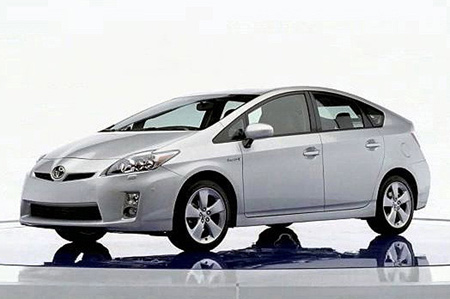
Toyota has gone to great lengths to make their flagship hybrid conspicuously ugly.

Don’t worry, we will all notice you if you buy one but it will take you years to make up the difference in price versus a similar mileage compact car and hybrids are widely known to come nowhere near stated EPA mileage estimates.

So if you want to buy a Toyota Prius to make some sort of “look at me I’m greenier than you” statement, go right ahead.

…but don’t ask the rest of us to pay for it.

David Sandalow, the Department of Energy’s assistant secretary for policy and international affairs, said that changes will be made in order that the current credit can be claimed by dealers or others. He said that the consumers will be made to benefit from the credit, saying that this incentive will be more effective this way than if it is applied against income tax returns (which may mean waiting up to a year).

Cash for Clunkers and Cash for Your Fridge were both busts. Cash for Ugly Cars is a bad idea too.

Please Mr. President, don’t incent others to uglify the environment with those homely little loafs and get back to work creating jobs so more people can buy new cars.

In Search Of A Problem

Tuesday, January 18th, 2011

Construction  starts on the Union Depot in downtown Saint Paul today:

Construction crews are starting a $243 million renovation that will turn St. Paul’s historic Union Depot back into a hub for trains and buses.

Demolition begins Tuesday after a groundbreaking ceremony with elected officials including U.S. Rep. Betty McCollum and St. Paul Mayor Chris Coleman. Crews will start clearing space for train tracks and bus lanes.

The renovation will transform the building into a station connecting future light rail and high-speed trains with buses and bicycles.

So we’re spending money we don’t have to build a depot for transportation that nobody uses to get to a place nobody goes.

Do I have that right?

If You’re a Motorhead Like Me

Monday, January 17th, 2011

…you gotta check this out.

Auto Show photos through the years.

All Wheel Drive Anxiety

Tuesday, January 11th, 2011

I apologize.

You see when it snows like this – you know, constant, fine, light snow, the roads get slippery and when you hit the gas you slip and slide.

You sit and spin.

The thing is…ever since I got this car with all-wheel-drive, when I hit the gas, I just go.

Rain, snow, small animals, volcanic ash. Nothing can stop me!

Yes!!! It’s like I’m a God!!!!!

Lord of the Lanes! Baron of the Boulevard! Potentate of the Interstate!

Four-wheeled power – an advantage, right?! Sure…if you’re not in front of me when the light turns green.

And when you are, I get so very anxious. I’ve become an all-wheel-drive snob and I’m not proud of it.

“C’mon! Letsgo letsgo letsgo letsgo letsgo letsgo letsgo letsgo letsgo! What?! Are you paid by the hour!!!”

(not that there’s anything wrong with that)

It’s like being the guy that gets frustrated and everyone thinks is so annoying because his Mensa IQ affords him the luxury of “getting” things so much quicker, but then he has to wait until everyone else catches up while he rolls his eyes.

He’s not the one that gets the girl, is he.

Like that insipid commercial for AT&T where the portly passenger with the fastest network gets the download quicker than everyone else in the car, and laughs out loud. Thirty more seconds go by and the rest of the passengers get the download and do the same.

They’re the popular ones. They’re late, but having all the fun.

It’s lonely at the top.

This winter we’ve had way more than our share of snow and as a result we’ve been sitting in lines, three lanes wide, like cattle in a slaughter line, waiting waiting waiting to get to the office or home.

And there I sit, with the power to go go go!!!  …if it weren’t for the 1985 Crown Vic in front of me.

It’s like a curse.

God I miss my Harley.

It’s Not Just Their Hands

Sunday, November 21st, 2010

…its that they are bloated and inefficient too, and surprisingly, at least for now, airports can tell them, the TSA, to leave.

Federal law allows airports to opt for screeners from the private sector instead. The push is being led by a powerful Florida congressman who’s a longtime critic of the Transportation Security Administration and counts among his campaign contributors some of the companies who might take the TSA’s place.

And it’s not just because of the national attention that their roaming hands are garnering on the news and on the web.

“I think we could use half the personnel and streamline the system,” Mica said Wednesday, calling the TSA a bloated bureaucracy.

the top executive at the Orlando-area’s second-largest airport, Orlando Sanford International Airport, said he plans to begin the process of switching to private screeners in January

“I am a frequent air traveler and I have experienced … TSA agents who have let the power go to their head,” Erickson said. “You can complain about those people, but very rarely does the bureaucracy work quickly enough to remove those people from their positions.”

Is this yet another sector that could be performed better, faster, cheaper than by the government?

Dear Governor Ventura,

Wednesday, November 10th, 2010

Thank you for the one thing you did for us “shocked” Minnesotans: My license tabs used to be $105-195.

Today I paid $360 for a 2008 model car. The tabs are a very cool color – red – for 2011. It’s a shame to stick them on my plates because I paid enough for them to be jewelry. I’m glad the DMV takes Visa because that way I am able to spread out the payments.

I’m sure that money will be well-spent on our awesome Minnesota streets, roads and highways.

I miss you (at the moment). Say hello to Terry.

That is all.

I’m Not Sure It’s Going To Send Me Racing To A Subaru Dealer…

Monday, October 25th, 2010

…but this odd parody add campaign made me laugh.

But, fittingly, lnot too much.

Georgia Bans Lefty Losers

Thursday, March 25th, 2010

Is there anything more irritating on your morning commute than slow-moving drivers who refuse to extricate themselves from the passing lane? The answer is “no.” And so now we may have at least one good reason to consider moving to Georgia

…sorry for the teaser…still… hell yeah!

I’ll Bet Even Jimmy Carter Can’t Drive 55

Wednesday, March 17th, 2010

I wonder if the 55 MPH speed limit, a product of his protracted era of malaise, wasn’t more of a factor in retrospect, of the quick demise of his executive branch career?

Meanwhile, over thirty years later, the government is relaxing in favor of allowing citizens to use their own judgment.

The 55 mph national speed limit enacted in 1973 in response to the first Arab oil embargo was justified as a means of conserving fuel. In 1987, the law was changed to allow speeds up to 65 mph. But the Republican Congress elected in 1994 did few things more popular than repealing the limit altogether in 1995.

Virginia will become the 34th state to boost interstate speed limits to 70 mph or higher. In big, empty states such as New Mexico, Idaho and Nevada, posted limits on rural interstates can be as high as 75 mph.

I have noticed when traveling longer distances that no matter what car I am driving, I tend to feel most comfortable just above 70 mph. The roads and our cars seem to be designed for that speed.

Left to their own devices, American drivers confronted with an open stretch of interstate highway tend to drive at about 70 miles per hour—whatever the legal speed limit happens to be.

But doesn’t speed kill?

both fatalities and fatality rates on U.S. highways are declining even as speed limits rise. The U.S. Department of Transportation last week reported that its latest estimate of highway deaths in 2009 is 33,963—the lowest number since the government began keeping these grim records in 1954. The fatality rate is estimated at 1.16 deaths per 100 million vehicle miles traveled.

Modern cars and light trucks have an average of 225 horsepower under the hood and sophisticated safety systems such as traction control. They are designed to cruise comfortably, safely and efficiently at between 65 and 70 mph—if not faster, particularly in the case of the autobahn-burners German luxury brands sell.

Anything above 75, I feel I almost have to be “too attentive” to the road and am unable to enjoy the ride.

Anything below that…I get bored.

How fast do you drive?

--> Site Meter -->