Scrimmage
By Mitch Berg
Over the weekend, I heard NPR intoning with worried voice that ISIS was working on getting some captured Syrian jet fighters operational.
This, the worried NPR reporters told us, would be a worrisome development in the developing war in the Levant.

A Syrian Air Force MIG-21.
And I thought “well, maybe to NPR reporters. But I have a hunch I know one crowd who’d just loooooooove it if ISIS were to cough up a plane or two”:
“I’d sell my first born to engage all three… by myself,” one highly experienced U.S. Marine Corps fighter pilot joked. Another Air Force F-15E Strike Eagle pilot said, “Send me in, coach! There’s no way they get those airborne!”
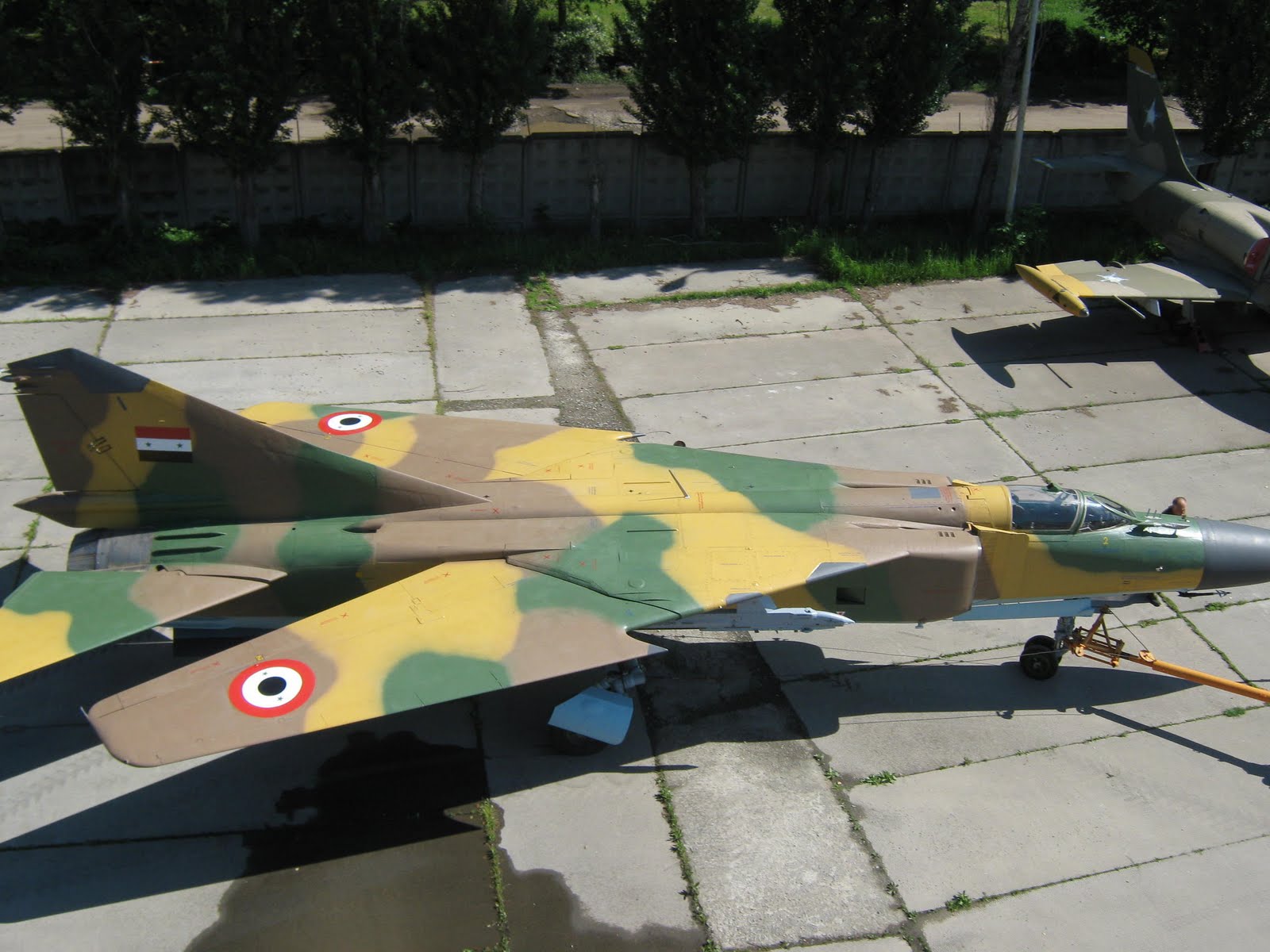
A Syrian MIG-23. During the skirmishes with Israel over the Bekaa Valley in Lebanon in 1981, several Syrian Mig-23 pilots ejected from their planes the moment they saw that Israeli F-4s’ air-to-air radar had locked onto them.
Western, non-Israeli fighter pilots haven’t had any air-to-air combat since the first Gulf War, 20-odd years ago – and even that was rare. The Iraqi air force largely buried itself in the sand (not making that up) or flew to…Syria and Iran in 2003.
The ISIS “air force” apparently has two MIG-21s – infamous dogfighters in Vietnam, which led to the design of the F-16, forty years ago – and a single MIG-23, a Cold-War-era mainstay of the Soviet air force.
Both were designed in an era where either planes were fighters, or bombers – not both:
“We’re not talking about aircraft that are extremely effective at delivering ordinance both in terms of equipment and training,” said one U.S. Air Force official. “It’s simply not worth it beyond an easily discreditable propaganda ploy.”
The MiG-21 does not carry a huge amount of weaponry and was originally designed to fight other aircraft. Meanwhile, the MiG-23 is a much bigger and more complex jet that requires a professional pilot to operate properly.
Oh, make no mistake – they both require professional pilots. If not to fly them, then to survive in combat long enough to say they were in combat.
There are a fighter pilot or two among the regular commentariat here at SITD. I’ll invite their feedback…


October 22nd, 2014 at 2:08 pm
Forget the pilots for minute; any idea of how much ground support it takes to maintain one of these? Techs, parts, fuel, ordnance, transport, take-off and landing strips – and for planes that are 40+ years old? It’s more likely – and effective – for ISIS to paint their planes with Coalition decals, blow it up and faux-tograph their troops celebrating a victory while the ignorant media that couldn’t tell a MiG from a Phantom lets it play.
October 22nd, 2014 at 4:34 pm
ISIS supposedly does have defected Iraqi pilots.
October 22nd, 2014 at 5:12 pm
If the MIG-23 is anything like the F-111, it requires hundreds of technicians to maintain. I can believe that ISIS may be good, but not that good. I think NW has a better plan, to be honest.
October 22nd, 2014 at 5:19 pm
NW, ISIS is the dog that chased and caught the car and has to face the existential question “now what do I do?”
October 22nd, 2014 at 8:36 pm
jp; I remember that just prior to going into Iraq, the lame stream media bobbleheads were throwing out stories about the Iraqi Republican Guard pilots being the most feared in the Middle East.
As Mitch points out, without even talking about how older Israeli aircraft made them fly home as fast as their plane’s afterburners would take them, as soon as U.S. pilots showed up, there wasn’t an Iraqi plane in the sky.
Just like when ISIS started taking over Iraq, the Iraqi army, equipped with US weaponry, bailed out of their Humvees, M1 Abrams tanks, dropped their rifles and high tailed it away from the battle zone.
Quite frankly, I think that one U.S. pilot would make short work of a whole squadron of Iraqi, Syrian or any other Jihadi sympathizer state that dared to come up to meet them.
October 23rd, 2014 at 7:50 am
American aircraft maintenance manuals dictate schedules for inspections, cleaning, repair, replacement, overhaul. Plane captains know it by heart.
Everything in the Muslim world seems to run on “Inshallah” meaning “if God wills it.” That’s why the AK-74 is the perfect weapon for them – it works whether you take care of it or not.
If ISIS takes the same attitude toward aircraft maintenance, it means we won’t have to engage them in the air, just wait for their airplanes to fall out of the sky from neglect. Because God willed it. Nice.
.
October 23rd, 2014 at 9:50 am
Joe, that would explain why, eighty years after they started pumping oil in Saudi Arabia, they still rely on expats to do the technical work to get it out of the ground, wouldn’t it?
October 23rd, 2014 at 9:51 am
And if you’ve ever been to Malaysia, it would seem to explain the wonderful Malaysian car, the Proton, or the “Malaysian Trabant”. Even a 100% tariff on imported cars and new designs coming in annually from Japan (the Proton is a rebadged Mitsubishi) can’t keep their market share.
October 23rd, 2014 at 11:14 am
I’ve had friends in the military explain to me that that’s the key difference between a Third World military and a good one; the military, from the top brass down to the lowliest private, becomes convinced of the imperative to maintain what they’ve got, and learns to do it themselves, without help from foreign technicians (to say nothing of “without letting it all rust away from neglect”).
It’s what separates the Singaporean, Taiwanese, Thai and Korean militaries from, say, the Indonesian, Burmese and (much of the) Philippine militaries. Or the Israelis (and Jordanians and, for the past couple decades, Egyptians) from the Syrans, Iraqis and Libyans. Or any military from a gang of thugs with AK47s.