Archive for the 'History And Its Making' Category

The Ultimate American

Monday, October 8th, 2012

There is a short list of people who genuinely, truly inspire me. Ernest Shackelton, we’ve talked about. Stanislaus Schmajzner is coming up shortly.  Lech Walesa will get an article soon.

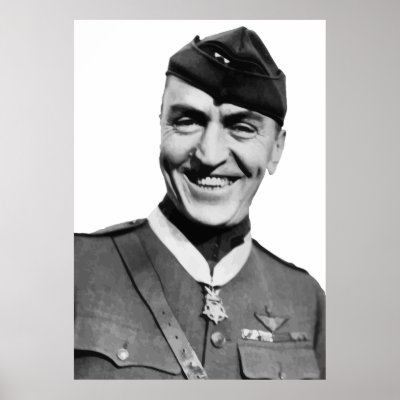
But today would have been the 132nd birthday of Eddie Rickenbacker.

And if you’ve never heard of him, join the club.   And yet in his day – and he had a long day – he may have been the ultimate manifestation of what it meant, and means, to be an American.

Rickenbacker was born in Edward Rickenbacher, in 1890, in a poor neighborhood in Columbus Ohio, the son of Swiss-German immigrants.  His father died when he was 13; in his autobiography, Rickenbacker said it was an accident; one of his biographers claimed the elder Rickenbacher died after a fight.  Young Eddie left school after seventh grade, working a long series of odd jobs, including a job in a foundry.  He discovered an aptitude for mechanics, as well as a desire to learn, even taking a corresondence course in engineering.

He supplemented his informal and semi-formal education with lucky bits of practical experience; he told the story of encountering a broken-down car out on the road, with its driver, completely flummoxed by the breakdown.  Rickenbacker had never worked on a car – but he took his correspondence-school engineering and natural mechanical aptitude and figured the problem out, and got it back on the road – and left him with the car bug at a time when cars were what the Personal Computer would be in about 1975; a toy of the very wealthy.

Rickenbacker, early in his racing career, at the wheel of a “Firestone/Columbus” racer. In those days, race cars carried on-board mechanics – partly to fix things, partly to counterbalance the car on tight turns.

Rickenbacker went from an accidental tinkerer to a salesman to, in very quick succession, a race car driver.  Staring with the American branch of Peugeot, he quickly went over to the Maxwell team, back in the days when race car drivers were like extreme sports celebs today, barnstorming around the country and racing in cobbled-together tracks, in the days long before drivers wore helmets, much less roll bars.  Rickenbacker raced in four Indianapolis 500 races back in the late oughts and the early teens.

Rickenbacker, at the wheel of a “Blitzen Benz”, in which he set a land speed record in the Teens. I didn’t mention that he held a land speed record, did I? Yep. That too.

He got into aviation the same way he got into cars; he happened upon a barnstorming aviator who’d had mechanical problems; he traded some mechanical help for a ride in the plane.  And again, he was hooked.  The pilot, fatefully, turned out to be T.F. Dodd, who became one of the pioneers of American military aviation, and served as the top aviation officer for the American Expeditionary Force in World War I.

Around then, World War I broke out.  Rickenbacker went to Britain – ostensibly to race, but with an ulterior motive of finding ways to get into the fight.  The British treated the celebrity – who at the time still spelled his name “Rickenbacher” – with suspicion, keeping him under surveillance as a potential German spy.  He returned to America, believing war was imminent, and hatched a plan to recruit fellow race drivers – mostly daredevils and risk-addicts with strong mechanical aptitude – to serve as pilots.

When the US entered the war, Rickenbacker – he’d changed the spelling to make it look more American – joined the Army as an infantryman, but quickly parlayed his celebrity and his contact with Dodd into a job first as an engineering officer with the first of the US Army’s new fighter squadrons, the 94th Pursuit Squadron.  He quickly wangled his way into a flight assignment (he had to roust up another engineer to take his job first).

Rickenbacker, by his first plane, a French-built Nieuport 17. The plane contributed to one of his many brushes with death. It was a very maneuverable plane – but prone to having the fabric skin of its upper wing rip off if it went too fast in a dive. Which it did, once, when Rickenbacker was trying to evade a German attack. He managed to coax the plane in for a landing – more or less miraculously.

And then he went on a tear, shooting down six German planes in his first month, becoming an “ace” (five kills), one of America’s first, before an ear infection – serious business in the days before planes were pressurized – grounded him for three months.  He recovered and, promoted to captain and squadron leader, banged out 20 more confirmed kills by the end of the war, including two kills on his first day back in action.  Most of the kills, as a matter of trivia, were among the hardest targets the German air service had to offer, the Fokker D-7 fighters that were at the time the best fighter plane in the air.    He was awarded the Medal of Honor for his exploits (belatedly, in 1931), and remained America’s top fighter ace until World War II, where he was first passed by Marine and future South Dakota governor Joe Foss.

Rickenbacker’s Spad 13, the plane in which he ran up most of his score. Also built in France, the Spad was one of the better fighter aircraft of World War I.

He married his first and only wife, Adelaide, in 1922.  Adelaide was something of a throw-forward; outspoken, independent, divorced and both opinionated and not averse to make sure people knew it, she and Rickenbacker were married for the next 51 years, ’til Rickenbacker’s death in 1973.

The Rickenbackers, with their two adopted sons David and William.

In 1920, capitalizing on his fame but driven by an urge to build a better mousetrap, he founded the Rickenbacker Motor Company.  The company’s goal was to build the most advanced cars on the market, incorporating the latest racing technology into passenger cars.  The biggest advance – four wheel brakes.  At the time, most cars had brakes on the two rear wheels; as a lifelong winter driver, I can only imagine how fun that must have been on the ice.

A 1923 “Rickenbacker Six”, serving as a pace car at the Indy 500. It was one of the most advanced cars of its era.

It was an era long before the auto market coalesced into a “big three” – there were dozens of manufacturers at the time – but the bigger manufacturers at the time engaged in an epic PR battle to try to squeeze Rickenbacker off the road – fearing, as Rickenbacker related it, that their own backlogs of two-wheeled-brake vehicles would be unsaleable.

A Rickenbacker sedan.

Rickenbacker Motor Company only lasted until 1927, but its legacy – the four wheel brake system, among many other advances – lives on today; most American auto makers adopted them within a few years.  While the major auto makers squeezed Rickenbacker out of the business, they quickly offered him work; he served as a regional sales director for their “Sheridan”, “LaSalle” and “Cadillac” marques, as well as serving, ironically, as head of American distribution for Dutch-owned Fokker Aircraft, 11 of whose aircraft he’d shot down during the war.

Rickenbacker went on to buy the Indianapolis Motor Speedway, turning it into the national institution it is today (before shutting it down at the beginning of  World War II).  He sold it after the war, but it was during his ownership that many of the traditions of the storied race, and the Brickyard itself, were instituted.

It was via his ongoing interest in aviation that he persuaded GM to invest in “North American Aviation”.  One of its subsidiaries, “Eastern Air Transport”, was a fledgling and failing airline; GM appointed Rickenbacker to take over the struggling carrier.  He merged it with Florida Airways, turned it into one of the country’s major air carriers, and then arranged to buy the airline from GM in 1938.

It was around this time that Rickenbacker first delved into politics; although he never ran for office, he was an outspoken critic of Franklin Delano Roosevelt’s New Deal, earning the ire not only of the administration but of much of the press; liberal media bias is nothing new.  In 1934, he got into direct conflict with Roosevelt over the President’s decision to cancel all commercial air mail contracts and have the US Army Air Corps deliver the mail. Rickenbacker savaged this decision; when a number of Army pilots, untrained in all-weather cargo flight, were killed in accidents, Rickenbacker condemned the action as “legalized murder”; Roosevelt in turn ordered NBC radio to stop broadcasting Rickenbacker’s statements about Roosevelt.

Still, Eastern thrived.

On February 26, 1941, Eastern Flight 21, on approach to an airfield near Atlanta, crashed into a hillside.  Rickenbacker, flying to Atlanta on business, was gravely injured – massive internal injuries, many broken bones and dislocated joints, and an eyeball popped out of its socket.  He was trapped, immobilized, and – most frightening of all to Rickenbacker – soaked in aviation fuel.  The plane and its survivors sat on the mountainside until morning before searchers found them.  Although he’d spent the night encouraging the other survivors to hang on, Rickenbacker had passed out from shock and internal bleeding; he was initially left for dead, and taken off the hillside when the ambulance crews started hauling “bodies”.  He was left for dead again at the hospital; his injuries looked unsurvivable.  It wasn’t until a doctor noticed he still had a pulse that they worked on trying to save him, the better part of a day after the accident.  The newspapers announced that he had been killed in the accident.

The crash scene.  The DC3 – at the time, one of the most advanced passenger planes in the world – was landing for the second leg of a trip from DC to Houston.

It wasn’t the last time in his life that they’d have to retract that story.

In his autobiography, Rickenbacker described the scene – and his battle to stave off death – with riveting intensity.  He felt death calling to him – not for the first time in his life, naturally – and described the internal, mental battle to hold on, by far the most intense of his many brushes with death.  He was in the hospital for months, and took the better part of a year to get his eyesight completely back.   There were eight dead and eight survivors.

While he was recuperating, World War II began.  Rickenbacker wanted to fly again – but between his injuries and the usual fifty-year-old stuff, he knew he wasn’t in the game in that way anymore.  He visited flight schools, inspected pilots and aircraft, and lent his name and his expertise to the Air Force as it got ready to go fight.  And as US forces went into action around the world, he visited – partly as a morale-builder, partly because of his own vast technical knowledge of aircraft.

It was on one of these missions that Rickenbacker had another brush with death.  On an inspection tour of bases in the Pacific, and carrying a message from President Roosevelt to General MacArthur in Australia, Rickenbacker’s plane – a B17 Flying Fortress – was en route to a planned fuel stop on Canton Island in the central Pacific.  A defect in a damaged navigational instrument caused the crew to fly the plane hundreds of miles off course; they ran out of fuel in the middle, almost literally, of nowhere.  The plane “ditched” – carried out an emergency landing in the ocean – and the plane’s crew of six, Rickenbacker and his assitant, all of them injured to one degree or another (and with Rickenbacker still walking with a cane and very much still hurting from the plane crash) climbed aboard three small life rafts.

After a few days lost at sea, the newspapers again declared him dead.  His wife prevailed on the Army and Navy not to give up the search.

The rafts’ emergency food supplies ran out after three days.  Rickenbacker described their battle to survive; they soaked their clothing with water from passing rain showers, caught and ate raw fish and a small shark, and whatever came their way.  In one memorable incident, when the fish gave out, Rickenbacker led the crew in a prayer for salvation – and a seagull landed on his head.  He grabbed the hapless bird, killed it, and the crew ate it raw.  One of the men died – but Rickenbacker led the crew to keep their spirits until, after 24 days floating at sea, a US Navy search plane found the rafts, on November 13 1942.  They had drifted on the current for thousands of miles before being picked up near Tuvalu.

After the war, Rickenbacker continued running Eastern, making it the most profitable airline in the country for many years (he was forced out as CEO during a downturn in 1959, and spent the rest of his life as a conservative activist (who urged respect but caution for the Soviets, whom he’d visited extensively during the war).  He wrote his biographpy, “Rickenbacker” in 1967 – I probably found it on my dad’s bookshelf when I was nine or ten years old – and clearly remember reading in the newspaper that Rickenbacker died of a stroke in 1973.  For the first time, there was no retraction.
And Rickenbacker’s example, like those of Shackelton and Schmajzner – never, ever give up – has kept me going through an awful lot of much, much lesser trials.

But even when he wasn’t dodging, out-muscling and throwing the finger directly at death, Rickenbacker was an example for the ages.  As we watch our school systems crumble, Rickenbacker was a classic example of the self-taught person, and of the power of a curious, agile mind to learn on its own. As a tireless businessman, he was perhaps one of the greatest entrepreneurs in American history – and had the conservative worldview to show for it.

And as the second-generation son of immigrants, he’s one of the greatest examples of what the American spirit should be.

It’s a crime that the story of his life isn’t required learning in our schools today.  We’d be a better nation for it.

There Are Few Things In The World I Generally Like Less…

Monday, October 8th, 2012

…than European liberals writing about American culture.  It’s always a smorgasbord of stereotypes – both the stereotypes they see and write about, and the ones they themselves exhibit.

And both are on ample display in this piece in Britain’s Guardian by Ed Vulliamy about B.B. King’s annual concert in his hometown.

And yet mixed in and among all of that is a great look not only at King’s life – he’s 87 – and the South he came from as it’s evolved over his lifetime, but there are even a few looks into how he became the guitar player he’s been for all these years.

It’s more or less in sync with the upcoming release of the documentary The Life of Riley, about King’s life and impact on music (King’s birth name was Riley B. King).   And that, I need to see, wherever it shows in the Twin Cities.

For Norge

Sunday, September 16th, 2012

I’ve always been fascinated by exiles – people who are forced from their homelands for whatever reason.  From the Volgadeutsch of rural North Dakota – Germans who fled to Ukraine and then  to the US, where they fully assimilated but still observe and in some cases mourn their old country (Stalin killed most of the Ukrainian Germans during the war), or the Cubans of Florida, many of whom share a nominal goal of getting their homeland back by one means or another.

And it’s soldiers in exile that fascinate me most.  Poland has supplied many of them; several generations of Polish warriors fought, either to regain their home or to serve foreign rulers who promised, someday, maybe, to do it for them.  Among them were Napoleon’s Polish Legion, an elite cavalry unit that fought all over the continent (and other continents – 600 of them fought in Haiti, most of them dying of one miserable tropical disease or another).  Most of whom would never see their homes again.  And from among these men sprang a song, Mazurek Dabrowskiego that with independence and nationhood became Poland’s national anthem.  The song speaks of the yearning of the exile with raw, painful emotion.

Norwegians aren’t prone to expressing raw, painful emotion, of course.

We – and I can say “we”, since four of my eight great-grandparents, on both sides of my family were born in Norway – are most famous for calm-to-the-point-of-dull accommodation and negotiation, accompanied by a nasty passive-aggression that is more prone to being internalized than acted on.  A Norwegian builds to violence famously slowly – but practices it in a way that people from Russia to Ireland, from Scotland to Algeria, still keep tucked away in a dark corner of their ethnic and national consciousnesses; “Viking” is still a synonym for ruthless, calculated remorselessness that would make a Mafioso gag up his skull; for the old Norsemen, it truly was just business.

———-

It was that sense of dull accomodation, of orderly communitarianism and plaintive idealism, that was conquered in the spring of 1940.  In the two and a half years since the sucker-punch invasion of officially-pacifistic and almost-completely demilitarized Norway, thousands of Norwegians signed up for one form of service or another; tens of thousands served in Norway’s massive Merchant Marine, which provided a huge proportion of the allies’ shipping across the Atlantic.  Many more served in the Army and, even moreso, navies in exile; Norwegian-manned British ships were involved in most of the Royal Navy’s major and minor operations in the Atlantic.

And veterans of Norway’s tiny, obsolescent Air Force escaped across the North Sea, by plane or boat, and thence to Canada – where a group of exiles set up a training airbase at Toronto Island, christened by the locals “Little Norway“.  There, equipped with American-built planes that had been completed just too late to be shipped to Norway as the government frantically tried to re-arm, they learned how to fly modern aircraft, before shipping back across the pond to the UK to form a new squadron, “331 Squadron” of the British Royal Air Force.

The squadron was equipped with the iconic Supermarine Spitfire fighter plane, perhaps the most aesthetically beautiful instrument of war ever produced, and issued the RAF fuselage code “FN” – reputed to be, by design or coincidence, the abbreviation of the squadron’s motto, For Norge, “For Norway”.

Spitfires of 331 Squadron at their first base, at Catterick, Scotland

And it was 71 years ago today, at Catterick Scotland, that 331 Squadron became operational.

In the Dieppe Raid of August 1942 – a commando raid that served a shake-down for D-Day – 331 (and its sister squadron, 332 Squadron) shot down 15 German planes for a loss of three, making it the  highest-scoring RAF squadron during the raid.

The squadron spent 1943 doing “sweeps” over Belgium, France and Holland, attacking German ground transport and mixing it up with German fighters that came up to fight.

331 Squadron Spitfires taxing out for a fighter sweep in 1943.

331 was the highest-scoring fighter squadron in the RAF in Europe during 1943.

Captain Svein Heglund, Norway’s top-scoring fighter pilot of World War 2.  The dent in his Spitfire’s propeller spinner was from a part of one of the German aircraft he’d just shot down.  Heglund ended the war with 17 confirmed kills.

The two squadrons of Norwegians were among the mass of aircraft flying top cover over the D-Day invasions, and met and drove off one of the few attempts at a Nazi air raid that day.   Not long after, they relocated to the continent, among the first Allied fighter squadrons to move operations to France and, eventually, the Netherlands.  As the German Luftwaffe faded from the battlefield, the Norweigans spent a good chunk of the rest of the war shooting down German V1 “buzz bomb” cruise missiles.

The two Norwegian squadrons ended the war with 300 confirmed, “probable” or damaged German planes; they lost 131 planes and 71 pilots in combat and accidents.  This, out of squadrons that at full combat strength had 18-24 pilots and planes.

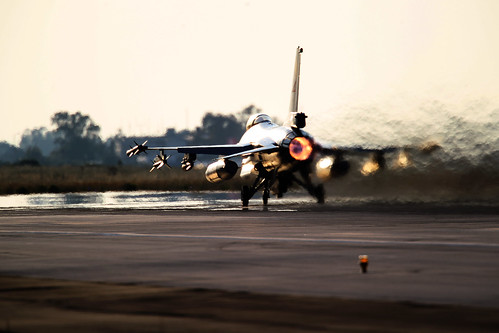
331 Squadron F16 lining up to fly a mission over Libya last year.

The Norwegian Air Force’s two current combat fighter squadrons are still named 331 and 332, in homage to their ancestors who, seven decades ago, fought a lonely, hopeless battle far from home.

The Soldier In Hell

Saturday, September 15th, 2012

People who’ve never served in the military – and some who do, but aren’t in the infantry – shake their heads and wonder what it takes to find someone who can run toward gunfire, when the natural numan instinct is to run away from it.

But training, and the testosterone that most young men have in great abundance, mixed together with enough esprit de corps or coercion or whatever, can overcome, or at least tame, the instinct of self-preservation enough that armies can and do exactly that; charge toward people who can kill them, and – sometimes – vanquish them.

But beyond that – what does it take to not only see and understand hell, but willingly walk into it?

It was 72 years ago today that Witold Pilecki (pronounced “Pi-LETZ-ki”) undertook perhaps the most daunting intelligence mission in history.

And if you’re American and not Polish, your response may well be “Witold who?”

Sit back for a moment.

———-
If you were to develop a laboratory process to develop a perfect strain of militant patriot, the end result might be a lot like Witold Pilecki.

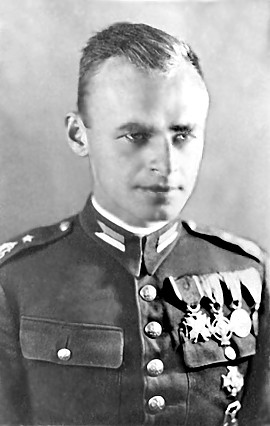
Pilecki in his Polish cavalry uniform

Born in the Finnish-Russian area near Petrograd, Russia, where his family was forcibly resettled by the Czarist Russians after his grandfather spent seven years in Siberia for participating in a failed uprising against Russian rule in 1863, he grew up steeped in the militant patriotism of the motivated exile.  The family moved to Lithuania when he was a boy – where he joined the Boy Scouts.

For those of you who have watched your kids make Pinewood Derby cars and go camping, that seems pretty innocent.  But in Poland – or among ethnic Poles scattered all over Russian Europe at the time – Scouting in Poland – the “Związek Harcerstwa Polskiego” (Polish Scouting and Guides) or ZHP – was, however, considered an underground paramilitary organization and an instrument of undesirable Polish patriotism.  ZHP fought in the Russo-Polish war as well as as part of the Polish Underground in World War 2.

And that was Pilecki’s introduction to war.  At age 17, as World War 1 devolved into the Russian Civil War, his Boy Scout troop became an irregular combat unit that fought against the Bolsheviks and, when the area was overrun, served as a guerrilla group until Poland’s independence.  He then joined the new, regular Polish Army as a cavalryman, and fought at the Battle of Warsaw, the high-water mark of the Bolshevik advance into Poland. as well as the ensuing pursuit of the Bolsheviks back to Ukraine.

And then he finished high school, at age 20.

Over the next decade and a half, he was a gentleman farmer, a reserve cavalry officer, a husband and father (with two children born in the thirties), and a social worker.

Pilecki during his brief civilian life

When World War 2 started, he was called up and, at age 38, served as a cavalry platoon leader, and a ferocious one; his platoon destroyed seven German tanks, shot down one airplane, and destroyed two more on the ground as they retreated across Poland.  During the war – which lasted barely over a month – he went from leading a platoon of 40 horsemen to the deputy commander of an Infantry division with a paper strength of 12,000 men (although by that point in the war it was more like 4,000).  When Poland surrendered, he and his commander, Jan Włodarkiewicz. slipped away and went to Warsaw to found a resistance group.  The two men built the group into one of the network of underground armies that undertook the resistance against the Nazis.

And it was while serving among the commanders of the Polish underground that the word of a German concentration camp near the Polish town of Oświęcim – “Auschwitz”, in German.

It was believed to be a fairly run-of-the-mill labor camp at the time Pilecki undertook the mission. On September 19, 1940 – 72 years ago today – carrying fake paperwork undre the name “Tomasz Serafiński”, Pilecki deliberately out into the middle of a roundup of Jews, and was hauled off to Auschwitz.  He undertook to form an underground organization to gather information and eventually rebel against the Germans.

Tomasz Serafinski, Auschwitz Prisoner 4859

At the time, Auschwitz was still a labor camp – a terrible enough place, to be sure, but it hadn’t  yet morphed into the Vernichtungslager, or “Extermination Camp”, that it would shortly.

But as it did, Pilecki was there.  He and his organization – the “ZOW” (“Związek Organizacji Wojskowej“, or Union of Military Organizations) gathered information, built a radio transmitter out of smuggled parts and improvised bits and pieces, and reported on the gathering horror as the work camp evolved into a death camp.

It was Pilecki’s intelligence that the final, definitive reports of trains full of Jews being brought to the camp, gassed and burned – transmitted seventy years ago this month, and then smuggled via the Polish Underground (the “Home Army”, or Armija Krajowa, as it had become, the Polish nationalist branch of the resistance) to the Polish Government in Exile, and thence to Winston Churchill and FDR.

Who did shamefully little with it.  We’ll come back to that later in this series.

Remember – this was in the middle of a concentration camp.  The Gestapo eventually caught wind of the guerrilla group forming amid the death camp, with the radio transmitter, and began homing in on Pilecki.  And in April of 1943, he and a couple of comrades overpowered a guard while assigned to a job outside the wire, cut the phone line to buy time to escape, and got away cleanly.  Pilecki linked up with the Armia Krajowa in a few weeks, and went  back to Warsaw.  His war wasn’t nearly over.

He led an AK unit in the Warsaw Uprising in August of 1944 (of which much more in a couple of years); after the uprising’s betrayal by the Soviets, he – saved by his military commissions from drumhead execution – went into a German POW camp.

Which was liberated by the Soviets; Pilecki went to Italy and served in the Free Polish Army for the remainder of the war.

And that was when the real war began.  The Polish government in exile sent Pilecki, under another fake ID, to organize anti-Soviet resistance; it’s largely forgotten in the west today, but armed resistance to the Soviets continued in Poland until the early fifties.

It was there, in 1946, that Pilecki’s cover was blown.  He was arrested, tortured by the Soviets’ Polish Communist puppets, and executed after a show trial on May 25, 1948.

Pilecki on the stand at his show trial

A few weeks back – not long after President Obama was making his “Polish Concentration Camp” gaffe – the people of Poland were undertaking a forensic expedition to find Pilecki’s remains; buried in an unmarked grave by the Communists, it’d taken decades of research.

“[Pilecki is] a hero because he volunteered to go to Auschwitz,” says Michael Schudrich, chief rabbi of Poland.

“He went to find out what was happening and tell the world.”…Since the fall of Communism in Poland, Pilecki has received several posthumous honors from the Polish government.

“But he is even more of a hero to the Jewish people of Poland,” according to Rabbi Schudrich.
Pilecki’s story is, in many ways, a microcosm of the Polish story; Poland was torn over the plight of its Jews; many Poles were virulently anti-semitic and actively collaborated with the Nazis – but the biggest contingent among the Righteous Among The Nations are Poles who risked and frequently lost all to help Jews hide, escape and resist; the nation then suffered years of battle between Stalinists and nationalists and the ensuing decades of Communist rule before finally leading the Soviet world in its own flight to freedom starting thirty years ago.

The Best Years Of Their Lives

Tuesday, September 11th, 2012

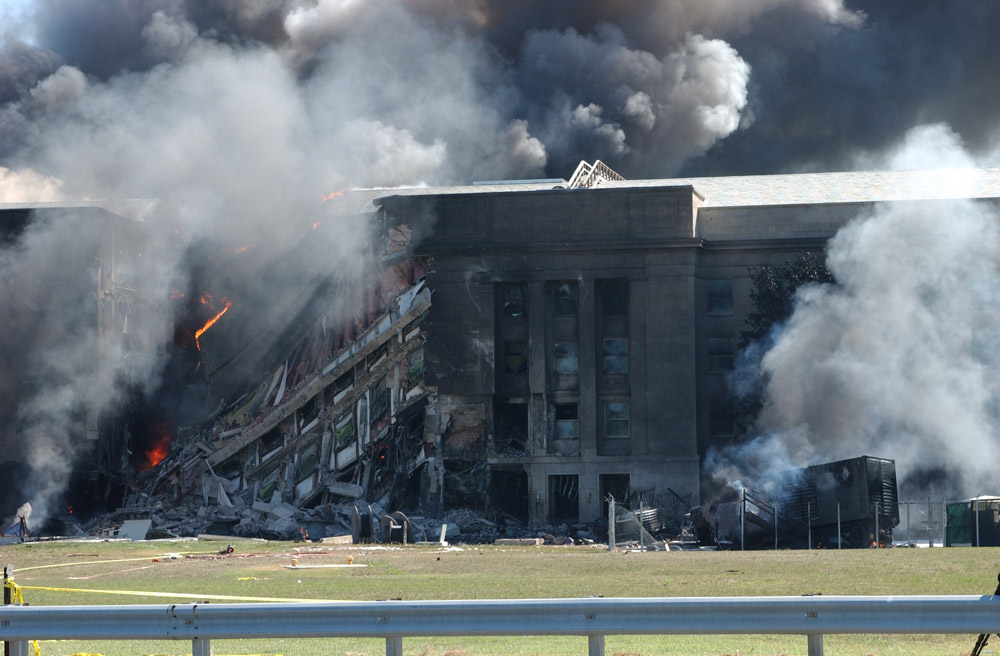
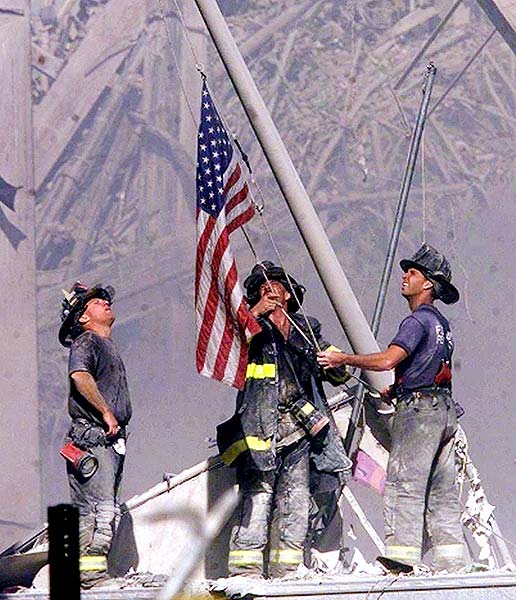
There is nothing I can tell you about 9/11, and what it did for and to this nation, that you haven’t heard a million times from people much smarter than me.

But a while ago, I saw The Best Years Of Our LIves, the 1946 William Wyler classic that won the Academy Award winner for best picture.  It was the story of three servicemen coming home from World War II; a former bank loan officer who’d spent the war as an infantry platoon sergeant; a soda jerk who’d won a Distinguished Flying Cross as a bombardier in a B-17, and a sailor who’d lost both hands when his ship was sunk (played respectively by Fredric March, whose turn as the ex-NCE won the Best Actor Oscar, as well as Dana Andrews as the bombardier and Harold Russell, who had actually lost both hands to an accidental training explosion while serving as a paratrooper, and who won the Best Supporting Actor Oscar for the role).  The movie was about the difficulties the veterans of the day had in re-adjusting to life at home – and shows that the topic didn’t first occur after Vietnam.  If you’ve never watched it, don’t watch another movie until you see it.

It won seven Oscars – and generations of admiration from an America that got it; it told the story that so many veterans couldn’t, and for decades didn’t, tell.

And World War II was different – and almost incomprehensible to people today.  12 million Americans served, out of a population of 160 million; that’s one out of thirteen.  And around 400,000 Americans died of all causes and on all fronts during the war – one out of every thirty that served, one American out of four hundred.  Every family had a servicemember; virtually everyone knew a family that lost someone.

In World War II, just about everyone was close to the war, one way or another.

The War on Terror that switched into its “hot” phase for most of us eleven years ago today has been very different.  While most Americans of all stripes make noises about supporting the troops – and most truly do, in their own way – it’s a whole different world than in the forties.  It’s a detached thing for most Americans.  Less than one percent of Americans serve.  For most Americans, service in the war on terror is something someone else, someone else’s family, does.

In terms of loss?  We’ve suffered around 6,000 military dead in the past 11 years; an incalculable loss of some of our nation’s best people, of course, but about the same death toll as three weeks on Iwo Jima (where the oldest brother of my father’s childhood friends was killed), or two months in the waters off Okinawa (where my ex-father-in-law served).  Most Americans can name someone who died in the service of this country – but for most of America, it involves someone else’s family, someone else’s husband or son or father, frequently from some far corner of their family or social circle.

I was never that someone else.  I came close to joining the service a few times – talked with an Army recruiter in high school and again after college, and with the Navy Reserve when I was in my mid-twenties – but like 99% of Americans, I took a different path.  On 9/11 I was a 38 year old guy with a couple kids and a job in a dotcom that was already failing, with a bad knee.  Not exactly military material.

And so for me, like most of you, this war has been something fought by someone else.  It’s someone else’s family dreading deployments and watching their family climbing onto buses and planes and dreading reports of violence on the news and counting the hours until their loved ones come home, in many cases to start the cycle over again.

And so today I’ll just send my prayers and hopes and best wishes and deepest thanks to all of the “someone elses” out there; all of you who did spend the best years of your lives overseas fighting a war that most of your countrymen barely acknowledge, much less understand.

I’m hoping someone, someday tells your story in the way you deserve it to be told.

Tuesday, September 11th, 2012


Remember.

Tuesday, September 11th, 2012

Remember – They’re The Smart Ones

Thursday, September 6th, 2012

Democrat Congresswoman bobbles the history in all 57 states:

Rep. Yvette Clarke (D-N.Y.) appeared to botch American and Brooklyn political history during an appearance on “The Colbert Report” that aired Tuesday night, saying that slavery in the United States persisted under the Dutch as late as 1898.

The Dutch left in 1674.

Colbert was quizzing Clarke on the history of her borough.

“Some have called Brooklyn’s decision to become part of New York City ‘The Great Mistake of 1898,’ ” Colbert said. “If you could get in a time machine and go back to 1898, what would you say to those Brooklynites?”

“I would say to them, ‘Set me free,’ ” Clarke said.
Pressed by Colbert what she would be free from, the black congresswoman responded, “Slavery.”

“Slavery. Really? I didn’t realize there was slavery in Brooklyn in 1898,” Colbert responded, seemingly looking to give the lawmaker a chance to catch her error.

“I’m pretty sure there was,” Clarke responded.

“It sounds like a horrible part of the United States that kept slavery going until 1898,” the late-night comedian then quipped.

I’m frankly amazed Colbert didn’t switch the subject.  Maybe start painting her toenails…

Colbert pressed on, asking, “Who would be enslaving you in 1898 in New York?”

At that point, Clarke responded, “The Dutch.”

Remember:  Liberals are teh smart!


War Horse

Thursday, August 23rd, 2012

The ground was wet and the air noticeably cool for a late August morning in 1942.  The men of the Italian Savoia Regiment were likely nervous.  In the midst of a Russian counterattack than had driven a wedge between the Italian 8th Army and the German 6th Army in the Ukraine, the Savoia had been thrown as a last-second, stop gap measure.  Facing them were 2,000 men of the Siberian 812th Infantry Regiment.  With bugles blaring and cries of “Savoia!” and “Caricat” (charge), the Savoia Regment galloped into the record books.

It was the last cavalry charge in military history.*

The regiment was the 3rd Dragoons Savoia Cavalleggeri (Cavalry Regiment), one of oldest and last actual combat cavalry units in any of the major military powers by World War II.  Founded in 1692, by Gian Piossasco de Rossi, one of the most powerful Italian noble families, the Savoia Cavalleggeri carried forward a number of ancient traditions to the modern battlefield.  The unit’s helmets were emblazoned with black crosses, in commemoration of the Battle of Madonna di Campana in 1706 when the unit captured a French battle flag. Each of the 600 men wore a red necktie in honor of a wounded dispatch rider – from the 1790s.  And last, but not least, the units still carried sabers.  Sabers that were drawn on August 24, 1942.

The Italian 3rd Dragoons Savoia Cavalry Regiment in training. One would have found few changes from the units’ drills 250 years earlier

The 3rd Dragoons was but one unit of many among the Italian military presence in Russia.  From early July of 1941, the Italian military had sought to provide assistance to the German invasion of Soviet Russia.  Indeed, the entire Eastern Front became a clarion call to unify the various fascist and nationalist element of Europe that had for decades defined themselves in large part to their opposition to Communism.  Romanian, Hungarian, Bulgarian, Croatian, Slovakian, Finnish, and various Norwegian and French units would eventually fight on the Eastern Front and Italy would be no different.

Despite Hitler’s misgivings, Mussolini provided two corps-sized units: the Italian Expeditionary Corps in Russia (Corpo di Spedizione Italiano in Russia) and the Italian 8th Army (otherwise known as the Italian Army in Russia).  10 divisions in all would serve in Russia, roughly 290,000 men, largely in a support capacity.  Neither Hitler or the German High Command trusted the Italians, routed on so many other battlefields when bereft of German leadership, to do much more than play a patchwork role on the front line.

An Italian soldier in Russia. Over 54,000 Italians would die as POWs on the Eastern Front alone

A patchwork role was precisely what the 3rd Dragoons Savoia Cavalry Regiment played starting on August 23rd, 1942.  As the Axis advance on Stalingrad commenced, the Russians attempted a counter-attack at the River Don.  Focused at the point between the Italian 8th Army and German 6th, the Russian found themselves able to separate the two Axis forces.  No organized force stood in the way of the Russians being able to get back behind the German or Italian line – and thus the Savoia Regiment was quickly dispatched to block any Russian advance at the small village of Isbuschenskij.

As August 23rd gave way to the 24th, the Italians skirmished with elements of the Siberian 812th Infantry Regiment.  The Savoia was already outnumbered, 2,000 to 600, with all but one squadron on horseback when the regiment’s commander, the aristocratic royalist Colonnello Alessandro Bettoni-Cazzago gave the order to charge.  Bettoni-Cazzago, assuming that the longer he delayed an offense action, the worse the Italian position would be, attacked.  In an age where cavalry divisions were made of steel, not flesh, and fed diesel, not oats, the Italian charge seemed destined to match Lord Cardigan’s ill-fated “Charge of the Light Brigade” against Russian forces during the Battle of Balaclava in the Crimean War.

The Italian 3rd Dragoons Savoia Cavalry Regiment rides into battle

The move completely took the Russians by surprise.  One squadron flanked right against the Siberians’ left flank before wheeling around again to press the advantage from behind, hurling hand grenades into the quickly disintegrating enemy line. The another squadron attacked head on and the battle wore down into brutal hand-to-hand fighting, many of the Savoia having dismounted.  Supported by a machine-gun squad, the Italians amazingly took the field, suffering only 40 killed and another 79 wounded (to say nothing of the 100 horses lost).  In return, the 3rd Dragoons killed or captured over 1,000 Russians.

Il Duce visits the Russian Front

Isbuschenskij was a rare Italian triumph on the Eastern Front and was quickly forgotten amid the horror of Stalingrad.  Six months after the last successful cavalry charge in history, the Italians had 150,000 men either killed or captured as the Axis front was smashed by the Soviets.  Italian survivors of the East were hidden by the Rome press, as veterans angrily voiced their contempt for a government that sent them to Russia woefully unprepared for the winter conditions or the enemy they faced.  Like Greece or East Africa, Russia was yet another front that Il Duce had sent Italian sons to fight and die under misleading or under-informed pretenses.  The defeat did not go unnoticed by the Italian monarchy.

Savoia’s commander, Bettoni-Cazzago, was among those royalists who returned from the Russian cold with a heated hatred for the Fascist regime.  Bettoni-Cazzago would eventually join the anti-Mussolini conspirators who would aid King Victor Emmanuel III in disposing of the Mussolini government in the late summer/early fall of 1943.

* Yes, there were horse-mounted units that fought as recently as Afghanistan and South Ossetia in 2008, but Isbuschenskij remains unique as an actual cavalry unit in an organized charge.

Guerrillas in the Midst

Wednesday, August 1st, 2012

By August of 1942, to call Addis Ababa even a distant battlefield in the scope of the Second World War seemed charitable.  The Italian Army had been routed almost 10 months earlier.  Most of the troops that had liberated Abbyisania were en route either to Egypt or the Far East.  The main British ammo depot in Addis Ababa hardly seemed to need guarding under such circumstances – until it erupted in flames, destroying ammunition for the new British Sten machine guns badly needed on other fronts.

The explosion was an act of sabotage – one of many in the unheralded Italian guerrilla war in East Africa.

The East African Campaign wasn’t merely a footnote to the Second World War but a colonial anachronism.  Despite the scale of soldiers involved – 250,000 British, Commonwealth, French, Belgian and Abyssinian troops versus nearly 280,000 Fascist troops, the majority of whom were Eritrean or Somali colonial recruits – the conflict seemed over 19th century Imperial goals than 20th century ideological concerns.  The targets were of minimal strategic importance, the battles fierce but comparatively bloodless (only 28,000 killed total between all sides over the course of nearly three years), and the leading combatants a collection of eccentrics fighting for the right to plant their flags in desolate locations for the glory of far-flung maps.

Ethiopians paying homage to their conqueror, who demanded they call him the “Great White Father”

East Africa presented greater political victories than strategic ones.  Certainly, the presence of nearly 280,000 Fascist troops to the south of the Suez Canal represented a viable threat to the British Empire.  Between Benito Mussolini’s North & East African “Empires”, Italian divisions vastly outnumbered the British, perhaps as much to the tune of 500,000 to less than 50,000.  But for those quarter of a million Italian and Italian colonial soldiers stationed in Abyssinia, Eritrea and Italian Somaliland, the outpost might as well have been the moon as they were cut off from supplies and reinforcements.  Such tactical issues were of little concern to Rome who saw the war as an opportunity to occupy surrounding colonies.

In the late summer of 1940, Italian forces captured British possessions in East Africa, including Somaliland, Kenya, and portions of Sudan.  Despite far more pressing concerns, including the Battle of Britain taking place in the English skies, Churchill was furious that Britain had lost such minor colonial outposts and demanded retaliation.  For Mussolini, bogged down in Greece and unsuccessful in North Africa, East Africa represent a triumph of the Blackshirts – even if the battles saw Italian forces suffer ten times the killed and wounded of their opponents.

The formal end to the East African Campaign: Italian Troops "Saluted" into Surrender

The formal end to the East African Campaign: Italian Troops “Saluted” in Surrender By South African Soldiers

The initial Italian victories in East Africa may have included Blackshirt units such as the Camicie Nere battalions and Security Volunteer Militia (Milizia Volontaria per la Sicurezza Nazionale), but most of the fighting was being done by black faces.  70% of the East African Italian Army was Askari (native soldiers), many of whom were Eritrean.  In fact, the Eritrean battalions of the “Royal Corps of Colonial Troops” (Regio Corpo Truppe Coloniali) were likely the best trained and equipped soldiers in East Africa – the equal or superior of white Italian or British troops.

Black or white, the Italian numerical advantage disappeared by the end of 1940 as Allied troops prepared to invade with a force of 250,000 by January 1941.  Part of the invading army included irregular Abyssinian troops under British command.  Named the Gideon Force, the unit may have only numbered 2,000 “patriots” as the British called them, but became extremely feared by Italian soldiers.  Like Lawrence of Arabia a conflict before, Gideon Force cut supply lines, blew up key positions, harassed the enemy and was led by a British eccentric – in this case, Orde Wingate, who would go on to greater fame as the leader of the “Chindits” in Burma.  And like Lawrence’s Arab irregulars in World War I, the Gideon Force, although nominally a British infantry regiment, took few prisoners.  Italian pacification of Abyssinia had been particularly brutal, and Wingate’s “patriots” relished the opportunity to inflict their revenge.

Orde Wingate: the epitome of the East African Campaign – brave, bold and forgotten to history

The invading Allied armies discovered what the Italians had in 1935 – Abyssinia had little infrastructure for a modernized, motorized army to use. Lacking the ability to be resupplied, the Italian Viceroy for East Africa, Prince Amedeo, the Duke of Aosta, fought a rear-guard campaign, holding defensive positions until his units, worn by constant attack and dwindling resources, moved on to the next redoubt.  The strategy worked – sort of.  Addis Ababa fell in early May, almost five years to the day of the Abyssinian defeat and five months after the initial invasion.  While the crown jewel of the Italian Empire had surrendered, the Italian regular army fought on with the last 23,000 troops giving up at the Battle of Gondor in late November.  The Italians had accomplished their only possible objective – draw out the operation and keep British forces away from North Africa.

“We will return”….yeah, you won’t…

The fall of the Italian East Africa Empire meant freedom for the Abyssinians and at least a change to a democratic colonial master for others, but left one group in political limbo – the 40,000 Italians who had been convinced by Mussolini to move to Abyssinia.  Some were simply bureaucratic paper-pushers or government-sponsored engineers, but others were a part of Mussolini’s grand ambition to solve Italy’s problem of emigration.  Abyssinia would become India and the Bronx all in one – the economic engine of Italian colonialism and the settling ground for a planned two million Italians immigrants.

For those unlucky enough to believe Rome’s propaganda found a country far different than advertised.  Abyssinia was poor in resources but rich in hostilities.  Rebels loyal to exiled Emperor Haile Selassie controlled perhaps as much as 1/4 of the country’s hinterlands and for the 3,200 farmers who attempted to cultivate the land found it as unforgiving as the gun-wielding partisans.  Nothing grew in Abyssinia except hatred for Italy.

Seeing no future in East Africa, the only hope for Italian civilians was in the past – a return of the fascist regime.  Two Italian guerrilla organizations grew quickly in the wake of the defeat.  One of the groups, Fronte di Resistenza, (Front of Resistance) was a combination military and civilian resistance group operating out of the major cities.  Lacking weapons, the group resorted to sabotage (like the Addis Ababa ammo depot bombing) and spying on British troop movements.  The other, Figli d’Italia (Sons of Italy), was a Blackshirt-recruited organization that also sort of involved Italian civilians.  Only that the Figli, after finding out how hard it was to kill British troops, preferred shooting Italian civilians they thought were collaborating.

An Italian “flying column.” Even as guerrillas, the Italians were dappy dressers

Not all Italian troops embraced these forms of resistance.  Roughly 7,000 Italian soldiers managed to escape capture and conduct a guerrilla war on the African plain for almost two years.  Calling to mind the World War I German General Paul Emil von Lettow-Vorbeck who successfully evaded capture of his East African Army for the entire war, a series of Italian commanders led their small bands of guerrillas, literally called “bande” in Italian, in raiding party attacks from 1941 to 1943.

The most memorable of these holdouts were the “Tigray” fighters of Lt. Amedeo Guillet in Eritrea.  Guillet had already earned the reputation from the British as the “Devil Commander” for his brazen, bordering on reckless, attack strategies during the British invasion.  Ordered to protect an Italian retreat in early 1941 against an advancing British tank unit, Guillet and his calvary unit charged with swords drawn.  Despite heavy colonial losses, Guillet halted the British advance while riding his horse between enemy tanks.

If Orde Wingate was “Lawrence of Abyssinia”, Guillet was the “Lawrence of Eritrea.”  Guillet remained popular with the Eritrean populace, even with the brutal fascist rule that predated his arrival.  Guillet himself, like many in the Italian military, was not a fascist but a monarchist and loyal to King Victor Emmanuel III.

Guillet not only evaded capture but managed to sneak back to Italy in 1943.  His first request?  To be sent back to Eritrea with gold and weapons to continue the guerrilla war – this despite the total Axis defeat in North & East Africa.  Guillet’s request was denied as days later, Italy would change sides.  For the rest of the war Guillet would perform risky missions in German-held Italy, ironically working with a British commando unit whose previous task had been to try and capture him in Eritrea.

Amedeo Guillet: The Devil Commander

Amedeo Guillet: The Devil Commander

The British might have viewed Guillet and other Italian holdouts as relatively minor irratants, but the guerrillas’ actions caught the attention of Emperor Haile Selassie.  By the summer of 1942, with Rommel at El Alamein and the British forced to send reinforcements to sections of East Africa to quell Italian fighting, Selassie hedged his bets and extended terms to the Italian rebels should the Allies be defeated.  Selassie declared his willingness to accept an Italian Protectorate if the Italians agreed to:

  1. a total amnesty for all the Ethiopians sentenced by Italy
  2. the presence of Ethiopians in all levels of the administration
  3. allow Selassie to maintain under throne under Italian rule
Selassie later denied that he made the offer.  And for good reason.  Shortly after the ammo depot explosion, British authorities decided to round up all Italian civilians and place them in internment camps for the duration of the war (they were actually called “concentration camps” but the name was not yet synonymous with mass genocide).  The sabotages ceased.  By October, the Fronte di Resistenza was no more.
A few guerrillas remained in the field, fighting even after Italy’s surrender and switch to the Allied side.  Colonel Nino Tramonti was the last to give up in October of 1943, a month after his forces were technically attacking their now British allies.  The war in East Africa was finally over and for those few Italian civilians who chose to stay in Abyssinia, they discovered an unlikely protector – Haile Selassie.
Selassie did not force Italians to leave his country.  Only after Selassie was overthrown and murdered by Communist forces in his own military in 1974 did the country embark on a forced emigration policy.  22,000 Italo-Ethiopians were forced to flee – many to a country they had never known.  Today, fewer than 100 of the original Italian settlers who came during the ’30s & ’40s remain in the country.

Ash Wednesday & Salvation

Sunday, July 1st, 2012

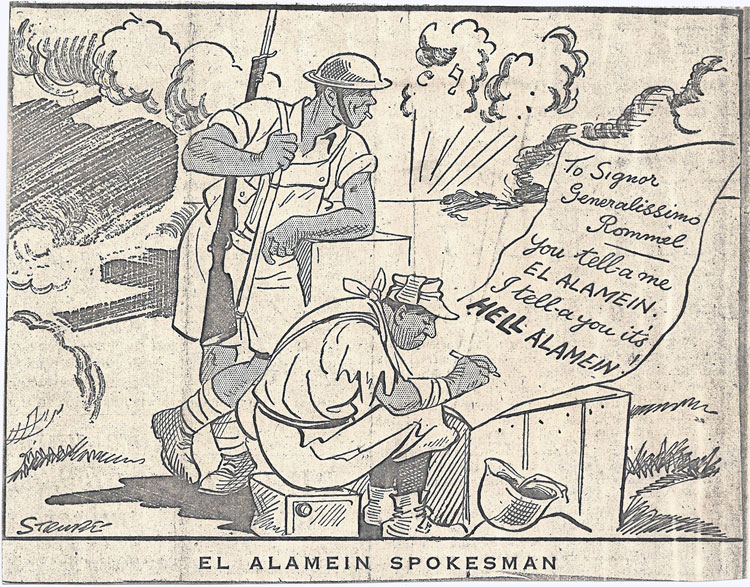
It was a tiny desert coastal town, notable only for its modest railway and relative proximity (a scant 66 miles) to Alexandria.  Even today, El Alamein is small, home to only 7,400 people total.  But on July 1st, 1942, the town whose name in Arabic stands for “two flags” saw 250,000 men under various national flags collide in one of the most important battles of World War II.

For nearly a year-and-a-half, the war in North Africa seemed stuck on a bloody Mobius strip.  With infrastructure at a bare minimum and lines of supply stretching from Axis Tripoli in the West and British Alexandria in the East, the battles in the desert took on a repetitive nature.  One side would score a crushing victory, over-extend their ability to be resupplied or reinforced, and the other side would counter-attack until they too had simply exhausted their gas, ammo and food.  Heat, time and distance gave the desert tremendous power over armies.  The sands of Libya and Egypt soaked up fuel and blood in massive qualities, bits of which are still being discovered today.

Erwin Johannes Eugen Rommel: The Desert Fox befuddled Britain for 1 1/2 years in Libya. At El Alamein, his signature strategy of outflanking proved impossible

Few mastered the limitations of the desert better than German General Erwin Rommel.  Rommel had arrived in Libya on the heels of an impressive rout of the Italian 10th Army.  Using small amounts of armor striking quickly through the vast desert interior, 36,000 British soldiers under Gen. Richard O’Connor managed to outflank and capture 130,000 Italian troops plus much of Cyrenaica (eastern Libya) including the key port of Tobruk.

Rommel didn’t need to emulate O’Connor, having been one of the pioneers of rapid, outflanking armor as part of the German strategy of blitzkrieg (lightning war).  Rommel’s own 7th Panzer had developed the nickname “Ghost Division” in France since even the German High Command often had no idea where Rommel was or where he was heading.  Arrogant, egotistical, and unwilling to follow orders he personally disagreed with (Rommel disobeyed orders for him to kill enemy prisoners, civilians and Jews), Rommel was also a tactical genius.  Protected by his successes and friendship with Joseph Goebbels, “The Desert Fox” was given a free hand in North Africa.

Claude Auchinleck: Halted Rommel twice and was the victor of El Alamein. His reward? Replaced and largely forgotten by history

The British were less graced with military leadership in North Africa.  A revolving door of generals came and left Cairo, each seemingly unable to master the Deutsch-Italienische Panzerarmee for more than a few fleeting moments.  It didn’t have to have been this way.  If not for large portions of the British Army in Egypt being recalled to fight in Greece, Richard O’Connor’s victory over Italian Libya might have been complete.  Instead, despite a numerical advantage over the Afrika Korps in both men (150,000 versus 96,000) and tanks (179 to 70), by the end of June of 1942, the British had retreated to Mersa Matruh – 100 miles inside Egypt and the furthest retreat thus far in the campaign.  The British commanding general was relieved again (this time it was Lt. Gen. Neil Ritchie, for those who cared) and in a desperate move, the Commander-in-Chief of Middle East Command, Claude Auchinleck, personally took over operations.

Auchinleck, nicknamed “The Auk” by his men, had taken over command before.  The C-in-C of the Middle Eastern Front since the summer of 1941, Auchinleck had relieved Sir Alan Cunningham in November of ’41, saving the British Army from defeat.  But Auchinleck either couldn’t delegate authority well or had poor resources to draw from (maybe both) and now found himself having direct control over the British 8th Army.  His first decision sent panic across Egypt.

“The Auk” knew Mersa Matruh was not defensible – at least not with the 8th Army in the condition it was in.  To the south was yet another giant open flank of desert, the kind that Rommel had used again and again to defeat British forces.  Lacking natural defenses and perhaps not trusting that his tank commanders could match Rommel’s in open battle, Auchinleck made the risky decision to retreat to the railway junction of El Alamein.

What followed would be known as “Ash Wednesday.”  British Command in Cairo assumed Rommel would be in the heart of the Nile valley in days and began frantically burning anything of military value.  With Alexandria only 66 miles away from the front, Auchinleck made contingency plans to construct bunkers east of the city and flood the Nile to slow the enemy advance.  Even the Axis believed the fall of British Egypt could arrive at any minute.  Benito Mussolini, wishing to create his own “Hitler at the Eiffel Tower” moment, flew to Libya and anxiously awaited his victorious march into Cairo.

Deutsch-Italienische Panzerarmee: the majority of the Afrika Korps was, in fact, Italian

Auchinleck may have been making back-up plans, but he knew what he was doing.  El Alamein was an unknown dot on a dusty map in Cairo, but in military terms was a modern Thermopylae.  Hedged by the Ruweisat Ridge and the Qattara Depression to the south, Rommel would have to go through the Sahara itself to outflank the 8th Army – a distance and environment too far and too harsh to overcome.  Rommel would have to mount a frontal assault on a relatively small front of 20/30 miles.  The British had foreseen the potential of this area even before the war, building pill boxes and mine-fields in the open terrain.  Rommel would fight a numerically superior force in a brutal, head-to-head battle.  There would be no flanks to turn this time.

The First Battle of El Alamein didn’t start well either for the Axis on July 1st.  The 90th Light Infantry Division, whose mission was to clear the coastal road, wandered off and found themselves pinned against a South African division.  The main lines of attack, led (as always) by Panzer divisions, spent most of the first day under air assault by both British planes and desert storms.  By the time they made their target destination of Deir el Abyad, the 18th Indian Infantry Brigade had already hunkered down with their 25-pound, heavy artillery guns.  Fierce fighting into the night gave the Afrika Korps the ground but at a high price – only 37 tanks remained.

The 8.8cm FlaK gun: the German transformation of an anti-aircraft weapon into an anti-tank gun was key in the early North African Axis successes

While the next two days were a mix of battles without a clear front line, the coastal road necessary for the Axis advance remained in British hands.  Sensing that the offensive was stalling, Rommel pulled back armored units from the desert in an attempt to shore up the 90th Light Infantry’s hard fighting.  It had no effect.

Auchinleck too had a sense of the direction of the fight and sent the New Zealand 2nd Division along with the Indian 5th to outflank and surround the German 90th Light Infantry.  They ran head-long into the Italian Ariete Armored Division.  The Italians foiled the effort to surround the 90th Light Infantry, but at a cost – only 5 of their tanks remained.  By July 3rd, the entire Afrika Korps had at best 26 tanks left.  The dream of bathing in the Nile was dead – for now.

The View at the Time: El Alamein was viewed, at best, as a bloody stalemate. Few understood that Rommel had reached the end of his supply line. The Nile was no longer a goal but the state of mind of the Afrika Korps

In truth, both sides were exhausted.  The British had been on the run for weeks and the Axis had few offensive options left.  The tank and infantry battles ceased.  The battle of supplies started.

Rommel had been receiving 34,000 short tons of supplies a month back in May of 1942.  With naval patrols hitting Italian shipping and British bombers attacking his supply lines, Rommel’s troops were down to 5,000 short tons by the end of June.  Vehicles too were in short supply.  4,000 had made it to Libya and the front in May.  400 made it in June.  In contrast, not only were the British getting new supplies every day, but within a week, two new Indian Brigades and a new Australian Division were now at El Alamein.

Renewed fighting on July 8th reflected the imbalance.  Depleted Panzer groups mostly counter-attacked, trying to stop Australian units from overrunning the center of the line.  Despite heavy Australian tank losses (as much as 50%), within a week of fighting, the Germans had suffered nearly 6,000 casualties and lost Signals Intercept Company 621.  The company, a forward unit charged with picking up British radio signals and other intelligence, had been Rommel’s strategic ace-in-the-hole.  By the middle of July, Rommel had lost most of his tanks and now his ears and eyes on the front.

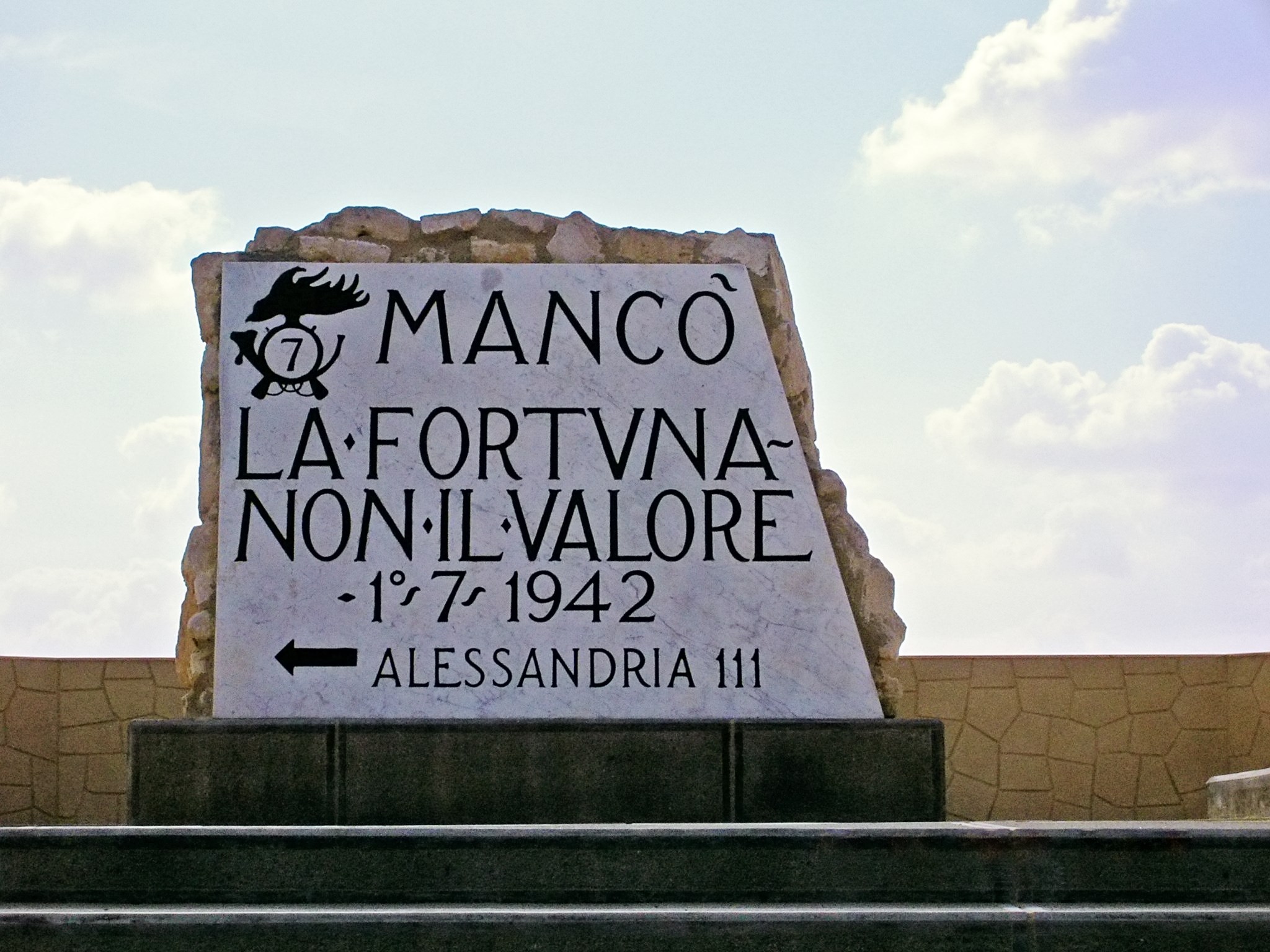
"Mancò la fortuna, non il valore" (A failure of fortune, not of valour). A Italian marker at the site of the furthest advance of the Axis armies in Egypt

The tide had turned.  But now the coastal road was no longer blocking an Axis advance but a British one as Auchinleck was determined to destroy Rommel once and for all.  In late July, having now twice tried to push the Axis out of the El Alamein region, Auchinleck launched a furious armored assault with Operation Manhood.  Not only were the Germans expecting the offensive, but not for the first time, British forces got lost in the desert.  Anti-tank defenders got separated from their tank units, some brigades stumbled into mine-fields, and in general communication was poor.  Even with having told Berlin that “the situation is critical in the extreme”, Rommel was able to counter the attack, causing 1,000 British and Australian casualties for no gain.  Rommel would not be in Cairo but nor would Auchinleck be in Tripoli anytime soon.

But how had the British been unable to defeat Rommel even after his forces had suffered terrible losses?  Largely it was about coordination.  British units simply hadn’t been trained well enough for joint aerial, infantry and armored action.  But the terrain too hurt the British once the tables had been turned.  Like Thermopylae, the battles were contained on narrow ground and the defenders had plenty of time to prepare.  El Alamein’s natural defenses bled the fight out of the Axis and returned the favor to the British.

The cost of battle: at least 23,000 British & German troops were killed or wounded at El Alamein.  Italian deaths are unknown but considerable

The cost of battle: at least 23,000 British & German troops were killed or wounded at El Alamein. Italian deaths are unknown but considerable

The significance of the First Battle of El Alamein was lost to the British Command in London.  Claude Auchinleck might have stopped Rommel and saved the critical shipping artery of the Suez Canal, but he had done so at a frightening loss of men and material against a smaller force.  Nevermind that thus far Auchinleck had been the only commander of any nation to beat Rommel, “The Auk” was seen as a command liability.  Auchinleck was offered a revised C-in-C command for Persia and Iraq (the Middle Eastern Command was now split in two, with Egypt and Libya a separate office) but turned it down.  He would resurface by 1943 in India in a similar role and was credited, in part, in changing British fortunes in the Indian/Burmese theater of operations.

To replace Auchinleck, British Command chose Gen. William Gott – a corps commander with excellent tank skills.  But Gott never took command.  On route, his plane was attacked and Gott was killed instantly by a Messerschmitt round through the heart.  Instead, a Home Defence Lt. General by the name of Bernard Montgomery was named the new C-in-C of the Middle Eastern Front.

Montgomery would get his own chance at Rommel at El Alamein that fall and the end result would be quite different.

The Last BUFF

Friday, June 22nd, 2012

Compare and contrast.

The state bird of Minnesota is the mosquito (gyuck gyuck, ya workin’ hard or hardly workin’? Oh, ja, I’m on my way up to da cabin, gooo Vikes, I think Governor Carlson is good at reachin’ across dat dere aisle, ja?).

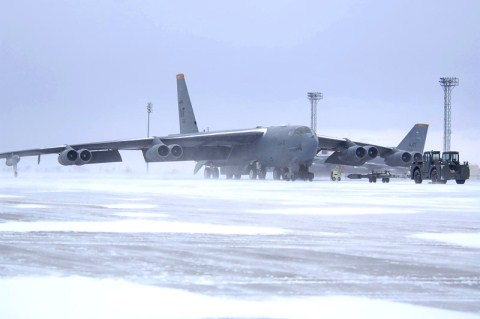
The state bird of North Dakota for most of the past fifty years was the B52 Stratofortress, known to its crews and neighbors as the “BUFF” (Big Ugly Fat, er Felllow) or “BMF” (Big Motor Scooter).

And it was fifty years ago today that the last BUFF came off the assembly line.

It’s been the same pool of B52’s that’s been modified to meet every strategic whim – from high-level nuclear bomber,

A B52 on strategic deterrent duty in the seventies, with a pair of Hound Dog standoff nuclear missiles.

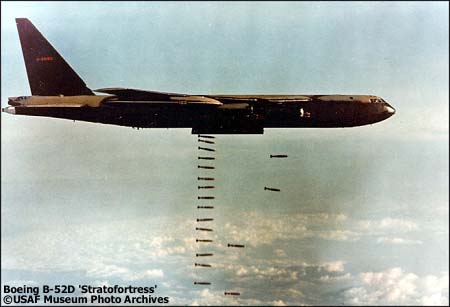
to counterinsurgency saturation-bomber over Vietnam…:

A B52D drops a load of bombs over Vietnam during "Operation Rolling Thunder"

to low-level nuclear bomber and missile launcher (as Soviet air defense made high-altitude bombing too risky)…

A B52H loaded with cruise missiles, on deterrent duty at Minot Air Force Base, May 15, 1985

, to high-level dropper of conventional precision-guided bombs

B52H over Afghanistan.

To…well, whatever is around the corner. The B52 is getting refitted for duty until at least 2040 – nearly 100 years from when its design requirements were issued. It’s hard to believe that it’s likely the B52 will have been in service for 100 years by the time the last one leaves service, at this rate. And it has to be one of the bigger bargains in the history of military procurement.

Compare And Contrast

Friday, June 15th, 2012


The Thin Reed

Monday, June 4th, 2012

If you read enough history, you eventually realize that history, especially the history of warfare, is less a matter of “who makes the best plan”, and more “who comes reacts best to and endless series of unplanned errors, mistakes and unforeseeable twists of fate?”

It was seventy years ago today and tomorrow that one of the most important battles in Western civilization was being decided.  At about this time (after allowing for time zones),  two days of furtive maneuvering about tens of thousands of square miles of ocean led to 90 minutes of frantic back-and-forth air strikes on the morning of June 5, a series of battles that began at dawn and were substantially over by 2PM.  And the results were largely the confluence of a long series of strokes of luck, caprice and erroneous decisions – good and bad.

Today is the seventieth anniversary of the pivotal moment in the Battle of Midway.  The battle has been seen as the turning point in the war in the Pacific – and it’s an accurate perception.  Since the beginning of the war, the Japanese had been running the table; after wiping out the US battleship fleet at Pearl Harbor, they’d taken Hong Kong, Malaysia, Wake Island, Guam, and finally the huge US colony in the Philippines and the equally important British base in Singapore;  they sank a pair of British battleships (HMS Prince of Wales and Repulse) on their way to assist Singapore, and followed up by destroying virtually the entire Dutch fleet, along with most of the supporting British, Australian and American units, in the Battle of The Java Sea, while conquering Indonesia and its immense oil and rubber reserves.   They’d raided as far afield as Sri Lanka and Darwin, Australia.

Then, a month ago, at the Battle of the Coral Sea, they’d won a tactical victory over the US and Australians – sinking the carrier Lexington, and damaging the USS Yorktown badly enough to keep it in dry dock for three months, leaving the US with only two functional carriers, Hornet and Enterprise, in the whole Pacific (and five in the whole world – Wasp and Ranger, both of whom were regarded even then as failed design experiments, were still in the Atlanticm and Saratoga was undergoing maintenance in San Francisco).

Hornet and Enterprise had just returned from the “Doolittle Raid“, launching 16 Army bombers on a pinprick raid on Tokyo and Kyoto, which had no military effect but immense, intense moral impact on Japan, especially its leadership.  If American bombers could reach Tokyo – even via extraordinary means like the Doolittle Raid – then drastic action was needed to shore up the home islands’ defenses.

WIth this in mind – as well as to deny the Americans a key base for patrolling the Central Pacific – the Japanese planned to seize Midway Island, so named because it was halfway between Hawaii and Tokyo.  It would secure much of the vast ocean waste from American reconnaissance, making it easy to conquer Fiji and Samoa and close up the last remaining gap in the Home Islands’ outer ring of defenses.  Most importantly to Admiral Isoroku Yamamoto, the planner of the Pearl Harbor raid and many of the other successes of the previous six months, it would lure the surviving American aircraft carriers – two, he thought, Hornet and Enterprise – out for a fight at 2:1 odds.

IJN Kaga, Japan's first large aircraft carrier. Like the USS Lexington and Saratoga, Kaga was a converted battleship, and in its day was the most powerful aircraft carrier afloat. A veteran of Pearl Harbor and the battles afterward.

The US Navy had, of course, broken the Japanese Navy’s codes, and knew of the operation long enough in advance to order the three months of work on Yorktown to be completed in there days (we covered that here) and to move the three carriers out to a place in the Pacific from where they could try to ambush the Japanese.

Less well-known?  The Japanese, worried about security, had actually ordered a change in code-books, which would take the US Navy some time to re-break.  But the change didn’t go into effect until the beginning of June – enough time for the USN to get all the information it needed.

The Japanese were hampered by their own bureaucracy and doctrine.  They’d had two of their newest carriers – Shokaku and Zuikaku – badly damaged at Coral Sea.  Shokaku was out for three months – and unlike Yorktown, out for three months it stayed.  And Zuikaku‘s air group had been so badly mauled at Coral Sea that it would take a few months to bring in and train up replacements…

…which was also a problem for Yorktown – but its air group was brought up to strength by borrowing squadrons from the USS Saratoga, which was refitting in San Francisco.  Zuikaku could have done much the same – but Japanese doctrine at the time was to keep ships and their air groups together.  It’d cost them.

But beyond doctrinal differences and top-secret technological prowess and the foibles of leaders and nations, the Battle of Midway was decided as much by three ill-timed bits of fortune – good or bad, depending on your point of view – that had relatively little to do with the battle itself.

Oceanfront Real Estate – Now, in those days before satellites and drones and over-the-horizon radar, the biggest problem was finding the enemy.  And that meant hundreds, thousands of hours spent crisscrossing the Pacific in search planes – long-ranged land-based bombers and, especially, “Seaplanes” or “Flying Boats”.  Almost unknown today, flying boats – which could land on water – were the key to patrolling most of the Pacific at the time.

An American PBY "Catalina" flying boat. This clumsy-looking plane was among the most important of all in World War II; it, more than any other, was the "eyes of the fleet" for the US and British navies. A Catalina caught the first whiff of the Japanese fleet at Midway - and many other battles.

One of the reasons the Japanese were able to so precisely pinpoint the US fleet at Pearl Harbor was that they had set up a “flying boat” base at a bare, uninhabited coral atoll and rock called “French Frigate Shoals”, from which their “flying boats” could reconnoiter Pearl Harbor.   Refueled from Japanese submarines who waited in the lagoon, the flying boats gave the Japanese a very up-to-date picture of what was at the base before the attack.

Aerial view of the main island ("Tern Island") of French Frigate Shoals. The airfield happened later in the war. The island is inhabited by birds and researchers.

They then frittered that advantage away by launching a series of pinprick bombing raids from the Shoals, causing the US Navy to send a small squadron of destroyers and a few “Seaplane Tenders” – squat little ships with none of the glamor of the aircraft carrier or dash of the destroyers or cruisers – whose job was to serve as a floating base for US flying boats.

And so when the Japanese submarines returned to the Shoals to set up the base again, they found the harbor full of US ships and aircraft.  They aborted the mission – leaving Yamamoto blind, with no idea what US units were in or near Pearl Harbor and – due to the radio silence he’d ordered – no idea that that part of the plan had gone awry – and worst of all, no scout planes crisscrossing the Central Pacific looking for the American carriers.

The Right And Wrong Places At The Right And Wrong Time – The Japanese had attacked Midway the previous day, and had shredded the defending Army and Marine aircraft.  There had been several rounds of counterattacks – US Army and Marine planes from Midway finding and trying to attack the Japanese carriers, without effect, but more or less fixing the Japanese position for airstrikes launched from the American carriers, which, unknown to the Japanese, were lurking within range.

It’s here that timing intersected with doctrine – or as people in business or politics call it, “policy”.

It was American practice to launch airstrikes as soon as possible and send them on their way; minutes were precious and irrecoverable when a strike or counterstrike ending in a ten-minute air raid was all that separated your fleet from disaster.  The American carriers launched as soon as they could, each carrier’s air groups proceeding toward the best guess they had of where the Japanese fleet lay – with the torpedo bombers flying low, and the dive bombers up high…

…and, due to a math error, flying on the wrong course, getting separated from the torpedo planes below.

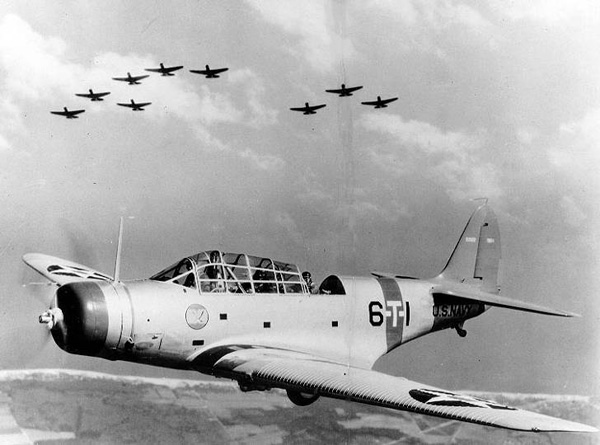
A Douglas TBD "Devastator" torpedo bomber. Obsolete, underpowered and almost unarmed, it was further hampered by the fact that US torpedoes, early in the war, had a habit of not blowing up when they hit targets. Of 41 Devastators to attempt attacks at Midway, only four returned to their ships - a 90% casualty rate in ninety minutes.

And so the torpedo bombers went in to attack, unescorted, flying low and slow (so the torpedoes would work), and they got mowed down; every single plane in Hornet’s “Torpedo Squadron Eight” was shot down by the defending Japanese fighters; only one man, Ensign George Gay, survived, floating under a seat cushion.

Ensign George Gay (right), the sole survivor of the 45 pilots, bombardiers and gunners of Torpedo Squadron Eight, from Hornet. Shot down by a Japanese fighter, he floated under a seat cushion, watching the first three carriers get hit and set ablaze. He was picked up by a Catalina the next day. He spent 30 years as a pilot for TWA He passed away in 1994, and had his ashes scattered over the same piece of water where he'd floated, and his squadronmates had died.

The dive bombers, who had started their flight on the wrong course, found nothing…

…but the wake of a Japanese destroyer, three miles below, that had diverted to try to attack an American submarine, and was returning to the fleet at top speed.  The dive bombers followed the destroyer’s course, and arrived over the Japanese fleet…

IJN Arashio. The destroyer had spent the morning trying to depth-charge the submarine USS Nautilus. It failed, and was returning to rejoin the fleet when Lt. Commander McClusky's dive bombers saw its wake from three miles up. Lost and out of ideas and, nearly, fuel, they turned to match Arashio's course - and found the carriers.

…as the torpedo bombers were being slaughtered.  Which, as it happened, had drawn all of the defending Japanese fighters down to nearly ocean level, unable to respond as the dive bombers tipped over and began their attacks almost completely unmolested.

Indecision – The Japanese, on the other hand, had a policy of only sending complete strikes.  The Japanese admiral – Chuichi Nagumo, who commanded the carrier fleet as Yamamoto’s subordinate – had two missions on his plate; bombard Midway (the scheduled invasion was two days away), and sink the carriers (without which the invasion was a moot point).  Each mission required his planes to carry different weapons; his torpedo bombers would carry bombs to attack land targets; his dive bombers would carry armor-piercing bombs to attack ships.

And Nagumo had just changed his mind, switching from attacking Midway to going after the carriers, and ordered his planes to begin the one-hour re-arming process as the American air raid closed in – a Japanese search plane found the American carriers just about the time they were launching their air strikes.

And so the decks of the Japanese carriers were piled high with bombs and torpedoes as the Americans closed in.

The Japanese carriers, all veterans of Pearl Harbor, were a mixed bag; Kaga and Nagumo’s flagship Akagi were old converted battleships (like the American Lexington and Saratoga), big ships with some serious design weaknesses.  But Hiryu and Soryu were newer ships, designed largely according to British design practices, including armored hangars capable of withstanding some damage (unlike the American carriers, whose flight decks were wood and whose hangar decks were largely open).  In theory, the Japanese carriers were tougher propositions for a bomber than were the US ships.

But the Japanese Navy had never really emphasized damage control, or damage prevention – which would plague them for the entire war.  And in any case, having decks piled high with bombs, torpedoes and criss-crossed with hoses full of aviation fuel, and with flight and hangar decks lined with airplanes full of fuel and carrying explosives, would make any damage a dicey proposition.

Artist' rendition of a Douglass "Dauntless" dive bomber pulling out of its dive by a blazing IJN "AkagI".

And so instead of attacking ships buttoned up for action, with explosives stowed under armor and gas lines drained, the US dive bombers attacked ships that were practically rigged to explode.

And when the bombs hit – four on Kaga, three each on Soryu and Akagi.  The hits set off chain-reaction explosions on the fueled and armed planes, which also detonated the stacks of bombs and torpedoes, dooming the three ships.

A Douglass SBD3 "Dauntless" Dive Bomber - the hero of the battle - after landing on Yorktown after bombing Kaga. Note the damage to the rear "elevator" fins.

The battle went on for two more days, officially – but it was all decided seventy years ago today.  Two waves of Japanese counterattacks from Hiryu, the lone surviving carrier, crippled Yorktown, which was sunk the next day by a Japanese submarine.   Follow-ups from Enterprise and Hornet finished off Hiryu that afternoon.

IJN Hiryu, the last carrier afloat, ablaze after being set afire later in the afternoon on June 5. It would be sunk later by a Japanese destoyer.

Four of the six Pearl Harbor carriers, and the elite of the Japanese carrier air force, was wiped out in a matter of hours.  The Japanese Navy would never again carry out an offensive action during the war.  The full weight of America’s industrial might would come to bear in the next year and a half, as the US would commission 24 aircraft carriers to replace the two they’d lost (and the two more they’d lose in the coming year – of which more later).

The lesson?

In war, as in so many areas of life, it’s not so much who has the best plan, the best process or the best equipment so much as the one that can react fastest, and best, to a fluid, confusing and changing situation.

Repairs

Sunday, May 27th, 2012

On this Memorial Day weekend, I thought we’d remember an amazing event in the history of American enterprise.

It was seventy years ago today that the most important repair job in American history began.

The aircraft carrier USS Yorktown had begun its life six years earlier, as one of Franklin D. Roosevelt’s “economic stimuli” as the administration prepared for what they saw – correctly, this time – as an inevitable war with Japan.

The carrier was an important ship; America’s previous carriers were had been two converted battlecruisers (the Lexington and Saratoga) and an unsuccessful, too-small USS Ranger (*). The Yorktown served as the lead ship of a class of two other carriers, the Hornet and Enterprise, that themselves served as the prototypes for the 24 wartime Essex class – by far the biggest class of aircraft carriers in history, and one of the most successful classes of warships ever, which served in front-line service into the seventies, and as training and reserve ships until the nineties.

But that was all in the future.

Yorktown had spent the first months of the war escorting convoys and raiding isolated Japanese garrisons when intelligence discovered a Japanese invasion fleet heading for Port Moresby, an isolated and malarial outpost on the eastern end of New Guinea of little economic or demographic influence…

…except that it had enough flat ground to build a big enough airport to put northern Australia, and all maritime traffic in the area, under threat of Japanese air attack.

The two American carriers, Lexington and Yorktown, sank one small Japanese carrier, and drove off the invasion fleet.  In return, the Japanese sank the Lexington, and after the Yorkdown’s captain dodged eight near misses from Japanese dive bombers and torpedo planes, the Yorktown was hit by a single Japanese bomb that killed or injured 66 men.

The engineers on board figured it’d take three months in a shipyard to repair the damage.

The battle – almost unknown to Americans today – was crucial; it was a tactical defeat for the Americans, who lost a carrier, a tanker and a destroyer, with Yorktown badly damaged.  But it marked the high-water line for Japanese expansion.  The six month wave of success had ended.  That was a strategic win for the US – the first of the war.

But Naval Intelligence indicated the Japanese didn’t know that yet; signs pointed to an attempt to invade Midway Island, by way of staging for a potential invasion or neutralization of Hawaii.  And if Midway fell, and Hawaii was jeopardized, that “strategic victory” would mean little.

And the US had almost nothing to respond with; six months after Pearl Harbor, there were no seaworthy battleships in the Pacific; worse, we were down to two functional aircraft carriers, Enterprise and Hornet had just returned from the Doolittle Raid, and Saratoga was in a long refit in San Francisco.

That was it.

So the commander of the US Pacific Fleet took a desperate gamble; he sent Yorktown back to Pearl Harbor, and mobilized the entire base’s civilian and military workforce to do the unthinkable; get Yorktown ready for battle in three days, rather than three months.

Yorktown in drydock at Pearl Harbor This is where the repair work was done.

And so for the next 72 hours, a horde of sailors and dockyard workers swarmed over the ship; they repaired the massive structural damage from the bomb, and the leaking from the fuel tanks whose walls had been shredded by shrapnel from the near-misses, causing Yorktown to trail an oil slick all the way home from the battle of the Coral Sea.

And it worked.  Right on schedule, after three days of frenzied, 24-hour-a-day work, Yorktown departed Pearl Harbor, escorted by a small gaggle of cruisers and destroyers, to join Hornet and Enterprise on a fast voyage to the central Pacific…

…whose destination we’ll talk about in a couple of days here.

(more…)

The “Gibraltar of the East”

Sunday, May 6th, 2012

Broken and burnt, its nearly 14,000 inhabitants starving and weary of 6-months of near constant aerial and coastal bombardment, the final holdout of American and Filipino resistance to the Japanese invasion of Philippines succumb.  The island of Corregidor, affectionately known to American troops as “The Rock”, and triumphed as the “Gibraltar of the East,” had finally fallen on May 6th, 1942.

The last redoubt for the "Battling Bastards of Bataan." As their saying went, "no mama, no papa, no Uncle Sam."

What ended in an American defeat had been a Japanese embarrassment for months.  Lieutenant General Masaharu Homma, commander of the 14th Imperial Army, had been tasked to deliver the Philippines (and the critical port of Manila Harbor) in a brisk two months.  Instead, Homma found himself dragged into a slow war of attrition against nearly 80,000 American and Filipino troops on the Bataan Peninsula and unable to use Manila Harbor as the gun batteries of Corregidor’s Fort Mills swept the surrounding bay.  For months, Japanese propaganda repeatedly claimed that Bataan and Corregidor were about to fall followed by weeks of silence.  Despite Japanese forces pushing aside Allied forces on all fronts, Bataan and Corregidor remained a strategic thorn in side of Japan’s military planners.  Without Manila Harbor, supplying troops invading the raw material rich areas like Malaysia and Indonesia would become even more difficult and could bring the Japanese advance to a halt.
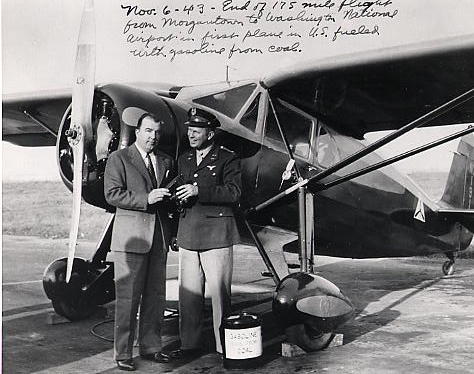
Resistance may have inspired Americans back home and frustrated Tokyo, but the defense of Bataan and Corregidor had been badly botched.  Despite his accomplished military resume (including being Army Chief of Staff, Field Marshal of the Philippine Army & Commander of US Forces in the Far East), Gen. Douglas MacArthur refused to follow the army’s War Plan Orange 3 strategy of retreating into Bataan and holding up with enough supplies until reinforcements arrived.
Yes, the Japanese used flamethrower on American bunker positions too. Here we see Japanese troops fighting against American positions on the Orion-Bagac Line on Bataan

Instead, MacArthur wanted to meet the enemy on the beaches – a near strategic impossibility on an archipelago.  Coupled with a failure to defend the airbase on Clark Field on December 8th, resulting in the loss of American air support, supplies for the defense of the Philippines were scattered across the islands when the first Japanese troops came ashore.  Despite a numerical parity with the Japanese (nearly 80,000 versus 75,000 Imperial troops), the lack of even basic supplies on Bataan put American forces at a significant disadvantage.  By April 9th,  the Japanese had breached the Orion-Bagac Line, among the last lines of defense in the US strategy of Bataan, and Major General Edward P. King agreed to surrender the 75,000 US and Filipino troops who remained.  MacArthur and his superiors had seen the writing on the wall even earlier, transferring MacArthur to Corregidor in March and then Australia.  MacArthur declared “I shall return.”  10,000 Filipinos and 650 American POWs didn’t as they were shot, stabbed and starved in the Bataan Death March.

American and Filipino POWs from Bataan. 60,000 Filipino troops were among those who suffered on the infamous "Bataan Death March"

Bataan had fallen but Corregidor had not.  The tiny 3.5 miles long by 1.5 miles wide island posed a political dilemma both in Tokyo and Washington. The battle for control of Philippines was most assuredly over, but 14,000 soldiers and civilians continued to block Manila Bay – seemingly unreachable by both Japanese bombers and American reinforcements.  Protected by the vast underground bunker and tunnel system on Malinta Hill, armed with an independent water pump and vast (if shrinking) supplies, and stocked with numerous anti-aircraft guns and naval batteries, Corregidor was earning the “Gibraltar” description.

The Island's main defense. Corregidor had 45 gun batteries stationed over the island, but most were from WWI

The Japanese had already discovered that Corregidor would be a tough nut to crack.  Early in the invasion, on December 29th, 91 Japanese bombers, the whole of the local Japanese bomber air force, hit the island with nearly 50 tons of explosives.  The bombs did little; the American AA guns did more – shooting down 7 planes.  The attacks continued until Jan 6th, with Japanese planes dropping their payloads at higher and higher altitudes to escape AA fire.  Unwilling to suffer further losses, the air fleet was moved to Thailand and General Homma refocused his attention on Bataan.

Tunnel vision: the sight for most American soldiers on Corregidor during the siege

Corregidor wasn’t regularly targeted again until February as Japanese artillery was able to set up positions close enough to hit the island.  By then, life on the island had settled into a dreary routine. When the men were not building fortifications or going about their daily chores, they had little to do.  Rations had been cut in half at start of January and an island that was built to house only 6,000 was overwhelmed with civilians and political refugees, including Philippine President Quezon who gave his second inaugural address amid an air raid while sheltered in the Malinta tunnel system.

 Mac's staff car.  The general himself had long since left

Mac's staff car. The general himself had long since left

The fall of Bataan brought the full weight of the Japanese Army back on Corregidor.  By now, troops were down to 30 ounces of food a day with drinking water rarely getting distributed.  And with the arrival of the 22nd Air Brigade, the Japanese air attack had returned with vigor.  An estimated 365 tons of bombs were dropped on Corregidor and in one day alone, May 4th, 1942, 16,000 shells hit as well.  Worse for those trapped on the island was the realization, post Bataan, that their only options were death or brutal imprisonment.  There would be no rescue operation, no American Fleet arriving to save the day.  The longer they held out, the greater they aided the overall war effort, but at the likely expense of Japanese retribution.

The last act on Corregidor began on May 5th as 790 Japanese soldiers invaded.  Pushed by strong currents between Bataan and the island, landing proved difficult, especially under American fire.  Quickly bogging down, the initial invasion fared better than the 785 reinforcements who landed in the wrong location opposite the 4th Marines.  Most of this invasion force was killed, with the survivors escaping along the island’s edge to join the main invasion force.  Together, they pushed forward and captured one of the main battery stations.  A desperate US counterattack with 500 Marines failed as another 800 Japanese troops arrived, along with several tanks.  With Japanese troops just yards away from the Malinta tunnel complex, housing civilians and 1,000 injured troops, Gen. Jonathan Wainwright radioed Washington with a simple message: “There is a limit of human endurance, and that point has long been passed.”   By 1:30pm on May 6th, the last of American and Filipino forces had surrendered.

The last American holdouts pose for Japanese propaganda

Survivors were marched in downtown Manila as trophies of war.  The “lucky” made it to Japan as slave laborers.  Gen. Wainwright eventually returned home a hero despite his concern that his status as the highest-ranking American POW would have made him a military and social pariah.  Wainwright would receive the Medal of Honor for his defense of Bataan and Corregidor.  The only voice of dissident?  Gen. MacArthur – despite having won a Medal of Honor for the same defense.

Wainwright and MacArthur’s opponent also had his reputation defined by Bataan and Corregidor.  General Masaharu Homma was relieved of command after his failure to quickly defeat the Americans and retired from military service.  Homma resurfaced after the war as accountable for the Bataan Death March and was found guilty.  On April 3rd, 1946, almost four years to the date of the surrender of Bataan, Homma was executed by a firing squad of Americans and Filipinos.

Obama Vs. Carter: The Matchup (Part I)

Thursday, May 3rd, 2012

Mitt Romney has been making great hay in recent weeks comparing Obama to Jimmy Carter.

In some ways, Carter had it much tougher than Obama did last year, and his big moment of command decision was a much bigger risk.

Mitt was referring to Obama’s (correct) decision to pull the trigger on the Bin Laden raid, of course.  On the one hand, it would have been a tough decision for any President – sending American troops into harm’s way deep inside a “neutral”, “friendly” country on the basis of intelligence tips.

But Obama had at his disposal a military with ten years’ experience fighting a hard war overseas – and at the point of that spear was a special forces community (including many units from all four services, including the SEALs) that has had a decade of very hard experience doing every kind of mission that can be imagined, and some that can’t be.  From tracking fugitives to winning tribal political fights to rescuing hostages, the US military, especially our various special operations forces, have done it all.  And they’ve all done it together – the Navy’s SEALs operate with the Army’s special ops helicopters and the Air Force’s special ops aircraft seamlessly, without the inter service rivalry that so paralyzed earlier US efforts.  And they flew from a base they knew well, in a part of the world in which they now have a total of a decade (maybe two) of experience, using equipment that’s been tried and refined in ten years of continuous conflict.

So while it was a tough decision, “are they capable of pulling it off?” was not one of the variables.

When Jimmy Carter pondered “Operation Eagle Claw” – an incredibly ambitious plan to rescue the American hostages in Iran – he had a few dodgier variables to deal with:

  • The US military had just gone through a traumatic, un-earned defeat, and an equally-traumatic defunding in the wake of Vietnam.  The seventies were a terrible low-point in the US military; there were Army units in Germany rated combat-ineffective due to drugs and crime; equipment was old and unreliable.  Conservatives actually short Carter a bit on defense; a few of the reforms that came to fruition under Reagan first germinated under Carter.
  • The military’s pre-Nunn/Nichols command structure was a breeding ground for political infighting and turf-guarding.  Over-officered and underutilized, the Pentagon’s inter-service rivalries made this year’s GOP primary battle look sane and rational.
  • The various special forces – not really recognizable to anyone who follows the field today – were in disarray, treated with deep suspicion by regular military officers, who regarded them as unreliable, unpredictable cowboys after the uncoordinated way they’d been employed in Vietnam.   And they’d had no real success at rescuing hostages.  While the British Army’s SAS, the German federal police’s GSG9, the Dutch Marines’ BSE and Israel’s Sayaret Matkal had all carried out successful hostage rescues (in buildings, a hijacked plane in Somalia, a railroad train and an airport, respectively), the US military’s attempt at rescuing closely-held hostages, the utterly snake-bit Mayaguez raid in 1975, had been a thoroughly-botched disaster.
  • “Delta”, the US Army’s new counterterrorism unit, was brand new and untried in this sort of action.  While its troops were all experienced and many had seen action in Vietnam, this was its first live raid.  And the other troops involved in the raid – the Navy and Marine choppers and Air Force planes that carried the unit into action, the Rangers that guarded the “Desert One” airbase from which the raid was launched – had never trained together.
  • Helicopters in 1980 were ubiquitous – and still only thirty years old.  They were still famously unreliable – much worse than today. The SEALs rode into Pakistan in choppers that benefitted from the lessons learned the hard way in 1980, not to mention 1991.  Which helped the SEALs, but not Jimmy Carter or Delta on its first big mission.
  • Iran was a much bigger country, more explicitly hostile to the US.
  • Finally, after acknowledging all those variables – the mission itself was much more complex.  It involved flying from an improvised base in a friendly but neutral country (Oman) to an improvised base in the middle of the desert (Desert One), then to another hidden base in the desert (Desert Two), travelling from the base into the heart of Teheran via truck, seizing not only the embassy and the hostages but the stadium across the street to serve as an exfiltration point for the helicopters to land in, and then flying back to Desert One, and thence by plane back to Oman.  That’s a lot of moving parts.

So Jimmy Carter pulled the trigger on a raid with many, many more variables than the Bin Laden raid, all of them bad.

And it showed.  Eagle Claw was a resounding failure, one that took down whatever part of his presidency that the economic stagflation might have left standing.

So a rare bout of kudos to Jimmy Carter.  He held, and played, a much weaker hand than Barack Obama did.

Black Panthers

Thursday, April 5th, 2012

Although I’ve been waiting on the anniversary for almost a year, it almost passed by me without enough time to write about it; Sunday was the seventieth anniversary of the forming of the 761st Tank Battalion of the US Army.

As divided as racial politics in America are today, they were of course much worse in 1942, at the very nadir of the Depression-era Jim Crow south.  The US military was intensely segregated – there were those who didn’t even want to go that far, believing that blacks didn’t have the intelligence to train or the courage to fight (notwithstanding the long combat record of black troops in the Revolution, the Civil War, and the Indian Wars).

Almost worse?  As a “compromise”, the chief of Army personnel matters, General Robert E. Lee (no, I’m not making that up) decided that black units should be formed, mostly for labor and support duties – and those units should be led by white officers from the deep south, since they had the most experience dealing with African-Americans.

Not everyone agreed, of course; reformers believed that blacks should have the same right to fight for this country as any other citizen.  One of their supporters was General Leslie McNair – an officer who had many sweeping impacts on the US Army during the war, most not nearly as positive (we looked at the first of them last year).  McNair and his reformers had a powerful supporter – First Lady Eleanor Roosevelt.  And the First Lady exerted her considerable political force on the Army, which grudgingly agreed to start forming combat units.

Including the 761st Tank Battalion.

The unit was formed at Camp Claiborne, Louisiana.

We’ll come back to them in a bit.

Farewell to Arms

Tuesday, February 7th, 2012

Florence Green - WWI's Grandmother

World War I now belongs only to history.

The last surviving veteran of what H.G. Wells foretold would be “the war to end wars” (and was later modified by Woodrow Wilson as the more famous quote “the war to end war”), has passed away.

Florence Green joined the RAF as a mess steward at 18, just two months before the guns fell silent on November 11, 1918.  She could have had little notion that amid some of the most frantic fighting of the war, as the Allies pounded the Château-Thierry salient in the Battle of Amiens, undoing the summer gains of the German Army’s last ditch attempt to force a conclusion to the Western Front, that the war would be shortly over.  Nor could Florence Green have likely envisioned that a conflict that took or injured 35 million lives would spare her until nearly 111 years of age.

The “World War I generation”, if such a term can even be coined, has long since passed as the few surviving modern links to the conflict vanished.  The last combatants, Charles Choules of the British Navy and Frank Buckles of the U.S. Army, died early last year.  The German debt from the Treaty of Versailles was only paid off in September of 2010.  Even the geopolitical and cultural effects of the war have significantly faded, as Germany and France battle not for European supremacy but jointly to keep the rest of Europe’s crippling debt from dominating them.

With nothing seemingly remain to tie the past to the present, how will World War I truly be remembered now that it’s final judgement is in the hands of history?  Will it be seen as the touchstone for the creation of the modern world, ending the age of European empire?  Or will Florence Green, Frank Buckles and others become future Yves Prigents, the last survivor of the Crimean War – trivia notes for wars of senseless and forgotten ages.

Florence Green’s passing changes nothing about our view of World War I – right now.  The “Great War” was seen as incomplete in its own era, and increasingly became a bloody footnote to the conflict that resolved the question of whether Europe (and thus the world) would be dominated by Anglo-Franco democratic sensibilities or Prussian authoritarianism.  Such thoughts today seem as foreign as an Austro-Hungarian Empire, or that an assassination of an Archduke nearly 98 1/2 years ago in Sarajevo could spark a global war.  Heck, plenty of people don’t even remember the conflict in Bosnia & Herzegovina in the 1990s.

The task of preserving the significance of World War I, indeed any war, falls not on the Florence Greens of the world nor historians.  It falls a little on everyone to remember such sacrifices and remind the next generation why they mattered.

It’s Reagan’s Birthday!

Monday, February 6th, 2012

While we won’t be doing the traditional Reagan’s Birthday family dinner tonight, there’ll be jelly beans for all at work today.  It’s Reagan’s Birthday!

Today would be the 101st birthday of the greatest president of my lifetime, so far.

It’s hard, and a little humbling, to admit that I was a flaming liberal who deeply feared (as deeply as a bobble headed 17 year old can do anything) Reagan when he was elected.

I was about a month too young to vote in 1980, and had I been that month older I’d have voted for…well, not Jimmy Carter.  I knew he was a disaster, as liberal as I was.  I’d have voted for John Anderson, probably.  Reagan, I just knew,was going to lead us to war in Saudi Arabia over oil, and end up getting us all nuked!

The media said so!

And it was over the next four years that Reagan, his example, his style and his leadership – along with some acerbic coaching from my college professor, Dr. James Blake, who may have been the only English professor in the past century to convert students to conservatism – converted me.  It seemed like a gradual thing back then, and I suppose it was, although four years is nothing.

And in 1984, while I didn’t tell my parents – my mom would likely have disowned me – I pulled the lever for Reagan.  And have, like so many other conservatives, kept him before me as an example of how conservatism should work.

There are examples in Reagan’s story for conservatives to remember today.  Reagan was a coalition-builder; he built “big tents”, not by offering something to everyone, but by convincing others that his way was the right way.  He started with a vision, and focused like a laser beam, delegating everything that didn’t lead to achieving that vision.  He shook off the negative with a wry quip, and kept his focus.

He never once used the term RINO.  He issued his eleventh commandment; focus on the 70% of things you agree on, rather than bashing them for the 30% you don’t.

I strongly recommend reading “Ronald Reagan: How An Ordinary Man Became An Extraordinary President“, by Dinesh D’Souza; it captured, more than anything I’ve ever read, the essence of Reagan.  It’s worth climbing mountains to find.

In trying to explain Reagan to people who weren’t there, it’s hard to know where to start.  The economy was in the crapper?  And under Reagan, it came roaring back?  That’s a good place to start, naturally; kids today can identify what what us kids from 1980 faced.

In terms of the world, though?  Our kids grew up in a world with threats – terrorists who’d lop of Americans a few, or once a few thousand, at a time.  But it was nothing like the Armageddon that seemed to lurk around the corner in 1980.  Both of my kids were born after the fall of the USSR.  And so this speech – one of the pivotal ones in western civilization…:

…doesn’t mean much.

I turn to this story, with its Tolkein-ish overtones, to try to explain what it was Reagan, and we all, faced.  It’s a story with overtones today – only our Jaruzelski was an organizer, not a soldier.

And so conservative Americans, and tens of millions of Eastern Europeans, and I all join together in celebrating the birthday of the best American president of the past 100 years, and one of the five best in history.

Back Pay

Friday, February 3rd, 2012

A letter from a former slave to a former master, from the 1860s.

Real or not?  Apparently real.

Judge for yourself.

Just go read it.

Hell’s Project Kickoff

Friday, January 20th, 2012

History is full of examples of the sort of evil that makes most people with living souls need to find a baby to look at to rouse their spirits.

Of course, evil on the dime-lot level surrounds us; everything from premeditated murder to child-abduction to terrorists blowing up innocent people to further political goals – when any person says “my ends justify my means”, and the “means” include depriving another of their liberty or their life, it’s evil.

There are greater, more spectacular evils; people crashing planes into buildings full of people, or blowing up buildings, or spree killings, or…the list is depressingly long.

Of course, most people know, or eventually learn, the great pinnacles of evil; when nations harness their governments’ entire political system and means to power to deprive people of their liberty, their property, their sanity and their lives.  The title “Greatest Murderer in History” has several contenders; Lenin and Stalin killed anywhere from 40-60 million, maybe more, between them.   Mao was probably not far off that pace.  Both operated over decades, of course; there were a few great surges in killing (the Ukrainian Holodomor, the Great Leap Forward, several surges in purging), but all three of the great Communists plied their bloody trade over the course of a miserable generation or two.  And they – and the other great mass-murderers, Pol Pot, Saddam Hussein, Kim Jong-Il, Robespierre, the Ottomans in Armenia and a grim list of others – as a rule did their killing the old-fashioned way; by various flavors of pseudo-judicial murder, with firing squads or destruction of food stocks or guillotines or pistols to the back of the head; with machine guns next to ditches; with mustard gas from the air; with government-induced mass-starvation.

All very slow, brutal and inefficient.

The fact is, killing people is difficult.  People want to stay alive.  They fight, hard, to stay that way.  And while people under dictatorships learn to be docile in order to survive (especially in the absence of any other hope), they will occasionally rise up and throw monkey-wrenches in the works.  And try as you may to indoctrinate your own followers to perform evil on your behalf, there will be some that will retain some innate good; they will interfere, or at least not participate in your plans with the enthusiasm needed to get the job done.

Any good engineer knows that, when you want an efficient process – an assembly line, a decision-making process, a nuclear power plant, the code for a Nintendo game, anything – you need to factor out as many variables as possible; to strip out the moving parts.

Germans are, stereotypically, great engineers.  They build things.  And when an engineer builds a complicated thing – a BMW or a camera or a system to eliminate a race of people – they’ll start with a prototype or two, to test out the theories and work out the bugs before going into mass production.

And so, with teutonic thoroughness, did the Germans.

In the eighteen months since they’d conquered Poland, the Germans had been testing out methods for killing people – Gypsies, gays, the mentally ill, dissidents and, of course, Jews.  They’d been through the “traditional” methods; roving units of SS troops tried go from village to village trying to herd Jews to mass graves and machine-gun them; it was slow, manpower-intensive, and left too many loose ends (including a few survivors – a precious few of whom, unbeknownst to the Germans, would survive the war to testify against their would-be murderers).  They settled on poison gas, of various varieties.

And like any good manufacturer, the Germans knew that the technical solution was only part of the job; the rest is logistics – in this case, the task of identifying, assembling and transporting all of those Jews.

The Germans, working with the sort of meticulousness we’d recognize in any good process engineer today, factored out the moving parts, and arrived at the solution for an industrial killing system; a series of centralized camps.

And to tie together all the pieces of this immense project, it was seventy years ago today that the Nazis held a conference at a villa at 56–58 Am Großen Wannsee, in the Berlin suburb of Wannsee.

The villa in Wannsee where the conference was held 70 years ago today.

At the conference, the senior leadership of the various bureaucracies in Nazi Germany were gotten up to speed, with the job at hand, given a mission statement and were directed to start planning.

The “Wannsee Conference” was the project kickoff meeting from Hell.

The goal of the conference – to take the “learnings” from eighteen months of “rehearsals” in the fields of Poland, and experiments at Chelmno and Treblinka, and start the actual execution of what the Germans called the “Endlösung”, or “Final Solution” to the “Jewish Problem”.

Adolf Eichmann's census of Jews. This list reflected the number of Jews already murdered. He was proud to note that Estonia was already "Judenfrei" - free of Jews.

The meeting was attended by a who’s who of Nazi leadership, and for an assembly focused on one of the greatest single acts of evil in human history, the proceedings were remarkably banal.  From the Wikipedia entry on the subject – which, for Wkipedia, is pretty useful and concise:

Heydrich spoke for nearly an hour. Then followed about thirty minutes of questions and comments, followed by some less formal conversation.[33] Luther from the Foreign Office urged caution in Scandinavia, “Nordic” countries where public opinion was not hostile to the small Jewish populations and would react badly to unpleasant scenes. Hofmann and Stuckart pointed out the legalistic and administrative difficulties over mixed marriages, arguing for compulsory dissolution of marriages to prevent legal disputes and for the wider use of sterilisation as an alternative to deportation. Neumann from the Four Year Plan argued for the exemption of Jews who were working in industries vital to the war effort and for whom no replacements are available. Heydrich (keen not to offend Neumann’s boss Hermann Göring) assured him that these Jews would not be “evacuated”.[34] There were questions about the mischlings [mixed-race people of quarter-to-half Jewish anscestry] and those in mixed marriages: the details of these complex questions were put off until a later meeting.[35]

Finally Bühler of the General Government in occupied Poland [the German term for the administration of Poland] stated that:

“the General Government would welcome it if the final solution of this problem could be begun in the General Government, since on the one hand transportation does not play such a large role here nor would problems of labor supply hamper this action. Jews must be removed from the territory of the General Government as quickly as possible, since it is especially here that the Jew as an epidemic carrier represents an extreme danger and on the other hand he is causing permanent chaos in the economic structure of the country through continued black market dealings.”[36]

The meeting itself was of little note in the schedules of the men involved – it lasted less than two hours, one of many such meetings on the schedules of busy bureaucrats in a nation at war.  No great decisions were made; the decision was in fact Hitler’s, and had been made years earlier.  There was no “go/no-go” moment; the leadership, Hitler and Göring, Himmler and the rest, were already fully on board.   There was no question of stopping the “Final Solution” – which was, in a sense, already well underway.  The idea of killing Jews was well-enough known. but fairly oblique at the meeting; the actual killing was an internal matter for the SS.

In a sense, the meeting was a set-up; Heydrich’s way of making sure the civilian and petty-military leadership of the entire German bureaucracy was linked to the Solution, as accomplices.  In a larger sense, it was to get the German bureaucracy’s buy-in to the idea of finding and deporting 11 million Jews from around the occupied world (Eichmann still planned on getting his hands on Jews in England and Ireland) to extermination camps in Poland.

Not a whole lot different than kicking of the adoption of an Oracle database, if you leave out the subject matter.

Which is, really, the point; evil is boring and banal.  If evil came strutting onto the stage in a red cape with horns sticking out of its head and blood soaking its beard, it’d be easy to pick out and deal with.

Real evil walks among us, wearing a suit or a petty uniform or a Mao jacket, and speaks the same language you do.

And evil has meetings.  Probably catered.

Sea To Blazing Sea

Wednesday, January 18th, 2012

One of the major lures of America has always been its isolation.

For centuries, people tired of the constant bickering and warring between Europe’s myriad princes and petty nobles were drawn to America, snug behind its two immense ocean ramparts.

And for over a century and a half, the idea of seriously attacking America verged on science fiction.

Oh, it happened; British troops sacked Washington DC in 1812 – but that was when Canada was a serious military base for the British.

British troops burning Washington DC in 1812. Some liberals claim this was the Tea Party.

But as Canada receded into relatively pacific independence and various other powers’ attempts to turn Mexico and the Caribbean into bases succumbed to America’s enforcement of the Monroe Doctrine (and, mostly, tropical diseases), America’s position as a great, isolated, isolationist power gradually coalesced.

Not that other powers didn’t want to take a run at it.

Germany in particular was fascinated with cracking America’s invincibility  Back in 1899, a German naval captain, Adolf Golzen, drew up a plan to blockade New York and Long Island and, as a coup de grace, land German infantry on Long Island to create a bridgehead.  These troops would consolidate a foothold on the then-sparsely-populated island, while raiding into Manhattan.  It seems far-fetched, and it was, although not perhaps for the reasons you’d think; the force the Germans planned to land may have outnumbered the entire regular US military at the time.

During World War I, the Germans pondered building Zeppelins that could bomb New York – but those plans were shelved at the end of the war.

Hitler pulled them out of the file cabinet when he started planning his war.  New York in particular obsessed him; seeing it as a major Jewish population center, he dreamed of pounding New York into rubble.

He sent the German aircraft industry onto a long quest to build a bomber that could carry a ton of bombs to New York and return – and had his planners develop lists of targets for them to hit once they were built.

The Messerschmidt 264 "Amerika", designed to be able to reach targets in America as well as prowl the Atlantic to find targets for the U-boats. Oddly - for a nation known for great cars and engineering - the Germans never developed an aircraft engine capable of reliable long-range performance. .

To his last days, as the Russians poured into Germany, his scientists worked on fanciful guided missile and long-range jets capable of bombing the city.

But as the Japanese bombed Pearl Harbor, the Germans had a much more practical means of attacking the US.  The fall of France had given their U-boats – Unterseeboote, or submarines – bases only 2,000 miles from the US coast.

And the commander of the German U-boat force, Admiral Karl Dönitz, saw the opportunity.

But at the beginning of 1942, he had only five boats available that could easily reach the east coast of the United States.  Obsessed with choking off Britain, Hitler had ordered the construction of hundreds of smaller “Type VII” U-Boats, capable of about thirty days of cruising, enough to patrol to the mid-Atlantic without much support.

German Type VII (top) and Type IX U-boats. Note that the Type IX was about twenty feet shorter than the typical American submarine of World War II, which were designed for the even longer ranges of the Pacific Ocean.

There were fewer of the larger, longer-legged Type IX boats – a few dozen, in early 1941 – and many of them were busy prowling the South Atlantic and even as far afield as the Indian Ocean to raid British commerce.  Of the entire German U-Boat fleet, only five Type IX boats (U-123, U-130, U-66, U-109, and U-125) were available when Germany declared war on the US..

The U-505, on permanent display at the Museum of Science and Industry in Chicago, was a Type IXc boat that spent its 11 war patrols in the South Atlantic and Caribbean - but also patrolled off the US East Coast, sinking a few ships. One of few U-boats to survive the war, it was captured by US forces in 1944; we'll come back to that in a couple of years. And if you've ever taken a tour of the cramped, claustrophobic U-Boat, do try to imagine what it was like riding the thing for 80-days at a shot -a typical patrol for a Type IX boat.

The Admiral called it Operation Paukenschlag – “Drumbeat”.

Dönitz gave Drumbeat a big patrol area – from the Chesapeake Bay up to the Saint Lawrence – and told them to focus on on bigger ships. over 10,000 tons.

And so in late December of 1941, the five boats sallied forth.

It may seem incredible in retrospect, for those who remember the fleets that the US and Britain sent forth later in the war – the thousands and thousands of ships that carpeted the English Channel on D-Day, the thousands of warships and thousands more support and supply ships that carried the war across the Pacific – but the US east coast was very sparsely defended in early 1942.  To watch the entire US coast, the Coast Guard had a few dozen aircraft, mostly obsolete, and three operational cutters, along with a polyglot collection of WWI-vintage patrol boats, converted yachts and wooden “sub-chasers”.  The Army Air Force had a few dozen bombers based on the East Coast.  And on any given day, the Navy would have two destroyers, and the AAF a couple of short-ranged B-25 bombers, on duty to guard the entire Eastern Seaboard.

So short was the US of aircraft to watch for U-boats on the East Coast, the Army Air Force was forced to enlist civilian aviation enthusiasts. So was formed the "Civil Air Patrol". Today, they focus on finding wayward hunters and snowmobilers; seventy years ago, they scoured the ocean for U-boats. A U-boat couldn't tell the difference between a private plane and a patrolling bomber loaded with depth charges - so they'd submerge, greatly shortening their range and hampering their search for targets. And occasionally the CAP would radio a target to the Air Force, which could take more aggressive action. Ro so went the theory; while coordination improved with time, inter-service rivalry and focus on other areas of the war hindered such coordination.

Naturally, inter-service rivalry being what it was, these units could not communicate with each other, much less coordinate their efforts.

It was 70 years ago today, about 75 miles off the coast of Kitty Hawk, North Carolina – directly east of the spot where the Wright Brothers had made their first flight a little over 38 years earlier – that U66, commanded by Korvettenkapitän Richard Zapp, stalked the American tanker Allan Jackson,  a 7,000 toni tanker loaded with 72,000 barrels of oil and bound for New York.  (We’ll encounter the U66 again in a couple of years).

The SS Allan Jackson.

Zapp hit the tanker with two torpedoes and slipped away.  13 of the ship’s crew of 35 were picked up the next day by an American destroyer.

Zapp returns from patrol, atop the conning tower of the U66. The boat would be sunk in one of the most bizarre incidents of the war (well get to that in 2014). But although over 3/4 of U-boat crewman would die during the war, Zapp survived the war.

In and of itself, the sinking of the Jackson was a minor event – one of thousands of ships sunk by U-boats during the war.

But the episode was the first in what became an epic – and largely unreported – bloodbath along the East Coast, and one of the greatest examples of bureaucratic incompetence in the history of this country.

A freighter, down by the stern off the US coast, viewed from the conning tower of the U-boat that had just torpedoed it.

The British – who, remember, were reading Germany’s U-boat communications in very nearly real-time by this point, thanks to their code-breaking operation that we talked about six months ago – had warned the Roosevelt Administration at the highest levels that Paukenschlag was underway, and to expect U-boat attacks.

Over the course of 1942, a total of forty U-boats carried out missions along the US coast, sinking ships with wild abandon, almost unopposed by any US forces.  Between January and June, they sank 400 ships, totaling 2,000,000 tons (not counting their cargos), killing a total of 5,000 of their crew and passengers.  The pickings for those six months were so  easy, they went down in German U-boat lore as the “Happy Hunting Time”.  Ships were being sunk within sight of American cities…

…which, due to an incredible bit of bureaucratic and political fumbling, remained brightly lit and, more importantly, pretty much uninformed about what was going on.  The Roosevelt Administration didn’t want to create excessive panic on the East Coast – and so for the first month of Paukenschlag, it was business as usual along the East Coast.

But between the Administration’s political desire not to panic the entire East Coast – or to admit America was too vulnerable in what was, after all, a mid-term election year where Roosevelt rightly feared Republican backlash from the surprise attack at Pearl Harbor (which, indeed, led to the GOP’s best showing since the debacle of 1936), and the Army and Navy’s inability and unwillingness to either coordinate their efforts or divert forces from what they saw as their real missions – attacking Germany and Japan – virtually nothing was done.

So as the sinkings skyrocketed, the US didn’t institute a convoy system until February, and didn’t start truly devoting enough resources to the job until summer.

The USS Roper - a World War I-vintage destroyer plucked from the reserve fleet to patrol the coast for subs. In a controversial incident in 1942, Roper sank one of the few U-boats actually sunk during Operation Drumbeat. In an unrelated incident, I met one of Roper's crew at the dedication of the World War II memorial in Saint Paul, in 2007.

The U-boats got so bold that they were actually able to land agents and saboteurs on the US coast.  They didn’t have any great effect – indeed, the first batch of them landed smack-dab on one of the few stretches of shore that was regularly patrolled by the military, and were promptly captured – but it was a sign that the US’ vaunted isolation, our ocean rampart, was porous.

Which is something Americans learn every few generations – in 1812, or 1942, or 2001 or…

…well, who knows?

RIP Mike Colalillo

Wednesday, January 4th, 2012

Minnesota’s last living Medal Of Honor recipient, Mike Colalillo, has passed away.

He was awarded the Medal for an action near Untergriesheim, Germany on April 7, 1945 – bare weeks before the end of the war, at a time when the battle in the West alternated unpredictably between Germans eager to surrender to any Western army, and fanatical SS or Hitlerjügend holdouts who fought ferociously.

Colalillo encountered the latter, according to this story in the Winona Daily News:

“Inspired by his example, his comrades advanced in the face of savage enemy fire,” the citation read.

When his pistol was disabled by shrapnel, Colalillo climbed onto a friendly tank and manned its machine gun. And, as “bullets rattled about him, fired at an enemy emplacement with such devastating accuracy that he killed or wounded at least 10 hostile soldiers and destroyed their machine gun.”

After that gun jammed, he borrowed a submachine gun from the tank crew and continued the attack on foot. When his company was ordered to withdraw, Colalillo remained behind to help a wounded soldier cross “several hundred yards of open terrain rocked by an intense enemy artillery and mortar barrage,” the citation said.

Colalillo was later sent to Washington, where President Harry S. Truman presented him with the medal on Dec. 18, 1945.

A few years back, at the dedication of the Minnesota World War II memorial, Ed and I were slated to interview Colalillo.  The interview fell through – the dedication ceremony ran too long.  As much fun as I had talking with the mass of World War II veterans that day, missing out on talking with Colalillo was a major loss.

Couldn’t See This Coming

Thursday, December 22nd, 2011

Submitted without comment:

Former President Jimmy Carter has sent North Korea a message of condolence over the death of Kim Jong-il and wished “every success” to the man expected to take over as dictator, according to the communist country’s state-run news agency

To be fair to the former President, all those concentration camp inmates will make a heck of a market for Habitat for Humanity when they get released.

But Carter was never good at getting people released.  To be fair, Carter probabably think

Oh, wait – I submitted this without comment, didn’t I?

Sorry.  My bad.

--> Site Meter -->