Archive for the 'Conservatism' Category

The Circular Firing Squad

Tuesday, February 18th, 2014

The Marriage Amendment and the legalization of gay marriage is a gift that just keeps on giving.

Walter Hudson writes about the socialcon push to unseat Dave Fitzsimmons – I almost called it a “Fatwa” before catching myself – and its commentary about the state of the MNGOP in 2014.

First things first:  Fitzsimmons is a Tea Party and libertarian-conservative stalwart – a guy who ran on rock-ribbed libertarian-conservative principle, and delivered on it during his freshman term in the House.

Hudson:

Cycle after electoral cycle, activists pine for candidates who will stand on principle and do the right thing regardless of political consequence. Cycle after cycle, candidates claim they will meet that challenge and take bold action to serve their constituents. Cycle after cycle, voters remain disappointed by bland performances delivering lack-luster results.

Perhaps we get what we deserve. Perhaps we only say that we want bold statesman who will do the right thing without regard to their next election. Perhaps we actually reward bland performance while punishing aggressive leadership.

A case study presents in Wright County, where activist-turned-legislator David Fitzsimmons serves Minnesota House District 30B. This Saturday, Fitzsimmons will seek his party’s endorsement in the face of three challengers hoping to wrest it from him.

Two years ago, Fitzsimmons was a shoe-in for endorsement and handily defended a primary challenge before earning his freshman term. His victory seemed predestined, given the conservative leanings of his district and a well-earned reputation for effective activism on behalf of his party and its candidates.

Hudson notes that in a party full of talkers – myself included – Fitzsimmons is a do-er.  He’s a guy who’s actually made things happen; a long-time activist, he engineered Tom Emmer’s campaign up through the convention (before handing it off to less-successful management), and has been a founding chair of the GOP Liberty caucus.  He’s been a right-libertarian Godfather, including to Hudson himself:

Coming up through the Tea Party, I learned the ropes from candidates and activists who owed their political education to Fitzsimmons. His name became synonymous with expertise, hard work, and discernment. He blazed a trail of credibility which up-and-coming activists were able to follow into the Republican Party, growing its ranks and sharpening its conscience.

And, as Hudson notes, with that sort of resume he could have followed the usual Freshman route and made himself a very small target while he learned the Saint Paul ropes and built a political career.

But that’s not who David is. He didn’t go to Saint Paul to be something. He went there to do something. When the opportunity to make a difference presented itself, he seized it at great risk to his political future.

Long story short:

  1. With the collapse of the Marriage Amendment and the sweep to power of the DFL, the passage of a gay marriage statute was a foregone conclusion.
  2. Fitzsimmons – a gay marriage opponent – tried to offer an amendment that would have made same-sex marriage a matter of civil law, preserving clergy’s right to abstain from performing or recognizing same-sex marriages on religious grounds, thus protecting the First Amendment freedom of religion in a way the DFL wasn’t going to.

Hudson:

Democrats consented to the amendment. However, Fitzsimmons knew that his amendment could be stripped out of the final bill unless he sat on the conference committee which would reconcile the House and Senate versions. To ensure his place on that committee, he would have to vote for final passage.

Surely, he understood the political fallout which would occur in Wright County – likely the most conservative political district in the state – if he voted yes on final passage. He also understood that voting yes was the only way to ensure some protection of his constituents’ religious liberty.

As the vote for final passage took place, Fitzsimmons watched the vote totals to make sure his would not decide the question. Only once it was certain that the bill would pass did Fitzsimmons cast his vote for final passage, securing his place on the conference committee to preserve his amendment.

I’ve seen arguments over the mechanics of the amendment; I’ve seen none that convince me Fitzsimmons offered his amendment for reasons other than the ones Hudson detailed.

I’ve only been acquainted with one of Fitzsimmons’ challengers – Dayton city councilman Eric Lucero.  While I’m told Lucero is a capable enough activist, the first impression I took away was that he didn’t really speak to any issues beyond marriage (and information security), that he was fairly inarticulate about even those issues, and that he couldn’t possibly fill Fitzsimmons’ shoes.

And the propensity to judge an entire political career – a stellar one, one of the ones that needs to be emulated all over this state, one of the ones this nation is going to need thousands more of if it’s going to survive – by a disagreement over the mechanics rather than principles behind a single vote – is one of the Minnesota GOP’s biggest handicaps today.

District 30B’s activists have a chance to make a clear declaration on this, one way or another, at their convention.  Here’s hoping they choose wisely.

Appeal To Authority

Sunday, February 16th, 2014

Over the years, I’ve been codifying bits and pieces of (mostly liberal) human behavior into what I call “Berg’s Laws”.

I’m adding a new…well, not so much “law” as corollary to a law; an observation completely supported by the law.

The Law in question is Berg’s Fourteenth:

 The more strenuously a media organization identifies itself as “fact-checkers”, the more completely their “fact checking” will actually be checking statement for congruency with liberal conventional wisdom.

I’m adding the brand-new but utterly-sensible Maddow Corollary:

The same goes for science

I did it after reading this Glenn Reynolds piece in the NYPost, pointing out the facts behind the latest blitz of self-congratulatory articles by liberals lauding themselves for their greater supposed belief in science than conservatives.

These articles always trip the BS detector, naturally; they’re like the articles pointing out the”science” showing that liberals having higher IQ, or are less racist, or other such fripperies; bad science to reinforce a bad and – more importantly – meaningless conclusion.

Of course, as Reynolds points out, the whole tendency goes a solid level of illogic deeper.  He starts by noting that in 1974, a University of North Carolina sociologist Gordon Gauchat noted that in 1974, conservatives had a demonstrably higher likelihood to trust science than liberals.  I’m going to add some emphasis: 

Gauchat points out, correctly, that you can’t lay the blame at the feet of biblical creationists and anti-evolutionists, who were no less common in 1974. Nor is sheer ignorance responsible, as the decline in trust rose with education.

So wait – the more educated a conservative, the less likely he or she is to trust science?

Why, that suggest that this lack of trust isn’t just love of snake-handling, doesn’t it?

Why yes.  It does:

Instead, he suggests that it’s the increasing use of science as ammunition for big-government schemes that has led to more skepticism.
There’s probably something to that, but if you read the actual paper something else becomes clear. Despite the language in the coverage, it’s not science as a method that people are losing confidence in; it’s scientists and the institutions that purport to speak for them.

Reynolds does what everyone needs to do when they analyze polling information; looks at the original questions.

Gauchat’s paper was based on annual responses in the General Social Survey, which asks people: “I am going to name some institutions in this country. As far as the people running these institutions are concerned, would you say you have a great deal of confidence, only some confidence, or hardly any confidence at all in them?” One institution mentioned was “the scientific community.”
So when fewer people answered “a great deal” and more answered “hardly any” with regard to “the scientific community,” they were demonstrating more skepticism not toward science but toward the people running scientific institutions.
With this in mind, a rise in skepticism isn’t such a surprise.

Of course, people today have less faith in general in “institutions” than they used to.  Journalism, the police, the courts, the government, all are less trusted than they used to be.

So has…not “science”, as in the “scientific method”, but the institutions that run it, and especially the ones that use it toward their political ends.

“Science” – in the form of institutions – earned that distrust.  And that’s a good thing – because the root of science is skepticism.

And the push to jam down the beliefs of institutions, simply because they’re institutions, is unskeptical and, beyond that, illogical.  It is in fact a logical fallacy, the “appeal to authority“, which is also unskeptical and unscientific:

We accept arguments not because they come from people in authority but because they can be proven correct — in independent experiments by independent experimenters. If you make a claim that can’t be proven false in an independent experiment, you’re not really making a scientific claim at all.

And saying, “trust us,” while denouncing skeptics as — horror of horrors — “skeptics” doesn’t count as science, either, even if it comes from someone with a doctorate and a lab coat.
After a century of destructive and false scientific fads — ranging from eugenics to Paul Ehrlich’s “population bomb” scaremongering, among many others — the American public could probably do with more skepticism, not less.

Conservatives aren’t less scientific.  After a few years of “debating” liberals, it’s painfully clear we’re more logical.

We’re just less likely to trust someone with a PhD and a lab coat who’s come for our freedom, simply because he has a PhD and a lab coat.

Non-Negotiable

Wednesday, February 5th, 2014

Joe Doakes from Como Park emails:

Rush anticipated the President would call for an increase in the Minimum Wage to $10 per hour in the State of the Union address.  A caller said Republicans should see his $10 and raise him to $30.  That would make people to see how silly the Minimum Wage is so they’d stop talking about it.

That’s a bad idea.  The Minimum Wage is an emotional issue – poor people are suffering because wicked businesses won’t pay fair wages.  Explaining the economics of it in a logical, orderly, methodical way is proof that you’re a heartless bastard who doesn’t care about fairness and hates the poor.

Feeling is easy and everybody does it.  Thinking is hard so nobody does it.  Playing to Democrat strength is a bad idea just as raising the minimum wage is a bad idea.  Don’t offer $30, don’t even offer $10: they might just take you up on it and later, when the bad consequences hit, it’ll be your fault for suggesting it.

Yes, Democrats will call you heartless.  That will suck.  Tough.  Embrace the suck and do the right thing anyway.

Joe Doakes

There is a short list of things that the GOP – despite its inner, “go-along, get-along” tendencies – really really can not compromise on; the compromise itself will not only make things worse, but will be used against the party and all those trying to un-screw things after this past five years.

Seven Arguments

Monday, February 3rd, 2014

This year may be one of the greatest opportunities for the conservative movement in recent memory.  Greater than 2010?  The polling says “why not?”.  Greater than 1994, in terms of reversing an unstoppable liberal juggernaut?  Maybe.

And maybe not.  Because the GOP – meaning the party, but including some of the parts of the conservative movement that speak from within the platform of the Grand Old Party, continue to show a complete inability to portray conservatism in a form that could attract the unaligned middle class.

And while the insurgent parts of the party – the Tea Party, mainly – can do better, no single Tea Party contender seems to be able to articulate a vision on more than a few issues, consistently and clearly, that resonates with middle class voters.  Now, a few may be enough – Obamacare is a deal-breaker for many people, gun-grabbing for others, and a few Americans even have the foresight to be terrified about long-term entitlement debt.

Victor Davis Hanson – the smartest person in any room he’s in – articulates middle-class approaches to not one, not two, but seven vital issues.   If I pulled one quote, I’d have to pull the whole thing.  I’m just going to commend it to  you for your attention.

And I humbly suggest certain GOP candidates read them, internalize them, and use them on the trail.  Stat.

Gonna Need A New Meme

Friday, January 24th, 2014

One of the de-rallying cries of the disaffected conservative is that there’s juuust no difference between the two major parties.

The left is actively promoting that message on the right – even as it tries to tear down the Tea Party.

Why?

Because the Tea Party proves it’s false.


Lone Reviewer

Friday, January 17th, 2014

I caught “Lone Survivor” – the film adaptation of former SEAL Marcus Luttrell’s memoir chronicling his surviving a badly-awry mission in Afghanistan in 2005 – a few weeks back, as part of a review audience.

It was, by the way, an amazing movie.  Not a perfect retelling of the book – I won’t spoil anything, but one of the battles does get Hollywooded in comparison to the book, just a little.

All of that aside, it’s a great move, and I highly recommend it. 

Of course, it bleeds red white and blue – which means Hollywood’s liberal film critic elite have broken out the long knives. 

Which brings us to Roger Simon’s review of the reviews (and the movie’s snubbing from this year’s Oscars).  Read the whole thing.  But the conclusion is the vital part:

As for those of you who are lining up to diss Hollywood again in the comments, remember the late Andrew Breitbart said that politics is downstream of culture. He was a 1000% correct. Diss Hollywood all you want. It deserves it. But save some of your energy for taking it back. That’s a lot harder. And a lot more important.

Winning – no,contesting- the culture war is going to be as hard as Afghanistan.  And maybe more vital for this nation’s future.

When Grownups Run Things

Friday, January 17th, 2014

On the one hand: Minnesota hikes taxes two billion dollars.  The “surplus” rises about $200 million over what the Republican majority in 2011-2012 left.  The DFL majority is currently arguing not so much over how to spend the “surplus’, but how many times over it shall be spent. 

On the not-stupid hand:  Wisconsin under Scott Walker cut taxes.  Wisconsin’s surplus is pushing a billion dollars.  And the only argument in Wisconsin today is “how are the taxpayers going to get the overbilling back?”

“The additional revenue should be returned to taxpayers because it’s their money, and my administration will work with the Legislature to determine the most prudent course of action,” Walker said in a statement.

Walker has been talking with Republican leaders about tax cut proposals he plans to release in his State of the State speech next Wednesday. Walker’s spokeswoman Jocelyn Webster said the governor wants to adjust income tax withholding tables to put more money in taxpayers’ pockets immediately and is also eyeing income and property tax reductions.

It’d sure be nice to have grownups in charge in Minnesota again.

(VIa regular commenter Chuck)

The Kids Are Kinda Not Alright

Tuesday, January 14th, 2014

“Millennials” are rapidly approaching “Baby Boomers” as the most over-doted generation of all time.  Since the baby boom is slowly ageing out of the demographic hogpile, I figure “millennials” will soon eclipse the Boom as the most hated generation in history around the time the peak of their demographic bell curve hits 45 or so.

Not that its any more the Millennials’ fault than it was the fault of any individual baby boomer.  It’s not that they are individually and severally awful people.  It’s just that they had such awful spokespeople.

In the case of the Millennials, the spokesman I refer to is Jesse Myerson, whose piece “Five Economic Reforms Millennials Should Be Fighting For” (in the ever more vacuous Rolling Stone, natch) delivers eighty distilled years of “progressive” fever dreams in a few pages of Yale-via-video-game argot.

I was going to respond to the whole noxious mess – I spent a week noodling with the idea as I nursed my flu last week – but Walter Hudson has done it, and done it better.

It’s not what Myerson presents so much as what he takes for granted which deserves rebuttal. His proposals proceed from unspoken assumptions which have been promoted in the popular culture by an organized Left, manipulating the nation’s youth into sacrificing their future. Here are 6 lies millennials must reject to live free.

Hudson’s conclusion:

Like each generation before them, millennials will define their own destiny with the ideas they choose to embrace. The whole of human history reads as a tale of tyranny, of political will trumping individual rights. Whether a pharaoh, an emperor, or a democratic majority, the powers that be tend to crush individuals under a banner of grandeur – an appeal to greatness, national pride, or the common good.


The American experiment stands out as a remarkable deviation from that dark standard, an attempt to recognize individual lives as ends in and of themselves, rather than a means toward the ends of others. What Myerson advocates is not new when viewed in historical context. He prescribes the old. He rallies for the tried and failed. Following his advice will return us to serfdom.


The real revolution, the truly youthful cause, erupts in the pursuit of liberty. A celebration of life and our living of it, liberty unleashes you to be who you are and pursue what you want, demanding only no trespass upon others. That’s the reform millennials–and everyone else–should enthusiastically fight for.

To get the logic that led from the beginning to the conclusion, you need to read the whole thing.

And have it ready, in case any of the “Millennials” in your life try to parrot Myerson.

Start the Revolution Without Me

Tuesday, January 7th, 2014

New York is anything but blasé as de Blasio takes office.

If Supreme Court Justice Louis Brandeis was correct that States are the “laboratories of democracy,” then perhaps America’s cities are the petri dishes – developing political cultures at a micro level.

For 20 years, the Big Apple had largely quarantined the most aggressive tendencies of New York liberalism through a succession of centrist Mayors.  Even for all his nanny-state inclinations, Michael Bloomberg was (as we once noted) all that stood between the average Gothamite and an “army of liberal partisans who saw City Hall as Grand Central Station for a variety of socioeconomic engineering ideas.”

It should be of little surprise then that newly ensconced New York Mayor Bill de Blasio’s campaign certainly looked like something engineered in a political science lab.  De Blasio’s “tale of two cities” rhetoric, his promises to end “income inequity” and repeal “stop and frisk” defined his candidacy as being in stark contrast to Bloombergian Era.  Despite Bloomberg polling at a 51% approval as he left office and his supposedly controversial police chief Ray Kelly at 64%, de Blasio won running directly against the accomplishments (and their architects) of prior two decades.  Voters who cared about crime and candidate experience – once centerpieces to any New York campaign – barely broke for Republican Joe Lhota, and constituted a paltry 15% of the vote.

De Blasio’s supporters haven’t minced words about the expectations his overwhelming election has created in liberal circles, calling his mayoralty a “progressive revolution.”  Such rhetoric, amplified by a litany of speakers at de Blasio’s inauguration that trashed Michael Bloomberg (with apparently with de Blasio’s consent, as he stated he was “very comfortable with all that was done”), glosses over what exactly entails a “progressive revolution”?

From the early previews, de Blasio’s “revolution” may resemble Michael Bloomberg’s in one key, and often criticized, factor – policy tinkering instead of major reforms.  Candidate de Blaiso talked on the campaign trail about affordable-housing projects, stopping hospital closures, and a tax on upper-income earners to fund, in part, universal pre-kindergarten.  The first act of Mayor de Blasio was to end the handsome cab, horse-draw carriages – a move that drew criticism left and right, and even speculation that the position was based on a campaign pay-off.

Even when de Blasio talks about broader political themes, such his obsession with reducing “income inequality,” it’s rarely followed by policy prescriptions that will address the issue.  Some of de Blasio’s proposals will require support from Albany to enact, including aspects of his desired pre-K and after-school programs, while others reek of desperation to find an agenda, regardless of impact or practicality.  De Blasio declared he would expand the Paid Sick Leave law…which was just passed months ago and hasn’t even been enforced yet.  De Blasio campaigned on a goal of “zero deaths” in New York –  a policy that sounds like it was crafted by King Canute the Great.

If de Blasio truly wanted to address “income inequality,” he could look at New York’s punitive tax structure.  A married couple with $60,000 in taxable income pays nearly $2,000 in taxes to the city alone.  That doesn’t include the 25% federal tax rate for a couple in that income bracket, or the State of New York’s $3,200 in taxes as well.  Without including property taxes, school board levies, and a host of other taxes (how about the city’s 8.875% sales tax?), a couple with $60,000 in earned income would be paying out over $20,000 in taxes in one of the most expensive cities in the world.  Is that “equality”?

Take Heart

Thursday, December 26th, 2013

2013 was a decent year for grassroots Real Americans. 

In Minnesota, we shut down a full-court press for gun control, in a DFL-controlled legislature that should have passed at least some gun-grab bill in a walkover.  The good guys – and there were plenty of DFLers among those good guys, from outstate – broke the unaminity of the DFL majority, and issued the Metrocrats, their media praetorian guards, and their darlings “Protect” MN and “Moms Want Action” a humilating rebuke. 

Of course, guns are about principle; when money’s involved, the DFL cracks the whip even harder.  Minnesota’s home daycare and home-care providers, working in their spare time around their jobs and families, couldn’t quite beat back the unions’ lavishly-funded onslaught; with $2 million a year in union contributions to the DFL at stake, no dissent could be tolerated.  But the plucky providers launched a grass-roots effort that not only won the moral battle and showed the DFL to be even more cynical and craven than we thought before – but they took the fight to court.  And, so far, won. 

Of course, in Colorado Real Americans came within a trice of taking back the state Senate via a meticulously-organized recall campaign against Democrat senators who served as puppets for Michael Bloomberg’s gun-grab campaign; the Democrats held the Senate only because the next target resigned (allowing her seat to be filled with a Democrat) rather than get tossed in a recall (which would have flipped the Senate). 

This past five years have at times been discouraging for conservatives; we’ve felt like the GOP at the highest levels is in the thrall of people with careers and pals to look out for, and the money to make it stick, and who are not above defeating their unruly grassroots erstwhile allies before worrying about the Democrats.  It’s felt at times like the Beltway GOP is more worried about the Tea Party – which is the real soul of the conservative movement – than about Harry Reid and Nancy Pelosi. 

The GOP needs to learn something from its grass roots, here and nationwide.

Pol Position Deux – Frankensense

Friday, December 20th, 2013

We return to look at the nascent Minnesota GOP race for U.S. Senate.  We broke down the GOP governor’s battle royale here.

____

While the Minnesota GOP governor’s race has attracted most of the attention from the state’s punditry and conservative activists, the race for U.S. Senate has been at best a political red-headed stepchild – an electoral Clint Howard.  A bevy of unheralded candidates and little money raised hasn’t fundamentally altered the state of the race since July.  This despite the increasingly polling weakness of Sen. Al Franken.

Much like the man who he’ll likely be sharing the top of the DFL ticket with, Gov. Mark Dayton, Sen. Al Franken has seen his approval rating collapse, with the last six months essentially undo six years of polling gains following his contested 312-vote margin of victory.  Franken’s approval rating has dipped to 39%, with a bare majority of 51% disapproving.  Ideologically sympathetic pollsters have pegged Franken’s percentages much higher, but his 10-12% early head-to-head numbers against a mostly unknown GOP field suggests Minnesota’s junior senator hasn’t found the political elixir that Sen. Amy Klobuchar rode to victory just a scant 12+ months ago.  The question remains whether Republicans can take advantage. (more…)

Pol Position Deux – The Race to Summit (Ave)

Friday, December 20th, 2013

We breakdown the state of the GOP race for governor.  We offer a similar analysis of the GOP Senate contest here.

___

The seasons have changed significantly since our last detailed analysis of the GOP governor’s race – and so has the political climate.

Last July, Minnesota’s political commentariat had all but official declared Gov. Mark Dayton the winner in his 2014 re-election effort.  Sporting a 57% approval rating, despite a legislative session that saw no shortage of controversial bills (including a warehouse tax even the Star Tribune editorial board begged Dayton to reconsider), Dayton looked in good position to cruise through the fall and winter political doldrums.

Fast-forward six months and Mark Dayton’s numbers are dropping as quickly as the temperature.  Dragging a 52% disapproval rating into the 2014 session, Dayton has been eager to recast his imagine as a traditional tax-and-spend liberal, suggesting he’d return the bulk of Minnesota’s projected $1.1 billion surplus (minus erasing the shift in education dollars) as tax cuts.  The reception to the concept has only been slightly warmer than absolute zero in the DFL caucus, framing a potential conflict between Dayton’s yearning for re-election aid and the legislative desires for more spending.

Tax cuts or not, Dayton’s greatest potential saving grace may simply be his opposition. (more…)

Keith Ellison And Barack Rex

Sunday, December 8th, 2013

There are two ways to look at Rep. Keith Ellison’s statement to a group of minimum wage protesters last week; emphasis added by me:

“We in Congress will try to raise the minimum wage. We got opponents on the other side of the aisle who say that there shouldn’t be no minimum wage. So, we are in difficulty fighting these guys.

“But, we know, at the executive level, an executive order can change the situation. We demand it, right now. Mr. President, sign the executive order. We demand this federal worker work reform, federal contractors. Give the pay raise, the livable, fair wage. Let’s do it now. I gave him a letter to this effect, yesterday.”

As Ellison walked off stage, the crowd chanted: “Sign the executive order!”

Either Ellison thinks Obama is a King, with absolute control over this country, or he has very little respect for his audience and thinks he can trick them into believing so. 

I’m going to lean toward “has very little respect, and thinks he can trick them”; that a graduate of a Jesuit high school, Wayne State University and a Tier 1 law school thinks saying things like “shouldn’t be no minimum wage” is authentic reeks of distilled cynicism.

Happy Thanksgiving, America

Friday, November 29th, 2013

Video taken from a “Sign Up For Obamacare” event yesterday evening.

Nah, it was WalMart.

Probably.

Doomed To Fail

Wednesday, November 20th, 2013

Joe Doakes from Como Park emails:

Bankers were seriously panicked over the last shut-down, fearing government might actually stop paying welfare.  Bankers were willing to fund the welfare system while Democrats kept ratcheting up the hysteria to force the Narrative on the public.  How much of the bankers’ war-gaming was spent lobbying Republicans to turn the spigot back on?

Like the illegal drug business, banking is so immensely profitable that there is nearly no way to take them down from the outside.

And what happens in January, when the short-term-agreement ends?

For Christmas, all my kids are getting bricks.  Of .22’s.

Joe Doakes

This country does need a serious realignment.  Of course, every splinter party and every faction thinks the same thing. The problem is making sure the right splinter or faction drives that realignment.

Also – Joe, you’ve actually found .22LR?

Rudymentary

Monday, November 11th, 2013

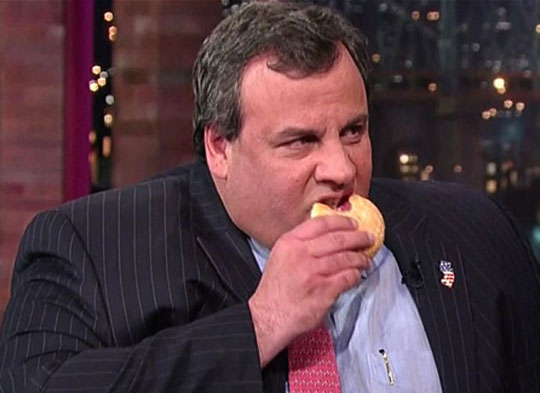
Christie’s Real Weight Problem – the punditry’s baggage of Rudy Giuliani’s 2008 bid

Does Chris Christie have a Rudy Giuliani-sized lump on his body politic?

While the fat jokes about New Jersey Governor Chris Christie started long before he was elected (recall Jon Corzine’s much-maligned ad from 2009), Christie’s political weight has been the only thing in the governor’s mansion packing on the pounds in recent months.  Thanks in multiple parts to a weak Democrat challenger, a compliant press corps, and a Democrat-leaning special election held weeks earlier, Chris Christie’s 22% margin of victory in ultramarine blue New Jersey has vaunted him to the top of the incredibly-too-early-to-reasonably-speculate GOP sweepstakes.

Christie’s critics suggest his numerous derivations from conservative orthodoxy and penchant for picking fights with his own party spell his early primary doom – presumably because they’ve never met Mitt Romney or John McCain.  But the early line of attack that does seem to be gaining some traction with the only segment of the electorate who cares this early – the punditry – is that Christie is too east coast, too combative.  Too Rudy Giulianiesque: (more…)

Narrative, Interrupted

Wednesday, October 30th, 2013

The Tea Party are extremists that the American people refudiate.

Right?

Well, not so fast (emphasis added):

A new Rasmussen Reports national telephone survey finds that 42% of Likely U.S. Voters think the president’s views are closest to their own when it comes to the major issues facing the country. But just as many (42%) say their views come closest to those of the average Tea Party member instead. Sixteen percent (16%) are not sure. (To see survey question wording, click here.)

This marks a small setback for the Tea Party from April 2010 when 48% felt closest to the average Tea Party member, while 44% said they had more in common with the president

On the other hand, it’s right after the full-fledged media narrative-attack over the “shutdown”.

Thirty-four percent (34%) now believe their personal views are closest to those of the average member of Congress when it comes to the major issues of the day. But slightly more (36%) say their views are closest to those of the average member of the Tea Party. A sizable 30%, however, are not sure.

Opposition by Tea Party Republicans to the president’s national health care law has been blamed for the recent government shutdown, and just 30% of voters now have a favorable opinion of the Tea Party. That’s back to the level seen in January and down from a high of 44% in May after it was disclosed that the Internal Revenue Service was targeting Tea Party and other conservative groups.

Many of the “unfavorables” are likely never voting conservative under any circumstances.

The GOP has to present an alternative to the Democrats.

Doakes Sunday: Tell Them No

Sunday, October 20th, 2013

Joe Doakes from Como Park emails:

Remember Aesop’s fable about the country mouse and the city mouse?  I felt that way when I moved to Saint Paul.  Not because the buildings were strangely tall but because the residents were strangely liberal.

Years ago, I attended an out-state Republican Precinct Caucus in Senate District 16A represented by Republican Joe Niehaus, who came to the caucus and asked for our votes.  He promised that if we re-elected him, he’d go to St. Paul and vote NO.  If they ask to raise taxes, he’d vote NO.  If they ask for unilateral disarmament, he’d vote NO.  If they . . . by the time he finished, the whole crowd was yelling NO at every punch line and they meant every word of it.  Whatever it was, he was against it, and so were all of us.  Joe Niehaus was my kind of conservative because he understood that things which have stood the test of time should continue, government should do only what’s absolutely necessary and then at the lowest organizational level, and when you maximize personal responsibility, you maximize personal freedom to boot.

Years later, I attended a St. Paul Republican Precinct Caucus and sat between two people who would have been branded Commies had they been out-state.  The resolutions passed up to the county level were just as leftist as anything the out-state Democrats would have wanted.  I felt completely out of place at that meeting.  I was the only Joe Niehaus conservative there.

I’m getting that feeling again, watching senior Republican members of Congress congratulate themselves for caving in to Democrats.  They didn’t have to cave in, they didn’t have to do anything at all.  Just sit quietly until the default date appeared, call the President’s bluff, and wait for him to come to the bargaining table. How hard is that?  Just do . . . nothing.

I miss Joe Niehaus.  I wish he were a candidate in 2014 so we could send him to Washington solely to vote NO.  Now that’s a campaign I would donate to.

Joe Doakes

Sometimes “No” is the only answer you need.

I’m Going To Pull This Car Over

Friday, October 18th, 2013

All of you “The GOP Let Us Down, Why Should We Ever Support Them Again?” types:   To quote LTCDR Montgomery Scott, “you can’t change the laws of physics”.  Or the Constitution, in this case.  The Republicans – RINOs, Tea Partiers, Cruzes and Boehners alike – control one chamber of the Congress.  The Dems have the other one, and the Presidency.  No law is going to be changed while we are the minority.  The best we can hope for is to stall some of the Dems’ plans until, hopefully, somehow, someday, we get majorities in both chambers and the Presidency.  Someday.

All of you “What has Ted Cruz gotten us?” folks:  Hopefully, a sense from the base that there are some people on Capitol Hill who aren’t cowed by the system, and among independents that someone is publicly bucking against the insurance plan that’s jacking their rates up through the ceiling.

Remember the 2012 election?  When the GOP base and not a whole lot else came out to vote, tepidly, for Mitt Romney and the guy who should have been the candidate?  That’s what going along and being polite and playing the Beltway’s game the beltway’s way gets us.

To Both Of You:  Not a single concession?  After all that?  Are you kidding me?

More Monday.

The “Shutdown” Cage Match

Tuesday, October 15th, 2013

On the one hand, Jennifer Rubin at the WaPo points out 15 signs shutdown fans have “drunk the koolaid“:

There has been, to put it mildly, some mass self-delusion going on in right-wing circles. Here’s how to tell if you are suffering from the ill-effects of the echo chamber.

On the other hand?  Steven Hayward atPower Lineis a convert:

First of all, like the sequester, have the majority of Americans noticed its effects beyond what the media has been screaming about?  The bullying tactics of forcibly shutting off public spaces like the World War II memorial on the mall has surely inflicted damage on Obama that, had he behaved with minimal restraint, he might have been spared.

Beyond this, have there been riots or even public demonstrations against the shutdown?  The political-financial crises in Europe and elsewhere in recent years have seen mass protests and street riots (Spain, Brazil, Greece, Bulgaria, etc).  Where is Occupy Wall Street when Obama needs them?  To the contrary, much more of the political energy appears to be on the Tea Party side right now.  Pretty clearly the shutdown terrifies liberals and journalists—and that’s about it.

Of course, it might be pointed out that this is a faux-shutdown: 80 percent of the government is up and running.  This is analogous to TSA airport security: it is shutdown theater rather than the real thing.  Stop sending Social Security checks and see what happens.

A fair point, but this leads to the next big question: which party most needs the government to be up and running?  Ask yourself which party is the party of government and you’ll know the answer.  With 90 percent of the EPA furloughed, what’s the downside here for Republicans?

More seriously, to the extent that shutdown and “government dysfunction” in Washington causes the public to hold Washington in even greater disgust than usual, who does this hurt the most?  Democrats need the public to have some degree of confidence in government for their expansive schemes to succeed.  Which brings me to the latest soundings on public opinion that Karlyn Bowman and Andrew Rugg have put together and displayed in the charts below. 

Bottom line: public confidence in Washington D.C. is at lows not seen since the 1970s.  (And we know what happened at the end of that decade.)

The takeaway?  I think a competent GOP leadership could make this into a net win in 2014 for the GOP.

Which means we’re screwed.

But for the Tea Party, anyway.

The Lightning Rod

Wednesday, October 9th, 2013

Rod Grams has passed away after a long battle with cancer. 

Son of a dairy farmer from Princeton, MN, Grams came up through broadcasting, working his way from small radio stations into the anchorman’s seat at Channel 9 by the mid-eighties. 

From there, he went into politics – defeating Gerry Sikorski, who was hobbled by a capitol banking scandal that showed the door to not a few Congresspeople that year. 

And in 1994, at the crest of the “Contract with America”, he took over Dave Durenberger’s Senate seat, after beating Ann Wynia by  squeaker in a race that showed both the nascent power of conservatives in the exceedingly moderate Minnesota Independent Republican party, and the rising power of the state’s Second Amendment lobby. 

His term in the Senate also was a barometer for the slide of the Twin Cities media into outright partisanship; the Twin Cities media lavished coverage on the twists and turns in Grams’ personal life, and breathless wall to wall scrutiny on the travails of Grams’ son Morgan – of whom Grams’ ex-wife had had full custody – in a way that they never quite managed to for DFLers. 

But it is an objective fact that Grams accomplished more in his six years in DC than the celebrated Paul Wellstone did in 12, or than Amy Klobuchar likely will in her entire career. 

After being defeated for re-election by future “Worst Senator in America” Mark Dayton in 2000, Grams went back to his first love, broadcasting; he owned a cluster of radio stations in Central Minnesota.  

I had the pleasure of interviewing Senator Grams two or three times on the NARN.  He had a broadcaster’s knack for being a great interview subject. 

I urge you to direct your prayers – or whatever your worldview calls for – to his family.

A Little Knowledge

Monday, October 7th, 2013

If there’s one thing I’ve learned from my various liberal lawyer friends, it’s this; when I see news of the filing of an absurd lawsuit demanding a bizarre amount of money for an insane claim, take a step back and a deep breath.  A filing does not equal a judgment; while the occasional batspittle-crazy judgment happens, the vast majority of bizarre lawsuits end in a dismissal on summary judgment; a judge determines that no actual matters of law are involved, so there’s no need for a trial. 

And the bizarre cases that appeared in a splash of laughter and anger disappear, unlamented and

Over the weekend, the word got out among the usual circles about a Swiss proposal to give every single citizen a $2,600 monthly government-paid income

There were two reactions from among Americans I’d broadly call “conservative”; mockery, and a little bit of head-scratching.

We’ll look into the head-scratching first. 

The Big Fix: In his classic book Parliament of Whores, P.J. O’Rourke noted that if we just gave the money we currently spend on social welfare to people whose income is below the poverty line, we could bring every person in the United States up to the poverty line, and save money.  We’d do something that eighty years of “progressive” social policy has “tried” and failed to do; eradicate poverty, at least in a literal, personal-financial sense. 

The Swiss “plan” – assuming it also involved eliminating other poverty entitlement programs – might be a huge step toward simplifying poverty entitlements and, perversely, saving money…

The Swiss Reality– …if there were the slightest chance of it becoming law.

The Swiss federal system allows the National Assembly – the Swiss parliament – to refer bills dealing with major government issues – taxes, spending and big policy issues – to a national vote, very, very easily. 

Switzerland, like Minnesota, is starkly divided along what we’d call “red/blue” lines; the big cities, Zürich and Basel and Geneva, are every bit as clogged with socialist bobbleheads as Minneapolis or Duluth.  But the cantons (states) of greater Switzerland tend to be very conservative. The largest party in the National Assembly is the “Swiss People’s Party” (Scheweizerische Volkspartei, or SVP in German), a center-right party that, unlike many European “conservative” parties, could be recognized as “conservative” by an American Tea Partier. The SVP leads a coalition of center and right-leaning parties that don’t quite have a majority of the Parliament – 94 out of 200 seats in the lower house – but would require absolute unity among their opposition to effectively beat. 

But this isn’t even a parliamentary referendum.  Swiss law allows citizen petitions with 100,000 signatures – out of a population of 8 million citizens, or roughly 2% of the voting population – to force a referendum.

Andthatis how this proposal got on the ballot. 

On the one hand, it allows well-organized grass-roots groups to make a big electoral splash by getting the darnedest hare-brained ideas onto the national ballot. 

On the other?  They almost always get beaten.  A “grassroots” group of Swiss got an initiative to abolish the Swiss military onto the ballot in 2011.  It got a slew of headlines.

And it lost by about a 3:1 margin. 

The election of Jesse Ventura shows that if times are good enough, you can get up to 37% of any population to suspend their good judgement on a lark, when they don’t think it matters that much.

But here, we’re talking money.

This initiative is going to generate a lot of headlines, and a fair amount of mockery from American, left and right, who don’t get how Swiss democracy works…

…and, soon, a 2:1 electoral defeat.

Mission Fail

Thursday, September 26th, 2013

Despite four years of demonization, the public largely doesn’t see the Tea Party as demons:

Considering the multi-year war on the Tea Party by Democrats, many Republicans, and the media, it is astounding that the Tea Party continues to stay more or less even in its support over the past two years.  A 2% drop is hardly meaningful, and could just be variations within the margin of error in the poll, which was +/- 3%.

So what we’re saying is there’s a chance.

Can’t Start A Fire Without A Spark

Tuesday, September 10th, 2013

Last week – voters toss a carbon-taxing, border-opening, “War on Womyn”-pimping government in Australia, ushering in a conservative government. 

And in Norway – yes, Norway – a center-right coalition toppled the socialists

I know – “conservative” is relative around the world.  There was a time when the conventional wisdom was that European “conservatives” were like American Democrats. 

That was before American Democrats became the extremist party, of course.

With All Respect Due The Esteemed Drs. Banaian And Spry

Wednesday, August 21st, 2013

A line that hovers before me in blog and news-site comment sections like a red cape in front of a bull; “most economists agree”. 

Forbes’ Louis Woodhill has at that oldie-but-goodie:

Let’s be blunt. Whatever economics is, it is not a science. Unlike physicists, who can predict an asteroid’s closest approach to earth within a few miles when it is still 100 million miles out in space, economists can’t accurately predict this quarter’s GDP. Indeed, they are still arguing among themselves about what “really” happened 83 years ago.

In light of the economics profession’s track record, it is hilarious to hear pundits and politicians say things like, “Most economists agree…” as if this mattered…It has been said that generals are always preparing to fight the last war. Similarly, at the time that our current “Pretty Good Depression” started, most of what central bankers knew (or thought that they knew) had to do with “fighting inflation,” which was the last great monetary “war.”

The post itself is entitled “America Doesn’t Need Monetary Policy, And It Doesn’t Need Economists”.  It’s a long read, and worth every bit of it.

Although since some of my best friends are economists, I’ll stick with “America doesn’t need to pay undue attention to them on a policy level”.

--> Site Meter -->