Archive for the 'Music' Category

Hot Technique Friday: Just When I Think There Are No More Frontiers

Friday, December 26th, 2008

This March will be 33rd anniversary of playing guitar.  And sometimes it feels like there are no more frontiers.

Which is not to say I’ve conquered everything I want to on the instrument; merely that after attempting certain frontiers (being a convincing speed-metal player, copping Chet Atkins licks, getting Terry Kath’s solo for Chicago’s 25 or 6 to 4 down note for note), I’ve decided they just didn’t mean that much to me.

Other frontiers hover out there like Moby Dick; getting Nils Lofgren’s pick harmonics (without adopting fingerpicks), getting the alternate-string thumb bass line in Richard Thompson’s 1952 Vincent Black Lighting sounding like I’m not playing after a severe stroke, figuring out Brian May’s guitar tone, that kind of thing.

But it’s time to try something new.

I’ve never really tried to sit down and gnosh out anything on Television’s Marquee Moon.  Which makes me nekulturnii, I know; I’m being honest here.  It occurred to me that I’ve wanted to figure out Tom Verlaine and Richard Lloyd’s parts in Venus for a very long time.

So there’s a project for the long weekend.

I’m Not Sure What Surprised Me More

Friday, December 26th, 2008

Whether it was that the MinnPost is doing stories that sound like they could have come from the “Around Town” column in a small-town weekly…:

Sources close to the 400 Bar are reporting that a squirrel recently got into the historic West Bank music landmark and did serious damage to the top row of the liquor shelf behind the bar.

…or the details of the actual damage done:

Co-owner/manager Tom Sullivan is telling friends that the club lost several high-end bottles of Scotch in the little rodent’s raid. Sullivan couldn’t be reached for comment Wednesday, but a good bottle of Chivas Regal goes for hundreds of dollars (not this much, we hope) and, as this edition of MinnPost went to press, police liked this guy as a suspect.

This is the same 400 Bar I played back in ’86-88?   The place where ordering Michelob got you branded an effete pansy?

Either they’ve moved upmarket, or west-end rock-bar barflies have a lot more money than they used to…

A Long December

Friday, December 19th, 2008

Steve Miller said it; you’ve got to go through hell before you get to heaven.   Or maybe it was Saint Augustine.

December ends in Christmas, of course – the most joyous time of the year, for those of us who believe, or who merely want it to be joyous whatever it takes (and I’m firmly in both camps).  And yet it starts so hard; the days collapse inward to the shortest days of the year.  The dark reaches out to get you earlier and earlier every day, engulfing the afternoon and eating up the parts of the day you don’t owe to The Man.  It’s fraught with symbolism, all of it (save Christmas) tied up in mythological angst.

And it’s the part before Christmas I think of when I hear this song:

It’s Maria McKee, formerly of Lone Justice – one of my favorite no-hit wonders of the eighties.  If anything, her solo career was shorter and less successful.

And yet this song infiltrates me every year about this time.  I’ve written in the past about songs that are inextricably tied  to things in my mind; places and times and moments.  “Breathe” is always December 16-20 for me; the striking, eloquent sadness; the wondering stare into the beautiful abyss.
Part of it is the guitar part, by Richard Thompson.  In some ways, this song is one of the most ingenious bits of guitar in Thompson’s ingenuity-clogged forty-year career as the world’s greatest living guitar player.  Elegantly jagged, beautiful and yet disturbing in its almost random harshness, it descends on you like a snow squall engulfing the aurora borealis.

Soon it’ll give way to the Christmas carols, the Hallelujah Chorus, Auld Lang Syne, just as the cold will fall before the apple cider and the lefse and the cocoa, just as sin and decay fall before redemption.

And yet Christmas wouldn’t be as hopeful but for the dark, the dread and the cold that it contrasts with.

The Inescapable Conundrum

Thursday, December 4th, 2008

Great band?  Yes.

Great song?  Yes – indeed, one of my favorite songs of the rock and roll era.

Excellent performance of a great song by that great band?  Oh, my, yes.

But after all these years, it’s incumbent on the responsible to say that, “performer” and “sex symbol” and outsized personality and media myths aside, and considering only technical ability, Mick Jagger would get laughed out of karaoke night as a singer.

Don’t shoot the messenger.

Great Leap Backward (to 1998)

Tuesday, November 25th, 2008

G’nR’s Chinese Democracy is available – at Best Buy, at any rate.

NPR’s music reviewer may have preferred the delay:

Chinese Democracy wins points just for entering the world. After all these years, hearing it is like finally seeing the monster at the end of a horror movie: It’s no longer a mystery, but at least now, the real action begins.

Rumor has it their next album will be called either Man-Made Global Warming or President Hillary

Hot Gear Friday: The Hiwatt Stack

Friday, November 14th, 2008

Growing up as something of a wannabe rock star, my dreams as a teenager were probably more focused on guitar gear than on cars than for most teenage guys. 

And in fact they still are.

And the big mack daddy of ’em all, to a kid who grew up a Who fanatic and who played guitar for two years before he knew there was a way to strum the guitar other than windmilling, was the amp that Pete Townsend, more than anyone, made famous; the Hiwatt.

Famous largely for getting smashed during Townsend’s “destruction is art” phase from the mid-sixties to the mid-seventies, the Hiwatt was also famous for being clear, powerful, reliable and very, very loud.  It was part of the “big three” of Brit guitar amps of the sixties and seventies, along with Vox (which was the Fender of Brit amps) and Marshall (which was, hello, Marshall).

Of course, being all Brit and exotic and all, they were impossible to find in North Dakota.  Although rumors from travelling musicians had it that you could occasionally – rarely – see one at Marguerite’s Music in Moorhead.  And so, one day, when I was finally old enough to do road trips to Fargo/Moorhead with my friends, I made the pilgrimmage.  I walked into Marguerite’s…

…and found nothing.

So the second time I took a road trip to Fargo, I tried again.

And there it was.  No, not the stack, but the “Studio Stage” combo…

…which, truth be told, may or may not have been up to the standard of the original “stack”, with its two cabinets with eight 12 inch speakers and 100-120 watts of pure electonic meth.  It’s hard to say..

…and it prompts the question; if you’ve never tasted, say, scotch, and you walk into a bar and someone gives you a glass of six-week-old WalMart scotch and, next to it, a glass of 30-year-old LaPhraoig, do you think you could tell the difference?

I dunno.  The little combo was a joy to play, but then everything at Marguerite’s was.

Even if they’d had an honest-to-goodness stack, could I have cranked it to the stops to get any idea of its real performance, in the middle of a music store?  Probably not.  It would have blown half of Moorhead and all the topsoil in Clay County over the Red River into North Dakota.

Someday.  Someday.

Only 43?

Thursday, October 23rd, 2008

Bren O’Malley – brother of Sheila – is working on the kind of series that could come perilously close to launching me on another endless series – “The 43 Greatest Albums”.

The latest installment?  Prince’s Purple Rain.

Snip:

It opens with ‘Let’s Go Crazy’ and the song itself invites insanity. A tightly wound little top spinning on a perfectly polished floor, it gallops along without effort until that guitar solo explodes it until the top becomes a pair of fuzzy dice hanging from the diamond studded mirror of a pimped out Cadillac.

And just to introduce some fireworks, I refer you to his review of Nebraska:

OK, fine, ‘Born In The U.S.A.’ is a perfect album but I think ‘Born To Run’ is overrated, ‘The River’ sounds like it was recorded at the bottom of one, and ‘The Wild, The Innocent, and The E-Street Shuffle’ is just embarrassing. At their worst they remind me of a coked out middle manager over-dancing to Journey in white jeans.

Most bands are BANDS. You can’t separate one of the members from the rest. This is why the E-Streeters are ultimately session players and not members of a band. I don’t care how many photos they put on the cover of Bruce leaning on Clarence or Little Stevie or Max. It is Bruce and whoever he brings along for the ride.

Which is why ‘Nebraska’ is perfect. Much of Springsteen’s music in the ’70’s suffered under the weight of ambition. I SHALL NOW CAPTURE THE SPIRIT OF AMERICA IN 4 MINUTES OR LESS, AND BY SPIRIT I MEAN THE DIRTY UNDERBELLY AND THE SOARING HOPE, THE PASSION AND THE DESPAIR, THE EVERYTHING AND NOTHING, THE OVER AND THE UNDER, WHAT THE HELL WAS I SAYING?

Oh, Bren.  We are gonna go ’round and ’round, me bucko.

After I get this new idea for a series off the ground, I mean…

To Inspire: Art Tatum

Sunday, October 12th, 2008


In the process of reading The Other 90% by Ken Cooper I came across a vignette about Art Tatum, a man that overcame seemingly insurmountable physical challenges and triumphed as one of the world’s foremost jazz pianists.

Born in Ohio in 1909, Tatum suffered from blindness in one eye; partial in the other.

Blessed with an extraordinary ear for music and largely self-taught, Tatum layed his hands on a player piano one day and while it played his fingers grasped the movement of the keys. He learned to play the piano and repetition lead to mastery. This despite his blissful ignorance of the fact that player pianos at the time played as though two pianists and four hands were at the keyboard.

When you listen to his work, the range, tempo and touch he exhibits leaves you unable to imagine one man’s fingers dancing with such pace and perfection. Other artists of the 1930’s called his performances “impossible.”

Ironically…

“Art Tatum’s incredibly fast playing style requires a level of precision beyond the capabilities of conventional player piano systems,” said John Q. Walker, founder of Zenph Studios

In fact, watching a player piano perform probably his most representative work “Tiger Rag,” reveals an amazingly complex range of keystrokes and leaves one wondering how any one artist could play the song.

Videos of his performances, rare as they are, reveal an exceedingly calm but rapid command of the keys. I don’t know much about jazz, so I poked around the web, looking for tidbits on this remarkable artist and was inspired by his ability to overcome, to produce such a large volume of work and to inspire other artists.

Sources:

Wikipedia

Duke University

NPR

Coughing Up Blood

Wednesday, October 8th, 2008

I’m 45, these days.  Big thrills come fewer and farther between than they used to. 

Which in many ways is a good thing.  When you’re a teenager or an overdramatic twentysomething, hormones and that lack of jading that most of us start out life with make way too much stuff seem like life and death.  The dumbest stuff matters like life and death when you’re a kid – and having two teenagers in the house, I do see that all the dang time.

One of the things that’s have some of its searing immediacy shaved off over the years is rock and roll. 

I used to wear my heart on my sleeve when it came to music; thrills and chills in the form of a thousand little moments were all over the place.  They came in places you’d expect Darkness on the Edge of Town and London Calling and Who’s Next and The Pretenders and The Crossing and Tim and The Unforgettable Fire and Have A Good Time (But Get Out Alive), sure – all of them are albums that are packed full of big moments that seemed to sum up big chunks of my life. 

And beyond that, there are a zillion other little moments – not even necessarily on songs I like, even, but moments where I can tell you exactly where I was and what I was doing when I first heard them, and describe the jolt it gave me.  “We Live For Love” by Pat Benatar takes me back to the first night at my first radio job; “Don’t Stop Believing” by Journey, hanging around the dorm my freshman year of college; “Forever” by Little Steven and the Disciples of Soul is always tied to sitting at the dam and looking up at the stars in the summer of ’82; “GirlUWant” by Devo is inseparable from high school speech team trips to Fargo and Grand Forks; “Nights In White Satin” by the Moody Blues is all about sitting in a car at 2AM, lovelorn and anxious to get the hell out of North Dakota…

…and I could go on.  Indeed, over the past six years on this blog, I have gone on.  But most of those are interesting to me as historical artifacts – sort of an audio museum of my life. 

These moments – little snippets of musical genius or just emotional accidents in the right place at the right time – happen less and less often these days.  And when they do happen, lately, it seems like they’re mostly songs from way back when that make me wonder “how did I miss this one, or forget it, all these years?”

I can count the number of artists that’ve made me sit up and go “Yeaaaaah!” and feel that jitter up my spine that comes from having a big epiphany, that’d make me think “I’ll remember where I was when I heard this the first time”, on probably a couple of fingers.

Eminem’s Eight Mile soundtrack had a bunch of ’em.

Franky PerezPoor Man’s Son had a bunch – enough to make me think he was a Cuban-American Springsteen when I first caught him, five years ago.  That he is not a superstar is an indictment of the American music industry.

But most of all, there’s Marah.

Marah is a band from Philadephia, Brooklyn, or points somewhere in between depending on who you google.  And calling them a “band” is a little misleading – it’s really the Bielanko brothers, Dave and Serge, along with (for the past couple of years) keyboardist Christine Smith.  They’ve been around for a long time – their discography goes back to 1997 – but their national breakout of sorts came in 2000, with Kids In Philly, an album recorded above an auto-repair shop in Philadelphia that evoked Springsteen’s The Wild, The Innocent and the E Street Shuffle in enough ways to set an amateur music critic off on a Hornbyesque orgy of taxonomizing.  The lyrics were as rapid-fire and dense as anything Springsteen wrote pre-Jon Landau; the music was as gleefully, eclectically alt-country as Springsteen’s sophomore effort swerved between rock and R’nB.  And Kids in Philly was about Philadelphia – or at least the neighborhood the album came from, with its Italian diners and Vietnamese barbers and South Asian groceries – as E Street Shuffle was about the Jersey Shore via Bleecker Street.

The similarities didn’t escape the critics or, more importantly, me.  “Faraway You” is a banjo-driven (?) raveup that’s equal parts zydeco and rockabilly, with a little Irish snuck in there (you have to work for it).  “Point Breeze” evokes E Street Shuffle‘s title cut, while “Christian Street” takes the same spirit and sticks a rocket-booster horn section behind it and wraps it with a production style that tries to mimic the Spektor “Wall of Sound” on a tiny budget, with glorious results; they bring in legendary Philadelphia disk jockey Hy Lit to kick things off, tying together five decades into three minutes.  “The Catfisherman” is a slinky bit of funk blues with a nasty surprise.  And for all the joyous stomping and pre-Sorpranos underworld tourism, some of the lower-key moments stick out just as much; “My Heart Is The Bums On The Street” may be the best closing-time lament since the Replacements’ “Here Comes A Regular”. 

And if that’d been their only contribution to music history, I’d be sitting here, eight years later, raving about them still.  It was the kind of album a great garage band should do; yes, done in/above a garage, but brimming with a glee at being able to play rock and roll that crackled through the headphones and made you think, damn, it isn’t a sin to be glad you’re alive.

For a while, it seemed that’s what I’d do, eventually – write about a great old album.  I followed the band via their website for most of the last eight years; along about 2004, it seemed they were going to be consigned to the “acoustic duo show” ghetto, playing coffee shops and little clubs to the hard-core fans. 

And yet not only have they soldiered on, they’ve gotten better.  2005 brought If You Didn’t Laugh, You’d Cry, an even better album full of even better moments than Philly

And earlier this year came Angels of Destruction, maybe their best yet.  And, like any “best yet” from an unknown, almost-there band, it couldn’t happen without a problem; on the even of a tour in support of the album, their rhythm section quit; Marah, indeed, seems to go through backlines like Spinal Tap went through drummers.  The Bielankos and Smith forged on, and are on the road again, sort of. (Hint, guys – the Twin Cities.  C’mon). 

And yet the album absolutely shimmers; there are too many high points to name – the title cut, “Coughing Up Blood”, “Santos De Madera” and enough others that I’m going to start sounding like a shill before long. 

Which’d be a shame – because the point is, as I’ve gotten to be older, I’ve gotten to be a lot harder to impress.  Hell – it’s gotten a lot harder for me to notice music and remember it.  And yet Marah – bittersweet, joyful and rollicking and smoky and sweaty and eccentric and maddeningly-just-shy-of-famous and occasionally pit-of-the-soul poignant – never misses. 

And hey – nice to know there’s other fans out there – that’s a blog that posts lots of videos, including a few full performances, including this one at Weert, Holland.  Worth a look.

Anyway – your mission is clear.  If you only buy one album this year, buy Kids in Philly and If You Didn’t Laugh… and Angels, too.
It Wouldn’t Be A Crisis…

Tuesday, October 7th, 2008

…without the Minnesoros “Independent” sending ace reporter Molly “Is It White In Here” Priesmeyer – AKA “The Margaret Grebe of the 21st Century” – out to the nightclubs to show how the Sturm and Drang of the Zeitgeist was causing Angst among people who are…er, hanging around in bars on a weeknight:

The cover photo of this week’s Time magazine has been lurking in the psyche of America for the past two weeks: A bread line, circa 1931, buttressed by the headline “The New Hard Times.” Whether or not that’s overstating things by the liberal media elite remains to be seen, but I took my own pulse of America this week, stopping in at Minneapolis bars and music clubs (and one strip club), to imbibe in the healing qualities of good music and gathered people, and to gauge the post-crash mood.

Unlike the Republican candidate for vice president, it wasn’t pretty. In fact, the only comparable such club tour I’ve taken was in the week immediately following 9/11, when hushed roomfuls of people stuck their head in the live music sand and wondered what the bleep would happen next.

Profound.

UPDATE:  My bad; the piece was in the MNPost, and it’s by Jim Walsh, who is not a bad music critic.  Which is sort of like saying “Leukemia isn’t such a bad cancer”; I’ve gotten progressively less and less tolerant of “rock critics” over the years, in the same way “sports journalism” has come to strike me as an oxymoron among all but a few “sports journalists” tiny enough in number to fit into Frank DeFord’s jacket pockets.

UP-UPDATE: OK, I lied.  I knew it was Walsh all along – and I followed the “Priesmeyer Tangent” because “Rock Criticism” frequently – usually? – falls back on the same trite answers to life’s persistent questions that seem to dominate her oeuvre.  Perhaps it’s because most rock critics are lousy writers (and the craft’s dubious standards, in this era of freebie, “citizen” “journalism”, seems to be eroding year by year; I’m flummoxed to think of a rock in the AAA leagues who’s fit to carry Dave Considine or Jim DeRogatis’ Ipod case.  Perhaps the eternal adolescence of the rock club world – a place that’s a combination of Peter Pan and Logan’s Run, a place where everyone, whether musician or bartender or booker or waitress or the audience, either stays a pissed-off 21-year-old or eventually disappears, un-lamented and unremembered – makes the whole enterprise terminally self-limiting. 

And for those of us who disappear from those clubs – those of us who stomped around The Entry’s claustrophobic stage, fought with The Uptown’s cranky sound system and crankier booking agent, cadged drinks from girls at Lyle’s for a year or four, and then…disappeared, vanished into a world of babies and mortgages and day jobs and newer lives lived in daylight?

I’m not going to speak for all of us – but I’m not exactly hanging on Liz Phair’s reaction to the economic crisis.  Or anything.

But, as I said, Walsh is not one of the semi-literate slapnuts that glut “rock criticism” today.  He’s a sharp guy, a good writer and, often enough to notice, a sharp observer.

And amid the pop-culture dross, he scores a few good points:

After 9/11, the president famously told Americans to go shopping. At the moment, it might behoove him to remind “we the people” that going out — to clubs, bars, music venues — gets us out of ourselves and out of our own burrowed-in blues, and that it’s important to keep the blood pumping and the elbows rubbing, even when the world can make you feel, as one mourner put it to me at a funeral home recently, “I’m lost.”

You could ask – “did we grow up and stop having fun because life got difficult, or did life get difficult because we grew up and stopped having fun?”   The answer would be “probably not entirely”, of course, because life is rarely that black-and-white. 

So no – you won’t see me giving a rat’s ass about what some adolescent, or arrested-adolescent, in a bar on a Tuesday night thinks about politics or the economy.  But Walsh is right – isolation is as big a killer than the stress that isolates us.

While You Breathlessly Await…

Thursday, September 25th, 2008

…more sterling blog output, I have to link you to this, over at MPR’s “Loophole”.

Jeff Horwich – himself rather peripatetically musical – notes:

The Smarts turned me on to the “Shreds” ouvre at a rehearsal last night, and they crack me up.

Video of famous guitar solos, stripped of audio, which is replaced with a truly crappy performance.

The Creed bit had me laughing so hard I hurt my sides.  Which didn’t prepare me for the one with Slash; I almost had a stroke.

As Jeff notes, it may be funny only to musicians. 

As for me?  I might just grab some video and start a few of my own…

This Is Why It’s Great Having Roosh Here

Monday, September 22nd, 2008

Because after two years of trying, I finally figured out a workaround to that whole “my css stylesheet stinks for embedding videos” thing.

And I gotta say…

…I’m still totally a kid in a candy store.

No, really:

On The Other Hand…

Wednesday, September 17th, 2008

…if you’d asked me in college what kind of band I wanted to have when I made the big time, I’d have probably said something like this.

No Matter How He Tried, He Could Not Break Free

Tuesday, September 16th, 2008

Longtime Pink Floyd keyboardist and Roger Waters’ kicktoy Richard Wright is dead at 65.

I’m a longtime Pink Floyd non-fan – but not because weren’t amazing musicians in their way. Pink Floyd in its prime was like The Who, in the sense that it was four distinct musicians who were very different, but depended on each other.

Behind David Gilmour’s languid, fluid guitar, filling up the spaces behind Roger Waters’ indifferent thumping and scowling and in front of Nick Mason’s dirgeline plodding lay Wright’s keyboards, especially his work on the Hammond B3.  Gilmour – either the world’s slowest great guitarist or the world’s greatest slow guitarist (and no insult is intended, because I play a lot like Gilmour) was the band’s outcry; Mason and Waters were the cholesterol-clogged heartbeat; Wright, like the late Danny Federici and the still-thankfully-alive Benmont Tench was the atmosphere; where that atmosphere for Federici was the big roaring heart of Jersey Shore soul, and with Tench was the tear in Tom Petty’s beer, in Wright’s case it was usually foreboding and menace.

Wright was almost always in the background – never moreso than when Waters engineered his ouster from the band, demoting him in effect to a paid sideman for the band’s last tours in support of The Final Cut.

One of my favorite Wright moments.  Hard to concentrate, given the dynamic stage performance, but the song is mostly Wright, and it’s one of Pink Floyd’s best moments.
(Via Flash)

If You’d Asked Me Thirty Years Ago…

Tuesday, September 16th, 2008

…what I wanted to be when I grew up, I’d probably have answered something like this.

And sometimes, I still would.

Obsolete, But Fun

Tuesday, September 16th, 2008

And anyone who calls “Obama Girl” a “skank” gets my vote just on principle, anyway.

One Bad Mother…

Monday, August 11th, 2008

Isaac Hayes dead at 65:

With his muscular build, shiny head and sunglasses, Hayes cut a striking figure at a time when most of his contemporaries were sporting Afros. His music, which came to be known as urban-contemporary, paved the way for disco as well as romantic crooners like Barry White.

And in his spoken-word introductions and interludes, Hayes was essentially rapping before there was rap. His career hit another high in 1997 when he became the voice of Chef, the sensible school cook and devoted ladies man on the animated TV show “South Park.”…

Hayes was born in 1942 in a tin shack in Covington, Tenn., about 40 miles north of Memphis. He was raised by his maternal grandparents after his mother died and his father took off when he was 1 1/2. The family moved to Memphis when he was 6.

Hayes wanted to be a doctor, but got redirected when he won a talent contest in ninth grade by singing Nat King Cole‘s “Looking Back.”

He held down various low-paying jobs, including shining shoes on the legendary Beale Street in Memphis. He also played gigs in rural Southern juke joints where at times he had to hit the floor because someone began shooting.

RIP.

Three Whacks Upside The Head

Monday, August 4th, 2008

Whack 1) How incredibly hot Ellen Foley was back then; hot enough to be the subject of this song, indeed…

Whack 2) That Pat Benetar became a superstar, while Ellen Foley (but for her bit on “Paradise by the Dashboard Light” and her part on “Night Court”) languished in obscurity.

Whack 3) The fact that most of those videos are almost thirty years old…

The Crossing

Friday, August 1st, 2008

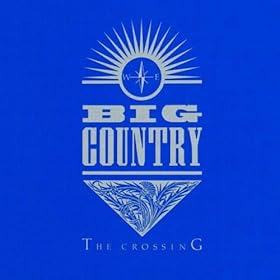
It was 25 years ago today that Big Country’s The Crossing was released.

In America, Big Country has that “one-hit wonder” patina about them, which only goes to show that when it comes to music, too many Americans are ignorant clods.

While The Crossing‘s “In A Big Country” was, indeed, their only real entry into the Top40 in America, it’d be hard to overestimate what a blast of fresh air the album was about this time 25 years ago.

1983 was a great year in music; it was also the year that provided many of the decade’s musical punch lines; “Putting On The Ritz” by Taco, “Mr. Roboto” by Styx, “Safety Dance” by Men Without Hats, Kajagoogoo and Culture Club and Asia and Naked Eyes and Laura Branigan and not one but two Jim Steinman bombast-fests (Bonnie Tyler’s “Total Eclipse Of The Heart” and Air Supply’s “Making Love Out of Nothing At All”) duked it out with some of the great pop music of all time; “Little Red Corvette”, Michael Jacksons entire Thriller album back before he turned into a walking freak show.

Worse, some were declaring the guitar dead.  Articles in Rolling Stone said that the new wave (heh heh) of cheap electronic technology would finally euthanize the venerable analog stringed instrument.  It was the year Yamaha’s revolutionary DX7 synthesizer hit the market, bringing digital Frequency Modulation technology down to around $1,000 for the first time, making it possible for pretty much anyone (with $1,000) to create any sound they wanted, save it onto cassettes (or, for a few bucks more, floppy disks!), play it onto the first inexpensive digital sequencers and MIDI processors and “drum machines” and essentially run a “band” from ones’ keyboard. The future of music, said the wonks, was pasty-faced geeks with hundred dollar haircuts in flamboyant suits, pecking away at keyboards as masses of lobotomized droogs bobbed away in the audience.

Into this dismal future stepped Big Country – a band from Dunfermline, Scotland that mixed technical “wow” with actual fun (the Scottish football-hooligan atmosphere that accompanied their shows and appearances), they blew the knobs and faders off of the synth-wankers that glorious autumn.

The band wrapped itself in “Scotland” but, ironically, none of the band’s members were native Scots; bassist Tony Butler and drummer Mark Brzezicki were from London, guitarist Bruce Watson was Canadian, and guitarist and singer Stuart Adamson was from Manchester (although he grew up in Dunfermline, and acquired his impenetrable accent for real).

The “wow” came partly from technology (really cheap technology, like the MXR Pitch Transposer and the e-bow, basically a hand-held electromagnet that acts like an electronic violin bow, giving a guitar infinite sustain), great guitars (the lads favored Yamaha SG2000s and Fender Strats) and clever engineering to wrench amazing impersonations from their instruments; they loosely modeled bagpipes, Irish fiddles, and all manner of supercharged traditional instruments which, combined with the Gaelic-y arrangements, roused talk of a “Celtic revival” in that year that also brought U2, the Alarm and Simple Minds to the charts.

And of course, there was great musicianship; Butler and Brzezicki were superb session musicians before Big Country; Adamson and Watson were excellent in a more restrained, controlled way. They rarely played power chords, sticking to carefully-orchestrated one-and-two-note patterns over their carefully-built sound-setups to create a distinctive, loud, joyful noise.

Nearly every song on the album was a keeper:

  1. “In a Big Country” – hardly needs explaining, right?
  2. Inwards” – like German techno, played on guitars. By humans.  Who are having fun and not praying for imminent nuclear war.
  3. Chance” – A hit single in the UK, unknown here, but a gorgeous song; spare, evocative guitars and vocal harmonies that, in Tony Butler’s career as a spectacular backup singer, are among his best. Actually one of my two favorite songs on the album.
  4. 1000 Stars” – An infectiously danceable bit of Cold War paranoia.
  5. The Storm” – As Scots-Gaelic as the flat side of a claymore.
  6. Harvest Home” – An irresistably danceable song (in the “Sword Dance” vein, rather than “Dancing With The Stars”, or even “Dance Fever with Denny Terrio”), drawn from that bottomless well of Rock and Roll inspiration, the Jacobite Rebellion and the diaspora of Scots afterwards.
  7. Lost Patrol” – Never liked this one all that much; another one of those “Gaelo-Teutonic techno on guitars” things.
  8. Close Action” – My other favorite.
  9. Fields of Fire” – The other single in the US, and one of many great bagpipe impressions…
  10. Porrohman” – A fun bit of guitar-effect wizardry to try to pick apart, but it did in fact get tiresome and shrill after a while. Hey, one out of ten ain’t bad…

They never really had much impact in the US after this; they only charted with one more single (“Wonderland“, from the next year, one of my favorites) which peaked at #86, while Steeltown, my favorite Big Country album, barely dented the album charts in the US (it debuted at #1 in the UK), while the marquee single, the spectacular “Where The Rose Is Sown“, a Falklands War protest of sorts, didn’t show up at all.
I think I spent sixty hours over my “interim” period in 2004 (my college was on a 4-1-4 system – January was spent on one, all-day class for the whole month) learning how to play and imitate every single song on the album. I had the bagpipe thing figured out, anyway…

Adamson, after years of fighting alcoholism,  committed suicide in December of 2001.  Watson, after years of knocking around in various projects, works as a tester in a shipyard (and appears in various revival bands, including re-formed versions of Adamson’s old classic Scots punk band The Skids).  Butler is a college music teacher; Brzezicki is still a session drummer.  The band attempted a reunion last year – but it got hung up in court.

I’m gonna down a Newcastle and break out the SG in honor of the anniversary.

Better Than Caffeine?

Wednesday, July 30th, 2008

The last five songs on ITunes, while I’ve been writing:

5. Where Grass Won’t Grow (George Jones & Emmylou Harris)
4. The Road Goes On Forever (Joe Ely)
3. Scherzo from 9th Symphony (Beethoven)
2. Wang Dang Sweet Poontang (Ted Nugent)
1. Town Called Heartbreak (Patty Scialfa)

I’ve never liked Nugent – at least, not his music. His persona – the gleeful counter-counterculture bit, the gun-toting drug-eschewing Republican rock and roll star – was cool (and needed) and all, but good Lord, his music sucked.

Except, y’know, butted up against Beethoven.

Extrasensory

Friday, July 25th, 2008

A while ago, I wrote about the association that “Allison Road” by the Gin Blossoms has in my mind – with working serial all-nighters, back in 1995, trying to get a contract writing job finished on time. I hear the song? I feel my eyes crackle with fatigue, the funk of bad coffee on the back of my tongue, my fingertips chilled from the drafty room I used as an office.

I got to thinking; I have a bunch of those:

    • Glycerine, Bush: I always associate this song with driving in blizzards; for whatever reason, the first 100 or so times I heard it, I was…well, driving through blizzards. To this day, I hear the song (or see the video), I feel…cold, and in danger.
    • Nights In White Satin, Moody Blues: This one is high school. Sitting up at 2 in the morning. Terribly lovelorn. Sitting out at Shale Beach at Jamestown Reservoir, staring at the sky with KFYR in the background, thinking this year was gonna be my year. I can feel the humidity, the dank evening breeze with the faint whiff of cattle manure, when I hear it.
    • Bette Davis Eyes, Kim Carnes: When I hear this song – which, I hasten to add, I hated then as I hate it now –  I still recall the exact weather (cloudy, chilly, humid, starting to drizzle) as I drove up Seventh Street in Jamestown, to the alley behind my parents’ house. 
    • Sultans of Swing, Dire Straits: I first heard this song on the weekend of a German Club trip to Bemidji. I got lost (although not badly, and not for long) in the woods while cross-country skiing. I always associated this song with being frozen, fighting off panic, and warming up with a quart of cocoa afterward.
    • Shout, Tears for Fears: Driving in my first rush hour on 494, in 1985, right after I moved here. To a guy who’d spent his whole driving live in North Dakota, it felt like I’d driven into the Indy 500 by accident. I still smell the burning oil and feel the incipient panic when that song comes on.
    • In A Big Country, Big Country: It was late fall, almost early winter, if 1983.  I walked up the fire escape at my dorm and walked in.  It was a Friday night.  I’d gotten out of play practice early.  I had a date.  The dorm, like the guy’s floors on most dorms on Friday nights (back in those days when co-ed dorms still separated genders by floor), was awash in testosterone and optimism which, along with the song and the warm air on the chilly night, smacked me in the face as I opened the door.  And, with that propulsive beat and those skirling, martial guitars in the background, so was I.
    • The Wait, The Pretenders: Driving from Carrington to Jamestown at 100+mph, playing it on a cassette boombox plugged into the cigarette lighter. I can feel the wind and smell the late-summer prairie and everything whenever I hear those chiming opening chords.

    I’m sure I could come up with more…

Flatline (AKA “The Sophomore Slump”)

Thursday, July 24th, 2008

Bogus Doug reviews the new Fratellis album.

‘Yah, I know the Frat Boys hate the Fratellis on the basis of politics. Not too helpful. Most of the best artists of our (probably any) generation endorse sucky politics.

The thing is, the first Fratelli album was freaking awesome! It was all punky yet dancy and introspective, yet only to the extent it made it even better. It was pretty much the perfect album for its genre and its age. Infectious. A bevy of hit singles to choose from. Hitting the right notes for the time.

What Doug said.  If I had to reject all music that didn’t agree with me politically, I’d be pretty much down to Ted Nugent, Johnny Ramone (who, drat the luck, never did a solo album), Five for Fighting (if only on foreign policy), maybe Franky Perez, and country-western.

Which is fine – there’s a thin film of C/W I enjoy a lot, and I like to crank “Courtesy Of The Red White And Blue” just on principle to piss off some of my DFL neighbors (and yes, putting boots up miscreats’ asses is  the American way, dadgummit).

But dammit, I like to rock.  And it doesn’t bother me that some of my favorite artists – Springsteen, Pete Townsend) have some of the dumbest politics – because I’ll care about what musicians think about politics about the time I care what John Kline or Michele Bachmann think about music; interesting trivia, perhaps, but not why I hired any of them.

And so – I loved the first Fratellis album.  It was…fun.  I enjoyed it.

So did Doug:

I listened to the Fratelli’s initial offering so often I almost wore out my headphones.

“Flathead” was one of my favorite singles of the past five years (and there aren’t many).

And the new one?

And… what the heck happened?!

All at once there’s nothing threatening. Nothing challenging. Nothing interesting. It’s all so safe… so formulized… And the weird thing is the formulas don’t seem to follow the previous album at all. They’re some kind of bland “this should be more accessible” formula only a soulless studio drone might have preferred. Makes the whole thing tedious. Seriously.

…I’m having a hard time thinking why I would subject myself to a listening of their next album again without payment.

And that’ll be the last we hear of them.  There was a time in pop music where an act that had a great (or at least hot-selling) debut album might be forgiven a sophomore slump; the third album could save ’em.  It was frightfully common; an artist would spend years getting material together for the debut – and have a year to get the second ready, while touring and doing oceans of blow.  It was almost inevitable; the second album almost always disappointed, both artistically and in sales.

And the third act was what made a lot of artists; Springsteen’s first album sold poorly, and had one song (“Blinded by the Light”, an Van-Morrison-like R’nB romp that Manfred Man re-tooled into an ode to depression) that grazed the bottom of the Top100.  The followup didn’t do much better.  Today, the label would have dumped him.  32 years ago, he got the chance to do Born to Run.
No more.  Record companies, desperate as their revenues are plunging, need the hits now. There are no second chances.

Ah, well.  We’ll always have “Flathead”.

No Honor Among Cover Bands

Tuesday, July 22nd, 2008

Long ago – thirty years ago, for crying out loud – The Who was my favorite band.  They’re still right up there.  While I tired of some of Pete Townsend’s mid-career dramatics, Who’s Next is right up there with Darkness on the Edge of Town among my three favorite albums in rock and roll history, and The Who Sell Out and Quadrophenia are on my top forty.

So yes.  As a matter of fact, I’m a bit of a Who afficionado.  Which mean, of course, that I turn a gimlet-y eye toward Who covers.

So VH1 has been broadcasting “Rock Honors – The Who“.  It was actually a bit disorienting – actually seeing music on VH1 – but I digress.

I’d never seen “Rock Honors”, but it’s apparently the musical equivalent of a Friar’s Roast, only with music instead of blue humor.

The highlight of the evening was “The Who” – well, Pete Townsend and Roger Daltrey, at any event – doing some of their biggest hits.

That was fun.  More later.

The most interesting part, to me anyway, was the “tribute” covers.  Hearing them, it was hard to miss…

…how few singers are fit to carry Roger Daltrey’s gig bag.

  • Foo Fighters, “Young Man Blues” and “Bargain”: Dave Grohl is just about the most talented guy in music today. And picking Young Man Blues was a choice that’ll gladden any Who freak’s heart; the song, a cover of an obscure Mose Allison song that appeared on the classic Live at Leeds album, smoked.  They squandered a bit of goodwill, though, bringing Gaz Coombes of the Brit alt-rock band “Supergrass” up to sing lead on “Bargain”, one of Who’s Next‘s best songs and one of my favorite Who songs ever.  The Foos rocked, but Coombes – who, let’s just say, has “opportunities” as a singer – could have been replaced by the top half of singers at a decent karaoke joint and nobody would have known better.  Disappointing.  Three and a half smashed Hiwatt amps (docked half a point for Coombes’ “contribution”).
  • Incubus, “I Can See For Miles” and “I Can’t Explain”: Serviceable but uninspired.  Which, with “I Can’t Explain” – a song that every band in the world has covered at least once – is pretty much the norm.  But with “I Can See For Miles”, one of the five best songs of the British Invasion?  It’ll take a good lawyer to get pled down to misdemeanor.  Three smashed Hiwatt amps.
  • Flaming Lips, “Amazing Journey” and “Pinball Wizard”: I dunno – the Lips are an off-and-on thing for me.  All I do know is that it’d have been cool if they’d have found a song or two that fit into Wayne Coyne’s eight note range.  Even Bun thought it was weak, weak, weak.  One and a half smashed Hiwatt amps.
  • Pearl Jam, “Love Reign O’er Me” and “The Real Me”: On the other hand, Eddie Vedder sticks two of Daltrey’s most challenging parts; the soaring “Love Reign O’er Me” and the meatgrinder “The Real Me” from Quadrophenia.  And they were just freaking amazing, going for a note-for-note cover on “Love” (complete with full orchestra on the string part), while opting to try to out-loud the Who on “The Real Me”.  And dayum, it was good.  Four and a half smashed Hiwatt amps.
  • Tenacious D, “Squeeze Box” and something else, I think, because while Jack Black can be a really good actor, the whole “Tenacious D” joke wore thin on me ten years ago, and I went to answer the phone in mid-“Squeeze Box” (probably my least-favorite Who single while Keith Moon was still alive).  Two smashed Hiwatt amps, if only because even though I’ve long tired of TD, they did the voodoo they do pretty serviceably, even though it bored me too stiff to watch all the way through.

That is all.

The Great Saint Paul Land Grab

Tuesday, July 15th, 2008

Last week, I wrote about the mood change I see in Saint Paul since the Coleman (Chris) Administration took over, and since the ultraliberal Gang of Four consolidated their power and expanded to Five. 

To sum it up – things seem gloomy in Saint Paul lately. 

Now, I’ve lived in some gloomy places.  I grew up in North Dakota, during the farm depression of the seventies and eighties.  The family farm, in those pre-ethanol days, was in deep trouble.  A decade of profligate farm lending (and borrowing) ran smack-dab into huge surpluses and lower prices.  This, combined with government interference in the market both chronic (the various farm subsidy programs) and acute (the 1980 grain embargo of the USSR), made independent farms dry up and blow away faster than Al Franken’s political future.  Some farmers (and the rural businesses that supported and depended on them) adjusted; they sold the land and left the business; others diversified crops and, in many cases, careers.  Others reacted less rationally.  And quite a few just hunkered down and rode it out.

Which, if you’re not on the federal reserve board or Warren Buffet, is about all you can do.

Unless, of course, government seems hell-bent on making things much, much worse.

———-

I got an email last week from a Saint Paul resident, from the Como Park neighborhood.  He’ll remain nameless for now, since his wife is closely-enough connected to this issue that it’d be poor form for her name to be floating around.

She got a copy of this new St. Paul city ordinance from her trade association.  If they’re correct that this ordinance was adopted, it could be historic.  We could see huge swaths of Frogtown and the East Side disappear in the next three years.

That got my attention.

Saint Paul has a foreclosure problem – and that leads to a vacant building problem.  As of yesterday, the city listed 1993 vacant properties in Saint Paul.  The number is big enough when you put it up against the total number of houses (115,713 as of the 2000 census); it’s worse when you see how those vacant properties are concentrated.   While real estate values throughout the city have suffered, a big part of the problem is concentrated in some of the city’s most “challenged” neighborhoods.  You can walk some blocks in the North End, the East Side and Frogtown and see more houses with blue “Vacant Building” signs on them than without; I walked a block near one of my kids’ schools, in the North End, last spring and counted five vacant, foreclosed homes out of six on a block just west of Rice Street.

Now, you can attribute this to any cause you want.  Some will point to greedy, unethical lenders – and they are certainly a part of the problem. 

Of course, free markets are usually pretty good at preventing bad behavior on their own – and when you see unethical behavior on a wholesale basis, it’s often useful to look for openings for that behavior, created by government interference in the market. 

The Community Reinvestment Act, and its various amendments, is a good place to start looking; the CRA impelled lenders to get into the subprime business on a wholesale level in the first place.  This wasn’t a bad thing in and of itself; home ownership can, in and of itself, be a very good thing for communities.  Twenty years ago, “absentee landlords” were the crisis du jour in exactly the same neighborhoods that are awash in foreclosures and vacancies today. 

Of course, combining a regulatory compulsion to do assume riskier loans and the “get rich quick” impulse on the part of many lenders to fill that compulsion during the housing bubble meant that, in a lot of cases, money was moving faster than information; a lot of new home-buyers didn’t know the questions to ask.  The lenders (or, to be fair, the brokers that originated the loans that the big lenders then bought to collect on the debt) didn’t, by law, need to care; they were doing their job, as mandated under the CRA.

But this posting isn’t about why we have a foreclosure crisis in Saint Paul.  It’s about how we – as a city – react to it.

And that’s where the really bad news kicks in.  Not only are many of the city’s oldest – and, as it happens, most historic – neighborhoods in immediate jeopardy, but so is the notion of actually being able to buy a home, if the plan goes through.

More on Thursday.

(Read the whole series: Part I, Part II, Part III, Part IV, Part V)

Red Letter Day

Wednesday, July 2nd, 2008

After six years of trying, I found all of Men Without Women  by Little Steven and the Disciples of Soul on the ‘net.

I’m so stoked about it, I can even listen to “Princess of Little Italy” with a smile on my face, knowing that “Lying in a Bed of Fire”, “Save Me”, “Inside of Me” and the title cut all await.

--> Site Meter -->