Archive for the 'Music' Category

This Was The Year That Was

Friday, October 30th, 2009

A little background:  As I wrote some time ago, the question “which decade was the best” in pop music of the Rock and Roll era is a misleading one.  Popular music in the rock and roll era has really been divided into ten distinct eras (see the linked article above for explanations).

  • Pre-Rock and Roll (1948-1953)
  • Early Rock and Roll (1954-1958)
  • The Brill Building Era (1958-1962)
  • The Golden Age of the 45 (1962-1968)
  • The Album Age (1968-1972)
  • The Malaise Era (1973-1979)
  • The Alternative Era (1980-1986)
  • The Style-Over-Substance Era (1987-1992)
  • The Return Of The Seventies (1993-2000)
  • The IPod Era (2000-Present)

Each of these eras – 4-10 years long – had its own unique personality; music moved in a direction.  Not always a good one, but a direction.

And it was thirty years ago tomorrow that my favorite among these eras really got its start.  Not just an album (tune in tomorrow), but the beginning of a year-and-change period in time when pop music changed more, faster, than had ever happened before.  It was a dizzying time to be listening to, and taking part in, music.  It wasn’t just that there was plenty of experimentation going on; it was that for about five years or so, the underground became the mainstream.

Think about it.  Check out the Top 100 songs of 1978; mostly depressing bilge.  The last remnants of the Disco boom (and, in the case of Chic, Yvonne Elliman and the Bee Gees, some of the best of the genre) were about the only memorable thing about the entire year.  Barbra Streisand and Barry Manilow were still big hitmakers.  In the meantime, groups like the Cars, the Police, the Talking Heads and Dire Straits were a mildly-threatening insurgency; Tom Petty and AC/DC were snotty rockers riding in on the ragged edges of punk and new wave; The Clash was an obscure bunch of pub punks; Prince was a teenager in Minneapolis; Bruce Springsteen’s only Top 100 hit, said Billboard, was Manfred Man’s vandalism of “Blinded By The Light” the previous year.

Now, jump ahead a mere six years, to 1984.  Nary a Ronstadt or an Air Supply to be found; even Elton John, one of the few throwbacks on the charts, had had to radically update his approach to get his second big burst of success.  The stuff that dominated the charts was the stuff that was on the fringe of the fringe in ’78, like Prince, The Police, Springsteen, Dire Straits – or groups that didn’t exist in any publicly-visible form in ’78, like Duran Duran, the Pretenders, Big Country, U2…really, pretty much the whole list.

Over the next year and a half or so, I’ll be celebrating the thirtieth anniversaries of a couple of dozen albums that changed pop music forever, more drastically than anything since the Beatles and Elvis.

See you tomorrow.

Happy Birthday, Garry Tallent

Tuesday, October 27th, 2009

When you play bass, you’re rarely the focus of attention.  The guitar is usually front and center; the drummer gets to smash things, at least by appearances.  Not a lot of bass players get much attention, and when they do it’s usually because they sing lead (Rush’s Geddy Lee, the Grass Roots’ Rob Grill, Chicago’s Peter Cetera), or they’re comically inept (Sid Vicious), or they are standout musicians in bands that rely on the bass to hold the whole mess together (The Who’s late John Entwistle, the Clash’s Paul Simonon).

And the bigger the band, the farther in the background they get pushed – because the bass player’s job, along with the drummer, is to be the bedrock on which the rest of the band’s sound is built, and with big bands there’s a lot riding on that bedrock.  Who was the most unprepossessing member of the Rolling Stones?  Bill Wyman, of course – to the point that many people don’t know he’s gone.  Duff McKagan was the beating heart behind Guns ‘n Roses’ Appetite for Destruction; Leon Wilkerson held Lynyrd Skynyrd together; who knew?

And the most in-the-background bassist from the biggest band of all?

It’s Garry Tallent’s sixtieth birthday today.

And the more you listen for Tallent, the more of him there is to hear.  Tallent, for a bit player in a big, big band, is an extraordinarily fluid, mobile bassist.  In fact, it’s easy to miss how much of the band’s motion he provides.

Think about it.  Max Weinberg, the band’s drummer, is a Charlie Watts-style human metronome; he has to be, to keep the whole nine-piece melange in time.  You can count the times he’s gotten to cut loose in the past 35 years – “Born In The USA”, “Roulette”, “Candy’s Room”, “Jackson Cage” – on a hand, with a finger or so in change.  The other key elements – Roy Bittan, the late Danny Federici (and his replacement, Charles Giordano), and the band’s guitar line, whether the classic Springsteen/Van Zandt pairing or today’s Bruce/Steve/Nils/Patti onslaught – and of course Clarence Clemons and Soozie Tyrell, are all layers piling on top of the whole mass of sound.  Weinberg may as well be playing drums in a symphony orchestra, for the all the room he has to stretch out, beyond the occasional accent here and there.

But Tallent is a sly one, if you pay attention.

Fire“?  Well, that’s a no-brainer.  The verses are pretty much bass solos.

Much more interesting, though, is last series of choruses in “Incident on 57th Street“; as the band builds momentum after the final verse, Tallent starts an increasingly aggressive bass line that sneaks up on you behind the wash of keyboards and backup vocals, until you realize that Tallent’s solo is driving the whole thing.

“Trapped” is even more clever, in its own way.  One of Springsteen’s very few recorded cover songs (until the Seeger sessions, anyway), it’s an almost unrecognizably rock-y remake of a Jimmy Cliff reggae classic.  The rest of the band bashes into it like it’s a Who cover – not that there’s anything wrong with that, per se.  But it’s in Tallent’s bass line that you can hear a faint echo of the song’s roots, just a little zing of caribbean syncopation to counterpoint the rest of the version’s Jersey Shore rock’nroll brawn.

I’ve written about “Backstreets“, of course, over and over again; it’s the best breakup song ever written, it’s one of Danny Federici and Roy Bittan’s best moments together.  But throughout, especially in the song’s choruses, Tallent’s bass line takes what could easily have been a pretty blah mid-tempo ballad, a John Cafferty wham-bam one-to-minor-six etude, and adds an agitated pulse in the middle; it’s disquieting, and carries on the agitated theme that Bittan and Federici set up in the song’s intro.

Could I go on, sure.

But it’d be much better to go turn your internal equalizer way, way down and listen for yourself.

Anyway – happy birthday, Garry Tallent!

UPDATE:  Wow – this is cool!  Welcome, Backstreets readers!  I remember when I was a kid, thinking “how cool would it be to get an article in Backstreets“?  This is just about as fun!  Thanks, all!

And if you like this, I’ll direct you to my tribute to Darkness on the Edge of Town, and my memorial to Danny.

And my thirtieth anniversary of The River?  Oh, yeah.  Wrote it six months ago!

Thanks for stopping by!

Self():=TemplesOfSyrynx(Priests)

Thursday, October 22nd, 2009
Is it pathetic that this made sense to me?

void tomsawyer() {
try {
assertequals(you.say(his_company), you.say(society));
}
catch (mist) {}
catch (myth) {}
catch (mystery) {}
catch (drift) {}
finally
{
Runtime.exit(TomSawyer.WARRIOR);
}
}

I’m tempted to compile it.

(Via Geekboy)

Who Are You Am I

Wednesday, October 21st, 2009

Someone – frequent commenter BillC, if memory serves – sent this around on Facebook a while ago.

The idea?  Pick an artist or band, and then answer the questions using nothing but song titles from their discography.  The source album is included in italics (I add this mainly because if I don’t, one of the entries is going to look kinda weird…)

I chose…: 

Pick Your Artist:  The Who

Are you male or female?  “I’m A Boy” [Meaty Beaty Big and Bouncy]

Describe yourself: “The Punk meets the Godfather” [Quadrophenia]

How do you feel about yourself?  “I Can See For Miles” [Who Sell Out]

Describe where you currently live:  “Amenia, City In The Sky” [Who Sell Out]

If you could go anywhere, where would you go?  “Tommy’s Holiday Camp” [Tommy]

Your best friend is: “Baba O’Riley” [Who’s Next]

Your favorite color is:  “Red, Blue and Grey” [Who by Numbers]

You know that:  “The Music Must Change” (Who Are You)

What’s the weather like:  “Heat Wave” (yes, it’s a cover of Martha and the Vandellas, from A Quick One)

If your life was a tv show, what would it be called?: “Won’t Get Fooled Again” [Who’s Next]

What is life to you?  “Faith In Something Bigger” [Odds ‘n Sods]

What is the best advice you have to give?  “Bargain” [Who’s Next][used as a verb in the imperative, naturally]

If you could change your name, what would it be?  “Doctor Jimmy and[/or] Mister Jim” [Quadrophenia]

Your favorite food is:  “Heinz Baked Beans” [The Who Sell Out, and yes, I know, it’s not technically a song – it’s one of the fake ads from the album, which was in its entirety a face radio broadcast.  But the game just says titles, not “songs”.  I think]

Well, that was fifteen minutes I don’t have to figure out how to occupy…

Sweet Depression

Monday, October 5th, 2009

On the one hand, Iris Dement always looks like she’s singing with a mouthful of sour lemondrops.

On the other hand, she’s pretty amazing.
On the third hand, this song is the very definition of “bittersweet”.  It reminds me of how I feel about my own hometown, in a lot of ways.  For that matter, it reminds me of how I feel about Saint Paul, these days.

On the fourth – it’s a gorgeous version of the song, especially with Emmylou Harris sitting in on background vocals.

Worst. Earworm. Ever.

Tuesday, September 29th, 2009

Five straight days.

“And if you want to sing out, sing out – and if you want to be free, be free…”

Do you suppose Cat Stevens converted to Islam to escape this bit of his own legacy?

One Of The Pod Of Great White Whales

Monday, September 28th, 2009

Over the years, I’ve had any number of “to-dos”, and ticked most of them off in due enough time.

Some of the “to-dos” that have been ageing longest on the shelf involve guitar parts I need to learn.

Granted, I no longer play in bands; my last real attempt at it was back around 2001, and we never came close to playing out.  But I still occasionally sit down and try to learn something new.  And the things I try, most often, are the ones that have been ageing on that “to-do” list for the longest.

A few years ago, I more or less picked up “1952 Vincent Black Lightning” by Richard Thompson.  And when I say “more or less”, I mean I can either play it really well but just a little slow, or I can play it at speed but about as sloppy as a Bolivian heart/lung transplant.

(It occurs to me that I’ll probably get an irate email form someone, sooner than later, saying “Hey, I am Bolivia’s leading heart/lung transplant surgeon, and I have a 100% success rate over 1,700 surgeries” – or, worse, “Hey, I’m on my way to La Paz with my father to get him a transplant – what are you trying to say?”  It’s a dumb, possibly ill-informed joke, although I do know my Google Fu well enough to at least check.  Whew . I’m not insulting the Bolivian transplant industry.  Good times).

But one that’s been on my to-do list for two decades – through three careers, two children, an entire marriage, five moves and five presidents – has been “Sweet Child of Mine” by Guns ‘n Roses.  For whatever reason – not playing in glam-metal bands at first, then being too busy, and then being even more too busy – I just never got around to learning it.  And when I say “never got around to”, I mean I took the occasional swat at it over the years, and gave up.
Until this weekend.

Thanks to the miracle of YouTube, you can find people who can show you how to play just about anything.  I solved the problem that’d always vexed me with the song (what position of “D” Slash used), and…

…voila!  I can play it!

Well, more or less.  I can play it slowly pretty well (for now), as I’m still getting the whole lick into “muscle memory” (which isn’t something I’ve done in a while, and lemme tell ya it’s a lot easier when you’re 18).  Up to speed?  Well, I’m about as sloppy as a Bolivian hear…

…er, pretty sloppy.

Bruuuuuuuuuuuuuuuuuuuuuuuuuuuuuuce

Wednesday, September 23rd, 2009

It’s Bruce Springsteen’s sixtieth birthday today.

Yeah, you read that right.

Wish I had a ticket to the Stone Pony tonight. Not to mention airfare to Newark…

And while Glory Days will indeed pass you by in the wink of a young girl’s eye, it’s good to remember what got a guy where he is.

Someone did the world the estimable service of posting videos shot at two concerts at the old Capitol Theater in Passaic, New Jersey – sorta Springsteen’s home turf in those years after he outgrew the clubs on the Shore, but before he could fill the Meadowlands.  It was from two nights just a shade over 31 years ago, on the epic Darkness on the Edge of Town  tour.  Bruce and the band – a very young Max Weinberg, a very thin Miami Steve, a very skeezy-looking Gary Tallent, a very tough-looking Danny Federici, a very Scorsese-esque Roy Bittan, and a very fly Clarence “Big Man” Clemons – were in probably the best form ever, on home turf, playing as the rocket to “legend” was just blasting off from the station.

The concert shows sides of the band we’ve rarely seen since super-super-stardom hit in the eighties; Federici stepping out front with the accordion on “Sandy”; the whole band coming down front to sing along on “Not Fade Away”; Miami Steve taking as many solos as Bruce (“Jungleland”, “The Promised Land”); the Big Man and Roy singing lots and lots of background vocals back in the days before Patti Scialfa and Nils Lofgren took them over, Clelmons’ jungle sounds in “She’s The One”…

Check them out.  I’ve thought about trying to put the links in concert order – but that’s a project that’s gonna have to wait.

Anyway – happy sixtieth, Bruce!

Block Z

Tuesday, August 25th, 2009

Back during my long-dead, unlamented career as a rock-and-roller, there were a slew of bars that everyone played.

Your band played innumerable gigs at the Seventh Street Entry for $20 and ten spots on the guest list and two drink tickets apiece to keep the hope of someday playing the stage at the First Avenue main room, opening for some kind of national act or another, alive.  You knew that not only had the Replacements and Hüsker Dü and teh Suicide Commandos played on that very stage, but that the sticky residue on the “dressing room” benches had probably started as Tommy Stinson’s vomit, years before.

The Cabooze?  You played there, if you could, because it was a little taste of the good life; a huge stage, a clean dressing room (that always started out the evening stocked with a cooler full of beer for the bands), a sound system that not only worked but made you sound like a rock star – the Cabooze kept the dream alive.

Mr B’s?  Fernandos?  MacReady’s?  The Union?  You played there to play.  Usually to a bar full of four or five career alcoholics who would have polished their bar stools to anything from Sonic Youth to Lawrence Welk in the background.

But the Uptown?  You played there – and hung out there – to see and be seen.  The Uptown was where The Scene was.  It was also the only live music joint in the city (other than the bars that booked only cover bands, like the Iron Horse or the Burnsville Bowl, which we just didn’t do) that the girls would ever go to on their own; Wednesday was “Ladies Night”, with $.50 drinks for the girls, which drew, mirabile dictu, guys, to hit on the girls and, failing that (and didn’t we all fail at that?), cadge cheap drinks off them.  I plead guilty and the Fifth.

Getting booked was a sisyphean ordeal; booking agent Maggie MacPherson (known to at least a few of my frustrated, band-leading friends as “the Maggot”) was brusque, curt, uncompromising, and impossible to reach, ever.  Fortunately for me, her boyfriend was a huge Don Vogel fan; it was worth a couple fairly choice bookings for my bands, back in the day.

The stage was as narrow and shallow as the hipsters that clogged the place. “Loading In” involved hoisting your gear through the back door directly to the stage – a miserable slog in mid-winter, which was inevitably when I played there. The sound system had a perpetual short-circuit that made everyone sound tinny and crackly.  The bartenders were arrogant and played peevish favorites with all the grace of Nick Coleman reciting Percy Shelley.  And it – at the corner of Hennepin and Lake, the epicenter of the “Uptown” neighborhood, the core of the Minneapolis hipster universe – was where everyone went (when they weren’t shooting pool at the CC or doing three-for-ones at Lyle’s).

And, as it has long been for most of the hipsters and musical C-list local heroes that used to run their lives around Maggie’s whims and the bands on the schedule, it looks like the party’s over:

Hopes of saving the Uptown Bar & Cafe at its present location dimmed Monday as the Minneapolis Planning Commission unanimously approved a development plan to level the long-beloved rock club and brunch spot in favor of a new, three-story retail space.

The developer behind the project, Jeffrey Herman, said a plan is in place to relocate the bar and keep its legacy as a music venue alive.

You can never go back, of course.  And Uptown – the neighborhood, not the bar – certainly hasn’t.  Just as the hipsters and wannabees grew up and got married and got day jobs that became careers and had kids and moved to Plymouth, the old hipster haunts have been gobbled up by soulless commerce; chain stores and theme eateries have replaced head shops and holes-in-the-wall; the same hipsters that used to sneak booze into the Uptown Theatre for the midnight showings of “Stop Making Sense” (I have no idea who I’m talking about here) now go to screenings at – I kid you not – an art-film multiplex, different only in scale and material from the mall-anchor megatheaters by the Gap they get their kids’ clothes at.

Of course, you want to go back:

Herman, whose company, Urban Anthology, helped bring Victoria’s Secret and American Apparel stores to Uptown, said he is among those who would hate to see the neighborhood lose such a landmark. That decision is up to bar owner Frank Toonen, 88, who approached Herman about the retail plan, the developer said.

Toonen wants to sell the property to raise money that he plans to leave to his wife and to the widow of his son, Kenneth Toonen, who ran the bar for several decades before he passed away last summer, said Herman.

“If they were younger and more able to handle running the business, they would, but as it stands this is strictly an estate-divestment situation,” Herman said.

I have fond memories of that time, of course.  The temptation to go memorialize the era by walking in, hitting on and striking out with a U of M girl, handing off a demo tape, and puking in a back-alley dumpster is certainly there…

…but, these days, manageable.

Things I’m Supposed To Hate, But Don’t: “God Bless The USA”

Monday, August 24th, 2009

There was no more dismal period in any genre of American music than country music’s ordeal from about 1975 to about 1990.

Pushed by Big Nashville’s urge to cash in on the big money in pop music, “crossover” was the watchword and goal and driving force behind Nashville’s main efforts during that whole stretch of time.  Some country artists – Kenny Rogers and Eddie Rabbit and Barbara Mandrell and a whole lot of equally-forgettable tripe – existed purely to capitalize on the trend.  The trend swallowed up years from the careers of some otherwise great country artists; who knows what could happen if Dolly Parton could get the years back that she spent trying to be a pop star?

And some of the best country music of the era – indeed, some of the genre’s only music of the era that anyone has reason to remember – was specifically done as a reaction to that whole noxious trend; “The Outlaws”, Willie Nelson, Hank Williams Junior, Waylon Jennings, Emmylou Harris, Rodney Crowell and a few others who stuck to and extended on country’s twangy roots, were about the only products of the era worth remembering.

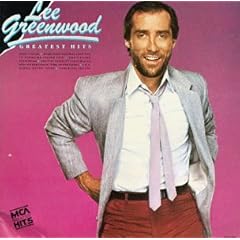
Lee Greenwood was very much in the former group.

Is he country?  Is he Vegas?  Is he new wave?  He’d just as soon you not worry about it!

Having worked in Country radio a few times – in 1982 and 1984 and 1991-92 – I can remember what an utterly dismal thing country was, in that wretched era before Garth Brooks and Patty Loveless and Dwight Yoakam and Holly Dunn and the whole crowd of “back to the roots” singers paradoxically made country a colossal success by dragging it “backward” twenty years.  Lee Greenwood had been one of the big offenders, doing treacly, overproduced glop whose only connection with “country” was a little arklahoma twang in his voice and, of course, a relentless tugging on the heartland’s heartstrings.

Which is what gave us “God Bless the USA“.

And make no mistake about it; “GBTUSA” has everything that made Lee Greenwood such a lowlight of “country” music for that entire dismal period of time; lots of violins, but nary a fiddle to be found; electric guitars, but none of them pedal steel; lots of vocals, but the most generic voice imaginable.  That cloying sense that the song is trying hard to push every button you have.

Perversely, though?  It works.

Well, maybe not for you.  Indeed, as John Edwards once said whilst running between a hair appointment and a date with his mistress, there are two Americas; one that hates “God Bless The USA” and is mildly creeped out by everything it stands for, and another that may or may not be silently amused by the song, but still gets a thrill in its heart from all of its glorious, mawkish sentiment.

And it is gloriously, over the top mawkish; if your heartstrings aren’t rated for 2000 points of pull, they will snap like Nancy Pelosi’s facial muscles when someone pops a paper bag behind her.

But aside from being perhaps a perfect lab experiment showing the absolute limits of emotional button-pushing in song, the song has been adopted – intentionally or not – by that second America, as a sort of huge, glowing middle finger aimed at the first one.  Because when Greenwood and his background singers – it could be the Red Army Choir, for crying out loud – wind up and attack that last big finish, it challenges you not to say “Yes, Chauncey Boston-Cosmopolitan, the idea of America transcends its problems; the promise of this experiment supercedes its mistakes; it is a concept deserving of loyalty for its own sake; we are a shining city on the hill, and we are the best attempt at a nation that this world has ever seen, viewed objectively and ethically.  You have the right to disagree – but in the meantime, shut your impotent babbling pseudointellectual piehole, because I’m gonna sing and wave the flag for a moment”.

A symptom of obstinate, unthinking jingoism?  A thud-witted rejection of the reflexive dialecticism that “educated” Americans are supposed to embrace (and which many do, most of them with little more literacy than the most jingoistic redneck), that believes to every good there must be an equal yet opposite evil?

Perhaps.

But let me say in response that there ain’t no doubt I love this land.  And, in conclusion, God Bless the USA.  Or, as the kids today say, “America; F*** Yeah”.

Whoosh.  Dang, I’m stoked. 

There. I believe I settled that.

Things I’m Supposed To Love, But Can’t Stand: Radiohead

Monday, August 24th, 2009

If you converted all the critical plaudits Radiohead has gotten over the past fifteen years or so into liquid form, and poured them into all the world’s supertankers, then an awful lot of supertanker crews would be frantically bailing their overloaded vessels out to keep the keels off the harbor floors.

Now, I’ve been around music a long time. I’ve listened to a lot of it.  I’m about as openminded as it gets.  I dig music on two levels; on the one hand, there’s music that grabs me in the liver, that connects with me emotionally right where I live and breathe.  It’s the stuff I wear on my sleeve in this blog – stuff like Springsteen and Tchaikowski and Emmylou Harris and Richard Thompson and Prince and the Clash and Gustav Mahler and Sam and Dave and piobaireachd and Iris Dement and the Iron City Houserockers and middle-period Public Enemy and the Black Watch Pipes and Drums, and all kinds of stuff in between.  Stuff that grabs me in the soul.

And then there’s stuff that misses my soul to one degree or another, but which I admire from a technical perspective as a musician, much like a programmer might admire good code or an engineer a perfect gusset plate, as great technique for its own sake.  Stuff like Yngwie Malmsteen or or Alban Berg or Rush or Bela Fleck or Miles Davis or Charles Mingus or Rimsky-Korsakoff – stuff whose pure technical excellence I admire and enjoy to a degree, but which doesn’t grab me by the liver and say “this explains a key part of what life is about!”.

And at the juncture of neither of these avenues lies Radiohead.

Now, if you’ve followed this “Thing I Like/Things I Don’t” series over the past few months, you’ll know this is the point where I launch into a detailed explication of why, even though I know I should  like something, and indeed find things in his or her or their body of work that I do appreciate, there is a paradoxical hitch that keeps me from liking it, or interferes with my appreciation.

But not here.

Because while I’ve tried, and King Banaian (as Radiohead-y of a Radiohead fan as exists) has tried, and other ‘head fans have tried, I can’t honestly say I care about them on either level.

And as with most of these love/hate articles, it’s not that I couldn’t or won’t be converted.  And I’ll cop to the fact that the period from the band’s major-league debut up through what their fans call their “creative peak” (whatever that was – and if you get five Radiohead fans in a room, you’ll get seven answers to that question) happened at a time when I didn’t listen to much music at all, so it never really had a chance to get ingrained in my head, one way or the other.

It’s just that in a decade and change of (sorta) trying, nothing has pushed me in one direction or the other.

OK.  Not much of an article.  Sorry.  I’m a creep and I don’t belong here…

…er, wait.

To Everything (Turn Turn Turn) There Is A Season (Turn Turn Turn)…

Monday, August 17th, 2009

Twentysomething cops on the Jersey Shore have no idea who Bob Dylan is:

Rock legend Bob Dylan was treated like a complete unknown by police in a New Jersey shore community when a resident called to report someone wandering around the neighborhood.Dylan was in Long Branch, about a two-hour drive south of New York City, on July 23 as part of a tour with Willie Nelson and John Mellencamp that was to play at a baseball stadium in nearby Lakewood.

A 24-year-old police officer apparently was unaware of who Dylan is and asked him for identification, Long Branch business administrator Howard Woolley said Friday.

“I don’t think she was familiar with his entire body of work,” Woolley said.

“Oh, hey, Angela – isn’t he da guy from da Victoria’s Secret ads?”

“My secret is to keep going, keep working”

Thursday, August 13th, 2009

And that’s what Les Paul did. 

The legendary guitarist, and even more legendary inventor, passed away today at age 94 from complications to a case of pneumonia – but not before winning a Grammy for an album recorded when he was already past 90.

His big contributions, of course, came 50 and 60 years ago:

As an inventor, Paul helped bring about the rise of rock ‘n’ roll and multitrack recording, which enables artists to record different instruments at different times, sing harmony with themselves, and then carefully balance the “tracks” in the finished recording.

With Ford, his wife from 1949 to 1962, he earned 36 gold records and 11 No. 1 pop hits, including “Vaya Con Dios,” “How High the Moon,” “Nola” and “Lover.” Many of their songs used overdubbing techniques that Paul the inventor had helped develop.

“I could take my Mary and make her three, six, nine, 12, as many voices as I wished,” he recalled. “This is quite an asset.” The overdubbing technique was highly influential on later recording artists such as the Carpenters.

“Overdubbing”, as well as the multi-track recording technology that Paul helped pioneer, arguably was one of the most important facets in creating the production style that has dominated popular music (of all genres, from rock to R’nB to country to rap to whatever) for the past 45 years; it changed recording music from an essentially technical, almost secretarial exercise of placing mikes and recording performances into a self-contained art form of its own, limited less by the performance than by the producer’s imagination.

Of course, among musicians he’s most famous for his eponymous guitar:

 Paul was working on solid-body guitars in the late 1940’s, experimenting about the idea of trying to get more “sustain” from a note – to make the tone ring as long as possible.  He figured bright and early that the mass of the guitar was the key factor in retaining the vibrations that made a guitar old a note.  He famously wired a pickup and a string/head/tail combination onto a railroad tie and, as he related it, plucked a note, went out to lunch, and came back to find the note still ringing.

He worked from there:

Now I need to take a piece of wood and make it sound like the railroad track, but I also had to make it beautiful and lovable so that a person playing it would think of it in terms of his mistress, a bartender, his wife, a good psychiatrist – whatever.

And it worked; legendarily so.  The Les Paul in its many styles did for the electric guitar what dubbing did for recording; revolutionized it. 

What a life!  Think about it; doing what he loved (playing music, tinkering with instruments) and doing it well not only made him a living, but left behind a legacy that pretty much everyone in both fields will owe a debt to forever.

Hard to beat that!

RIP, Les Paul.

There Was A Time…

Wednesday, August 5th, 2009

…when you could count on Shot In The Dark to react to this sort of “news” with incompetently-concealed ennui.  I’ve never cared for AmIdol much; if overwrought, over-ornamented Mariah Carey knockoffs were money, America would have no deficit already.  But for Kelly Clarkson, Jordin Sparks and Chris Daughtry, I doubt I could pick out a single winner, much less contestant.

But now, the news that Paula Abdullah has left the show means something.  Before, I’d have yawned…

“With sadness in my heart, I’ve decided not to return to #IDOL. I’ll miss nurturing all the new talent, but most of all…being a part of a show that I helped from day1 become an international phenomenon,” read two tweets posted shortly after 7:30 p.m.

Fox confirmed the news shortly afterward

…but now, with the addition of Bogus Doug – perhaps America’s foremost Idologist – Shot In The Dark leaps to the forefront of AmIdol coverage.

Which is good, because I was wondering who the cute valley girl was, sitting with the gay british guy and the guy who replaced Ross Valory in Journey.

Something Is Found, Something Is Lost

Tuesday, August 4th, 2009

A while ago, I wrote a post about Gordon Lightfoot.  As the comment thread wound on, I noted a moment in my past:

So there’s a Lightfoot mystery; while driving across southern MN in about 1988 or ‘89, I heard a song in the distance on an AM station out of Long Prairie; it was late at night, and the music was slightly garbled and distorted by atmospherics, but I heard a Lightfoot song from the era that sounded, in the distance, almost like a Big Country song, with what sounded like big, skirling guitars keening in the background almost like bagpipes. It was one of those moments you only got on AM radio; a little four minute ephemeral snippet of beauty that disappeared (seemingly) never to return again. Or so it seems, having looked for close to 20 years for the song…

As often happens with these things, I didn’t have to wait long for a completely unbidden answer:

The Gordon Lightfoot song with “big guitars skirling like bagpipes” sounds like the title track of the 1983 album “Salute”. The album has since been released on CD.

Dave, Melbourne, Australia.

So I went out, and found the song.  Dave in Melbourne was right; “Salute” was the song.  Mystery solved.

And on the one hand, it’s cool; I got a 20-year-old mystery solved with less effort than it took to think about it.

And on the other, I thought “kids today are missing something”.

Today, with the internet, anyone can see or listen to anything, pretty much anywhere.  Most questions can get answered in less time than it takes to formulate the question.  The world has gotten very, very small.  And I have no idea what it’s like to be a kid from age, say, seven through 17, today with access to pretty much everything, everywhere, I sometimes wonder – what do kids wonder about?

One of the signal experiences of my early-mid teens, growing up three doors down from the edge of the earth in rural North Dakota, was getting hold of my first radio, and carefully tuning around the dial to find news, sports, music, accents, sounds…stuff from places outside my hometown.  Dialling the twitchy little radio very, very carefully, I heard about shootings in Minneapolis (via, what else, WCCO), concerts in Chicago (via WLS and WBBM), unintelligible Spanish nighttime show conversations from Juarez (XEROK), weather in Denver (on KOA), corruption scandals in Cincinnati (WLW), and above all, music. 

And all of it was ephemeral – little audio shooting stars that flashed across the ether to my memory – and very, very low-fidelity, just the way God and Marconi intended radio to be.  Everything was washed through a layer of AM frequency compression and clipping, mild (hopefully) static, and occasional atmospheric harmonics that made it seem that I was listening to transmissions from another planet. 

Which, it seemed sometimes, I was.

And the sounds of music via AM radio – flat, mid-rangey, with a garnish of high-end fuzz and the occasional wave of high-pitched static washing across it like a bright audio searchlight in the dark – are some of the most intense memories I have of those years.  I associate it with almost everything from those years; discovering the world, friendship, love, boredom, antsiness, intoxication, loss, late-night burrito missions, leaving; for every one of those, I can recall a night in my room or in a car out on some prairie road, tuned in to WLS or KFYR or KOA, with some song in the background, more poignant and memorable for being scratchy and distorted, as much a part of the memory of the situation as the situation itself.

And for a kid who was 19 before he saw a city bigger than Fargo, it was the stuff that launched a thousand dreams.

Maybe I’m being provincial or curmudgeonly – I’ll cop to it – but I don’t see that happening with an IPod.

Things I’m Supposed To Love, But Can’t Stand: Frank Zappa

Monday, July 27th, 2009

Yeah, I know – Frank Zappa was a really great guitar player…:

…although I never really cared for him there, either.

Over the years, I’ve been told “the Mothers of Invention were the best band of the sixties!”

Which was, of course, rubbish; they were just another big, self-indulgent jam band, like the Grateful Dead without the pot-headed geniality but with all of the snide, smarter-than-thou precociousness that the world would soon call “Frank Zappa”.

Frank Zappa’s greatest trick was convincing the world that “shallow, smarter-than-thou aping of people with real talent” was “groundbreaking”.  If we accept that Frank Zappa was the love child of Jerry Garcia, Jello Biafra and Weird Al Yankovic, then ask yourselves these questions:

  1. Can three people have a love child?
  2. If those three people could have a love child, would it be a good idea?

Oh, no doubt about it; Zappa was a clever fellow.  “Sheik Yerbouti”, his disco parody album from the late seventies…

…was one of the best visual gag/puns of the decade.

But his music?

“But he was so clever!”

No, he wasn’t.

“But he was a groundbreaking innovator”.

No, he was a dyspeptic crank with a creative streak.

“But he was a musical genius”.

No, he was a musical footpad with a cult following.

“But he was funny…”

Yeah, I know – don’t eat yellow snow.  Got it.

From the day I checked The Mothers’ “Weasels Rip My Flesh” out from the Jamestown Library, to the day he passed away (lamentably young, I’ll add), I detested his music; I’d rather be forced to listen to early-period Pink Floyd than any of Zappa’s various incarnations.

But disliking music is a fairly ambient thing.  My visceral dislike for everything Zappa represented was cemented years after my ennui for his music was set in stone.

Back in 1980, Zappa appeared on the New Years’ Eve edition of ABC’s old SNL knockoff Fridays, doing a “Top Ten Albums” countdown.  Predictably, he hated every album on the top ten (except for the recently-murdered John Lennon’s dismal Double Fantasy, which he called “a testimony to the good taste of the American record-buying public”). 

Now, #5 for the year was Styx’s vacuous Paradise Theater, an album I personally had no time for.  I’d developed a cordial dislike for Styx by this point, especially anything involving Dennis DeYoung, inflamed by having had to play the sappy, treacly, unbearable megahit “Babe” about a million times at my radio job in the past year). 

But what did Zappa mention in his review?  DeYoung’s whiny “woe is me” over the travails of being a spoiled rock star?  The trite bombast of everythign DeYoung touched?  The conceit of doing a concept album about a theater at all?

No.  He said – and I remember it word for word, 28 years and change later: “Styx.  They grow wheat where these guys come from”, before flinging the album away. 

Yes, Frank F****ng Zappa.  They grow wheat where Eddie Cochrane came from, too.  And they grew cotton where Carl Perkins and Johnny Cash and Buddy Holly and Chuck Berry came from.  Bruce Springsteen comes from tomato country.  Jimmy Hendrix?  Apples.  Liverpool was big for oats and potatoes.  And Frank Zappa. who was not fit to carry any of their gig bags, obviously came from wherever they grow bumper crops of ass***es.

Frank Zappa – rest his soul – was a waste of musical time.   He bores me.  Of him, no more shall be said.

Two Small Steps For Man

Monday, July 20th, 2009

Why yes – I do remember sitting in the living room on a balmy July day and watching, like everyone else in the world, Neil Armstrong’s first steps on the moon. 


As I recall, Mom was there; Dad was (again, if I recall correctly – and I was six, for crying out loud) was off teaching summer school. 


It’s hard to explain to people who weren’t old enough to remember it – or who weren’t born yet – just how exciting that moment was.  Granted, I was very young, and I certainly couldn’t speak for all of society, but the nearest I can remember, there have been no similar events that brought pretty much the whole world together in excitement, worry and prayer like the first moon landing.  Maybe 9/11, although that was very different, obviously.  The whole world just doesn’t get behind much of anything anymore.

But there was a double-shot of excitement for me, that day.  When Dad came home, he brought…my first guitar!

It was a cheapo catalog model that some kid had left in his locker three or four years earlier; it was the kind of thing that’d cost maybe $69.99 at WalMart today, and probably under $20 at the time.  It was missing a string.  And after I banged on it a little, it went into the closet, coming out over the next seven years to serve as a boat, a fort, a rifle and any number of things, until that day in March of 1977 when I decided I had to be a guitar player, dragged it out, put two new tuning machines and six new strings on it, and started working my way through the Gene Leis chord book.

Things I’m Supposed To Hate, But Don’t: Everclear

Monday, July 20th, 2009

Oh, I suppose after having written a long piece about my ambivalence about single-malt Scotch, you’re thinking “there Berg goes; he’s talking about grain alcohol.  That explains a lot”.

Perhaps it does:

Eveclear is a pure grain alcohol.  198 proof (that is to say, 99% alcohol) in its standard form (it’s diluted to 175 proof in Minnesota), Everclear is a common request from Minnesotans whenever I go back to visit North Dakota; it’s the main ingredient in homemade schnapps.  More importantly, some of my most treasured memories – or fragments of memories, anyway – started out with shot after shot after shot of the delicious, clear beverage.  Which also doubles as a lamp fuel if you’re stranded in the woods…

…oh, OK. I’m yanking your collective chain.  No, while you can drink the stuff, it’s really stupid to try.

No, I’m actually talking about the band:

Everclear, a Portland-area punk band led by Art Alexakis, had a brief Top-40 heyday in the mid-nineties.  They had (by punk band standards) a fairly brief swerve through “underground” success – which I mostly missed, other than reading snippets and hearing things from friends who still had time and energy to keep up with music; my kids were little, I was changing careers around and trying to teach myself a new trade, and music barely qualified as background noise for the most part.

But the band struck it big in 1996, vaulting out of the underground with So Much For The Afterglow, with a troika of singles, “Everything To Everyone”, “I Will Buy You A New Life” and “Father Of Mine”.

Now, before I heard any of this, I started reading (on that new “web” thing I’d just discovered) the usual punk kids, doing the same thing they do every time a punk band gets mainstream success and income; “Sellout!”.  That, I expected.

The part I didn’t expect was the sniveling some of the punk kidz were doing about the music itself; “boring stuff about parents and being a father”.

So I cocked my ear to it.

Turned out Alexakis was about my age (actually eight months older), had (unlike most rock and rollers) a kid or two, and that the singles that were starting to leak out on the radio were about…

grown up stuff.   Having kids.  Trying to be a decent father and feeling really inadequate at it.  Trying to keep a relationship from fizzling out.  Y’know – stuff that actual grownups do when they have left the club scene and packed their guitars and amps lovingly away in the closet and have to get on with real life. Stuff that was real to him and, I add in retrospect, me, at the time.

Santa Monica” is, along with “A Man In Need” and “Tunnel Of Love”, perhaps the best song ever written about watching a relationship crumble from the inside; the song has a wistful, doomed hope in clinging to the familiar (“we can sit beside the ocean, leave the world behind, swim out past the breakers, watch the world die”) that, no matter how many times its repeated, rings hollow; we know as well as the singer does that there’s really nothing to be done about it – there’s just too much ugly behind the hope in the chorus (“I am still dreaming of your face/Hungry and hollow for all the things you took away/I don’t want to be your good time/I don’t want to be your fall-back crutch anymore”).

But rock and roll is crawling with great breakup songs, from “Backstreets” to, yes, “The Breakup Song”.

What Rock and Roll does not have many of is songs about being Dad.

I was sitting in a cube at my job in 1996 when “Father Of Mine” came on the radio.  Alexakis’ real father left his family when he was young – I didn’t need to read anything to figure that out.  What catches you – or at least what caught me, 13 years ago – about the song is the blood-curdling anger that Alexakis feels for his own father and, above and beyond that, the fear-laced hope that he won’t pass the baggage from that horror, and well as fresh horrors of own, on to his own kids.

Having little kids of my own at the time, the song caught me between the eyes.  The song was as angry as anything the Clash ever did – but the anger wasn’t a vehicle adolescent posturing and puerile politics.  It hit me where I lived, not at age 16, but 33, and the anger and the fear were no different for me, and it hit me just as squarely as “London Calling” had, half a lifetime earlier.  Maybe moreso; this was my life.

It still is.

And for that brief moment, once in history, old punks didn’t die; the anger just grew up and got some purpose.  Just like the old punks.

Alexakis has never come close to that peak since then.  The band went the way of all punk rock bands, self-destructing not long after their brief heyday.  And Alexakis did  embrace puerile politics, eventually; he was a delegate to and entertainer at the 2004 Democratic National Convention, and a reformed Everclear released a single, “Jesus Was A Democrat”, last year.  I don’t even like it when people claim Christ was a conservative; the less said, the better.

But we’ll always have 1996.

Totally Batass

Thursday, July 16th, 2009

Violinist wiht the National Symphony makes a violinin out of a baseball bat.

And danged if it doesn’t sound pretty cool…

Hot-But-Underutilized Gear Friday

Friday, July 3rd, 2009

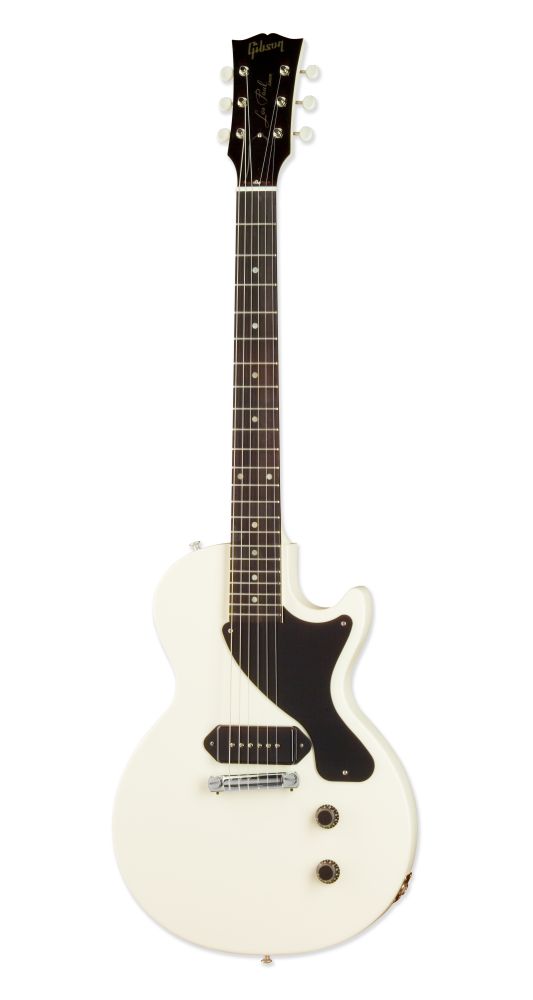
This isn’t exactly news; it’s almost three years old in fact.  But I just heard about it the other day, as a couple of guys from Kansas (who knew they were still together?) talked about it on the KQ Morning Show; Billie Joe Armstrong has an endorsement deal with Gibson for the reissued Les Paul Junior.

Well, the big news in signature guitars last week [in 2006] was Gibson’s announcement of their new Billie Joe Armstrong Signature Les Paul Junior – an apparently accurate reproduction of the Green Day front-man’s original 1956 LP Junior affectionately known as “Floyd.” (Hehe, you can’t make this stuff up!)

Now, I have nothing against Green Day; truth be told, I like some of their stuff.  Dookie is a great rock ‘n roll record; Nimrod was that plus all sorts of signs that the band wasn’t just a bunch of nutslap punks without a brain; American Idiot proved that they were smart-ish nutslap punks with delusions of intellectual grandeur but who gave us the everlasting gift of the most indelible mental map of the 2000’s liberal, via the spectacle of a bunch of pot-addled barflies yammering about how stupid everyone between the Sierra Madre and the Hudson were; watching bass player Mike Dirndt trying to explain his higher state of awareness through his chiba-monkey’s stammer was one of the better bits of found comedy back in 2006, in those days before Minnesota Progressive Project.  Politics aside, they have an undeniable way with a hook.

But one thing they’re not – with the arguable exception of drummer Frank “Tre Cool” Wright – is really, really great musicians.

Billie Joe Armstrong is a serviceable guitar player at best.  There’s nothing wrong with that; in a power trio (a guitar/bass/drums band, like Green Day), holding down the rhythm is the most important part of the job.  Not only is not everyone an Eddie Van Halen or a Steve Vai or a Richard Thompson – it wouldn’t be a good thing if everyone were.  There’ve been many excellent guitar players who don’t set the fretboard on fire with solo pyrotechnics; Tom Petty, Joey Ramone, Joe Grushecky, John Lennon, Tom Fogerty, Neil Finn, Colin Hay, Paul Stanley, Chrissy Hynde, Joe Strummer – all were perfectly capable guitar players who held down an important place in their various bands, playing rhythm.  All of them are perfectly respectable guitarists.  None of them are renowned as great guitarists, although all of them are good musicians in the same way a second violinist in a string quartet might not get the virtuoso solo nod, but still has to hold down a vital part in the ensemble.

But it used to be that getting a guitar named after you took years of diligent practice and a level of technical accomplishment well above the merely capable.  Eric Clapton, Jimmy Page, Jeff Beck, Pete Townsend – they got guitars named after them.

As to the Les Paul Junior?  It’s a single-pickup solid-body single-cutaway; the necks always struck me as hopelessly thick and clunky, and the inflexibility of the one-pickup electronics – one volulme pot, one tone pot, and that’s it – always drove me nuts (although I suppose if you were playing through a modeling amp, like a LineSix, it wouldn’t be such a problem).  Punk rockers loved ’em; Paul Westerberg (a much better guitar player than Armstrong_) played ’em, among many others.

Things I’m Supposed To Love But Can’t Stand: The Beatles

Tuesday, June 30th, 2009

No, not “The Beatles” as in “everything they ever did”.

The Fab Four that got off the plane at LaGuardia and appeared on Ed Sullivan?  They were one amazing band – all exaggerated backbeat and fearless looping harmonies and everything that was good about skiffle and white-boy R’nB all rolled into one.

The band that did Rubber Soul and Revolver?  With the fascinating harmonies and stuttering rhythms (“She Said”) and the palpable sense they were wallowing in the pure joy of being able to create music for a living? Amazing stuff.

Even Sergeant Pepper’s Lonely Hearts Club Band has its joys.   But between the grooves the rot was showing.  Where once there was joy and wit and the pure fun of playing rock and roll (even very inventive rock and roll) in front of a crowd, there was a new, introverted, baroque sensibility creeping in.  And while Pepper was a great record, it only got worse.

Over the rest of the band’s career (and it’s kinda funny to think that “the rest of their career” was only three more years, and their entire career as a superstar band was shorter than the run of That Seventies Show), though…

…well, I’ll cop to it.  I can’t stand most of it.  Sure, there are enjoyable, even fantastic, moments.  But there is no Beatles album after Pepper that I can listen to all the way through without tuning out and looking for something else.  From the self-indulgent baroque noodling of Abbey Road to the self-indulgent psychedelia of Magical Mystery Tour to the self-indulgent self-indulgence of The White Album, everything the Beatles did after Sergeant Pepper bores me stiff.

Espectially White Album.  After a lifetime of hearing friends tell me how absolutely freaking essential it is, I just have to respond for the record; The White Album is the most overrated record ever hatched upon the world. Not boring.  Not bad.  Just overrated.

You can disagree.  I expect many of you will.  Go for it.  But after thirty-odd years of trying, I can not find a way around it; The White Album doesn’t even rise to the level of “doing nothing for me”; it just falls flat.

Perhaps it’s the sound of John Lennon seizing control of the band; Lennon/McCartney were geniuses – together.  Separately?  McCartney was a featherweight popster, and Lennon was a misanthropic mope.  Up through Sergeant Pepper, they cancelled each others’ worst characteristics out.  After?

Ugh.

Every time.

Do You Remember the Time

Friday, June 26th, 2009

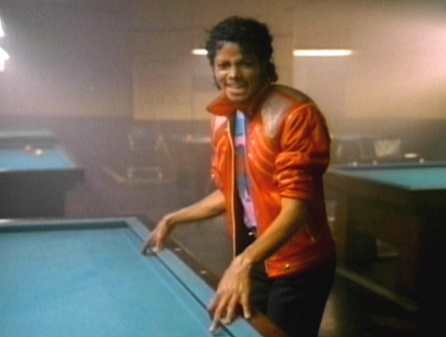
One of his lesser-known songs (and videos for that matter) Do You Remember the Time is one of my favorite Michael Jackson songs; the second track of Dangerous, released in 1991. Click the pic for the video.

As Things Were

Friday, June 26th, 2009

It occurred to me last night; my kids have no concept of Michael Jackson, other than the freakish tabloid-fodder plastic-surgery nightmare figure he’s been their entire lives.  Indeed, I dont’ think anyone under age thirty has any other reference for Jackson.

But walking through the parking lot at Rainbow yesterday, I did hear three different people cranking Thriller and Off The Wall in their cars.
After the past twenty years of tabloid fodder, it’s easy to forget…

…well, I almost wrote “Who Michael Jackson really was”.  I don’t know if Jackson himself, much less anyone else, knew that answer.

But it is easy to forget the swathe he cut through popular music from the late sixties to about 1988.

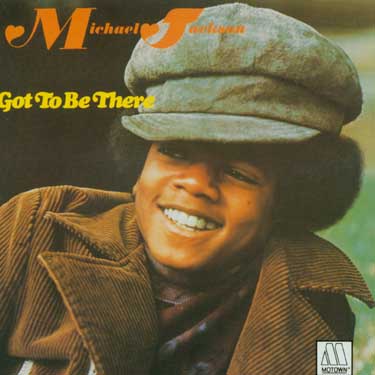
It’s hard to remember sometimes that the Jackson Five were not just a child-prodigy novelty act,

…or that Off The Wall, cut when he was barely twenty, was not only one of the highest points of seventies R’nB…

…but a hell of a lot of fun.

Of course, there’s been plenty written about Thriller  – the biggest selling record of all time, and one of the soundtrack albums for the entire decade.

Plenty has been written about Thriller.  I really have only one thing to add.  Growing up (at that time, going to college) in one of the very whitest places in the world (I never met an Afro-American face-to-face until my late teens), I didn’t encounter a whole lot of R’nB as a kid.  Or late teen.  Or college kid.  It took an album like Thriller to crack places like…

…well, everywhere.  Especially where I was at the time.

The early eighties were one of the great periods in the history of popular music not because of Thriller, necessarily, but because of something that helped producer the album: in the early eightes, like the mid-fifties and the mid-sixties, “black” and “white” music cross-pollinated like ever before and, sadly, never since.

In 1981,popular music was divided as strictly as Berlin was.  R’nB and rock met on the top forty, but only as a measurement of sales.  Black audiences and white audiences prett much kept to themselves.  And MTV was getting beaten on for only playing white artists (back when, for those who remember, they actually played music videos).
And then, Eddie Van Halen played on a Michael Jackson song.

And for half a decade or so, the black and white divide in music evaporated.  Almost overnight, the best rock band in America was two white guys, two white girls and two black guys led by a pint-sized prodigy from Minneapolis.  Suddenly synth-pop imported R’nB conventions wholesale.  Suddenly Aerosmith led rap’s crossover to the mainstream.  For half a decade or so, black
Could that happen with music today?  At all?
Of course not.  I doubt it could ever happen again.  But while it lasted, it was amazing.

All of the King’s psychologists, and all the King’s prescription meds, couldn’t untangle the workings of Jackson’s mind; growing up with a psychotic stage father who almost literally tortured his children to stardom, the mind-warping fame in his early teens, being the biggest star in the world at a time when most kids are just getting over acne and learning to drive inside the speed limit.

Jackson was poised for a “comeback”, starting next month.  It’s tempting to wonder – could it have worked?  If it had, it’d have been a first.  Most superstars – like Jackson’s ex-father-in-law and, now, fellow casualty of fame, Elvis Presley – are motivated by very different things in their fifties than in their twenties, and so are their audiences.  Some superstars – Bruce Springsteen, Prince – lose their original muse, but manage to find another one, more or less gracefully.  Others keep flogging the same horse that got them to where they’re at.  Could Jackson have extricated himself from the baggage of his own hyper-success, to say nothing of the problems in his own mind, and found that new spark?

Anyway.  Too much thinking.  RIP, Michael Jackson.

Jacko Fade To Blacko

Thursday, June 25th, 2009

Michael Jackson, King of Pop, dead at 50

A source tells us Jackson was dead when paramedics arrived. A cardiologist at UCLA tells TMZ Jackson died of cardiac arrest.

Once at the hospital, the staff tried to resuscitate him but he was completely unresponsive.

A source inside the hospital told us there was “absolute chaos” after Jackson arrrived. People who were with the singer were screaming, “You’ve got to save him! You’ve got to save him!”

Much more tomorrow.
(more…)

Things I’m Supposed To Love But Can’t Stand: Jazz

Monday, June 22nd, 2009

Yeah, I know – Jazz is the only American art form.  It ties together all of the strains of American life from the civil war to the present the late 1950’s.  It’s the apogee of American music.

And I’m straining to think of any American jazz in the past forty years that’s really grabbed me.

And when I say “grabbed me”, don’t get me wrong. I appreciate all music in one or both of two ways.  One of them is, as a musician, appreciating technical virtuosity and musicianship.  The other is, “does it grab me in the liver?”  And most jazz of the past fifty years is the former; I can appreciate virtuosity, and – better yet – musicianship.  I can appreciate Miles Davis or Larry Carlton in about the same way I do Steve Vai; yes, indeed, they are very good at what they do.  Of course, nothing they do grabs me by the liver and says this tells you something about life, love, the universe, and everything, the way Darkness On The Edge Of Town or “Boulder to Birmingham” or “I Cover The Waterfront” or Mahler’s Tenth Symphony or “Duke’s Place” or “Hand of Kindness” or “My Brain Is Hanging Upside Down” do.

Or the way jazz did, for a long time; stuff from the twenties through the fifties, Billy Holiday and Sarah Vaughan and Benny Goodman and Count Basie and Peggy Lee and Duke Ellington and the Dorseys all made music that was intricate and inventive and accessible.

Two things, I think, happened to jazz.

First: it ceded “accessibility” to the rest of pop music, and became a tight-knit, self-referential little club full of people who were all in on the same joke and loved keeping the uninitiated out of it.  Sort of like Simpsons fans who’ve shot too much smack.  Along about the time of Elvis, pop took the “accessible” route, leaving jazz – the form of the day was “bebop”, all quirky and technical and really really dull if you weren’t actually busy playing it yourself – to those who really cared about, well, quirky and technical and just plain holier than thou.

The other?  It became “art” more than just music.  Jazz became an audio museum more than a living, breathing art form. 

And I know – the jazz buffs will squawk “but jazz is alive and well and living and breathing”, to which I answer “Really?  When was the last time you saw a bunch of kids get together in a garage to start a jazz band to set forth and take over the world?  No, not a bunch of prodigies like the Marsalis brothers, normal people? When was the last time you saw a kid play air saxophone in the hall at school?  And no – I don’t mean that music has to aspire to the lowest common denominator, or be a “do it yourself” thing with no barrier to entry; most of music would be better if kids actually learned how to play these days.  But there you have it – how long has it been since you heard a normal, regular kid say with a straight face he aspired to play like Brandford Marsalis or Joe Pass or Charlie Parker?

How long has it been since a jazz – not “jazzy”, not “jazz-inflected”, but jazz – album captured the imagination of anyone who isn’t a musician in the first place?

Put another way; once people started getting National Endowment for the Arts grants to do jazz, and once it became the province of college music departments, jazz became to music what Latin did to languages.

Put another another way:  When was the last time jazz was any couple’s “song?”  Indeed; most jazz of the past fifty years is exactly like the scene from Jerry McGuire, where Tom Cruise and Renee Zellweger are gettin’ happenin’, and for whatever reason Cruise took the advice of the creepy jazz-fan friend (!) and put on some Miles Davis mix CD to help close the deal on the big seduction – and stops in the middle of the hot scene, and breaks up laughing; “What the hell is that?”, as Davis honks and blats abstractly away in the background.  Jazz has been a mood-killer since Charles Mingus supplanted Billie Holiday; Nine Inch Nails is better date music.

So jazz is fine.   I just…can’t stand it, too.

--> Site Meter -->