Author Archive

Where Credit Is Due: Don Vogel

Thursday, October 12th, 2023

The Twin Cities remembers Don Vogel as one of the most instinctively funny people ever to appear on the radio. “The Round Mound of Sound”, the blind guy who was going to drive you home.

I remember a lot of different Dons.

He was a guy who’d been blind since infancy, and who lived with it as gracefully and powerfully as anyone you’ve ever seen.

Notwithstanding that, he was a frighteningly vindictive man who never forgot a slight or a miscue. Once you were out with Don, you were out. The man had no loyalty or sentiment.

And if dark were energy, his dark side could have powered half the state. A morbidly obese epicurean with blood chemistry could qualify for Superfund cleanup funding, he always said his goal was to die by fifty. And he made it with weeks to spare, of metastatic bladder cancer.

He was the guy who gave me my big break out of college, not once but twice; once when he hired me to be his screener, and once when he went way out on a limb with management to get me on the air.

He was the guy at the enter of one of the most formative experiences of my life – my first job after college, where I got to do juvenile comedy all week and argue politics with strangers all weekend – perhaps the most perfect time of my life in many ways.

And he taught me a few lessons that have formed my approach to my entire life: always think three questions ahead; always be ready for the guest to not show and the phone lines to break down; never lose control of the conversation; there are four kinds of callers – great ones, average ones, crazy ones and boring ones; stick with the first three kinds.

They sound like radio lessons, but they work for life in general, if you think about it.

Soundtrack, Part 8

Thursday, October 12th, 2023

My first couple of weeks in the Twin Cities, I spent a lot of time in the car.

And Twin Cities radio stations spent a lot of time playing this song.

I’m not sure if it ever went to #1, but in a month of memorable music, it was perhaps the most chant-along-worthy thing on the radio…

…which led us to hours of racing around freeways or sitting in traffic, rocking back and forth and singing “Shout…Shout…””, and waiting impatiently for the reward of the fat, glorious guitar solo at the end.

I still feel like I”m in traffic, and don’t mind that much, when I hear this one. .

Where Credit Is Due: Dr. James Blake

Wednesday, October 11th, 2023

“Mitch, you’re not a Democrat. And I can prove it”.

Dr. Blake looked across his desk at me. I was afraid he might be right.


Jim Blake was the son of a New York cop, and still had the Queens accent to show for it. I didn’t know much more about his background, other than he had gotten a Masters at Rutgers and his PhD at Marquette – a school he’d chosen because he wanted to be in a city with an NBA team.

I didn’t know the whole story:

Born in Brooklyn, NY on April 26, 1947 he was the son of the late James and Louise Blake. By all accounts he was a very shy, sweet little boy who seemed beyond his years and would at times be sad and “ morbid” as his grandmother put it. At the age of three, he was presented with a baby sister, Pamela Louise. At the age of six, his beloved mother passed away with cancer. He was unfortunatelyl eft in the hands of a very uncaring parent and thus began a very rough and tumble childhood.

When he was eleven, a stepmother and a stepsister joined the household. He spent the next several years protecting his sisters and endured continued physical and emotional abuse. He spent many nights in the car outside of a bar watching his sisters until the bars closed and his “parents” returned. His sister still remembers the pain of watching her brother being abused even during times of illness and always having to “man” up.

But fatherhood and academia were where Dr. Blake found a footing in life.

Although Jim was the first in his family to attend college, and was successful wherever he went in one way or another, his family loved him for other reasons. He broke the cycle of abuse he experiences. He was a loyal husband and friend. A wildly amusing and unique father. Bedtime for his son was having a father that became a robot and would obey his commands by pushing”buttons.” His daughters were not read bed time stories but would be visited by a “creature from the cellar.” There were eight at one time; each with a different voice and personality. One was Sidney a particularly obnoxious, bratty character which gave him full rein to be just that. Some of the characters wore a wig or an old suit picked up at a second hand store.

He taught in Memphis before getting a job running the small, ailing English department at the small, ailing college where my mother worked, giving me the 80% tuition break that got me into college.

He arrived to find the English Department with only two majors and this at a liberal arts college. One year after arriving, he was made department chair and at the end of the first year there were more than 50 students enrolled as English Majors.

I didn’t know I was going to be one of them until the end of my Freshman year – because, after taking my first class with Dr. Blake, I found I had a facility, and before long a fascination, for analyzing narratives and finding the point behind the story. By the end of my freshman year I’d changed my major to English. I’ve never regretted it.

Along with analysis and ferocious logic, Dr. Blake had two traits that would make him a pariah in education today.

First – he was utterly up-front about the prospects for English majors after graduation. He never promised that we would find a “job in our field”; indeed, he was drearily realistic about the jobs that were “in the field” for English majors (who didn’t want to be high school teachers) back then; years of graduate school leading to years on the tenure treadmill (the situation was bad then, and worse today), years of work in literary or refernce editing (working for $15K in 1985 dollars a year in New York or Los Angeles), or the endless grind of trying to actuallyl be a published author that earned a living. Instead, he emphasized the strengths the degree did give us; thinking outside the box, digging for the narrative needle in haystack, and turning it into a living, The degree didn’t teach us the “how”, but it taught us how to find the “why”. Without Dr. Blake, I’m not sure I’d have had the mental agility to blunder into the career I’m in, one which didn’t exist when I was in college.

Also – he was a conservative. He referred to himself as a “Monarchist”. And while he didn’t push anyone, he represented for the value of the traditions that made Western Civilization the hotbed of intellectual liberalism and economic humanity that it is.

I’d been getting little precursor echoes of my worldview changing for years; my anger at Jjmmy Carter’s “Malaise” speech, watching the crackdown on Solidarity, talking with boys my age from Polish and Vietnamese refugee families…

…but it was Dr. Blake who helped me tie it all together. I doubt I’d have pulled the lever for Reagan in 1984 without Dr. Blake.

Dr. Blake took a job as a dean in Marshalltown, Iowa the year after I graduated, and in 1992 moved to take a job at a school in Oil City, Pennsylvania. Marriage and kids and divorce led me out of contact with him until 2016, when I started looking him up and found his obituary from the year before.

I’ve never regretted procrastinating more.

Anti-Democratic

Wednesday, October 11th, 2023

Given that justices Kavanaugh and Coney Barrett were appointed and confirmed via the same process that has covered for over 200 years…

… can someone tell me how our “junior senator” trying to popularize this kind of garbage isn’t a bigger threat to our system of government, the January 6 ever was

Soundtrack, Part 7

Wednesday, October 11th, 2023

Throughout this series, I’ve focused on memories triggered by music that is cemented into my brain as sublime.

But it wasn’t all good.

There was plenty of music that ranged from awkward to awful. And the more I write about it, the more of it comes back to me..

This was the second or third song I ever saw on MTV:

I gave ’em extra points for sneaking Christian imagery onto MTV (at a time when it wasn’t quite as uncommon as today) – and removed a few for it being…it.

But I never could find a reason to give this then-MTV staple any points at all…

…and am somewhat distressed to say I hear the one on the radio waaaaay more than I should.

It wasn’t all bad, per se. Some of it was just background music. This one was on the charts around this time in 1985:

Have you ever wondered what it looked like to watch two music legends deflate before your eyes, early October of 1985 brought that as well;

Of course, all of the above build up – or, rather, sink down – to the level of this song, which was peaking on the charts around this time…

…and remains , by acclamation, the worst song in pop music history.

Not all nostaliga as good.

I’ll get back on track tomorrow.

Sincere, Sober Suggestion

Wednesday, October 11th, 2023

(…since it sounds like “sobriety” is in short supply in government circles)

Dave Hutchinson. Dan Wolgamott. John Thompson (not a DWI, but certainly over the legal limit of entitlement and rage). And now DFL legislator Briona Curran – who, it could be fairly said, was a little buzzed the other night:

Perhaps Ken Martin and Co-Governors Klink and Flanagan need a new motto.

With all respect due, I humbly suggest:

One Point Six Minnesota.

Thoughts?

Where Credit Is Due: Bob Richardson

Tuesday, October 10th, 2023

It was the long, hot summer after tenth grade when I was looking for a way to make more money than the buck a lawn I was getting from mowing and raking (In retrospect, I think my parents and grandma had quite the racket going).

But I had no idea what I actually wanted to do.

There weren;t a lot of jobs for cripplingly awkward teenagers back then. And I talked myself out of many of the ones that were.

Perhaps as much out of exasperation as anything, one day around the time school let out, Dad suggested maybe I should call Bob Richardson at KEYJ, one of the local radio stations.

And one day, somehow, I drummed up the nerve to do exactly that.

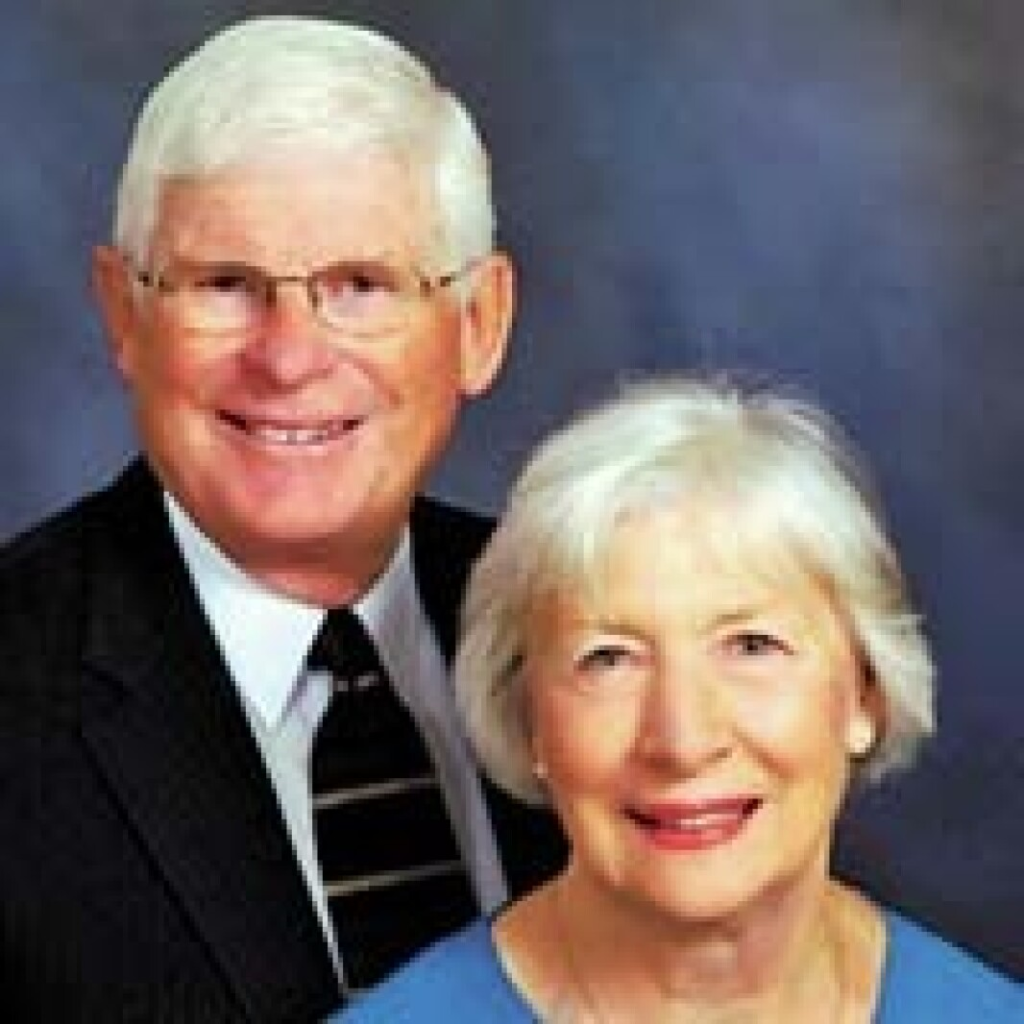
They say you can find anything on the internet. Photos of Bob from 1980 or thereabouts, however, don’t count. This is Bob and his wife of close to 70 years, Norma, from 2012. He doesn’t look a whole lot different today than he did when I worked for him.

Bob was the voice of Jamestown. With a booming voice that gave up nothing in authority terms to a drill sergeant, Bob had an easy sense of absolute authority about him that left me pretty much shaking in my shoes as I dialed. As I waited on hold, I took three deep breaths, and he picked up.

“This is Bob”.

I introduced myself, and asked if I might, maybe, apply for a job.

He audibly thought for a moment.

“You’ve got good diction”, he started. “And your dad knows something about speech – he can teach you a think or two…”

He thought for a moment.

“Let’s see how things look in the fall. In the meantime…”, he said, leading into a list of homework I needed to do. Read newspaper stories into a cassette deck, and listen to myself to see if I liked the way I sounded. Learn to read to a rhythm. Become familiar with local and regional politicians – the job involved not only reading the news, but writing it.

And so I waited, and read news stories, and listened to the horror that was my adolescent voice, and crossed my fingers.

It took three months, but one day in late July, Bob called, asking me if I was still interested. I jumped. I spent the next three Saturdays and Sundays waking up at 4:30AM, walking to the studio (above the White Drug store in Jamestown), and learning the basics – how to run the board, how to talk on the air, how to juggle all the elements of doing live radio, the news and weather and sports and fire calls and, least of all, records.

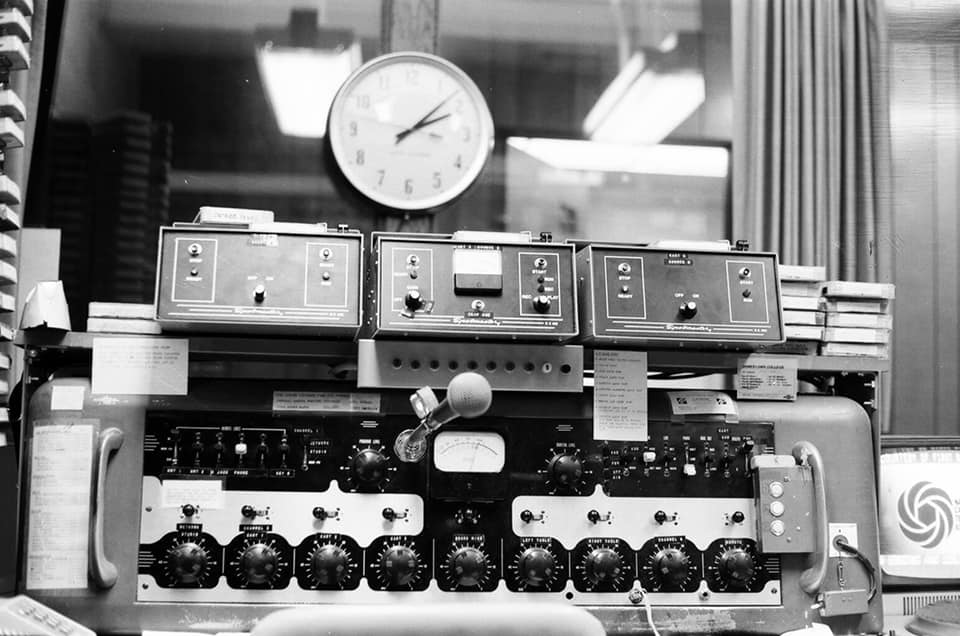
The main control room board at KEYJ. It was built in the late 1930s, which used to seem like a long time ago. That’s nothing; the production room board had a stamping from the 1920s, and I believe it completely. I can still remember what every knob, toggle and button does.

And on August 12, I soloed for the first time.

The rest is history. Lots of it.

I’m writing about Bob, partly because he gave me my first radio job – the job that vaulted me from “cripplingly shy, socially toxic, athletically inept adolescent” to “young fella who was kinda starting to believe in himself”.

It went way beyond that.

I was just the latest. and, as it turned out, last – of a long line of high school kids who got their start under Bob’s wing. Bob had seen it as part of his mission in buying and running that little 1,000 watt station to help teach kids how to do radio. He was uncompromising in his demands; be on time; cover the news, including writing up stories that haopened on our shifts; remember the station’s mission in the community; pronounce names right (Bob would have had a great time teaching Hugh Hewitt to do radio); learn and practice the craft of doing good radio. There was no time of the schedule, from sign-on at 5:55AM to sign-off at 11:55PM, where flubbing a name or writing a clumsy bit of copy wouldn’t get you a phone call, a stern talking to and a crisp invitation to do it better, then and there. You don’t repeat mistakes on Bob’s station.

And generations of local kids got their starts at KEYJ and went on to bigger things; legendary LA disk jockey Shadow Stevens (who started as Terry Ingstad at KEYJ when he was 12), as well as his younger brothers, including his youngest brother Dick, himself a highly respected morning guy; North Dakota radio news legends Dan Brannon and the late Mark Swartzell; Mick Wagner, today a very prominent jazz jock; radioman turned state politician Dave Nething. They are just the top of the heap; going to stations like KEYJ was, for a generation of radiomen and women, the best possible job to get out of broadcast school; in your first year, you’d do literally everything one could do in a radio station.

Bob’s still with us. I told him, 5-6 years ago, that he was one of my bucket list interviews. I could never close the deal to get him to come on the show; I’m not sure he thinks anything he did was worth an interview.

He was wrong. I never got to tell him that when I worked for him. There’s a first time for just about everything.

Soundtrack, Part 6: Notes From Underground

Tuesday, October 10th, 2023

Long ago, I told the story of my first Sunday in the Twin Cities. It was a free day, without job hunting or much of anything to do.

So I drove downtown. I visited First Avenue, had a burger, looked at Murray’s and vowed that someday, when I had a cool job and an awesome girlfriend and had made it in the Twin Cites I was going to get a butterknife steak at Murrays.

And I bought a tape – my first tape in MInneapolis, from my first Minneapols band. The Replacements.

And given my situation, this song seemed apposite…

…and I may have played it a few hundred times in the first week, and thousands more since then.

And this article reminds me – I gotta get down to Murray’s.


While we’re talking underground? REM hadn’t quite graduated to annoying me completely yet. This song came out too:

And, since we’re on less well-known music that bobbed up on the radio during this, perhaps the most exciting and diverse period in top forty music radio, there were these two songs, also rattling around MTV at the time:

“Whisper to a Scream” by Icicle Works,

And “Litarny” by Guadalcanal Diary:

As I kicked this series off, I allowed it might be possible that my situation was what welded the music from this entire series into my brain.

That’s probably true. But dang, there was a lot of good music.

Not all of it, of course . We’ll visit music tomorrow that was memorable in all the wrong ways.

Open Letter To The Entire Twin Cities Media

Tuesday, October 10th, 2023

To: Twin CIties Media
From: Mitch Berg, Obstreporous Peasant
Re: Comforting The Confortable While Afflicting The Afflicted

Minnesota Media,

The Klink regime – in this case, politruk Flanagan – have been making this claim in various degrees ever since the election:

Questions someone might think of asking the Administration:

  1. Where do they get this 33% number?
  2. They expect this number to be measured how?
  3. And measured by when?

Given the administration’s, uh, innumeracy, it’d seem to be important.

That is all.

Where Credit Is Due: Bill King And His Employees

Monday, October 9th, 2023

Bill King wasn’t your typical Presbyterian minister.

He spent, by his telling, a good chunk of his teenage years in one form of juvenile detention or another. He was a bit of a hoodlum until well into his teens. As he described it once, he didn’t get the right to vote until he was into his early twenties, as backwash from his teenage legal issues.

But somewhere along the way, he straigtened out, and literally “got religion”, went to college and then McCormick Theological Seminiary, and then sometime in his thirties got called to the FIrst Presbyterian Church in Jamestown.

And he created a bit of a stir.

Presbyterians were known as “God’s Frozen People”. King was far from frozen; he was an ebullient man with a sense of humor that could have found a home at a comedy club.

He encouraged the church – divided between older folks who’d been there forever, and younger parishioners, many of them college staffers – to loosen up. To engage. And, in a move that horrified some of the traditional Presbyterians, to applaud the special music – unthinkable to generations of staunch Knoxists. This actually launched a bit of a dispute – some people actually left the church.

But the Presbyterians have always valued a good, or ideally a great, sermon. It’s a trait that’s kept me in the Presbyterian church – albeit not the same one King presided over.

More on that later.

One of the things that drew my Dad, a speech teacher who gave speaker points to everyone, was the fact that King’s sermons were freaking brilliant; if you could get past all that clapping, it was absolute gold. And so when I was 11, we “converted”.

And King had a way of engaging even the pre-teen, and adolescent, me. Mitch the child had been bored and fidgety in the Lutheran services, with their endless up and down and aaaaaaal thaaaaat chaaaanting. King’s sermons had an uncanny way of having enough intellectual “oomph” to engage Dad and Mom, but were direct and clear enough to cause me to sit up, pay attention, and think “there’s something to this faith thing”.

And in ninth grade, in confirmation class, he gave me a lesson – more secular and psychological than theological – that redounds with to this day. Confirmation was serious in his church; kids could, and did, flunk; it wasn’t easy, but it happened. And there was a final conversation with him before the actual confirmation service. I ran over to the church, not quite sure what to expect, over lunch hour one spring day, and sat in his office, where he quizzed me on what i”d learned.

And then, a few minutes of his own observations. Where he started: “Mitch – I’ve noticed that you are far and away your own nastiest critic”.

He was right. And he still is. That internal critic still howls at me every day – and the voice of Bill King pops up, most every time, and reminds me to be as forgiving to myself as God wants to be.

It’s hard to describe, but was an amazing gift in its own simple way.


King didn’t run a big church – but he had a little help.

First came intern Jim Jacobson. Also from Chicago, aso with a past out of a Hunter S. Thompson novel, “Jake” was 27 and in his senior hear at Jamestown College, after having been a heroin addict for many years, he was also a great guitar player. He sold me my first electric guitar – a 1960 Fender Jazzmaster – and taught me a lot, about playing guitar and other even more important things. He was a minister in Hallock the last I heard of him. I’ll have to look him up sometime.

Then, Mick Burns and his on-again, off-again girlfriend Joni Jordheim. Twin Cities natives, they ran the youth group at a time when Presbyterian churches still had enough families to warrant having youth groups. It’s hard to explain how important that group was for me. Mick and Joni gor married 45 years ago, by the way, and after a career running churches in Fargo and Baltimore, they just retired back to Oakdale.

Mick was a drummer in a Christian rock band up at the college. Along with Jake, there was another guitar player, Ron Allen. Ron was the fullback on the college football team, and a great one at that. He could have been playing at a higher division – but he’d been dragged to Jamestown by his then-fiance, Jenny, of whom more in a moment. Ron had an amazing talent for relating the stories of the life-changing importance of faith in his life – stories that stuck with me during some of the more parlous times of my life. Ron was semi-famous for having been one of very few NAIA Division 3 players to get a tryout with an NFL team – he did a walk0-on with the Raiders in, I think, ’79. He’s also semi-famous because of his son, Jared, whom Vikings fans may remember.

Jared was not the son of Ron and Jenny – they broke up shortly after they arrived in North Dakota (although I do remember Jared’s mom, too). But Jenny was a huge influence; a student of my dad’s at a class he taught at the college, she became a long-time friend of the family. And in the summer after eighth grade, as I was struggling to teach myself to play a wrecked, cheap, borderline useless guitar, she lent me a Yamaha acoustic guitar that she wasn’t using. Which may have been what made teaching myself guitar actually do-able.

And playing guitar certainly had an impact on the next ten years of my life.


Reverend King was a “progressive” minister at at time when that was simultaneously a little out of the norm in mainstream Protestantism, and not all that remarkable to me. He was working in rural North Dakota; he could read a room.

His next calling, my sophomore year of of high school, was to a church in Madison, Wisconsin, where he got to let his Progressive flag fly. He was there until he retired, probably 20 years ago.

My politics changed – and, one day in the fall of ’86, after I’d not only changed politics, but become a conservative talk show host, I called Reverend King – partly to say “hi”, partly to nudge him a bit over the fact that the critical thinking he’s helped teach me had led me to that particular fork in the road.

He sounded disappointed. Probably not theatrically. But that was OK. I took one of his lessons to heart, and didn’t castigate myself too hard over it.

Soundtrack, Part 5

Monday, October 9th, 2023

Nothing about my first week in the Twin Cities ever smacked me upside the head quite as hard as my first rush hour.

I drove Cedar to 494 to try to get to 35W, to drive from Burnsville to Vadnais Heights for an interview.

And 494 during the morning rush hour is still a cardio workout.

Back then? In a barely roadworthy car, learning the few rules that the road had?

I flipped on WLOL. This song started:

The buildup, in my memory, went hand in hand with the traffic, the weaving and ducking and lane-changing, built up around me, mirroring the mental frenzy I’d just merged into.

I’m sure my blood pressure and heart rate still rise when this song come on, anywhere.

Figures

Sunday, October 8th, 2023

I take some time off from job, blog and radio show, and suddenly the biggest story in the world isn’t our senile president and Trump’s legal woes.

The fiftieth anniversary of the Yom Kippur invasion, no less. Couldn’t see that one coming.

Quietly hoping that this time Israel ignores the international yapping about cease fires and diplomacy, and builds a pyramid of the skulls of HAMAS fighters, and puts it at the approaches to Yad Vashem.

They really need to push the notion that that “never again” thing wasn’t a polite request. It clearly hasn’t sunk in.

One thing that is sinking in: someone missed their cue:

“All of Israel is asking itself: where is the IDF, where are the police, where is the security?” said Eli Maron, a former head of the Israeli navy, on Channel 12. “It’s a colossal failure; the [defence] establishments have simply failed, with vast consequences.”

HAMAS is directly supported by Iran, whose intelligence and special forces are among the craftiest in the world. While Berg’s 18th Law is in full effect, I’m going to go out on a short, sturdy limb and guess that Iran spent years helping HAMAS play intel-fu to conceal the attack plans.

This isn’t without precedent; even though the Yom Kippur War was a huge conventional operation with thousands of tanks and planes and hundreds of thousands of troops, it came as a complete surprise as well.

One thing that doesn’t need any post-attack study: Biden Administraiton policies have directly contributed to the situation. Reports say US weapons left in Afghanistan were used in the attacks; while I’m waiting for better confirmation there, it appears almost certain that US integrity and foreign-policy gravitas left in Afghanistan, or packed into boxes of money sent to Iran, was involved.

And the administration remains an embarassment:

That didn’t sound “unequivocal” at all.

Where Credit Is Due: Don And Pat Hall

Friday, October 6th, 2023

In couples terms, Don and Pat Hall were the American Dream.

Don was a kid from a fairly unsuccessful farm in Starkweather, North Dakota, who nonetheless had athletic talent to burn. He got a scholarship to come to Jamestown College, in Jamestown, where he lettered in Football, Basketball, Track and Baseball for all four years, setting some records that still stand at that school.

Pat Hendrickson was, if not the homecoming queen, the girl who got the queen through English class. The daughter of Sven Hendrickson (of which see earlier), a rural pharmacist, she came to Jamestown to major in English and become a teacher.

Don and Pat met at Jamestown College in, I think, 1931. And they were married until death, indeed, parted them temporarily, about seventy years later.

Both of them went on to teach; Pat taught English, Don covered Chemistry when he wasn’t coaching. And he was a superlative coach; he led Grand Forks Central through the only undefeated regular/post-season/championship march in the history of North Dakota high school basketball (until Jamestown pulled it off a few years ago), in (I think) 1940,

They had three kids – Jan (of whom more later), Jerri and Roger.

And then – sometime around 1952 or so – Don decided to chuck it all and become a businessman. He got a franchise for Lystads Pest Control – now a division of Ecolab – in Aberdeen, South Dakota. He packed up the family and moved…

…and spent a couple years crawling around under porches on hundred-degree days chasing colonies of wasps, and decided before long to take independence a different way.

As I used to say, to the delight of my classmates and the consternation of my teachers, he “sold drugs”.

Which was a breezy, sixth-grader’s way of saying he took his chemistry degree, and spent the next twenty-odd years of his career as a traveling pharmaceutical salesman.

I got to know Grandpa when he was at the top of his game – he had a pretty rocking route going on in the seventies.

He took me on his route once – a couple of days of driving from one small-town North Dakota drug store to another. Montpelior, Gackle, Wishek, Richardton, Medina, Glen Ullen, Dickinson, and a whole bunch I’m sure I can’t remember. He was on a first-name basis with all the pharmacists and owners.

It didn’t occur to me at the time that it was his third shot at a career. That didn’t really hit me until I was into my thirties, really.

Don and Grandma were married for close to seventy years before they passed away in Arizona, about a year apart, close to 20 years ago.

More on them later.

Soundtrack, Part 4

Friday, October 6th, 2023

Yesterday’s (and Tuesday’s) entry was a bit of eighties apocrypha, meaningful maybe only to me.

Today’s? Sublime, and a pretty universal pop culture reference.

Do I even need to introduce it?

The video isn’t just representative of the golden age of music video. The rotoscope noir-in-color is the golden age of music video. MTV would certainly have existed without it – but nobody would have cared nearly as much.

And the song itself – the bubbling syths and synth drums, the descent into the choruses, and of course Morten Harket’s iconic falsetto in the chorus?

I heard and saw this for the first time sitting on a friend’s couch, watching MTV for the first time. On top of everything else, this song says “Welcome to Minneapolis, and the Rest Of Your Life” to me.

Whevever I am, I feel “1985” down to my marrow.

Where Credit Is Due: Grandma Bea

Thursday, October 5th, 2023

My Grandma Bea was not an effusive woman. If there’s a stereotype of rural Scandinavians in America, it’s that they are pretty emotionally reserved, in a way that comes across as cold to some, passive-aggressive to others, and often just funny for those who get it.

Example: when I was born, Dad called his mother to tell her it was a boy.

“What’s his name?”, Bea asked.

“Mitchell”.

There was (so the story goes) a few seconds of silence on the line.

“Well, it’s not too late to change it…”, she averred, before the conversation moved on.

We lived six blocks from Grandma Bea for my entire childhood. Sundays, every week, involved dinner at Grandma’s, followed by “Wild Kingdom” and “Wonderful World of Disney”. Grandma was an amazing cook, and even made lutefisk that was utterly edible and enjoyable (if only as a garnish – never an actual meal). And her lefse was the highlight of most holidays.

She died when I was 17 – and while shes didn’t talk about her childhood a lot, I learned a thing or two over the years.


Bernt “Oleson” Greslie married Mary Nilson, the daughter of the postman in New Solem, Minnesota – a township that is the “suburbs” of Thief River Falls. They had four kids.

The youngest was my grandmother, Beatrice.

They spoke Norwegian at home; Bea didn’t learn English until she was in third grade. Like a lot of immigrants and their children, they kept the old language at home in the new country – which, as a young language geek, used to frustrate me immensely. I wanted Grandma to teach me Norwegian.

In retrospect, it may have been a good thing she didn’t; Berndt spoke the Trøndelsk dialect from the hills east of Trondheim – more or less the Appalachian accent of Norway. Still, it would have helped…well, today.

The family moved to a house up in Middle River, Minnesota when Grandma was very young. As always, I don’t know a lot about her childhood.

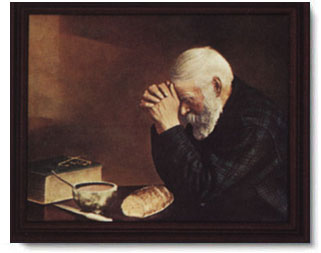
What I do know is that she had two aunts who must have been absolutely fascinating people. They were a couple of sisters who were proto-tycoons in the photography business. traveled the wilds of Minnesota and the Dakotas. starting photography studios all over the place and selling them off to new photogs. Some of those studios still exist. One that still does – thanks to a Chamber or Commerce that knows where its bread is buttered – but in any case has lived on in Minnesota lore, was the Eric Enstrom studio in Bovey – a stone’s throw from Coleraine. Grandma apprenticed with Enstrom, and one day in the early ’20s was involved in the staging, shooting, development and hand-coloring of this photo:

Bea carried on as a photographer’s assistant, and then photographer, in Bovey for another 7-8 years, until one of her aunts heard that a photographer in Jamestown, North Dakota needed another photographer. And one thing led to another…

….anyway,, we talked about that yesterday.

The interesting part, to me at least, was what came 15 years later.

In June of 1942, as the grit from the dust bowl was still getting swept out of corners, and while World War 2 is at its most uncertain moment, Oscar died, leaving (as the legend goes) $50 in the bank [1].

And Bea…just kept on. She worked, as Dad described it, sixteen hours a day for the next twenty-odd years, keeping the studio going.

Mommybloggers and child psychologists use the term “grit” today. Grandma Bea had grit. Forget the modern fripperies – she was tough.

I often think of Grandma Bea (not to mention the aunts who helped her get started) when I hear modern feminists – most particularly some of the Twin Cities feminist-bloggers of the 2000s – yapping about being warriors. I don’t think they’d have been able to keep up with Bea for 24 hours.


[1] Of course, after inflation, $50 in 1942 would be closer to $1,000 today, but still. .

Soundtrack, Part 3

Thursday, October 5th, 2023

My first couple of days in the Cities, I was staying on a friend’s couch in Burnsville, working through my list of job leads (which was short) and going through the want ads to try to find some kind of income.

Which left a little time for watching that new toy I’d found, MTV.

And I’m fairly sure this was the first song I ever saw:

It was Simple Minds’s followup to “Don’t You Forget About Me”, their megahit from earlier in the year.

And it was peak SImple Minds; arty, ingenious, pretentious, memorable, full of Jim Kerr’s preening, roiling with Charlie Burchill’s insidious guitar and Mel Gayhor’s sublime drumming.

I heard it on the overhead at happy hour the other day – for maybe the second time since 1990. And it transported my brain back to that living room in Burnsville.

But rather than waiting for a phone call that never came, iti promped me to write…

…well, this entire series.

Where Credit Is Due: Oscar Berg

Wednesday, October 4th, 2023

Nobody really knows where the name “Berg” came from. Oscar’s father, Andrew, was named Anders Olafson – “Andrew, son of Olaf” – in his home village in rural Sweden. He came to America in the late 1870s, and wound up in Lake Lida, Minnesota with the name Andrew Berg.

Berg? I have no idea. I have this 20%-serious theory that he arrived at the bureaucrats design at Ellis Island at the same time as a group of Hasidim from eastern Poland, one of whose descendants is trying to figure out why his family are the only Olafsons in their synagogue.

Andrew married Caroline Slorby, of and had two kids before she died in childbirth. Andrew them re-married Ida Venholm, another immigrant from Sweden, and their first son Oscar, born in 1889, was the first of ten more kids.

Oscar was born in Lake Lida, and grew up working on Andrews farm – but he had other plans.

Sometime in the 1910s, he headed to Saint Paul. There’s a photo, somewhere, of him in a Saint Paul streetcar driver’s uniform, in front of the Como Park streetcar station, the one at the south end of Como Park. And then the trail goes cold again.

He popped up again in 1927, starting a photography studio in Jamestown, North Dakota. Business was good enough that he needed an assistant. He wrote to a couple of women in northeastern Minnesota, XXXXXX, who’d spent years establishing photography studios all over the upper Midwest, including one in Bovey run by Ralph Enstrom that’d already produced a photo that would become iconic in the upper Midwest…

…but that’s coming up later on in the week.

But one of the aunts knew that one of the girls working at the Enstrom studio, their niece Beatrice, was looking for a move. Bea moved to Jamestown to take over as the assistant at Berg Studio.

They got married not too long later – 1930-ish, I think.

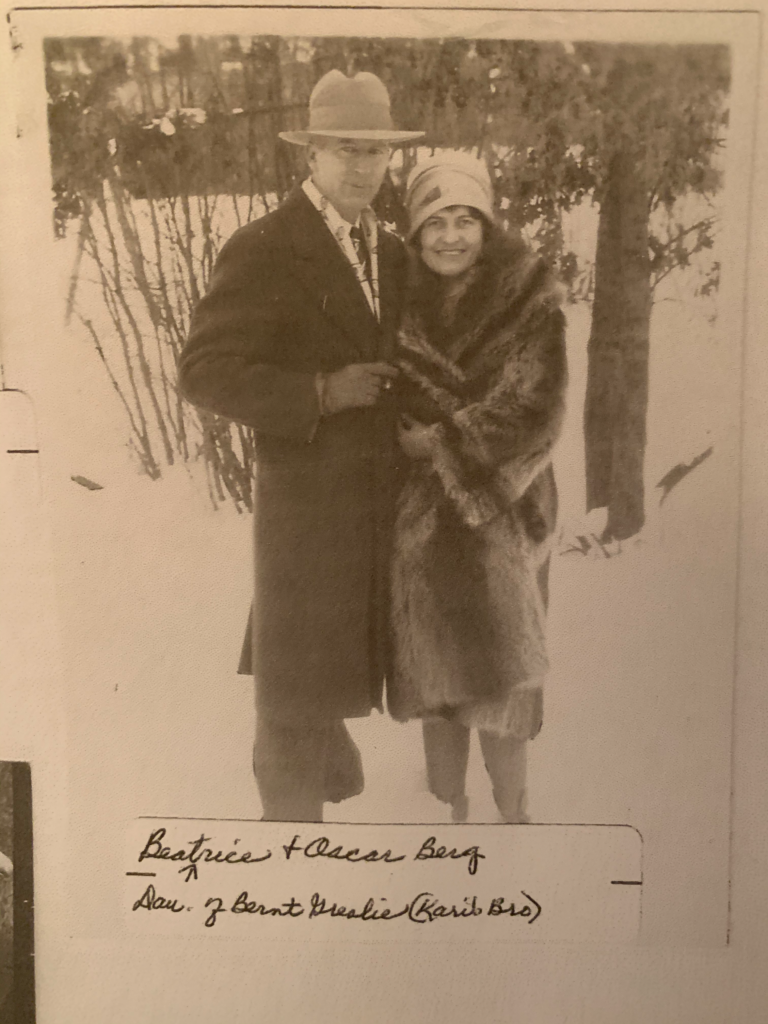
Grandpa Oscar and Grandma Bea.

My father, Bruce, was born in 1936.

Oscar was, by all accounts I’ve heard, quite the outdoorsman; a hunter, a fisherman, a golfer, a man about town (in a fairly small town).

But neither I nor my dad knew much about that. Oscar died of a cardiac arrest in March of 1942.

It’s been said that my brother, sister and I would have been very different if Oscar had lived longer. Oscar was, by all accounts, a lot more brusque, a little more “direct”, much more “Type A” than Grandma. We’ll touch on that later next week.

All I know is that Oscar, like a lot of guys in that era, had to adapt to a lot of circumstances in his day. I can’t imagine they romanticized it enough to call it “Reinventing Oneself” back then – it was more a matter of necessity spawning invention.

But as someone who’s had to do the same over the years, I would have so many question for Oscar.

Soundtrack, Part 2

Wednesday, October 4th, 2023

The two weeks before I moved to Minneapolis, I wrapped up on my roofing and siding job.

I had a boom box to help while away the lonely hours of hammering and sawing. To save battery power (four D batteries ain’t cheap), I usually tuned it to KFYR in Bismark – the only non-country music station in range.

This being the eighties, program directors were casting some very broad nets to try to figure out what’d latch on.

And this song peered out onto the radio a few times during those few weeks. It’s by Jane Wiedlin, erstwhile rhythm guitarist for the Go Gos.

There is no rational reason why this song, of all the hours of music I listened to on that job site that month, this one stuck with me. You never hear it on the radio – ever. I doubt most of you ever have heard it, or retained it if you did.

And yet this song, for me, feels like a hot day, smelling the hay coming in, watching the sun edging down toward the hjorizon.

I didn’t say all of these songs made sense.

Where Credit Is Due: Berndt Oleson Græsli

Tuesday, October 3rd, 2023

I sometimes wonder what it must have been like to be Berndt Oleson Græsli.

He was born in 1863, named Berndt Oleson – “Berndt, son of Ole”, in a tiny farm hamlet named “Græsli”. a place small enough that being known as your father’s son was plenty specific enough. Græsli was in the hills of east-central Norway, close to the Swedish border, in a municipality (think “township”) called Tydal, which was a tiny isolated backwater then, and still is today [1]. The oldest sons of each generation swapped between “Berndt Oleson” and “Ole Berndtson”, going back as far as I can tell to the early 1700s.

But times were tough in Tydal. My grandmother – Berndt’s youngest child, who grew up speakiung Norwegian until she was 8 – passed on stories she’d heard of people eating tree bark soup the winter after a crop failure. Sometimes the problems were external – the Swedes invaded in 1812 – but it just wasn’t a hospitable place.

The chronology isn’t clear, but at some point in the late 1800s, one of the many periodic depressions that afflicted Tydal, Ole Berndson’s father went bankrupt, and the farm got foreclosed on. Bernd, by this time in his twenties and with nothing to inherit, emigrated to the US, and moved to greater Thief River Falls, which today reflects the fact that it was a favorite destination for Norwegian emigrés. He took as his last name the anglicization of his home town, and became Berndt Gresley.

He got a job as a drayman, which was the trade he listed in the 1900 and 1910 censuses. By this time he’d moved to Middle River, MN, and built a house that was just torn down fairly recently

Being a drayman was a hard life – but it apparently not as hard as the alternatives. He sent word to Norway, and 5-7 years after he left Norway, his two younger sisters followed suit; Kari Olesdatter moved to a little town along the Canadian border in North Dakota, married, and became Carrie Dennett. Ingeborg married a farmer near Binford, North Dakota, and became, ironically, Ingeborg Olson.

I don’t know much about Berndt. He died 15 years before I was born, in 1948. I try to imagine sometimes what the world must have seemed like to him, starting out in a world not a whole lot different than it’d been 500 years ago, and seeing two world wars, rural electrification, trains and cars, aircraft of any kind much less jets, and a world where his children didn’t consider it preposterous to move more than 10 miles from where they were born.

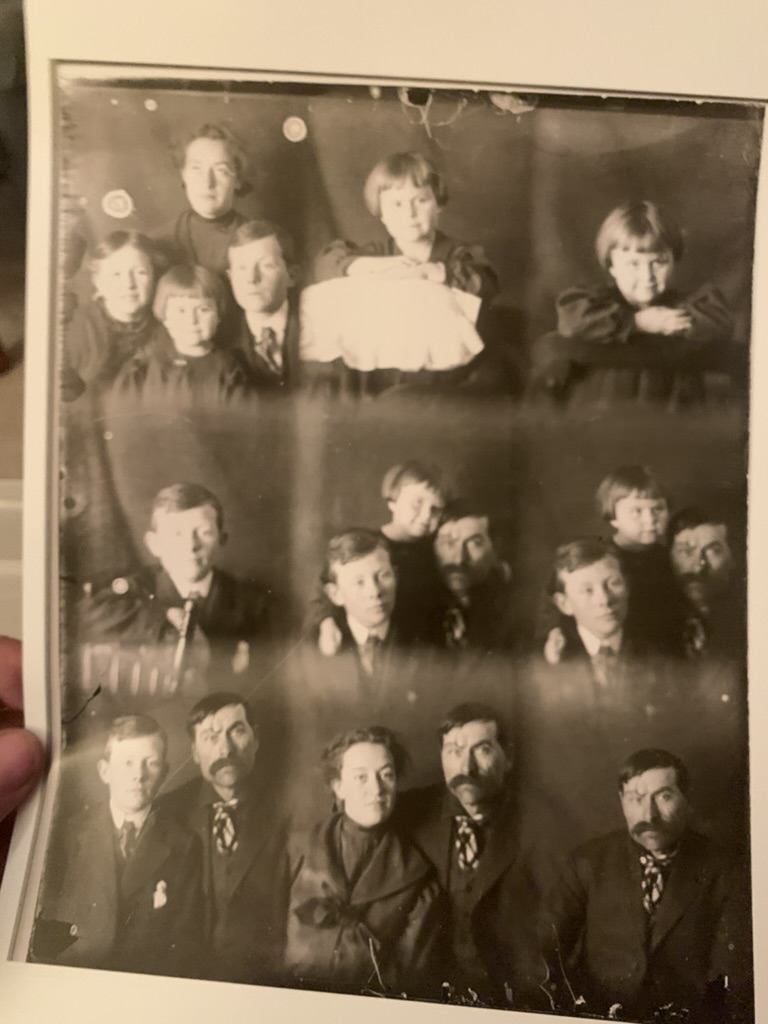
Berndt is in the bottom three photos, along with his wife Mary (button center), son Ralph (bottom left). Top left, clockwise from top: daughter Minnie, son Ralph, my grandma Beatrice, daughter Alice.

And as someone who rolled the dice and moved to a place that was socially different than the world I grew up in, but economically and technologically utterly recognizable, I wonder what must have gone threw Berndt’s mind as he pondered spinning life’s roulette wheel and moving 3,000 miles to a place that existed in his mind only in the stories sent back in letters from people who’d emigrated before.

[1] Although during the war, the town was a stop on the underground railroad smuggling refugees, guerrillas, downed airmen and Jews to Sweden.

Soundtrack, Part 1

Tuesday, October 3rd, 2023

John Hughes wrote movies for eveyrone – but they focused through the lens of angsty upper-middle-class kids from the north burbs of Chicago. Risky Business, Sixteen Candles, Breakfast Club, Pretty in Pink. even Home Alone (angsty tween!). And their soundtracks reflected those kids; Psychedelic Furs, Orchestral Manoeuvres in the Dark, Simple Minds – just sing the big singles from each of those movies, and you’ll get a pretty decent digest of new wave pop from the early to mid eighties.

If Hughes had written movies about rangy, restless kids with huge chips on their shoulder in the middle of nowhere, he’d have had a bunch of John Mellencamp’s Scarecrow on the soundtrack.

As I knocked around Jamestown during the weeks before I moved, it felt like my social circle was constricting around me. My haunts and stomping grounds were on short time. . My friends who hadn’t graduated and moved on were all busy with their lives – there, in Jamestown. My focus was moving.

And outside the occasional night knocking back beers at “The Club”, I felt isolated. Above and beyond the isolation of living in a place far, far from the center of action I craved being in.

So as this song plied its way up the charts in early October, it couldn’t have been timed much better:

And I hear it today, and I can still feel that hollow ache of ,as Paul Westerberg put it, “waiting to be”.

Where Credit Is Due, Part I

Monday, October 2nd, 2023

I’m not a big “podcast” person.

But since I got a car that reads my phone’s bluetooth without a lot of muss and fuss, I wind up listening to some of them anyway.

It’s probably not a huge leap that I found my way to Mike Rowe’s The Way I Heard It podcast. It started years ago as a riff on Paul Harvey’s old “The Rest Of The Story” blurbcast, and has evolved into something more like Joe Rogan or Jordan Peterson’s podcasts, for people who like their great interviews in one hour chunks.

Like Rowe’s Dirty Jobs, it focuses on people who are just a tad off the beaten path who nonetheless have fascinating stories to tell.

Johnny Joey Johnson – a Marine EOD tech who lost both legs in Afghanistan – iis one of them. If you haven’t heard it, I’ll. commend it to your attention:

In it, Jones plugs his new book, in which he talks about ten people who shaped him, sometimes without knowing it until long after the fact, and for whose influence he’s grateful.

The idea grabbed me – especially since gratitude has become such an important theme for me lately (more on that in November).

So over the next couple of weeks, I’m going to do the same…

…well, not the same thing. Something similar.

More on Monday.

Soundtrack

Monday, October 2nd, 2023

Growing up working in radio, I learned an interesting bit of applied psychology from my various program directors: people tend to become emotionally attached to music they hear from puberty until their brain stops growing, around age 25.

It’s not so much that music attaches itself to important events in your life, as the music and the events happen at a time when your brain is filling in a lot of important space with events that matter to you – and, given its evocative intensity, the music that’s going on at the time.

If I ever got to be a phenomenally wealthy mad scientist, ,one of my experiments would be to pay a family to raise their children around nothing but some absurd, archaic genre of music – say, John Philip Sousa marches – through their twenties, and measure to see how many events, first dances and first crushes and first kisses, they associated with marching music.

Anyway, about this time in 1985, my brain was getting stuffed with the consequences of my following up on my drunken promise to move to the Twin Cities that I’d made about a week earlier at a college homecoming dance. And for the next two weeks as I tried to fill in the many blanks of my half-baked “plan”, my still-growing brain drank in the music that was going on around me, on the radio, on my boom box, and (when I got to the Cities) on MTV, which I finally got to watch.

And to this day, I hear one of those songs, it brings it all back. I hear one of the songs burned into my cortext from that era on an overhead or the radio or at a bar, and I still smell the must of autumn building, of the harvest coming in as I worked my roofing and siding job, the feel of the wind as I drove my barely-roadworthy car to MInneapolis, the “exhilaration” of my first rush hour on my way to an interview.

The smell of fear, the feel of the tingle of hope, and the shiver of taking a huge leap.

I’ve had a theory that the period from 1977 to about 1986 was one of the best periods of all time for popular music.

It might be because it was a fact. Or it might be because it’s associated with that most searingly immediate period in life, adolescence through leaping out into the world.

Why choose?

At the risk of indulging in nostalgia, I’m going to indulge in some of the rewards of nostalgia.

I Heard It On The NARN

Saturday, September 30th, 2023

Mike Casey is running for the GOP nomination in CD4.

Jim Schulz, former MN Attorney General candidate, is with the Minnesota Private Business Council.

And here’s today’s music list:

Instant Experts

Friday, September 29th, 2023

As we noted the other day, Target is closing nine stores in four, blue, cities.

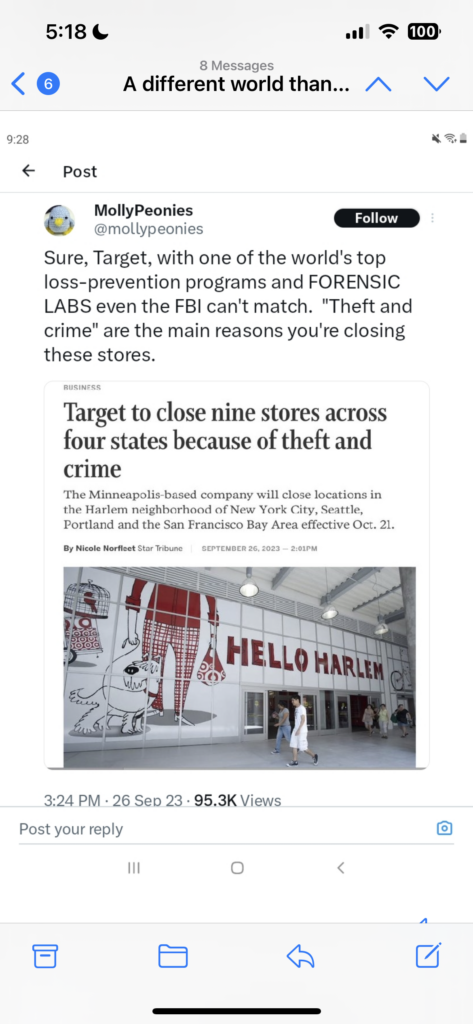
The news brought out a flood of expert social media opinion from people who have never worked in the productive private sector. “Target is just using teh crime to cover up teh realz reazons they’re closing” was the big line around mid-week.

Including this, from our long time acquaintance, Molly Priesmeyer.

You may remember Molly – and “award winning journalist“ who is never let the fact she doesn’t know anything about a subject stop her from writing about it.

She turns her keen-eyed expertise to the world of business:

Let’s be frank – many things can be true simultaneously.

Business ain’t easy. Balancing supply, demand and asking price isn’t for the faint of heart, and that’s before you get into taxes, regulations, and externalities like regular “shrinkage”.

WIth all that, though, Target’s been in Seattle, Portland, San Francisco and even NYC for literally decades, through good times and bad, ups and downs in markets, the works.

And the closures aren’t spread across the entire market.

As far as Target’s security? Not sure if they’re better than the FBI – but let’s say they perfected teh art of store security. That means they catch thieves, grifters, swindlers and other ne’er do wells.

And then…

Well, Target may do a lot of things, but rthey don’t run any county attorney’s offfices. Or any city councils, especially the ones making laws like shoplifting less than $900 doesn’t even warrant a charge, much less a sentence.

Target’s big, but not that big.

Perhaps “award winning journalist” Priesjeyer has some insight on the facts that aren’t apparent from, well, the facts. I’m all ears.

Addiction?

Friday, September 29th, 2023

Governor Klink apparently came to love the way he got to govern while he had “emergency powers” [1]:

Of course, none of it is “done”.

It’s mandated. It’s on paper.

Businesses have scarcely started paying for “Paid Leave”, or absorbing the impact of the unfunded mandate.

“Affordable Housing” is exquisitely unaffordable.

Public transportation? They’re throwing around plans for trains. That’s about it.

It’s the sort of performative posturing that we’d call “virtue signaling” if it were talking about social hot buttons.

Since it’s about spending and building, we’ll need a new term.

Bureauvirtue signalling?

[1] Or at least the twerp who handles his social media.

--> Site Meter -->