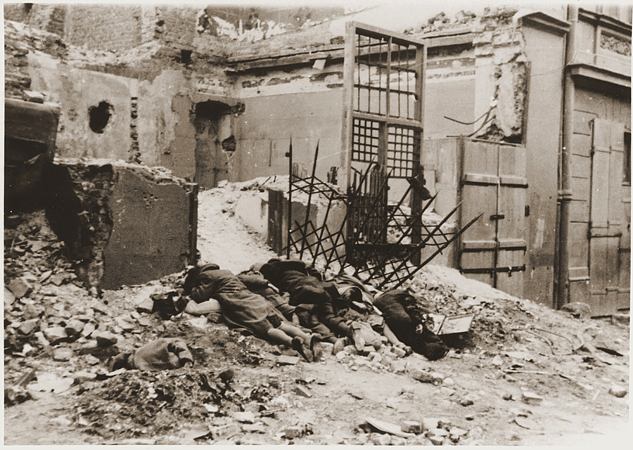
With news filtering out of Haiti as slowly as aid is effectively able to get in, the scale of the massive earthquake’s destruction is still hard to determine. For a country already in political and economic ruin, magnitude-7 quake destroyed most of Port-au-Prince, leaving estimates as high as 500,000 dead and perhaps as many as 3 million in need of emergency aid:
Tuesday’s earthquake brought down buildings great and small — from shacks in shantytowns to President Rene Preval‘s gleaming white National Palace, where a dome tilted ominously above the manicured grounds.
Hospitals, schools and the main prison collapsed. The capital’s Roman Catholic archbishop was killed when his office and the main cathedral fell. The head of the U.N. peacekeeping mission was missing in the ruins of the organization’s multistory headquarters.
Police officers turned their pickup trucks into ambulances to carry the injured. Wisnel Occilus, a 24-year-old student, was wedged between two other survivors in a truck bed headed to a police station. He was in an English class when the earth shook at 4:53 p.m. and the building collapsed.
“The professor is dead. Some of the students are dead, too,” said Occilus, who suspected he had several broken bones. “Everything hurts.”
To put Haiti’s most recent tragedy into perspective, the earthquake may already rank as one of the deadliest in history. Only Shaanxi in China’s 1556 earthquake may have been worse with an unconfirmed 830,000 dead, but with the inaccurate of historical records, the 1976 Tangshan earthquake and it’s official death-toll of 255,000 ranks as the worst of the modern era and likely the most deadly.
There are many fine organizations assisting survivors in Haiti, but I would encourage SITD’s loyal readers to consider donating to the International Red Cross in this hour of need.
It was twenty years ago today that the Berlin Wall fell.
It’s hard to remember at twenty years remove that it, and the Communism it represented, didn’t just get swept away in a wave of small-l liberal euphoria.
Dinesh D’Souza, in his excellent bio of Reagan, notes that between 1980 and 1983, the experts were united in their belief that the “Second World”, Communism, was here to stay. Make no mistake, people had recovered from the spell of Walter Duranty long enough to know that the Soviet system was cruel and corrupt gangster-run autocracy even worse than Chicago. The publication of The Gulag Archipelago and other releases from the samisdat media, and the flood of people who fled Germany from 1948 through 1961, popped the bubble of acceptability that had accompanied travesties like Stalin’s “Man of the Year” awards in 1939 and 1942, and Stalinism’s embrace by “intelligentsia” throughout the West (including the early version of the Minnesota Democratic Farmer/Labor Party). The stories of the thousands of heroic Soviet-bloc citizens who risked death and imprisonment fleeing their foetid, starving, lumpen homelands inspired many a young patriot in the day.
But while the bloom was long off the rose of western acceptance of Communism, the number of western intellectuals who seriously believed in 1980 that the decade would see the fall of the Berlin Wall and, in short order, communism itself would have fit in a single room at a Ramada Inn.
There had been resistance, of course; in Budapest and Gdansk in 1956, Prague in 1967, Gdansk again in ’71 – all put down with ruthless brutality by the authorities, including the Soviet military.
And so I’m not aware that anyone held out that much hope for change in 1979 – thirty years ago – when Lech Walesa, a young electrician in Gdansk, led a pro-democracy union strike in Gdansk. The movement had traction, of course – it swept Poland, and threatened to spin out of control; the Polish Army under General Wojciech Jaruzelski staged what amounted to a last-ditch military coup to bring down the government and declare martial law to quell the strikes, siccing “ZOMO” thugs (no, it’s not Polish for SEIU) on the protesters and strikers. Jaruzelski was reviled around the world for the action – although there is evidence that history has misjudged the General, that he acted as did many in the Polish Army, as a Polish patriot, to prevent a Soviet invasion, which would have been much, much worse).
And indeed, had the status quo ante held sway after 1980, nothing much would have happened.
But in 1980, the election of Ronald Reagan signalled an end to detente – the diplomatic legitimazion of the Soviet gangster regime. Reagan jacked up the rhetoric war, and the civil support for trade unionists behind the Iron Curtain (with considerable help from Margaret Thatcher, the Pope and, speaking of strange bedfellows, Lane Kirkland of the AFL-CIO), as well as building up the US military from its post-Vietnam nadir (although to be fair Jimmy Carter had realized the problem, and taken a few of the necessary high-level steps to start facilitating this). The rhetorical confrontation peaked at Reagan’s classic Brandenburg Gate speech in 1987…
…but the diplomatic war had reached its Battle of Stalingrad at the Rejkjavik conference the year before, when Reagan called Gorbachev’s bluff on intermediate-range nukes. Lily-livered pundits in the west flew into a panic, expecting mushroom clouds over London…
…but Gorbachev blinked. He realized the communist East could not outlast the free West. He accelerated the “liberalization” of the USSR and the Communist bloc – not to extinct it, initially, but to try to save it.
It was too late. The Poles tossed aside the commies, followed by the Czechs.
It didn’t go entirely without a fight, though. As the Baltic States – Latvia, Lithuania and Estonia – tried to follow neighboring Poland’s suit, Soviet soldiers attacked some demonstrations.
But in dizzyingly short order, the Communist Bloc, which had killed tens of millions of people in the previous seventy years (estimates range from 20 to 60 million) and floated on a sea of blood that dwarved even Hitler’s monumental crimes against humanity, fell, kicked to the curb in a sea of ebullient humanity.
The left never got it. Some of them had backed the wrong team. Others were so invested in the idea that capitalism and western-style liberty were obsolete that they couldn’t wrap their arms around the new reality.
Some believe that if western-style democracy and liberty were so cool, the nations left in the wake of the fall of The Wall should have been able to get up and run from the get-go. I distinctly remember Tom Brokaw, in 1992, describing Poland’s difficulties in changing from a command economy to free-enterprise. “Et wrold sheem thut Eesturrrn Yurp’s ukspurramunt in Kapetelezm hez FEHLED” (“it would seem Eastern Europe’s experiment in capitalism has failed“), he said, with no further comment, apparently seeking his own Waltern Cronkite “this war can not be won” moment, writing off three whole years of effort on Poland’s part. He was wrong, of course; Poland survived, and thrived. And while the road to prosperity has been difficult for some former Soviet counties (indeed, for Russia itself, which may or may not be socially amenable to small-L liberal goverment), most of Eastern Europe thrives today, free of prowling Black Marias and windowless trains in the dark for long enough that people are starting to forget what they meant.
Which must be an incredible blessing.
But Brokaw’s pronouncement, more than anything I can remember, started curing me of the habit of watching network news.
There are those who still say the whole fall of The Wall was Gorbachev’s idea – an idea that requires a preposterous suspension of disbelief, buying the notion that the Politburo – think Capi di Tutti Capi in Russian – would turn the Premiership over to anyone whose goal wasn’t the survival of the system.
Whatever.
My many friends and acquaintances and neighbors and co-workers over the past twenty years who fled to the West tell me that they and their people back home remember who their real friends are.
So – Fröhliche Zwanzigste Jahre der Freiheit, Deutschland. Und viele mehr.
May the rest of us remember.
At least better than our feckless current leadership does. Obama blew off the observance, just as he blew off Poland’s observance, six weeks ago, of the beginning on its soil of the greatest single cataclysm of human history.
Just as well. He’d probably deliver a heartfelt apology for the US having won.
Europe is beginning to seethe with contempt for the US – partly over the Administration’s early social gaffes, and partly because of its fecklessness.
The Administration sold the Poles and Czechs down the river, causing two nations that have risked boundlessly to express their allegiance to the US to openly wondering if the US is good for its obligations.
Israel is nervous that the US has abandoned it – or at least that it will when the chips are down, one day.
Georgia is still rebuilding from when the Soviets Russians gang-raped it.
Our president bowed to a tin-pot potentate.
Afghanistan is spiralling into the toilet. (Thankfully, the grownups were in charge long enough to buy Iraq a decent chance).
The Administration is pushing socialism, which is inevitably disastrous for the environment, and gundecking capitalism, which is the world’s best hope for benefitting the environment.
Iran is building nukes, and there’s not a damn thing we can (or will) do about it (short of defend against them – which the Administration eschews on dogmatic grounds).
China – a nation that’s killed tens of millions of its own people – is ascendant, while the US,which as recently as twenty years ago freed hundreds of millions, is rapidly neutering itself.
President Barack Obama won the 2009 Nobel Peace Prize on Friday for “his extraordinary efforts to strengthen international diplomacy and cooperation between peoples,” the Norwegian Nobel Committee said, citing his outreach to the Muslim world and attempts to curb nuclear proliferation.
Of course, after Algore, “cheapening the brand” is all very relative.
Um, “congratulations”, Mister President.
UPDATE: Or as Mo Rocca says on Twitter, “Nobel Peace Prize officially awarded to “Not George Bush.” Most passive aggressive Nobel ever?”
UPDATE 2: Nominations for the Peace Prize were due by the end of January.
Ten days after Obama was inaugurated.
UPDATE 3: A friend of mine wrote asking if the Onion hadn’t pulled the ultimate hoax. He wasn’t alone.
Extraordinary efforts? I’m sorry, but what extraordinary efforts has he made? This prize should be given for a major lifetime achievement, and while I like Obama, this is really, really jumping the gun.
Even lefties – some of them – are astounded by this.
UPDATE 5: A prize winner who actually earned one – Lech Walesa, 1983 winner and former president of Poland:
“So soon? Too early. He has no contribution so far,” former Polish President Lech Walesa, who won the Nobel Peace Prize in 1983, said Friday. “He is still at an early stage.”
Also, his record since the nominations closed, on February 1, has been so utterly dismal…
Because I’d probably be pretty dangerous in the White House…to our most conspicuous enemies.
Mahmoud Ahmadinejad’s continued overt threats to wipe Israel (or any other country for that matter) off the planet coupled with recent intelligence revealing a new nuclear facility would be met with a different tact than our Hippy-Wimp-in-Chief has chosen.
“Iran’s leaders must now choose – they can live up to their responsibilities and achieve integration with the community of nations. Or they will face increased pressure and isolation, and deny opportunity to their own people,” Obama said in his radio and Internet address Saturday.
Mahmoud Ahmadinejad is like a young unmedicated schoolchild.
Continued rhetoric without consequences, without punishment, has emboldened him. Just like a young child, repeatedly told “No” but without limits and punishment will turn into a spoiled maladjusted kid, Iran has given the rest of the world the bird.
The fact that the same party that let Osama Bin Laden slip through their fingers occupies Congress and the White House no doubt further stokes the fires of insanity; an opportunity to bully the other school kids while the Principal is on sabbatical.
Jimmy II recently informed Ahmadinejad he’s “breaking the rules” and later this week ratcheted up his teleprompter which in turn threatened Iran’s President with the dark storm clouds of “serious dialogue.”
Chilling.
Does that mean Michelle’s husband will have his publicist produce words with more syllables? That he’ll enlist multiple teleprompters? Employ a laser pointer or a PowerPoint presentation?
Iran’s current leadership has been directly or indirectly responsible for the deaths of many of our young men and women in Iraq, extending already excruciatingly long tours of duty for our brave young soldiers. Ahmadinejad represents a faction that resents Western freedoms and prosperity and will stop at nothing to destroy us to level the playing field and will not be bargained with or swayed by chit chat.
They have threatened peaceful nations and have shown time and again that they are not to be trusted and at the same time hold their ostensibly peaceful citizens hostage while exposing them to future military retaliation. Every week that goes by they grow in their ability to wreak havoc across much of Europe – and that’s based on what we know.
If I were President, that nuclear facility would be gone today. By lunch. On a Saturday. I’d make a call on the Batline and warn the weekend Janitor. The smoke would be clear by Monday morning.
It’s called a cruise missile, Mr. President, and his ass, up put, should be one.
So it’s a good thing, for Mahmoud Ahmadinejad, that I’m not President, and am armed only with a laptop whose battery has 19% charge left.
The clashes began after hundreds of protesters, many advocating against capitalism, tried to march from an outlying neighborhood toward the convention center where the summit is being held.The protesters banged on drums and chanted “Ain’t no power like the power of the people, ’cause the power of the people don’t stop.”
The marchers included small groups of self-described anarchists, some wearing dark clothes and bandanas and carrying black flags. Others wore helmets and safety goggles.
One banner read, “No borders, no banks,” another, “No hope in capitalism.” A few minutes into the march, protesters unfurled a large banner reading “NO BAILOUT NO CAPITALISM” with an encircled “A,” a recognized sign of anarchists.
Violence, injuries and much property damage ensued.
This sort of violence is the inevitable, direct result of the kind of rhetoric we’re getting from the left:
Michael Moore’s assaults on “capitalism”
The rhetoric of the likes of Keith Ellison and Dennis Kucinich – prominent Democratic/leftist legislators
The demonstrations at the homes of AIG executives by groups of rent-an-outragers (we call them “TeabAIGers”), who made it very clear that the political is utterly personal
The writings of vital lefty pundits like Nick Coleman and their disparaging references to “Big Cheeses”…
The anti-business rhetoric of the likes of Andy Stein of the SEIU.
The demonization of conservative causes, groups, and even thoughts by Janet Napolitano
…and many, many more, it’s clear to me that it’s inevitable that the left’s rhetoric on the economy is not only going to lead directly to violence; it’s already led there.
…you could take some comfort in the knowledge (if you read the leftmedia) that all terrorist threats were trumped-up paranoia from the Administration and their neocon supporters.
(And someday, after Obama invades Pakistan and turns his attention to Iran, does anyone else think it’s be grimly, ironically droll if Obama discovered there were really no nuke plants?)
Earlier this week, on the seventieth anniversary of the Soviet Union’s invasion of Poland at the beginning of World War II, President Obama announced that the United States is reneging on a promise to build a missile defense shield against future, likely Iranian nuclear missiles. This program was started under Bush, enacted in Poland and the Czech Republican at the cost of immense political capital to the Polish and Czech governments.
The date, of course, was Vladimir Putin’s way of telling the recalcitrant, west-leaning, NATO-joining Poles that he’s watching them.
But the reverse on the missile program? That was all Obama. The President seems to think, as Jimmy Carter did, that if he just gives a few more concessions to Putin, to the Mullahs, to the world’s thugs and gangsters, that eventually even they’ll start believing in all the Hope and Change.
Of course, as we saw earlier this summer, earnest promises of Hope and Change didn’t stop the mullahs from gunning down protesters in the streets of Teheran.
What a contrast with thirty years ago, as Jeffrey Lord noted earlier this summer in American Spectator:
One need look no further than President Obama’s cautiously timid response to the demands of freedom from Iranians. Contrast this with Reagan’s response to similar demands from Poles in the 1980s and the miserable inadequacy of the Obama foreign policy is thrust into a stark and shameful relief.
Finding historical parallels is a slippery slope that leads to madness. But sometimes they’re illustrative:
When Reagan took office in January of 1981, Poland had been a Soviet satellite for almost four decades. The American foreign policy establishment had long since settled into an acceptance of moral equivalency between the United States and the Communists. The policy was acted out in a thousand different ways ranging from so-called “détente” (a relaxing of tensions) to a vast, arcane arms control process which over time had substituted the process itself instead of the unconditional victory of freedom as America’s chief foreign policy goal.
Sound familiar?
As opposed to the example from the last time we had a thug-ocracy beating freedom-loving demonstrators in the streets, I mean?…:
Reagan had campaigned on a completely different idea, a very old principle when dealing with an adversary. He phrased it this way to his first national security advisor, Richard Allen: “We win, they lose.” It was this goal that Reagan sought, and thus caused him to speak bluntly about America’s adversary in the Cold War. An “Evil Empire” is how he early-on famously described the Soviet Union, completely horrifying the Obama-like striped-pants set in the State Department and Establishment foreign policy circles…
Joe Biden said during the campaign that Obama would face a foreign policy “test”. Well, Ronald Reagan certainly did:
One of the very first items that arose on Reagan’s watch was the rising demand for freedom from the Polish people. On January 21, his first full day in the Oval Office, word reached the White House that a young shipyard worker and union leader named Lech Walesa had informed the Communist government of Poland he had called a series of strikes in four Polish cities, beginning the next day. Within 24 hours hundreds of thousands of Poles in ten cities — not four — were publicly defying the Polish Communist dictator, General Wojciech Jaruzelski.
A fight for freedom was on — and Ronald Reagan had zero intention of standing on the sidelines…Liberals all over Washington paled. This, they insisted, was no way to conduct diplomacy. One just does not say these things in public. But Reagan had only just begun.
And we all know how that ended – in this case, with a free Poland; a nation that reveres the Reagan legacy; a place that is probably the best place in Europe to be an American; a place that has repaid Reagan’s efforts many-fold, by becoming not just a leading voice for freedom, but a leading supplier of muscle to defend it; Polish troops were among the largest allied contingents in Iraq.
Iran today and Poland in 1980 aren’t perfect analogues – but the similarities are strong enough to help us gauge the character of our nation’s leadership.
Which is bad news for Obama:
As Walesa and his fellow Poles demanded the most basic of human liberties, Moscow responded by sending troops on maneuvers along the Polish border, then installing a military government with instructions to stop Walesa in his tracks.
Distinctly unlike Obama’s reaction to the demonstrators filling the streets of Iran, Reagan looked at similar crowds in Poland and said the sight was “thrilling.” Said Reagan: “I wanted to be sure we did nothing to impede this process and everything we could to spur it along.”
And so he did. In a stiff note to Soviet boss Leonid Brezhnev, Reagan said that if the Russians kept up their thuggish response to Poland they “could forget any new nuclear arms agreement.” Gone too would be better trade relations, and in their place would be the “harshest possible economic sanctions” if they even thought of invading Poland as they had done with Czechoslovakia in 1968 or Hungary in 1956.
Of couse, Reagan did much more; he formed an unlikely alliance (according to Dinesh D’Souza) with Margaret Thatcher, Pope John Paul II, and AFL-CIO president Layne Kirkland to send financial as well as moral aid to Solidarity.
Hope and change didn’t come for free in 1980, either; as tensions ratcheted up, Reagan took the occasion of the normally-pacific Christmas speech to stump for the Poles…:
… “We can’t let this revolution against Communism fail without offering a hand,” he wrote that day in his diary. “We may never have an opportunity like this in our lifetime.”
Christmas or not, Reagan proceeded to write Brezhnev about the “recent events in Poland.” Warned the President: “Attempts to suppress the Polish people-either by the Polish army or police acting under Soviet pressure, or through even more direct use of the Soviet military force — certainly will not bring about long term stability in Poland and could unleash a process neither you nor we could fully control.” Reagan said the Soviets were encouraging “political terror, mass arrests and bloodshed” and they must either halt this behavior or “we will travel a different path.”
On Christmas morning, Reagan had a heated, angry reply from Brezhnev. Furious, he accused the President of “defaming our social and state system, our internal order.” It was a charge, Reagan said, “to which I pleaded guilty.”
Words were followed by actions – sanctions against Poland and the USSR – and then by years of committed agitation to bring down, not Poland, but the USSR itself. These efforts paid off almost twenty years ago, as first the Poles, and then the rest Eastern Europe, and finally the Russians themselves cast off the Communists. History’s bloodthirstiest regime fell without a shot in less than ten years, because of a show of backbone and resolve.
And some people know it:
Lech Walesa went on to win the Nobel Peace Prize and later become the freely elected President of a democratic Poland. In 2007, Walesa’s successor as President of Poland traveled to the Reagan Library to present Nancy Reagan, who accepted on behalf of her late husband, The Order of the White Eagle, the oldest and highest honor within the gift of the Polish people. Today one can visit Ronald Reagan Square in Krakow, a Reagan statue is planned for Warsaw and Reagan streets and parks dot the country. He is considered, in the words of the Polish president, the “architect of democracy.”
Compare and contrast:
This is a lesson that one realizes the Obama White House simply doesn’t have the courage to embrace. As over a million Iranians fill[ed] the streets of Tehran, the message from this President of the United States is that he is afraid to be seen as “meddling” — precisely the charge Reagan faced down from Brezhnev. Instead Obama backs away from standing up for freedom, saying (as if Iran were a free country): “It is up to Iranians to make decisions about who Iran’s leaders will be. We respect Iranian sovereignty and want to avoid the United States being the issue inside of Iran.” He does say he is “deeply troubled.”
As those Iranians who seek freedom are literally shot dead in the streets, Obama observes cautiously that “the democratic process, free speech, the ability of people to peacefully dissent — all those are universal values and need to be respected.” Instead of dealing with the mullahs of Iran in the fashion Reagan dealt with Brezhnev and the Polish Communist puppets, Obama refers deferentially to Ayatollah ali Khamenei, as the “Supreme Leader.”
And so inside a generation, American leadership has gone from embracing and pressing for freedom, to equivocating and waffling – and, worse, betraying it, allowing Vladimir Putin not only to use the symbol of Poland’s subjugation before the Soviets to deliver his message, but carrying Putin’s water for him. Obama’s selling-out of Poland in the face of Putin’s pressure was the sort of thing that might make pragmatic sense to those diplomats more allied to “process” than to the goal of liberty…
…and it’s the sort of thing that wouldn’t have gotten on Ronald Reagan’s short list.
Hundreds of years of vassaldom to the Russians, Germans and Austro-Hungarians.
6-7 years under the Nazi jackboot, with millions – millions – dead as they served as a battlefield, a killing field, a death factory, and finally a battlefield again.
Poles and Czechs voiced deep concern Friday at President Barack Obama’s decision to scrap a Bush-era missile defense shield planned for their countries.
“Betrayal! The U.S. sold us to Russia and stabbed us in the back,” the Polish tabloid Fakt declared on its front page.
Polish President Lech Kaczynski said he was concerned that Obama’s new strategy leaves Poland in a dangerous “gray zone” between Western Europe and the old Soviet sphere.
And the Poles’ experiences with being in “gray zones” – like when the Brits and French crossed their fingers behind their backs when promising to protect them from the Germans – isn’t all that good.
Recent events in the region have rattled nerves throughout central and eastern Europe, a region controlled by Moscow during the Cold War, including the war last summer between Russia and Georgia and ongoing efforts by Russia to regain influence in Ukraine. A Russian cutoff of gas to Ukraine last winter left many Europeans without heat.
The Bush administration‘s plan would have been “a major step in preventing various disturbing trends in our region of the world,” Kaczynski said in a guest editorial in the daily Fakt and also carried on his presidential Web site.
There’s a reason many Czechs and Hungarians and Georgians keep photos of Ronald Reagan in their houses; in not a few Polish houses, Reagan’s photo is next to Pope John Paul II’s on the mantelpiece.
And I’m thinking they’re in no danger of moving.
Maybe Kerry was right; we could learn a lot from the Europeans…
There are many areas where I’m willing to chalk Obama’s actions up to stupidity, and the invincible ignorance that follows whenever you put a bunch of Ivy Leaguers in the same place.
But I’m sorry – there was no way in hell Obama and his staff didn’t know the signifiance of 9/17 in Poland. No f****ng way.
All things considered, I’m happy that Polish prime minister Tusk snubbed Hillary.
A U.S. delegation held high-level meetings Thursday in both Poland and the Czech Republic to discuss the missile defense system. While the outcome of the meetings wasn’t clear, officials in both countries confirmed the system would be scrapped.
Czech Prime minister Jan Fischer said in a statement that U.S. President Barack Obama told him in a Wednesday phone call that the United States was shelving its plans. Fischer did not say what reason Obama gave him for reconsidering.
A spokeswoman at the Polish Ministry of Defense also said the program had been suspended.
“This is catastrophic for Poland,” said the spokeswoman, who declined to be named in line with ministry policy.
U.S. Defense Secretary Robert Gates and Gen. James E. Cartwright, who is vice chairman of the Joint Chiefs of Staff, are scheduled to hold a news conference Thursday morning. The Defense Department has not announced what will be discussed, but Cartwright is the point man for the missile defense shield program. See how the system would work »
Poland and the Czech Republic had based much of their future security policy on getting the missile defenses from the United States. The countries share deep concerns of a future military threat from the east — namely, Russia — and may now look for other defense assurances from their NATO allies.
“At the NATO summit in April, we adopted a resolution focusing on building a defense system against real, existing threats, i.e. short-range and medium-range missiles,” Fischer said. “We expect that the United States will continue cooperating with the Czech Republic on concluding the relevant agreements on our mutual (research and development) and military collaboration, including the financing of specific projects.”
What this means is that hostile nations like the Russians have more clout with the Administration than the small, Eastern European states – Poland, Ukraine, Georgia, Hungary, the Czech Republic – that have sacrificed so much to join the Western World.
This is bad news for all who care about the US commitment to the transatlantic alliance and the defence of Europe as well as the United States. It represents the appalling appeasement of Russian aggression and a willingness to sacrifice American allies on the altar of political expediency. A deal with the Russians to cancel missile defence installations sends a clear message that even Washington can be intimidated by the Russian bear.
What signal does this send to Ukraine, Georgia and a host of other former Soviet satellites who look to America and NATO for protection from their powerful neighbour? The impending cancellation of Third Site is a shameful abandonment of America’s friends in eastern and central Europe, and a slap in the face for those who actually believed a key agreement with Washington was worth the paper it was written on.
If by “improve our image abroad” Obama meant “yell “off what” when Vladimir Putin says “jump”” during the campaign…well, mission accomplished.
A weakened United States could start retreating from the world stage without help from its allies abroad, an international strategic affairs think tank said Tuesday.
The London-based International Institute for Strategic Studies said President Barack Obama would increasingly turn to others for help dealing with the world’s problems — in part because he has no alternative.
“Domestically Obama may have campaigned on the theme ‘yes we can’; internationally he may increasingly have to argue ‘no we can’t’,” the institute said in its annual review of world affairs.
The report said the U.S. struggles against insurgent groups in Iraq and Afghanistan had exposed the limits of the country’s military muscle, while the near-collapse of the world financial markets had sapped the economic base on which that muscle relied.
The report also claimed that the U.S. had lost traction in its efforts to contain Iran’s nuclear program and bring peace to the Middle East.
“Clearly the U.S. share of ‘global power,’ however measured, is in decline,” the report said.
Of course, it’s not the first time “think tanks” have claimed the US’ significance was fading under Democrat rule; they said all the same things during the Carter years.
And while there’s a good traditional conservative case to be made for staying uninvolved overseas, Franklin Roosevelt let that genie out of the bottle three generations ago; anyway, it should be a matter of national consensus, not because administration-induced decay makes it impossible.
While the anti-neocons in the American left congratulated themselves and The One over the past weeks for meddling excessively in Iran’s internal poliics, Globalsecurity notes that the big winners in the unrest were the Revolutionary Guards:
The re-election appears to have depended on systematic fraud, as alleged by vocal opponents. What it represents is a defeat for Iran’s ruling clerical class, led by such revolutionary luminaries Ali Akbar Hashemi Rafsanjani – and a victory for the increasingly powerful Islamic Revolutionary Guards Corps, who are in many ways the real power behind the upstart Ahmadinejad.
The Guards indicated even before the election that they would not allow Ahmadinejad’s challenger, Mir Hussein Mousavi, to succeed. And they are willing to use any means possible, including mass arrests of opposition leaders and the use of military force against protesters, to maintain their grip on power. Iran’s ruling political elite have earned much popular hostility in the last few days, but they appear to have enough military support to withstand the protests for now. Regardless, the Islamic Republic may no longer be able to count on the people’s will to maintain its legitimacy
The result has serious implications for the Iranian people – including continued social repression, economic mismanagement, and the stifling of political dissent – and for the international community, especially the United States. The Guards’ continued political ascent and their military aspirations, including expanding missile and nuclear programs, will pose a new challenge to the Obama administration’s efforts to engage Iran.
The Guards are the kind of groups most dictators set up – a second army to play against the real army, like the SS or the Republican Guards.
Today is “Canada Day”, the 142nd anniversary of Canada finally getting permission from the UK to get its own place.
Congratulations, Canada!
To honor the holiday, I plan on being nice and innocuous, cranking some Gordon Lightfoot, Rush or Triumph (but not Loverboy; ew), complaining about the price of beer, and getting into a hockey brawl.
I saw The Stoning of Soraya M at the Uptown last night.
First things first; it’s a harrowing movie. As in Passion of the Christ harrowing.
Too harrowing, at this remove, to really write a coherent review. That’ll come soon.
But do yourself a favor; ignore the NYTimes’ specious review. The Times writes the movie off as ‘Torture-Porn”. They hit the point and still it completely; the village men doing the stoning were acting as if they were taking part in pornography. That is exactly the point.
It’s at the Uptown again tonight. It’s not the feel-good hit of the summer – I haven’t seen a group walk out of a building looking so emotionally smacked around since the Holocaust Museum.
But it is so good. An amazing movie. Go if you get the chance.
…that I, a young liberal who believed in the left in my adolescent way (but was starting to sour on Jimmy Carter) was mortified that Margaret Thatcher had become the Prime Minister in the UK.
And then came Reagan.
Now, I don’t believe history repeats. But after a couple of years when Europe has moved to the right with elections in Germany, France and Italy showing a center-right swing (by Euro standards, naturally), and a likely big conservative pickup in the next elections in the UK, it’s good to see the trend picking up speed across the continent:
Conservatives raced toward victory in some of Europe’s largest economies Sunday as initial results and exit polls showed voters punishing left-leaning parties in European parliament elections in France, Germany and elsewhere.Some right-leaning parties said the results vindicated their reluctance to spend more on company bailouts and fiscal stimulus amid the global economic crisis.
First projections by the European Union showed center-right parties would have the most seats — between 263 and 273 — in the 736-member parliament. Center-left parties were expected to get between 155 to 165 seats.
Of course, there are no real parallels with the seventies just yet; America was ready to come out of the miasma of post-Vietnam trauma, Watergate and stagflation when Reagan came on the scene; I don’t know that America’s really woken up to the hangover from it’s last electoral tantrum yet.
Madeline Albright: “Islam is maybe the most democratic religion because there is nobody between you and God. So I do not think that is something that can be used as reason not to have Muslim democracies.
Albright – Jewish, as I recall, not that it matters – must have missed that whole “Protestant Reformation” bit.
At any rate – it seems Islam is used for exactly that reason – there is exactly one stable Moslem democracy (Turkey), two deeply flawed democracies with huge numbers of Moslems (India and Indonesia), and a few more that show signs of promise (Senegal and, to an extent, Mali).
The return to prominence of Madeline Albright, who under Clinton (eww) was the worst Secretary of State since Warren Christopher, a woman who’s always treated American Exceptionalism as an inconvenient hurdle, is one of the great tragedies of Obama’s win.
The story is well-known to people who know their history – which means most Americans know nothing about it.
Before there were concentration and extermination camps, the Nazis used the traditional Jewish “Ghettos” of Eastern Europe as natural “camps” in which to confine the Jews, Gypsies and the rest of their targets. They systematically deported Jews from all over Poland, Ukraine and Russia – and then all over Europe – to these small enclaves in Polish, Baltic and Ukrainian cities, using them as holding tanks until the camps – the last link in the Final Solution – were ready.
And in early 1942, they were ready. The Germans started shipping Jews off to Treblinka, the first of the Vernichtungslagern, or Extermination camps.
And in the overcrowded, starving, disease-ridden Warsaw Ghetto – the realization that the end was near provoked a response from some of the inmates; it’d be better to die fighting.
And so a resistance movement,armed with a few stolen handguns and rifles, had formed. In the previous months, it had managed to disrupt some of the roundups to the camps, throwing the Germans’ plans – as precise as any industrial supply chain management system – into disarray. And on April 19, the Germans’ military response was met with armed resistance.
The story is long, and gruesome; it’s been told better elsewhere.
The Jews – hopelessly outnumbered and virtually unarmed by military standards – somehow dished out a military setback to the Germans, holding the Germans out of the Ghetto for nearly a month.
It couldn’t last, of course. The Germans advanced building-to-building, killing nearly everyone as they went, burning the entire Ghetto to the ground.
The Germans trashed the Ghetto as thoroughly as Ground Zero; they shipped the very few they didn’t kill or burn or bury out of hand off to Treblinka (itself to end in another doomed uprising in the near future).
There are still some survivors; Marek Edelman, at 87, the last surviving leader, and a handful of others continue to tell their stories. But like our own World War Two generation, the Holocaust’s few survivors – and the fewer still who survived the Ghetto – are dying off.
And as they do, we should worry – justifiably – that society is going to forget about what happened; that society might forget the consequences of racism (the real kind), hatred, dminishing the humanity of ones’ enemies (or scapegoats) to try to justify all manner of inhumanities and horrors upon them. And of course, worry that some will take away the wrong lesson, as another loathsome person did fourteen years ago today.
I read the story of the Ghetto and the Uprising when I was in junior high; I probably absorbed it much later. And lessons were these; never let this happen here. Call out the prejudice that leads to this sort of eliminationist hatred when you see it, and do it without stint or mercy. Never let society be left at the mercy of the thugs and the autocrats; it’s why we have a Second Amendment.
“Never waste a good crisis,” Clinton told a hearing at the European Parliament. “And when it comes to the economic crisis, don’t waste it when it can have a very positive impact on climate change and energy security.”
The United States is seen as the key player in global climate talks in Copenhagen in December, after President Barack Obama signaled a new urgency in tackling climate change in stark contrast to his predecessor George W.
First: is anyone checking Algore’s bank accounts?
Second: Is this the most tone-deaf administration in history?
One of them I’ll cop to is beer. I didn’t really start drinking seriously until I went to Europe. I developed a taste for good beer before I developed a tolerance for crummy beer. So ever since then, generally, when given a choice between a case of Budweiser and a six-pack of something really, really good for the same price, I’ll take the good beer and drink nice and slow.
Coffee is another. I never drank coffee – not even when I worked graveyard shift radio (Mountain Dew provided my caffeine back then). Then I got married to a coffee drinker, and lived across from a Dunn Brothers. And…wow. Just…wow.
So to this day, I’ll squeedge out two bucks for a large DunnBros, if I need it.
Takeaway; I can see the point behind some of the “hoity toidy” obsessions some of us have. I can justify liking the “good stuff” rather than choking down the crummy stuff, when one has it as a responsible option.
That being said, I want to pants this guy just on principle.
…well, no. That’s the wrong word. I’ve seen what I know about the US, and International, left’s antisemitic roots fully validated yet again during and after the latest war in Gaza.
Israel is facing an opponent that uses human lives – non-combatant Palestinians in Gaza – as sacrificial pawns, worth only what their deaths will garner in one-sided international outrage. That outrage comes, naturally, from people who are perfectly fine accepting that the combatants among these same people have been lobbing rockets at Israeli civilians for the previous months on end.
In other words, noncombatant deaths are ammunition in the public opinion war.
But the Jews have been fighting the public opinion war for millenia, notes Rami Kaminski.
It’s only when they started contesting that war that things got bad for ’em:
As killing Jews for being Jews has been a national sport for centuries, Islamic militants are justified in believing they are merely fulfilling historical tradition in Argentina, India and Gaza. Surely the Jews in Mumbai did not occupy Gaza. They were tortured and killed just for being Jews. And predictably, in the eyes of the world, they immediately became good Jews, just like my murdered family in Bertishev.
Good Jews would wait until Hamas has weapons enabling its members to achieve their ultimate goal of absolute mass murder. Those enraged by Israel’s defensive military action insist Hamas uses only crude rockets, as if Qassams were BB guns, and military inferiority were somehow equivalent with moral superiority. In fact, Hamas now has Iranian-supplied Grad missiles which have landed on Beer Sheva and the outskirts of Tel Aviv.
Westerners have had only sporadic exposure to the indiscriminate killing in the name of holy war which Israel has lived with for years. Memories of 9-11, Madrid, and London have dimmed. This is not because the Islamic militants made a careful choice of weapons. They simply have not yet acquired nuclear bombs. Once they do, the West will develop a less detached view about the Islamists professed intentions for the infidels.
What Britain said in 1940: when given a choice between acquiescen\ce to authoritarianism and resistance:
We shall go on to the end, we shall fight in France, we shall fight on the seas and oceans, we shall fight with growing confidence and growing strength in the air, we shall defend our Island, whatever the cost may be, we shall fight on the beaches, we shall fight on the landing grounds, we shall fight in the fields and in the streets, we shall fight in the hills; we shall never surrender,
Answering the same question today:
Britain’s Home Office, which is responsible for immigration issues…said it “opposes extremism in all its forms” and would work to “stop [the producer of a movie critical of Islam] from coming to our country.”
For most of human history, humans have had to reproduce as fast as they could; children were the only 401K, and infant/child mortality was harder on that retirement plan than the recession is on your Roth IRA today.
Capitalism and the generalized prosperity that’s attended it in the past 150-odd years has changed that dynamic. In a sense relative to the rest of the world throughout history, capitalism and general prosperity has taken human life from “nasty, brutish and short” to “relatively civilized, at least modestly comfortable, and whereobesity is the biggest health problem among the poor“.
One of the blessings that’s attended these changes is the existence, throughout the world, of “cheap food”. When I say “cheap”, I’m not talking about supermarket shelf price, by the way; 500 years ago, over 95% of the world’s population worked from dawn to dusk six or seven days a week trying to subsist. Do you work two shifts seven days a week just to feed your family and live in a hovel? Who does? No – food is incomparably cheap these days, historically speaking, even if the price of eggs is getting kinda out of hand.
“Cheap food” has enabled the parts of the world still governed by dictators, petty overlords and warlords to sustain populations that would have been mathematically and logistically impossible 100 years ago. Of course, the lack of actual personal prosperity, and the attendant uncertainty of life, has kept the birthrates in these places high (albeit lower than when I was a kid). The presence of global media, communications and markets have also made life safer in the parts of the world run by despots, warlords, and amok bureaucrats; it’s a truism that no famine can take place in a nation with a free market and a free media (every famine in the past 100 years has taken place in places with neither); the globalization of communications and markets has made it possible for weathy nations (with their epic surpluses of food) to ameliorate the worst ravages of famines, the great population-leveler of days gone by.
So on the one hand, a tide that has been rising since the birth of the modern world has been lifting all boats.
On the other, this has led the world into two basic demographic paths:
“First World” countries, with safe, practically-boundless supplies of food and historically-unprecedented prosperity, find it unneccessary to reproduce as much – even, in the case of Western Europe, to fall below replacement level, leading in just a few generations (from the end of WWII to today) to the specter of being demographically “upside down”, with average ages creeping up into the forties and retirees outnumbering working citizens, and thus having to choose between economic shrinkage (with its attendant ravages on taxes to support “service”-heavy governments – but let’s not digress) or importing working-age labor from…
“Third World” countries, for whom the relative affordability of food (historically speaking) but the relative scarcity of economic freedom has led to populations that are booming, young (average age less than twenty in many countries) and, since they live in despotic, anarchic or socialist countries, underemployed and poor.
This might lead to a vicious cycle – as we’re starting to see in Western Europe, where ageing populations, which for almost two generations have been at zero or negative native population growth are having to import labor from other younger, poorer countries. Who are changing the political face of these countries – sometimes against immense resistance from the natives, and all of the attendant strife.
(There are actually two vicious cycles: overpopulation in the world’s current context happens when populations in un-free nations continue pre-prosperity growth rates; there’s a reason that Paul Ehrlich, overpopulation alarmist of the sixties and seventies, is largely a risible figure these days; widening prosperity (in a historical context) obsoleted his theory in many countries that he’d used as case studies. Remember when people expected India to become a famine-ridden wasteland?).
The US’ average age is still relatively low – partly due to immigration, partly because our national birth rate is above replacement levels (and even moreso outside the “blue” states – which could reflect anything from lower standards of living or greater optimism in the red states, depending on your point of view, and it’s a digression we won’t follow in any case), but we have a “baby boom” moving through the pipeline that’ll drag things upward a bit in short order. Still, the US is faring better than most, controversies over illegal immigration notwithstanding.
But here’s the question: how does the “First” world react to the demographic fact that prosperity itself renders its populations older and less capable of continued economic growth?
The French model – work to pound immigrants into line behind a national set of standards set by the dominant culture (which, culturally, resists assimilation of immigrants)
The Dutch model – try (at least in theory) to carefully regulate and balance immigration to provide needed labor and skills without overly diluting the national culture (which is marginally less resistant to assimilation than France)
The American model – work to assimilate immigrants into a cultural system comprising a set of ideals rather than ethnic cultural norms
The Japanese model – actively reject all but the most desperately needed immigrants, and aggressively marginalize the few that do get in.
The Russian model – wallow in cultural depression and drink oneself into a stupor, and let your nation’s underworld fleece, terrorize, brutalize and co-opt the immigrants into a permanent, but distracted, underclass.
The Finnish model – watch your national median age skyrocket – but live in a place to which nobody actually wants to migrate.
The (ahem koff koff) model – subsidize fecundity. Give tax breaks and/or other rewards to families that reproduce above the replacement rate, promoting measured growth and helping to keep the nation’s median age down to a reasonable level, to ensure future economic growth and national viability in everything from defense to beach scenery.