Archive for the 'Socialism American Style' Category

Democrats Can Be Sneaky

Tuesday, January 27th, 2009

…but sometimes they’re just stupid.

Nancy Pelosi gave up on the condoms today, but stimuless dollars for ACORN?

Seriously?!

Republican lawmakers are raising concerns that ACORN, the low-income advocacy group under investigation for voter registration fraud, could be eligible for billions in aid from the economic stimulus proposal working its way through the House.

House Republican Leader John Boehner issued a statement over the weekend noting that the stimulus bill wending its way through Congress provides $4.19 billion for “neighborhood stabilization activities.”

…probably won’t make it through the Senate, but come on.

Weasels.

Someday I’ll Be Undersecretary Of Guitar

Monday, January 26th, 2009

Democracy can only survive until people discover they can vote themselves largesse from the public treasury:

We wanted to make sure arts were not left out of the recovery,” said Robert L. Lynch, president of Americans for the Arts, a national lobbying group. “The artist’s paycheck is every bit as important as the steelworker’s paycheck or the autoworker’s paycheck.”

To the artist?  Perhaps.

As a “public good” – the sort of thing the government is supposed to concern itself with?  They should be equally unimportant.

For the moment eyes are largely turned to the National Endowment for the Arts. Dana Gioia, the outgoing chairman, officially stepped down on Inauguration Day and President Obama has not yet named his successor.

In Congress the American Recovery and Reinvestment bill, approved last week by the House Appropriations Committee, includes a $50 million supplement for the N.E.A. to distribute directly to nonprofit arts organizations and also through state and local arts agencies.

The bill is expected to go to the full House for a vote on Wednesday before proceeding to the Senate. It could reach the president’s desk as early as mid-February, an N.E.A. spokeswoman said.

They’re pushing for a cabinet-level  “Secretary of Culture” post.  Orwellian overtones aside, sure – why not do all the wonderful things for arts that having a Secretary and an Executive-branch bureaucracy has done for Education, Housing and Energy?

700 Billion Condoms

Monday, January 26th, 2009

Nancy Pelosi: make birth control part of the stimulus:

Speaker of the House Nancy Pelosi boldly defended a move to add birth control funding to the new economic “stimulus” package, claiming “contraception will reduce costs to the states and to the federal government.”

By that logic, think how much money we’d save if we “aborted” everyone on welfare!

I suppose it’s patriotic – just like paying more taxes…
No, really – birth control won’t be necessary for this particular stimulus, since we’re all getting [indelicate sex-act and anatomical reference redacted for propriety’s sake]

Carriers Reaction to Broadband Package Illustrates Why The Stimulus Won’t Work

Monday, January 19th, 2009

Barack Obama has a dream of affordable broadband internet for every American household and six billion dollars of the Democrats stimulus package is earmarked to that end.

Broadband carriers say it’s too little and it will be too late.

“I was incredibly impressed how quickly the House moved,” says Shirley Bloomfield, senior vice-president for federal relations at Qwest Communications (Q), a Denver-based communications provider that serves 14 Western states. “They’ve got some good concepts. But $6 billion is not going to get you to ubiquitous broadband.”

…some communications providers warn that the package as designed in the House bill may get bogged down by too much government bureaucracy, and fail to create jobs quickly—a key objective of the federal stimulus.

…the House bill is focused on using grants, loans, and loan guarantees, but it doesn’t use tax incentives at all. Grants would likely take many months to be distributed, whereas some companies say they could act much more quickly if they knew they could receive tax credits for their investments. “With grants it is eight months of bureaucracy before any money gets to its destination,” says an official for a large communications provider. “If you are looking for a quick stimulus hit, tax credits would be better.”

Do you mind if I repeat that?

“If you are looking for a quick stimulus hit, tax credits would be better.”

Just as giving free money to banks doesn’t guarantee they will lend it out, internet network providers may not be interested in stimulus money conditioned with government mandates, further diminishing the stimulus’ potential impact on growth.

However, some organizations such as Public Knowledge are hopeful that open access will mean that network builders—such as Verizon Communications (VZ), AT&T (T), Time Warner Cable (TWC), and Comcast (CMCSA)—must allow rivals to use their networks at wholesale prices.

“You would be required to lease space over these networks the way we used to do.”

If this is the case, ITIF’s Atkinson warns that many broadband providers would not participate in the program. “You’ll effectively have a boycott,” he says. “You’ll see very, very few takers.”

Internet access is a boon to the free flow of information, education and free enterprise, but high-speed access is not a right of every American citizen. Spending billions of dollars so more Americans can access their email, update their Facebook page and surf porn more efficiently has dubious value for the incremental creation of jobs.

Ford Takes The High Road

Tuesday, January 13th, 2009

…and finds the government stopped paving it, in favor of the low road.

General Motors and Chrysler flew their private jets to Washington to beg for some cheese.

Congress said “No.” George W. Bush said “Yes.”

So they got it, along with all the “strings.”

Ford said “No, thanks” and sent in their offense, announcing new energy-efficient and technologically-advanced models and boasting of higher quality and industry publication endorsements.

And now they want to kick some Detroit rear quarter panels. They want the Big Three to become The Big Ford.

Company insiders say the overarching goal was to separate Ford in the public mind from General Motors (GM) and Chrysler. As the crisis afflicting the auto industry has deepened, Mulally & Co. have gone out of their way to convince car buyers that Ford is stronger, greener, and more technologically advanced than those other guys. Executive Chairman William C. Ford Jr. sees an advantage if “people view us as a company that pulled itself up by its own bootstraps.”

At a time when GM’s and Chrysler’s financing arms have been hard-pressed to make loans to potential buyers, Ford has been using television, online, and radio ads to remind the world that it has money to lend. And executives have been falling over themselves to promote Ford’s kudos from Consumer Reports, which this month noted that of eight new Detroit cars it recommends, six are Fords or Ford brands.

In a dismal fourth quarter, it notes, only Ford, Honda (HMC), and Toyota increased their market share among the top six carmakers.

And yet?

This is why the President should have respected Congress’ and the people’s rejection of the bailout:

But GM, in exchange for federal help, likely will swap equity for debt and may emerge with a stronger balance sheet. By taking the high road, Ford could find itself at a competitive disadvantage.

President Bush in one fell swoop turned the American automotive industry upside down by rewarding failure and inadvertently but predictably penalizing success. Contrary to President Bush’s assertions otherwise, in the long run you can’t protect capitalism by abandoning free-market principles; especially to this magnitude.

GM and Chrysler should have been allowed to fail.

Ford Motor may find this out the hard way thanks to President Bush. Our nation may found out the hard way thanks to the President-Elect.

Would You Like a Little Optimism with Your Coffee This Morning?

Monday, January 12th, 2009

Barack Obama has made it clear you won’t get it from the President.

First off, as a refresher, there are leading economic indicators and there are lagging economic indicators.

The stock market is a leading economic indicator in that to the degree investors have the data and the visibility, the market tracks the forseable future, barring any unforseen events such as natural disasters, wars or terrorist attacks.

The 21 percent rally in the Standard & Poor’s 500 Index since Nov. 20 reflects speculation the worst of the recession is over, according to Biggs, managing partner at hedge fund Traxis Partners LLC, and Doll, chief investment officer for BlackRock Inc. Equities will probably keep rising, they said yesterday on Bloomberg Television.

“Sometime around the middle of the year there’s going to be pretty conclusive evidence that the economy has stabilized,” Biggs said. “That’s what the stock market is now looking forward and seeing, and that’s why I think that this rally carries further.”

Employment on the other hand, is a lagging indictor. Unemployment usually confirms what we already know, or at least suspect. The fact that we are hearing news of job losses is, at least from a macro standpoint, good news, as long as we are all resigned to the fact that we are in fact in a recession. Job losses usually mark the beginning of the end.

Context is everything. By no means is 7.2% unemployment severe in the context of past recessions. It’s been much higher in modern times, and around 5 1/2% of that is “built in” – represents the unemployable.

My advice is to reject media analysis of the economy, including – I mean especially – Barack Obama. His understanding of basic economics is impaired.

the president elect warned that failure to pass legislation enacting his proposals within the next few weeks risks letting the U.S. fall into a deeper and more prolonged recession.

…his understanding of politics and fear however is quite well developed, which makes him motivated. And dangerous.


Oceania Has Always Run A Deficit, Winston

Friday, January 9th, 2009

Dictators need to have a war to keep their nation in a state of crisis.  If they don’t have one, they need to manufacture one.

I was going to write about Obama’s state of the union speech yesterday – but I’m going to use King’s observations instead, since he’s both qualified and coherent:

“All we have to fear is the status quo,” I think, is how Ed characterized that. But I think much of this is hyperbole. Take for example “2 million out of work.” The context for this is a workforce over 140 million people. Through November, the 12 month percentage change in employt is a decline of 1.4%. (You can play with the data.) This doesn’t even match the 12-month percentage change in March 2002, hardly a period that called for the drama of this speech. Payroll employment declines of 2.5% or more have occured in both the 1974-75 and 1981-82 recessions. We may get to that level; I think that’s more likely than not some time in the next six months, at which point you will say “4 million out of work” rather than two. But let’s keep some perspective rather than dwell on “we could lose a generation of potential and promise.” That’s just bathos. Four million jobs lost sucks, but it’s not without recent precedent when the size of the economy is accounted for.That same perspective is needed elsewhere. 2.8 million more people involuntarily in part-time work? Take a look at the data. 25% of them are workers age 16-24. We don’t have data before 1994 for the unemployment series that includes part-time workers who wish they were full time (known as U-6), and we know it’s higher than it has been since we’ve tracked the current series. But it was pretty high in 1994, also not a date when we thought the end of the world was nigh.

King – an actual licensed economist, for those who don’t already know – goes on to show how bad the crisis at this moment is not, at least for most Americans.  Read the post.

The question:  why did Obama uncork a stemwinder on exactly how badly we all need his trillion-dollar hug?

Rahm Emanuel noted that the new administration didn’t want to waste a crisis, that they could pass things in crisis mode that wouldn’t get past Congress in normal times. The speech tries to elevate a normal recession into a crisis. In doing so it risks imposing a solution to a problem that doesn’t exist anymore when fiscal policy works through its lags.

See “The New Deal, Circa 1939”.

(And yes, I wrote this before I read Roosh’s excellent “Trillion Dollar Hug“, which you need to read now).

A One Trillion Dollar Hug

Friday, January 9th, 2009

Obama gave a speech yesterday. Word has it (I didn’t watch or listen) he discussed the economy in no uncertain terms.

Let me guess though, I’ll bet he used the words “crisis” numerous times; I’ll bet he furrowed his eyebrows real good like and probably had a real ominous look on his face too.

Were ya scared?

Did he make you think you need him to save you? …that this crisis is too severe for you to solve it on your own? Did he speak of sweeping, decisive, massive and immediate action being required on the part of the federal government? Did you need a hug? A big government hug?

These days it seems like it is our patriotic duty to consume more. And if we don’t choose to spend more money ourselves, the government will do it for us.

Obama is building his case: You need big government. You need guys like him; guys that are smarter than you cuz they read more books, went to better schools and have more letters after their name. Guys that aren’t afraid to take massive, decisive action; to write big checks with someone else’s money.

These problems, despite being undeniably caused by liberal policies in the first place, must be solved by the government. The government must “create” three million “jobs.” The government is the answer, no matter what the question, when you’re a liberal.

Liberals can’t do anything if it doesn’t justify government’s growth and influence in our lives.

But wait a minute. Isn’t it excessive spending that got us into this mess in the first place? Spending more now seems like drinking Scotch to cure a hangover.

But what if the right thing to do right now is nothing?

Here and there are some small signs that the economy is at least bottoming — a crucial stepping stone to meaningful recovery.

New orders, employment, backlogs, and exports all ticked higher than the previous month.

The November factory-orders report showed non-defense capex rising at a 3.9 percent annual pace, the first increase in four months and the best gain in 10 months. Computer orders surged 12.5 percent.

Commercial construction rose 0.7 percent annually in November, and is up 12.1 percent over the past three months.

And in the November personal-income report, real disposable income jumped 1 percent for the month and is up 7.1 percent at an annual rate over the past three months. Real consumer spending in that report rose 0.6 percent in November.

Additionally, the credit freeze continues to thaw. The three-month LIBOR rate is all the way back to 1.4 percent. And corporate bond rates continue to decline, a signal that private capital markets are starting to function again. The 30-year mortgage rate is holding around 5.3 percent.

At a recent conference in San Francisco, academic economists were very pessimistic, expecting recession to last through the whole year. But easy money and low retail gas prices may be a lot more stimulative than the academics think.

The stock market says we’re already over half way through the recession, it’s up almost twenty percent since it’s low point in November.

Americans are already saving more. Banks are amassing cash which they will lend as soon as their balance sheets improve.

Unemployment has a long way to go to match Reagan-era suffering let alone Great Depression levels. Reagan came into office with 7.6% unemployment, it rose to 9.7% then fell to 5.5% on his watch.

Riddle me this: How did he do that?  How big was Reagan’s government stimulus? (It’s a trick question).

Obama’s fear mongering is designed to set the stage for the hero to enter. The damsel in distress is you, he’s going to rescue you, and we all know what the hero gets to do to the damsel once he rescues her.

It’s not enough for Obama to be the first African American President of the United States.

Obama needs a legacy, and in the annals of history, the great liberals, the ones with fist-pounding speeches and legacies, all did the same thing. Increase government, create ever more massive government spending and debt, and screw the next generation (or two or three).

Obama’s 9/11 is the economy and he is going to take the only action a liberal knows.

The economy will improve. The free-enterprise system will come to the rescue like it always does. Capitalism will survive. It may have started already. Obama just wants the credit for it.

You see liberals have just one lever in front of them, and they’re always itching to pull it whenever we give them the chance. Obama wants to pull it so hard, it will be in the history books.

Calling In The Markers

Friday, January 9th, 2009

The most galling thing about the Bush Administration was it gave the Dems – the party of Tip O’Neill and Ted Kennedy and Barney Frank – the opportunity to try to claim to be the party of fiscal responsibility with a straight face.

I told myself down all those long years “if, heaven forfend, those chattering chipmunks get into power again, they’ll revert to their true colors.  Of course, it’ll bankrupt the country…”

Of course, I was right…

President-elect Barack Obama warned of dire and long-lasting consequences if Congress doesn’t pump unprecedented dollars into the national economy, making an urgent pitch Thursday for his mammoth spending proposal in his first speech since the election.”In short, a bad situation could become dramatically worse” if Washington doesn’t go far enough to address the spreading crisis, the Democrat said as fresh economic reports showed an outlook growing increasingly grim.

…but it’s probably not worth bragging about.

So, all you “Hope and Change” voters; if your kids ask you “why can’t I find a job, and why does a house cost me 15% interest” one of these years, have you started working on your response yet?

(And yes, I know Bush spent like a crack whore with a gold card.  I was warning Republicans of this in 2000.  And there’s nothing about “a bad spender” that justifies “a worse spender”, so just (to coin a phrase) move on).

Did You Consider Having a Bake Sale?

Monday, January 5th, 2009

I think I saw a bumper sticker that said that works for the military. Maybe not.

Flush with riders, transit is short on money and options

Revenue from the sales tax on motor vehicles, which provides about 38 percent of the funding for Metro Transit’s bus operations, has plummeted as car sales slumped. State government, already plagued by a shortfall in the billions, isn’t in a great position to help ease a transit funding deficit estimated at $11 million for the current year and at $60 million for the next two-year budget period.

I have a novel idea. How about charging the people that use it a fare commensurate with the costs? You know, like real businesses do. One of two things will happen.

People will buy cars. Problem solved.

People will pay their share. Problem solved.

One remedy — raising fares by as much as 50 cents in 2009 — isn’t leaving anybody laughing. And it would fill only part of the gap.

How about a dollar then?

Backfire

Wednesday, December 31st, 2008

Despite Cerberus having billions in cash, Chrysler recently received $4 Billion from the US Treasury.

They’re grateful and they want you to know it.

So they embarked on a national “Thank You” ad campaign including full-page ads in the Wall Street Journal and USA Today, reportedly at a cost of around a quarter million dollars each.

From the Chrysler Blog:

  • Mr. Nardelli,It takes a man with a whole lotta chutzpah to thank a person for investing in a company when they had zero voice in the matter. My elected representatives decided ‘no’.  The executive branch decided ‘yes’ through means that might be legal but frankly smell like rotten fish.You may certainly get my money this way, but you will never see a dime of my money voluntarily spent on any of your products.
    Brian Dunbar
    Neenah, Wisconsin
  • Mr Nardelli, Fire your PR and advertising teams and execs immediately.  We the People did not want to see any more ads and money wasted on ads, be it from Chrysler, et al, or from your own pocket.  You should have put up a website thanking the people and just submitted it to various online news aggregators for free.  Once again, I am pained to see you are demonstrating a lack of common sense and fiscal responsibility.  We supported the bailout of the car companies, even in the face of the horrendously mismanaged and secretive bailout of banks, and you stlil throw money away in the name of your company.  Time to wake up. Sincerely, Matt and the rest of the Internet.
  • Dear Mr. Nardelli and the “over one million people who depend on Chrysler” – You’ve got some nerve to thank us for our forced “investment” when we didn’t want it to happen in the first place.  Isn’t forced or coerced investment akin to robbery?  Taking one’s money against one’s will? Hmmm . . . . The very thought that MY money is going to go to some union lackey’s pockets just makes me queasy.  You should’ve filed for bankruptcy just like any other business in your position would have to.  And that would’ve given you the opportunity to unshackle yourselves from the ridiculous union contracts that you signed on to.  You’ve got two major issues to fix:  Unions and quality products.  If you’d listen to your customers and NOT the media and marketing types, you’d fix your product issues.  And the unions . . . sheesh, get out of that racket!  Notice the plants in the South where unions aren’t that prominent don’t have the same issues as the ones up North? Let’s see what happens when MY business tanks.  Will YOU throw cash at me?  I don’t think so. So, in conclusion – to hell with you and your company.  Any business that would go begging to the government for a handout has no shame, and deserves to fail. File for Bankruptcy, or crumble!
  • I’m speechless.  And I’m saddened that a corporate management team is so inept at understanding public opinion.  Some advice:  issue a press release stating that you regret that you made a mistake using taxpayers’ money in this manner.

back-fire

[bak-fahyuhr]

…to bring a result opposite to that which was planned or expected: The plot backfired.  

The Price Of Solvency

Tuesday, December 23rd, 2008

There’s an old parable of a group of frogs.  Things were getting difficult in the pond, so the frogs demanded a king.

They were sent a new king; a stork.

Storks, naturally, eat frogs.  The frogs weren’t happy about this – but hey, they’d asked for a king, rigt?

With that in mind – what’s the price of effectively socializing the auto industry?

(Besides going down the same road that led us from Jaguar/Cooper/Lotus/Bentley/Rover to British Leyland, obviously?)

Eternal stagnance, perhaps?

The Bush administration’s $13.4 billion rescue of GM and Chrysler is a fitting finish to a year in which governments around the world expanded their role in the economy and markets after three decades of retreat.The intervention comes at what may prove to be a steep price. Future investment may be allocated less efficiently as risk-averse politicians make business decisions. Whenever banks decide to lend again, they are likely to find new capital requirements that will curb how freely they can do it. Interest rates may be pushed up by government borrowing to finance trillions of dollars of bailouts.

Perhaps the problem is that we have a generation of reporters, government figures, businesspeople and “thinkers” who don’t remember the nadir of the seventies, when the US economy flirted with socialism (and much of the rest of the Western world went way past flirting, figuratively ending up in the locker room with the whole metaphoric soccer team on the rhetorical first date).  The pain of the Carter years has dimmed in the minds of too many – or, perhaps those teachers, reporters and other eminementoes were biding their time in college and were immune to it?  I don’t know.

“We’re seeing a more statist world economy,” says Ken Rogoff, former chief economist at the International Monetary Fund and now a professor at Harvard University in Cambridge, Massachusetts. “That’s not good for growth in the longer run.”

It’s not good for stocks either, says Paola Sapienza, associate professor of finance at Northwestern University’s Kellogg School of Management. Slower economic growth means lower profits. Shares might also be hurt by investor uncertainty about the scope and timing of government intervention in the corporate sector.

“If the rules of the game are changing, people are reluctant to invest in the stock market,” Sapienza says.

Which slows everything down.

Notes To A Young, Dumb Lefty

Monday, December 22nd, 2008

Benicio Del Toro – an excellent actor, and, like too many actors, dumb as a bag of hammers about politics and history – is directing co-producing the yuuuuuuge biopic about Che Guevara:

When asked why the movie needed to be so long, co-producer and star Benecio Del Toro replied, “That is a question for Che. Why such a fulfilled life? We believe that this is the shortest film about Che Guevara’s revolutionary life that could be made.”

Mark Goldblatt in NRO, with emphasis added:

Well, no.

The shortest film about Che’s revolutionary life has already been made. In it, a couple of scruffy, paramilitary-looking, motorcycle-riding cartoon cockroaches decide to “take over” a kitchen, running amok until a giant muscle-bound can of Raid appears and “kills them dead.”

Guevara, in reality, belongs to that species of human vermin who attach themselves to a charismatic villain — in Che’s case, Fidel Castro; in Heinrich Himmler’s case, Adolf Hitler; in Khalid Sheikh Mohammed’s case, Osama bin Laden — and enact their murderous agendas until the countervailing forces of history end their pathetic existences. Granted, Che is more photogenic than either the thin-lipped Poindexter Himmler or the hairy-backed Super Mario Brother Sheikh. It’s hard to imagine either of them ever moving a gross of tee shirts the way Che does. But the fact that Che continues to sell is a testament to the historical ignorance of every consumer of his visage.

I remember standing at Lake and Lyndale, at the little counterdemonstration with a little over a dozen of my friends and readers of this blog last year.

A cute redhead with a pierced nose and a carpenters apron festooned with fascist flair walked through the crowd selling buttons. Among them were a bunch of Che Guevara buttons.

“One dollar”, she said, perkily.

“You do know that Guevara was a mass murderer, don’t you? He ordered the execution of children?”

She grinned, looking a little dazed, and walked away to more fertile sales ground.

The guy ordered the murder of eight-year-old boys. He slaughtered entire families of his opponents. He was not merely a thug; he was a cowardly, sadistic thug.

To not only roil in admiration for Guevara, but to support a systematic, institutional beatification of such a person, complete with rewritten/suppressed history and iconic imagery?

Wow. Good thing that’s just the province of young, dumb radicals. Good thing no modern movement would immerse itself purely in a figure’s surface appeal and ignore all that’s underneath…

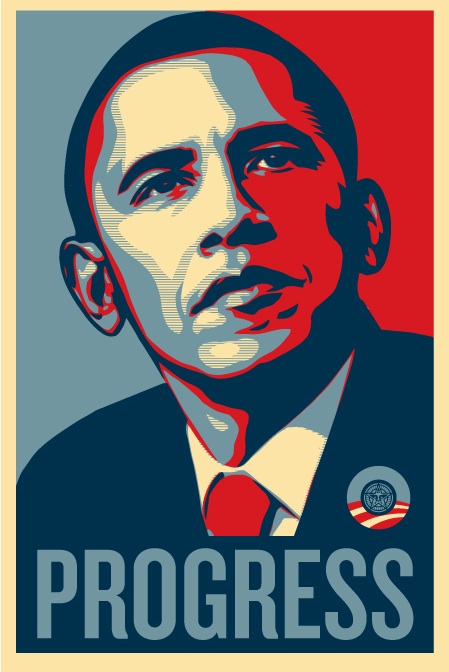
Since it’s inevitable that someone in my comment section will bleat “What? You’re comparing Obama and Che?” – Er, no.

I’m comparing their audiences.

Good Money After Bad Booze

Thursday, December 18th, 2008

There’s an apocryphal saying – it’s often incorrectly attributed to De Tocqueville – that goes “a free society can only survive until the people discover they can vote themselves largesse from the public treasury”. 

Apocryphal or not, it’s coming to vivid, horrifying life all around us.

We’ve bailed out the negligent financial industry and the smug, complacent auto industry and unions. 

Now?  Nick Loris writes that some even more-useless industries are at the trough; now, the Ethanol industry wants some taxpayer love.  Or should we say, more of it:

If you want a slippery slope example, you’re witnessing it. An auto bailout would set a disturbing precedent, resulting in even more private companies clamoring for government sponsorships. A number of companies today could make the case that their respective industry is vital for the economy and begin requesting billions of dollars in bailout subsidies. And if an ethanol bailout follows an auto bailout, who knows who will be next in line.

Ethanol has been receiving preferential treatment for thirty years and has proven to be unsuccessful. Even after decades of special tax breaks and subsidies, ethanol still provides only a small fraction of America’s energy needs. The government’s initial goal to kick start the ethanol business has morphed into the government trying to pick winners and losers among energy sources and has ultimately created a dependence mentality for the ethanol industry. It’s time to let ethanol stand on its own two feet or die.

And to make matters worse, ethanol isn’t doing any of the things it intended to do – ethanol literally is making matters worse.

Raising food prices, contributing to the global grain crunch, polluting more, depleting the aquifers, and begging for handouts?

If it were a bum, we’d put it in treatment.

--> Site Meter -->