Why Yes,
Wednesday, June 3rd, 2009…I overslept this morning.
Posting will be light until, oh, I dunno, after work.
Ta.
…I overslept this morning.
Posting will be light until, oh, I dunno, after work.
Ta.
Ask a random sample of people who were thirteen or older during the eighties “what is the decade’s most tiresome icon”, and you’ll get a lot of answers, depending on where one was at the time; Boy George, “We Are The World”, “Choose Life” T-shirts, Don Johnson, the “Flock of Seagulls'” dude’s haircut, the training scene from Flashdance…
…but as they go through their own personal lists, eventually most of them will get to “Walking On Sunshine“, the too-big-to-measure one-hit-wonder by Katrina and the Waves.
And it’s true; “Walking…” was very overplayed.
But the reason tragedy wasn’t that the song overstayed its welcome; it’s that it became synonymous with the group that played it.
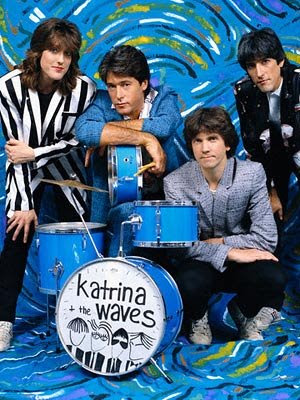
And that’s a shame – because Katrina and the Waves were a really, really good band.
Even people who are sick to death of “Walking on Sunshine” admit that Katrina Leskanich, the band’s statuesque lead singer, had a voice and a half. Of course, you have listen harder to hear that guitarist Kim Rew, in his first big gig after leaving the Soft Boys, had a way with bending and strangling chords into ad-hoc passages may not have been “Solos” in the Steve Vai sense of the term, but were really, really good.
But here’s the real cool thing about The Waves; they did something that very, very few bands had done since John Fogerty left Creedence Clearwater Revival, and that had become an almost lost art in the meantime; they wrote small, perfectly-crafted, three -minute pop songs that were shimmering little gems of pop perfection. Perhaps your world was falling apart at 10AM; perhaps it’d still be falling apart at 10:04; but from 10 to 10:03, you could smile and go “dang, that’s cool”…
So yeah. Forget the “Sunshine”. Dig the wave.
My whole musical life, from the mid-seventies on, whenever someone has wanted to portray themselves as the kind of hip that transcends mere temporal hipness, they’ll claim to be Joni Mitchell fans.

Joni Mitchell fandom has gone through a couple of phases; its original stretch in the late sixties through the mid-seventies, when Mitchell was putting out albums that got all sorts of attention, of course. And then in the late eighties, when Prince confessed to being a huge Mitchell fan.

And today, in an era where quirky art-school girls with guitars is a booming genre, I’m hearing more would-be hypstrz claiming to be huge Joni Mitchell fans.
She always bugged me.
No, no – I know she’s an iconic songwriter, an amazing singer, and had been for almost forty years the leading voice of her particular genre. She’s a spectacular talent with four decades of great material.
It just happens to be a genre, and material, that leave me utterly cold.
Part of it is the whole “folk-jazz” thing. Folk music is a form that I go hot and cold on, depending on the singer and the subject material.
And jazz? Well, to paraphrase the Supreme Court wag, “I don’t know how to define what jazz I like, but I know it when I hear it”.
And while I know deep down inside that it’s wrong, and that I probably need to reset my internal musical CPU, I also have to cop to it; whenever Mitchell starts singing, I shut down a little inside. “Oh, goodie; another overly ornamented pseudo-jazz reflection on romantic ambiguity, delivered via lovely-yet-grating high-alto warble that just grates the desire to sit still and analyze the deadeningly-oblique lyrics right out of me”.
I know. It’s wrong. Maybe I’ll work on it when time permits.
Summer was about to start. My sophomore year of high school was grinding to a miserable, hormone-addled, C-minus-average halt. The lowlights of the year: I’d gotten a strong-“F+” average in Geometry, I’d gotten straight “D”s in the grammar semester (after aceing the literature and writing half of the year), and I’d finally given up the ghost on whatever passed for an athletic career – a tough choice, since I did love playing basketball; I just hated coaches.
The highlights: I’d gotten straight “A”s in the various social studies classes (Modern Africa, Western Civ, Modern Asia, offered in quick ten-week hit-and-runs), which was the norm for me. And after my performance in Geo, I’d snuck out a “B” in the final, which salvaged a “D” for the year. I’d played the “villain”, “Mortimer Frothingham”, in the fall play, a melodrama, and had managed to parlay my meager skills on the guitar into a spot in the stage band.
Lower-lights? My hair was greasy enough to wring out in liquid form. And while I was finally getting toward the end of my acne-ridden phase, my face still looked like Bryan Adams after a bad run-in with a wolverine.
Mid-lights? I was taking biology in summer school. Summer School at Jamestown High School back then was an odd combination; half the kids were the ones that’d flunked the classes, and needed to pass to graduate. The other half were the highly-motivated kids – and, my grades notwithstanding, I was, if only because getting three years of summer-school credits out of the way would allow me to graduate at least half a year early. And I really, really wanted to do that.
But summer was coming. And more than anything, I wanted a job.
Dad had mentioned, whilst over at Grandma Bea’s house the day before for our usual weekly Sunday dinner, that I ought to give Bob Richardson at KEYJ a call. KEYJ was one of two radio stations in Jamestown; more importantly, it was the one that made a point of hiring local kids, especially kids from the high school and college, and teaching them how to do radio.
And today was Monday. Go-time.
If you know me today, it may not be readily apparent, but I was pretty cripplingly shy at personal contact back then, and that was talking with regular people – classmates, teachers, anyone who wasn’t a close life-long friend (and I didn’t have a whole lot of them). And Bob Richardson was not a “regular person”. Richardson, who’d worked at KEYJ since the early fifties and had owned it for ten years (i.e., forever, to me, at that age) was the voice of authority in Jamestown. His was the big, booming voice behind the noon news, a million football broadcasts, “Live Line” (Richardson’s half-hour daily call-in show that was the closest I came to talk radio until I moved to the Twin Cities)…everywhere. If radio – the entire medium – had a sound to me back then, it was Richardson.
So I waited in my parents’ living room until everyone – Mom, Dad, my sister and brother – were all out of the house. I calmed my jangling nerves enough to dial the number – 252-1400 – and waited.
The receptionist picked up. If that wasn’t bad enough, when I asked “Is Mr. Richardson there?”, she said “yes” and put me on hold.
I started taking three deep breaths. I’d read somewhere that that was a good way to calm your nerves.
I was halfway into Breath Three when the phone picked up. “THIS IS BOB“.
Bo-weep.
“Hi. I’m Mitch Berg – Bruce Berg’s son”. It never hurt to drop Dad’s name around Jamestown; everyone in town had either had dad in school, or their kids, or parents had. Indeed, all of Richardson’s kids had been in one of Dad’s classes or another. Also, he ran the Jamestown High School Radio Club, which did its annual project over at KEYJ. I took a breath. “I’m interested in radio, and I thought I’d call and see if there were any part-time jobs available at the station, and if there were if you’d keep me in mind for one?”
Silence.
And more silence.
“Hmmm”, Richardson growled. “You do have a decent voice, and fairly good diction”.
More silence. I could feel the sweat.
“Tell you what. There’s nothing right now, but there might be something coming up soon. I’ll keep you in mind…”
And that was about it.
I hung up, relieved to have survived.
Onward with Summer!
Occasionally, when discussing biking, one or another putatively “conservative” critic will sound off with one or another of the following:
No, I bike because I enjoy it.I always have. It’s great exercise and, unlike most exercise, the scenery is never the same twice. For over 30 years, I’ve enjoyed the feeling you get from finding ones’ limit (which, at 46, is a lot easier than it used to be) and pushing it back. I just plain feel better when I’m biking, which is nothing to sneeze at. How many of you car drivers look forward to your morning and afternoon commutes?
As I noted last year when interviewed in the Utne Reader, there are those that have politicized biking. I respond to that politicization to wit: “Not me”. Of course, there are impeccably conservative reasons to bike: it saves money; you pay less taxes (and what conservative doesn’t relish that thought?); you are happy not to pay for someone else’s vision of Minnesota.
That should take care of that, right?
Well, hopefully. With some of the (let’s just say) less-creatively-dogmatic people on my side of the aisle, you have to get mighty specific, lest they take the word “bike” like a bull takes an inadvertently-exposed bit of red underwear.
With that established, though, there are some bikers that deserve rhetorical wedgies.
One of them – Matthew Modine, former famous actor – gives one all the ammo one needs in the biograf of a HuffPo post, “Cars Are Like Cigarettes; The New Pariah“:
Matthew Modine is a Causecast leader, a dedicated and passionate individual who is an enigmatic voice for change.
And it’s a good thing he’s got that, since he hasn’t had a decent movie since Full Metal Jacket.
Causecast leaders are a prestigious collection of athletes, artists, students, actors, musicians, politicians, teachers and more. These individuals have set themselves apart from their contemporaries with a spirited dedication to their ideals…
…which are then expressed on…a blog.
Modine:
I am often asked, “Why do you love bicycles?” For a few reasons, but mostly because I am in love with self-propulsion and self-motivation.
So far so good; most of us like “self-propulsion” for some reason or another.
I love finding solutions to problems and I want to leave the world in better condition than when I arrived. For too long we’ve behaved as if the resources of our world are infinite.
On the one hand – nothing is infinite. But lots of people “want to leave the world a better place”; fortunately, many of them are more concerned with finding ways past our limitations than being held prisoner by them.
Sometimes I feel like I am flying when I ride my bike. It’s exciting to turn a corner and suddenly find myself in a sea of other bicyclists.
[CLOSED CIRCUIT TO MR. MODINE AND BIKERS ONLY: Ugh. No. I mean, different strokes and all, but biking for me is always a solo thing. Hell, as this article shows us, is other bikers].
Modine is now going to shift into 10th gear, settle his feet into the clips, and pedal like hell into the Smug Zone:
The statistical truth is that 90% of trips made in cars are less than five miles from our homes. A very comfortable journey made on a bicycle.
Mr. Modlne, I’ll give you your due: you’ve certainly put your money where your mouth is on quite a few issues. You turned down Tom Cruise’s role in Top Gun because you didn’t like the politics; I disagree, but I can respect someone who lives his beliefs. Unlike most of Hollywood, you’ve also been married to the same person for almost thirty years. You have two grown children. Good on ya.
Now – in all those years of raising kids in New York or LA, how many of those “90% of comfortable trips” to the UrgentCare, to the pediatrician, or to the MiniMart for midnight diaper runs did you make by bike? How often did you do a week’s worth – even a days’ worth – of shopping for a family of four on your ride? Or even by subway, bus, taxi or any other “environmentally responsible” form of transportation?
And if you want to say “most of them”, that’s great. Now – if you weren’t a famous, well-paid actor, how might that have worked out?
Behind every transit-uber-alles advocate is someone who’s never had to haul two kids to the urgent-care after work.
Perhaps the best part of choosing a bike instead of a car is what you are saying by pedaling. You are saying to yourself, your friends, your family, and the cars that clog our roads and highways, that you care about the air we breathe and that you care about the environment. You’re saying you want to do something to reduce carbon emissions and that you want to improve your health. This personal and environmental awareness is the legacy that you want to share with your friends and family.
Well, no. I mean, believe what you will, but the only legacy I’m going to leave my kids is a father who hopefully doesn’t drop dead of a heart attack at 50.
Next: Proof that Modine really is from Planet Manhattan:
Our country has had a long love affair with the automobile. Since its invention, the automobile has provided us with the freedom and liberty we yearned for since we took those first baby steps. The automobile took us further and faster than we could have ever done by self-propulsion. But that speed and distance has brought the world to the edge of extinction. We must now look at the automobile with an understanding of what it really is…as a cigarette–a cancer stick–a nail in our collective coffin. The sexy lifestyle that the tobacco industry sold to us contains the same advertising lies and poison which the automobile industry sold and continues to sell to the world.
Let’s ignore for a moment the extent to which Modine’s transit-friendly world – New York – was built to a great extent with profits from slave-grown tobacco; does Modine realize how many millions of Americans were dragged out of poverty by the changes to society that the car brought? How many good, family-supporting, transit-friendly-city-building jobs came from building, supporting and repairing cars? How many places like Modine’s native Loma Linda, California were opened up to the rest of the world. enabling wide-eyed Mormon kids like Matthew Modine to think of futures that didn’t involve farming? Indeed, how they paid for Modine’s childhood itself (his father ran…a drive-in theater!).
But Modine’s right. Like cigarettes, cars have their problems; they are also the butt (heh) of a wave of ill-informed PC lunacy, dished up in the service of people who want to re-engineer society in their image, and damn the unintended consequences; damn the jobs lost, cities swept into ruins, lives altered. Damn the waitress thrown out of work by the smoking ban, along with the assembly-line worker, and the city in which they both live.
Modine’s right. Gasoline is literally finite. But the market will find an alternative long before government will.
Look at the ads for automobiles and you’ll begin to recognize the lies. You’ll see open roads with happy smiling drivers. Ask yourself, When was the last time I was NOT stuck in traffic? When was the last time I was not pissed off and stressed out after just a few hours spent driving behind the wheel of a car? The automobile ads always present cars in a setting that is free of traffic and the drivers appear powerful, happy and liberated behind the wheel. Yeah, like that ever happens in the modern world.
Dunno if Matthew Modine’s ever tried driving in the vast majority of this country between the Sierras and the Hudson.
Hey, he should try biking it!
Yeah. Like that ever happens in Matthew Modine’s world.
I know, I know. Barney’s irritating.

My apolitical friends hate Barney because of his relentless, up-beat cheeriness and, of course, the voice.
My “conservative” friends – or at least some of the ones that look too hard to find political significance in life’s pettiest minutuae – detest him because of his cushy, relentlessly PC world.
And truth be told, there’s much about Barney, the long-running PBS show for toddlers and pre-toddlers, that’ll drive you nuts. The music is relentlessly simple. The supporting cast – Baby Bop’s voice and sing-song delivery will drive you to cheap liquor, and the kids at the fictional daycare are, let’s just say, not gifted actors.
But my various friends and I all have one thing in common. We’re not two years old.
Too obvious? OK. Most of my Barney-hating friends and acquaintances had never spent a day at home with a pre-toddler.
It’s hard to explain to them; I owe that purple dinosaur my sanity.
Let me explain.
Years ago, when Bun was a baby, I was working nights. Her mother worked days. So during the day, I watched the baby. Indeed, Bun was a pretty active baby – so I didn’t do a whole lot but watch the baby. Bottles, diapers, doing stuff – there wasn’t a whole lot of time for luxuries and dissipations like going to the bathroom.
But every day, I could count on two half-hour breaks in the action, where baby Bun would be glued so firmly to the screen (also strapped so firmly into the Snugli) that I could go grab a glass of water and a quick (quick!) trip to the bathroom without fear of getting jolted to reality by a squall of screaming. Bun was mesmerized, which was thirty minutes of being tethered to the baby by 25 foot cable, rather than a three foot leash. Barney was on twice a day back then, and those two showings were my little rewards to myself that kept me going through the day.
So yep. I owe that dinosaur. Bigtime.
And whatever you want to say about the tone of the show (as an adult, and not the show’s audience), the theme song was the first song Bun ever learned. And there’s nothing in the world more cute than a toddler singing her or his first song – it wouldn’t matter if it were a Throbbing Gristle song. Although thankfully it wasn’t.
So anyway. Step off the dinosaur.
I’m not sure why I hate Seinfeld.

I know; it’s funny; hilarious, even. I watch it, and I laugh. Sometimes really, really hard. Even at Kramer. The show is well-written, no doubt about it.
And yet I find myself gritting my teeth and getting antsy when I watch it, just like I do when I’m behind some yapping, whiny, self-centered dolt in the line at the grocery store – the kind that argues over the price they thought they saw on the shelf. When I’m not laughing, the show irritates the bejeebers out of me.
Part of it is, yuks aside, watching Michael Richards has, for me, always been like listening to fingers scratching on chalkboards. I’ve had an almost-visceral distaste for Richards ever since Fridays, the abortive ABC whack at Saturday Night Live’s market back in 1980. Richards/Kramer is funny, occasionally? Sure. Irritating? Always, always, always.
But the biggest problem I’ve always had with Seinfeld is the overall attitude of the show. If Seinfeld were a person, it’d be fussy, uptight, nit-picky, whiny, infantile and grating.
Watching too much Seinfeld for me would be like being snowbound in a hotel room with Mike Gelfand.
So I laugh. And I grit my teeth. And, usually, just don’t tune in.
It was Monday, May 22, 1989.
I woke up late at about the usual time, probably 9 or 10. I’d been working late the night before, at “Wallaby’s”, a horrible bar stuck under a strip mall in Columbia Heights.
Since I’d moved into the little upper duplex, life had gotten less eventful. Living without an addict in the house was a whole lot less crisis-prone.
But there wasn’t a whole lot going on to fill the time, either. My week pretty much ran like this:
And that was about it.
The routine during the day? Most days, it involved jumping on my bike and riding. I rode all over the metro. 20-30 miles a day, back in the day before there were bike paths and bike lanes all over the place. I’d ride whichever way the wind told me to; if the wind were blowing from the west, I’d ride west, across the Lowry Bridge, over to Wirth Park, and off into some maze of northwest-suburban streets or another; I’d have the wind behind me on the way home. I had no goal or destination, really; I’d just ride.
Whiling away the time.
The band thing had sort of tailed off again; Bill the Drummer had started drinking again, and gotten depressed about the prospects, and I just walked away. Again.
But it was a beautiful morning.
And so I rode.
Last night: Went to bed. At ten PM.
That is all.
Back in high school, I had a friend who, while driving home from her boyfriend’s place on some dark, dank, country road around dusk one night, made a left turn onto a side road.
Through inexperience, bad luck, poor road design or the glare of the sunset, she didn’t see the truck barrelling up the road straight at her as she made the turn. She was killed instantly – about as instantly as it gets, as luck’d have it, not that that made her parents feel any better.
Was she “stupid?” Unlucky? Did she guess wrong, or just plain miss the oncoming truck? We don’t know. The driver was never cited, and no fault was ever really ascertained as I recall because, really, did it matter anymore?
Question: Is it a good thing she never got to “breed?”
The tragedy hit me hard back then. And since I’ve had kids of my own, I’m even more keenly aware of how fragile life is. Bad things happen – frequently to people whose only “stupidity” is being in the wrong place at the wrong time. And when those bad things happen, someone – a father, some kids, a girlfriend – get left behind.
I haven’t laughed about an accident, even a genuinely stupid one, since I had kids.
———-
I digress. But not really.
I’ve never really understood “conservatives'” antipathy toward bikers – and by “bikers”, I mean people who ride bikes. Lots of conservatives ride. I ride a lot from the beginning of April until it gets just too cold; it’s my main commute to work, and it’s one of my favorite weekend diversions, when weather permits.
Leaving aside that it’s a lot of fun, and it’s just about the best outdoor cardio exercise there is, especially for people who are past their mid-twenties and have the knees to show for it, there are a lot of good free market reasons to bike. It’s inexpensive. It saves you money on gas, maintenance, healthcare and taxes, since we’re cutting out miles of government gas taxes as we ride.
Some, like Jason Lewis, complain wrongly that we are getting a free ride. Its untrue of course; gas taxes go mostly to highways, and most biking is done on city streets. Which we pay through various city taxes, including property taxes, which I assure you I most definitely pay. Indeed, given that all other things being equal we pay the same city/county taxes as everyone else, and inflict vastly less wear and tear on the roads than our car-driving neighbors, it’s not unreasonable to say that all other things being equal we pay more taxes on the applicable roads than the rest of you (and that ignored the fact that most of us drive as well).
So it’s all you motorized freeloaders who need to step lightly around the rest of us.
And yes, I know – bikes are identified with a lot of lefty excesses; smug greenies wave their bikes in the rest of society’s faces with gay abandon. “Critical Mass” has turned into an excercise in group arrogance, and would be well dispensed with.
But the fact is, a bike – like a gun – is nothing more than a tool. It’s the rider that counts.
———-
At any rate, a rider was killed yesterday morning in Minneapolis. By a turning semi. While riding (the nerve of the guy) in a dedicated bike lane.
Stuff happens. Sometimes the accidents come to you. Urban biking requires immense care; experienced city bikers have eyes on the backs of their heads, and are not the ones you see riding around with IPods stuck in their ears. The old drill sergeant aphorism is true; anything you do can kill you, and anything you don’t do can kill you. When you’re a city biker, you are always one missed signal, one inattentive driver, one moron in a Jeep trying to reset his CD player or groping for a cell phone, one overly-wide turn, away from being a grease stain; you are only as safe as the sum of the dumbest driver around you and the speed of your own reflexes allow you to be. If you’re smart, you ride very defensively, avoiding dangerous streets (I cringe as I drive down University or Snelling watching people trying to ride in traffic), and places with particularly dangerous traffic.
Especially semis.
Tracy Eberly at the short-for-this-world Anti-Strib quoted the Strib article on the accident verbatim, adding only two editorial elements of his own; the title (“Weeding Out The Stupid“) and the tag (“I Hope He Didn’t Breed”). The victim, unfortunately, was named Donald Dumm. I know nothing about the late Mr. Dumm – his background, his experience at city biking, his knowledge of his route, and least of all his politics. I don’t know if he was riding carefully or not (he was in a bike lane), or whether he took a dumb chance.
I do know, though, that when Tony Snow – former talk show host, White House spokesman and all-around class act – died of cancer a few years ago, a horde of suet-brained leftybloggers partied like it was 1999, acting as if Hitler or, worse, Cheney himself had passed, and drawing glee from it. And I ripped on them for being, really, inhuman.
Leftyblogger and biker Charlie Quimby – who’s never been mistaken for a drooling Kossack – responded to Tracy yesterday.
Tracy is being extremely stupid and insensitive, but I don’t think he deserves to die for it.
Don’t know if I’ll go word for word with Charlie, but in for a penny, in for a pound; Mr. Dumm had friends, a family, a life, and his death – through circumstances that look to have been the kind of sudden, uncontrollable crisis that kills thousands of car drivers a year who pass without the benefit of anyone grabbing a cheap chuckle at their death – isn’t the stuff of cheap comedy.
Especially political comedy.
Especially political comedy that is just plain wrong.
Look – I’ve defended Anti-Strib when nobody else would; during the “Dirt Worshipping Heathens” fracas, I took Tracy’s side against drooling crank Karl Bremer and the bought-and-paid-for Steve Perry and their horde of anonymous, lead-paint-chip guzzling leftyblog droogs. And I’d do it again. Because, more often than not, Tracy’s right.
But one of the most important tenets of conservatism is that of the worth of the individual, as opposed to the class, label or group. When we start focusing on group labels – “Bushie” or “Cyclist” or “wingnut” or whatever – over individuals, we lose. We become like “the enemy”.
And it wouldn’t matter if Dennis Dumm, God rest his soul, were an ACORN worker who was singing “The Internationale” and smacked into the truck because he was laughing at that funny “Somewhere in Texas, a Village is missing an Idiot” bumpersticker yet again.
…and I overslept just a tad. But I did need the sleep.
Blogging light until this afternoon.
Note to Glenn Beck:

I actually like your TV show, if only because it’s better than most cable-TV methane-fests.
But on the air?
Don’t get me wrong, Mr. Beck. You’re a conservative, ergo right about everything underneath all the schtick. Duly noted.
But if people were to take your hyperbole seriously, Glenn, we’d all be moving into bunkers in the mountains; I certainly want to after listening to you for an eveing.
So I say, Glenn Beck; lead the way.
It’s been over twenty-two years since Tom Barnard took the helm of the morning show at a formerly-sleepy Minneapolis “classic rock” station and made it into the most successful local morning show in America.
We’ll come back to the numbers.
It’s considered a faux pas in polite Twin Cities society to admit liking the KQ Morning show,which is into its third decade of dominating the ratings like no other radio show in the country, including Howard Stern at his peak. Oh, the show does the nuts and bolts of radio really, really well; the interplay between Barnard and his huge cast is smooth and polished, in a completely amateur-sounding way. And some of his supporting cast are excellent in their own right; Mike “Stretch” Gelfand, the show’s adenoidal Jewish horse-handicapper is hilarious, and engineer Brian Zepp is to straight lines what an all-star NHL goalie is to pucks; he never lets one past him.
But it’s easy to see why the show doesn’t get any love from the Twin Cities’ self-appoitned intelligentsia. Even leaving aside the show’s occasional contoversies, the show is often described as a junior high locker room, with the sort of potty mouth language that only Al Franken can get away with, the crude, catty peekaboo sexual banter that only Chelsea Handler is allowed to do, and the sort of constant pr0n references that Twin Cities hipsters will only accept in a Diablo Cody book or in a performance art piece at the Bryant Lake Bowl.
But it’s not a junior high locker room. It’s more like one of those beer commercials that you see around super-bowl time.
Work with me, here.
On the show, you have a cross-section of America like you see nowhere else in the Twin Cities media. I mean, nowhere! Quick; name an audibly-African-American voice on MPR? An identified “out” gay, anywhere in the Twin Cities media?
In those Super Bowl beer ads, you see a vision of superbowl parties around the country, each of which shows a perfect racial cross-section of this nation,with black and hispanic and the occasional asian partier joining all us crackers – a heartwarming vision of racial harmony in 2009 that also exists very rarely in nature. And it is a rarity in nature at least in part because Americans are panicked at the notion of offending each other; race and gender orientation in America isn’t just a third rail, it’s a foggy midnight in a Newell Park Transfer Yard full of third rails.
And yet Barnard’s show is like that fictional party, with a middle-aged white guy, a “dumb blonde”, a black guy, a left-leaning Jewish guy, a schlemiel from Jersey, a redneck, a slumming news anchor, a dizzyingly-obsessed pr0n nerd and – for a few years – an openly gay guy, all doing what real people would do if this society were remotely grown-up about race, gender and gender-orientation; bagging on each other constantly, with a nudge and a wink and the subtext that we’re all grownups, so just relax and get over yourselves.
If the whole nation got along like the KQ Morning Show does, it’d be a better place.
Plus, all those whinging libs who’ve been threatening to move to Canada probably would have to shut up and just do it.
But they’re not, which brings us back to the numbers. Barnard’s show gets, literally, the best market share of any major-market morning show anywhere in the country. He was the first person since the Great Depression to upset WCCO in the mornings. In an era where music radio’s audience is collapsing, he and only he still gets Golden-Age-of-WCCO-type numbers. Which means that it’s physically impossible, in one of the most “liberal” cities in the country, to make up those numbers entirely of third-shifters, white trash from the Brooklyns and Shakopee and Newport and the other usual cliché closet crackers. It means that some of that audience has to be those irritating, preening libs sitting next to you who claim they listen religiously to Cathy Wurzer or Jim Ed Poole or podcasts of Prairie Home Companion on the way to work.
So now you’re onto them. So if you’re chatting with ’em by the water cooler, and they make some statement you agree with, just respond by saying “Ex-ACT-ly”, or “HEY now, ain’t nothing wrong with that”, or “EVERYONE’S a winner!”; if you see that muted, panicky, “I’ve been made” look in their eyes, you’ll know it.
And what a wondeful world that’ll be, huh?
Presenting symptoms:
I made sure I had coffee made before I started blogging this morning…
As noted in the previous article, I hate crap.
Unless it’s good crap.
Or, if it’s bad crap, at least let it be bad crap that does something good.
Let’s be clear; Red Dawn is a crap movie. It’s so crappy, only Quentin Tarantino should direct the remake.
And yet I love it.
It had everything a teenage guy (or in my case, a twenty year old, which in college is just about the same thing) could want.
It had all your best buds, out on a really serious adventure!

It had blatant cold-war emotional manipulation!
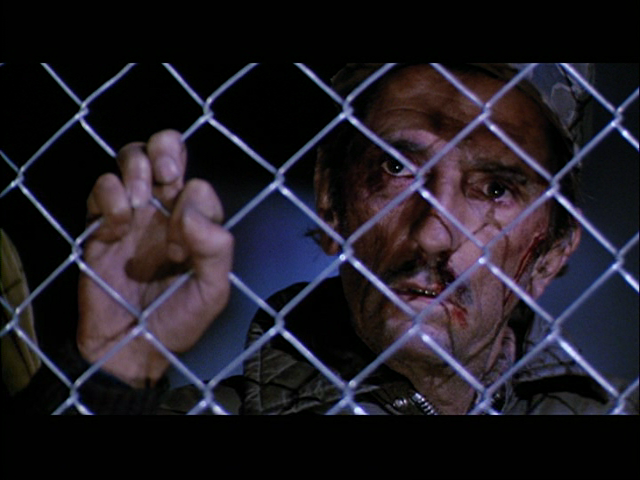
It had you…er, Patrick Swayze and all your buds kicking righteous ass!
It had Ferris Buehler’s sister and that Caroline In The City chick whose name eludes me, with guns!

Jennifer Gray and Lea Thompson! I didn’t even have to look it up!
I noted long ago that I’ve only walked out of two movies in my life; Tom Hanks’ wretched The Burbs, in 1988, and Little Nicky in 2000. Red Dawn was nearly the first; during the scene where the student council president (who later betrays the group) calls for the vote on going back to town after the invasion? I started getting my things together to get up and go – but since it was a cold night and only homework at college awaited me, I stayed put.
And there were more justifications for getting up and going; any scenery that Lea Thompson doesn’t shoot or blow up, she chews; you can see Powers Boothe silently cursing his agent in every scene; the ending is mawkish and awful.
But it’s a John Milius movie. And Milius has a way of making “marinading in testosterone” fun, and even thrilling. Dirty Harry was only a few steps above Tarantino-level dreck – but there’s not a person in the film-going world that doesn’t love it; there are people in Sri Lanka whose only English is “Go Ahead, Make My Day”, and they all get it.
And as bad as the movie is, Milius is in fine form, pushing all the same buttons that get otherwise-sophisticated Americans to get a little verklempt at “God Bless the USA”, or sing along “we’ll put a boot in your ass, it’s the American way!” with Toby Keith.
It’s manipulation. It’s crap. It’s glorious.
It’s almost a rite of passage, these days. I watch it with my kids, partly to point out the crap, and partly to pass on the great two-generations-from-white-trash folklore of the whole thing.
Wolverines! F**k Yeah!
Now, I’m going to go listen to “This American Life” to rebalance my chi.
Take two patties of crap.
Mold them around a piece of pungent, sharp swiss cheese to form a “Juicy Lucy” patty. Grill the patties to perfection, and put them on a fresh, just-crusty-enough Kaiser bun, with Jamaica onions, tomatoes, a little smear of garlic paste, dijon mustard and ketchup. Plate it with some impeccable steak fries with pepper-catchup and ranch dipping sauce.
You’ll have a real work of culinary art and craft on your hands, a testimony to the skill of the cook and the quality of the ingredients…
…or you would, if it weren’t for the fact at the center of it all it’s still just a crap sandwich.
Film buffs tell me I’m supposed to looooove Quentin Tarantino.
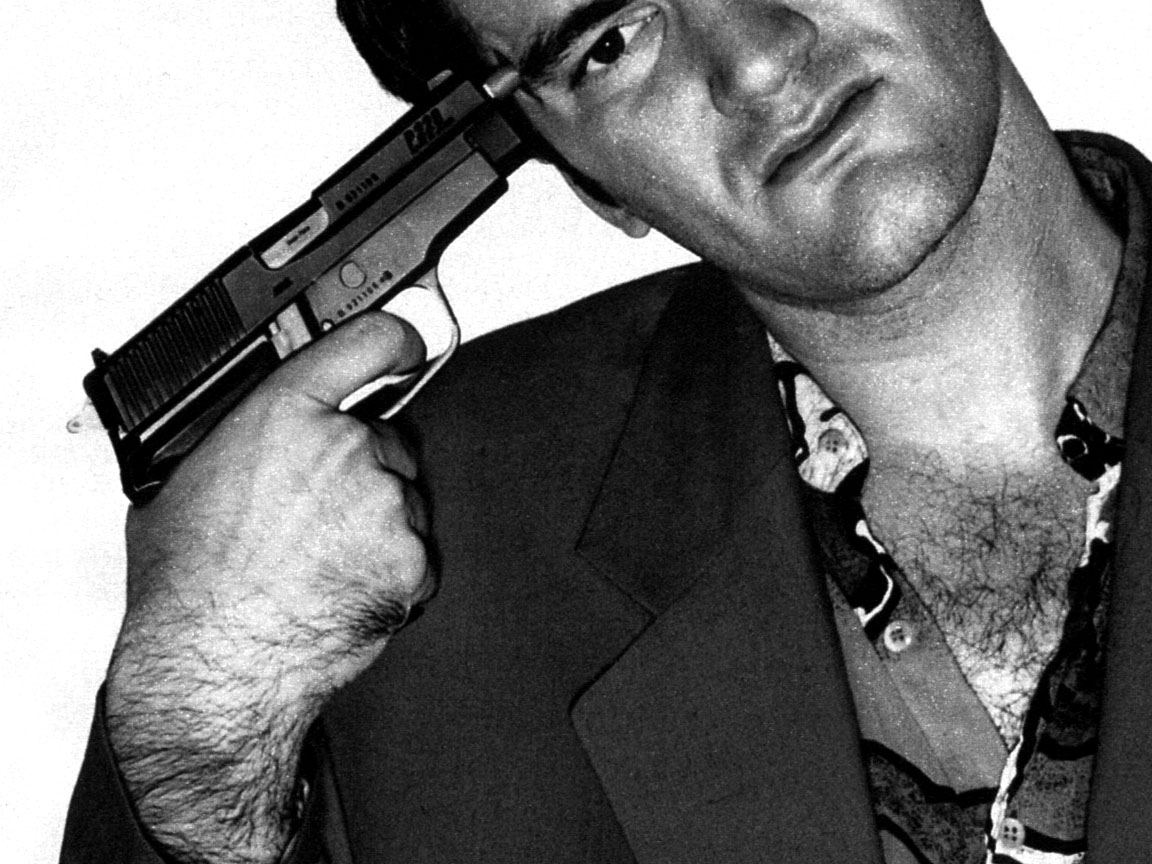
I can’t stand him.
Oh, Pulp Fiction is all right; it’s entertaining, but terribly overrated. But a little of it goes a looooong way.
Which is better than I can say for the rest of his filmography. Reservoir Dogs is like Diner for people who were raised by bad dog trainers. The Kill Bills were like the sandwich above; crap sandwiches, albeit well-crafted with with the occasional “ooh, cool!” piled between the patties of crap and the bun. I never saw Grindhouse, but I’ll take a guess and wager “crappiest” was the adjective I’m looking for.
But here’s my big beef (as it were); what would we say if, say, a music producer came to the fore whose entire oeuvre was recapturing the magic of Tommy Roe or Bo Donaldson and the Heywoods? We – people who care about actual music – would shake our heads, mutter etro Uber Alles people have gone too far”, and go about our business.
If a chef opened a high end restaurant featuring Tang, Space Food Sticks and Cap’n Crunch, what’d the culinary crowd say?
Well, we know what some of them – the crowd that flocks to Chino Latino to get abused by the surly hipster waitstaff, the ones that get their yuks at just how tacky people used to be by wallowing in faux irony.
And that’d explain Tarantino. He’s a one trick pony; his only trick is endless, pointless homage to the kitschiest, ugliest, shabbiest things American moviemaking has ever done.
Wheee.
Tracy Eberly at Anti-Strib once said that my dislike of Tarantino was a musician thing:
Mitch Berg has highlighted the massive chasm that exists between movie people and music people.
No. It’s a “I dislike, and refuse to celebrate, crap” thing. Accepting Tarentino as a good example, much less as the sine qua non of American filmmaking is like going to Manny’s and ordering a cow flop steak with all the trimmings.
Look – just for future references: Doesn’t matter if it’s crap music, crap literature, crap dance or crap movies. And it really doesn’t matter if it’s just a well-crafted, lovingly-obsessive, irony-drenched homage to crap, or the first-generation variety. Crap is Crap.
Tarantino: he may not be crap. He’s just built a career out of repackaging crap for those who idealize crap or, worse, think that paying homage to crap ennobles it.
Go ahead, Quentin. Pull.
It was a day a lot like this only (as I recall) clearer and warmer.
I had a pretty good gig going, as I recall; only child, pretty much had the run of the little stucco house on Third Avenue in Jamestown. Best yet, I’d just had a couple of days with Granma babysitting – and that always rocked, because she made cookies. Lots and lots of cookies.
And I was probably enjoying the aftermath of one of Grandma’s spectacular lunches when I got the news, and raced out to the porch to meet…
…my new little sister.
And while I never did get that “only child” thing back, I did get…
…well, (koff koff) years of being a big brother.
Anyway, happy birthday, Barb!
While we’re on the subject of Canadian folk singers gone awry – I just can’t stand Neil Young.
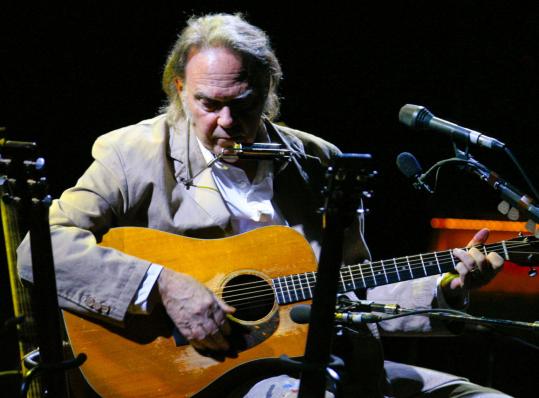
Let’s make sure I’m clear here. I love tons of Neil Young music; “Down By The River” is one of the sixties’ better moments; that it can survive the presence of Stephen Stills is testimony to its greatness.
And he’s got plenty of great music where that came from; much of Harvest; “Rockin’ in the Free World”; a lot of what he did with Crazy Horse.
And still I grit my teeth and expect the worst every time I hear he’s got something new coming out.
Neil Young is like that crazy neighbor who happens to be a fantastic baker. You know that nine times out of ten when you hear anything from that neighbor it’ll be because he’s plinking at cats with a BB gun, or because the cops are hauling her back into treatment. But there’s that odd visit where he/she brings over the lemon meringue pie that proves the existence of a divine loving God that makes you forget the other nine times – for the moment.
That’s Neil Young. He bounces from the sublime to the…well, not really “ridiculous”. “Tiresome”? “Not really quite right?” “Waste of time?” Anyway, he bounces around like a hyperactive four-year-old who’s broken into the Coca-Cola.
And I don’t mind that, even. Oh, it’d be cool of so many of Neil Young’s reinventions weren’t squibs (Trans, Re-Ac-Tor, and on and on), but it would be boring, for Young and for the audience, if he never,ever changed.
So part of the problem is that I get worn out keeping up with Neil Young.
But the big problem I have?
Let’s go back to college. I took a piano tuning class. In learning how to tune pianos, my ears became incredibly sensitive to pitch, and especially to harmonic dissonance between strings; when two strings that are supposed to have the same pitch are just ever-so-slightly out of tune, phase cancellation creations a subtle “beat” in the sound; the more out of tune the strings are, the faster the beat.
So by the time I got done with that class, my ears were as sensitive as a dog’s.
And then Re Ac Tor came out. And its first single, “Southern Pacific”, came on the radio.
And I listened. And held my head in pain. Neil Young’s guitar was out of tune.
And as I listened to more and more Young, the throbbing phase beats told me Neil Young never ever ever ever tunes is &^%^$#$@ guitar! My ears are still very sensitive to pitch, by the way, which is why Karaoke night can be so utterly painful to me.
So stylistic schizophrenia aside, even when I like Neil Young, he makes my teeth hurt from clenching at the out-of-tuneness of it all.
In 20-odd years, I haven’t been able to ignore it.
So yeah. I’m supposed to love Neil Young. But he bugs me.
To the musical hipster, Gordon Lightfoot has for almost thirty years been synonymous with getting a kiss from your great-aunt.
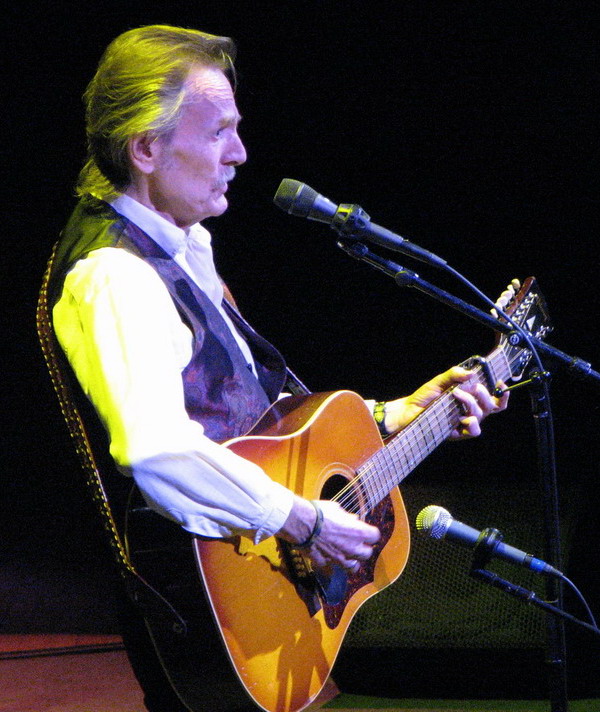
Let’s do try to set the record straight, here.
Lightfoot is one of the last, longest-living (commercially, anyway) survivors of the folk music boom of the early sixties. But I always took to Lightfoot because, while most of the “folk” music I heard was either screechingly, mawkishly self-righteous (Peter, Paul and Mary, Joan Baez) or self-consciously archaic (all of Pete Seger and Woody Guthrie’s many, many imitators) or groaningly over-literate (Bob Dylan’s many, many, many imitators), Lightfoot was just a guy who wanted to entertain a crowd. He was just a hard-drinking Canadian guy who looked and drank like the guy who refinished your driveway and sang songs about being hungover and unreliable.
Which isn’t to say that he didn’t follow some of the trends of the times – but even those shots were more interesting than their contemporaries. Amid the suffocating masses of “protest” folk songs, songs like “Don Quixote” and “Circle of Steel” were deft, oblique yet engaging.
Unlike most of his folk contemporaries, his shots at pop stardom, “Sundown” and “Carefree Highway” and “Summer Side of Life” and many others, were refreshingly un-suffocated by the conventions of folk that weighed down so much of the rest of the genre.
Lightfoot comes in for particular abuse for his biggest, best-known hit, “Wreck Of The Edmund Fitzgerald”. Some call it “boring”. Well, people are entitled to their own opinion; “Fitz” is an example of one of the most-abused folk forms, the “Really really long historical ballad” (which Lightfoot has done before, albeit without quite the same sales). But I always loved the song, partly because being from North Dakota, maritime lore is in my bones, and partly because the notion that, in 1976, when disco and dreary singer-songwriter treacle and Bachman Turner Overdrive ruled the airwaves, the notion that a five minute song about a shipwreck would sell a zillion songs should have been a plot for one of those “a couple of underdog guys hatch an improbable plot to make a zillion bucks in a scheme that everyone says has got to be a flop” movies.
So yeah. I’m supposed to hate Gordon Lightfoot. But I don’t.
The turnout for “pledge week” this week (it’s not really “pledging”, it’s just passing the tip jar, really) has been really good, so I’m going to make it “Pledge Four Days” instead.
As I noted before – I’d do the blog for the sheer love of the game, but knowing others are interested as well helps a lot.
Thanks for all of your support.
Well, the “week” is rapidly heading toward “four days”.
But I appreciate any support I can get!.
Either way, thanks for your patronage.
And when I say “week”, I usually mean like “a couple of days”.
The left’s got George Soros and Paul Allen and Barbra Streisand. The right? Well, we’ve got you, and that’s plenty enough.
OK, OK, that’s a big over the top. But I’m passing the hat anyway.So if you’re so inclined, I’ll be everlastingly grateful for whatever spare electronic change you might toss in the pail…
Either way, thanks for your patronage.
Anyone know if there’s a flag store in the Twin Cities?
I finally mounted a flagpole holder on my porch. I have the Stars and Stripes, of course, ready for all flag-waving occasions; I also have the Saint Andrews Cross, which inaugurated the flagpole on Tartan Day, earlier this month.
So I need a Norwegian flag in time for Syttende Mai, and there are only 17 shopping days left until Norway’s Independence Day.
Any tips?
Have been spelling Arlen Specter “Spector” all morning.
It’s that musical background.
I went back; I think I got ’em all.
It Tuesday, April 25, 1988.
My band had a gig. In the several months since we’d recorded a demo, we’d knocked around with a bit of this, a bit of that, a few practices, a few parties, a little schmoozing…
…and, finally, our band – “Joe Public”, this time – had a gig. Mark, Bill and I were playing yet another Tuesday “New Band Night” – our third – at the Seventh Street Entry. Their older brother Chaz was sitting in on the sax for a few songs.
To tell you the truth, I don’t remember much about the evening; I could name probably half a dozen of the ten songs we played, because we played them at all our gigs, songs I’d written two years earlier and that went over OK with audiences, whenever we had audiences; “Great Northern Avenue”, “Fourth Of July”, “Long Gray Wire” and “Five Bucks and a Transfer”, from our demo tape, and a few others I’d written since that are long lost to my memory. It was a decent gig, although Chaz’ contributions on the sax were a little incongruous; Mark, Bill and I were a pretty tight rock’nroll power trio by this point (think “Gin Blossoms meet the Iron City Houserockers”, not that that’ll help you much), and Chaz was more into “free-form jazz”, meaning honking on more or less random notes and scales as the spirit moved him, which made for a few interesting moments; he took a solo on “Great Northern” that sounded a little like hindu raga music on the sax, albeit in a key utterly unrelated to my little three-minute rock-and-roll tune.
What I really remember about the evening were the other bands that night. We played third out of the four bands that balmy late-April evening. The two before us were a couple of sloppy, dissipated groups of college kids who strummed gamely away at first-position chords and did more-or-less-random songs about not a whole lot. The fourth band of the night – “Full Metal Hangover” – was a trio of local bartenders who, being bartenders, were everyone’s best friends (I knew a couple of ’em); they thrashed gamely away at first-position chords and did more-or-less-random-sounding songs about being incapacitated in one way or another.
The unifying theme? They were what someone’d call, at another place and time, “bad”. But on that evening, it snuck up on me; the Minneapolis music scene I’d moved to – a combination of ultra-motivated R’nB bands (Westside), glibly-vocational new wavers (The Suburbs, Limited Warranty, Figures, The Shoes) and raucous punks with ferocious chops (the ‘mats, the Hüskers, the Clams, The Law) – had given way to a new generation. And to this new generation, detached cool was king; part of “detached cool” was detaching from the newly-uncool idea of “playing your instrument well”. The new cool, proclaimed via the official bibles of the Twin Cities music scene, the Twin Cities Reader and City Pages’ various music columns, was angsty, noisy or jangly (Sonic Youth, Killdozer and REM seemed to be the big influences), and seemed to actively eschew the notion of competence, much less proficience on one’s instrument. It was they heyday of groups like ZuZu’s Petals, the Cheap Dates, and a slew of other noisy, sloppy, angsty bands.
I remember nudging Bill the Drummer as we watched Full Metal Hangover. “It’s getting to the point where playing your instrument well is a handicap”. He nodded, not for the first or last time on the subject. It seemed to us – to me – that the Twin Cities music scene I’d moved to the Twin Cities to be a part of had died and gone away.
———-
Call it sour grapes; I don’t think was an entirely inaccurate assessment, then or now.
But what had died and gone away was my future as a rock and roll star. Oh, I still loved playing. I still do. But little did I know that that would be the last time I’d play in a band of my own in a Twin Cities rock and roll bar. The scene had left me, and I’d left it, driving in opposite directions, although I doubt I knew it at the time. I had one more gig in one more band coming up – but that’d be in July of 1996, a one-off…
But that’s a story for another day – seven years from now.


You are currently browsing the archives for the mitch category.


