Archive for the 'Music' Category

Things I’m Supposed To Hate, But Don’t: Rap

Monday, June 22nd, 2009

I called Jason Lewis one day, during his first stint in the Twin Cities, probably close to ten years ago.  He’d just said “Rap isn’t music!” – hardly an original idea among talk show hosts.  “It’s just rhythm”.

I called in, and got on the air quickly; Joe Hansen always got me on the air pronto back in the day.

“Jason”, I asked, “were Gene Krupa’s albums “not music” just because they were mostly a single drummer playing solos?”

There really was no answer, of course.

So yeah.  I like rap.

And when I say I like rap, I mean “I disdain the vast, vast majority of rap, and I can honestly think of maybe three rappers in the past ten years that haven’t bored me stiff, and the rise of gangsta rap has pretty much killed most originality not only in rap but in most of R’nB, which has largely adopted the thudding bass/tinkling ornament/big attitude style that west-coast rap adopted ten or fifteen years ago or so, and it’s not like I’d know most originality anymore anyway because I really don’t go out and actively find much new music in any genre anymore, certainly not like when I was a nightclub DJ and had whatever was left of my brain marinading in new music all the dang time”.

But yeah.  There’s been plenty of rap that I liked.  A lot.

Run/DMC’s King of Rock de-mystified the whole thing for me as a college kid in North Dakota.

It’s when I realized “Hey – it’s not some strange cult ritual! It’s – like – music!  Only without guitars and stuff”

It’s hard to say “Leave aside all the references to Louis Farrakhan and militant Afrocentrism on Public Enemy’s It Takes A Nation Of Millions Hold Us Back; it’s like staying “ignore all the George Harrison on that Beatles album”, or “dig Simple Minds, but ignore the parts where Jim Kerr preens”.  It’s everywhere; militancy and all the most bombastic trappings of black anger as of 20 years ago jumped from the grooves and pimp-slapped you from almost every cut; by the time Flavor Flav brought the comic relief (on the hilarious “Cold Lampin’ withe Flavor”), you need it.  Chuck D at his peak (and this album was his peak) made Kirk Hemmett seem laid-back.

But listening to Public Enemy’s It Takes A Nation Of Millions To Hold Us Back was a little like listening to Phil Spector the first time.
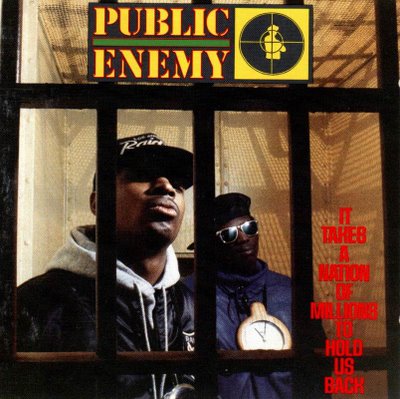
Alan Shocklee produced it – and he was to rap, in those days before the courts clamped down on the use of samples and loops, what Spector was to producing Rock and Roll; the king of everything.  And while the material was raw and angry and really, really provocative, and I think my Jewish friends had a point about the anti-semitism hidden in all that black militancy, and the group really did start to believe their media after not very long at all, the album had the two things that all the best rap had twenty years ago; great production, and really sharp, intricate wordplay delivered flawlessly.  Someone once called Chuck D the Bob Dylan of Rap.  I think it sticks.

And before the courts shut down looping and sampling (a court decision in the early nineties required artists to pay royalties to whomever had written the songs from which ones’ own song sampled), there was time to squeeze out one more great production masterpiece – one of the two best rap albums ever done by white guys:

The Beastie Boys’ Paul’s Boutique is like a jazz album – all fluent interplay between instruments, where “instruments” means Ad-Rock, MCA and Mike D’s voices and the avalanche of loops, drops and samples behind ’em.  If you’ve never listened to it, then curb your preconceptions and give it a shot.   And if you don’t like it?  Well, fine, but don’t come whining to me.  The album capped a brief flash of time where the thing that makes any kind of music fun and interesting – cross-pollination – was happening, when white/black amalgamations like Third Base and House of Pain were doing great stuff (shaddap about Vanilla Ice and Snow and Gerardo if you know what’s good for you), if only briefly. 

The late eighties were an awful, dry spell for music; if you get a copy of Paul’s Boutique, Tunnel of Love, Appetite for Destruction and Nation of Millions, you’ve got most of the good stuff. 

Well, that, and maybe one more:

It’s tempting to blame NWA’s Straight Outta Compton for all of its’ successors’ excesses.  It was the first really big ganster rap album.  And after the ghastly crimes against culture that the genre has given us (and, worse, given right back to “urban” culture”), it’s tempting to try to make a case for censorship.  And it launched the “west coast” rap “mystique” that has inflicted so much stupidity, criminality and really bad music on the world (to say nothing of Dr. Dre’s producing career – of which more below – and Ice Cube’s acting career).

But if George Jones made it safe to visit the world of the regretful cheater and the wistful drinker, and Merle Haggard and Gretchen Wilson and Hank Williams Junior made it possible to vicariously line-dance through the world of the budweiser-pickled redneck, and Born to Run gave everyone a taste of roaring down the turnpike in a suicide machine (even if you were just a schlubby high school kid), Compton  – whatever you think about gangster rap and the ills of urban culture – is a lyrical thrill ride in the theme park of the wanna-be badass.  And – here’s the wierd part, if you’ve listened to what’s passed for rap this past decade and a half – it’s fun.  I mean, if you can get past all the prattling about killing cops and the gleefully-casual misogyny, it’s just plain fun to listen to.

Which most of rap since then has not been. With two exceptions – both of ’em crackers from Detroit:

Eminem is to the vocal technique of saying things real fast to a beat, and around a beat, and in between the parts and sides and, I dunno, underneath the beat, what Eddie Van Halen is to the guitar; with both, you hear them start a passage, and you wonder “how’s he going to get to the end of this?”  And then – both of them do, and only with style, and you go “Dayum” from wondering it all.  Don’t believe, me?  Try to copy either of ’em.  Get ready to feel very humble when you’re done.

And Kid Rock?

If Eminem is the Van Halen of rap, Kid Rock is the Ian Hunter.  He’s been around forever, he’s done everything, he brings an air of gleeful excess to the whole thing, he goes outside the form just for the pure fun of it; he’s the first person I’ve seen try to tie redneck rock’n roll and sh*tkicker country/western into something like rap, ending up with an amalgamation that doesn’t really match any style at all, and who really cares anyway?

So yeah. I’m “supposed” to hate it.  And most of it, I do.  But not just because it’s “rap”, but because most of it, like most rock and roll or most C’nW, is garbage.

As with most things in life, it’s best to focus on what’s not garbage.

Yin Pimp-Slaps Yang

Wednesday, June 17th, 2009

On my IPod just now:

  1. Bruce Springsteens’ “Backstreets”, perhaps the greatest bittersweet angrysweet breakup song of all time (…”when the breakdown hit at midnight, there was nothing left to say/but I hated him, and I hated you when you went away…”), immediately followed by
  2. Stevie Wonder’s “I Believe” (When I Fall In Love It Will Be Forever), perhaps the best song about faith in the idea of romance ever.

Fifteen rounds, come out at the bell.

Things I’m Supposed To Hate, But Don’t: “Courtesy Of The Red White And Blue”

Monday, June 15th, 2009

It wrenches the needle off the jingo meter.

It still provokes somber tut-tutting from our betters about the knee-jerk ignorance of NASCAR America.
And nowhere in American pop culture after 9/11 did the id of the vast mass of America between the Hudson and the Sierra Madre get expressed better.

Which isn’t to say there wasn’t competition.  Springsteen’s The Rising evoked loss, commemorated heroism, and opened the faucet on the best evocations of spirituality during times of tragedy in American pop music history. Neil Young’s “Let’s Roll” and Big and Rich’s “Eighth of November” took very different approaches to illuminating the best in American, and human, character against horrendous odds.

All well and good.

And it’s true; there are times when diplomacy and nuance and meeting your enemy halfway and being aware of ones’ own faults is essential – even in wartime.
But there are some times, some moods, when putting a boot in someone’s ass, the American way, is all that will suffice.  There are times when, like Churchill’s “Dunkirk” and Reagan’s “Shining City” and “Brandenburg Gate” speeches, I just need to hear it.

There is no substitute.

So kudos, Toby Keith.

Things I’m Supposed To Love, But Can’t Stand: REM

Monday, June 15th, 2009

Yeah, yeah, I know – most important American band of the last twenty years, bla bla bla.

Save it.

REM – Michael Stipe, Pete Buck, Mike Mills and the long-departed Bill Berry – have been critical darlings and, for the most part, commercial powerhouses for a generation now (it used to really bug my stepson that after a jag of feeling hip that he’d gotten the new REM record, I pulled out my copy of Murmur from my sophomore year of college. Psych).

Well, good for them.

Here’s the maddening thing about REM; I can scarcely listen to a single one of their albums all the way through.  Pete Buck once described the band’s is-it-a-stereotype-or-is-it-a-cliche style:”Minor key, mid-tempo, enigmatic, semi-folk-rock-balladish things. That’s what everyone thinks and to a certain degree, that’s true.”  REM’s music is all oblique this and badly-enunciated enigmatic reference that and sophomore poetry-class the other thing, and always, always Michael Stipe prancing around going “hreydee-yo hree murrup” and “and nuh freyn konnukter fez, ryever ape, pake a mape”…

Mind you, I don’t mind oblique, enigmatic and sophomoric per se. And I can’t knock the band itself; Mills and Berry were an excellent Watts ‘n Wyman-style rhythm section; Mills has a distinctive yet perfect backing vocal style; Pete Buck is…well, perfectly functional given his chosen limits. And Michael Stipe is a good singer with an excellent (albeit not Bono-like) and distinctive voice.

But most of REM’s music invariably bores me stiff…

…except that every album (that I bothered listening to, which hasn’t happened since 1998’s Up, includes one, and only one, song that I just absolutely love, love love – which always comes out after  the dreary, minor-key mid-tempo southern-mythology-sodden ballad.


Album by album:

  • Murmur – was entirely dispensable – except that life without “Radio Free Europe” would be a lot poorer.  But it’s more a visceral thing – the rhythm section’s tight snap, the cool (if inscrutable) hook line, the zing of the thing.  Certainly not the lyrics, as delivered by Michael Stipe  “Sigh this elf if radio munna slay/Reason it muld paw ish utta pray/poodat poodata poodta up your wah/Mrs. Islecumfray ah haul.  Raving station, be fly…”
  • Reckoning led off with the “South Central Rain (I’m Sorry)”, or as Stipe pronounced it, “Um Hawry”, which makes me nod off a bit 25 years later – but followed up with “Don’t Go Back To Rockville”, which was a really good song.
  • Fables of the Reconstruction – Produced by Joe Boyd, who produced Richard Thompson’s classic “Shoot Out The Lights”, Fables breaks the pattern only slightly: lead-off single “Driver 8” didn’t suck, and follow-up “Can’t Get There From Here” is actually IPod-worthy.
  • Lifes Rich Pageant – Not even Don Gehman – who’d just produced John Mellencamp’s classic Scarecrow, could make most of this album less tedious – except for the gorgeous “Fall On Me”.
  • Document – “The One I Love” almost made me pound my ears out with a potato masher.  And “Exuming McCarthy” may have been the dumbest anti-Reagan song in a decade full of standouts.  But “It’s The End Of The World As We Know It” jumps in at last minute and staves off self-mutilation.
  • Green – What if the Brill Building was in Athens, Georgia in 1988, instead of Philadelphia in 1962?  You’d have gotten “Stand”, and most of the album.  Except “Orange Crush”, which, dude.
  • Out of Time – I used to wonder if “Losing My Religion” was a self-parody; if I were going to write a spoof of REM, it’d sound just like LMR, and have just about the same lyrics.  But I still love “Shiny Happy People”, although having Kate Pearson on board helps.
  • Automatic for the People – Small breach of protocol: “Everybody Hurts” and “Man In The Moon” don’t suck.
  • Monster – Bla bla bla “What’s the Frequency KennetH” bla bla bla.
  • New Adventures in Hi-Fi – Broke the pattern again – all of it sucked.
  • Up, Reveal, Around the Sun, Accelerate – never heard any of ’em.

But as with most of these “things I should love but don’t” pieces, it’s not so much the artist as the artist’s fans. And it’s not just that REM fans are just this side of Grateful Dead fans in terms of worshipping.  No, it’s the damage they did.

An alt-rock radio program director I once knew summed up alt-rock in the late eighties: “There are two types of music”, said the learned sage; “Noisy rock, and Jangly rock”.  The poles of his universe were Dinosaur Junior on the one hand, and REM on the other.  And this program director was hardly alone.

So for a couple of years in the late eighties and early nineties, alt-rock diverged into two miserable paths: sludgy, mopey glop that eventually morphed into grunge, and jangly, folky music in a zillion nearly-identical permutations (The Connells, Wednesday Week, Aztec Camera, Let’s Active!) that eventually morphed into…

…well, landfill.  Nobody remembers any of it.  Not even – be honest! – most of what REM did.

Well, some of it, we do.  Only we can’t make out the damn words.

I Swore I’d Love You ‘Til The End Of Time

Friday, June 5th, 2009

While I was researching Ian Hunter for my post on his birthday earlier this week, I tripped across the fact that today was, wonder of wonders, Ellen Foley’s birthday.

She’s 58 today, not that you’d know.

“Ellen Who?”

How, or whether you know anything about Foley depends on where you were and what you were doing between about 1977 and 1990ish.

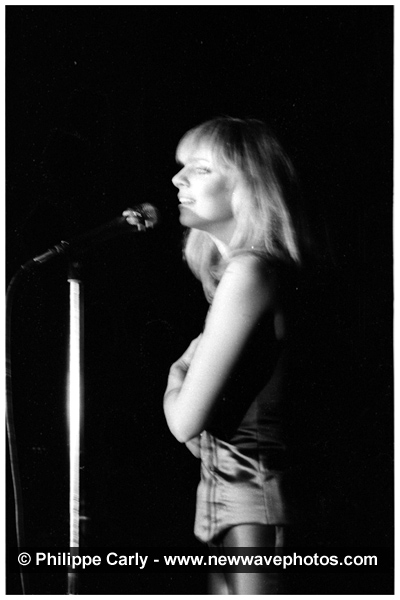
Her first claim to fame was serving as Meat Loaf’s female foil in his ’77 trash-rock classic, “Paradise By The Dashboard Light” (heard, but not seen, in this video, which features Carla DeVito lip-synching Foley’s part), which counterbalanced the fairly useless Mr. Loaf with one of my favorite supporting casts in rock history; Utopia’s Todd Rundgren and Kasim Sultan on guitar and bass, the E Street Band’s Max Weinberg and Roy Bittan on drums and keys, and of course Foley singing the part of the eternally hard-to-get girlfriend.

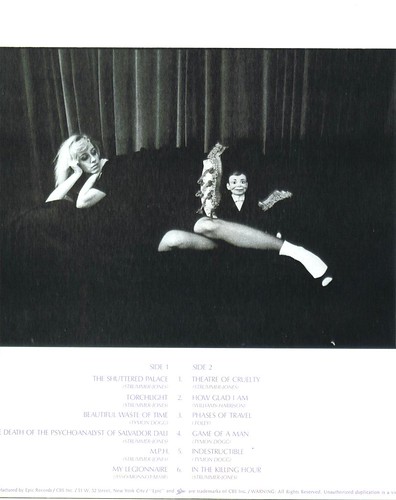
If you were into Ian Hunter, you remember Foley as one of Hunter’s background singers on a number of his albums back between ’77 and ’79; he also produced her 1979 debut album, Nightout, an album that…well, sounded like Ellen Foley singing Ian Hunter songs, jammed full of classic, American-pop inspired sounds lifting heavily from the Phil Spector oeuvre.  

If you’re into freshman-level music trivia, you know that she dated Mick Jones of the Clash, sang backup on their Sandinista album (“Hitsville UK”), that they returned the favor (playing on her second solo album, Spirit of Saint Louis), and that “Should I Stay Or Should I Go” was written in her honor by a befuddled Mick Jones (and answered “Go!” by a generation of guys of a certain age at the time).

Graduate-level music trivia?  Ian Hunter brought her in to sing backup on the Iron City Houserockers’ classic second album, Have A Good Time But Get Out Alive, singing backup on their longtime signature “Junior’s Bar“.

Fans of really, really bad music?  Foley had something in common with Bonnie Tyler, Meatloaf, Air Supply and Barry Manilow – her “We Belong To The Night” was butchered by a bombastic, overblown Jim Steinman production job; of all Steinman’s victims, only Foley really survived artistically, if not commercially.

Not into music?  She was also Billie Young, on the first season of Night Court, kicking off a decades long controversy that was only settled by a 2005 session of the National Institute of Standards that unanimously declared “Ellen Foley was way hotter than Markie Post“. 

As I noted in writing about Foley last year, it’s one of the great injustices of the eighties that Pat Benetar became a fairly enduring star, while Foley languished in obscurity and now teaches vocal technique at a music tech school in New York.

Still – thanks for the memories!

Happy Birthday, Ellen Foley!

Where Was This…

Friday, June 5th, 2009

…back in the eighties when I was having to play this stupid song on the evening shift at KQDJ and I needed to hear it worse than just about anything?

It Was Just Another Night On The Other Side Of Life

Wednesday, June 3rd, 2009

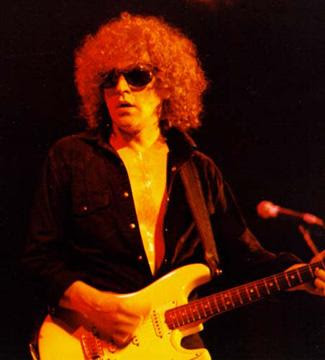
It’s Ian Hunter’s birthday today.  He’s…

…seventy?

That can’t be right.  Let me check.

Well, blow me down.  It’s true.  Hunter was born in 1939.

Yow.

Hunter – who climbed to fame as lead singer of classic glam-rock band Mott the Hoople in the early seventies, before launching a solo career that brought him almost to the edge of superstardom, and left him with a huge cult following and royalty income that’d make many “bigger” “stars'” jaws drop – started as an apprentice at a Rolls-Royce plant.  His five-year stint with Mott included lows, highs (the hit “All The Young Dudes”) and one of the great books about rock and roll ever, Diary of a Rock and Roll Star.

He’s had the kind of solo career that I’d suspect a lot of rock stars would love to trade for; he has a mid-sized, fanatical cult following that make his live shows sell-outs 30 years after his supposed prime, which has to be all the fun of being a rock star without all the bother of paparrazi and the corrosion of superstardom.  And while he’s only obliquely grazed the Top Forty on his own, other artists have had vastly bigger hits than he or Mott ever had with Hunter-penned songs (“Ships” for Barry Manilow, “Once Bitten Twice Shy” by Great White, “Cleveland Rocks” by the Presidents, the Drew Carey Show and, while we’re at it, the City of Cleveland).  Which is good for Hunter;the songwriters get the real royalty money; Hunter made out like a bandit during the eighties and nineties; every time “Once Bitten…” gets played on a classic rock station,  or The Drew Carey Show airs anywhere in reruns, Hunter gets a cut.

Sweet.

He’s also been an impresario in his own right; he produced Ellen Foley’s first album, as well as most of the Iron City Houserockers’ first critical grand slam, Have A Good Time But Get Out Alive, which is one of my favorite records ever, period.

I was lucky enough to see Hunter once – back in 1988 at the First Avenue, touring with a band that included his essential foil, guitarist Mick Ronson.  Indeed, Hunter’s solo career is a bit like Mick Jagger’s, if only inasmuch as both of their most successful work seems to be linked to their main guitarist – Keith Richards in Jagger’s case, Ronson for Hunter.

If you only buy one Hunter album, get You’re Never Alone With A Schizophrenic, his 1979 album featuring collaborations with Ronson (on guitar as well as in the control room), John Cale, and the E Street Band’s Roy Bittan, Max Weinberg and Gary Tallent, as well as Foley, which is chock full of Hunter classics:

Just Another Night” (practically a duet with Foley, and still my favorite Hunter song), “Cleveland Rocks“, “Ships”, “When the Daylight Comes” and “Bastard”.

Anyway – happy birthday, Ian Hunter, and many more.

UPDATE:  Derek Brigham is an even bigger Hunter fan, and has the series of posts to prove it.

Of course, the late Paul “Wog” Kuettel was Hunter’s biggest fan in the Twin Cities blogging community; if memory serves, his wife and he had an early date/just-married night out/something or other at a Hunter gig; I think it was from one of our conversations rather than his blog, but Hunter was the closest thing the Kinks had to a rival in Paul’s musical heart.

Things I’m Supposed To Hate, But Don’t: Katrina And The Waves

Monday, June 1st, 2009

Ask a random sample of people who were thirteen or older during the eighties “what is the decade’s most tiresome icon”, and you’ll get a lot of answers, depending on where one was at the time; Boy George, “We Are The World”, “Choose Life” T-shirts, Don Johnson, the “Flock of Seagulls'” dude’s haircut, the training scene from Flashdance…

…but as they go through their own personal lists, eventually most of them will get to “Walking On Sunshine“, the too-big-to-measure one-hit-wonder by Katrina and the Waves.

And it’s true; “Walking…” was very overplayed.

But the reason tragedy wasn’t that the song overstayed its welcome; it’s that it became synonymous with the group that played it.

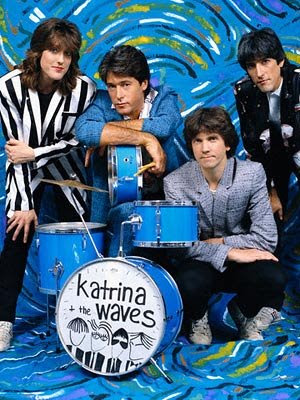
And that’s a shame – because Katrina and the Waves were a really, really good band.

Even people who are sick to death of “Walking on Sunshine” admit that Katrina Leskanich, the band’s statuesque lead singer, had a voice and a half.  Of course, you have listen harder to hear that guitarist Kim Rew, in his first big gig after leaving the Soft Boys, had a way with bending and strangling chords into ad-hoc passages may not have been “Solos” in the Steve Vai sense of the term, but were really, really good.

But here’s the real cool thing about The Waves; they did something that very, very few bands had done since John Fogerty left Creedence Clearwater Revival, and that had become an almost lost art in the meantime; they wrote small, perfectly-crafted, three -minute pop songs that were shimmering little gems of pop perfection.  Perhaps your world was falling apart at 10AM; perhaps it’d still be falling apart at 10:04; but from 10 to 10:03, you could smile and go “dang, that’s cool”…

So yeah.  Forget the “Sunshine”.  Dig the wave.

Things I’m Supposed To Love, But Can’t Stand: Joni Mitchell

Monday, June 1st, 2009

My whole musical life, from the mid-seventies on, whenever someone has wanted to portray themselves as the kind of hip that transcends mere temporal hipness, they’ll claim to be Joni Mitchell fans.

Joni Mitchell fandom has gone through a couple of phases; its original stretch in the late sixties through the mid-seventies, when Mitchell was putting out albums that got all sorts of attention, of course.  And then in the late eighties, when Prince confessed to being a huge Mitchell fan.

And today, in an era where quirky art-school girls with guitars is a booming genre, I’m hearing more would-be hypstrz claiming to be huge Joni Mitchell fans.

She always bugged me.

No, no – I know she’s an iconic songwriter, an amazing singer, and had been for almost forty years the leading voice of her particular genre.  She’s a spectacular talent with four decades of great material.

It  just happens to be a genre, and material, that leave me utterly cold.

Part of it is the whole “folk-jazz” thing.  Folk music is a form that I go hot and cold on, depending on the singer and the subject material.

And jazz?  Well, to paraphrase the Supreme Court wag, “I don’t know how to define what jazz I like, but I know it when I hear it”.

And while I know deep down inside that it’s wrong, and that I probably need to reset my internal musical CPU, I also have to cop to it; whenever Mitchell starts singing, I shut down a little inside.  “Oh, goodie; another overly ornamented pseudo-jazz reflection on romantic ambiguity, delivered via lovely-yet-grating high-alto warble that just grates the desire to sit still and analyze the deadeningly-oblique lyrics right out of me”.

I know.  It’s wrong.  Maybe I’ll work on it when time permits.

Things I’m Supposed To Love, But Can’t Stand: Neil Young

Monday, May 4th, 2009

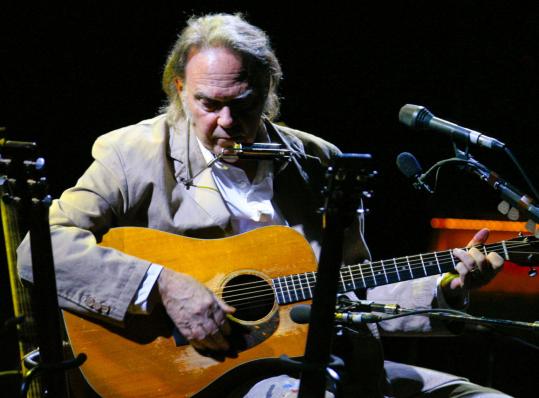
While we’re on the subject of Canadian folk singers gone awry – I just can’t stand Neil Young.

Let’s make sure I’m clear here.  I love tons of Neil Young music; “Down By The River” is one of the sixties’ better moments; that it can survive the presence of Stephen Stills is testimony to its greatness.

And he’s got plenty of great music where that came from; much of Harvest; “Rockin’ in the Free World”; a lot of what he did with Crazy Horse.
And still I grit my teeth and expect the worst every time I hear he’s got something new coming out.

Neil Young is like that crazy neighbor who happens to be a fantastic baker.  You know that nine times out of ten when you hear anything from that neighbor it’ll be because he’s plinking at cats with a BB gun, or because the cops are hauling her back into treatment.  But there’s that odd visit where he/she brings over the lemon meringue pie that proves the existence of a divine loving God that makes you forget the other nine times – for the moment.
That’s Neil Young. He bounces from the sublime to the…well, not really “ridiculous”.  “Tiresome”?  “Not really quite right?” “Waste of time?”  Anyway, he bounces around like a hyperactive four-year-old who’s broken into the Coca-Cola.

And I don’t mind that, even. Oh, it’d be cool of so many of Neil Young’s reinventions weren’t squibs (Trans, Re-Ac-Tor, and on and on), but it would be boring, for Young and for the audience, if he never,ever changed.

So part of the problem is that I get worn out keeping up with Neil Young.

But the big problem I have?

Let’s go back to college.  I took a piano tuning class.  In learning how to tune pianos, my ears became incredibly sensitive to pitch, and especially to harmonic dissonance between strings; when two strings that are supposed to have the same pitch are just ever-so-slightly out of tune, phase cancellation creations a subtle “beat” in the sound; the more out of tune the strings are, the faster the beat. 

So by the time I got done with that class, my ears were as sensitive as a dog’s.

And then Re Ac Tor came out.   And its first single, “Southern Pacific”, came on the radio.

And I listened.  And held my head in pain.  Neil Young’s guitar was out of tune. 

And as I listened to more and more Young, the throbbing phase beats told me Neil Young never ever ever ever tunes is &^%^$#$@ guitar!  My ears are still very sensitive to pitch, by the way, which is why Karaoke night can be so utterly painful to me.

So stylistic schizophrenia aside, even when I like Neil Young, he makes my teeth hurt from clenching at the out-of-tuneness of it all.

In 20-odd years, I haven’t been able to ignore it.

So yeah.  I’m supposed to love Neil Young. But he bugs me. 

Things I’m Supposed To Hate, But Don’t: Gordon Lightfoot

Monday, May 4th, 2009

To the musical hipster, Gordon Lightfoot has for almost thirty years been synonymous with getting a kiss from your great-aunt.

Let’s do try to set the record straight, here.

Lightfoot is one of the last, longest-living (commercially, anyway) survivors of the folk music boom of the early sixties. But I always took to Lightfoot because, while most of the “folk” music I heard was either screechingly, mawkishly self-righteous (Peter, Paul and Mary, Joan Baez) or self-consciously archaic (all of Pete Seger and Woody Guthrie’s many, many imitators) or groaningly over-literate (Bob Dylan’s many, many, many imitators), Lightfoot was just a guy who wanted to entertain a crowd.  He was just a hard-drinking Canadian guy who looked and drank like the guy who refinished your driveway and sang songs about being hungover and unreliable.

Which isn’t to say that he didn’t follow some of the trends of the times – but even those shots were more interesting than their contemporaries.  Amid the suffocating masses of “protest” folk songs, songs like “Don Quixote” and “Circle of Steel” were deft, oblique yet engaging.

Unlike most of his folk contemporaries, his shots at pop stardom, “Sundown” and “Carefree Highway” and “Summer Side of Life” and many others, were refreshingly un-suffocated by the conventions of folk that weighed down so much of the rest of the genre.

Lightfoot comes in for particular abuse for his biggest, best-known hit, “Wreck Of The Edmund Fitzgerald”.  Some call it “boring”.  Well, people are entitled to their own opinion; “Fitz” is an example of one of the most-abused folk forms, the “Really really long historical ballad” (which Lightfoot has done before, albeit without quite the same sales). But I always loved the song, partly because being from North Dakota, maritime lore is in my bones, and partly because the notion that, in 1976, when disco and dreary singer-songwriter treacle and Bachman Turner Overdrive ruled the airwaves, the notion that a five minute song about a shipwreck would sell a zillion songs should have been a plot for one of those “a couple of underdog guys hatch an improbable plot to make a zillion bucks in a scheme that everyone says has got to be a flop” movies.

So yeah.  I’m supposed to hate Gordon Lightfoot.  But I don’t.

Am I The Only One…

Thursday, April 16th, 2009

…who has trouble mixing up Janet Napolitano – former Arizona “governor”, current DHS secretary, and bureaucrat who sees a potential terrorist in every conservative – and Johnette Napolitano, singer for the ’80s garage-punk band Concrete Blond?

I mean, the names.  Not so much the resemblances:

Janet:

Johnette:


Wonder if the DHS secretary gets requests to sing “Joey” at the department’s Karaoke night?

Love Is Like A Rock

Tuesday, March 31st, 2009

…don’t you forget it.

Happy Birthday, Bruce Watson

Wednesday, March 11th, 2009

Sometimes it’s the footnotes in music history that are the most fun.

Today is Bruce Watson’s 48th birthday.

“Bruce who?”

Look, people – aren’t you the same folks who asked “Tony who?” when I celebrated Tony Butler’s birthday last month?  C’mon.  Do I have to do all the work here?

Bruce Watson, people.  The second guitarist of Scotland’s greatest rock band, Big Country.

Unless you’re a huge Scottish-rock buff, you probably have only the vaguest idea of who Watson is, much less why he mattered (or, for that matter, that none of the members of Big Country, the most Scottish band in rock, where actually born in Scotland; Watson hails originally from Timmins, Ontario).  And he’s only tenuously in the business anymore; word has it he works as a materials tester in a shipyard.

But he certainly mattered.

Going back to the dawn of the rock and roll era, the dominant style on the electric guitar was one variety or another of amped-up blues or folk style; from Jim Burton’s country-blues twang to Jimmy Page’s nordic-blues stomp to George Harrison’s pop reading to Jimi Hendrix’s psychedelic blues noodling to Eric Clapton’s clean, surgical…um, blues.  Most of the major guitarists, and styles of guitarists, were one kind of take-off or another on the blues, from Eddie Van Halen’s explosive, technocratic virtuosity to Ted Nugent’s obnoxious flailing to Lindsay Buckingham’s Harrison-on-Quaalude vibe to…

…well, fill in your favorite.  And of course there were exceptions.  But that’s what they were – outliers from the norm.

Somewhere in the seventies – maybe going back as far as Lou Reed – a new approach started burbling up, using the electric guitar less as a prime, driving motif as in the blues, and more as atmosphere; it relied (on its surface) less on sheer technical chops and power, and more on sound, interaction, and sound processing.  While blues guitar was “classical”, the newer style was…impressionistic?

I’ll leave the similes to the professionals.

But somewhere in there, about the time I was first picking up the instrument, guitarists like Richard Lloyd and Tom Verlaine (of Television) started turning guitar parts into dense, complexly-interwoven textures more than driving themes, solos and rhythm tracks.  The Edge (of U2) and Pete Burchill (of Simple Minds) made their stomp-boxes – the delay, chorus, flange, distortion and other special effects lines – perhaps the focus of their styles, rather than decoration on the virtuosity of their finger work.

And Adamson and Watson wound the two together as tightly as any couple of guitarists ever have.

Where electric guitarists had traditionally strummed or picked their rhythm parts – or, like Pete Townsend or Malcolm Young, bashed them out with primal aggression – Adamson and Watson patiently built simple patterns, one-and-two-string figures that complemented and wove in and out through each other.  They layered them using ingenious, but low-key, special effects – using the “E-Bow” electronic tone device to simulate Scots fiddles, pushing and equalizing their amps to imitate bagpipes.  And that was just the recognizable stuff; Adamson and Watson tweaked their guitar/effect/amp chains to coax sounds that didn’t sound like anything, but felt like something – like dread, winter, anger, longing…

…oh, how do you explain tone?  You don’t.  You just play it, and hope it comes across. And it did for me, surely; when Big Country’s The Crossing came out during my sophomore year of college, I spent days curled up in my dorm, trying to figure out what those guys were doing.

So happy birthday, Bruce Watson.  And thanks – not only for the years of inspiration, but for all the puzzles I’m still working on.

Pure Beauty In A Bottle

Wednesday, March 4th, 2009

Allison Krauss and the Chieftains doing the traditional “Molly Ban”.

Apropos nothing.

Final Vinyl

Wednesday, February 18th, 2009

The former owner of long-vanished “Let It Be Records” is going to be having a garage sale.

It reminds me; the worst thing about the digitization of all music is the disappearance of the record shop.  Let It Be was not the best record store in town, but it was one of the last holdouts among the good ones.
Time to go load up on vinyl!

Happy Birthday, Tony Butler

Friday, February 13th, 2009

It’s Tony Butler’s birthday today.

“Tony who?”

No, not the pitcher. This Tony Butler.

You’re forgiven for not having heard of Butler if you’re not seriously into unsung musical heroes.  But that’s certainly Butler.

He’s most famous as the long-time bassist for Big Country.  Before, during and after that, he served as a session bassist, most notably in concert with longtime pal and bandmate Mark Brzezicki.

In the late seventies, he edged into the limelight as part of “On The Air”, a band with Brzezicki and Simon Townsend,  younger brother of The Who’s Pete Townsend.  From there, the Butler/Brzezicki rhythm section gigged with all manner of British heavyweights, including Simon’s Sweet Sound, the elder Townsend’s classic Empty Glass and All The Best Cowboys Have Chinese Eyes, the Pretenders (with whom he recorded the hit “Back On The Chain Gang” in the wake of Pete Farndon’s death) and many more.

Bass players are, by nature, support players (leaving out the odd Geddy-Lee-like bass-playing frontman or John-Entwistle-like superstar).  And Butler was a support monster – not only as a very capable bass player, but as a seamless yet distinctive backup singer.  Listen to the greatest moments for Big Country or Simon Townsend’s first album; right behind Townsend or Stuart Adamson, singing his trademark, “loosely-tight” dropped fifth harmonies, was Butler.  Most casual music fans don’t give a second thought to backup vocals – which, in a sense, is as it should be, since great backup vocals reinforce the lead without drawing attention from it.

But think about it.  Would “In A Big Country” or “Where The Rose Is Sown” been the same had their hooklines been nothing more than Adamson’s earnest yelp?

Would  “I Am The Answer” packed the same on-the-edge thrill with just Townsend’s thin tenor?

No – the hooks – and the songs built around them – are memorable because of Tony Butler’s support; seamless and unostentatious, and yet tense and musically-inventive and unique and just-plain-thrilling.

So happy birthday, Tony Butler.  And though I’m sure you’ve heard it a zillion times, please, stay alive.

A Girl Thing

Thursday, February 12th, 2009

You can count on two things in life:

  1. Death
  2. Taxes
  3. Minnesota Progressive Project writing something face-palmingly stupid…

OK, that’s three things in life you can count on:

  1. Death
  2. Taxes
  3. Minnesota Progressive Project writing something face-palmingly stupid
  4. Every couple of years, someone writing an article about how “women are breaking into the all-male world of rock and roll”.

Dang.  That’s four.  Why, if I keep coming up with life’s immutable laws, it’ll look like the Minnesota Senate Recount.

Where was I?

Oh, yeah – articles about women conquering rock and roll.

Of course, it’s an easy article to write – if you’re completely clueless.  Rock and Roll’s “gender divide” – which is really more of a testosterone deficiency – was bridged thirty years ago this summer by Chrissy Hynde.  Countless others have followed – Joan Jett, Lita Ford, the Clams, Hole, Babes in Toyland, The Donnas and pallet-loads of others have risen, “conquered”, jumped the shark, and been forgotten just in time for another generation of “rock critics” (a group so useless they seem to have avoided being included in Obama’s “stimulus”) to twig to the next group of women.

And yet while the meme churns endlessly among the rock critics, the good ones just keep cranking out the stuff.

It’s not a huge secret that I’m a Springsteen buff. What would be a surprise is that I didn’t necessarily hold out a lot of hope for the solo career of Patti Scialfa when I first heard there was going to be one.  Part of it is the dismal record of superstars’ spouses; beyond Sonny Bono and Ike Turner, just look at what happened to Ray Davies and Jim Kerr after they married Chrissie Hynde.  And part of it is that whatever his epochal draw and influence as an artist himself, Springsteen can not be said to have launched the solo careers of those in his orbit (the solo careers of Danny Federici and Clarence Clemons never went far; Nils Lofgren was already on the career skids when he joined the band; Little Steven started out hot after leaving the E Street Band but came up desperately short of musical ideas; Max Weinberg became the Generation Y version of Doc Severinson after meeting Conan O’Brien) or whom he’s produced (quick – name one other than Gary “US” Bonds).

But Scialfa’s three solo albums – 1993’s Rumble Doll, 2004’s 23rd Street Lullaby and 2007’s Play It As It Lays – are surprisingly good. Although there shouldn’t be a surprise; Scialfa spent years working with all sortsof bands up and down the Jersey Shore before joining the E Street Band in 1984 (just a few days before I first saw her, on the opening run of the Born In The USA tour, at the old Saint Paul Civic Center).

At any rate, all three of her albums are fantastic, low-key little gems.  Here’s “Looking For Elvis”, from Play It…

…and this is “As Long As I Can Be With You”, off of Rumble Doll

which was not only a great album in its own right, but for my money (gulp) better than anything Bruce himself put out in the ’90’s.

Worth a listen.

Change

Monday, February 2nd, 2009

I wasn’t paying all that much attention to the Republican National Committee chair race – life pretty much got in the way.

However, I was overjoyed to see that Michael Steele won the seat after a zillion ballots.

Steele’s unobtrusive but reliable bass work and solid low-end background vocals were a key part of the Bangles’ success back in the ’80s; she also helped launch The Runaways back in the late ’70s, giving us Joan Jett and Lita Ford as well.

Hopefully she’ll do at least as well for the GOP!

UPDATE:  Oh, sorry – they meant this guy:

My bad.

Ah, Memories

Friday, January 30th, 2009

I remember nights just like the one recorded on this video – getting up on stage with a bunch of other drunk musicians and sloshing your way through covers with ten times more brio than talent.

I bet The Kings would roll over in their collective grave if they saw this.

UPDATE:  Whoops.  My bad.

I Beg To Differ

Friday, January 30th, 2009

To:  Lou Reed

From: Mitch Berg, minimal fan.

Re:  Sweet Jane observations

Mr. Reed,

You are on record from 20-odd years ago as saying that the Cowboy Junkies’ version of “Sweet Jane” is the best ever, and better than the original version you did with the Velvet Underground.

This is categorically incorrect.

Please see to correcting this error.  Thanks.

That is all.

Happy Birthday, Dave Sharp

Wednesday, January 28th, 2009

If you hear me playing a solo on the electric guitar – and I’m having a good day and my amp is clicking on all six cylinders – I sound just a tad like David Gilmour.

But playing rhythm?  Someone who knew my old band once told me I came off a lot like Dave Sharp.  Which is odd, since my style was pretty well settled before I even heard the Alarm at any depth.

Anyway.  Just saying.  The guy has a style about him; like the Edge, but not quite as polished.  Good example?  Sure, here y’go. Heck, I’m feeling good – here’s another, and keep the change.

Sharp, the former guitarist for The Alarm turns fifty today.

Wait – did I just say Dave Sharp is fifty?

Oy.  I believe I did.

Having Heard…

Wednesday, January 21st, 2009

…my kids ITunes playlists, I can say without fear of contradiction…

…that Hooba still stinks.

Forgive Them, Sam Cooke…

Tuesday, January 20th, 2009

…for they know not what they do.

Just saying; if I hear another butchering of “A Change Is Gonna Come”, it’s gonna get ugly.

Podded Up

Monday, January 12th, 2009

Observations on having an Ipod for the first time in almost a year:

  1. I had no idea this song was so amazingly cool.  It’s almost a shame Patti Scialfa has to put up with all that “Mrs. Springsteen” stuff; she does some really great music.
  2. The last time I heard this song  was probably thirty years ago, on an AM radio in a car in North Dakota on KFYR, and remember it as a sappy teenypopper love song.  So I downloaded it a few weeks ago (I have no idea why).  And it’s…a sappy teenybopper love song with the most over-the-top production since Queen discovered the sixty-four-track tape recorder.  Hyperactive strings, a Hammond B3 poking its nose and occasionally soaring behind the mix, and enough big black background singers (borrowed from Andre Crouch) to take on the Mormon Tabernacle choir (and singing overlapping, interleaving parts with more layers than one of those Hardee’s triple-decker grease burgers), it’s not just glorious, not just sappy; it’s gloriously sappy.
  3. Metallica is great workout music.

That’s a start.

--> Site Meter -->