Radiohead frontman Thom Yorke is warning the music industry is on the brink of collapse, insisting young musicians should resist signing record deals because the major labels will “completely fold” within months.
The British rockers broke away from their longtime label, EMI, in 2007 and went on to embrace the new digital era with the release their seventh album, In Rainbows, which they offered up over the internet and allowed fans to choose the price.
These days music is pretty much a give-away; the money is in the touring and live appearances – the things that can’t be put up on BitTorrent.
That’s why in some ways it’s better never to have been signed in the first place. Getting signed meant getting an “advance” from the record company. The advance had to pay for recording, videos and touring, and had to be paid back out of touring revenues and royalties…
…if any.
And if you were one of the 90-odd percent of bands whose albums never got airplay or significant sales, and whose live touring careers never took off, that meant you were in debt from the beginning of your “career” which, if you were one of those 90-odd percent of bands that never took off, was going to be short; labels in the seventies would drop artists that didn’t turn a profit after two albums; by the nineties, one album was all a new artist got.
In the meantime, many artists that never got signed to “the big time” but stuck with touring and built thriving local and regional followings – including recording and selling their own CDs – are doing fairly well. Sometimes really well.
And they’re the lucky ones:
Yorke has now issued a warning to upcoming artists, urging them not to sign traditional record deals because they would be tying themselves to “the sinking ship”…He says, “It will be only a matter of time – months rather than years – before the music business establishment completely folds. (It will be) no great loss to the world.”
Expect the Federal Trade Commission to advocate socializing the music industry any day now.
I sold an old car of mine to a guy once upon a time.
I was told that the new owner had used the car to drive to Storm Lake, Iowa.
I hate Storm Lake, Iowa. [1] So I called him and told him that if he didn’t cease and desist driving to that hateful town, I’d lawyer up and put him in a world of hurt.
He stopped.
———-
Well, of course not. Once I sold the car, it was his.
I always thought that if you paid the royalties for a song – i.e, bought it – it was pretty much yours to use for the purpose for which it was purchased (i.e. playing). And if a radio station pays the licensing fee for a song (which stations do in bulk), the song was pretty much theirs to use as well – which usually means “play on the air”, even as part of a parody. That’s why Rush Limbaugh, the archconservative, can use “My City Was Gone”, written by ultraliberal Chrissy Hynde, for a theme song.
And if you’re a politician, that means paying the licensing fees for a public performance. Artists are supposed to get a royalty for the performance of their music at big public appearance. And in exchange for that, someone gets to play the damn song.
If stereotypes held true, you would think that the Republicans would be the ones telling folks to turn that blasted music down. But this year — and indeed in many past election cycles — it’s the GOP that has been attracting cease-and-desist letters for pilfering music against the artists’ wishes. So let’s take a look at some of the more notable GOP music fails from this cycle, and cycles past.
To be fair, they’re not so much “GOP music fails” as “spoiled artist tantrums”; Heart having a cow over Sarah Paljn using “Barracuda”, John Mellencamp throwing a hissy over Reagan using “Pink Houses”, and on and on.
In completely unrelated news, I think I’ll use this as a personal theme song:
[1] – Not really. I just needed something to hate for the moment.
The Houserockers were led by Joe Grushecky, a high school special education teacher who had never quite put away that rock and roll jones. He started “the Brick Alley Band” in 1976, plugged away building a huge reputation on the Pittsburgh bar circuit, and in 1979 released Love’s So Tough, an album that was…
…like a zillion other debut albums by bands on shoestring budgets; with tinny production by a couple of no-name fader jockeys, Love’s So Tough stood out in some of the details, mostly a keen eye for the anxious desperation of his fellow working stiffs, and and a raw spirit that cut through the crappy production.
Cut through it enough to draw some big label attention; the band was picked up by MCA records, and paired with “Miami” Steve Van Zandt – Bruce Springsteen’s second guitarist – for their major label debut.
The result was Have A Good Time…
The Iron City Houserockers (from L): Marc Reisman, Joe Grushecky, Eddie Britt, Gil Snyder, Ned Rankin, Art Nardini
And at a time when rock critics on both sides of the Atlantic were swooning over the “anger” and “grittiness” of the so-called “punks”, it was the real thing.
Part of it was the band. Van Zandt (who produced five songs before leaving the project, turning it over to Ian Hunter and Mick Ronson, who were themselves at the top of their commercal game at the time) has a long history of overwhelming his productions with serial waves of bombast (see Lone Justice’s Shelter); it took a strong band not to get lost in Van Zandt’s huge, pounding vision. And the Houserockers were up to the task. Grushecky sang and played rhythm guitar; the rhythm section of Art Nardini (bass) and Gil Snyder (drums) anchored a band of…
…bar room players, and on the surface nothing more, really; Eddie Britt was a serviceable lead guitar player; Ned Rankin played classic barroom piano and organ; much of the band’s sound hinged around harmonica whiz Marc Reisman.
Individually, then, they were just another bar band.
But they were much more than the sum of their parts, especially hitched to Grushecky’s music – where again, the right combination of time, band, producer and inspiration transcended the obvious limits.
On Love’s So Tough, Grushecky’s music had been like cut-rate Springsteen, or leaner and meaner Bob Seger.
But on Have A Good Time, driven by first by Van Zandt’s rock and roll myth-chasing and then by Hunter and Ronson’s then-peaking creativity, the band and the music exploded into something vastly more than the sum of its parts.
The title cut sets the stage; the song attacks from the first bar with a ferocity that The Clash never approached:
You never fit quite right in school
Went out and broke all the rules
Talk so loud and act so cool – that’s right
Only sixteen when you left home
Thought you could make it on your own
Because you were born with the right to roam the night
You said “don’t put those chains on me
I am young and I am free
And I’ll be what I want to be” – that’s right
Have a good time but get out alive
Don’t you know only the strong survive
Have a good time but get out alive
You always did what you wanted
It didn’t matter who you hurt
But you didn’t hurt no one like you hurt yourself
You took anything that you could get
Did it all with no regrets
You tried so hard but you can’t forget your past
Don’t you know this life is killing you
You act crazy but don’t be a fool
Do what you want to do but keep in mind
Have a good time but get out alive
Don’t you know only the strong survive
Have a good time but get out alive
After one long night
When Bobby was involved in a senseless fight
He woke up in jail with a broken old man
The old man was staring down at him
He said “boy you better wipe off that stupid grin
And learn something now while you still can”
Have a good time but get out alive
Don’t you know only the strong survive
Have a good time but get out alive
Much of the album was cut from the same cloth; three of the five other Van Zandt-produced tracks (“Blondie”, “Angela” and “Don’t Let Them Push You Around”) are subtle as buckets of scrap steel to the forehead, blazing gems of rock and roll ferocity that mocked the art-school pretensions of the “punks”.
Hunter and Ronson’s seven tracks are more subtle; “Pumping Iron”, “Running Scared” and “We’re Not Dead Yet” sound like Bob Seger songs fed through Hunter and Ronson’s glam pub rock in a way that, miraculously, stripped off the glam; “Hypnotized” is a paranoid minor-key rocker that falls flat, as does the ballad “Price of Love”.
But it’s the end of Side Two that gives us the album’s biggest, riskiest moment. It’s two-song couplet, “Old Man Bar/Junior’s Bar”, that is the most thrilling, sobering moment on the whole album.
“Old Man Bar” starts with an accordion playing an Italian-sounding lament, with keyboardist Gil Snyder singing in a voice that sounds – honestly – sixty years old with forty-five years of three packs a day.
Going down to Dom’s Cafe, just to have a drink
The old men in their same seats down the row…
Telling tales of World War Two for anyone to hear,
their insides lined with scars that never show.
Old Man Bar is where I am and where I’ll be
Old Man Bar with a jukebox full of memories
Old Man Bar until they kill the neon light
I hope nobody sees me here tonight.
I hope nobody sees me here tonight.
A sad, almost depressing song about the kind of bar, and patrons, you see on every seedy tumbledown strip wherever you are.
And the song – the according, and Mick Ronson’s mandolin part – keen to an arthritic, tired stop; the record courts four…
…and Snyder slams the snare to launch “Junior’s Bar” – a song with the same chord progression as “Old Man”, but with the whole band telling the story of a man thirty years younger:
Going down to Junior’s Bar, just to have a drink
hoping for a one-night rendezvous.
The girls down there, all at the bar, dressed up and looking good,
Gonna show them all my new tattoo…
Junior’s Bar, where the band is playing just for me,
They move the crowdn they play real loud
It’s a poor boy’s symphony
Junior’s Bar, until they kill the neon light
I hope I don’t go home alone tonight
I hope I don’t go home alone tonight
“Junior” was as glorious a rock and roll anthem as has ever been played; the original featured Ellen Foley on a delicious background vocal, and a guitar solo that may have been played by Britt, but had Van Zandt all over it.
I can’t even find the audio for “Old Man”; here’s “Junior”, again with a newer incarnation of the band.
Have A Good Time… was uneven album; the band’s full promise would be revealed a year or so later, when Amercan roots-rock impresario Steve Cropper would produce Blood On The Bricks, one of the most perfect albums in the history of rock and roll.
But the highlight moments on Have A Good Time… – the title cut, “Blondie”, “Angela”, “Old Man Bar/Junior’s Bar” – are, in the annals of America’s brief “heartland rock” phase in the eighties, among the best songs ever; harder-edged than anything Springsteen has ever done, sharper and more immediate than Bob Seger at his best.
The idea of American Rock and Roll may never have been carried off better.
OK, yesterday I said Springsteen’s “Frankie” ran on continuous loop through my head.
I wasn’t completely accurate. “Frankie” runs until I wonder to myself “what am I really thinking right now?”
And then I switch to this one:
It’s another megararity, written for Born In The USA, but never released until Tracks, and utterly unavailable online. I’m hoping someone posts an eighties’ E-Street Band version someday.
On rainy spring nights…
Tonight, now I see old friends
Caught in a game they’ve got no chance to win
Gettin’ beat and then playin’ again
‘Til their strength gives out or their heart gives in
Now who’s the man who thinks he can decide
Whose dreams will live and who’s shall be pushed aside
Has he ever walked down these streets at night and looked into the eyes of
None but the brave
No one baby but the brave
Those strong enough to save
Something from the love they gave…
The best Springsteen song you’ve never heard – “Frankie”, which was never released until 1998’s Tracks box set – in a fun take from the endearinly-sloppy pre-Darkness E Street Band, in 1976.
Apropos not much, except maybe that this song runs on continuous loop through my head this time of year.
Three men who showed up in full Nazi regalia to a hardcore punk show at an Old City bar Friday night were attacked by as many as 50 people on the streets after leaving the venue, according to witnesses and club management…
…
“I guess being on 2nd Street in SS uniforms on a Friday night is a way to incite a semi-riot,” [the club owner] said.
But the headline was worth it…:
Concertgoers show the Reich stuff, are beaten by crowd
It does for everyone. It’s a fact – or at least, it’s as close to fact as three generations of marketers have been able to determine – and since a lot of them got very rich, they must have known something.
When I was in music radio, a program director told me that programmers and music companies track demographics by when listeners reached adolescence; teenage emotions and hormones and angst and lack of perspective (between ages 12ish and 25ish) combines with whatever music happens to be happening at the time to create a bond that tends to follow people through their lives. Which is why “classic rock” stations are so huge, and “college rock” and “alternative” stations traditionally were not; they like to catch people with their adolescent memories about the time that they also start to earn lots of money to spend with advertisers.
Of course, somewhere along the way that emotional connection and immediacy fades. People get perspective. They grow up. They get other emotional focuses – children, careers – that depend less on big hyped up emotions than on being slow, steady and there.
So I don’t feel music the way I used to. Oh, I still love music – but it’s different. It’s more mental. I take apart a song’s production, lyrics, the mechanics of the whole thing in a way I didn’t when I was a teenager. I enjoy playing guitar (and a few other instruments, too). I don’t get the highs and lows from music the way that I did when I was 17 – but now that I have a 17 year old, I can see all the things about that age that I don’t miss, too.
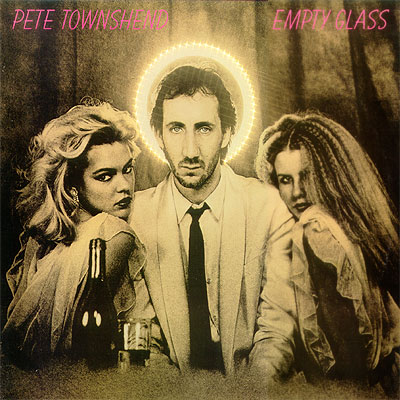
Few songs illustrate the change, for me, better than Pete Townshend’s Empty Glass. Townshend’s first solo album came out thirty years ago today.
The album – recorded as Townshend and The Who were recovering from the death of Keith Moon – was a grab bag of different themes, which could be summed up as “I’m Pete Townshend. I’m almost forty, and nobody knows anything about me other than via the band I’ve been in since I was 18 – which has just collapsed. Who am I?”
Who was he?
He was a chain yanker. Even if Townshend had been a musical nonentity, I’d love him for his love of yanking writers chains; reading his old interviews were like watching a Monty Python sketch unfolding in real time. (Dave Marsh’s essential bio of The Who, Before I Get Old, has a zillion stories about Townshend’s love of popping the media’s balloon). And he yanked madly on Empty Glass; “Rough Boys”, dedicated to the Sex Pistols and his daughters, started the whole “uh, is he gay?” thing…:
He was also a pop songwriter. “Let My Love Open The Door” was inescapable in the summer of 1980
And he was a big chunk of The Who; a few of the songs (Gonna Get Ya, Jools and Jim) played like Who demos.
Most intriguing, though – back then, to me as a Christian who oozed rock and roll – was that Townshend was a relentlessly inquisitive spiritual seeker whose music had always knocked about the idea of faith. While Townshend was still a few years away from sobriety, the best parts of Empty Glass are all about his relationship with his higher power – “A Little Is Enough” and especially the title cut, which oozes fatigue for the distractions of this world…
Why was I born today
Life is useless like Ecclesiastes say
I never had a chance
But opportunity’s now in my hands
I stand with my guitar
All I need’s a mirror
Then I’m a star
I’m so sick of dud TV
Next time you switch on
You might see me…oh.what a thrill for you
I’ve been there and gone there
I’ve lived there and bummed there
I’ve spinned there, I gave there
I drank there and I slaved there
I’ve had enough of the way things been done
Every man on a razors edge
Someone has used us to kill with the same gun
Killing each other by driving a wedge
The song was originally recorded as a demo by The Who – and it was a lot more nihilistic; “Killing each other, then jump off the ledge”.
And yet at a time in his life when he was drinking a bottle of Remy Martin a day, Townshend saw God as the eternal bartender:
My life’s a mess I wait for you to pass
I stand here at the bar, I hold an empty glass
And truth be told, I’ve seen worse explanations. (And on his subsquent solo albums, we’d see better – but we’re a few years away from that).
And so while the windmilling, guitar-smashing attempt to make art out of adolescent angst long ago wore thin on me, Empty Glass, and “Empty Glass”, still click for me. Not the same way they did thirty years ago. Maybe better, in their own way.
NOTE: Among conservatives who are too young to remember Townshend’s musical glory days, he’s perhaps, tragically, most famous for his arrest on child porn charges a few years back. Althought Townshend was never charged, and the police took pains to say they believed his story about researching the subject for a book exploring alleged abuse when he was a child, some social-conservative bloggers don’t believe it.
To which I reply “where the hell have you been?” Does anyone believe there’s a crime anywhere in Western Civilization where the police are less likely to accept “I was doing research!” for an answer without some pretty good reason, and mountains of proof, than anything to do with the sexual abuse of children? That a prosecutor is likely to give up on a career-building celebrity case, on one of the most emotionally-wrenching topic there is, without damn good reason? It’s a crime that is as close to “guilty until proven innocent” as any in the Western justice system; people look crosswises at you for uttering the phrase “Kiddie Porn”. And yet the police, and the prosecutors, let Townshend walk away without a single charge or a slap on the wrist.
What does this tell the discerning observer?
At any rate, I’m writing this to say that the post is about the album; any discussion of the kiddie porn incident will be deleted without any warning or fanfare.
It’s Max Weinberg’s birthday today. The longtime drummer for Bruce Springsteen and Conan O’Brien is 59.
A native of Newark, Weinberg was a bit of a child prodigy as a drummer, playing with bar mitzvah bands from age seven, and performing with one of his early bands at the 1964 New York World’s Fair. He attended Adelphi and Seton Hall, with a vague notion of becoming a lawyer – but drums was always his bag. He played in a grab bag of bands in central and seaside New Jersey, before winning an audition to replace Vini “Mad Dog” Lopez (and his temporary replacement, Ernest “Boom” Carter, most famous for playing on the song “Born To Run”). It wasn’t hard to improve on Lopez’ legacy; “Mad Dog” may have been the worst drummer ever to record a major label album.
Indeed, that’s a great introduction to Weinberg’s power as a drummer; compare the sloppy, swooping changes in meter on Lopez’ part on “Kitty’s Back”, on The Wild, The Innocent and the E Street Shuffle to the metronomic steadiness on “Born In The USA” or The River’s “Jackson Cage”. The E Street Band with Vini Lopez was like an inspired garage band, with some great players (David Sancious was another charter member), but it always felt like Springsteen’s voice was the main rhythm instrument. With Weinberg, the band became professional, and very, very powerful.
Weinberg, with Springsteen and Tallent, on The River tour
Playing behind a band that’s ranged from seven to nine pieces over the years, the drummer’s key mission is to lock in the beat with the bass player and provide a stable beat for everything else to work over. And it’s there – as part of the E Street Band’s rhythm section with Garry Tallent, that Weinberg is most notable; he’s been called “The American Charlie Watts”, because whatever he might lack in pure flash, he makes up in rock-sold steadiness, enabling Tallent to stretch out and play, while still keeping a bedrock-solid foundation for the band as a whole.
This was cutting loose...
Which isn’t to say that Weinberg can’t rip it on the skins. Weinberg was an accomplished session man, playing on Ian Hunter’s You’re Never Alone With A Schizophrenic, Meat Loaf’s Bat Out Of Hell, and plenty of other records in the seventies and eighties (and touring with 10,000 Maniacs after the E Street Band broke up. But most of all, Max spent a whole second career, 16 years or so, as the leader of Conan O’Brien’s “Max Weinberg Seven”, playing to an audience that largely didn’t know Bruce Springsteen from Rick Springfield, playing a whole ‘nother style of music – jazzy jump blues slathered with barbecued R’nB.
Weinberg on the O'Brien set.
Weinberg was in effect the band’s front man; in a band that played mostly instrumentals, he was the band’s lead instrument. It was a side you could have gone his entire E Street career and scarcely seen. And it was a blast.
And it led to one of the more interesting show-biz compromises in history. Weinberg was justifiably wary of jeorpardizing his O’Brien gig to go back with Springsteen full-time, after Bruce had cut the whole band loose in 1989 without any warning. So Weinberg, Springsteen and NBC worked out an unprecedented schedule that allowed Weinberg a leave of absence from O’Brien’s show for E Street Band tours and, eventually, led to Weinberg’s son Jake serving essentially as an understudy drummer for the band.
Malcolm McLaren, punk-rock impresario behind the Sex Pistols, dead at 64.
McClaren’s longtime partner, Young Kim, said “He was a great artist who changed the world.”
And she’s probably right – except that McLaren was an artist in the post-Romantic, 20th-century sense of the term; he believed that destroying art was art. It was a school of art that gave us a lot of really annoying, self-indulgent twaddle, and still cripples the world of art today.
But along the way? Well, we’ll always have the Pistols:
It was McLaren who gave the name Sex Pistols to the group of young men hanging out at his store and helped pick out front man John Lydon (soon known as “Johnny Rotten.”) McLaren signed the group with EMI, and their first single, “Anarchy in the UK” came out in 1976.
The group would aggressively court controversy, becoming a household name after an expletive-packed appearance in a British television interview which drew a ban on the group’s live performances in the U.K.
After being dropped by EMI for bad behavior, the group later signed with Virgin. Their second single, “God Save The Queen,” whose title lyrics are rhymed with “fascist regime,” was released during Elizabeth II’s Silver Jubilee celebrations — was an auditory assault on the monarchy which sparked widespread outrage and saw members of the band attacked in the street.
Which, when I was a teenager in terminally-staid North Dakota, sounded like a lot of fun.
Now that I’m not a teenager, of course, the “Art-as-destruction” school of art, and the Pistols’ contrived rebellion, wear a bit thin on me. Fortunately, the Pistols – provided that Glen Matlock rather than Sid Vicious was playing bass – were also, counterintuitively, a really, really good band.
Which, of course, wasn’t the point to McLaren:
McLaren professed a certain indifference to the talent of the band he managed, saying it never occurred to him that the group could ever be any good.
“What occurred to me was that it didn’t matter if they were bad,” he told the Times of London last year.
Sylvain Sylvain, whose group proto-punk group the New York Dolls McLaren managed before the Sex Pistols, told the AP that McLaren knew how to anticipate a trend.
“He had that vision — maybe it came from the clothing,” Sylvain said. “In the rag business you’ve got to be five to 10 years ahead of everybody.”
McLaren, like the punks and the hippies before them, decided that transient art didn’t have to leave one starving:
He helped create advertising campaigns for British Airways, went to Hollywood to make films alongside directors such as Steven Spielberg, and worked on shows with the BBC — the broadcaster which in the 70s had refused to play his group’s songs. He even wrote for the New Yorker.
…
And while McLaren also worked with Adam and the Ants and helped create the group Bow Wow Wow, his music career wasn’t limited to management. He had a regarded solo career in which he blended genres and acted as a kind of music curator. In the early 1980s, he had key songs in hip-hop, including the hit “Buffalo Gals,” and bringing different textures to the developing genre; in his career, he worked in electronica, pop — even opera.
RIP, Malcolm McLaren, the Great Rock And Roll Swindler.
Fans of Carly Simon are a step closer to learning the identity of the person described in her 1972 hit, “You’re So Vain.”
Simon told Uncut Magazine that listeners can hear a clue to the identity of the man on her acoustic version of the song, which is featured on her latest album “Never Been Gone.”
“You know what, I’m just going to tell you this,” Simon told the magazine. “The answer is on the new version of ‘You’re So Vain,’ on my new record. … There’s a little whisper and it’s the answer to the puzzle.”
…or that anyone remembers Carly Simon, or “You’re So Vain” as anything but a commercial jingle, or cares who the song was about at all.
Here’s a flashback to my first year in radio: Doug Fieger, via dead at 57:
Fieger formed The Knack in Los Angeles 1978, and the group quickly became a staple of Sunset Strip rock clubs. A year later he co-wrote and sang lead vocals on “My Sharona.”
Fieger said the song, with its pounding drums and exuberant vocals, was inspired by a girlfriend of four years.
So I’ve been playing guitar for a long time. 33 years next month, in fact.
And back when I was 14 and was just starting to play, “cheap” guitars were really, really awful. By “cheap”, of course, I meant the kinds of guitar you found in department stores and catalogs for under about $200. They had anemic electronics, terrible workmanship, necks that felt like polished telephone poles, and wouldn’t stay in tune for more than half a song.
The advent of the global economy, computer-assisted manufacturing and mass-marketing of musical instruments has had the sort of effect that the free market was supposed to; not only can you find guitars for under $300 today that rival the quality of some of the axes that went for $600 1980 dollars thirty years ago, but it’s even dragged up the quality of some of the few remaining knockoff brand guitars you can find at Target and WalMart, which aren’t professional-quality, but aren’t embarrassments either.
Anyway – I’ve been playing a long time now. And that whole time, I’ve been playing three guitars:
A mid-seventies Ibanez “Lawsuit” SG that I wrote about a while ago. It’s my most recent purchase, by the way, in 1979.
A 1960 Fender Jazz that’s been hotrodded way out of spec, and will be the subject of an upcoming HGF. I got it for $150 in 1978.
A “Ventura” acoustic I bought for paper route money when I was 14. It was $140 in 1977, which made it kinda low-end, but it has a nice high-end tone that actually made it a decent recording guitar. Needs some bridgework.
And so I’ve been thinking – maybe it’s time for a new toy?
I’m spurred somewhat by my kids. I’ve been teaching them how to play. Bun plays a Yamaha acoustic that she got for Christmas two years ago. She’s picking it up at her own pace, and she’s not bad.
Zam? He’s got mad hand-eye coordination; he’s picking it up real fast. I got him a guitar – a little Jackson electric, on mind-warping special at Guitar Center before Chistmas – and a Peavey amp. And he’s doing really good. He could have some talent.
So the other day we went to Guitar Center – which, it occurred to me, was the first father-son “hobby” junket we’ve taken in many many years.
And we both fell in love with the same instrument; a tobacco-sunburst single-cutaway beauty with hot electronics, a gorgeous, smooth action, a slick neck, a dense but comfortable body…’
I looked at the headstock. “Paul Reed Smith”.
“No wonder it played like a dream; it’s a Smith”. I braced for sticker shock as I reached for the price tag. Paul Reed Smiths are traditionally hand-made wonders that sell for well into four digits.
I looked.
Under $400.
Turns out Smith’s new SE line are factory-built guitars – and while a discerning guitarist can no doubt tell the difference between one of the hand-built high end models, the SEs are pure joy expressed in wood and wire.
So if I get a bonus this year…
Just saying.
DISCLOSURE: Nobody paid me to write this. But they sure could.
Oh, sure, they have to keep up with the latest trends and whatnot. And that, to be sure, is a gruelling job. It takes a huge nasal sinus cavity to even hold all the cocaine that it takes to get to the bottom of that kind of story.
But every five years or so, they can kick back and relax for at least one issue – because that’s the turnaround cycle for the obligatory “WOMEN WHO ROCK” issue of whatever it is they’re doing. In it, accompanied by cheesecake-via-the-“gritty”-filter photos of the “women who rock” in question, we are solemnly informed that the walls of the hitherto-all-male, mysogynistic, testosterone-guzzling world of Rawk ‘n Rawl have been breached by a new pack of ladies who, lest we doubted it, do it all on their own terms.
Over the past thirty years, we’ve been visited with the notion that The Runaways, Suzi Quattro, Joan Jett, Cindy Lawson, Kat Bjelland and Lori Barbero, Lita Ford, Courtney Love, Liz Phair, Jennifer Trynin, Avril Lavigne, Alanis Morisette, and any number of women in between (as well as any number of slightly poppier varieties – Katrina Leskanich, the Bangles, the Triplets – and dancier, style-bending ones like Madonna and Gwen Stefani) have imprinted their stilettos on the face of Rawk and Rowl, combining millenia of inborn feminist wisdom with hooks you can hang Stiv Bators’ man-tackle on (plus they’re babes to boot!)
Note to all music critics and “editors”: Stop. It has all been done.
Thirty years ago today, in fact; January 19, 1980; the date The Pretenders was released.
And there has never been, and never will be, a woman in rock and roll who can hold a Telecaster to Chrissy Hynde.
And since then, really, the whole “women who rawk the boyz club!” story has been utterly obsolete.
It’s hard to describe the impact that The Pretenders had on music at the time. I remember the first time I heard the record, on the turntable at Mother’s Records in Jamestown, as clearly now as the day it happened; the initial suspended-fourth chord wash that kicks off “The Wait“, the most distinctive, succinct-but-glorious intro since “A Hard Day’s Night”, ending in…
…that grunt. “Huuunnnnnh!”. Snotty, loud – and sexier than anything the 16 year old Mitch Berg had ever heard on record.
But women – and riot grrls – had done “sexy” before; if Otter Tail Power could have attached electric leads to the crowd of ninth-grade boys gathered in front of Mother’s Records in Jamestown when The Runaways’ first poster went up in the window, they could have jump-started every stalled car in town through that cold January.
Of course, there was so much more to The Pretenders, and Pretenders, than Hynde. Producer Chris Thomas, who’d worked with the Sex Pistols, and would go on to make INXS superstars using many of the same signatures, defined his style on this record – the bright, clear guitars, the percussion that dared you not to dance or slam or have sex or whatever grabbed you, the crisp, paradoxical clean-ness of an album that was a high point of a fundamentally grungy genre.
And of course, the band – in its original form, one of the tightest, most incendiary bands in the history of New Wave, Post-Punk or whatever the hell they were. Pete Farndon, the dark, leather-clad, greaser bass player…
…was a solid yet fluid technician who filled up immense space behind Hynde’s eccentric rhythm guitar style and the booming, aggressive, almost Keith-Moon-ish drumming of Martin Chambers…
…the gleefully “bloke”-y powerhouse drummer. Together, they were the most distinctive rhythm section of the whole genre.
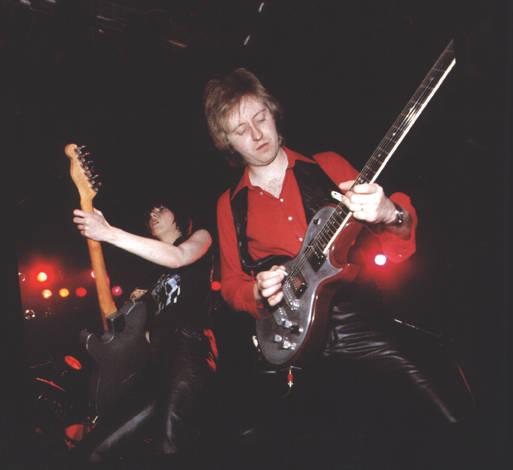
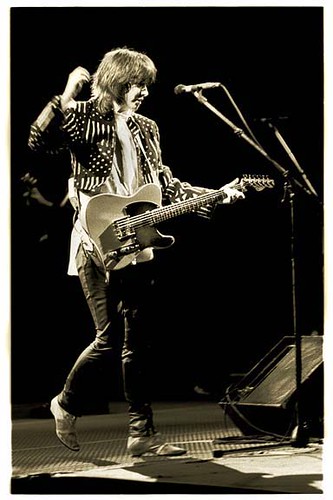
And of course, James Honeyman-Scott, a spectacular, explosive guitarist in the Dave Davies mold…
…whose style – frenetic yet harmonically gorgeous, which could jump from strangled thrashing to chiming anthemic figures so fast it left me wondering “hunh?” – was, along with Mike Campbell, the biggest single influence on my guitar style at the time.
And of course, Hynde.
She snarled – but with a literate edge.
She oozed smart – in a way that had every teenage boy with a majoritarian libido walking doubled-over.
You just knew your mom would hate her, and you were dying to prove it. She oozed “sexy” in a way that was utterly unlike any of the other icons of the day, the Farrah Fawcetts and the like, did; she exuded an edge that went beyond confidence to a sort of muted menace – which made her all the sexier.
Together? They were like the second coming of the Kinks, (a band Hynde admired so much she married Ray Davies, in addition to covering “Stop Your Sobbing” on the debut) only harder, more intense. They were – Hynde’s domination notwithstanding – an ensemble; their parts interleaved with the sort of effortless grace and gleeful confidence that came from relentless practice to get that good. They were four musicians at the absolute peak of their craft.
There were really many sides on display on Pretenders; the ferocious, articulate post-punk of “Precious“,
“Tattooed Love Boys” a controversial, relentlessly un-PC 7/4-time sprint driven by Honeyman-Scott’s disjointed signature guitar figure, Hynde’s muffled, grinding rhythm guitar and a demented shuffle of a drum part.
“The Phone Call”, “Up the Neck” and, perhaps the best pop-punk song ever written, the frenetic-yet-glorious “The Wait”; the cool, shimmery brit-pop of “Kid”, and their debut single, “Brass in Pocket“; the slow departure “Lovers Of Today”, an almost R’nB-like ballad which presaged the group’s cover of “Thin Line Between Love And Hate” a few years later; the quirky, almost funky “Private Life”, which you can almost hear Prince covering; the hilariously off-beat Farndon/Honeyman-Scott instrumental “Space Invader” (yes, it was an homage to the video game); a very faithful cover of the early Kinks’ single “Stop Your Sobbing” which served as an audio mash note from Hynde to Ray Davies, one of her idols and, eventually, boyfriend…
Clocking in at five minutes and change, and driven by a bass line that almost serves as a percussion track on its own, the song pays audible homage to Stax/Volt soul music, linking an almost-paranoid, minor-key verse with the most irresistable sing-along chorus of the genre. It features one of Honeyman-Scott’s most inflammable guitar solos, and impenetrable yet delectable background vocals, and sends the album off with a glimmering, unforgettable bang.
The album was a shooting star, a brash explosion of sound and sexuality and gritty-but-shimmering atmosphere, as explosive and ephemeral as any great moment coursing across the ether. It hit, it exploded, it kicked open doors that (whiny music editors notwithstanding) never really closed, even if those who came after could never fill the gap like Hynde at that moment, with those bandmates, at that time.
It was never the same after that, of course; Hynde – the undeniable boss – fired Farndon for his excessive drug use in ’82, as their long-delayed second album was nearing completion; Honeyman-Scott died of an overdose himself that same week at age 25. Farndon, shattered, died of an overdose himself less than a year later.
The Pretenders were never the same; they were never really a band again. They were the Chrissy Hynde show, with special guests. And they were amazing special guests, at times; Hynde’s tribute to her fallen bandmates, “Back On The Chain”, brought in Big Country’s Tony Butler on bass and Rockpile’s Billy Bremner on guitar; on Learning To Crawl, she enlisted crack session guitarist Robbie McIntosh and bass whiz Malcolm Foster; the Pretenders later included the likes of Johnny Marr, Andy Rourke and Bernie Worrell.
Which, of course, undercuts the entire “Women Who RAWK!” conceit; the Pretenders weren’t great because of Chrissie Hynde’s chromosomes; they were great because, for a two year stretch thirty years ago, four great, theretofore-unknown musicians got together and did something much greater than the sum of its parts. Which doesn’t sell magazines quite like “Women Who RAWK” does, I guess.
That’s not to say that Hynde didn’t go on to write and record a lot of great music. But nothing topped Pretenders.
Years ago, Wilebski’s “Blues Saloon” was the cornerstone of the local blues scene. The tumbledown second-story tavern at Thomas and Western in Saint Paul was a stop on the regional blues circuit, and hosted one of the better open-stage nights in town every Monday.
And then, like most good things in the world of bars, it came to an end. The club went through a number of identities; a couple of wan attempts at wan R’nB bars, with a shot at a gay bar in the middle somewhere.
But I was riding by on the 67 bus the other day, and saw the banners on the sides of the building: “Wilebski’s Blues Saloon”.
Clemons, who’s been playing saxophone (and, briefly on the Rising tour, bagpipes) with Bruce Springsteen since 1981, is one of the great rock and roll stories. Son of a fish merchant from Norfolk, Virginia, grandson of a Baptists minister, Clemons went Maryland State College on music and football scholarships, and had a tryout with the Jim-Brown-era Cleveland Browns; an untimely car accident before his tryout sent him to Plan B, working as a social worker by day and a musician by night.
Over the years, Clemons was a reliable foil for Springsteen in concert…
He wasn’t the most flexible sax payer of all time – I think a guy could do serviceable impression learning three or four basic licks on the horn.
But what he may lack in major chops, he makes up in distinctiveness; there may not be a sax player anywhere in music with a more identifiable sound.
Of course, the story of the first meeting between Clemons and Springsteen is known to anyone who ever listened to Born to Run; it’s the story in “Tenth Avenue Freezeout” (here’s a particularly frenetic rave-up of a version):
In more prosaic form?
One night we were playing in Asbury Park. I’d heard The Bruce Springsteen Band was nearby at a club called The Student Prince and on a break between sets I walked over there. On-stage, Bruce used to tell different versions of this story but I’m a Baptist, remember, so this is the truth. A rainy, windy night it was, and when I opened the door the whole thing flew off its hinges and blew away down the street. The band were on-stage, but staring at me framed in the doorway. And maybe that did make Bruce a little nervous because I just said, “I want to play with your band,” and he said, “Sure, you do anything you want.” The first song we did was an early version of “Spirit In The Night“. Bruce and I looked at each other and didn’t say anything, we just knew. We knew we were the missing links in each other’s lives. He was what I’d been searching for. In one way he was just a scrawny little kid. But he was a visionary. He wanted to follow his dream. So from then on I was part of history.
After snorting coke from the bellybuttons of a bunch of filipina hookers, waking up under piles of U of M cheerleaders after booze-induced blackouts, and telling people I enjoyed Natural Born Killers, I had someone tell me to pull it all together.
I did.
Now – given the media’s history as self-appointed high priests of knowledge and newspaper reporters’ reputation for sucking the fumes from the corks of empty booze bottles, perhaps you could favor us with details on your reporters’ drinking habits? Y’know, so we can use it to judge your ability to cover the news?
Failure to repond will be considered a go-ahead to say anything we want about you.
When Bruce Springsteen turned 60 earlier this year, it was a bit of a milestone on the one hand – but still just a tad removed from me. As much as Bruce’s music has always affected me, he was still a singer from an earlier generation; a little closer to me than the Who or the Kinks, but still someone from that great cloud of Those Who Came Before.
But hearing that today is Paul Westerberg’s 50th birthday?
That’s different. Westerberg was one of the first great post-baby-boom songwriters; his music with and since the Replacements had only the most incidental reference to baby-boom era music.
Was he an original? No – and nobody in rock and roll ever really is, at least musically speaking – everybody borrows and synthesizes and rips off Those Who Came Before – so shaddap already.
But Westerberg combined punk’s snotty snarl with a nuance and depth that evaded most of his thrashy contemporaries.
The Replacements – Chris Mars, Bob Stinson, Westerberg, Tommy Stinson – at an early protest against the Midtown Greenway
And so Westerberg – in his Replacements-era career and ever since – has occupied a much larger space in my memory of the era than most other writers of his or any other generation. Westerberg’s music grew up, just like we did – but still kept a foot back in the garage.
Just like many of us like to think we do, in a little corner in the back of our minds that never quite turned 22.
It was thirty years ago today that London Calling by The Clash came out.
If you get 100 people off the street to free-associate what “punk rock” means, I suspect the answers you get will depend on the subjects’ ages and whatever social label they wear on their sleeves (or through their noses).
People under 30 – the ones who were born long after “Punk” was dead? They’ll probably think attitude-thick genre museum bands like Green Day and Blink 182, people who’ve kept the superficial elements of the punk form – buzz-saw guitars heavy on rhythm and light on solo pyrotechnics, three-minute songs, lots of attitude (justified or not).
People under 40 who see themselves as maybe just a tad counterculture? Maybe they’ll slip in references to Rancid, Social Distortion, the Dead Kennedys or Henry Rollins, and mumble something about rejecting this and anarchy that and dystopic the other thing, and some of the other adolescent catchphrases that “punks” repeated at the time, and maybe even dye their hair pink, don a pair of greasy black stovepipe jeans and a ripped t-shirt and stick a safety pin through their nose for good measure.
But just about anyone of any age who can remember the term “Punk Rock” will list London Calling as the peak of the genre. Perhaps if you were sentient at the time – and, at 16, I barely was – you can recall some of the hype and hyperbole over the record; to one critic or another, the Clash were “the only band that matters”; Dave Marsh famously opined that the Clash “is a band that can do anything they want, right now”. At a time when music was changing faster than it had since the first radio station banned the first Elvis Presley record from airplay, The Clash were the band that was pushing the change further, and faster, than anyone.
The funny thing, though? The part that two generations of critics, poseurs and after-the-fact fans miss, thirty years after the fact? London Calling largely wasn’t a “punk” record.
The ironies keep coming, though. While London Calling wasn’t “punk”, it did more to further “punk”‘s alleged goals, at least as far as music was concerned, than every other punk record combined. It effected more change in mainstream musical taste than any other punk record. It kicked the Top Forty open to ragged, raw, “do-it-yourself” music more than any record, ever. Its’ appearance on the Billboard charts kicked off the greatest disturbance in the Top Forty force since FM radio stopped being “alternative” – the glorious, four-or-so year period in the eighties where the “alternative” was the mainstream.
London Calling covered the waterfront, style-wise: from brutal, hard punk rock (the title cut, “Clampdown”), giddy ska (“Wrong ’em Boyo”, “I’m Not Down”), balmy bar-band reggae (“Rudy Can’t Fail”, “Revolution Rock”)…
…and quite a bit that you can’t classify at all; “Spanish Bombs”, which sounds like the Kinks rendering Ennio Morricone; “Jimmy Jazz”, a slinky, boozy “blues” number which is to jazz what Chris Gaines was to alt-rock; “Brand New Cadillac”, a menacing minor-key-inverted cover of “the first British rock and roll record” by Vince Taylor which sounds like…well, like the Clash doing rockabilly.
I think I played my first copy until it turned white from the needle tracking. And even today, it’s got something for just about every mood; over the weekend I had ‘Rudy Can’t Fail” coursing through my head – partly because we used it as a bumper on Saturday, but also because it’s one of the catchiest songs of the decade.
But for my money, London Calling has two moments that stand out. And if it’s only for “my money”, that’s OK; it’s my review.
On those days when I’m feeling very 47 years old and the world’s been beating me about the head and shoulders enough to get me down, I spin “Death Or Glory”:
What’s it about? The gruelling life of a rock star, for all I care. But it’s three minutes and change of exactly why I love music; it grabs me in the liver and says “Dance, mofo!”+
And I do.
The other moment? “The Card Cheat”
I didn’t really “get” this song when I was 17. I think I was probably into my thirties before I really figured it out. And today, if someone asks me why London Calling is so great, it’s my answer.
It’s a musical version of a noir film – speaking of genres I didn’t appreciate until I was older. What’s it about? Flailing against the darkness, or seeking and failing to find one little bit of immortality, or maybe just crap from Mick Jones’ notebook?
I dunno. But between the Irish Horns’ ruffles and flourishes and Jones’ dork-fingered piano playing, it wrenches a noir beauty out of the garage-band genre.
The Clash couldn’t live up to the hype, of course; nobody could live up to the kind of hype that they got in their day. The followup, Sandinista, was ambitious but shrill; Combat Rock gave me the sense that Strummer and Jones thought they were too good for the whole “pop star” thing – it was like a punk-reggae Dennis DeYoung record.
But London Calling is still timeless, as these things go.
A Nov. 26 article in the District edition of Local Living incorrectly said a Public Enemy song declared 9/11 a joke. The song refers to 911, the emergency phone number.
But be careful, WaPo and Public Enemy; you might look for Jesse Ventura to do an episode on “Why did a rap group in 1990 predict the 9/11 attack?” on Conspiracy Theory.
Reading Salon’s vacuous interchangeable 20-something “music writer”, who seems to be encountering a bit of cognitive dissonance over the runaway success of Taylor Swift:
Feminism is confusing sometimes! As I’ve lamented before, it occasionally compels me to defend the anti-feminist likes of Sarah Palin and “Twilight,”
(Note to conservatives, who actually will get this: Palin is “anti-feminist”. No extra points for guessing what this writer’s sine qua non of feminism is, now, is there?)
and if that weren’t bad enough, now I can’t figure out what to make of this year’s platinum success story Taylor Swift, recently nominated for eight Grammys. I haven’t thought much about Swift, but I’m generally inclined to agree with ladybloggers like Amanda Hess and Sady Doyle, two smart writers in their 20s who have concluded that the 19-year-old’s songs reinforce some not-so-woman-friendly stereotypes in extremely annoying ways. But today, with a typically excellent post about pop culture’s promotion of patience as a girl-powerful virtue, Hess got me wondering — not that she meant to — about whether there might be a legitimate feminist argument in favor of Taylor Swift.
Let’s see; she started writing music when she was a pre-teen, actually worked on being able to sing without the miracle of Auto-Tune, play an instrument or two, and build a career at an age when most of her peers are, well, writing dreary politically-correct drivel for web-zines.
First, let’s acknowledge some major points in the Not Feminist column. As Hess says, “Taylor Swift sings songs about waiting around, being a princess, and crying for her ‘Romeo’ to rescue her from her dad, who is so mean. Then, she makes videos for these songs where she is literally waiting in an ivory tower for her prince to come.”
Goodness. Indulging in fairy tales. A form of “literature” that’s been around for thousands of years, for good reason; people like ’em. Hence they’re popular. And what, homophonically, is the goal of writing and performing “popular” music?
I don’t wanna keep seeing the same hands, here.
And that brings us to the crux of the “Is Taylor Swift good for women?” debate, which — exceptions like “White Horse” aside — really comes down to Taylor Swift, lyricist, vs. Taylor Swift, public figure. It’s her superstardom (and apparent business savvy) itself that provides the most compelling pro-Swift argument. As music critic Ann Powers wrote in the L.A. Times last year, “Swift might play a princess in many of her songs … but in the studio she’s her own boss, writing and producing those fairy tales.” Hess is unconvinced: “This is the Sarah Palin theory of feminism. If she’s a woman, and she does stuff, it’s feminist…”
Well, of course. Being a woman and doing stuff isn’t as important to “feminism” as being a woman and believing all the same stuff, word for word and note for note, that the modern, academic notion of gender-identity feminism tells women to believe.
It’s why a Sarah Palin, a Michelle Malkin, a Michele Bachmann or a Laura Ingraham or Ann Coulter or Katherine Kersten or even a Taylor Swift – women who’ve actually accomplished something without having to either demanding allowances for their gender or, for that matter, losing any ground due to it – can be called “anti-feminist” with a straight face, while mainstream, academic gender-identity feminists can wipe out decades of “workplace equality” and “no means no” rhetoric overnight on behalf of, say, Bill Clinton.
Because the fact is this; to a modern, academic gender-identity feminist, a “feminist” who’s never amounted to anything outside of a make-work pseudoacademic university “Women’s Studies” program, but who supports abortion without question, is a feminist, while a pro-life women who’s moved mountains through skill, determination and the force of her own merits who is pro-life is not.
Put another way – it’s “framing the argument” for the not-so-bright.
As “Miami Steve”, Van Zandt has served for a couple of decades, with a break from 1984 through the mid-nineties, as Bruce Springsteen’s onstage foil – sort of the quiet anti-Clarence-Clemons of the band. And while a lot of Bruuuuce fans have an awful lot of great memories locked into the E Street Band’s, Van-Zandt-less incarnations – Nils Lofgren is no slouch, and the ’84 and ’88 tours were pretty amazing experiences – the Miami years had a chemistry and interplay that changed into something else – not better, not worse, but different – on later years. Something I missed:
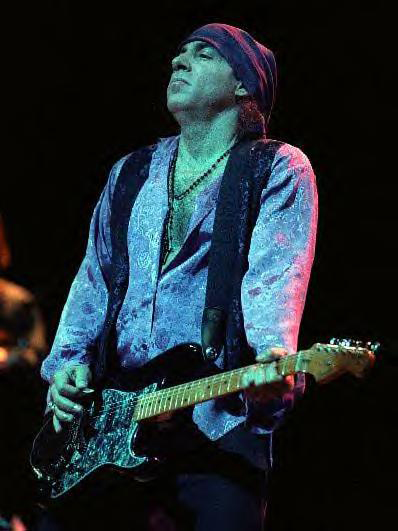
Van Zandt had a knack for raw, on-the-sleeve background vocals that set off Springsteen’s throat-scraping roar, and a sloppy, leaky style on the Strat that, on a good night, sent songs like “Jungleland” into orbit.
Van Zandt the singer?
Men Without Women, 1982
Van Zandt’s solo debut, “Men Without Women”, was one of the ten best albums in the history of rock and roll. Van Zandt gathered a bunch of rock’s greatest journeymen – Max Weinberg and Dino Danelli on drums, the Plasmatics’ bassist Jean Bouvoir, Felix Cavaliere, Roy Bittan and Danny Federici on keyboards, and La Bamba’s Mambomen – better known today as most of “The Max Weinberg Seven’s horn section” – into a studio for a couple of frantic days, and ended up with an album that combined the raw emotion of Exile on Main Street, the style of the best Stax/Volt rock and soul, and the immediacy of a bunch of guys running on raw inspiration; most of the album was is first takes, all of it recorded “live” direct to tape (Van Zandt overdubbed only a few guitar parts; the rest of the album was recorded almost like a live album, with the band gathered in a big circle in the studio).
And what an album it was.
“Forever” was the song that intoduced me to the whole raw, passion-drenched world of Stax/Volt soul:
There wasn’t a weak cut on the album:
The album came and went pretty quickly in the eighties – although big chunks of it turned up in the first two seasons of “The Sopranos”.
He released four more albums – swerving through garage metal, dance music, worldbeat and fairly conventional rock, each louder and a little shriller and much more political; it seemed to me that he only had so many ideas that got more and more tapped out with repetition. But when they were all brand new? Men Without Women was one amazing album.
Steve the producer? Van Zandt was the brains behind the first several classic albums by Southside Johnny and the Asbury Jukes. You could see the Jukes as one of the great bar band in history…:
…or as a prototype for Men Without Women:
He also producer another of my favorite records of all time – the Iron City Houserockers’ Have A Good Time (But Get Out Alive), along with Ian Hunter and Mick Ronson.
Which is not to say he was King Midas. He also presided over the decline and fall of the magnificent Lone Justice, producing Shelter, perhaps the slumpiest sophomore effort of the eighties. Which isn’t to say it didn’t have redeeming value…
Steve the actor? Well, it’s been pretty much The Sopranos so far. But I thought he was a pretty convincing sleazeball cub owner/consiglieri.
The disc jockey? That may be his great contribution these days; Little Steven’s Underground Garage is the absolute last bastion of genuine cool rock and roll anywhere in radio today.
One of the odd things I”ve observed in 16 years in one form of IT or another; many of the best programmers I have worked with majored in, of all things, music.
This seems counterintuitive to people whose primary background is engineering, mathematics, software or other stereotypically left-brain activities, who tend to think music is far-right-brain and emotion-driven. There’s something to that – but there’s much more to it.
Mastering an instrument, music theory, and especially any kind of serious composition, particularly jazz or “classical”, is a frightfully logical activity. Those who do any of the above really, really well often have many of the mental tools needed to be good software engineers – not that the academic mainstream of either discipline brags about it much.
One of the examples of this – a colleague of mine from a dotcom we both worked at back in the nineties – extends the idea, classifying programmers in classical music terms:
For example, some engineers are Beethovens. Driven perfectionists, constantly refining and revising their code, never content for it to be just “good enough”. Beethovens are utterly fearless about using “revolutionary” new approaches and techniques. They aren’t motivated by what’s fashionable or lucrative; their only concern is to blaze new trails and create radically innovative solutions that nobody has ever seen before.
I’ve known a few of these. In at least one case the programmer I’m thinkiing of (not the author that I’m linking to, just to be clear), like Beethoven, had no problem insisting it was everyone else’s duty to support him (in terms of organizational effort and project time rather than financially, in this case) as he worked on his grand transformation. The Beethoven analogy seemed particularly apt.
Other engineers are Mozarts. Great software just seems to “pour” out of them, as effortlessly as breathing. They’re not so concerned with breaking new ground, but their code “just works” and is elegant and easy to understand and maintain. They are masters of the tools of the trade. They’re not always reliable though, preferring to avoid work, and don’t like producing on a deadline.
Then there are the Haydns. Steady, dependable, consistently cranking out one app after another like a machine. While the Beethovens and Mozarts work best on their own, Haydns are great delegators and collaborators. Their code isn’t likely to change the world, but neither is it likely to crash or contain bugs, and you can count on them to deliver on time and under budget.
It seems like I’ve been running into a lot of Neil Diamonds and Desmond Childs lately. And I think at least one of the author and my mutual acquaintances might pass for Richard Wagner.
It’s too bad Music History isn’t taught in schools any more, because this would be a great software engineer interview question: “If you were a composer, which one would you be?”. I wonder how many recent computer science students could provide an intelligent answer?
Convinced as so many from both the “hard” sciences and the humanities are that never shall the ‘twain meet, mentally speaking, I’d suggest “zero”.
And “Agile” development is the equivalent of the Brill Building. And not in the Goffin/King sense of the term, if you catch my drift.
A program director at a radio station I used to work at let me in on the great secret of music radio – which let me in on an even greater secret of psychology.
People tend to be most attached to whatever music they were listening to when they were going through or immediately after puberty. Chalk it up to hormones; the same motivation that makes every little slight or setback into a dramatic battle royale also gives music – the most emotionally-direct of the arts – a special place in most peoples’ perceptions. It’s why for any given generation, “Oldies” music tends to focus on the music that was current when the listener was between 12 and 21 years old; the part of their life when lifelong emotional buttons get put in place, ready for the pushing.
And if you do the math, it was about thirty years ago that a slew of music came out that, thirty years later, fits that bill for yours truly. I think there’s a fair case to be made that each of them is an extraordinary record. A few of the records are on the list because they are extraordinary, whether I cared for them much at the time or not. But most of them are there because they stuck a flag in my psyche thirty years ago, and I can still see why today.
It was thirty years ago today that Tom Petty’s Damn The Torpedoes was released.
We’ll come back to that.
———-
It’s hard to explain to people who weren’t there exactly what music was like in the late seventies. There was great music, to be sure; and a lot of the music I turned my nose up at at the time, I’ve softened on over the years; Fleetwood Mac doesn’t bore me as stiff as it used to; bits and pieces of the treacly corporate pop of the era have grown on me since I was a pissed-off teenager. And the bits and pieces of pop genius that leaked back out to me after years of sleeping on ’em have occasionally made me shake my head and wonder what I was thinking.
But still, with all that, the mainstream in 1979 was a dismal place. Linda Ronstadt was the mainstream. Billy Joel was edgy stuff. A generation of nebbishy California singer-songwriters – Robert John, Sammy John, Roger Voudouris, Alan O’Day, Rupert Holmes and a slew of other pre-MTV fodder – sold millions upon millions.
But most of it was dreary stuff; formulaic, mechanical pop treacle. “Rock is dead”, sang The Who, and it kinda showed; and while rock may have lived on via the dinosaurian touring machines that dominated the industry of the day, rock and roll – the danceable, three-minute song you could dance to or sing along with or pump your fist to – was on the ropes.
Oh, sure – there was Springsteen – who had roared back from three years’ legal limbo the previous year with Darkness on the Edge of Town, the second installment in “The Holy Trinity” that started with Born to Run and would end with The River in 1980 – but he didn’t exactly light up the Top 40 singles charts. Bob Seger was hitting on all cylinders – Night Moves was a huge smash as an album and as a single, but Seger was a palpable outlier.
And then, thirty years ago today, came Damn the Torpedoes.
I hadn’t personally had much of an opinion of Tom Petty; I only knew of him through a lukewarm review of his second album, You’re Gonna Get It, a sophomore slump that shamed many artists’ debuts.
So, truth be told, the Halloween release date passed without my noticing.
But a little less than two weeks after the album’s release, on November 10, 1979, the band appeared on Saturday Night Live. Buck Henry hosted that night, and he introduced “Tom Petty and the Heartbreakers!”, and I watched as a scruffy, Strat-slinging Petty counted Stan Lynch into the opening drum kick to “Refugee”. by four counts into the song, as Ben Tench’s howling Hammond B3 led the band through a dark, edgy reading of the soon-to-be classic, I muttered to myself “Damn. I love this”. In as many words. Mike Campbell played the interlacing lead guitar parts like God and Chuck Berry and Keith Richard had created them to be played; sparely, economically, not a wasted note or a dropped impact. And Petty bit off every word, every teeth-clenched yelp, like it was now or never.
Or that’s how I remembered it.
Via the miracle of YouTube, I actually found that performance; it’s the first time I’ve seen it since that chilly night thirty years ago:
(NBC Universal, curses opon them, blocked the video)
(Update 2 – someone else posted it)
Youtube has the potential to deflate an awful lot of adolescent memories; things that seemed so amazing back then often ring a little duller today.
Not this one. Oh, Petty sounds a little hoarse; he has a little trouble hitting the high notes. The band drops a note or two here and there. The drums are badly miked; it sounds like Stan Lynch is playing on empty Cap’n Crunch boxes. I watched it, and thought “this ran into me like a runaway supertanker thirty years ago”.
But I can see why I reacted the way I did. I still do – thirty years and a whole lot of music and not a little jading later. It was raw – like one of the garage bands I was playing in – yet it sounded polished. Beyond that? It had an emotional “snap” to it that, up to then, I just didn’t year on the radio.
The next morning, between Sunday School and church, I took $7 from my paycheck at the station, ran over to the record section at White Drug and grabbed the only copy in stock off the rack. And four or five of us – Mike Aylmer and Matt Anderson and Keri Kleingartner, I think – sat in one of the classrooms and skipped church and listened to the whole thing on a cheap turntable, all the way through.
And it blew me away – but I didn’t know why until maybe ten years ago.
For many Americans educated in the public school system, Saving Private Ryan and Band of Brothers were the first real explanations of why Americans fought in World War II, and what they did. And it served that purpose because they were among the first vehicles to make history accessible to people.
Damn the Torpedoes was similar. It was a 37 minute and 36 second trip through the best of American rock and roll since the Beatles had come and gone, without filtering it through all the baggage of the concept of the Rock Star.
Refugee sounded like The Band with the twang beaten out and the grit pounded in. “Here Comes My Girl” was the Byrds via the bayou. “Louisiana Rain” sounded like an outtake from Exile on Main Street, replacing Mick Jagger’s verbal posturing with Petty’s laconic backwater drawl. “Don’t Do Me Like That“, with its pulsing piano/organ attack, and “You Tell Me” with its dark, slinky refrain, both sounded like Stax/Volt songs that had gotten lost on a Gainesville backroad on a muggy night, wandered into a redneck roadhouse, grabbed a guitar and a bottleneck slide and a Budweiser, and stayed for the after-hours party. (The simile is even better than I thought when I first wrote that last passage; Stax’ house bassist Donald “Duck” Dunn sat in on “You Tell Me”. Can I call ’em or what?)
As to “Shadow of a Doubt (A Complex Kid)”, “Century City”,and “What Are You Doin’ in My Life?” – well, they’re all Petty; little bits of every nook and cranny in the history of rock and roll, from Chuck Berry through the Stones, jumbled into Petty’s own supercharged pop-via-Memphis sensibility. And unlike just about every other “album” of the era, there was not one second of “filler”.
The highlight, of course, was Even the Losers – long since my favorite song on the album, and in fact one of my favorite songs ever.
Is it possible that there was an American teenage boy of that era that couldn’t not only relate to the song, but know what it was about without needing to know the lyrics?
Well, it was nearly all summer we sat on your roof.
Yeah, we smoked cigarettes and we stared at the moon.
And I’d show you stars you never could see.
Baby, it couldn’t have been that easy to forget about me.
Damn. That was me. Well, if I smoked. And had a girlfriend. One that’d let me take her up on the roof. Otherwise, just like that. Someday.
Baby, time means nothing, anything seemed real.
Yeah, you could kiss like fire and you made me feel
Like every word you said was meant to be.
No, it couldn’t have been that easy to forget about me.
Baby, even the losers get lucky sometimes.
Even the losers keep a little bit of pride.
They get lucky sometimes.
And amid Ben Tench’s howling B3 and Stan Lynch’s muscular, aggressive beat and Petty’s hard-chewed delivery, you could only pray to yourself “good Lord, yes – maybe we will get lucky sometime”.
It all led up to the bridge; Tench drops the Hammond to a lower register, and Lynch switches to the highhat:
Two cars parked on the overpass,
Rocks hit the water like broken glass.
I should have known right then it was too good to last.
God, it’s such a drag when you’re livin’ in the past.
It’s the kind of passage Springsteen wrote all the time. But he wrote it through the lens of his crew of characters; Zero and Blind Terry, Mary with the waving dress, Crazy Janey and the Mission Man, Puerto Rican Jane, the visionaries in the parking lot underneath the Exxon sign – the whole cast of wild-eyed misfits with their ’69 Novas and their boardwalks. And damn, it was good.
Seger? Yeah, him too; “I woke last night to the sound of thunder/how far off, I sat and wondered. Started humming a song from 1962…”. Of course, I was born with two weeks left in 1962. It wasn’t about me. It was about a guy, Seger, who wrote a lot of great music, and it’s only resonated more as I’ve gotten older.
But Tom Petty’s secret? He wrote that bridge about Mitch Berg, age 16, of Jamestown North Dakota.
And about you, fella, whoever you are.
And as I sat in that church classroom on November 11, 1979, as the chill fell outside and the congregation sang in the background, I thought it was a pretty neat trick.