Archive for the 'Taxes' Category

One Day At The Double Tap In North Maplewood

Wednesday, July 13th, 2011

I drove out to North Maplewood the other day to have a chat with some DFLer acquaintances of mine;  Stephen (never “Steve”) Plotznick-Hale, and his wife, Bella Plotznick-Hale-Rehavy.  Committed DFLers both, she is a social worker in the Maplewood school system, and he’s a grievance writer with the Department of Labor.

They sat, dourly focused on their organic boxed wine, as I walked into the bar.  They were in no mood for small talk; they cut right to what passes for the chase.

I’ll join the conversation there:

STEPHEN:  This shutdown is ridiculous!  The GOP is obsessed with protecting the rich!

MITCH: Well, no – the GOP Legislative caucuses are doing what they were sent to Saint Paul to do; oppose all new taxes.

BELLA: But if we taxed the millionaires, we could solve thish problem!  We could afford everything that the Lezh…Ledge…Lesbolature sayzh we needed!

MITCH:  Well, Bella, funny you should say that.  Let’s ignore, for a moment, whether all that spending is needed, much less wise. and start by definining “millionaire”.

STEPHEN: Easy.  Someone with a net worth of a million bucks.

BELLA: YEAH! Shomeone with more money than…Jeeeeebuzh!

MITCH:  OK.  Now, we’re talking income tax rates, here.  They don’t all make a million bucks; if we assume a million or more in net worth, we’re talking everyone from the CEO of United HealthGroup down to regular people who’ve invested very very wisely.  They may make $30 million a year, they may make $150K.  For purposes of this discussion, let’s say they make an average of half a million a year in income.

STEPHEN:  O…K… (takes another sip, fingers nervously drumming table).

BELLA: I’m gonna get a beer. (She sits motionless).

MITCH: OK.  So the first $200K in Adjusted Gross Income is taxed at the current top tier rate of 7.95%.  The rest of their income is taxed at 10.95%, as the Governor proposes.    We’ll hit all 7,700 of them.

STEPHEN:  Exactly!  That’ll close the deficit.

MITCH:  Which is how much?

STEPHEN:  Five Billion dollars.

MITCH:  Heh.  Not exactly.  Taxing “millionaires” according to Dayton’s plan, assuming an average income of half a mill a year, gives us a grand total of $375 million.  About six percent of the “Five Billion Dollar Deficit”.

STEPHEN:  (Stares blankly)

MITCH: Of course, the Dayton rate was never going to stop at an AGI of $200K.  It was going to be more like $135.

STEPHEN:  Yeah!

MITCH:  In which case, assuming a half a million a year in income, we the people rake in a total of a little over $390 million.

BELLA:  Oh, you’re sho full of…(belches)…crap, Merg.  They all make a million bucksh a year!

MITCH:  OK.  Let’s say the average income for these 7,700 millionaires is a million dollars a year.  Applying the Dayton tax rate gets you a total of…

BELLA:  Eleventy billion dollars!

MITCH: Hah!  Bella, you rock!  No – it’s just shy of $797 million.  And if you start the surcharge at $135,000, the extra revenue jumps to $811 million.

STEPHEN:  (Calculates frantically in his head) That’s, like, way less than five billion…

BELLA:  We should just TAKE IT AALLLLLL!  (Bella swoops into a face-plant on the floor).

MITCH: (after helping Stephen help Bella into her chair).  OK.  Let’s do that.  Let’s say we assume the average “millionaire” makes $500K a year, and we confiscate every penny above the $135,000 a year level – a 100% tax rate on the wealthy.

BELLA: (head down on table) Yeahhhh….

MITCH:  You get a total of $2.8 billion the first year – about half of the DFL Deficit.  And let’s say we assume the “millionaires” make a million a year apiece, and we confiscate everything over $135,000; the total we take in is $6.7 billion.

STEPHEN:  So you cover the deficit!

BELLA:  Yaaaay! (starts to vomit a bit in her throat)

MITCH:  Yeah – once.

STEPHEN: Well, that’s the Legislature’s problem, not mine!  Make it happen!  Eat the rich!

(Mitch grabs a mung rag and cleans up the expanding vomit slick under Bella’s passed-out head on the table).

Norquists In The Mist At Macalester

Monday, July 11th, 2011

The American left today is a complex network of conspiracy theorists.

For example, there are the “Truthers” – people who believe that George W. Bush set up 9/11.  There are also “Triggers” – those who believe that Sarah, not Bristol, Palin begat little Trig.   There are many others – check ’em out.

The latest addition:  “Grovers”.  The “Grover” believes that the wheels of the GOP are being spun by Grover Norquist, of Americans for Tax Freedom.

In a move that should prompt deja vu on the part of Minnesotans who pay attnetion (admittedly mostly conservatives),

Brian Rosenberg is the president of Macalester College in Saint Paul.  The place makes fewer bones that most post-secondary schools about the fact that its mission is to train “progressives”; according to the Foundation for Individual Rights in Education, it’s got the “progressive”-friendly, anti-dissent speech code to match (FIRE gave Mac a “Red” rating for atrocious commitment to free speech).

And if you’re a parent who’s spending, or pondering spending, over $100,000 to send a kid to Mac, you might want to read Rosenberg’s Strib op-ed, and ask yourself “is this the level of commitment to intellectual honesty, to say nothing of rigor, that my kid can expect at Mac?”

Because Rosenberg exhibits the great trifecta of modern “progressive” “thought”in an op-ed in yesterdays’ Strib:

  • Crushing  Illogic: we’ll see plenty of that below.
  • The exploitation of ignorance.
  • The belief that government is our society’s most important enterprise

These lead liberals to some bizarre conclusions.

He’s got a thesis = and if you follow Minnesota politics, it’ll all sound very familiar:

The most powerful figure in today’s Republican Party is not John Boehner or Mitch McConnell. It is not Mitt Romney or Paul Ryan. It is not even Rush Limbaugh or Sarah Palin.

It is, of course, Grover Norquist, the man with The Pledge.

Sound familiar, Minnesotans?  It’s like David Strom and the Taxpayers League’s “No New Taxes” pledge .

Norquist, who has never held elected office…

Isn’t it funny how liberals toss that out when it suits them?

Martin Luther King never held elective office.  Either did Keith Olbermann, James Carville or Markos “Kos” Moulitsas, and each of them is every bit as involved in setting policy as is Norquist is – where “involvement” means “using their God-given right to tell legislators what they expect of them”.

Remember my first point?  Crushing Illogic?   Rosenberg indulges in the strawman first:

…is the founder and president of Americans for Tax Reform, a group whose pledge not to raise taxes under any circumstances has now been signed by hundreds of Republican candidates and officials at both state and national levels.

And they do mean “any circumstances.” Enormous budget deficits? No. A country at war? Nope. Famine and plague? Sorry.

It’s not just a strawman, it’s a dumb one.  We’re at war – but it’s not a war for our very existence, like World War 2 or the Civil War.  And we’re not suffering famine.

Indeed, our country’s only plague is government that regards spending as a greater “right” than the peoples’ right to keep the money they earn.  That’s the plague that Norquist is trying to  address.

If the Japanese attack Pearl Harbor, get back to us.

Our grandmothers kidnapped and threatened with death until and unless we raise taxes, as Norquist was asked recently by Stephen Colbert? Well, answered the unflappable Norquist, we always have our memories and our photographs.

(Colbert was being characteristically satiric. There appeared to be nothing satiric about the response.)

There’s point two, “playing on ignorance”.  A shocking number of self-described liberals believe that “The Daily Show” is a news show; it’s not a stretch to think they think the same of Colbert.

Norquist isn’t one of them.

I want to set aside for now the political and economic wisdom of raising or not raising taxes and focus instead on an even more fundamental question: How prudent is it to take an irrevocable pledge about how to govern before one begins the actual work of governing?

Again with the strawman.

If pledges were “irrevocable”, then Alcoholics Anonymous could make Step One “I pledge to quit drinking”, and dispense with steps two through twelve.

The politicians aren’t making the pledge to Grover Norquist.  They are making it to the voters.

Just as George H. W. Bush did, famously pledging “Read my lips!  No new taxes!”.  He broke the pledge.  It helped cost him the 1992 election.

Conservatives remember this.

How wise is it to remove from the legislative toolbox one of the most important tools before one knows what particular challenges one will face?

The “toolbox” is a dumb analogy.  Taxation isn’t government’s tool.  It’s government saying “I’m going to take your tool”.

A better analogy?  The credit card. It can be an important and useful tool in running a home – unless the homeowner starts believing it’s the credit card company’s obligation to support her spending no matter what.

Credit card companies don’t do that.  Why should we?

Up next?  Rosenberg shows – for those who might have doubted it – that he’s from Planet Academia:

How many employers in any industry would hire someone into a leadership position who declared, prior to beginning work, that he or she would under no circumstances employ a commonly used strategy or compromise with those with whom he or she disagreed?

Would a retailer hire a manager who asserted that he would never under any circumstances raise prices?

Would a manufacturer hire a vice president who insisted that under no conditions would layoffs be permissible?

No, no and no – but all of those analogies are wrong.

Nobody would hire a leader who promised to run the business according to a spending target.  And that’s exactly what the “progressives” have done to the state and federal government; make spending the measure of “good government”.

It’s why the DFL scolds us every year about “budget deficits” that are, in fact, based on nothing but bureaucratic spending targets; it’s the same at the national level, only moreso.

Even the most basic primers on leadership note that the ability to listen, the ability to learn and the willingness to compromise are among the essential characteristics of any successful leader.

True.  But Rosenberg missed the most important lesson in those “primers”; a leader leads people toward a goal.

Oh, liberals get it when it’s their goals – desired outcomes for their constituents, and above all that government itself remain fat and happy – and their leaders.

Norquist is asking that the main goal for would-be leaders that seek conservative votes,  at at a time when the greatest scourge facing our nation is an inability to continue long-term government entitlement spending, be to stop spending so much.

It’s a worthy goal.

Because conservatives don’t believe that keeping government fat and happy is the main goal of life – or, for that matter, of government.

Which brings us to the bizarre conclusion:

Many of these newcomers to public office appear also to believe that the mere fact of being elected constitutes a “mandate” for how they should subsequently act — as if the business of governing ended rather than began with being chosen for office.

That would make sense if we elected people to be bureaucrats – to follow pre-set, tested procedures to do a job whose parameters everyone already agrees on.

We don’t agree on those parameters, though.  Which is why we have elections – as an alternative to fighting a civil war over how that job is supposed to be done.

This is a new, peculiar, and destructive way to think about representative government. It ultimately would lead to the elimination of representative government altogether and, instead, to public ballot initiatives on every issue large and small. And we know how well that is working in California.

If Rosenberg were an undergrad writing an English or history paper, and he used such a broad, unsupported conclusion for his thesis, a teacher worthy of them name would knock him down a couple of letter grades and send it back for a rewrite.

Minnesota was once a place known for the exceptional ability of its leaders to place the common good above polarizing ideology.

No.  Minnesota was once a one-party state.  It had two “parties”, of course – but intellectually, there really was only one party.

Life changes.  Wear a helmet, Rosenberg.

Americans for Tax Reform asks every candidate for elected office on the state or federal level to make a written commitment to their constituents to “oppose and vote against all tax increases.”

Every member of Congress, upon taking office, is asked to swear an oath to “well and faithfully discharge the duties of the office on which I am about to enter.”

Here is my simple question: Which “pledge” takes precedence?

That Rosenberg thinks “making government live within its means” is not “part of the duties of the office” shows us where part of Minneosta’s problem is.

The Numbers

Wednesday, June 29th, 2011

Dave Osmek – a city councilman in Mound, which by the way receives no Local Government Aid, and hasn’t for quite sometime – writes:

I’d like to add my two cents to the whole DFL meme. Consider the following scenerio:

Evil Rich taxpayer A: Owns a nice house out on Lake Minnetonka (valued at $750,000) and his own commercial business (valued at $500,000)

Virtuous Poor taxpayer B: Owns a nice house in St. Paul (valued at $225,000)

Evil Rich taxpayer A pays a property tax rate of 1% on the first $500,000 of value and pays 1.25% on the next $250,000 of value. He also pays 1.5% on the first $150,000 of his commercial value and 2% on the next $350,000 of value.

That’s $8125 in property taxes, and $9250 on the business.

Virtuous Poor taxpayer B pays a property tax rate of 1% on his $225,000 house AND gets a homestead “credit” that further reduces his taxes by another 7% to an effective rate of 0.93%.

That comes down to $2092.

Bear in mind these aren’t income taxes; for all we know, the two hypothetical virtuous taxpayers may well make the same money.

And we’re supposed to swallow the DFL meme that the EEEEEEEEvil rich don’t “pay their fair share”? The numbers just don’t add up!

The DFL is counting on Minnesotans who don’t do things like numbers…

Diagnosis: Incoherence

Tuesday, June 14th, 2011

Whenever “progressives” start trying to argue “logic”, my ears perk up.  Because it’s virtually inevitable that no logic will ensue.

Myles Spicer- blurbed as a “retired ad agency executive” – proves that advertising is about emotions, not logic:

Clearly, the greatest threat to the reelection of Barack Obama is the economy — the struggle to create more jobs.

Polls confirm that only 37 percent of Americans believe Obama is improving the economy. Fueling those doubts is the conservative rant about job creation.

Now, I’m no retired executive, but I’m going to guesss that “fuelling those doubts” is the fact that 9% of us are out of work, as many more are underemployed or checked out completely, we’re paying $4 a gallon for gas and more for heat and food prices are zooming and our mortgages are underwater and used car prices, or used parts to fix our beaters are out of sight due to “cash for clunkers” and our retirement accounts are shrinking and taxes are rising and those of us who have jobs are being told our companies may drop our health insurance and our local governments are jacking up property taxes to buy electric cars and artistic water fountains even as food prices zoom upward thanks.

Just saying.

Trouble is, this rant is inconsistent with their other rants — like the one that holds “government doesn’t create jobs, only the private sector can.” And there’s also their contention that jobs are created by the wealthy, who must be stimulated and rewarded to do so.

Spicer is, himself, inconsistent with the liberal rant that “laws are for peasants”.

Wait – that’s not a standard rant?

Either are “government doesn’t create jobs” and “only the wealthy create jobs”.   Conservatives know government can create jobs; they’re just not sustainable, except via ratcheting up taxes.

Entrepreneurs?  They create sustainable jobs.  Entrepreneurs don’t have to be wealthy – they’re frequently not – but then, what’s the point of doing all that work without the chance of becoming wealthy?

Anyway – whenever “progressives” think they’ve found they found a hole in the logic of the free market, it’s hard to stop yourself from going “oh, that’s so cute and precocious”:

This leaves a gaping hole in conservative logic when they blame Obama for the weakness in our economy.

The mantra of Republicans and conservatives has always been to bless the private sector and urge government to “get out of the way, and let capitalism work.” Great! Then where are the jobs?

It has been the private sector (not government or Obama) that has brought us to this malaise, if not crisis, and it is the private sector that is not helping us out of it.

In Mr.Spicer’s special little world, the government never inflated the mortgage bubble by socializing the risk, forcing Fanny and Freddie to underwrite most of this nation’s mortgage market, to “promote home ownership”.

Never happened, Winston.

Conservatives claim that government interference, especially taxation, is impeding our recovery; they just have no basis in fact. There is nothing at all that is preventing, obstructing, retarding or impeding American business from creating jobs … except American business itself.

Taxes have been lower than ever. Interest rates are low. Regulation is generally lax.

Three statements so vague as to be meaningless. Some taxes are low,and many others are not.  Interest rates are low, but paradoxically credit is difficult to get. Regulations are lax, unless they aren’t.

Republican administrations ran the government for eight of the past 10 years. Major American corporations are loaded with cash, but they have learned that they can scrape along with higher productivity by stressing their existing staff rather than adding jobs.

One wonders how Mr. Spicer ran his “advertising agency”. “Sure, things are slow – let’s hire lots of designers, so we’ll be ready when the work picks up!”

Conservatives and the business community claim that “uncertainty” is harming job creation. Give me a break.

If you think today’s environment is “uncertain,” you did not live in the Depression. You missed World War II. You forgot about the times when mortgage rates got up to 20 percent. You skipped the turmoil and discontent of the Vietnam War.

In fact, in the context of history, today’s times are more tranquil and predictable than most. “Uncertainty” is a cop-out.

What a boss Mr. Spicer must have been. “You think shaving the 401K contribution is bad?  No,the Donner party was bad!  The sinking of the Titanic was bad!  Oh, Auschwitz! That was bad!

One needn’t “forget” bad times to observe that times are bad.

What, then, about the claim that taxes are job-destroyers? We have, in fact, been operating under all the previous Bush tax cuts for 10 years now (the lowest in decades), and look where that has taken us.

I’m predicting “to gusts of non-sequitur”…

Deficits have soared, no new taxes have been imposed, yet the wealthy among us seem not to be creating the promised jobs.

Ah.  Because times are fantastic!

Rubbish.  As peoples’ personal finances are dragged down by their plummeting home values and skyrocketing cost of living, consumer spending is in the tank.

Who – besides Mr. Spicer, apparently – would break the bank hiring right now?

No, I’m not putting words in his mouth:

However, there is one area where government actually can create jobs: within the government itself. But here again, conservative policies have actually created unemployment.

Mr. Spicer seems unable to recognize the difference between a horse that pulls the cart and a horse that sits on the wagon, depending on another horse to pull the cart.

Solutions are complex, but doable. But demonizing government and blaming President Obama, as conservatives are doing (especially the early Republican presidential candidates), is disingenuous at best, dishonest at worst, and destructive.

Well, he got the “solutions are complex” bit right.

The rest?  “Shut up, peasants!  The State is your mother!”

Thanks, but no.

The Business Guy

Monday, June 13th, 2011

Last week, we took a look at the Strib op-ed by Roger Hale that supported Governor Dayton’s budget plan, whom the Strib felt it was important to remind you was a former CEO at Tennant Corporation…

…but not that he was a large-scale DFL donor who’d given $110,000 in the last gubernatorial race alone to Alliance for a Better Minnesota, the Dayton-family-supported attack-PAC that launched the most epic sleaze campaign in Minnesota history against Tom Emmer.  That, apparently, the Strib didn’t believe was relevant.

“But what about what he said about business?”, some leftybloggers responded.

Doug Baker, CEO of St. Paul-based Ecolab, responded in the Strib over the weekend.  (Full disclosure:  I worked for Ecolab for four years. A good chunk of my retirement is still in Ecolab stock – and it’s performing better than most of my portfolio at the moment.  Their IT department would give Scott Adams a year worth of material, but it’s a good company – as it happens, 20 times the size of Roger Hale’s Tennant).

And Baker is unimpressed by either Hale or Governor Dayton:

I have two reactions to [Hale’s piece]: First, many in the business community strongly disagree — and second, focusing on revenue generation misses the point and delays action on the more important issue — unsustainable increases in government spending.

It’s no secret that Minnesota always has been a high-tax state. An April 2010 report from the Itasca Project, which highlighted our region’s strengths and weaknesses, identified Minnesota’s uncompetitive tax structure as one of the main barriers to job creation.

Blam.

The “progressives” never, never get that.

My experience, which is shared by the majority of my fellow business leaders in Minnesota, is that personal taxes do matter. It’s an issue that frequently comes up when recruiting people or transferring people to Minnesota.

A majority.

And that’s when it comes to getting talent to come to Ecolab Tower in downtown Saint Paul, or the R&D center in Eagan.   Like most big Minnesota companies, Ecolab has created no manufacturing, distribution or non-sales jobs in Minnesota in years.

Following Gov. Mark Dayton and enacting the second-highest tax rate in the nation would hurt our state.

This is especially true today when state and national borders no longer constrain the movement of labor, capital and intellectual property. In this digital age, people can and do work from anywhere — and they can and will choose to work where they can keep more of their income.

And that’s just speaking of people who work for major corporations.

Ecolab started in the 1920’s, back when the barriers to enter business were very, very low.  The corporation was able to build its business during decades when Minnesota’s taxes were blissfully unintrusive.

How about people starting the next generation of businesses?  The little S-corporations that are the big C-corporations of tomorrow?

They’re moving to Hudson, or Fargo, or Sioux Falls, or Dallas/Fort Worth.

Bring this up to a progressive.  Note that North Dakota is lowering taxes as their revenues boom; they’ll respond “but how many Fortune 500 companies have?”  The response is “that’s a function of population density, but nice try.  Still – how many jobs are those Fortune 500 companies creating in MN?”

The answer: fewer:

There also have been recent headquarters moves that cost Minnesota thousands of jobs — MoneyGram comes to mind — which I strongly believe was motivated more by personal income tax rates than anything else (in my opinion).

But you don’t have to take my word for it. According to the U.S. Bureau of Labor statistics, Minnesota employment growth has lagged the U.S. rate for a decade. More than 1,200 small and medium-sized businesses left the state from 1997 to 2008.

Baker gets the real problem – the one Hale glossed right past:

More important than the tax issue, though, is Dayton’s proposed double-digit increase in state spending. The legislative majorities have offered a 6 percent increase in spending over last year’s budget — this includes a substantial increase in spending on both K-12 education and health care.

For any family or anyone who owns a business in this state, a 6 percent increase in revenue would be considered very good news and would be considered a budget they could live with. However, in government-speak, a 6 percent increase is considered a “cut” because it represents less than the government wanted to spend.

Baker notes the same thing I did in shredding Hale last week; back in the seventies, Japan and Germany were getting done with recovering from World War 2. China and India were mired in experiments with various degrees of extreme socialism, and starving and riven with political contortions and very much third world countries.

Back in the sixties and seventies – which is where Dayton’s entire strategy came from, and when Roger Hale was an active CEO – it was a very different world.

Baker gets this:

Raising taxes and double-digit increases in government spending may have been a manageable strategy in the 1980s and 1990s, when our competition for jobs came primarily from Wisconsin and Iowa.

But the reality our state faces today is a very different one.

Our global competitors and the majority of U.S. states — led by a number of prominent Democrat governors — are moving toward lowering taxes, prioritizing government spending and building a more supportive business environment in order to attract jobs.

Minnesota must do the same if we hope to grow jobs in the future and compete in the 21st century.

Baker’s piece utterly shreds Hale.  You can tell it hurt the DFLers who were defending Hale last week.  They’re responding.

With name-calling.

Preaching To A Smug, Ill-Informed Choir

Wednesday, June 8th, 2011

One day last winter, I went out to eat at this Vietnamese joint I’ve been eyeing for years.

The next day, there was an epic earthquake in Japan; the quake led to a tsunami killing thousoands, and the disaster at the Fukushima nuclear reactor.

I guess I won’t eat at that restaurant again.  God only knows what’ll happen.

In related news, Joan Walsh at Salon “reports on” yesterday’s tenth anniversary of the Bush Tax Cuts:

I know, a congressman confessed to Tweeting a crotch shot to a woman who is not his wife, along with other online indiscretions that may wreck his marriage. That’s big news. [Or is it? – Ed.] The 10th anniversary of tax cuts that helped wreck the economy? Not so much.

That’s been the left’s chanting point. I heard Dick “Turban” “Let’s Bring Back The Fairness Doctrine” Durbin saying much the same yesterday, something to the effect of “you want tax cuts?  Look at how the Bush Administration turned out!”.

And Durbin, like Walsh, does it in terms that make just as much sense as the connection between the Vietnamese restaurant and the Japanese earthquake:

But it’s worth remembering how badly tax cuts worked in stimulating economic growth, as Republicans continue to claim more tax cuts will revive the economy. Most big economic indicators moved in the wrong direction since then, some horrifically.

Under the Bush-Cheney administration, the U.S. saw a series of historic economic lows, and overall, the slowest overall rate of economic growth since World War II.

Right.

Bush cut taxes.

The tax cuts were responsible for the violent deflation of the tech bubble (which seemed like a big deal, back before the Housing bubble), which began months before Bush was even elected.

Meanwhile on another continent, 8,000 miles away, Osama Bin Laden, outraged at the invocation of Reaganism, organized a revenge attack that, three months later, would kill 3,000 Americans and stick another fork in the economy, driving another recession (whose effects were muted by the tax cuts – Ed).

And of course, two years before Bush was elected, the tax cuts prompted the Clinton administration to impel Fannie and Freddie to socialize the risks of the mortgage industry on the backs of the taxpayer while simultaneously easing up home-buying credit.

The lesson is clear.

Stop eating Vietnamese food.

The Budget: The Grownups Speak

Thursday, March 10th, 2011

After weeks of endless whinging from the DFL (“where is the GOP’s budget?  Huh? Huh? Huh? Huh? Huh? Huh? Huh? Huh? Huh? Huh? Huh? Huh? Huh? Huh? Huh? Huh? Huh? Huh? Huh? Huh? Huh?”), the GOP Senate Caucus released its budget targets…

…weeks and weeks earlier than the DFL majorities did in the past two biennia.

Here’s the press release:

Leaders of the Senate Republican Majority Caucus have announced their budget targets for their forthcoming proposal to solve the state’s budget deficit. The overall budget spending level is set at roughly $34 billion for the 2012-13 biennial budget.

“Our caucus is committed to living within our means and not raising taxes,” said Senate Majority Leader Amy Koch (R-Buffalo).

The targets announced by the Senate Republican Majority protect funding levels for education, health and human services and increases funding for the judiciary.

“These targets protect the core constitutional requirements of state government. However, we absolutely have to scale back in the projected growth and spending,” said Senator Claire Robling (R-Jordan).

“These are appropriate spending levels for 21st Century state government,” said Deputy Majority Leader Geoff Michel (R-Edina).

Scraaaaaaaaaatch

Wait – Geoff Michel?

I thought the GOP was ruthlessly excising dissenters?  That’s what the DFL says!

Of course, they also have spent the last two months chanting about an “all-cuts budget”.

I guess everything the DFL says is suspect, huh?

Back to the presser:

“We will be incorporating substantial, real reform measures in our budget package to meet these budget targets. It is imperative that we reform and change the way government operates in order to contain runaway, autopilot spending increases and grow the economy.”

Moving forward, Senate Committees will continue hearing bills in a timely manner in order to meet the earliest committee deadlines in recent history. March 25 is the final date for finance committees and divisions to report appropriations bills. April 29th is set as the final date for committees to act favorable on bills in their house of origin and May 6th is the final date to advance bills or companions of bills that met the first deadline in the other house.

Here’s the big chart; today’s targets are blue, Dayton’s “Dustbowl” budget is red:

Adjusted FY 2010-2011 (with Stimulus & Edu Shifts) FY 2012-2013 Proposed Spending – Feb. Forecast FY 2012-2013 Senate Proposed Spending Change FY 2012-2013 from Adjusted FY 2010-2011 Governor Dayton Proposed Spending*
Education $13,812,526 $14,321,912 $14,297,039 3.5% $14,382,958
Education Shifts $1,301,683 ($138,975) ($138,632)
Education Net $13,812,526 $15,623,595 $14,158,064 2.5% $14,244,326
Higher Education $2,982,217 $2,916,580 $2,505,518 -16.0% $2,745,672
Health & Human Services $10,141,672 $12,337,837 $10,737,837 5.9% $12,189,349
Agriculture & Rural Economies $86,727 $89,396 $76,841 -11.4% $78,162
Environment, Energy, Commerce $312,018 $293,463 $221,463 -29.0% $268,314
Jobs & Economic Growth $ 195,430 $168,246 $103,246
-47.2% $166,822
Transportation $167,036 $180,158 $140,158 -16.1% $177,804
Judiciary & Public Safety $1,858,125 $1,782,650 $1,792,650 -3.5% $ 1,821,988
State Government Innovation & Veterans $884,330 $912,922 $412,922 -53.3% $916,721
Tax Aids & Credits Spending $3,018,752 $3,507,726 $2,727,726 -9.6% $3,507,934
Debt Service, Capital Projects, Cancellations $867,116 $ 1,208,994 $1,148,994
32.5% $1,175,525
Other/Reserves $274,665 $242,262 $138,665
Total General Fund Spending $34,600,614 $39,021,567 $34,267,681 -1.0% $37,431,282

You’ll note that it’s not an “all cuts” budget – the DFL meme that the compliant media has been going along and using for the past two months.   The Tea Party would have liked to have seen some cuts – but the important part is, the budget lives within the government’s forecast revenue.

The other important part?  This is just the beginning.  Our government, as Amy Koch pointed out in her statement, needs to get away from its current funding model, with its “autopilot” spending increases.

King Banaian’s bill, HF2, will be a big next step on that.  As we get into the budget brouhaha, we’ll need people to start keeping the pressure up on their Reps and Senators to push this bill along – or we’ll just be repeating this past three biennia, with automatic forecasts being turned into bloated budgets and absurd deficits.

There’s plenty of work to do, here.

Will He Be Happy To Pay For A Better USA?

Tuesday, March 8th, 2011

Mark Dayton reportedly has a fair chunk of his fortune tied up in a “dynasty” trust in South Dakota.

Why?

Because SoDak is one of 23 states that allow these trusts.

Dynasty trusts push that generation-skipping tax exemption to the max, putting the exempted amount [$5 million for an individual, $10 million for a married couple, which can be stretched further using discounts, life insurance policies and other big-dollar tax-lawyer dodges – Ed.] beyond the reach of estate taxes for the life of the trust. That, in turn, means the heirs don’t have to “spend” their own exemptions on those assets. These trusts are now allowed in 23 states and the District of Columbia (see table), to the delight of companies that charge fees to manage them. Taxpayers don’t have to live in a state to put a trust there.

Mark Dayton – and the other very rich, who get to shelter their fortunes using these trusts, unlike “the rich” that Dayton proposes to extract an almost 11-percent state income tax – may be losing some of this advantage, though, thanks to – the Obama Adminsitration:

To enable these trusts, most of the states allowing them had to get rid of an old common-law principle called the “rule against perpetuities,” which allowed trusts to exist only for about 90 years. The Obama administration proposal would reinstate this old principle in a way by removing the federal tax exemption after 90 years. So the trust can go on indefinitely, but the exemption can’t. (The pass applies to taxes on wealth transfers, of course; annual income taxes are always due.)

So will Mark Dayton be happy to pay for a better USA?

(Via Joe Doakes and Tax Prof Blog)

Chanting Points Memo: The Rich

Tuesday, March 1st, 2011

Now that Mark Dayton has proposed to jack the taxes of Minnesotans making over about $150,000 up to 10.95%, and those who earn over $500,000 to an unprecedented 13.95% – one dollar out of every seven they earn – it seems there’s a little ambiguity on who “the rich” are.

Who are “The Rich?”

Let’s break it down for you.

The Rich Are Not…: DFL uber-donor Vance Opperman, who donates millions to the DFL’s pet causes, and whose income comes largely from dividends and investments.  He’s not rich.

The Rich Are: The guy who runs the small consulting shop that landed you the IT gig with the company that was hiring.  He and his wife – who does the accounting – might break $200K for the year.  They are “the rich”, in Mark Dayton’s world.  Not Vance Opperman, silly reader.

The Rich Are Not…:  John Cowles, who donated $2.4 million to help start the Guthrie – in 1960, when that was serious money.  Who used to publish the left-leaning Star Tribune, and who ponied up to help found the center-left MinnPost a few years back.  He’s also given tens of thousands of dollars to the various groups that funded the epic, toxic sleaze campaign that helped squeedge Mark Dayton into office.  Cowles, with his money coming from dividends and trusts and all the usual shelters that the super-wealthy can afford?  What, you thought he was “the rich?”  Of course not!

The Rich Are:  Grandma’s oncologist.  The guy or gal who spent eight years working his or her ass off taking the hard courses in high school and college to get into med school, then more of the same to survive the weeding-out process during four years of education, an internship and three years of brutal residency designed to test his/her mettle for the field, leading to post-doctoral training leading to a board-certification and then a few decades of experience that make him able to  help Grandma to turn her cancer into a harrowing cautionary story rather than an early good-bye to the grandkids.  After all that, the doctor and his/her spouse – a hospital administrator, as luck would have it – earn a little over $500K, of which about $40,000 currently goes to the state of Minnesota.  Since they – not John Cowles – are “rich”, that tab is going to go up to almost $70,000.  Doc and spouse, of course, still have options; that place in Prescott is looking mighty nice right now.   Which Prescott – Wisconsin or Arizona?  I think they’d both love to have an Oncologist for a neighbor, especially since they’re “rich” – don’t you?

The Rich Are Not…:  Mark Dayton, whose net worth is somewhere between $3,000,000 and $12,000,000 (or was, back in 2006, the last time he deigned to report his net worth according to the Minnesota Birkeydependant.  It’s mostly tax-sheltered, of course, off in tax havens like South Dakota or all those other states where people aren’t so Happy To Pay For more government.  Which makes them ideal for trusts, where trust fund babies like The Governor can keep his money!  So even though Governor Dayton has Renoirs to sell to finance his gubernatorial campaign, he’s not The Rich.  Nosirreebob.

The Rich Are:  You, if you are (to pick an example from my own social circle) a programming consultant who started working as a code jockey right out of college, and spent a decade or so honing your skills as a software enginer.  You write good, tight code; you’ve stayed up on all the advances, and are fluent in not only several programming languages but in many of the arcane architectural environments that seem to so completely tribalize software these days.  You’ve moved on up; from your first job, making $24K a  year as a COBOL programmer for, say, Best Buy back in 1989, you’ve worked your way up to being a pretty indispensible part of some big, business-mission-critical projects.  You’re a hired gun, and a good one, and you get paid pretty well for it;  you bill $85 an hour or so, and work for six-month stretches on high-profile projects.  Tack on the salary from your spouse – a corporate HR benefits administrator who makes about $55K – and that means you make about $$225K on a good year; more during up years, less when the market’s off.  Not enough to have Renoirs to sell, but plenty comfortable.  Good thing, too – you pay for your own retirement, and write your own checks to Medicare and Social Security.  You know better than to complain – but you’re both one layoff or cut contract or downturn away from living on savings until the market turns up again.  Oh, yeah – your state tax bill is going to rise from $17K and change to almost $25,000.  Because you, you greedy bastard?  You are rich!

Unlike Vance Opperman, John Cowles or Mark Dayton.

Hang your head in shame, plutocrat.

CORRECTION – MAYBE: I’ m told that the 13.95% rate only applies to income over $500,000.  It changes the math…

…but not the principle.  “The Rich”, according to Daytons’ budget proposal, are people who earn income, as opposed to the rich, who make their money from capital gains and dividends and can afford to shelter their income in ways “The Rich” usually can’t.

Chanting Points Memo: “My Client Is Obviously Guilty”

Monday, February 21st, 2011

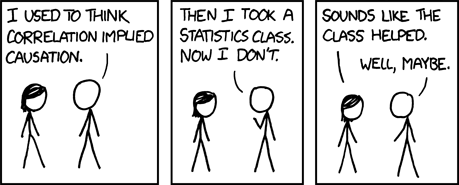
Courtesy of XKCD, here‘s one of my favorite comic strips ever:

I think about it every time a DFL chantingpointbot starts talking about things like “proof” and “evidence”.

Which brings us to this piece in MNPublius, which gurgitates one of the most alarmingly cynical memes the DFL and media (pardon the redundancy) are trying to foist on the less-literate:

It’s been well-documented that cuts to local government aid cause property taxes to rise.

Now, I spent the weekend going through the text of every piece of legislation that led to a freeze, reallocation or cut in Local Government Aid in the past ten years [1], looking for a passage that read like “Local Governments are required to raise taxes to make up for the change in the aid formula”.

Because there is none.

Local Government Aid, for the umpteenth time, was originally intended to redistribute money state tax money to poor outstate school districts and cities, so that towns like Hibbing could rebuild old schools, or Thief River Falls could have a waste-water treatment plant, or Osage could get a new police car.

It’s become a vehicle for the state’s largest (and most DFL-addled) cities, Minneapolis, Saint Paul and Duluth, to launder their own rapacious spending throug the state budget without having to account to city and county taxpayers.

My own analysis ([in the original MNPublius posting – Ed]) shows that property taxes have steadily risen as state aid has dropped.

But Jeff’s piece doesn’t show where the causation, the coercion, the cause is.  Because yes – as Local Government Aid has slowed, cities have had to decide whether to make their own tax base cover the difference, or to do without.  Some cities, like west-metro Mound (which hasn’t gotten LGA in years) made the tough choices, cut the budgets, and learned to make do.

Others, like Minneapolis and Saint Paul and Brainerd – addled by DFL mayors and/or city councils – raised property taxes by far more than the cuts to LGA.

At any rate – Rosenberg’s premise , that “cuts to LGA force property tax hikes”, is a canard, a shrill chanting point that is based in no fact whatsoever.

A local government can opt to keep taxes rock-steady no matter what happens to LGA, and trim what’s needed; they can also make the case to their citizens and taxpayers to keep paying the bills that were formerly paid by taxpayers around the rest of the state, and let the chips fall come election time; in cities like Mound, it’s a dodgy proposition; in Minneapolis and Saint Paul, the DFL will keep getting elected no matter what.

There’s a simple reason for that: Cities provide essential services that residents don’t want cut. So instead of cutting back on public safety or filling potholes, local governments are forced to make up for lost revenues by increasing property taxes.

There’s a non-sequitur there – one the DFL is counting on The People not to notice; cities do provide essential services.  They also provide plenty of non-essentials.  In Saint Paul, I pay for the best urban fire department in the US; I’m happy to do it.  We have a decent police department; there’s room for improvement, but they’d OK.

We have a lot of libraries. I love libraries – I practically grew up in one.  But as libraries become home to fewer and fewer books, it pains me to say we could perhaps do with just a tad fewer of them and not make them any less available.

We have a public works department.  I pay them to fill in potholes.  They get to it – eventually.  Clearly there is fat to be cut here. They also plow the streets.  They do an adequate job – one that could easily be privatized, along with many other city-paid services.

We have a park and rec department. I love parks. I love recreation.  The city has dozens of “Community Centers” which serve as public service catchalls for every variety of recreation and social program imaginable.  There would seem to be room for some consolidation.  And frankly, mowing the grass in the parks could be cut waaaay back.

I also pay for a city Human Rights office that fully duplicates the functions of the Ramsey County and State human rights offices, all located within a few blocks of each other in downtown Saint Paul. I pay for a mayoral staff with nineteen along with a phalanx of assistants and other hangers-on.

Could any of these be trimmed before we start laying off cops and firemen?  I think so.

Will it happen?  In Saint Paul, probably not. For all the Mayor’s whinging, the city’s government-dependence-addled electorate will likely increase property taxes to cover whatever they lose from LGA.  Most of the people who care about tax rates have already fled the cities to places with more responsible, responsive governments.

Now – if you live in a city with a more responsible government, the answer may be different.  The mayor may not be able to justify the expense.

But it’s a matter of choice.  Not “force”, as Jeff, the media and the DFL (pardon the redundancy) would like you to think.

Fortunately, the MNGOP has a “solution” for that: take away the right of local governments to make their own decisions and force them to cut essential services. That’s the impact of HF481, a bill by House Republicans that would make local governments’ budget decisions for them by outlawing any property tax increases in the 2012 fiscal year.

That sounds nice, except for one thing — if property taxes are frozen, that means services must be cut. Apparently, an all-cuts budget that slashes $6.2 billion in state funding for things like education isn’t good enough for the MNGOP. They want to force your city government to cut even more services.

The merits of HF481 notwithstanding – it’s worth a discussion – Rosenberg’s wrong.  Not all “services” are essential.  We, the taxpayers of our DFL=-addled cities, can do without $50,000 drinking fountains and misappropriation of city staff to political ends and all the other worthless patronage our cities pay for.

The point is, cuts in LGA do not lead inexorably to property tax hikes.  It is entirely voluntary – dependent entirely on the addiction of local government to spending, their success in selling those compensatory hikes to their voters, and how fed-up the voters are.

Why should voters in Bemidji pay for Saint Paul’s human rights office?

(more…)

Dear Wisconsin Tea Partiers

Saturday, February 19th, 2011

Bring video cameras.  Lots of them.  And don’t interact with a “union” protester without at least one camera on you.

Because yesterday, the unions and the other organizations leading the protests were warning their members “not to be provoked” by the Tea Party counterprotesters.

And you know Berg’s Seventh Law:

Berg’s Seventh Law of Liberal Projection – When a Liberal issues a group defamation or assault on conservatives’ ethics, character or respect for liberty, they are at best projecting, and at worst drawing attention away from their own misdeeds.

Or planned misdeeds.

So keep those cameras spinning.  Because the media will hang everything that goes wrong on you, and you know it.

Prying The Fingers Out Of Our Wallets

Thursday, February 17th, 2011

For want of 8,000 more votes…

Scott Walker is doing what governments at every level should do – ending collective bargaining for public union employees :

Gov. Scott Walker said Friday that he wants to end collective bargaining for nearly all public employees because the state is broke and there’s no point negotiating with the unions when there is nothing to offer.

Union leaders and Democrats, powerless to stop Walker’s plan from passing the Republican-controlled Legislature next week, were reeling. They blasted the proposal as a naked power-grab that will gut Wisconsin’s deep organized labor tradition and result in layoffs that devastate the economy.

If I were a Wisconsin taxpayer – and a place in Hudson is looking better and better every time I look at the Dayton “budget” – I’d say “screw your tradition”.

As to the layoffs?  If the jobs aren’t actually needed to run the state’s government, then why are we paying them?  Why is a public-sector job more sacrosanct than a private sector one?

Walker, a Republican who took office in January, argued that his proposal is an alternative to ordering furlough days and laying off 12,000 state and local public employees over the next two years to balance a $3.6 billion budget shortfall.

“The state’s broke,” Walker said. “Local governments are broke. They don’t have anything to offer.”

Walker wants to remove all collective-bargaining rights, except for salary, for roughly 175,000 public employees starting July 1. Any requests for a salary increase higher than the consumer price index would have to be approved by referendum.

He also wants – gasp – to require   public employees to pay half the cost of their gold-plated public employee pensions, and pay 12.5% of their healthcare costs.

I caught MPR’s coverage of the protests “sweeping” Wisconsin today.  Standout note – a Minnesota public-employee union leadership stooge whinging that the changes will “cost union employees’ …”

I was ready for the next word to be “jobs”.

“…money toward their retirement”.

I wished, fervently, that I could have met that woman face to face, and showed her what I – a self-employed guy – pay for retirement.

8.000 more freaking votes.

Underwhelmed

Wednesday, February 16th, 2011

So the GOP, as we’ve noted, is underwhelmed with Dayton’s budget; since they control both chambers of the legislature, it’s pretty much toast.

But the DFL is right behind the governor – yeah?

Well, maybe not. Rachel Stassen-Berger did something more capitol reporters should oughtta do; asked some questions (emphasis added):

DFL leaders of the House and Senate Tuesday would not say whether they support the tax increases in DFL Gov. Mark Dayton’s budget.

House Minority Leader Paul Thissen and Senate Minority Leader Tom Bakk, both of whom ran for governor last year, were asked multiple times, in various ways, whether they would back, vote for or want to run on the proposed $4 billion in tax increases and they refused to give a yes or no.

They said it was an honest budget that was better than what Republicans could offer but, despite repeated chances, did not say they supported it.

Now, this can mean anything – or nothing.

Still, you’d think the DFL would want a little more love for the gov, right?

One exchange:

Question: “Do you support the tax increases in this bill?”

Thissen: “The governor is delivering on what he promised. We have always been in our DFL caucus in favor of a solution that is going to be fair…We need to look at the details of it. I think the most important thing now to look at is asking the Republicans, okay, what’s your answer.”

Another exchange:

Stassen-Berger – whom I’ve certainly criticized in this space before, and will no doubt criticize again – runs through two more such exchanges; go read ’em.

I’ve been calling Dayton a very, very weak governor.  It could very well be I’m right…

The Rich

Wednesday, February 16th, 2011

You’re a guy who’s been working in Human Resources sales – basically selling labor – for your whole career.  You match up companies that are looking for contract labor – everything from office temps to database analysts – and you’ve been doing it your entire career.

You just got a bigger, better idea; start your own business.  So you took your life’s savings, and a book full of contacts, and hung out your own shingle as a software staff augmentation vendor – basically a temp service for software engineers.

You worked 12 hour days, and weekends, working your book of contacts, in a competitive market full of some very big players (including the tech services branches of some national players, like Robert Half and Manpower).  Each of those people takes work,  – HR paperwork, keeping up contact with them and their hiring managers – on top of your sales efforts which, in this economy, are a lot of work.

But your efforts, after several years of building a name and a rolodex, are paying off.  Your company has a solid name and reputation, , and have managed to have an average of 10-15 of “your” people working at companies around the area.   And this yields, after years of working very hard, about $250,000 a year for your efforts.  Figure that translates into an Adjusted Gross Income of $220,000 – you rack up a lot of business expenses.

And because you have managed to pull that off – especially in this economy – the Minnesota DFL and Mark Dayton believe that rather than the roughly  $17,600 of your income the state currently appropriates, they should take $24090.   That’s an extra $6,490 that the state believes would be better spent on its’ clerks’ defined-benefit pensions (you pay for your own IRA), and on light rail trains you’ll never ride (because your customers aren’t on Hiawatha or University, or even largely in Minneapolis or Saint Paul, for some reason), or on the pages and pages of other things…

…that are more important than whatever you planned, above and beyond what they already spend.

Which you clearly didn’t begrudge when you were paying $17,600 in state taxes – after all, you’re still here, right?

But another $6K?  On top of the federal tax hikes soon to come on people like you, “the rich”?

The Dallas market’s looking pretty good, isn’t it?

The Right Message

Wednesday, February 16th, 2011

My radio colleague and now Represenative King Bauaian writes his constituents (with emphasis added by me):

Neighbor-

Gov. Mark Dayton today unveiled historic tax increases and the nation’s highest income-tax bracket as his means to setting Minnesota’s budget.

His plan calls for around $4 billion in tax increases; that’s approximately $4 in tax increases for every $1 in spending reductions. Our state would increase spending by 22 percent over current levels – to around $37 billion.

There would be two new tax brackets, including our top earners paying 13.95 percent – the highest income-tax rate in the country. It is supposed to be temporary, but many temporary taxes become permanent. The second new tier would be 10.95 percent, a mere .05 percent behind the nation’s current top late. The tax increases would begin for joint/married filers earning $150,000 a year combined.

We face a $6.2 billion budget shortfall and this is the wrong proposal to send Minnesotans; it keeps government spending on autopilot, which I campaigned against last fall and will continue to work to stop. We need to focus on reforming government to help us live within our means.

Sincerely,

King

There are a lot of GOP freshmen who need to send that same message.  Clearly.

Chanting Points Memo: The Boy Who Cried Armageddon

Tuesday, February 15th, 2011

Remember the last Metro Transit strike?

The left and media (pardon the redundancy) predicted Armageddon. The poor, deprived of buses and – so the DFL and media (ptr) seemed to believe) – too stupid to adapt, would starve in their public housing.

“If you don’t get Happy To Pay For A Bigger MCTC Contract, the blood of the innocents will be on you!”

Now, in the first line of this piece, I ask if you “remember the transit strike”; it occurs to me that while it’s a rhetorical question, there might be a literal answer. The strike went (I had to look it up)  six weeks, and by about week three it was pretty clear that Metro Transit really didn’t command either the love or the market share that their press told them they did; people adapted, congestion lessened, and petty crime actually dropped.

The Teamsters wound up settling for less of a contract than they’d asked for – largely because far from the predicted Armageddon, the strike showed how generally superfluous they were in most peoples’ lives.

———-

I’m not the first to make the observation; a conservative sees government as a means to an end.  To have a free market, we need government to enforce the rule of law; to enforce contracts, to protect private property from the depredations of criminals (unofficial and otherwise), and to provide those precious few services that the private sector can not (defense, law enforcement) or, through decades or centuries of possibly-misguided tradition, just doesn’t (roads, schools) do.

Liberals see government as the end; the One Big Eternal that makes all subsidiary things possible.  Over the years, I’ve seen liberals characterize government as everything from a parent presiding over its’ children, society (that’d be us), or as the beating heart and ticking brain of society’s body.

And exactly where, in theory, these two currents collide and interact is, in normal times, the sort of thing Craig Westover and Dave Schultz can debate about in front of a packed room full of wonks, with a cash bar and hors d’oeuvres to make the whole thing more palatable.

But these aren’t normal times.  Perhaps you’ve heard – not only is our national economy a mess (our state economy a little less so, thanks to eight years of Tim  Pawlenty – not that the DFL didn’t try their darnedest), but we have a sharply split government – all the sharper because the two sides, the GOP legislative majority and Governor Dayton, were sent to Saint Paul with clear mandates from their constituencies; “tame government” and “make people give us stuff for free”, respectively.

And the two sides, platitudes about “reaching across the aisle” notwithstanding, are showing no interest in compromise; Mark Dayton vetoed cutting money from the current budget to help deal with the current crisis, for crying out loud.

So there is a chance that, if the two can’t reach a compromise – and it’ll be difficult – tbe government may shut down.

If you’re a conservative, you probably suspect that’ll end up more or less like the transnit strike.

If you’re a liberal – well, you probably already read Jeff Rosenberg at MNPublius.  Jeff is, naturally, less sanguine about the whole “Shutdown” thing– and he thinks we conservatives should be, too:

Less then two weeks into the legislative session, the MNGOP held a hearing about a possible government shutdown, a clear sign of how they see this legislative session ending.

Well, it doesn’t take a rocket surgeon to see that a strike is possible, given the circumstances.  I’d be mildly surprised if Dayton hasn’t done some contingency planning himself (although as out-of-his-depth as he seems, it’d only be a mild surprise).  The GOP contingent is drawn from people – businessmen, cops and the like – who actually have to plan for contingencies.  Cut ’em a break.

Governor Dayton, in a clear sign of his priorities, used his State of the State speech to ask that legislators pledge not to shut down the government:

I ask you, legislators; I invite you; I implore you — to join with me now, right here in our Capitol and pledge to the people of Minnesota that we will NOT shut down their government, our government — not next July 1st, not any July 1st, not any day ever.

Let’s let that one sink in a bit; the governor, “as a clear sign of his priorities” (Jeff’s phrase, not mine) asked the GOP to pledge…

…to blink.

In other words, when push comes to shove – and it likely will – to shut up and give the Governor his way.

Not a word on his own commitment to compromise.  Not a word on deferring to the wisdom of the legislature, directly elected by the people, over that of the union bosses and special interests.

As their hearing early in the session shows, Republican lawmakers don’t seem at all interested in making that pledge. In fact, they seem to be looking forward to the shutdown. Why? Conservative blogger Mitch Berg expressed their thoughts succinctly:

Long story short, DFL: We don’t NEED to compromise; if gov’t shuts down, *you* lose. Not us.

Jeff is nothing if not reliably imprecise; not “Jeff Fecke”-style “comically wrong”, but just not quite right.

The GOP majority was sent to Saint Paul on a mission; tame government.   Taking the governor’s “pledge” – saying “forget about our voters!  Forget our constituents! We’re her for you, Lord Fauntelroy!” before the Governor had released a single (workable) budget! – would be a deeply stupid thing to do under normal circumstances.

And the circumstances are not normal.  The GOP majority is faced by a very weak governor – whose strings are being pulled by a very powerful clacque of sponsors; the teachers’, government and service unions, the media, the state’s academic establishment from K through PhD, the whole phalanx of non-profits.  The weak governor is being inveigled to boost state spending by a solid 25%, and balance the spending orgy on the backs of the state’s most productive citizens.

And they’re supposed to take “the pledge” – and give up their ultimate bargaining chip, and basically tell their voters “sorry about all that “taming government” rhetoric, we didn’t really mean it that much!”?

But is he right? I think he’s miscalculating the potential impact of a shutdown.

Of course, to some extent, it depends on how Berg defines “lose.” Does he mean politically, or ideologically?

I mean, of course, both.

In terms of policy and the impact on the state, the DFL would lose. We believe the government is a force for good in many people’s lives [!!! – Ed]. So we would certainly see it as a loss if road maintenance stopped, if aid to the poor dried up, if thousands of people were denied healthcare, and so on. Today’s Republican party, on the other hand, would welcome that.

But that’s not what I think he means.

Well, not in the sense Jeff seems to intend – “Today’s GOP hates the poor and wants to destroy infrastructure and kill grandma while they’re at it!”.  Of course not.

But Jeff’s case  – and it is that of the DFL and its minions – is based on a couple of fundamental bits of rhetoric that are utterly illogical, but are being spun to try to inflame the maximum possible emotional response from voters.   They want the GOP to fold its hand now, before the budget is released (actually, it will have been released a few hours before this post appears – it is currently 5:30AM), and at all costs avoid all mention that the real choice – the choice that the Governor and his minions, Jeff included, are trying so hard to keep the voter from comprehending – is not between a 25% tax and spending hike and complete desolation, but between a 25% hike and a 6% hike – the $32 billion 2010-2011 budget that we’re living under, plus the forecast $2 billion in new revenue coming in from the Minnesota economy – combined with a fundamental realignment of how Minnesota government does its budgeting, so that we stop pretending that we, the taxpayers, were put on this earth to be the DFL’s ATM machine.

The Governor, the DFL, and all of their minions and stakeholders and hangers-on and Jeff Rosenberg too, want to make damn sure you, the voter, don’t see it that way.

I think he’s talking about the political fallout of a shutdown. And it’s not at all clear to me that the MNGOP would win that battle. The people of Minnesota have shown time and time again that they believe government has a vital role to play. Not only do they support that, they’re willing to pay for it.

Willing to pay?  Perhaps – to a point.

Willing to have that bill jacked up by 20+% per biennium? By 2-10x as fast as the economy grows?

Does Jeff think the people are that willing to pay?

You do remember how many DFLers got sent home last November, don’t you?

Actually, they already do pay for it. It’s the rich in Minnesota that still aren’t paying their fair share. Will Minnesotans support the Republican party going to the mat to keep the rich from having to pay the same percentage of their income in taxes as the rest of us do?

That paragraph is the consummate chanting point (“Chanting Point:  (Noun)  Similar to a “talking point”, but intended to be recited by rote (often as part of large real or virtual crowds) rather than critically analyzed”).   What it’s saying is “you people – the “rich” who make over $130K a year – have something we want; we want your hard work to benefit us – never mind that you already pay most of the cost of government at all levels from local through federal, while over a third of us pay nothing but sales taxes; you should feel shame, and donate your hard work to filling our needs”.

Do “the people” get that?  See last November 2 again.

Remember, although Americans often express our desire to cut government spending, there’s very little we actually support cutting when it comes to specifics. That’s why a shutdown is so overwhelmingly unpopular: everybody has programs they support, none of which are spared.

Leaving aside that it’s not true – the last “shutdown” actually only shut down around a third of state government operations – I think that’s one of the lessons of this past election; people, especially the ones that pay attention, are willing to do with less government, including “their” programs – and especially “their” programs staffed by people who get paid more than they do, and with gold-plated pensions who bitch to high heaven about being asked to pay a $5 copay to visit a doctor.

(“But wait – the people also elected Dayton!  They must like paying more taxes!” Well, some of them do – maybe the 20-25% that are genuine hard-core DFLers.  Dayton won on name ID, and as an uninformed response to the DFL’s toxic, sleazy anti-Emmer campaign, and most likely by not a few fraudulent votes; the voters “voted for taxes” with Dayton as much as they “voted for crazy and petulant” with Jesse Ventura).

Add to that a side of incompetence for allowing the government to shut down, and it’s a recipe for unpleasantness.

Just like the transit strike was.

So there certainly will be consequences. But on whom will they fall? They’ll fall on the party that refuses to budge, that protects the rich at the expense of the rest of us, and that chortles in glee as the government shuts down.

Nobody’s “chortling with glee”.

Just refusing to blink.
It’s Not A Cut If It Costs More

Tuesday, February 15th, 2011

Most “Chanting Points Memos” refer to Minnesota issues.

But this is not only an issue for all of us – but it’s one where the Minnesota media and leftyblog clacque have been chanting especially aggressively.

One tweeted “Obama is doing the biggest budget cuts (as percent) since Eisenhower. What do #teabaggers have 2 say?”

I say what I usually say when lefties claim to have done the right thing; it’s just not true

Conn Carroll at Heritage has the story:

Since President Barack Obama was sworn into office total entitlement spending has grown 4%, total discretionary has soared 16%, and the national debt has exploded 43%. Over that same time the United States economy has lost 3.3 million jobs. President Obama cannot be blamed for the most recent recession, but he certainly can be held accountable for the failure of his deficit spending policies in response.

As Krauthammer noted yesterday, the “cuts” are only cuts from the last budget’s “porkulus-inflated spending.   After the cuts, Health and Human Services spending is up 30% or more since their already-inflated Bush-era numbers.  And those numbera are not anomalies in the budget.

Carroll notes that Obama “cut” discretionary spending using three gimmicks:

  • Redefining Pell grants as mandatory spending. Stripped of this gimmick, discretionary spending jumps by $14 billion in 2012.
  • Reclassifying $54 billion of surface transportation spending from discretionary spending to mandatory spending.
  • Spending the peace dividend. The budget proposal includes spending for military operations in Iraq and Afghanistan, referred to as “overseas contingency operations,” as discretionary spending and reduces funding for these operations by $38.2 billion in 2012.
  • If you live in a district with a GOP representative – the 2nd, 3rd, 6th or 8th, and maybe the 7th dependong on which way the wind blows – you might wanna contact them.  Obama’s budget needs to get sent, bleeding, to palookaville.

    Lori Van Winkel

    Tuesday, February 15th, 2011

    I’ve been writing for years about how Lori Sturdevant seems to be stuck in the 1970’s, a time when the Minnesota DFL stood for paying for whatever they believed was needed, and the Minnesota GOP pretty much went along to get along.

    Lori Sturdevant has always seemed – like our current governor – to be stuck in that era.

    Speed Gibson explored a manifestation of that dozey nostalgia yesterday.  By way of giving a synopsis of 40  years of Minnesota Senate History, Sturdevant…

    …profiles incoming Taxes Committee Chair Julianne Ortman, generally positive but clearly disappointed that Ortman just isn’t interested in raising taxes or even tax reform.  Doesn’t she understand the need?  Doesn’t she understand her role is to stabilize?  Of course, words like reform and stablize really just mean raise taxes.  For example, she notes:

    The lightly taxed services sector now accounts for 80 percent of gross state product. The production and sale of goods, taxed more heavily in Minnesota than in many other states, is down to a 20 percent share.

    Taxing the services sector relatively more to allow for taxing goods relatively less has much to recommend it — not least, I noted, the opportunity to shore up state revenues to help erase a big deficit.

    Uh, Ms. Sturdevant, there’s a fundamental truth lurking in these numbers: the sectors doing well are the least taxed.  Maybe if we lightened up the taxes on the sectors not doing so well, they also would improve.  Plus, if you go after services, many of which are quite mobile or available from outside Minnesota, we could easily see a net decrease in jobs, especially if the tax cuts you promise never materialize as so often happens.

    Not to worry, Sen. Ortman and the GOP will first, correctly, “put government on a diet.”  But this is not the language of “statesfolk” (sic), just politicians in LoriWorld.

    I’m finally feeling confident that our Legislature will back Speed up on that.

    The Dayton Dustbowl: The Count Is 0-2

    Monday, February 14th, 2011

    Mark Dayton is scheduled to present his budget tomorrow.

    The question, as I see it, isn’t so much “how will he balance the budget” as it is “how far off from balanced will his proposal actually be?”

    Let’s take a walk back through recent history.  We’ve been down this road twice before.

    The First Dayton Budget:  Immediately after the party conventions last spring, Mark Dayton released a “budget plan” that, a fairly casual examination showed, deserved the scare quotes I just gave it.

    It was  three billion dollars short of balancing the forecast shortfall – the $6.2 billion “deficit” in paying for the wish list the DFL kicked down the road after the 2010-2011 biennium – and that was only if you left out some gaping holes in his assumptions (that taxing “snowbirds” is legal, that the state can cut contractor expenses on work that is largely legally-mandated and for which by law no state workers can be currently qualified, that cutting “patronage” jobs will rack up a lot of savings, that the feds will look the other way when Dayton eliminates the testing that is the cornerstone of the feds’ accountability standards, that jacking up licensing fees would shake lots of money out of Minnesota businesses without driving them across the river into Wisconsin or the Dakotas, that the state could violate the law in setting up a teachers health insurance pool, and many other gaps.  Calling it three billion dollars off was a complete gift.

    Strike one.

    If At First You Don’t Succeed: And then – after Tom Emmer released a coherent, detailed, balanced budget plan – Dayton tried again.  And his second attempt was, by Dayton’s own admission, almost $900 million short; the real figure was well over a billion dollars short, and that’s even if all the assumptions above (before “strike one”) didn’t happen (they will), and the “wealthy” – Minnesotan couples whose income is over $130K a year – don’t move themselves (as “the rich” in Oregon did) or their money (as Mark Dayton himself does) elsewhere, which they will.

    So given that Mark Dayton has never once submitted a budget that came within a billion dollars of granting his supporters their wish list, and given that his State of the State address telegraphed a “spend like it’s 1972!” approach to the issue, what do you suppose the odds are that tomorrow’s budget will be ready for prime time – other than, of course, by lowering the defintion of “the rich” to “people with jobs?”

    Chanting Points Memo: “Piecemeal”

    Monday, February 14th, 2011

    The region’s DFL, media (pardon the redundancy) and the leftyblogs that fill in the very, very few gaps between them have been spending the past few weeks grousing impotently about the Legislature’s GOP majorities’ “piecemeal” approach to tackling the budget, including the $6.2 billion deficit that is not.

    The chanting point campaign reached its peak last week, with Governor  Dayton demanding in his State of the State that the GOP majority send him a unified budget proposal.

    The DFL/media/leftyblog (ptr) chanting has coalesced been commissioned along three lines:

    1. Let’s just tackle the budget in one fell swoop!
    2. The GOP needs to get their budget in front of the governor now (in the aforementioned fell swoop)
    3. Governor Pawlenty didn’t let the DFL submit a piecemeal budget!

    All three lines are, of course, absurd – the sort of thing you expect from a group fighting a rear-guard battle against logic itself.

    Let’s break it down:

    The Journey Of A Thousand Miles Begins With A Single Step:  If you hear a rattling under your car’s hood, what do you do?  Hoist the engine out of the frame and start whacking it with a sledgehammer?  Or start taking it apart, piece by piece, until you find what’s broken?

    If you’re a DFLer, apparently, “A”.

    The “one big budget” approach is of a piece with the Democrat strategy from DC all the way down to your local city council; submit spending bills that are so unimaginably huge that, to closely paraphrase Nancy Pelosi, “you have to pass them to know what’s in them”.

    We don’t have to do that.  The MNGOP caucuses could do it, but they do not have to.   There is no legal, ethical, moral or traditional requirement that the GOP submit a budget in one big, ready-to-veto blob.

    Indeed, since the GOP was sent to Saint Paul to kick ass and take names, it makes perfect sense for them to tear the budget, and its reforms, down into its component parts.  We’ve discussed this, and we will no doubt discuss it again.

    Long story short; it makes zero difference if the GOP puts forth a bill with a $34 billion budget, or (hypothetically) 34 billion $1 bills.  Or something in between.

    Zero.

    And if your co-workers or relatives say that there is, please ask them why.  And watch them melt down.

    Patience: The DFL is trying to pull the same infantile trick on the GOP majority (and, more germane, on The People) that they tried to pull on the Emmer campaign (and The People); trying to browbeat the GOP into putting its budget proposal (in the form of one and only one bill, thankewverymuch) in front of the governor now.

    There is no statutory reason for this.  There is no reason at all – save a political one.  The DFL knows that they are over a barrel.  They are facing an energized majority operating with a crystal clear mandate; cut taxes and spending.  And that majority has come out of the gate this past five weeks like the Green Bay Packers’ pass rush, and focused on the goal – balancing the budget through cuts and revenue growth.

    Against that, what do they have?  Browbeating and playing the spin game via their friends (and, often as not, future employees) in the media.

    The only requirement?  That the budget be in place this summer.

    And, caterwauling aside, the GOP was tackling budget issues the moment the first gavel dropped; King Banaian’s HF2 – the second bill on the agenda – will be, if not a revolutionary change in the way our government works, at least a walloping kick in the evolutionary pants.  It will set the status quo on its ear.  More on that in a separate post.

    The DFL’s bellyaching about the GOP’s timing is nothing but a diversion for the not-very-well-informed – and they already vote DFL.

    Get The Waaaaaahmbulance: “Governor Pawlenty didn’t allow a piecemeal budget – why should Governor Dayton?” is the other line of “reasoning”.

    The situations could hardly be different, of course.

    The DFL majorities in the last two sessions didn’t really try to submit “piecemeal” plans, as such; there were really two pieces.  The first, the DFL’s budgetary wish list.  They wanted to get that wish list passed first, to get it written into law bright and early.

    Then, later in the session, they wanted to actually come up with the money to pay for it all.

    Sort of like trying to buy a house first, and submitting your income documentation later.  We tried that in this country.  Notice how well it worked?  Governor Pawlenty sure did.  That’s why he sent the DFL majority back to the woodshed.

    The GOP is doing the exact opposite.  The majority is figuring out the money first, and winnowing down the “wish list” to fit inside it – trying to start, indeed, with money from the current budget that hasn’t even been spent yet (a proposal that the Governor vetoed last week, citing his disdain for “piecemeal” budgeting, and showing his fundamental unseriousness when it comes to really controlling the deficit as opposed to trying to buy time for the DFL).

    The rhetoric of the governor and the DFL minority is not the rhetoric of people who are interested in getting serious about this state’s economy.  Your job, and your childrens’ economic future in this state, comes in well behind making sure government wants for not the slightest thing.

    Wages Of The GOP Trifecta

    Monday, February 14th, 2011

    New Richmond Airport is on final approach to swipe business from the smaller Twin Cities airports:

    A marketing campaign taking off from the New Richmond Regional Airport, with help from the city’s economic development agency, is touting cheaper hangar fees and lower state aircraft registration costs.

    Lower…ahem, what?  State fees?

    “The way Minnesota has it set up, it really penalizes people who buy expensive aircraft,” he said.

    Until the DFL starts an “affordable aircraft” initiative, anyway…

    The cost to register a new aircraft in Minnesota is 1 percent of the sale price. The fee drops each year for six years until it reaches 25 percent of the original tax or $50, whichever is higher. The cheapest new Cessna single-engine aircraft costs $112,500, which would make the first-year registration $1,125, eventually falling to $281.25.

    In Wisconsin, registrations for new aircraft are valid for two years and are based on weight. For smallest planes, those fees range from $60 to $100, with that same Cessna coming in at the low end of the range.

    It’ll be interesting to follow up on this in a year or two.

    I’m making a note right now…

    Game On!

    Friday, February 11th, 2011

    Mark Dayton vetoes the GOP’s $900 million budget proposal yesterday.  His stated reason – at least, the one for consumption by the not-very-well-informed was that Dayton didn’t want to “…force local government to raise property taxes”.

    Which is lunacy, of course; as we’ve discussed in this space many times, “Local Government Aid” is merely a money-laundering scam to fob city spending (by spendthrift DFL city councils cut from the same cloth as Mark Dayton) off on state taxpayers; since the largely-GOP-voting cities outside the top five – mostly outer ‘burbs and outstate – rarely actually get LGA. Minneapolis, Saint Paul and Duluth get vastly more LGA per capita than the rest of the state.

    Why shouldn’t cities be accountable to their own voters for their own spending?

    But I digress.  This is the game Dayton wants to play?

    Dayton wants to turn Minnesota into a cold California, taxing and spending and telling the taxpayers, especially the business and investing classes ,”like it or lump it”.

    Senate Majority leader Koch has the Governor pretty well dialed in:

    Dayton made a lot of noises during the campaign about “working across the aisle”.  I figured at the time it was just wind in sails; he figured he was going to have at least one friendly chamber in the Legislature.

    The Governor’s special-interest masters don’t want to give on a single dollar.

    Let’s get ready for a shutdown!

    Old And In The Way

    Wednesday, February 9th, 2011

    In the run-up to the State of the State address, MPR’s Gary Eichten is interviewing….Arne Carlson.

    We’re listening to him, of all people, lecturing us on how to balance budgets and build an economy.

    Tomorrow; Les Steckel on all the things the Packers did wrong at the Super Bowl.

    Chanting Points Memo: The DFL And The Black Knight

    Wednesday, February 9th, 2011

    Remember the movie Monty Python And The Holy Grail?  The part where King Arthur (Graham Chapman) battles the Black Knight (the voice of John Cleese) for the right to pass through the Knight’s land?

    The solemn lesson; taunting is no substitute for action.

    The DFL is hoping Minnesota’s voters haven’t learned that lesson.  On three issues this past week, the DFL has donned a red shirt to cover the bleeding and asked the GOP why they’re such a bunch of pansies about completely re-engineering government and turning the dominant taxpayer/government paradigm upside down.

    Jobs: One reads more than a few leftybloggers who are chanting “The GOP said they were going to create jobs!  And yet it’s four weeks into the session, and they haven’t had a jobs bill yet!  Why’s that?  Huh?  Huh? Huh?  Huh? Huh?  Huh? Huh?  Huh? Huh?  Huh? Huh?  Huh?Huh?  Huh? Huh?  Huh? Huh?  Huh? Huh?  Huh? Huh?  Huh? Huh?  Huh? Huh?  Huh? Huh?  Huh? Huh?  Huh? Huh?  Huh? Huh?  Huh? Huh?  Huh?”

    Being DFLers, they may not be clear on the concept that the GOP is not going to write a bill – call it “House File 666”, just for our purposes here – saying “Employers must create jobs and  hire people, or the State Patrol will arrest them and a judge will give them an eleventy-billion dollar fine and take their business away from them”.

    Silly?  Sure – but no dumber than what the Dems really think a job bill is:  government construction or entitlement projects hiring lots of (union) labor (to pay off the  markers the DFL owes them).

    The GOP will cut spending and its attendant taxe and, as Tom Emmer proposed during his campaign, greatly streamline regulations.  The market will respond by starting new projects, hiring new labor.  That’s how it works in the real world.

    The DFL is betting the typical voter doesn’t know that.

    The Budget: Representative Ryan “Eddie” Winkler tweeted:

    GOP so far has not passed a job bill, and are wimping out on their big budget cuts bill. But, they’ll deliver voter ID, guns and abortion.

    Jeff Rosenberg of MNPublius – which is basically the same as Ryan Winkler, without the snazzy office – writes:

    …this bill doesn’t solve our budget deficit. In fact, it barely even makes a dent, despite committing us to painful cuts.

    Winkler’s idea of “wimping out” is tackling the behemoth $32 Billion budget, and its potemkin “$6.2 Billion deficit”, is filing one big honkin’ bill that does everything, in one, huge, conveniently veto-able package.

    The Democrats are given to these sorts of things, of course – 2,300 page health care bills that nobody can possibly read in time and the like.  And such an omnibus spending-cut proposal  would make things really easy for the Governor and the DFL, which means it’d be pretty stupid.

    Senate Majority Leader Amy Koch, speaking at a blogger conference call last night, said “that’s just absurd”.

    The GOP majority (aaaaah) is doing this the right way; exposing every single piece of budgetary lard; making the DFL work to justify it in the harsh glare of public scrutiny.

    It may make the DFL’s kept talking heads, Winkler and the various bloggers, itchy and nervous at the death of a thousand cuts t hey’re suffereing.  But that’s their problem. Their only priority is to keep government fat and happy, on the backs of the taxpayer.

    Koch notes the madness of the approach: “If we hold taxes harmless, we become less competitive.  Other states – like Wisconsin- are working to be more competitive – cutting spending”, she said.

    Exactly how we get more competitive – one huge unwieldy bill, or many smaller ones – is irrelevant, as long as we actually do.

    Voter ID:  It’s pretty much been reduced to a chant; “Republicans want to keep people from the polls”.

    The response, of course, is rubbish; the GOP wants to provide our dismal election system the tools it needs to ensure people only vote once, where they’re supposed to.  The GOP slso wants to provide voters the ID they need to be able to vote.  For free.  On us.  Gratis.

    The DFL’s response is “It’s more complicated than that – what about the homeless?”  To which the GOP responds “we’ll have to figure something out; in the meantime, for the other 99.99% of the voting population, let us press ahead”.

    To which the DFL’s  chanting heads respond…well, who knows?  The bottom line is, the DFL is fighting to keep voting anonymous and un-controlled, to their benefit.  They are not fighting to ensure the right of every Minnesotan to vote; they are fighting to keep the rules opaque enough to hide more abuses that benefit the DFL.  They should be ashamed.

    But that’s never been their long suit, now, has it?

    Why Does Eric Pusey Hate Taxpayers And Property Owners?

    Friday, February 4th, 2011

    As Reagan once said, “It’s not that liberals lie.  It’s just that they say so many things that are not so”.

    Now, if you’ve read this blog for a while, you know two things:

    1. I, among very few partisan bloggers in the Twin Cities, make a concerted effort to try not only to remain civil, but to create some sort of a productive, or at least neutral, relationship with leftybloggers – or at least the ones that are worth the effort.  And there are a few.  Rare, but few.
    2. It’s really not easy.  It gets frustrating, dealing with so much bad logic for so long.

    Which brings us to this bit by Eric “Big E” Pusey, covering Senator Howe (R – Red Wing) and his effort to restructure the renters rebate.

    The piece – and if you guessed it’d be entitled “Why Does Senator John Howe Hate Renters?”, you’re right, but you needn’t get cocky, since one out of four posts on every Minnesota leftyblog starts with some variation on “Why Does Someone Hate Something?” – starts: –

    On the Senate floor today, Sen. John Howe (R-Red Wing) tried to explain how canceling the renter’s credit is a good idea. The Senate was debating the Republican’s $1 billion cutback’s bill. This is basically a tax increase on all renters.

    “That’s a $170 tax increase on every renter in Minnesota,” Sen. Scott Dibble (DFL Mpls) said.

    Well, no.  It’s a cutback on a rebate that renters get.

    In Minnesota (if you don’t live here), renters are entitled – via a niggling, sliding, income-based formula – to a refund of a piece of the property taxes paid by their landlord on the property they’re renting.  On the one hand, if you’re poor – and up until about 18 years or so ago, I certainly was – it is an annual tradition in Minnesota; waiting for the rebate check.  When I was a single guy making $12K a year and paying out $300 amonth in rent in 1989, it was a nice little $400 bump.

    Of course, that money comes from somewhere – the state’s gross property tax receipts, in this case.

    And with that pool dropping, as property values decline and foreclosures continue mounting, it’s high time the state re-jiggered the formula.

    Pusey doesn’t see it that way, naturally.  He quotes Howe’s speech to the Senate:

    It’s [the renter’s credit] actually encouraging people to stay in that renter mode, and not achieve what we want people to move forward. If we want to be “progressive”, we need to help people to achieve their dreams and their goals. And we shouldn’t hold them back. I view a renter’s credit as something that holds people back. It doesn’t encourage the type of behavior that we want. It doesn’t encourage the type of dreams and hopes that people can achieve to having their home ownership. And it runs counterproductive to other things that we do.

    First of all, he keeps using the word “progressive.” To quote Inigo Montoya from the movie “Princess Bride”: “You keep using that word. I do not think it means what you think it means.”

    (Entirely possible, but that doesn’t mean Pusey gets it right…)

    Secondly, isn’t it the Republican mantra on taxes that people should keep more of their own money or something? So why is it a good idea to take away this tax break for renters? Oh … I get it … they’re not millionaires …

    Pusey doesn’t get it.

    People should keep their own money – poor, rich, and everyone in between, myself included.

    But don’t  mistake the renters rebate for “people keeping their own money’; it’s a rental housing subsidy that gives tax revenues back to certain “targeted” constituencies – renters making less than $30K or so a year.  While landlords (and regular homeowners, who have nobody to pass the costs down to, even more so) get clobbered with property taxes (especially if you’re stuck living in a DFL-plagued city like Saint Paul), renters get a piece of that money directed back to them.

    Wouldn’t it be better to just lower taxes, and let the rental market pass the savings down to the renter?

    Indeed, the market for rental prices is affected by a dizzying number of variables, most of them tied, directly or indirectly, to big government.  “Affordable Housing” – houses and apartments that might not make it into Architectural Digest, but are inexpensive – is zoned out of existence by utopian City Councils from New York City to Saint Paul, to be replaced by tax-funded Public Housing and/or “affordable housing”, built and subsidized by taxpayers but not remotely “affordable” except maybe in the out-of-pocket cost to the government client “renter”.   The taxes to make more “affordable housing” combine to make housing, ironically, less affordable and, in bad times, contributing to a vicious cycle that forces out home owners (by foreclosure or tax fatigue), lowering property values, and thus tax revenues, thus requiring more tax increases…

    At its worst, the “Renters Rebate” insulates the poor from the profligacy of city government; if they didn’t get part of the price of their over-taxed rental property rebated to them, perhaps they would take a closer look at the stupidity of their city and county governments, the same way the profligacy of the 2009-2010 DFL legislature and the 2009-2010 Congress made so many Americans do the same before the last election.

    Look – the formula’s being re-jiggered.  People will still get rebate checks.  They’ll get smaller.

    Perhaps it’s time those renters took a moment to ask where the money comes from, and why.

    I wonder if Eric Pusey would care to help do that?

    (And isn’t it hilarious that the Democrats call the Bush Tax cuts – which cut taxes across the board, from billionaires to minimum wage owners, a “subsidy” and “spending”, while the portion or the renter’s rent that goes into property taxes is not?)

    --> Site Meter -->