Author Archive

Streaming Video Killed the Radio Star

Tuesday, February 28th, 2012

Despite having media appearances in cicada-like increments, I’ll be braving the flurries to be on Marty Owings’ “Capitol Conversations” tonight at 6pm.

You can catch the show here as we discuss the current issues at the Capitol including the constitutional amendments, redistricting, election issues, the Vikings stadiums (would the plural be stadia?) or any other breaking news of interest.


Minor Penalty for (Not) Checking

Saturday, February 11th, 2012

What’s one way to guarantee fighting will remain a staple of professional hockey?

Have Ralph Nader argue against it.

Reading his open letter to Gary Bettman, you can tell Nader hasn’t watched too much hockey in, say, the last several decades. After conceding there is no evidence directly connecting fighting to brain injuries…he says, “[r]epeated head trauma has shortened the careers of Pat LaFontaine, Eric Lindros, and Keith Primeau.  Currently, concussions are threatening the careers of Pittsburgh Penguins’ superstar Sidney Crosby and the Philadelphia Flyers’ Chris Pronger.”


First thing’s first: How many of those guys got concussions from fighting? Primeau maybe?

The off-ice deaths of Derek Boogard, Rick Rypien, and Wade Belak (all of whom Nader cites in his impassioned plea for new rules attention) have certainly re-focused discussion on how the NHL is addressing the issue of concussions and brain injuries.  Every sport is rightly doing so.  But changing any of the rules of hockey likely won’t significantly reduce concussions when the players on the rink are getting bigger, stronger and faster.  Witness the NFL where despite a litany of new rules designed to protect players most at risk for such injuries (QBs, WRs & DBs), concussions were only increasing (167 in total in 2010; the 2011 numbers haven’t been finished but were up to 146 by only week 12).  And this in a sport where fighting might earn you a five week suspension, not a five minute one.

If rules need to be adjusted to reduce concussions, it ought to be on the amateur levels where the differences in size and talent are more extreme than on the professional.  A 2010 Canadian study of junior hockey showed a higher rate of concussions per game than anything the professionals have to worry about.  And those concussions had nothing to do with fighting since fighting is already banned in such leagues.

If the NHL wants to take steps to finally ban actual fist-a-cuffs in games, fine by me.  But let’s not pretend that doing so accomplishes anything related to reducing brain injuries.

Farewell to Arms

Tuesday, February 7th, 2012

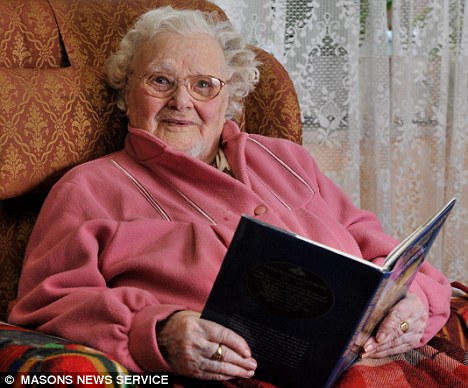
Florence Green - WWI's Grandmother

World War I now belongs only to history.

The last surviving veteran of what H.G. Wells foretold would be “the war to end wars” (and was later modified by Woodrow Wilson as the more famous quote “the war to end war”), has passed away.

Florence Green joined the RAF as a mess steward at 18, just two months before the guns fell silent on November 11, 1918.  She could have had little notion that amid some of the most frantic fighting of the war, as the Allies pounded the Château-Thierry salient in the Battle of Amiens, undoing the summer gains of the German Army’s last ditch attempt to force a conclusion to the Western Front, that the war would be shortly over.  Nor could Florence Green have likely envisioned that a conflict that took or injured 35 million lives would spare her until nearly 111 years of age.

The “World War I generation”, if such a term can even be coined, has long since passed as the few surviving modern links to the conflict vanished.  The last combatants, Charles Choules of the British Navy and Frank Buckles of the U.S. Army, died early last year.  The German debt from the Treaty of Versailles was only paid off in September of 2010.  Even the geopolitical and cultural effects of the war have significantly faded, as Germany and France battle not for European supremacy but jointly to keep the rest of Europe’s crippling debt from dominating them.

With nothing seemingly remain to tie the past to the present, how will World War I truly be remembered now that it’s final judgement is in the hands of history?  Will it be seen as the touchstone for the creation of the modern world, ending the age of European empire?  Or will Florence Green, Frank Buckles and others become future Yves Prigents, the last survivor of the Crimean War – trivia notes for wars of senseless and forgotten ages.

Florence Green’s passing changes nothing about our view of World War I – right now.  The “Great War” was seen as incomplete in its own era, and increasingly became a bloody footnote to the conflict that resolved the question of whether Europe (and thus the world) would be dominated by Anglo-Franco democratic sensibilities or Prussian authoritarianism.  Such thoughts today seem as foreign as an Austro-Hungarian Empire, or that an assassination of an Archduke nearly 98 1/2 years ago in Sarajevo could spark a global war.  Heck, plenty of people don’t even remember the conflict in Bosnia & Herzegovina in the 1990s.

The task of preserving the significance of World War I, indeed any war, falls not on the Florence Greens of the world nor historians.  It falls a little on everyone to remember such sacrifices and remind the next generation why they mattered.

The Primary Route

Monday, January 23rd, 2012

If there’s been one constant in this ever-changing Republican presidential primary season, it’s that every candidate has looked like Icarus at one point or another, melting under the heat of media and voter scrutiny.

We remain roughly a month-and-a-half away from Super Tuesday, the date where traditionally the primaries have been resolved – if not in literally allocating enough delegates to produce a winner, than at least enough to leave the outcome less than in doubt.  9 states vote until then, and while the race will probably shift numerous times over the course of these upcoming dates, let’s take a look at where things stand now:

  • Jan 31st – Florida (primary):  Despite Gingrich’s roundhouse kick to the meme of Romney’s inevitability, and a new poll showing him surging into the lead in Florida, Newt may have already lost the state.  Why?  A supposed third of likely Florida Republican primary voters have already cast their absentee ballots in a state where Romney continues to lead by an RCP average of 18.5% (and he’s been beating the absentee war drum for months).  Considering Romney turned a 10% lead into a 12% defeat within about four days, suggesting another Lazarus comeback for Gingrich isn’t out of the question, but requires Newt to significantly win the remaining pool of likely voters – and drive turnout up.  Perhaps biggest factor influencing decisions about Florida – the fact that the state’s delegates are winner-take-all.  Even a Iowaesque margin means one candidate takes home 50 delegates (cut nearly in half by the RNC due to Florida crashing the primary schedule) and everyone else gets squat.  Some of the field might be better served getting ready for the rest of the Republican primary schedule which includes…
  • Feb 4 – Nevada (caucus):  There’s a presumption that Nevada is prime Romney territory due to his 2008 victory, fueled by the state’s nearly 8% Mormon population (they comprised 25% of the caucus turnout in 2008).  And certainly in what little polling has been done (no new poll in a month), Romney has maintained a lead throughout, even at the height of Newtmania in December.  But the circumstances that lead Romney to win a number of caucus states four years ago have certainly changed.  With his role having been transformed from conservative outsider to moderate establishment, Romney now finds himself on the other side of the anti-establishment movement that he benefited from in 2008.  Nevada’s population might still help him win the state, but a caucus-filled February could hit Romney hard.
  • Feb 7 – Colorado (caucus), Minnesota (caucus), Missouri (primary):  Guess what all three states have in common?  None of them are actually allocating delegates on Feb 7th.  But damned if they won’t at least appear to matter as the momentum of the entire primary process might be up for grabs by this date.  Feb 7th might also be Rick Santorum’s last attempt to remain in the contest.  With Gingrich not on the Missouri ballot and caucuses far more fertile ground for a socially conservative message, Santorum needs to win one or two of these states to be seen as viable.  Paul could be making his last stand as anything more than a spolier as well, and likely will do quite well in Minnesota as he did in 2008 when he got nearly 16% of the vote.  While Romney carried both Colorado and Minnesota in 2008 (by large margins), again he was viewed as the conservative alternative.  If Romney only wins Missouri or loses the Show-Me State, talk of his collapse won’t be far behind.
  • Feb 11 – Maine (caucus):  Maine was virtually ignored four years ago by all the candidates (save Paul) and Romney still walked away with a 30-point victory.  Expectations would have Romney winning the state again due to proximity to New Hampshire and Massachusetts, the moderation of the state’s Republicans, and the poor organizing efforts by competing campaigns.  Because of that, probably the only way Maine’s results will have any impact on the race is if Romney loses.  The small media market might be tempting for the rest of the field to try and create an upset on the cheap.
  • Feb 28 – Arizona (primary), Michigan (primary):  17 days between primaries?  What will the 24-hour news channels do with themselves?  Probably forecast a split decision on Feb 28th, with Romney winning his former “home state” of Michigan and Gingrich or Santorum (assuming the latter is still in the race at this point) winning Arizona.  What little polling exists hasn’t been illuminating.  Three polls over the last three months have produced three different leaders.  Romney’s early January lead with 41% was amid his Iowa “win” and expected victory in New Hampshire.  Both states are larger media markets but the long delay between states will mean that aggressive retail campaigning might pay off.
  • March 3 – Washington (caucus):  The last state before Super Tuesday on March 6th could provide a little last-minute momentum for a candidate before 11 states (and 466 delegates) are decided.  2008 isn’t exactly much of a guide here – McCain squeezed out a victory here due to a fractured field with only 12,000 people showing up to vote.  By local comparison, nearly 63,000 Minnesota Republicans voted in on caucus night in 2008.  Turnout like 2008 likely means someone other than Romney wins – and that the result will be ignored by the media.  This could be a state that Ron Paul actually wins.  He performed well four years ago, has a strong organization in Washington and some establishment support (to the extent you can call it that).

Carolina Still On My Mind

Thursday, January 19th, 2012

“Everyone appears to be waiting for a shoe to drop to change the dynamic of the campaign…”  – SITD 24 hours ago.

And since then?  Imelda Marcos’ closet has spilled out all over the GOP primary.  To recap 24 of the busiest hours of the 2012 primary thus far:

  • Newt-onian Physics:  In one day, the Real Clear Politics average of South Carolina polls has shifted from a 10% Romney lead to a rounding error 1.2%.  We haven’t seen volatility like this since the stock market in the fall of 2008.  And the polls have move quickly because the fundamental elements that the entire 2012 Republican race have thus far been based on seem to be shifting as well.  Starting with…
  • Children of the Corn:  Rick Santorum won Iowa.  By 34 votes.  We think.  Iowa’s GOP now admits we’ll never know who won the caucus since too many precinct results are missing.  Iowa Democrats shouldn’t exactly express schadenfreude over the error, since a similar result happened to them in 1988.  While the result (officially called a “tie” by the Iowa GOP) would seemingly boost Santorum, setting the stage for three different winner of the first three primary/caucus states, the practical influence of the outcome has been more to hurt Romney than help Rick Roll into SC.  At once, the narrative of the race thus far has been changed.  Regardless of Saturday’s outcome, Romney no longer can claim to have run the table, denting his greatest asset – the assumption of inevitability.
  • Thrust and Perry:  Today could have been Santorum’s best of the campaign- news outlets might have led with both his belated Iowa victory and his formal endorsement by Focus on the Family founder James Dobson.  Instead, the media is using the Iowa results mostly to discredit Romney and the Hawkeye Cauci while trumpeting Rick Perry’s 11th hour decision to drop out and back Gingrich.  Perry’s blessing doesn’t carry much raw electoral weight – he was polling between 2-4% the last 48 hours of tracking polls – but helps tremendously towards Gingrich’s efforts to rally conservatives behind him as the “anti-Romney.”  And perhaps most importantly for Newt, it robs the headlines from…
  • The Ex-Files:  Marianne Gingrich’s timing was almost perfect – if she wanted to destroy her former husband’s political comeback (and she still might). Taken from a 48-72 hour-old context, her blistering ABC interview might have been the nail in the coffin of the former Speaker’s attempt to win South Carolina and stall Romney’s momentum.  Instead, her comments have disappeared down the news cycle memory hole as the narrative media outlets are going with is yet another amazing political Lazarus impression by Newt.  Will Marianne’s comments come up at the debate tonight?  Possibly.  Will her comments resurface if Gingrich wins SC?  Definitely.  But for now, Team Newt looks to have a few more days to figure out how to response to his ex’s charges that he wanted an “open marriage.”
  • Fringe Fest:  Tonight’s debate is the cherry on this news sundae, prompting questions as to who will be the evening’s target.  Will Gingrich find himself in the crosshairs again or will Romney continued to be hit hard since the week’s earlier debate marked the start of his polling bleed-out?  What’s less debatable is that both Paul and Santorum will find themselves on the edge of the debate, likely literally as cameras prep for a two-shot for a forthcoming two-man race.  Considering neither is going to win SC, whose victory hurts them more – Romney or Gingrich?  The likely answer is actually Gingrich.  If Newt pulls out a comeback in Carolina, the chattering class will begin to apply pressure on the rest of the field to clear the path for the desired mano-a-mano debates.  Since Paul is more in the race to build a movement than a nomination, Santorum needs to stop Newt from winning South Carolina to maintain the mantle as the only “non-Romney” to have won a state.  Meaning don’t be surprised if Santorum comes out guns-a-blazing against the former Speaker.

Carolina On My Mind

Wednesday, January 18th, 2012

It’s starting to become a trend in the 2012 Republican primaries – the vote may be days away, but the outcome (seems) to have already been decided.  Much like SITD did for the Granite State,  let’s take a look at Saturday’s Coming Attractions for the Palmetto State.

  • Romp-ney:  He won’t win by New Hampshire-styled margins, but Mitt Romney isn’t going to win by an Iowaesque 8 votes either.  The Real Clear Politics average shows Romney with a healthy 10% lead and the only candidate in the field trending up (Gingrich, Santorum & Paul have all flatlined in recent days).  Nor does there seem to be much of a battle for second place.  Gingrich has held steady around the low 20s and will more than likely hold off Paul who despite polling in the mid teens, admittedly has less organization in SC than in Iowa or New Hampshire.  Everyone appears to be waiting for a shoe to drop to change the dynamic of the campaign…and two events this week have perhaps the last best chance of doing it…
  • He Turned Her Into a Newt!:  Sarah Palin’s quasi-endorsement of Gingrich’s SC upset bid was the best news the former Speaker has had in weeks.  But despite the South Carolina-qualified nature of her “endorsement”, Palin’s comments might have a better influence on Gingrich’s candidacy down the road as he attempts to coalesce conservatives and define himself as the race’s sole “anti-Romney.”  With Santorum’s numbers stalling in SC (and elsewhere), a reasonably close second place finish for Gingrich might not entirely clear the field but could likely change the narrative from conservatives needing to rally around Rick (even if we now know he actually finished ahead of Newt in NH).  Good thing for Gingrich that Santorum didn’t have his own major endorse…oh wait…
  • Divine Intervention:  While Gingrich has been attempting to rally conservatives to his cause, Santorum was making headway in rallying social conservative support with the endorsement of 114 evangelical leaders in a lopsided vote.  Even better for Santorum, Focus on the Family leader James Dobson ignited controversy over Newt’s social values with his comment that Callista Gingrich had been Newt’s “mistress” for eight years.  Unfortunately, Rick may need an Act of God to finish higher than fourth in SC, have squandered his Iowa showing by trying to win, place or show in New Hampshire.  Like Gingrich, Santorum’s 11th hour endorsement might play better post SC, but unlike Gingrich, Santorum doesn’t look likely to have much momentum after Saturday.
  • Little Mr. Sunshine State:  Will South Carolina’s outcome even matter if Romney wins as expected?  Romney leads in Florida, the next state in the primary calendar, by 26%.  That number isn’t likely to get worse in light of a South Carolina win, meaning Romney might enter Feb not only undefeated but by winning by margins that would make him the nominee if the system was designed by the BCS.
  • Perry-kiri:  Ah, the obligatory Rick Perry comment.  Despite having performed political seppuku on his candidacy months ago (and confirmed by his 10%, $4 million Iowa showing), Perry has soldiered on.  There are three reasons for Perry’s decline: high expectations, poor debate/stump speech performance and….oh crap…uh….uh…the EPA?  Perry’s running third in Texas polling now, which should pretty much say everything that’s left to say about the one-time GOP front-runner.
  • Raising Cain:  Well, he promised an endorsement by January 19th.  And he delivered…kinda.  Herman Cain is endorsing his own bid on the South Carolina ballot, aided by “comedian” Stephen Colbert’s Super PAC.  Cain will be on Colbert’s conservative-bash-a-thon TV show and Colbert will supposedly “rally” for Cain, trying to drive independents and Democrats to the polls.  Cain says critics of the move should “lighten up.”  Cain’s political influence certainly has.

Taken for Granite

Tuesday, January 10th, 2012

The patient may be still wiggling on the table, but it’s never too early for a “pre-mortem” on the GOP New Hampshire primary.  [UPDATED BELOW]

  • Margin Call:  With even the Suffolk daily tracking poll showing Romney’s numbers rebounding despite a week of attacks, the question isn’t whether Romney will win but by how much.  Perhaps the only margin worth watching is to see where Gov. Jon Huntsman finishes.  Short of a close second, it’s hard to see how Huntsman justifies going forward unless he believes Florida can be his bulwark.
  • Rick-Rolled:  Rick Santorum is desperately trying to become 2012’s Mike Huckabee, right down to repeating the 2008 candidates’ mistakes.  Following his Iowa victory four years ago, Huckabee chose to contest New Hampshire and Michigan instead of turning to South Carolina and arguably friendly political territory.  Huckabee seemed temporarily vindicated by rising up from single digits to finish in third, winning a handful of delegates and lingering momentum.  Instead, the time and treasure spent elsewhere helped cost him South Carolina and the mantle as the sole “anti-McCain.”  Santorum might finish fourth or fifth tonight – and probably would have even if he hadn’t campaigned in the Granite State for the past week.
  • Bain & Conservatism’s Dark Night: No, we’re not talking about the next Batman film, but some of the comments from the field this week over Romney and his history with Bain Capital do seem Two-Faced.  Romney’s “I love being able to fire people” is likely to end up in a general election ad should he win the nomination, but did the rest of the GOP field need to beat the Democrats to the punch?  Romney’s comment certainly shows a tin-ear, even if he clarified his stance within the next few sentences.  Yet nearly every Republican candidate has decided not only to take a swing at Romney on the issue but poke capitalism as well.  A pro-Gingrich Super PAC is planning a $3 million-plus ad campaign in South Carolina lambasting Romney’s Bain record as well.  As NRO’s Jim Geraghty muses, “the demonization of the free market is complete.”
  • “Anti” Gravity:  While the battle to become the “anti-Romney” seemed more like a poor man’s episode of “Survivor” earlier in the campaign as candidate after candidate was eliminated from the race, the remaining Anybody But Romneys now look to be in an electoral game of chicken.  Paul, Gingrich, Santorum, Perry and Huntsman have all taken their measure of the field and (fairly correctly) determined that none of the remaining candidates have the organization, financing, or momentum to displace the front-runner.  But the hour for someone to coalesce the anti-Romney vote is growing late and despite all the talk of the gravity of nominating Romney, none of the pretenders has yet signaled a willingness to move their support to another.  Thus the rest of the field waits for someone else to drop out in increasingly vain hopes that the last man standing can inherit the cumulative frustrations of the base.
  • Days & Weaks Ahead:  Playing upon the last note, it’s hard to see where the anti-Romney forces can possibly stage a comeback given the upcoming primary calendar.  Romney holds solid polling leads in South Carolina and Florida and looks likely to enter February having won every caucus/primary.  But Feb 7th could be the date that sees Romney lose – twice.  Colorado and Minnesota hold their caucuses that night and if the field has narrowed down to one or two major competitors, the evening could contain the first electoral chink in Romney’s armor.  The only problem with that theory?  Neither state is actually pledging delegates to the convention – both votes are beauty contests and will likely be spun as such by Romney should he lose.
UPDATE:  If you prefer your summaries brief, NRO’s John Hood says it best with tonight’s result showcasing “the limits of election-night spin.”
Is a Romney nomination a foregone conclusion?  No, but let’s just say the fat lady is clearing her throat.  Romney not only became the first Republican since Gerald Ford to win both Iowa and New Hampshire in a contested primary (and the first non-incumbent), but none of his opponents blinked at finishing far behind him.  With a mixture of rumors and facts surrounding various candidate Super PACs and campaigns promising to spend the house to block Romney, expect South Carolina to be a primary Verdun – a financial meat-grinder intended to at last lessen the field.
Perhaps the biggest loser of the evening?  Rick Santorum, who now looks to not even get 10% – the minimal threshold necessary to earn a delegate.  Meanwhile Perry is blasting the South Carolina airwaves with hundreds of thousands of dollars worth of “values” themed TV ads while trying to do retail politics at a Run Lola Run pace.

To Be Frank

Tuesday, November 29th, 2011
Frannie, Freddie, I got an offer ‘ya can’t refuse, see…

Barney Frank decides his 2012 re-election is another entity that’s too big to fail. 

 The coverage of a politician’s announcement of their retirement, not unlike the coverage of their eventual passing, usually reads as an enduring time-capsule.  From their fame to their foibles, a few key sentences will forever define a politician who has left the political limelight. 

Retiring 16-term liberal Massachusetts Democrat Barney Frank had plenty of fame (fierce conservative critic; first openly gay member of Congress) and foibles (a prostitution scandal that nearly ended his career), all of which were extensively covered by the press as he announced that due in part to redistricting, he was choosing to forgo another run.  Yet to read or listen to the mainstream press’ coverage of Frank’s farewell tour, nary a word was spoken or written about what should be Frank’s infamous, enduring legacy:

 ‘These two entities — Fannie Mae and Freddie Mac — are not facing any kind of financial crisis,” said Representative Barney Frank of Massachusetts, the ranking Democrat on the Financial Services Committee. ”The more people exaggerate these problems, the more pressure there is on these companies, the less we will see in terms of affordable housing.”


 While the media’s hagiography of Frank dominated the afternoon news cycle (CNN called Frank “a teacher” of Congress), others noted that “Fannie, Freddie Lose A Friend In Frank” as Investors Business Daily‘s headline remarked. 

His role as the chairman of the House Financial Services Committee during the Great Recession would have defined Frank’s legacy had he been a Republican.  Frank’s determined ability to ignore the housing bubble until it was too late to save Fannie or Freddie or avert the financial crisis played a not-insignificant role. And when Fannie and Freddie finally failed, together they accounted for nearly 12 million subprime and other low quality and risky loans (40% of outstanding loans at the time).  Most of the loans existed to meet the affordable housing goals that Frank, and others, argued so passionately to protect at a projected cost to taxpayers of $400 billion.  But despite being among those in Washington “at the wheel”, outside of a few more conservative publications, Frank has largely escaped the Joseph Hazelwood-esque blame of running the American economy ashore.

Frank’s defenders can rightly point out that he did not become chairman of the HFSC until after the 2006 elections; implying that the Fannie & Freddie reign of error happened solely due to the previous Republican majority.  Such a defense gets the dates and times correct, but little else.  The expansion of housing lending authority had roots in the 1990s, not the 2000s and had Frank worked with Republican efforts to constrain Fannie & Freddie, instead of insisting that there were no problems, legislation might have been adopted in the early 2000s that could have lessen (not prevented, as some may argue) the financial crisis.

Frank tried to undo his part in the Fannie & Freddie story, telling Larry Kudlow in a 2010 interview that “it was a great mistake to push lower-income people into housing they couldn’t afford and couldn’t really handle once they had it” while expressing hopes that Fannie & Freddie would soon occupy the dust-bin of poorly constructed governmental program history.  Of course, Frank’s preferred methods of “reform” could easily add another $5 trillion of debt to the country’s maxed-out gold card of credit.

Killed

Tuesday, October 25th, 2011

Whew, image what they'd have paid me if I won at USC

The Gophers mortgage what’s left of their long-since tarnished Golden status.

If you’re possibly the worst team in 1-AA college football and your newly installed head coach (who has a limited history at coaching at this level) has won one game while being humiliated in several others, what would you do when finalizing a contract?  Probably not add two years and an extremely expensive buyout clause:

The University of Minnesota formalized the hiring of Jerry Kill as its football coach, announcing Tuesday that the two have agreed on a seven-year contract that pays $1.2 million a year in base salary and compensation for media appearances and endorsements…

There are also numerous performance-based incentives including winning the Big Ten ($150,000) [that’s just cruel to include – Ed], reaching five conference victories ($50,000) and additional bonuses of $25,000 for the sixth and subsequent victories in a season [not a problem for the foreseeable future – Ed].

As Kill’s biggest critic points out, beyond the obvious idiocy of extending a contract from 5 years to 7 despite the program seemingly going backwards, the cost of ending Jerry’s contract virtually assures Kill will be the Gophers’ head coach well into this decade no matter how bad the team performs:

My first reaction upon hearing this was to assume that the additional 2 years were an exchange for a more favorable buyout structure, but according to the Star Tribune the University is on the hook for $600K/year for any years they buyout.  Odds are the University wouldn’t seriously consider Kill’s dismissal until at least the end of his third year meaning the cheapest buyout available to them will be a $2.4M buyout.  That’s one expensive fumigation.

The University’s policy seems to be to create expensive buyouts.  Tim Brewster’s buyout cost the U $775,000.  That was chicken feed by comparison to the Glen Mason buyout that cost $3.6 million – and likely forced the U’s hand in hiring the cheapest coach they could find at the time.

All this would be understandable if Kill had a major conference resume.  Instead, a coach who compiled a middling record in the Gateway Football Conference and the MAC has become the 51st highest paid coach in the NCAA.  Not impressive sounding?  It’s the same amount of money that Paterno earns at Penn State.  It’s more than Rick Neuheisel takes at UCLA.  And it’s considerably more than Danny Hope at Purdue pockets, and Purdue just thumped Minnesota 45-17 weeks ago.

One day, the Golden Gophers will hire an accomplished head coach.  Unfortunately with this contract, that day doesn’t look to arrive until 2018 at the earliest.

The World Tax is Flat

Tuesday, October 25th, 2011

Ask yourself, tax code, do you feel lucky? Do ya, punk?

 Rick Perry stabs the tax system in the heart.  But under the plan, is it dead or simply pining for the fjords?

Steve Forbes must feel like he’s stepped into a time machine.

The 1996 & 2000 GOP presidential candidate briefly electrified the denizens of political wonkdom with his conception of a national flat tax to simplify – and eliminate – the current overcomplicated tax code over 15 years ago.  Forbes’ idea of broadening the tax base while reducing the individual tax burden proved a temporary hit – too much of one as most of his 1996 rivals embraced similar policies.  Unfortunately for flat tax advocates, the only candidate who didn’t rush towards the concept was nominee Bob Dole, and since then the tax as languished as more theory than practice despite its success in many former Soviet bloc countries.

That is until now, as Texas Governor Rick Perry has revived the concept, winning Forbes’ praise and liberal scorn.  The headlines have screamed about Perry’s new tax rate of 20%, but in most reports, the lead has been buried:

“The plan starts with giving Americans a choice between a new, flat tax rate of 20 percent or their current income tax rate,” Perry writes. “The new flat tax preserves mortgage interest, charitable and state and local tax exemptions for families earning less than $500,000 annually, and it increases the standard deduction to $12,500 for individuals and dependents.”


The plan also drops the corporate tax rate to 20 percent and will temporarily lower the rate to 5.25 percent to promote companies working overseas to move to the U.S. along with implementing a “territorial tax system,” which will  tax in-country income.


The plan will eliminate the death tax and end taxes on Social Security, which would help an estimated 17 million Americans receiving benefits today. It would also cut taxes on qualified dividends and long-term capital gains.

The drop in corporate tax rate would put the U.S. as the lowest in the world (among major competitors; there are a number of nations with no corporate taxes).  And with most foreign economies unable or unwilling to respond in-kind with similar corporate tax rate cuts, the U.S. could be looking at an immediate repatriation of up to $1.4 trillion with the addition of a “territorial tax.”  Does that mean an immediate increase in jobs?  Not exactly, but a similar “repatriation holiday” for overseas corporations in 2004 spurred massive investments in capital and employment.

Lost in the corporate tax discussion has been Perry’s proposal to cap federal spending to 18% of GDP, or what would be roughly $2.54 trillion.  That’s under the projected 2012 revenues of $2.627 trillion and significantly under the Obama adminstration’s desired $3.729 trillion of spending.  Perry is obviously expecting that projected $1.4 trillion to soften the blow as increased income would (hopefully) spur GDP growth, raising Perry’s 18% beyond projected 2012 revenue levels.

The chief compliants from the right, much like with Herman Cain’s “999” plan, are that Perry’s flat tax doesn’t go far enough.  Indeed, both leading economic fixes from the GOP field disembowel the current tax system but keep it wrapped together in some fiscal Eraserhead policy nightmare.  Both Cain and Perry’s proposals have foreign models to work from – Cain’s VATesque vision which has hindered Europe; Perry’s opt-out Hong Kong-like system which has worked well despite the complication of individuals being potentially able to switch back-and-forth from flat tax to the current system year to year.

Ultimately, Perry’s flat tax needs to be seen as the beginning of a new policy discussion, rather than as a destination.  A total overhaul of the tax code, while popular in spirit, likely polls poorly when the roughly 47% of Americans who don’t pay federal taxes figure out they might be forced to actually contribute to the system.  As proposed, few Americans will find themselves benefiting from the policy, but I think critics are thinking too short term and too little on the potential corporate effects of the plan.

Neuropathological

Tuesday, April 12th, 2011

Politics may not be rocket science, but apparently it is brain surgery.

Understanding the genesis of political orientation has long been a subject of biological interest, with every few years a new study suggesting our ideological differences aren’t skin-deep, they’re sub-atomic. 

Add to the list the findings of the University College London, which takes the theory of different liberal and conservative genes to another level.  Liberals and conservatives have always thought the other had their brains wired differently and, according to the University, physically speaking they’re right.

But the University’s study is also a case example in the sideshow of the politicization of science – namely, “proving” that conservatives are mentally (or genetically) deficient:

Using data from MRI scans, researchers at the University College London found that self-described liberals have a larger anterior cingulate cortex–a gray matter of the brain associated with understanding complexity. Meanwhile, self-described conservatives are more likely to have a larger amygdala, an almond-shaped area that is associated with fear and anxiety.

Using every inch of my larger amygdala, it’s hard not to notice how many of these studies inevitably lead to a conclusion that liberal physiological differences are viewed as genetically preferable – if not superior.  A similar outlook could be found just this last year with the ballyhooed discovery of a so-called “liberal gene”:

As a consequence, people with this genetic predisposition who have a greater-than-average number of friends would be exposed to a wider variety of social norms and lifestyles, which might make them more liberal than average. They reported that “it is the crucial interaction of two factors — the genetic predisposition and the environmental condition of having many friends in adolescence — that is associated with being more liberal.”

Outgoing, popular kids equals well-balanced, politically liberal adults?  Conservatives are creepy, adolescent shut-ins?  Curse my shriveled anterior cingulate cortex for reading anything into that study.

Of course, not all scientists are inferring that our political and genetic differences are so stark as to invite a Cro-Magnon/Neanderthal comparison.  In fact, some recongize the potential for political bias in such a report and actively work to tap down any broad-based partisan conclusions…including the actual authors of the study:

While the London study does find distinct differences between Democrats and Republicans, its authors caution that more research needs to be done on the subject. One unknown is whether people are simply born with their political beliefs or if our brains adjust to life experiences–which is a possibility, Kanai writes.

“It’s very unlikely that actual political orientation is directly encoded in these brain regions,” he said in a statement accompanying the study. “More work is needed to determine how these brain structures mediate the formation of political attitude.”

Talk about burying the lead.  And I thought we were just told that larger anterior cingulate cortexs led to understanding complex subjects better. 

Truthfully, we want our differences to be genetic for they absolve us of needing to convince others.  And seeking to find that absolution – that genesis of political thought – in the genius of others brings to mind the words of the discoverer of the double helix, J.D. Watson

One could not be a successful scientist without realizing that, in contrast to the popular conception supported by newspapers and mothers of scientists, a goodly number of scientists are not only narrow-minded and dull, but also just stupid.”

Trumped Up

Tuesday, April 12th, 2011

The Donald leads the field.  I blame women and independents.

Are his 15 minutes of this election cycle up yet? 

It may only be a poll of 385 Republicans nation-wide, but carrying the increasingly limited gravatis of CNN as the poll’s sponsor, few news outlets will miss the opportunity to write the following headline: “Trump GOP’s frontrunner.”

CNN/Opinion Research 2012 Republican Nomination Survey

  • Donald Trump 19% [10%]
  • Mike Huckabee 19% [19%] {21%} (21%) [14%] {24%} (17%)
  • Sarah Palin 12% [12%] {19%} (14%) [18%] {15%} (18%)
  • Newt Gingrich 11% [14%] {10%} (12%) [15%] {14%} (8%)
  • Mitt Romney 11% [18%] {18%} (20%) [21%] {20%} (22%)
  • Ron Paul 7% [8%] {7%} (7%) [10%] {8%} (8%)
  • Michele Bachmann 5%
  • Mitch Daniels 3% [3%] {3%}
  • Tim Pawlenty 2% [3%] {3%} (3%) [3%] {2%} (5%)
  • Rick Santorum 2% [3%] {1%} (2%) [2%] {3%} (5%)
  • Haley Barbour 0% [1%] {3%} (3%) [3%] {1%} (1%)
  • Someone else (vol.) 3% [4%] {5%} (7%) [6%] {5%} (8%)
  • None/No one (vol.) 4% [3%] {4%} (4%) [0%] {5%} (2%)

Trump may be nothing more in the current field than a name ID with an awful comb-over, but the Trump Brand apparently has some political value – especially with Republican-leaning independents and women.  Trump is the first choice of both demographics in the poll, with 24% and 23% respectively. 

The poll may well represent the zenith of Trump’s 2012 candidacy.  On the same day that Trump may capture headlines with his likely dubious polling “lead”, the real estate mogul of New York City politically shot himself in the foot – twice.  First, by publicly claiming that he’d run as an independent if the GOP didn’t nominate him and secondly, by writing scathing notes to a Vanity Fair blogger over a profile.

2011_04_donjtrump.jpg

Harry Truman once wrote an angry letter that caught the public’s eye.  Of course Truman, writing to Washington Post music critic Paul Hume, was defending his daughter against what he believed to be an unfair assault.  Truman’s critique was equal parts Oscar Wilde and Rocky Marciano in it’s prose.  And to channel Lloyd Bentsen: Mr. Trump, you’re no Harry Truman.

Donald’s “Trumpisms” have only continued in recent interviews.  In addition to his “birtherism” fetish, he’s “only interested in Libya if we take the oil,” “I would not leave Iraq and let Iran take over the oil,” and “I would tell China that you’re either going to shape up, or I’m going to tax you at 25% for all the products you send into this country.”

Trump has said he’ll wait until June to make a decision – or perhaps until “The Apprentice” gets off the TV renewal bubble and signed for another season on NBC.

Trump Card

Sunday, April 10th, 2011

P.T. Barnum runs for president. 

He’s vowed that he’s taking a presidential bid seriously.   He’s sent aides on “exploratory trips” for his nascent campaign.  He’s pledged millions of dollars towards his candidacy.  And what’s more, he’s taken seriously – by the media, the punditry, and the polls. 

Of course, all of that was in 2000.

When it comes to the media’s political fascination with eccentric billionaire millionaire massive debt holder Donald Trump, few could argue that the Donald is the rightful heir to 19th century showman P.T. Barnum.  For Trump’s multiple aborted presidential candidacies, ranging from 1988, to 2000, and now, prove Barnum’s misattributed cultural epitaph that indeed a sucker is born every minute.

Like Charlie Brown convincing himself that this time Lucy will not pull away the football, much of the media has engaged Trump’s third would-be presidential bid with increasing seriousness.  And why not?  Trump polls surprisingly well against the expected Republican field, placing fourth with 11% just days ago in a Fox News national poll.  Even Trump seems to be taking his latest political dalliance seriously enough to risk his most important attribute – his brand – by claiming to seek the nomination of one of the two major parties rather than another circa 2000 independent bid.

What remains harder to fathom is Trump’s appeal in the first place.  For a man known for his super ego, getting to the id of Donald Trump is vexing for many in the punditry.  Some view Trump as a symptom of the weak Republican field.  George Will likewise dismissed Trump as part of the gaggle of “spotlight-chasing candidates of 2012.”  Charles Krauthammer looked pained to even have to discuss Trump’s candidacy.  Others view Trump as the closing argument in their case of the failure of the political class:

Trump is suddenly “winning” as a political figure because the political class has failed. The authority of our political institutions is weak and getting weaker; it’s not that Americans ‘lack trust’ in them, as blue ribbon pundits and sociologists often lament, so much as they lack respect for the people inside them.

There is a lot of crazy surrounding the Trump phenomenon — some excellent, some embarrassing. But the massive fact dominating it all is that never before has such a famous outsider jumped into national politics with such an aggressive critique of a sitting president and the direction of the country — and never before has the response been so immediate and positive.

Um, not quite.

The novelty of Trump 2012 isn’t that novel.  The celebrity politician is nothing new – nor is Trump’s anti-Obama bravado.  Trump’s “aggressive critique” has largely been an ad hoc foreign policy mixing neo-conservative bluster and paleo-conservative isolationism with a chaser of paranoia that Obama is the country’s first super secret Nigerian sleeper agent.  Perhaps the only true novelty of Trump’s “candidacy” is that he would link his image to “birtherism.”  Or maybe Trump is merely projecting and he’s the sleeper agent sent to undermine the GOP.  After all, he did call Nancy Pelosi “the best.”

Understanding how an arrogant, over-the-top self-promoter has risen in the polling ranks of the GOP field doesn’t require searching for some sort of meta answer.  After a number of political cycles in which the presidential race started incredible early, for once the field is not settled nor is any candidate dashing out of the gates.  Trump represents a known name whose actively in the news – for better or for worse.  Few other contenders or pretenders can claim the same. 

The Donald wouldn’t mind being president but would rather use his candidacy as a perpetual trump card whenever his media image needs a boost.  Once the more serious candidates get underway and the early measures of success – fundraising, debate performances, endorsements and volunteers – become the most important yard markers, attention towards Trump will shrink.  With fewer and fewer onlookers to his latest political act, in Barnum like fashion, Trump will fold his tent and move on to his next show.

Steele Curtains

Monday, January 17th, 2011

The RNC bids adieu to its chairman. 

It was only two years ago in the wake of a confidence shattering election that establishment Republicans gambled on redesigning the party’s infrastructure on a foundation of Steele.   As Maryland’s former lieutenant governor and losing ’06 Senate candidate, Michael Steele had few direct qualifications for what was largely a managerial role, save a brief term as the Maryland GOP’s chair.  Instead, Steele (and the RNC members who supported his election in 2009) seemingly envisioned the chairmanship as the role of Promoter-in-Chief.  And after two gaffe-filled years of Steele tickling his tonseils with his heels while racking up Obamaesque debts, the RNC not only parted ways with Steele but likely also with the mindset that elected him.

The laymen’s criticism of Steele’s tenure would be to endorse what the Baltimore Sun wrote of him in 2002, that Steele “brings little to the team but the color of skin.”  And Steele most certainly was an affirmative action hire – but more for his policies than pigmentation. 

With the GOP routed by a supposedly moderate sounding African-American orator, the party was willing to promote a poorly Xeroxed copy of the same qualities.  The mere prospect of improved outreached to independents, young voters and minorities was enough for some to stomach Steele’s more centrist than center-right orthodoxy. 

So what if Steele was pro-choice, was against the war in Afghanistan, insulted the party’s conservative base, and played the race card against his own party when it suited him – he was going to give the Grand Old Party a “hip-hop” makeover.  Steele was so out of sync with the times, he was one giant clock around his neck away from becoming the Republican Flavor Flav.

All might have been forgiven had Steele simply done his job.  But while the zeitgeist of the conservative base was moving away trusting the party appartatus, Steele was trying to buy private jets as the RNC was enduring questions about expenses at bondage-themed nightclubs.  The result?  Fundraising lagged as the RGA became the defacto home of the Republican establishment despite the fact that Steele’s face was on TV more than the RGA’s Gov. Haley Barbour.

In such a light, there’s little wonder the RNC elected Reince PriusReece PriebusReese Pieces.  What’s-his-name or to the voting members, Not Michael Steele.  Priebus saw a tremendous political turnaround in Wisconsin, in part due to the party’s ability to win back the trust of Tea Party sympathizers without alienating independents. 

The task before Priebus is certainly much larger than what he faced in Wisconsin, but unlike Steele will hopefully succeed or fail outside the media limelight.

To Air Is Human

Thursday, January 6th, 2011

Perhaps it’s the circle of radio life.  The First Team of the Northern Alliance gets shown the door

and Mark Dayton takes to the air:

Gov. Mark Dayton plans to do a governor’s radio show soon.

“I wish I could be on the air somewhere tomorrow,” Dayton said. “I can’t wait to get on the air. It is just a question of where and going through the proper procedure.

Dayton having a weekly radio show follows a tradition of past governors. Both Govs. Jesse Ventura and Tim Pawlenty had Friday morning shows on WCCO that were required, and sometimes interesting, listening for political geeks.

So gubernatorial radio will go from vain, to vapid, to…uh, is there a synonym for odd that starts with ‘v’?

Ventura and Pawlenty’s shows had their moments, but “fireside chats” they were not.  Ventura used the forum as a ricktey soapbox from which to deliver a folding chair to his opponents while Pawlenty’s often politics-lite interviews were professional but dryer than a Martini in the Sahara.  Unless Dayton wants to reminisce on his Haight-Ashburyesque days, 60 minutes of dead air might be more entertaining.

MITCH ADDS:  While First Ringer would have no reason to know this, I’ll add that the First Team wasn’t “shown the door”.  There were some revenue-driven schedule changes; management and John and Brian couldn’t agree on a change to the First Team’s schedule that worked for everyone.   There were no aspersions cast on either side; the logistics and timing for both the station and John and Brian couldn’t be made to match up.

It stinks; I was one of the First Team’s biggest fans.  But them’s the breaks in Freebie Radio.

Bachmann Turner Overdrive

Thursday, January 6th, 2011

Think you’ve seen the Best of BTO (So Far) when it comes to the media’s obsession with Michele Bachmann (and vice versa)?  You ain’t seen nothing yet.

Let’s not bury the lede – she isn’t going to run

In politics, the rumored presidential campaign for many office holders is a cry for attention about one step removed from binging on aspirin.  For near total unknowns like former Godfather’s CEO Herman Cain or heyday politicos like Rick Santorum, the seeking of the White House is game of trival pursuit.  Lacking resources and with few political options, candidates like these have nothing to lose and everything to gain with a quixotic bid that likely ends in the hometown of Iowa State sometime in early August

Bachmann doesn’t lack for attention nor resources, as her $13.4 million campaign haul demonstrated.  But she may lack options.  Hemmed in by Minnesota’ s statewide left tilt, likely ruling out any statewide bid, immediate or otherwise, and having lost out as Chair of the House Republican Conference to Rep. Jeb Hensarling (R-TX), Bachmann’s present trajectory would be to become the best known backbencher in the history of Congress.

A bid for the presidency likely wouldn’t change that – but a possible bid for president might.

Actually running for president involves far too many “make or break” moments for any candidate, let alone a three-term congresswoman who, despite her numerous media forays over the years, isn’t exactly a household name to the average Iowan or New Hampshirite.  An exploratory committee or even merely a rumored campaign allows Bachmann the best of both worlds.  She can raise copious sums for her Michele PAC, get mentioned in every discussion of the 2012 Republican Primary, dismiss any poll that shows her doing poorly (she isn’t even a candidate, of course) and conversely celebrate any poll that shows her non-campaign campaign gaining momentum.  It’s the Fred Thompson strategy – which worked as long as he wasn’t formally running.

6 or 7 months of presidential media footsie and Bachmann can raise her national name ID even further, stockpile cash, and thus potentially leverage her pull within the House GOP Caucus.  Bachmann hasn’t exactly been embraced by the new House leadership, and the feelings are probably mutual.  It’s hard to ignore the comments and demands of a media saavy politico.  It’s even harder to do so when that politico is seen as gunning for the nomination.

It’s a somewhat deft political move by Bachmann as the end result harms few politicians not named Tim Pawlenty – who suddenly runs the risk of spending the summer of 2011 being known as that other Minnesotan running for president.

Domed If You Do…

Wednesday, December 22nd, 2010

The NFL lends some heat to the Vikings’ hot potato stadium issue.  Will it matter?

It’s been nearly 12 years since the Minnesota Vikings organization started making serious noise about leaving the Metrodome – albeit under different ownership – but despite a decade-plus of bargaining and begging, the last 10 days have had a greater impact over where the Vikings will play in 2012 and beyond.  In a year of collapses, from the Vikings’ line play to the Dome’s roof, count the past legistative resistance to a new Vikings’ stadium among the fallen.

Incoming Gov. Mark Dayton’s support, wafting between lukewarm and simmering, is certainly more than a few degrees warmer than his predecessor (although Dayton just announced he doesn’t intend to push for his own stadium bill). And already some GOP legislators are attempting to craft a Vikings stadium bill.  On cue, NFL Commissioner Roger Goodell landed in the Twin Cities for Monday’s game, likely putting more pressure on the local politicos than on the local press:

The former public relations intern at the NFL who worked his way up to league CEO had his talking points down pat after meeting with Gov.-elect Mark Dayton, a score of CEOs who belong to the Minnesota Business Partnership, Speaker Kurt Zellars, DFL leaders Tom Bakk and Paul Thissen, and some union leaders.

“We had a series of meetings today … they were all productive,” Goodell said at a news conference. “I think there is a recognition that we need to find a long-term solution for the Vikings here and get a new stadium built…

And it was Dayton, not Goodell, who ratcheted up the potential pace, telling reporters, according to the Star Tribune, “I really believe 2011 is the final opportunity for all of us to put forward a proposal … I think the writing’s on the wall. We need to get it done in this session.”

Short of the Vikings expressing a willingness to wait another year until the outcome of the 2012 legislative session (when presumably the $6.2 billion deficit will have fully addressed and the only major issue will be any bonding bill), the future of the franchise will be decided by the early summer of 2011.  And regardless of what does or doesn’t pass, something new will be with the Vikings – either a new stadium, a new owner, or a new location.

So which will it be?

Since Zygi Wilf bought one last lemon sold by the former used car salesman in Texas, Red McCombs, Wilf has watched his investment experience anemic growth at best.  The Vikings accurately lost value in the past year, down to $774 million (a 7% decline); still a $174 million improvement from Wilf’s purchase in 2005 but poor enough to rank 30th out of the NFL’s 32 teams.  This ranking is amazingly an improvement from 2007 when the Vikings’ ranked dead last in team value.  Coupled with word that Wilf has only been making interest payments on the loan he took out to buy the team, one has to wonder what exactly is Wilf’s personal financial picture.  No one knows the Wilfs’ net worth and given that the family makes their money in commercial real estate, it’s doubtful the Wilfs are doing as well as they once did.

Whether the Wilfs are credit rich and cash poor or not, Zygi’s options are all dictated by what the NFL wants.  And working to Wilf’s advantage, in addition to the Metrodome lease expiring after next season, is the first real progress in building a stadium in Los Angeles in the last 15-plus years.  Los Angeles Stadium, the brainchild of Lakers & Kings part owner Ed Roski, looks set to deliver a 75,000 seat stadium just 20-minutes outside of LA in the City of Industry – and has his eye on Minnesota.

Despite their overwhelming desire to get a team back to LA, the NFL isn’t terribly interested in moving the Vikings out of Minnesota.  Yet the Vikings remain behind in the battle for attendence with the other two most likely franchises heading west – Jacksonville and Buffalo.  Both the Jaguars and Bills play before less than capacity crowds in markets already saturated by multiple NFL teams (the Bucs & Dolphins in Florida and the Giants & Jets in NYC).

The reality is that the Wilfs will be more willing to move than sell – and sans a new stadium the NFL will be more than willing to consider it.  All of which begs an answer to the fundamental question – what are the Vikings worth to Minnesota?:

Economists Aju Fenn and John Crooker tried to answer the question in a study published in July 2009 in the Southern Economic Journal.

The two used “contingent valuation methodology,” which is a nerdy way of saying they surveyed people and used statistical models to turn the answers into an average price Minnesotans place on the Vikings.

The result: The Vikings’ “welfare value” is $702,351,890— $530.65 for each of the roughly 1.32 million households in Minnesota…

It’s tough putting a price on feelings, which is why some economists are skeptical of contingent value studies.

“It’s not that this is capturing nothing, it’s just that it’s not legitimate to interpret people’s answers as if folks were spending their own money,” says Peter Diamond, an MIT economist.

Assessing the Vikings’ “true worth” to Minnesota is microcosm of the stadium debate itself – overly detailed and largely symoblic.  In pure dollars, the stadium appears to be a massive loser.  Even Vikings Public Affiairs VP Lester Bagley only estimates the taxable revenue generated by the Dome at $250 million since it opened in the early 1980s.  At that rate, the Vikings’ proposed new stadium would pay for itself sometime towards the end of this century.  But whether counted in dollars real or imagined, the money to pay for any new stadium simply doesn’t exist.  Forget arguments whether or not Minnesotans are willing to pay for a better cup holder, even if additional revenue is “created”, most legislators are going to be more interested in turning such funds to the bottomless chasm that is the state budget.

Why not simply give the Metrodome to the Vikings?  The team remains the only tenant in a building that will become worthless should the Vikings relocate – unless the Metropolitian Stadium Commission truly believes a line-up of Monster Truck rallies and Prep Bowls can equal the millions generated per Vikes game.  Ownership of the property would give the Wilfs at least some additional revenue and the flexibility to remodel the property – albeit on their dime.  And given that one of the Vikings’ options is to rebuild on the same site, why not skip the expensive middleman and merely refurbish the Dome?

Of course, the Vikings aren’t likely to go for such an alternative.  Which is precisely why you should enjoy the Purple and Gold as much as you can now – because they probably won’t be around after next year.
Sour Grapes of Wrath

Wednesday, December 22nd, 2010

Snarlin’ Arlen leaves the Senate.

If Pennsylvania’s forcibly retired senior Senator was in the holiday spirit, he was cleverly hiding it under a guise worthy of Ebenezer Scrooge.  Biding adieu to a 30-year career in the Senate, Specter produced enough whine for a vineyard as he lashed out at the political opponents who toppled him:

In his final speech on the Senate floor, the outgoing Republican-turned-Democrat sounded off on the tea party, the rise of partisanship in Congress and the “judicial activism” of the Supreme Court.

“Defeating your own is a form of sophisticated cannibalism,” the Pennsylvania senator said of the tea party activists who worked to defeat GOP centrists.

Specter bemoaned the loss of a Senate where both parties seemed to be interested in finding compromise, and he was especially critical of lawmakers who campaigned against their fellow members.

“That conduct was beyond contemplation in the Senate I joined 30 years ago,” Specter said. “Collegiality can obviously not be maintained when negotiating with someone simultaneously out to defeat you, especially within your own party.”

In other words – bah humbug!

Specter’s comparison of the GOP to a Uruguayan rugby team has earned him the standard media designation of ex officio Republican division expert due to his status as, well, an ex officio.  Lost in the shuffle seems to be Specter’s actual defeat at the hands of the party that he left 45 years ago when he began his career as Philadelphia’s District Attorney.   By Specter’s own experience, if Republicans are cannibals, then Democrats are toasting Arlen’s farewell speech with Soylent Green.

But in his final mixing of geritol with vitriol, Specter showed precisely why the electorate’s of both major parties found little use for him.  As a man famous for tying his ideological moorings to helium balloons, Specter’s complaint that senior Republican senators have recently abandoned long-held positions out of fear of losing their seats” rang as hollow as his partisan affiliation.

Some of Specter’s greatest criticism came towards his colleagues who vigorously campaigned against him, apparently violating sacrosanct Senate rules of civility.  Or Scottish law.  Regardless that the leadership in two parties attempted to squeeze him through two different primaries, Specter cast a pale over the lack of Senate comity, stating that such an atmosphere made crafting legislation impossible.

Undoubtbly dying in politics is easy; comity is hard.  But what veterans of the Senate like Specter fail to understand is that most of the comity coming from Washington in recent years is decidedly unamusing to most voters.  From the Patriot Act, to Immigration Reform, TARP and everything in between, almost all the bipartisan solutions have produced bipartisan disgust.  Even the most recent tax compromise has left no one happy and the federal deficit a trillion dollars fatter.  When even Lindsey Graham finds such legislation a  “capitulation”, you know the fetish of compromise has reached its nadir. 

Specter dubbed his final address a “closing argument.”  But in truth, his parting shots were more a case for the prosecution as what Specter really issued was a petty defense of Senate priviledge – and himself.

Kaiser Less Permanente

Wednesday, September 29th, 2010

Or the debt to end all debts.

If November 11th is Armistice Day, then will September 26th now be known as Debenture Bonds Day?

92 years after the WWI officially ended — Germany made her last payment of $94 million in reparations “to private individuals, pension funds and corporations holding debenture bonds as agreed under the Treaty of Versailles.”

If nothing else the move proves peace is temporary while interest payments are forever.

The Write Choice

Thursday, September 9th, 2010

Vanity starts with an ‘M’ in Alaska’s senate contest.

Like a horror movie villain, the candidacy of Sen. Lisa Murkowski keeps returning from the dead.  Despite losing on election night, losing the absentee ballot fracus, and even conceding the GOP primary, Murkowski’s political ego has shown staying power the envy of Jason Voorhees.  Even the failure of Murkowski’s latest attempt to woo Alaska’s Libertarian Party apparently hasn’t dampered her efforts to return to D.C. short of buying her own ticket.  Instead, Murkowski’s newest bid is to prove the pen is mighter than the ballot with a longshot write-in candidacy:

Alaska Sen. Lisa Murkowski is expected to mount an independent campaign for senator after losing her primary, much to the dismay of her Republican colleagues, who won’t back her, according to a senior GOP leadership aide. 

“The entire Republican leadership has endorsed and would continue to support Joe Miller,” a the aide told Fox News on Wednesday…

A National Republican Senatorial Committee official made it clear that more money would be on the way to Miller, and suggested that Murkowski might be going through “the seven stages of grief.” 

“You know, first they concede … then there are the rumors of a write-in candidacy … then you get the acknowledgment that they’re done,” the official said.

If Murkowski does go through with a write-in effort, than she truly is “done”; which may suggest that she’s not Freddy Krueger, she’s Bruce Willis in the “Sixth Sense.”

Murkowski doesn’t appear to be gaining any options as the window for her to make a decision narrows.  The Libertarian option isn’t offically closed as long as endorsee Brian Haase continues to entain the notion of removing himself from the ballot.  But the LP’s executive committee has already voted against nominating Murkowski short of Haase presenting them with a fait accompli with his withdrawal.  And given some of the statements by the LP’s committee, even that scenario might not produce a Libertarian-endorsed Lisa Murkowski.

Only Strom Thurmond has ever won a general election write-in candidacy for the U.S. Senate.  Thurmond’s 1954 candidacy was far stranger than Alaska’s current senate tift.  The death of the Democratic incumbent, the Democrat Party’s decision to not hold a primary election, and former Governor Thurmond’s backing by the major players in the party were the only reasons why the endless South Carolina Senator prevailed.  Considering only one candidate was on the ballot – St. Sen. Edgar A. Brown for you political junkies out there – Thurmond’s candidacy was unique in the extreme.  Nothing approaching it awaits Murkowski on the frozen electoral tundra.

No pollster has yet demonstrated the effect of a Murkowski write-in campaign in Joe Miller and Scott McAdams minor league showdown.  While others polls show Murkowski with a narrow lead over Joe Miller (and Scott McAdams trailing badly), all were done with the assumption that Murkowski would actually be on the ballot.  A Murkowski coalition of moderate Republicans, independents and assorted anti-Palin voters could have propelled her to victory in a three-way race.

But a strategy that relies on such deep candidate committment to write-in her name – regardless of the hundreds of thousands of dollars Murkowski still has available to encourage voters to do so – is bound to attract only the hardest of hardcore Murkowski supporters.  It’s also one of the few strategies that could provide a victory to Democrat Scott McAdams.  While Murkowski’s holdouts certainly won’t be the 50% of the Republican electorate that voted for her on primary day, any votes for her will almost certainly be coming out of Miller’s side.  Couple that with even one poll showing Murkowski pulling low double-digit write-in support and the DNC might change it’s mind about bypassing the 49th State.

Murkowski could still be a viable force in Alaska politics – possibly even challenging first-term Senator Mark Begich in another four years.  But the longer Murkowski openly flirts with continuing a candidacy out of a cocktail of ego and spite, the less likely she’ll successfully seek office again.  Much like Charlie Crist, Murkowski’s unwillingness to suffer a present political setback has endangered (or in Crist’s case, likely ruined) her political past and future.

Fine China

Thursday, September 9th, 2010

Why Congress should be non-plussed about China’s trade surplus.

One of the oldest trade disputes of this very new century has been the seismic imbalance in U.S./Chinese trade relations.  American lawmakers have repeatedly beg/threated/legislated to try and get China to appreciate their currency, believing that the U.S. trade deficit might get reduced if the Chinese took the yuan on a romantic dinner date…or something to that effect.  U.S. legislators have even attempted to essentially fine the Chinese into currency compliance – trying to hike tariffs on Chinese goods as high as 27.5%.

Considering China’s latest trade surplus may exceed $20 billion, Congress may be closer to the mood of reviving Smoot Hawley:

The U.S. House Ways and Means Committee will discuss next week China’s currency policy after Premier Wen Jiabao’s government limited the yuan’s gain to less than 1 percent versus the dollar since a June pledge for greater flexibility. With November elections looming, legislators may push a bill letting companies seek tariffs for compensation for an undervalued yuan…

U.S. lawmakers including Senator Charles Schumer, a New York Democrat, have pressed the Obama administration to demand a speedier appreciation of the yuan. The house committee will discuss whether China has made “material progress” on the issue and what action Congress and the administration may need to take to address the nation’s exchange-rate policy.

While the Adminstration is unlikely to approve any Congressional legislation to gode the Chinese into reassessing their currency – especially after already agreeing to do so this summer – bills threatening a tariff war seems almost certain to be introduced.  Similar measures were taken in 2005 and, like in the summer of 2010, resulted in the Chinese acquising to some American demands for appreciation. 

Legislators might as well rub a lucky rabbit’s foot to ward away the U.S. trade deficit if they believe currency appreciation will significantly impact the situation.  The last time the Chinese appreciated their currency, the U.S. trade deficit…wait for it…grew:

Recent evidence suggests that RMB appreciation will not reduce the U.S. trade deficit and undermines the common political argument for compelling China to revalue. Between July 2005 and July 2008, the RMB appreciated by 21 percent against the dollar-from a value of $.1208 to $.1464.4 During that same period (between the full year 2005 and the full year 2008), the U.S. trade deficit with China increased from $202 to $268 billion.

In addition to the fact that increasing the currency value won’t have any major impact on the U.S. trade deficit, and will only fray trade relations with America’s second largest trading partner (you might be surprised to know Canada is #1), is the reality that China gains nothing by doing so.  With their economy slowing, in part as China encounters the same real estate nightmare the rest of the world has experienced, the Chinese are unlikely to want to also reduce the value of their U.S. debt holdings.  The Chinese are already reducing stimulus efforts and trying to avoid pumping more money into what is potentially becoming the international economy’s next major bubble to burst – China itself.

Miller’s Crossing

Wednesday, September 1st, 2010

Alaska’s GOP Senate nominee starts his quest to ask voters to “look into your heart”.  Senate Democrats may start asking contributors to look into their wallets.

It had all the looks of an epic recount slugfest.  Narrow margin of victory.  A near blood fued between the waring factions.  Lawyers from Washington.  Instead, Alaska’s GOP primary battle royale ended with a whimper, not a bang:

Senator Lisa Murkowski of Alaska conceded late Tuesday in her Republican primary race to Joe Miller, a lawyer from Fairbanks backed by Tea Party activists, Sarah Palin and other conservatives…

Ms. Murkowski’s concession followed the counting of about 16,000 additional ballots on Tuesday, which left Mr. Miller with a lead of about 1,469 votes out of about 103,000 cast. Several thousand more votes were to be counted on Friday but the trend suggested Ms. Murkowski would not gain enough ground to win.

Despite fumbling her re-election bid worse than Joe Pisarcik and entertaining a variety of ways to get onto the November ballot, Lisa Murkowski decided – at least for the moment – not to further risk the odds of a Republican holding her seat come November.  That hasn’t stopped Murkowski from sidestepping an endorsement of her primary bête noire.  And from the looks of yet another early poll, Joe Miller could use the support as Rasmussen has Democrat Scott McAdams within 6%:

Rasmussen Alaska Senatorial Survey

  • Joe Miller (R) 50%
  • Scott McAdams (D) 44%
  • Other 4%
  • Not sure 2%

Favorable / Unfavorable {Net}

  • Scott McAdams 43% / 36% {+7%}
  • Joe Miller 50% / 44% {+6%}

To call McAdams’ post primary fundraising Lazarus-like would imply his financial efforts had once been alive.  But since Murkowski and Miller headed to extra innings, Democrats in the lower 48 states have been slowly funneling McAdams coffers – thus far to the tune of just over $77,000.  Such figures might help in the 173rd “largest” media market in the U.S., but McAdams may be fighting his own internecine battle with state and national Democrats who are hinting at trying to replace him with more established names like former Governor Tony Knowles or former Lt. Gov. Fran Ulmer.

More likely, Alaska will be witnessing two AAA candidates battling in the political majors, egging on by activists from both sides.   Neither party’s senate branch is likely to pour resources into Alaska; the DSCC even moreso if McAdams remains on the ticket as they simply can’t afford to expend resources with so many vulernable incumbents.  But that hasn’t stopped conservative and liberals activists from trying to throw gas on the cooling embers of the primary in an effort to stoke interest and donations.  Consider the race the defacto Tea Party vs The Daily Kos battle of the frozen tundra.

But Joe Miller’s biggest opponent isn’t Scott McAdams but – depending on which numbers you feel matter more – either the 40% of Republicans who say they have an unfavorable opinion about him or the near 50% of Republicans who voted against him.  To that effect, Miller needs to keep Tea Party interest in his campaign brewing lest the coffers run dry, especially as he attempts to bridge the divide between his supporters and Murkowski’s. 

Could Murkowski torpedo the entire endeavor and endorse McAdams?  Sure, but doing so would stain the entire Murowski legacy in Alaska and all but formally ensure that Lisa Murkowski’s political career truly ended on primary night.  Murkowski’s relatively quick concession at least shows enough political acumen to suggest she’s still interested in surviving to fight another day.

Cold Affront

Tuesday, August 31st, 2010

Alaska’s Libertarians freeze the state’s U.S. Senate race.

With the GOP primary between Sen. Lisa Murkowski and Joe Miller headed into overtime, Alaska’s Libertarian Party suddenly found their own Senate prospects switching from irrelevant to relevant.  Between D.C. rumors of Murkowski courting the LP for ballot access and the willingness of the party’s own Senate nominee to step aside should Alaska’s senior senator come up short in the absentee race, Libertarians found themselves needing to make a familar choice between principle and politics.

By that definition, the outcome should never have been in doubt:

On Sunday morning, over coffee and donuts, the ExComm voted unanimously, 5 to 0 to deny the Senator the ballot line. There was no malice intended. ALP Chair Kohlhaas has repeatedly stated that she is a nice lady, and the ALP was flattered by the offer.

While the decision guarantees Lisa Murkowski won’t become a political footnote as the first Libertarian U.S. Senator, it also likely guarantees that short of a near landslide of Murkowski absentee ballots, Joe Miller will be the GOP’s nominee.  Despite the race closing to just over 1,600 votes and talk of tens of thousands of absentee ballots left to be counted, only 5,801 absentee ballots were sent to Republican voters.  Thus Murkowski needs to win those remaining ballots with totals around 60% – a possible but not particularly probable outcome.

Should she lose any recount attempt, Murkowski’s options are few other than simply conceding.  No other party can give her ballot access (other than the Democrats), meaning Murkowski’s last hope to return to Washington lies in a longshot write-in candidacy.  Although polling showed Murkowski competitive in a 3-way race, the hurdles of a successful write-in campaign are taller than Yao Ming on stilts.  Strom Thurmond managed to win a U.S. Senate race as a write-in candidate in 1954, and a handful of others have won U.S. House general or primary elections as write-ins.  But in almost all cases, the victory came because the opposition was either completely unknown and unmotivated to run, or because there simply wasn’t any opposition at all.  Neither could be said to be true in Alaska.

Murkowski’s likely forthcoming disappearance from the race makes Alaska’s senate race – at least for the moment – look mildly competitive.  In a two-way battle, Miller leads Democrat Scott McAdams only 47% to 39%, perhaps partially explaining why Miller’s ill-tempered tweet comparing Murkowski’s possible party switch to prostitution has garnered as much lower 48 media exposure as it has.  Or maybe because it had the media wondering if the analogy made the Libertarians the pimp or the john.

Democrats are obviously looking for GOP-held targets to help mitigate their likely November losses.  But despite the early polling, Alaska isn’t fertile ground for the DNC.  McAdams had raised only $9,000 as of the last reporting deadline, with a grand total of $4,500 on hand.  How much money would Democrats really want to pour into a state that requires more campaign infrastructure than TV ads in order to compete? 

Between McAdams’ nearly nonexistent campaign and Tea Party activists throwing money at Miller, it seems doubtful at the moment that Republicans will be required to spend much capital – monetary or otherwise – to ensure the seat remains safely in the ‘R’ column next January.

Lead Zeppelin

Friday, August 27th, 2010

Grounding the “Hindenburg”.

Contrary to public opinion, the advice of financial advisers doesn’t hinge on voodoo, tea leafs, chicken bones, or ritual sacrifices.  It runs on omens.

The “Hindenburg Omen”, a technical analysis formula developed in 1990s, with roots from the 1970s, has appeared repeatedly in the news this August.  As the name implies, the omen supposedly fortells economic doom – or more specifically  a market crash – and has already been triggered 3 to 4 times this month.  And despite a relatively short history, the Hindenburg Omen has only been wrong 8% of the time (2 out of 25 occasions) in predicting sizeable market decreases.

Or at least that’s how the story goes. 

Part of the Hindenburg’s “success rate” lies in the very defintion of a “sizable market decrease.”  The Omen has a 77% rate of accuracy at predicting at least a 5% more in the market.  Over the last few years, that could be anywhere from a bad couple of weeks to a bad day on the Dow Jones Industrial.  To put it simply, a 5% decline – or rise – doesn’t mean as much as it did when the formula was first introduced.

Another factor that benefits an increase in Hindenburg sightings is the omen’s most publicized necessary condition – that the daily number of NYSE new 52 week highs and new 52 week lows are both greater than or equal to 2.8% of the sum of NYSE issues that advanced or declined.  The 2.8% figure is much easier to reach than the 5% threshold established by the Omen’s predecessor, the High Low Logic Index.  The Index’s creator, Norman Fosback, has told financial reporters as much:

[Fosback’s] reading of the historical data suggests to him that the current new high/new low data are solidly in the “neutral” category. (Because of other indicators entirely, furthermore, Fosback is quite bullish on the stock market right now.)

In addition, there is doubt that the recent new high/new low data even reached this already too-low threshold of 2.5%. That’s because there are so many issues that now trade on the NYSE that are not operating companies.

None of this means investors should kick back and not worry.  Rising gold and treasuries certainly suggest the bull rebound that started in March of 2009 is now truly over, trading away gains while likely keeping the volatility.  Still, far too many investors may be influenced to buy into Jim Crameresque promises of “Hindenburg-proof” equities to try and escape the Hindenberg’s 25% prediction accuracy of a market collapse.

The Ice Curtain

Thursday, August 26th, 2010

Alaska’s cold war heads to a boiling finish.

The 2.4 miles that separate the island of Big Diomede and Little Diomede use to be among the most tension-filled in not only Alaska but the world. With Big Diomede part of Russian territory and Little Diomede part of the United States, the small space between Bering Strait islands was called the “Ice Curtain” and one of the frigid locations of the Cold War.

In the wake of Tuesday’s Senate primary, the Diomede Islands may need a new nickname.

The Murkowski/Palin spat, always tense since Palin’s upset victory over then-Governor Frank Murkowski in the 2006 Republican primary, didn’t seem like it could develop into any more of a blood feud short of Lisa Murkowski planting a Fredoesque kiss on the former VP nominee. But despite holding a nearly $1.6 million cash on hand advantage and a seemingly insurmountable polling lead, Sen. Lisa Murkowski has seen herself driven from the Republican nomination, possibly Washington, and probably the GOP. In the process, what was suppose to be a campaign as desolate in terms of interest as Alaska’s frozen tundra has turned into the punditry’s race du jour.

The Palin proxy for this would-be Alaskan dynastic rematch, Joe Miller, has already won the battle of expectations. The closet any poll got to Tuesday’s actual result was an Anchorage Daily News poll that still put the Tea Party favorite 11 points behind. And Miller could still lose as thousands of absentee ballots are left to be counted, to say nothing of a likely recount – which the NRSC appears already to be planning for as it sends lawyers north for Murkowski.

Despite such advantages of incumbency, the math remains firmly in Miller’s favor:

5801 absentee ballots were mailed out to Alaskans requesting the Republican absentee ballot….

In order to win the Republican Senate primary a candidate must have at least 49,094 votes (50% plus 1).

Joe Miller currently has 47,027 votes. He needs 2067 out of the available 5801 (36%) possible absentee votes to win.

Lisa Murkowski currently has 45359 votes. She needs 3735 out of the available 5801 (64%) possible absentee votes to win.

The math could look much better – if Murkowski ran as a third-party candidate. Even as the NRSC attempts to salvage Murkowski’s primary campaign, Murkowski is at least privately flirting with continuing her re-election effort under another party’s banner. This isn’t exactly a Joe Lieberman scenario. While Lieberman availed himself of Connecticut’s odd ballot access laws to file as an independent merely days after losing the Democrat primary, Murkowski would have to convince another party’s nominee to step aside and be nominated in their place.

The precedent has already been set in Alaskan political history. Former Republican Governor Wally Hickel lost the 1990 primary only to win the general election as the Alaskan Independence Party’s candidate. Unfortunately for Murkowski, the precedent isn’t quite precise for her. Hickel, a Governor in the 1960s and Secretary of the Interior under Nixon, was most certainly the more conservative candidate in his 1990 primary defeat. In contrast, Murkowski’s abortion record and last minute commentary in opposition to repealing Obamacare (see below) put her firmly in the moderate camp and squarely at odds with Alaskan conservatives.

If Murkowski does make a third-party bid, the welcome mat has already been extended by the state’s Libertarian Party. While ideologically speaking Murkowski and the Libertarians have about as much in common as Herve Villechaize and Manute Bol, a marriage of political convenience would spare Murkowski the baggage of the secessionist AIP (although it didn’t stop Hickel) and give the Libertarians something as unbelievable as a virgin in a whorehouse – a victory.

Lacking money, name ID with average Alaskan voters, and probably a general election campaign infrastructure, Joe Miller would need an even greater infusion of aid from the Tea Party Express than the $500,000 they spent. With Democrat Scott McAdams reporting only $4,000 cash on hand at the beginning of the month, Murkowski could easily pull Democratic voters into her camp – especially as both sides share the goal of rebuking Sarah Palin. No, Murkowski isn’t likely to pull an Arlen Specter and join the Democrat’s caucus (her 70% lifetime ACU rating is one reason), but she could turn a general election into a two-way race for all intents and purposes.

There’s little doubt that the Senate could benefit from more average Joe Millers than another Murkowski. Unfortunately, Murkowski it seems want to return to Washington no matter how many bridges she burns in the process. One can only hope that if Murkowski does cross party lines, it’s a bridge to nowhere.

--> Site Meter -->