Archive for April, 2012

I Renew The Challenge

Monday, April 2nd, 2012

Fifteen years ago, as the Minnesota Personal Protection Act (aka “Concealed Carry”, which is a misnomer – it’s really “Shall Issue”) started picking up steam in Minnesota, it also started picking up detractors.  Many of the names involved were exactly the same bunch that’s bagging on “Stand Your Ground” today.  They predicted, as is their dismal wont, blood in the streets and shootings over fender-benders and bla bla bla.

Sound familiar?

Judging by the record of the 94,000-odd carry permittees in Minnesota over nearly a decade, they were as wrong then as they are now.

Anyway – in 1997, I challenged any liberal detractor of “Shall Issue” to a debate in any forum on the facts and merits of the issue.  At that point, I wasn’t even a small-potatoes D-list basement pundit; I was a guy writing on a politics list-server.   Nobody took me up on the challenge.

Things have changed a bit; I am that small-potatoes D-list basement pundit.  And I’m still right on the issue.

And I reiterate my challenge.  I will take on any liberal detractor of “Stand Your Ground”, in a debate on the actual facts and substance of the issue.  (That’s a bit of a trick, there – the left’s case really has few facts and less substance).  We can have the debate in any mutually-agreeable forum – my show, your show, at Old Mexico or the Ramsey County Library, or on the steps of the Capitol at dawn for all I care.

The only qualifications?

  • I don’t get a check from Soros or the Flying Koch Brothers, so it can’t interfere with the day job.
  • I’d prefer it to be versus an intelligent lefty who can carry on a factual argument for more than one round of factual exchange (if that) without breaking into name-calling, which rules out “Two Putt Tommy” and 2/3 of the rest of the Twin Cities leftyblog community.
  • We’ll agree to a format beforehand. I’m not going to waste either of our time on a shouting match or mindless harangue if I can avoid it.  I do better than that.  Can you?
Have your people call my people.   And do your homework.  Because since that day in 1997 (and well before), I’ve been doing mine.

If The Upcoming Election…

Monday, April 2nd, 2012

…is decided by women who are willing to ignore the horrendous, permanent, inescapable cycle of economic destruction that Obama is pushing…

…because they buy the Administration’s utterly dishonest campaign about contraception and the nonexistant, manufactured and media-built “GOP War on Women”?

Then maybe this nation deserves to collapse.

A Small Victory

Monday, April 2nd, 2012

The “Million Mom March” – which, lately, draws fewer “moms” than pro-gun activists to its “events” – and “Citizens for a “Safer” Supine Minnesota, famous for never having once published a single fact in any of its press releases, and whose leader (and, let’s be honest, only member) Heather Martens has given this blog ten years of too-easy material, have had to “merge” (hahahahaha).  They are “Protect Minnesota“, now.

Rumor has it that they had to change the names in large part because their old names have become so utterly synonymous with dishonesty and providing false information.

This blog is happy and proud to have contributed to that.  And I dedicate its next ten years to extinguishing the group completely, preferably by humiliating them into an inescapable political shame spiral.

Although a little bird at the capitol tells me Heather Martens may be doing that herself; she reportedly approached a prominent Republican lawmaker with a model bill that was an attempt at a compromise on “Stand Your Ground”; Ms Martens claimed it had been approved by the NRA.

The lawmaker called the NRA.  They’d never heard of it, and did not approve.  Martens had lied, not that this surprises anyone who’s read this blog over the past ten years; if Heather Martens drops a hammer and claims it will hit the floor, don’t buy it until you hear the thump.

Just saying – it’s hard to humiliate an organization like “”Citizens for a “Safer” Supine Minnesota”…er, “Protect” Minnesota, when they do it so well themselves.

Chanting Points Memo: With “Experts” Like This, Who Needs Enemas?

Monday, April 2nd, 2012

Long before the Trayvon Martin shooting started dominating the headlines, gun law reform was in the news in Minnesota, and had already spawned a smaller, more “Barney-Fife”-y version of the disinformation mill that has been sweeping the nation these past few weeks.

I and the rest of the Minnesota Second Amendment community have been playing whack-a-mole for months now, as one dishonest public official or in-the-bag cop or another misinformed/disinforming editorial board excrescence essentially spreads the same vacuous chanting points.

Usually, whether the issue passes (like concealed carry) or not, it dies down between the final passages/vetos and the next session – because none of the people who write for the other side really know much about the issue other than what they’re told.

The Martin shooting has extended the disinformation season even here in Minnesota, though, as the DFL and media try to find a wedge issue to get their base frothed up and to try to peel off the uninformed, not-very-curious ones part of the swing set – the ones voted for Mark Dayton in 2010.

Which brings us to a piece from over the weekend at the MinnPost, by one Thomas Weyandt, a former St. Paul City Attorney’s-office prosecutor who’s  joined the cottage industry of instant pundits with opinions on gun laws:

With the national uproar over the Trayvon Martin shooting in Florida, it’s a good time to take another look at the expanded Castle Doctrine bill that almost became law in Minnesota. Ours would have been even worse than Florida’s “Shoot First” law.

It’s an inflammatory statement.  Let’s see if he packs the factual gear to follow it up:

But first, my qualifications before I explain why. I was an assistant city attorney for St. Paul for 34 years. In about 1996, I became interested in the lack of knowledge of gun laws by police, prosecutors, defense attorneys and judges. I did a study of the results of 676 cases my office had prosecuted and then wrote a manual on how to do it correctly.

His auto-bio speaks of 30-odd years in workmen’s compensation law for the City of Saint Paul – but a “special interest in gun crimes”, leading to a book on the subject, “Investigating and Charging Weapons and Gun Cases“.  Book?  Manual?

Whichever.  He’s setting himself up as an expert..

I have taught police, prosecutors and defense attorneys at a number of classes. I also was involved in the prosecution of hundreds of gun crimes during the last 10 years of my work with the city. Since retiring, I have been a consultant to a group that deals with gun laws at the Legislature.

Odd that he doesn’t favor the reader with the name of the “group” with which he “consults”.  I’m tempted to wonder if it’s “Protect Minnesota”, whose leader, Heather Martens, may be among the most discredited lobbyists on the hill – because she so habitually lies.  If so, that might be why Weyandt doesn’t give us the name of the group.  I’ll check up on that.

(UPDATE:  It’s “Protect Minnesota“, all right – check down in the “2009 Background Check Bill” section.  They’re hawking his “book”, in CD form.  Weyandt felt the need to buttress his credibility by proclaiming himself a “consultant” on the issue, but not to tell you he “consulted” with a group that’s been fighting a bit of an “Aboslutely No Credibility” issue for the past decade or two).

He also doesn’t say how he, a work-comp attorney, was “involved” in that prosecution.

There are two things to keep in mind as we proceed through Weyandt’s article:

  1. To A Lawyer, It’s As Much About The Information The Jury Doesn’t Get As What They Do:  A good trial lawyer never asks a witness a question whose answer he doesn’t know in advance.  They can also spend as much time arguing about the instructions the jury get about the law relating to the case as they do about the case itself – to make sure the jury doesn’t get the information that doesn’t help their case.  In this case, the “jury” is “the MinnPost’s audience”, and he’s already left out one key bit of information, the “group” with which he “consults”.  What else has he left out?  Oh, we’ll get to that.
  2. There Isn’t Just One Law:  Law really exists at three levels in this country; the Constitution puts down the basics.  “Statutory” laws passed by Congress, legislatures, county commissions and city councils fill in the implementation details.  And then “case law” – the stuff that makes lawyers rich – covers all the nuances that law develops over time and application to real-world situations.   We’ll come back to this.  Oh, yes, we will.

Back to Weyandt, the “expert” on gun law (and workmen’s comp!): he’s gotten his first key fact wrong.

So what’s wrong with Minnesota’s proposed Castle Doctrine bill?

Most important is the fact that there is no duty to retreat in a person’s home if someone enters illegally. That has been the major factor expressed by many in support of the proposal — “Come into my house and you’re toast.”

Pretty scary, huh?

Sounds like a pretty damning indictment of “Stand Your Ground”, doesn’t it?  The idea that Minnesotans would lose the “Duty to Retreat”, while in their homes?

Except that it seems to have escaped the “expert” Mr. Weyandt, Esq. that Minnesotans have not had a duty to retreat when in their homes – between the front and back doors – for almost thirteen years. .

It’s not in the state statute.  It’s in case law:

Case: State v. Carothers
Issue: Defense of dwelling, duty to retreat
Court: Minnesota Supreme Court
Cite: C8-98-86
Date: June 17, 1999
Link: http://www.lawlibrary.state.mn.us/archive/supct/9906/c89886.htm
Decision: A duty to retreat does not attach to defense
of dwelling claims.

So why does Weyandt, the “expert”, not relate this fact?

There are really two reasons this could happen:

  • He doesn’t know what he’s talking about, and he’s letting it show.
  • He’s trying to shape a reality in his audience’s mind’s eye that furthers his goal, which isn’t the same as telling the truth.  LIke a prosecutor trying to make sure his “Jury” – the MinnPost audience – hears only the bits of information that he wants them to see, and none of the inconvenient facts that lead them away from his desired conclusion, he’s counting on his audience’s ignorance to make his case for him.

He’s not done.  Not by a long shot:

The proposal — sponsored by Rep. Tony Cornish, R-Good Thunder, and Sen. Gretchen Hoffman, R-Vergas — would have allowed for the use of deadly force without a duty to retreat in a great many places other than a person’s home.

Why doesn’t Weyandt specify what the “Great Many” are?

Either because he’s incompetent, or he doesn’t want to “pollute” the argument with the fact that  “the person’s property, outbuildings, vehicle or business” just aren’t and will never be a “great many” places; it’s small list indeed.

Which reason – incompetence, or a considered desire to mislead the public about the law – do you think Weyandt is exhibiting?

It also allowed a person to use deadly force if they reasonably feared harm. The proposal contained a provision that creates a presumption that the fear is reasonable. Current law requires the use of the reasonable-man standard and leaves the question up to the jury.

This paragraph is a dog’s breakfast of nonsense.

There’s an omission – from incompetence or via deception, again, and we have no idea – that presumes the fear of death or great bodily harm is reasonable “in the case of a person entering a dwelling or occupied vehicle by stealth or force”.  That’s a rather more limited set of circumstances than Mr. Weyandt seems to want you to think, now, isn’t it?

Beyond that, and speaking to the lack of integrity in Mr. Weyandt’s piece?  The law today allows a person to claim a homicide is justifiable if they “reasonably” fear death or great bodily harm.  Here’s the law, as it is today.  See the word?  It’s right there!

The difference – the only difference – is that under the circumstances covered in the proposal, in the home or vehicle or property or business, which is being entered by force or stealth, the county prosecutor will have to prove that the fear of death or harm was unreasonable, rather than the shooter having to prove it (at their own expense, with a lengthy jail term hanging over their head should they not prove themselves innocent after an admission of “guilt with an explanation”).

That’s it!

Whether someone’s fear is reasonable is something a jury can understand.

And there’s the point of view of the professional attorney speaking.

A jury – sitting in a nice, warm, well-lit room, protected by sheriff’s deputies, with coffee breaks and donuts and bathroom time, can certainly determine that.  But the jury also has to operate on information shaped by the way two lawyers – one of them a county prosector, working the case full time on the taxpayers dime, sitting in another nice, warm, safe, well-lit office, without, say, rapists beating down his door.  He’ll have the luxury of time to try to persuade the jury, not that a woman’s fear of death or disfigurement wasn’t legitimate, but that she didn’t try hard enough to retreat from that threat to satisfy his picayune reading of the law.  And if her attorney, charging her $250, can’t convince the county’s full-time attorney that that undefined “duty to retreat” was met, then she’s going to jail, even with her legitimate fear of death.

And that is the status quo that Weyandt – and Jim Backstrom, and at the end of the day Mark Dayton – are defending; the idea that a law-abiding citizen’s freedom hangs on a technicality to be decided by a bunch of lawyers.

Like Mr. Weyandt.

Cornish’s bill wasn’t a “shoot first” law.  It was a “prosecutors have to earn their pay, or at least playing rhetorically-onanistic and politically-motivated games with peoples’ lives, when the shooting is so obviously law-abiding that even a lawyer other than Mr. Weyandt could see it”.

Lamentably, that doesn’t roll off the tongue quiet as fast.

Proving beyond a reasonable doubt that it was not reasonable, as the proposed law would have required, would seem to be nearly impossible.

This is pure fantasy.

Walk through this list of cases – mostly fictional, all plausible.  They’ll show the “near impossibility” of a reasonably intelligent cop and prosecutor telling the difference between legitimate self-defense and murder, with or without the Cornish proposal.

Will some cases be more complicated than my examples?  Sure; the Martin case is one of them (at least in terms of information available to the public. There may be cases – few, indeed – where the circumstances force prosecutors to work to get their precious conviction.

There might be a reason for that; it just might be that the shooting was perfectly legitimate.

So far, I’m guessing “reading Weyandt’s book” would be a bigger handicap to prosecutors than Cornish’s proposal.

The Cornish/Hoffman proposal allowed the use of deadly force if someone is threatened with substantial bodily harm (SBH). The law defines that as including a temporary disfigurement. That means a punch to the face and a black eye would allow the use of deadly force.

This is unvarnished bullshit, and Minnesota law says so.

Substantial bodily harm is “bodily injury which involves a temporary but substantial disfigurement, or which causes a temporary but substantial loss or impairment of the function of any bodily member or organ․

Go have a look for yourself.  It’s not exactly beach reading – but it’ll show you that under Minnesota law, Weyandt is talking nonsense.   A moderately-thorough scour through the cases didn’t find a single black eye among ’em.

Let me know how you do.

There are a couple of other especially troubling provisions:

• The expanded Castle Doctrine proposal would have granted total immunity from criminal prosecution.

They’re granted “total” immunity provided that the shooting was fully legal!  Read the law yourself (jump down to line 6.16)

• The proposal did not allow the arrest of the suspect until police have fully considered any claim of self-defense.

I’ve often wondered about people who object to this provision, which basically says “if the shooting was of someone who was entering a house/vehicle/property by force, and there was reasonable fear of death or substantial harm, and the force was reasonable, and every other part of the law was upheld, feel free not to arrest the shooter”.  That’s it.

Mr Weyandt’s desire to put people in handcuffs even if they are so obviously within the law that it’s transparently obvious to the cops borders on the unseemly.

So, if the police can’t arrest a suspect and bring him or her in for questioning, they have very little to no ability to determine if the person was acting in self-defense or not.  If the police can’t develop evidence that the claim of self-defense is false, there can be no prosecution.

Wait – is Mr Weyandt saying that, even in cases where the facts aren’t relatively obvious, that the best or only source of information is an interrogation after arrest?

If there is a prosecution, the proposal would presume the belief that the fear of harm was reasonable…

if the circumstances of the shooting were those covered in the law!  If the shooter reasonably feared death or sufficient harm, and were on their property/in their car or business, and if the “victim” was entering one of those places via force or stealth to commit a crime!

It’s just not that difficult – provided the cops and prosecutors are modestly competent.

Despite all my criticisms, I am not among those who think such a law would create an increased danger to police. Nor do I believe that it would result in shootings all over the place.

What I do know, though, is that this proposal virtually would have negated the ability to prosecute anyone who applies deadly force under virtually any circumstance.

Provided they were utterly incompetent.

And on, and on, and on.

The entire piece relies on two things, really:

  • Studiously misstating the context and effects of Cornish’s proposal
  • Ignoring Minnesota case law.

As such, it stands alongside the rest of of the long-debunked “Protect Minnesota” propaganda that this blog has been shredding for a decade.

Here’s a special invitation to my lawyer friends to pick apart Mr. Weyandt’s argument.  Use all the comment space you want.  Hell, email me; I’ll print it as a post.

Because humiliating this brand of partisan disinformation from the front page of the Minnesota Media would be a wondrous public service.

It’s Just The Motion

Sunday, April 1st, 2012

I first started this series, “The Real Eighties”, at a time when I was getting fed up with my kids’ schools throwing “Eighties”-themed parties that went as deep as “Flock of Seagulls”, Members Only jackets, and “Walking On Sunshine”.

And I’ve written about an absolute ton of music in this past three years.  Check it out for yourself. And there’s a bunch more to come.

But the original motivation for the entire series was my inner monologue responding to some bobblehead who’d sniveled that “eighties music was so stupid”.

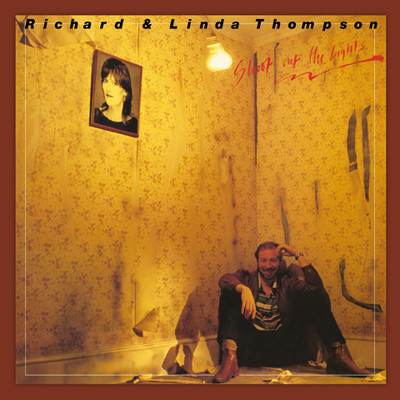
And I thought “then you haven’t heard Shoot Out the Lights, by Richard and Linda Thompson which, as it happens, came out thirty years ago today.

And that day, June 8 of 2009., I started the whoooole three year long series by starting the article you’re reading.  This piece has been sitting on the schedule for 33 months, now.

Just saying.

———-

Rock and roll is full of breakup songs; boy meets girl, boy gets girl, boy loses girl, boy pines for girl.

What rock and roll is not full of is music that slices into the bloody mess when the real, true love of one’s life slowly erodes, and then quickly collapses, into a mocking ruin.

There’s a reason for that; it’s easy to write breakup songs.  Breakups come and go; they’re the stuff of a million songs.

But music about the breakup of a relationship with some mileage – marriage, children, commitment, a shared body of life’s work?  Not so much.  The pain doesn’t lend itself to three chords and a hook line – and the pain and loss is just the beginning, leading to layers of recrimination, crippling self-doubt and worse.

It was thirty years ago today that Richard and Linda Thompson released “Shoot Out The Lights”.

The album and attendant tour happened as the couple’s nine year marriage spiraled into the toilet; by the time the album was released,    The couple – who’d met in one of the middle incarnations of the classic British folk-rock band Fairport Convention, of which Richard was a founding member – had put out five albums before.  All were commercial outliers and critical blockbusters, capped by 1974’s I Want To See The Bright Lights Tonight, generally regarded as one of the great accomplishments of either of their careers.

The previous year had been a period of immense stress; the Thompsons’ marital breakup was exacerbated by professional turmoil; they’d been released from one minor-label contract, had recorded an entire album floated by Thompson’s friend, the late Gerry Rafferty, a process that led to the end of the guitarists’ friendship.  But in the aftermath of the Rafferty fiasco, the Thompsons – their marriage foundering, with Linda pregnant with the couple’s third child – went into the studio with producer Joe Boyd, and produced an album that was…

not about marital discord.  So they said.  And that’s been their story for thirty years, and they’ve stuck by it religiously.

And yet there are mixed messages, as the album ping-pongs between the battlin’ Thompsons.  The album opens with “Don’t Renege On Our Love”

Remember when we were hand in hand?

Remember we sealed it with a golden band?

Now your eyes don’t meet mine,

you got a pulse like fever.

Do I take you for a lover, or just a deceiver?

Well simple is simple and plain is plain,

if you leave me now, you won’t come back again.

Don’t renege on our love, don’t renege on our love…

z
(Pardon the terrible sound quality)

It was followed by Linda’s “Walking On A Wire”:

I hand you my ball and chain,

You just have me that same old refrain.

I’m walking on a wire, and I’m falling…

Too many steps to take, too many spells to break,

too many nights awake and no-one else.

This grindstone’s wearing me, your clothes are tearing me,

Don’t use me endlessly,

it’s too long, too long to myself…

Where’s the justice, and where’s the sense?

When all the pain is on my side of the fence,

I’m walking on a wire, and I’m falling…

The songs bounce back and forth, each of them a subtle nuance on the theme, each a classic in its own way; Richard’s bouncy, funny ode to crushing frustration “A Man In Need” led to LInda’s gaunt “Just The Motion“…

When you’re rocked on the ocean, rocked up and down , don’t’ worry

when you’re spinning and turning round and round don’t worry

’cause you’re just feeling seasick, you’re just feeling weak,

your mind is confused and you can’t seam to speak,

it’s just the motion,

it’s just the motion…

…about the seasickness that comes from having your world completely submerged in stress.

There are two observations you can make about Shoot Out The Lights.  For starters, Richard Thompson is the world’s greatest living guitar player.  No, I know – you’ve got your Steve Vais and and your Yngwie Malmsteens, and they’re all great – but nobody on the planet teases the warped psychological nuance out of a Strat plugged into a Twin Reverb like Thompson, as here on the album’s brutal title cut…:

…with the same version of the Richard Thompson Band I first saw at First Avenue in 1986, with the lovely Christine Collister filling the Linda role.

The other?  That was a harrowing dissolution – as you read between the lines of the so many songs, especially Linda’s “Did She Jump (Or Was She Pushed)”.  I can’t find a video with Linda – but Richard does it great justice:

There’s enough cheating hearts to sink a hundred country western albums; enough emotional shrapnel to make Robert Smith say “sack up buddy”, were it not delivered with either a nudge or a keening wail…

…or with “Wall of Death” capping the whole thing off.

It’s nothing as trite as “It’s better to have loved and lost than never loved at all”…

Let me ride on the Wall Of Death one more time

Oh let me ride on the Wall Of Death one more time

You can waste your time on the other rides

This is the nearest to being alive

Oh let me take my chances on the Wall Of Death

…but it’s in the ballpark.

If you don’t own a copy, it’s an injustice to music.

--> Site Meter -->