Author Archive

Tron Together

Tuesday, July 27th, 2010

Disney looks to take movie marketing beyond viral to voluminous.

The 1982 film Tron broke new – if unheralded – ground in visual effects as the first motion picture to rely largely on computer-designed elements. Like Michelangelo trying to paint the Sistine Chapel with rocks, the attempt to create a computer-generated movie with only 330MB of disc space produced a crude and compromised redention of what Tron‘s creators had hoped it would be. As such, the film modestly recouped it’s $17 million budget. Considering only a decade later that entirely computer-generated characters, like those of Terminator 2 or Jurassic Park, were atonishing audiences, Tron in hindsight seemed even more like a cellouid’s equivalent of Pong.

Nearly 30 years later, the sequel Tron: Legacy has little ground left to break in terms of visual effects. But the film appears destined to try and become a trendsetter on its own in the world of marketing:

By the time the movie arrives in theaters on Dec. 17, Walt Disney Studios will have spent three and a half years priming the audience pump. The most recent push came last week at Comic-Con International, the annual pop culture convention here. For the third year in a row, Disney teased fans with exclusive “Tron: Legacy” footage. No other movie has guest-starred here so often…

Disney isn’t merely content to draw out the world’s longest cinematic tease. Forgoing the traditional movie tie-ins of fast food restaurants and toys, Disney is aiming for a marketing effort so wide that the studio is no longer merely marketing a film but an entire culture.

Skin-tight black uniforms with white and blue glowing light are part of Donatella Versace’s latest line. Recording artists such as Rihanna, Katy Perry and Lady Gaga are also doning Tron-esque clothes. Audi has even built a concept car based on Tron‘s signature light cycle. By modern marketing standards, Tron: Legacy isn’t an event – it’s a lifestyle.

From Disney’s standpoint – why not? The house that a mouse built is wagering a staggering $350 million budget on a sequel to a critical and commercial bomb from the 1980s.

Tron: Legacy simply represents another stage in Hollywood’s endless quest to find an increasingly difficult to target audience at lesser and lesser cost. The advent of DVR and the expansion of cable channels has made it easier for film’s most powerful advertising weapon – TV ads – to all but disappear.

While viral campaigns of making online converts one at a time have worked well for modestly budgeted films (see Paranormal Experience’s success), the margins for mainstream Hollywood fare rival Congressional budget deficits. Consider this – if Tron makes $1 billion worldwide it’ll be in the same league as Alice in Wonderland and considered a flop. Alice “only” cost $200 million and earned the same amount. Little wonder then if Disney will leave no marketing stone unturned this fall.
Loan Again, Naturally

Monday, July 26th, 2010

Washington tries to put more junk in the SBA’s trunk.

The pre-recession economy saw more than its fair share of credit alchemy as lenders ignored equity.  With bank loans to small firms dropping 5.6% to $670 billion from heights of $710 billion as recently as June of 2008, the Administration has become increasingly desperate to get credit into the hands of business.  The only problem?  The companies that need the credit can’t afford to accept it:

Bankers say the problem isn’t scarce credit, it’s lack of demand from creditworthy firms in a weak economy. The result may be more loans given to distressed firms and higher losses. While bank regulators don’t compile default rates, the biggest lenders have charge-offs of 4 percent to 14 percent tied to small businesses. Eliot Stark, managing director at Capital Insight Partners Inc., said their credit record resembles “junk.”

“The highest demand for loans is from the companies least qualified, the companies that have really struggled because of the economic downturn,” said Stark, a former Comerica Inc. executive whose Chicago-based investment bank helps community lenders raise capital. The way lawmakers see it, “everyone’s a good borrower, and that’s just not the case.”

Washington’s lending advice is currently as practical as a baseball coach telling his hitter he can swing away – but under no circumstances will he be allowed to get out. 

Worse is D.C.’s legislative panacea of having the Treasury Department make preferred stock investments in “small” banks (those with assets of $10 billion or less) in order to stimulate loans.  $30 billion in capital will be transferred to small banks in hopes that most of these lenders will leverage the funds to help create new small business loans – a figure that some in Washington estimate could be as high as $30 billion.  Despite assurances from Treasury that the program will earn $1.1 billion over 10 years for taxpayers, the legislation sounds like TARP for Hervé Villechaize-sized lenders.

Considering the bailout investment program targets largely community banks which account for most of the 240 banks that have failed since 2009, it becomes even harder not to see the effort as an attempt to inflate a TARP into yet another credit bubble.  Which may be precisely the point:

Small borrowers are higher risks because their size leaves less room for error, bankers say. Half fail within their first five years, according to the SBA, and the recession eroded the value of hard assets such as property and equipment to pledge as collateral, said Alfred Osborne, senior associate dean of the UCLA Anderson School of Management in Los Angeles.

“We can create lots of jobs making bad loans,” NFIB chief economist William Dunkelberg said. “We did that during the housing bubble.”

Steele This Chair

Sunday, July 25th, 2010

Norm Coleman starts the RNC’s game of musical chairs early. 

As 2009 begin, one of the two major political parties in the U.S. handed over its reins of control to an underqualified but charismatic African-American politican who subsequentially torpedoed the party in a series of public gaffes and highly publicized scandals.  Barack Obama was also inaugurated.

For a post that typically attracts little attention outside of the Beltway, Michael Steele’s RNC chairmanship has been disasterously high-profile.  In the last year-and-a-half of his two-year term, Steele has surfed one mistake after another into a building tsunami of political pressure to oust the chairman early.  From his public criticism of Rush Limbaugh, to his speaking fees, and sudden anti-Afghan War comments, Steele has taken the largely managerial role of RNC chair and tried to turn it into a psuedo-legislative office.

If Steele’s effect on the RNC were limited to his apparently incurable foot-in-mouth disease, talk of removing him or even talk of the next election for chair in 2011 would seem incredibly premature.  But the RNC’s mechanics appear to have suffered as well.  The party’s primary role as a fundraising vehicle has been easily usurped by the Republican Governors Association – headed by former RNC chair Haley Barbour.  While the RNC holds only $10 million in cash on hand, with more than $2 million in uncollected debts, the RGA is breaking fundraising records.  At $28 million in the bank, the RGA has already doubled it’s largest yearly take – ever.  And those numbers don’t even take into account charges that Steele is hiding more than $7 million in debt.

But is the solution to replace a politician as chair with another politician? 

Chatter about Norm Coleman assuming the RNC post isn’t exactly new.  While Politico threw some gas on long-dead embers of Coleman’s RNC ambitions, stories of the former St. Paul mayor leading the Grand Old Party first started floating only weeks after his recount battle began in 2008

Yet as a politican who only months ago declined a widely expected bid for governor, is Coleman making a similar mistake to Steele in eyeing the job as a national political soapbox?  So far, Coleman and his allies are hitting the right notes:

“He sees tremendous longing for donors who want to invest in an organization that will be critical to the 2012 cycle,” said the Coleman confidante. “And he has a proven track record of being able to raise money from the party’s traditional key constituencies and constituencies the party doesn’t always have.”…

“He understands it’s a fundraising job,” said one senior Republican, who has talked to Coleman about the RNC post.

If anything, Coleman appears to be trying to position himself – as Newsweek puts it – as the “anti-Michael Steele.”  Where Steele viewed his role as making public pronouncements about Republican policy, Coleman at least rhetorically understands that the role of RNC chair has little to do with grand strategy.  It’s a distinction even Newsweek has trouble understanding in suggesting that a Coleman selection might be an attempt to target swing states:

Coleman hails from Minnesota, which is a bluish-purple state, with populist and environmentalist streaks. So, would Coleman, who defeated high-profile Democrat Walter Mondale and came within a few hundred votes of doing the same to Al Franken in a Democratic wave election, unlock the secret to helping Republicans break out of their old/white/Southern cage? Probably not. Steele, after all, was chosen to attempt that, and the Democrats chose then–Virginia Gov. Tim Kaine to chair their party to do the inverse for them. Neither can be said to have accomplished that.

Party chairman are ideally much like the Victorian view of children – better seen then heard.  They aren’t policy wonks nor are they press secretaries.  As the last year has shown, average activists have far greater impact on the political process than party apparatchiks.   That’s how it should be.

Steele can be endured until his tenure ends and should not be re-elected.  And while Norm Coleman will undoubtably not make the sames mistakes as Steele, he remains a political – not managerial – figure.  The GOP needs a functional, competent manager, not another high-profile politician who will be granted greater attention due in part to his elected past.

The Wrath of Hahn

Tuesday, July 6th, 2010

Can a little known newspaper publisher author a different ending for Tom Horner’s campaign?
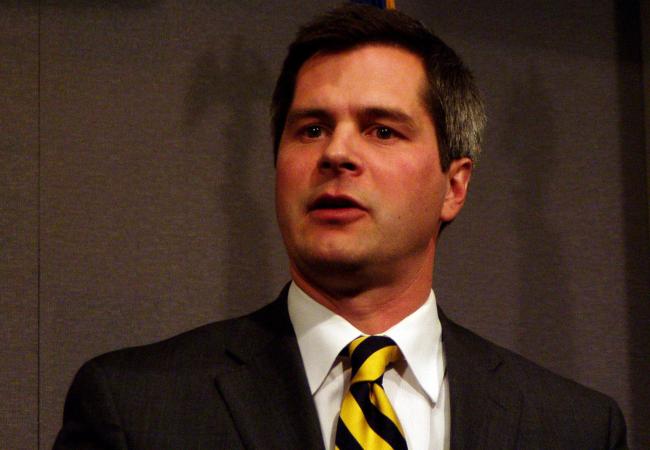
If there truly exists a halfway point between gadfly and contender in the realm of politics, Independence Party gubernatorial hopeful Rob Hahn has staked his long-on-moxy and short-on-funds campaign on finding just such an electoral sweet spot. A distant undercard to the expensive heavyweight battle royale occuring on the DFL side of the ballot, the IP’s primary focus on promoting erstwhile liberal Republican Tom Horner has been complicated by the would-be William Randolph Hearst. 

While Hahn might be unknown to most voters (I passed one of the few visible signs of his campaign – a billboard near Rockford – this past week), the man claiming to be the “only real independent running for governor” has gained minor traction with the only section of the electorate paying close attention to politics in general – the media.  From announcing his running-mate selection, to calling on Horner to drop out of the race, and even his policy proposal of using riverboat gambling to enhance the state’s coffers, Hahn has been granted a level of legitimacy seemingly far surpassing his likely ability to wrest away the IP’s nod this August.  The real question may be why?

Part of the answer may have less to do with Hahn’s media background and more to do with an agenda that leans heavily on the credible side of his credible fringe candidate persona.  While Hahn’s riverboat gambling concept has received far more press than an idea that at best would only generate $400-600 million a year should get, Hahn has put forward solutions on the budget deficit that sound far more detailed than many of his opponents.  Hahn’s call alone for phasing out LGA funding and a 5-7% across-the-board cut in state government is more intricate and conservative than anything Tom Horner has publically committed to other than tax policies that are apparently to the left of even Matt Entenza.

But what may really fuel the coverage of Rob Hahn’s campaign is his willingness to attack Horner’s most publicized weakness – his unwillingness/inability to release his client list – coupled with the uncertainty of turnout for an August 10th Independence Party primary.

Horner’s lobbying with his now former firm Himle Horner has proven to be the bête noire of his campaign, leading even the Star Tribune to momentarily put down their promotion of Horner’s Republican past to wrap his knuckles over the lack of disclosure.  The issue is a classic political conundrum; Horner is legally bound to keep his clients’ identities hidden while the Strib and Hahn maintain every right to question the inherent conflicts of interest such a past entails.

Can such an issue – or any – prove powerful enough for Hahn to win?  It depends on how exactly hotly the primary will be.  The IP has come a long way since the dog days of the summer of 2000 when party officials publically worried that IP U.S. Senate nominee James Gibson might not be able to defeat the Harold Stassen of the environmental set, Leslie Davis, in the party’s primary (Davis was considered “strong” enough to be included in pre-primary polling questions).  A whopping 5,600 votes were cast that September between four candidates, leaving Gibson – and the party’s fledgling respectability – intact. 

Higher profile races since then have done little to drive turnout.  The IP’s 7 candidate U.S. Senate field in 2008 that featured former appointed Sen. Dean Barkley only saw 11,000 votes.  It would be little wonder then if at least a few political beat reporters believed Hahn capable of gaining the necessary 5,000 or 6,000 votes to pull off a mildly noticed upset.  With Horner and even long-time politicos like Doug Grow floating theories of cross-over mischief, such an outcome hasn’t been completely discounted.

More likely, Hahn’s wrath will be felt in 7-second MPR soundbites and tiny column inches buried in the metro section.  Enough perhaps to provide a respectable margin of defeat 30 days hence but not enough to provide the party’s biggest upset since their candidates wore feather boas.

Kaus & Effect

Monday, June 7th, 2010

Blogging hits the ballot in California.

On Tuesday, voters in the Golden State will chose nominees for the state’s U.S. Senate general election.  And while most of the media oxygen for the race (already fighting for air against the uber-expensive GOP gubernatorial primary) has been sucked up by the Republican electoral 3-way, Democrats must thin their herd as well.  Only two Democrats are saying “no ma’am” to another term for incumbent Barbara Boxer: a disheveled, quixotic blogger and a vainglorious Hollywood “producer” whose campaign seems to be an excuse to post pictures of him with famous people.

Guess which of the three scored a profile by the New York Times:

No, this is not your typical Senate campaign command center; but then again, [Mickey] Kaus is not your typical Senate hopeful. His lair speaks more to his career of the last 10 years — prolific blogger and professional curmudgeon — than the one he’s currently aspiring to. As the one-man show behind Kausfiles on Slate, Mr. Kaus was one of the first political bloggers, after a print career that included stops at publications like Newsweek and Harper’s…

“If you’d asked me is he ever going to run for Senate, I’d say, ‘Are you crazy?’ ” says Michael Kinsley, editor at large of The Atlantic Wire and a longtime friend. “He seems like a classic blogger — someone who is happier in front of his computer than he is out kissing babies.”

But Mr. Kaus has thrown himself into his quixotic campaign with surprising earnestness, undeterred by his prospects (grim) and general diagnosis (insane). He is the first person to admit that he has absolutely no chance of becoming California’s next Senator, but contends that this is not really the point. He says he is running as a protest candidate in order to draw attention to his pet issues.

California has often been viewed as political laboratory – from recall elections and an ever-expanding list of constitutional propositions – even if most of their creations have taken on a Frankensteinesque quality in recent decades.  So it might as well be that the strengthes and limitations of the first fully blog-based candidate be demonstrated on a West Coast ballot.

Much like the blog, Kaus Files, that launched him into prominence within the punditry, Mickey Kaus’ candidacy has been rife with political paradoxes.  Instead of focusing on areas where he agrees with the Democratic base, Kaus is solidly running to Boxer’s right on unions and immigration.  Attacked as a closet Republican, Kaus invokes Paul Wellstone is his campaign’s sole TV advertisement.  Treating his campaign as a Dave Barry/Gore Vidal joke candidacy one minute, the next Kaus is writing serious political manifestos.

Yet it’s hard to escape the feeling that had Kaus taken himself – or his campaign – more seriously, his spoiler candidacy might have done more than simply garner a few memorable press clippings for his scrapebook. 

If the mood of the electorate is hostile across the country, California voters appear ready to find the nearest Bastille.  Every single major party candidate has their approval/disapproval numbers upside-down, including Boxer at 37/46 – and that’s relatively healthy compared to most of the other statewide candidates.  And whether California Democrats wish to acknowledge it or not, Kaus’ pet issues of unions and immigration are two big parts of the mosaic of problems that have painted the state forever in the red.

When even the LA Times refuses to endorse the incumbent, you know the political climate has turned stormy.  But the limitations of Kaus’ own personality precluded him turning the non-endorsement to his advantage.  Or as the paper put it: “But we can’t endorse him, because he gives no indication that he would step up to the job and away from his Democratic-gadfly persona.”

Blogging has certainly give Kaus an leg-up otherwise undeserved by his campaign.  What other forum would allow a candidate with a $36,000 budget, no visible support and with such blunt honesty about his chances that he was deined a speaking slot at the Democratic convention, as much media fanfare as Kaus has enjoyed?

But persuading an electorate is world’s away from simply unleasing opinions into the ether of the internet. Even recognized as one of the Founding Fathers of internet journalism and blogging, the height of Kaus’ popularity was 40,000 unique visitors each day – a tremendous audience in blog terms but a pittance in political value.

“The Kaus blog speaks to a very smart and important influential niche, but it’s still just a niche,” says the conservative blogger Jonah Goldberg, who has supported Mr. Kaus’s campaign in the National Review Online. “The universe of bloggers is a hell of a lot smaller than a lot of bloggers like to think.”

UPDATE: So much for the New York Times. Kaus was demolished, as expected, but surprisingly finished in 3rd – 55,000 votes behind Hollywoodd hanger-on Brian Quintana for 5.2%.

Two If By Senile

Monday, June 7th, 2010

Arne looks to be Revered.

During the 1980s, the growth in state government exceeded the growth in people’s paychecks by 15 percent.  Since then we have frozen the number of state employees, held the growth of government to the growth in personal income, implemented a wage freeze, and cut welfare for able-bodied adults…

In the process, we quickly became the target of nearly every entrenched and powerful spending system in Minnesota.  And as we were being attacked by all the forces that resists change – it was then that I knew we were doing something right.  — Gov. Arne Carlson’s 1994 State of the State Address

As former Governor Arne Carlson begins his much media ballyhooed “Paul Revere Tour” doing largely what he’s done for the past eight years – needle the Pawlenty administration – it’s not hard to look back at his 1994 comments and wonder which “side” the Arne Carlson of the 90’s would view his 2010 doppleganger.

Whether Carlson’s tour caused him to be revered or tarred and feathered, the former governor is indirectly experiencing his largest political relevance since leaving office.  Between the candidaces of self-described “former Republican” Tom Horner and former Carlson finance director Jon Gunyou, Arne’s old “Independent-Republican” brand (which the party called itself from 1974-1995) will be a subject of hot political debate and historical revisionism.

But how much are Carlson and others engaging in euphoric recall?  For most of Carlson’s eight years, the relationship between the chief executive’s office and the legislature looked as cozy as an Israeli/PLO summit.  Despite Carlson’s recent shot that Pawlenty “lacks leadership” due to his vetoes and inability to compromise with the DFL legislature, it’s Carlson who maintains the lead in the veto count.  In fact, it’s not even close as Pawlenty’s 96 vetoes are dwarfed by Carlson’s record 179.

Until at least 1998, when Carlson’s State of the State address read like an heiress’ shopping list amid his bid to buy a legacy, Arne had a far different reputation that his current incarnation as putting the ‘I’ in ‘IR’.  The Beta version of Arne Carlson was known by his liberal opponents as a tax-cutter, a supporter of vouchers, and a proponent of reducing funding to cities and counties.  He publicly rebuked the federalism of HillaryCare, decrying the would-be mandates on the states.  Carlson even tepidly backed the idea of a TABOResque constitutional amendment that would require voter approval before raising taxes.  Combined with his penchent for spending, especially later in his term, Arne’s dig at Pawlenty that “what the governor wants to do is to say no to taxes, yes to spending” seems apt to describe Carlson’s tenure as well.

Arne Carlson and his current supporters can definitely argue that circumstances were different in the 1990s when he professed such conservative positions, although Minnesota (like most of the nation) saw largely languid growth and recession for most of Carlson’s first four or so years in office.  But what may truly gall Carlson is that his Republican predecessors actually believe the rhetoric Carlson and his IR-brand of Republicanism once spouted.

Despite the invective hurled at Carlson during most of his term by the very same political and media institutions that now champion his public criticisms, most of the fiscally conservative positions that Carlson took were politically expedient. Rhetoric towards smaller government, tighter welfare rules and tax cuts were not just en vogue for most of the 1990s, but politically necessary for a governor viewed as boardline illegitimate by activists in both major parties.

Democrats and conservative Republicans groused at Carlson’s last-minute entry into the 1990 governor’s race following Jon Grunseth’s attempt at a Hot Tub Time Machine that would get him under the swimsuits of three teenaged girls. From the-then Republican perspective, Carlson had already lost the endorsement and the primary to Grunseth and had been trying to undermine the party with a write-in candidacy in the general election. 

Democrats hated that Carlson had narrowly beaten incumbent Rudy Perpich despite only being in the campaign for days and tried to steamroll Carlson’s early days, forcing a number of vetoes. Thus for Carlson, while it could be argued whether or not he viewed fiscal conservatism as good policy, it was certainly good politics.

16 years after his political highwater mark, Carlson still knows how to practice good politics – at least for himself.  Gaining nothing by defending Pawlenty or the GOP, which would in essence be defending many of same fiscal practices and positions he said he held while governor, Carlson can hold some media limelight by embracing his former opposition.  Whether that involves doing political gymnastics worthy of Nadia Comaneci – from now backing nationalized health care, to his views on vetoes and budget shifts – perhaps matters little.

Carlson believed he was fighting the status quo in 1994 and still believes it today.  Considering the Minnesota budget has expanded since he left office from $10 billion to $34 billion, Arne might seriously wish to question if he’s fighting for or against the dominant attitudes in St. Paul.

Bananas, Crackers & Nuts

Tuesday, May 18th, 2010

Perhaps Woody was just merely testing a plot to the sequel?

Woody Allen has a strange take on the democracy that allowed him to become rich and famous.

The “Scoop” director said it would be a cool idea for President Barack Obama to be dictator for for a few years.

Why?

So he could get things done without all the hassle of opposing views getting in the way.

In an interview published by Spanish language newspaper La Vanguardia (that we translated), Allen says “I am pleased with Obama. I think he’s brilliant. The Republican Party should get out of his way and stop trying to hurt him.”

But wait – there’s more!

The director said “it would be good…if he could be a dictator for a few years because he could do a lot of good things quickly.”

In other news, Allen revealed that he has redubbed Obama’s inaugural address and centered it around a secret egg salad recipe.

Release the Kagan!

Tuesday, May 18th, 2010

The mystery, wrapped in an enigma, smothered in secret sauce that has been Elena Kagan might be granted a little more clarifying light with the release of her Princeton and Oxford theses:

The White House says it soon will release two theses Supreme Court nominee Elena Kagan wrote while attending Princeton and Oxford — ending a game of cat-and-mouse that erupted on the Web after Princeton asked a conservative website to remove her thesis for copyright reasons.

Some conservative critics contend that Kagan’s 1981 Princeton thesis — called “To the Final Conflict: Socialism in New York City, 1900-1933” — shows Kagan’s allegiance to, or at the very least her affinity for radicalism, a notion Kagan’s supporters reject.

Reams of paper like Kagan’s theses will be released between now and the beginning of her confirmation hearings and volumes of ink will be spilled analyzing ever sentence she’s ever uttered or written.  But when it comes to illuminating Kagan’s actual judicial philosophy, the evidence that points to whether Kagan is a Harriet Miers or Ruth Bader Gingsburg nominee remains like much of her legal practice – theoretical.

Fool Britannia

Wednesday, May 12th, 2010

In 1598, William Shakespeare wrote of English politics in his otherwise unremarkable play “King John”:

O inglorious league!
Shall we, upon the footing of our land,
Send fair-play orders and make compremise,
Insinuation, parley, and base truce
To arms invasive?

412 years later David Cameron enters stage left, arms as invasive as ever before in Britain’s Conservative Party.  Will he be equally as unremarkable as “King John”?

In the last year, the youthful, moderate, almost too-charismatic leader of the Tories has yo-yoed from political genius/cross-Atlantic conservative inspiration to cautionary tale and nearly (within the last 24 hours) the head of the loyal opposition instead of Prime Minister.  Instead Cameron sent “fair-play orders” (which in Shakespeare’s era was tantamount to surrender) and made compromise with the exceedingly left-wing Liberal Democratic Party to form the oddest fusion since the Second Coalition of the Napoleonic Wars.  Or maybe Elton John and Eminem at the Grammys.

The tendency in Anglo-American political relations has long been to see parallels across the pond.  Churchill and Roosevelt, Reagan and Thatcher, Blair and Clinton.  Indeed, from the moment Barack Obama positioned himself at 1600 Pennsylvania Avenue, conservatives both of the big ‘C’ and litle ‘c’ variety, began to argue that Cameron was positioning himself as a fellow change agent en route to occupying 10 Downing Street.

Perhaps the most accurate link between between Obama and Cameron was their first and foremost notion of what such “change” meant – having the other party out of power.  Most certainly for Cameron, at least on the campaign trail, having Gordon Brown out of power was the only real change he promised to offer the United Kingdom:

Palin Rider

Thursday, April 29th, 2010

The GOP’s rockstar diva puts her support behind the “hockey dad.”  Will her last minute endorsement score or just put Tom Emmer in the penalty box?

On the eve of the Minnesota GOP’s two-man dialogue for governor being pared down to a monologue, 2008 Republican VP nominee Sarah Palin has injected herself into the contest with the political equivalent of a powerplay goal for her self-described “hockey dad” candidate of choice, Tom Emmer:

A family man who wants to leave his kids a better future, a “hockey dad” who once played for the University of Alaska-Fairbanks Nanooks, a patriotic commonsense conservative who wishes to serve for the right reasons – that’s Tom Emmer, and I ask you to join me in supporting him for governor of Minnesota.

John “Policy Guy” La Plante asks the 60% question of the evening – is Palin’s endorsement worth having?:

So Sarah Palin has endorsed Tom Emmer. Is this good news for Team Emmer? I’m not convinced.

Why? Because, I suspect, most Palin fans are likely sympathetic to Tom Emmer anyway. But a Republican candidate must appeal to more than Republican voters to win in the general election.

For a good chunk of independents and Democrats open to voting for a Republican candidate, an endorsement by Sarah Palin is the kiss of death. They’re the mirror image of Republicans who disdain a candidate who

gets endorsed by the Star-Tribune .

Much like Emmer’s somewhat questionable choice of Annette Meeks as his runningmate earlier this week, the backing of Sarah Palin makes terrific sense in the context of a political universe that’s set to expire in an endorsement supernova sometime Friday afternoon or evening.  As the adage goes that there’s no bad press as long as they spell your name right, so goes the same logic for the choices that have defined Tom Emmer’s final week before the gubernatorial endorsement.  While picking a highly partisan activist to share the ticket and garnering the endorsement of a polarizing but beloved conservative politician are potential risks come November, they’ve ensured that for better or worse, everyone is talking about Tom Emmer less than 24 hours from what could be the pinacle or nadir of his political career.

But La Plante’s analysis is also spot-on.  Palin remains as much of a potential liability in the general as she is an asset in the endorsement.  And Emmer’s camp must be prepared, should he raise his arms in victory on Friday, to find his win credited to Palin’s involvement by the media in a pre-emptive strike to paint the Delano rep into the far-right corner of the electorate.  Such an outcome likely sounds fine to many on Team Emmer given that the alternative is a long fall and summer on the political bench.

The Last Temptation of Crist

Thursday, April 29th, 2010

Florida’s political version of Hernán Cortés burns his last ship back to the GOP as he tries to chart an independent path to Washington.
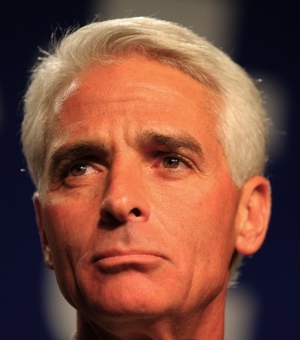
It was barely more than 12 months ago that Florida Governor Charlie Crist found himself basking the media limelight.  The politically-saavy governor of a swing state, Crist quickly positioned himself not only as the prohibitive frontrunner for Florida’s open U.S. Senate seat but as a presidential dark horse.  That one year later Crist is bolting the GOP while the party’s Senate leadership that had once backed him are now suing to drain his campaign coffers speaks volumes of how fickle political fortunes can be.

Much has been already written of Crist’s numerous campaign missteps and penchent to spend his dwindling political capital faster than a crack addict with a gold card.  Whether it was Crist’s ill-advised embrace of Obama and the stimulus (both literally and figuratively), his veto of a Republican-backed education reform bill or his Roger Muddesque inability to state why he was running for Senate, Crist’s once-famous campaign aptitude seemed to disappear into a Brigadoon-like political mist.  As NRO‘s Jim Geraghty notes:

You don’t get to be governor of Florida without a halfway decent sense of political judgment, and in fact that’s supposed to be one of Crist’s best qualities: He may not be the boldest or most principled politician, but he’s always been popular and displayed a knack for staying on the right side of Florida voters…

Yet during this election cycle, Crist’s keen judgment disappeared and was replaced with the bumbling instincts of some of our most legendary modern political blunderers…Almost every key decision made by Crist and his campaign since entering the Senate race has backfired.

Less has been written about Crist’s path forward.  While a few polls have shown Crist leading within the margin of error in an electoral ménage à trois with Marco Rubio and Kendrick Meeks, the political math remains at a calculus level of difficultly.  Crist would need a bare majority of independents plus nearly 1/3rd of all Republicans and Democrats to secure a plurality.  Just a political combination isn’t impossible but nevertheless rare among candidates not prone to wearing spandex and feather boas.  Nor is Crist aided when 52% of independents claim to be unwilling to vote for him under any circumstances, despite a 60% approval rating among the unaffiliated.

Undoubtably, an independent bid was Charlie Crist’s best chance of being elected to the U.S. Senate in 2010.  Unwilling or believing himself to be unable to seek the Republican nomination in 2012 against Sen. Bill Nelson, Crist has bet his once rising star on an all-or-noting Cortés-like strategy.  But left unanswered in his decision is how Crist believes he’ll be welcomed in Washington should he win. 

Should Republicans win the Senate seats they lead in current polling, the GOP would pick up 8 seats this November.  With California and Washington creeping into contention as well, one seat could easily tip the balance of power come January 2011.  Such narrow margins will bring tremendous political advantage to any independent Senate candidate.  Indeed, should the GOP come up one seat short, expect massive political pressure to be applied to Sen. Joe Lieberman (I-CT) to switch caucus allegiances.  Unable to afford a credible candidate to his right in what will likely be an incredibly bitter general election against a well-funded Democratic opponent, Lieberman might be tempted to caucus with the GOP even if his party affiliation remains unchanged.

Crist has little such luxury.  While if victorious he’ll be courted by both left and right given 2010’s likely outcome, neither is likely to embrace him come 2016.  And should control of the Senate shift sharply away from a narrow divide, Crist almost certainly would be discarded, his political leverage gone.  Thus it would appear that Charlie Crist has gambled his entire political career on trying to acheive a single – and perhaps very lonely – term as Florida’s senator.

Haitian Haste

Wednesday, January 13th, 2010

With news filtering out of Haiti as slowly as aid is effectively able to get in, the scale of the massive earthquake’s destruction is still hard to determine.  For a country already in political and economic ruin, magnitude-7 quake destroyed most of Port-au-Prince, leaving estimates as high as 500,000 dead and perhaps as many as 3 million in need of emergency aid:

Tuesday’s earthquake brought down buildings great and small — from shacks in shantytowns to President Rene Preval‘s gleaming white National Palace, where a dome tilted ominously above the manicured grounds.

Hospitals, schools and the main prison collapsed. The capital’s Roman Catholic archbishop was killed when his office and the main cathedral fell. The head of the U.N. peacekeeping mission was missing in the ruins of the organization’s multistory headquarters.

Police officers turned their pickup trucks into ambulances to carry the injured. Wisnel Occilus, a 24-year-old student, was wedged between two other survivors in a truck bed headed to a police station. He was in an English class when the earth shook at 4:53 p.m. and the building collapsed.

“The professor is dead. Some of the students are dead, too,” said Occilus, who suspected he had several broken bones. “Everything hurts.”

To put Haiti’s most recent tragedy into perspective, the earthquake may already rank as one of the deadliest in history.  Only Shaanxi in China’s 1556 earthquake may have been worse with an unconfirmed 830,000 dead, but with the inaccurate of historical records, the 1976 Tangshan earthquake and it’s official death-toll of 255,000 ranks as the worst of the modern era and likely the most deadly. 

There are many fine organizations assisting survivors in Haiti, but I would encourage SITD’s loyal readers to consider donating to the International Red Cross in this hour of need.

Avatarted

Wednesday, January 13th, 2010

If seeing James Cameron’s boffo blockbuster special effects extravaganza Avatar doesn’t give you a 3-D induced headache, apparently it will give you thoughts of suicide instead:

The beautiful alien planet Pandora depicted in James Cameron’s ‘Avatar’ is so captivating that some audience members are becoming depressed and even suicidal when they fail to find meaning in real life after the film is over…

“I just watched avatar a few weeks ago and I’m feeling depressed and sad. It’s like I want to reach out and be in Pandora. I’d do anything to be in Pandora. I’ve tried so hard to dream about me being on Pandora but it hasn’t worked.”

“Ever since I went to see ‘Avatar’ I have been depressed. Watching the wonderful world of Pandora and all the Na’vi made me want to be one of them. I can’t stop thinking about all the things that happened in the film and all of the tears and shivers I got from it. I even contemplate suicide thinking that if I do it I will be rebirthed in a world similar to Pandora and the everything is the same as in ‘Avatar.'”

I’ll admit I felt the urge to grab a gun after seeing “Cool as Ice”, but I don’t think it involved the same motivations.

While there’s nothing amusing about the serious depression and social alienation that allows individuals to be driven to thoughts of suicide from a 3-D film with 2-D characters, Cameron’s opus isn’t the first nor the last work of science fiction to do so.  There’s Star Wars depression.  There’s Twilight depression.  Who knows, maybe even Mitch’s light posting this morning caused a few cases of SITD withdrawal.

But regardless of the source, the causes for such depression from a work of fiction seem as much culturally based as personality-driven:

Tamara Nichols, who practiced psychotherapy for 11 years, says, “[The genre] can provide a sort of a symbolic model for people who don’t fit into the more mainstream ideas of what a man should be, what a woman should be.”

…it seems that many people who read science fiction as children had similar experiences: raised outside their mother countries, moved frequently, had health problems, troubled childhoods, and/or were academically gifted. These circumstances led these people to delve more deeply into books than to reach out to other people.

A multitude of critics as varied as the floral and fawna on Cameron’s fictional Pandora have expounded on the political and social messages that Avatar and its appeal suggest.  But regardless of the film’s real or accidental messages (and Cameron leaves little doubt about environmental intentions of the movie), the concept that Avatar’s appeal is largely what filmmakers 50 years used to call a “sword and sandal spectacle” is seemingly too timid a conclusion for some to be willing to reach.  What would columnists and bloggers have to write about without broad, overreaching conclusions on social phenomena?  Especially when your protagonists are giant blue cat people.

Maybe that’s the real underlying message of Avatar – millions of people are secretly suicidal furries.

Nuke’s Disarmament

Tuesday, January 5th, 2010

Ebby Calvin “Nuke” LaLoosh throws the mother of all political curveballs.  Or did he?

With the speed of Ferdinand Magellan on crack strapped to an Apollo rocket engine, news that actor/liberal activist icon Tim Robbins had contributed thousands of dollars in campaign contributions to conservative Republicans candidates – including Minnesota’s own Michele Bachmann – circumnavigated the blogosphere.  To Robbins’ ideological allies, the news proved more shocking than learning that Susan Sarandon is actually Robbins now former lover, and not mother:

Loyal Dems would undoubtedly be gobsmacked to learn that, if Federal Election Commission records are to be believed, Robbins has not only donated regularly to Democratic candidates over the past 18 years, he also has written checks to conservative Republicans. In the 2006 election cycle, according to public records, the actor gave $5,000 to 10 Republican candidates for the House and Senate—including, most shocking of all, Minnesota’s resident wingnut, Rep. Michele Bachmann. Why such largesse to the enemy? Former GOP congressman J.D. Hayworth of Arizona, who lost in 2006 despite Robbins’ $500 donation, was baffled and surprised when I reached him over the weekend. “Maybe because I covered the Durham Bulls as a sports broadcaster in the late 1970s and early ’80s?

The concept that the former Bob Roberts actor would have willingly contributed to any candidate with an ‘R’ next to their name is admittedly disarming – especially in light of Robbins and Sarandon’s past support for such candidates as Ralph Nader (leading Robbins to pen an op-ed defending his vote in the Nation).  But the FEC doesn’t distinguish between individuals and simply names submitted by a campaign committee from a check.  While a search for Tim Robbins in California produces results as seen below…

ROBBINS, TIM
LOS ANGELES, CA 90064
SELF EMPLOYED/ACTOR

   BACHMANN, MICHELE
    VIA BACHMANN FOR CONGRESS
  10/23/2006 500.00 26930598736
   CASEY, ROBERT P JR
    VIA BOB CASEY FOR PENNSYLVANIA COMMITTEE
  10/23/2006 500.00 26021043528
   JOHNSON, NANCY L.
    VIA JOHNSON FOR CONGRESS COMMITTEE
  10/26/2006 500.00 26930600160
   TAYLOR, CHARLES H
    VIA CHARLES TAYLOR FOR CONGRESS COMMITTEE
  11/02/2006 500.00 26930713029
   WELDON, CURTIS W.
    VIA WELDON VICTORY COMMITTEE
  10/23/2006 500.00 26930719616
   WILSON, HEATHER A.
    VIA HEATHER WILSON FOR SENATE
  10/24/2006 500.00 26940802299


…it also gives other, less entertainment-related results for multiple Tim Robbins living in the Los Angeles/Beverly Hills area.  Considering Robbins lists himself supposedly as anything from self-employed to a producer, or director, or actor and there are at least 7 different Tim Robbins in the industry, the possibility that multiple Robbins have been lumped together is not only feasible but likely.

And perhaps the most likely reality is that Robbins, well, simply goofed.  Almost all of Robbins’ supposed Republican donations took place in 2006, suggesting anything but a longstanding pattern of support to conservative candidates or causes.  

Unless Robbins suddenly starts showing up at Bachmann rallies and publicly endorsing her, I’m chalking this up to error – either on Robbins’ part or on overly zealous writers for The Daily Beast.

Punch Bowl

Wednesday, December 30th, 2009
Ah, the sweet taste of scandal

Ah, the sweet taste of scandal

Between the unseemingly confluence of money and collegiate athletics and the ungangly Bowl Championship Series, the potential for abuse and scandal often seemed to lurk just below the surface.

Enter the Arizona Republic and allegations that employees of the Fiesta Bowl were reimbursed for campaign contributions to local politicians whose votes could influence contracts related to the bowl game.  Some $38,000 were contributed to Arizona pols over the past decade from current and former Fiesta Bowl employees – hardly a massive sum either in sports or politics.  But the scandal has managed to renew talk of a college football playoff series from some high-profile politicos with too much time on their hands:

Brown Spot

Wednesday, December 30th, 2009

Have you seen this mans support?

The Republican attempt to soil Massachusetts’ tidy Senate election gets bleached.

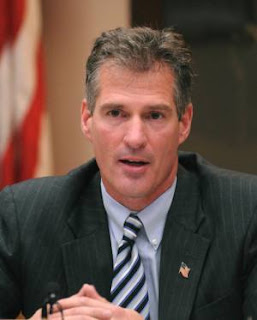
In a state where only 24 of the 200 legislators who occupy the legislature are Republicans and which last reliably voted GOP at a national level during Dwight Eisenhower’s era, most pundits and pols could be forgiven for tuning out their interest in the race to succeed the late Ted Kennedy after the lopsided, low-turnout Democratic primary of earlier this month.  Between Massachusetts’ historically liberal leanings, State Attorney General Martha Coakley’s convincing primary victory and her sizable cash advantage, national Republican leaders and even conservative activists have largely written off St. Sen. Scott Brown’s erstwhile attempt to score even a moral victory in the Bay State.

While there’s no question that despite being an articulate communicator whose good looks allowed him to put his posterior in Cosompolitan magazine for posterity in 1982, Brown faces taller odds than Hervé Villechaize at a slam dunk competition.  Still, some are questioning the national GOP’s disinterest in the campaignNRO‘s Jim Geraghty gamely expresses the NRSC and GOP’s likely logic of throwing away good money after bad considering the simple political math that Massachusetts presents any right-of-center candidacy:

But to illustrate how tough the odds are for Brown, let’s pretend that every registered Republican in the state, as of 2008, shows up and votes for him. And let us pretend that the independents split evenly, and that only one third of the state’s Democrats show up and vote for Coakley.

Under that scenario, Coakley still wins by about 1,045 votes.

With Brown trailing Coakley in cash-on-hand alone by nearly $1.6 million, in addition to having been already outraised $4 million to $400,000, there’s little logic at hand for any national Republican organization to spend the kind of money necessary to deliver, in the words of one snubbed Bay State Republican, “a level playing field.”  Had the state’s beleagued GOP recruited any one of the higher-profile candidates mentioned months ago, including Red Sox pitcher Curt Schilling or former White House chief of staff Andy Card, funds would likely be more forthcoming.   Such realities explain the lack of organizational support for Brown – but it doesn’t explain why conservative activists have wiped Brown from their radar.

Massachusetts may be solidly blue but the Democratic establishment has rarely been less popular.  Gov. Deval Patrick, who successfully broke a 20-year streak of moderate Republican governors with his victory in 2006, has a 47% disapproval rating, which is actually a slight improvement.  The state’s health care system, once seen as the template for Congress’ national health care reform, has been seen as successful by only 26% while merely 10% believe the system has actually improved the quality of care.  Throw in your run-of-the-mill scandals that happen in states that lack much competition at the polls and at least a pyrrhic Democratic victory seems possible.

The same scenario played out three years ago as Republican Jim Ogonowski nearly upset Niki Tsongas in Massachusetts’ 5th Congressional district.  Despite being outspent 4-to-1 and residing in a district where only 18% of voters were registered Republicans, Ogonowski captured 46% of the vote.  And while the numbers once again sizably favor the Democrat, the intangibles love the underdog:

[T]he number of votes there are in the Democratic Primary is usually the high-water mark of what the Democrat will get. In 2001 special congressional election, Steven Lynch got more votes in the Democratic Primary than he received in the General Election.  Fewer people voted for Nikki Tsongas in 2007 in the general than voted in the Democratic Primary.
…Coakley has basically shut-down and set the cruise control. She thinks she’s already won. Her base is no longer motivated. Scott is Senator 41. Obama’s Agenda screeches to a halt if Scott is elected . . .

Despite Brown’s potential importance, few conservative activists and fewer conservative dollars have rushed to his aid.  But recriminations are likely to abound should Brown pull closer than expected come Election Day, leaving the RNC and NRSC in an impossible position – spend money only to see Brown lose in a modest landslide or save for 2010 while likely losing dollars from yet another blog-inspired embargo on committee contributions.

Much like the Doug Hoffman candidacy in nearby New York, if conservative activists want to see Scott Brown supported, they’re best advised to start by doing so themselves.

--> Site Meter -->