Archive for the 'History And Its Making' Category

The Pigeons Rose Into the Air

Monday, January 18th, 2010

I was seventeen years old. My grandmother was born in Italy and had always wanted to go back. Just weeks after her husband, my grandfather died, she decided it was time. He never wanted to fly and she had long since given up on trying to drag him along. This was her chance and I’d be her guest. A three and a half week tour of the homeland.

The Pope gave an audience in St. Peter’s square every Wednesday and we of course had tickets. My grandmother, a member of Northeast Minneapolis’ aristocracy of restaurateurs, must also have had connections within The Vatican. Our seats were only a few rows back from where his holiness would sit, once the Popemobile made it’s customary circuit around the interior of the square, packed with hundreds of thousands of cheering believers and tourists. Little did we know it was this day in May 1981 that Pope John Paul II would not address the animated crowd.

The Pope entered the square off in a corner, far from our post. We caught brief glimpses of his white robe and matching (and then unprotected) Jeep through the crowd. We otherwise followed him audibly as the cheers rose and fell as he traveled counter clockwise under a beautiful blue sky, through the outer bounds of the open air square, framed by rows of aged, towering and historic white columns.

I would guess he was about three quarters through his route, behind the columns in the round section of the keyhole-shaped space when the pigeons rose into the air, startled by something beyond our perception. The look on my grandmothers face conveyed her immediate concern.

Seconds later we heard the delayed pop of one of what we would learn later was a quick salvo of five shots, the other four muffled by closely packed onlookers. It sounded like a firecracker. At first we thought it was a prank, maybe someone had smuggled one into the square. It was the distant, ominous wail of women and children screaming that informed us something much more serious was afoot.

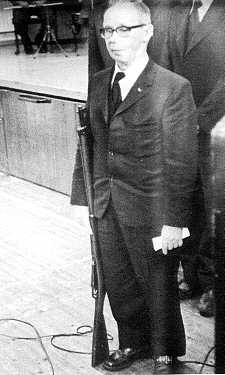
Mr. Agca shot the pope on May 13, 1981, in St. Peter’s Square, wounding him in the stomach, left hand and right arm.

The haunting sound grew in volume as the crowd became informed exponentially and traveled ominously from the point of impact to my distant perch as I stood on my chair, a typical teen-aged stance. From my vantage point I was startled to see a subsequent wave approaching through the throngs as the crowd instinctively dropped to their knees in prayer for their fallen magnate. I stood on my chair, alone, as everyone else around me fell to the bricks until just behind me, a priest, in Italian but clearly in disgust, scolded me while he horse-collared me to the ground, and implored me to pray as well.

Two years later, the Pope visited Mr. Agca in a an Italian prison and offered forgiveness.

Which is how long it seemed to take to get out of St. Peter’s square as sobbing Christians, uninformed as to their beloved Pope’s prognosis, made their way to the exits under the constant buzzing of helicopters overhead and caribinieri straining to secure and clear the area.

We made it back to our flat in Rome where the magnitude of what we had witnessed was revealed by worldwide television coverage of what would be one of the biggest global news events that year. We were glued to the screen as if we had been a thousand miles away. The fact that it had been a few hundred feet wouldn’t sink in until we were back home, weeks later.

The phone rang that night at two or three in the morning and we heard our host, a distant cousin, in Italian, clearly irritated by the disruption. It was when I heard him call out “Giovani! Telefono!” that I knew, curiously, the call was for me.

KSTP News was on the other end of the crackling line. Reporters had discovered we were the only Minnesotan’s in the square that day and they wanted an interview. I would find out later from my friends back home that my account of the incident was actually live on the air. It was probably better that I didn’t know it at the time.

The next three weeks of our trip was of course relatively uneventful as we visited the rest of Rome, touring Naples, Florence and Venice as well as the childhood home of my grandmother, reduced to remnants of a foundation by wars and the passage of time.

Mehmet Ali Agca, the Turkish man who shot and wounded Pope John Paul II in 1981, was released from a Turkish prison on Monday proclaiming that he was “the Christ eternal” after serving jail terms totaling 29 years.

Pope John Paul II miraculously recovered, forgave his would-be assassin, and served for over twenty more years. My grandmother passed away a few years after our pilgrimage.  I am grateful she chose me to accompany her on her last and only journey back to her home town.

Stuff From An Old Notebook

Thursday, January 14th, 2010

Back in the eighties, I thought it’d be fun to get a group of conservatives together and publicize a “Tachometer to Tyranny”.  It’d have basically been a gauge of some sort that would represent the consensus of a number of conservative thinkers about the speed at which the world was driving towards one-world dictatorship.

Of course it would have  been a biased indicator!  That was the point!

It was, of course, a response to the “Bulletin of Atomic Scientists'” “Doomsday Clock”, which was  prominently on display during the eighties as a barometer (to mix my gauges) of lefty opinion about the state of the world.

It’s baaaaaaaaaaaack:

The minute hand of the famous Doomsday Clock will be moved at 3pm this afternoon, for the first time in two years.

The timepiece in New York conveys how close humanity is to catastrophic destruction, which is represented by midnight.

I’m wondering if the  media – which cover every “adjustment” of the clock with breathless, unquestioning credulity – ever asked themselves “why was it that the “Bulletin’s” “scientists” became the most pants-wettingly depressed about Ronald Reagan’s actions – the very actions that made it possible to adjust the clock “backwards” shortly after his administration?

Oh, that’s right.  Must not question them; the science is settled.

A Ghost Of Crisis Past

Tuesday, December 22nd, 2009

It was 28 years ago this week that Romuald Spasowki, the Polish ambassador to the United States, defected to the United States, kicking off a chain of events that forever underscored what America should be all about.For the previous year, democracy-loving Poles had given communism its biggest internal challenge ever.

The Solidarity trade union movement, led by Lech Wałęsa, had started by paralyzing the Lenin shipyard in Gdansk; the strikes spread nationwide; it was becoming an untenable challenge to the Communists.

Solidarity Congress at the Gdansk Shipyard

Solidarity Congress at the Gdansk Shipyard

The movement was snowballing, paralyzing much of Poland’s industry:

Riots at the Nowy Huta steelworks,

Riot at the Nowy Huta Steelworks

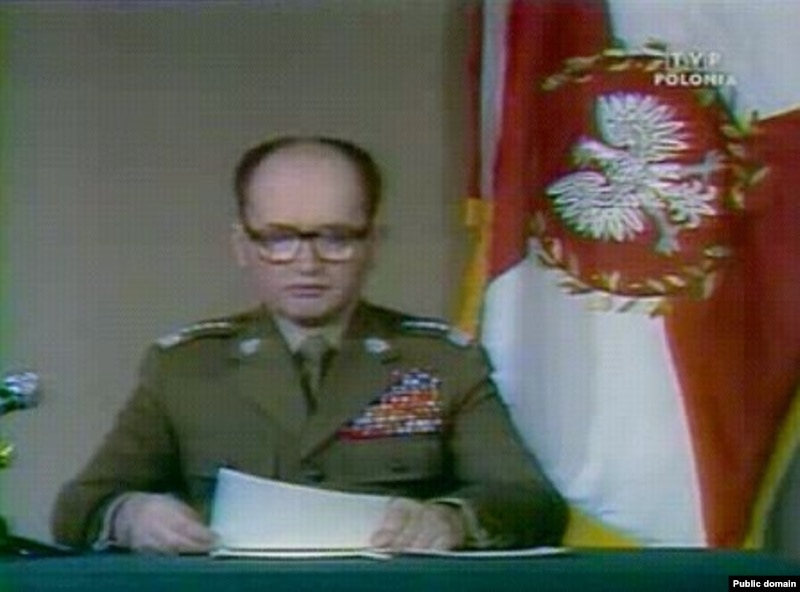
On December 13, 1981, General Wojciech Jaruzelski declared martial law, breaking up Solidarity strikes by force and arresting Wałęsa and many of his followers.

Jaruzelski announcing martial law on Polish TV

Jaruzelski announcing martial law on Polish TV

Jaruzelski acted decisively – siccing the ZOMO riot police (who were to 1981 Poland what Noriega’s “Dignity Battalions” were to Panama in 1989 and the basiji are to Iran today) on demonstrators around the country, attacking them with clubs, dogs, water cannon and worse.

ZOMO in Gdansk

Staring south at a northbound wall of thugs; ZOMO riot police.

While a case can be made that Jaruzelski was acting to prevent a Soviet invasion – like the one that had crushed a similar flowering of pro-liberty agitation in Czechoslovakia only 13 years earlier, or in Budapest and Gdansk just 12 years before that – there was no mistaking it on the Polish street; ZOMO’s boot was on their neck.

Ambassador Spasowski had been a communist his entire adult life – but he was also a Polish patriot; his family had fought in the Polish resistance during World War II; his father had died in Gestapo custody.

And his communism had been eroding over the years.  Like all good communists, he’d started out as an atheist.  But his wife, Wanda Spasowska, had gradually won him over to Poland’s majority faith, Catholicism.  And the elevation of Karol Wojtyła as Pope John Paul II was the last nail in the coffin of his faith in Communism.

And in December of 1981 Spasowski saw what was happening in Poland…

…and he couldn’t take anymore.  On December 20, he called the State Department, and expressed his desire to defect to the United States.

And it was 29 years ago at about this moment that Ronald Reagan hosted Ambassador Spasowski and Madame Spasowska to the White House.

Madame Spasowska, President Reagan, Ambassador Spasowski

Madame Spasowska, President Reagan, Ambassador Spasowski

Let me re-emphasize that: Ronald Reagan welcomed the highest-ranking defector in the history of Communism to the very seat of American power.  He took a source of immense, caustic embarassment to Warsaw’s puppet regime (who held a drumhead “trial” for Ambassador Spasowki and sentenced him to death in absentia in the coming weeks) and their gangster overlords in Moscow, and made him not just a refugee, but a highly-honored guest of the American people.  He gave them, in essence, the key to the nation – a ringing endorsement of Solidarnosc, of the Polish freedom fighters, and of the fight for liberty in a dismal land that wanted, and deserved, better.

———-

And then he did it one better.  The next day, December 23 1981, he took the traditional Christmas speech to the nation – traditionally a conciliatory, warm, fuzzy affair – and turned it into a broadside of rhetorical grapeshot onto the packed decks of communist boarders.  I will add the odd bit of emphasis:

As I speak to you tonight, the fate of a proud and ancient nation hangs in the balance. For a thousand years, Christmas has been celebrated in Poland, a land of deep religious faith, but this Christmas brings little joy to the courageous Polish people. They have been betrayed by their own government.

The men who rule them and their totalitarian allies fear the very freedom that the Polish people cherish. They have answered the stirrings of liberty with brute force, killings, mass arrests, and the setting up of concentration camps. Lech Walesa and other Solidarity leaders are imprisoned, their fate unknown. Factories, mines, universities, and homes have been assaulted.

The Polish Government has trampled underfoot solemn commitments to the UN Charter and the Helsinki accords. It has even broken the Gdansk agreement of August 1980, by which the Polish Government recognized the basic right of its people to form free trade unions and to strike.

Compare this to Obama’s initial response to the demonstrations in Iran.  If you can.

Reagan didn’t limit things; he went all-in:

The target of this depression [repression] is the Solidarity Movement, but in attacking Solidarity its enemies attack an entire people. Ten million of Poland’s 36 million citizens are members of Solidarity. Taken together with their families, they account for the overwhelming majority of the Polish nation. By persecuting Solidarity the Polish Government wages war against its own people.

I urge the Polish Government and its allies to consider the consequences of their actions. How can they possibly justify using naked force to crush a people who ask for nothing more than the right to lead their own lives in freedom and dignity? Brute force may intimidate, but it cannot form the basis of an enduring society, and the ailing Polish economy cannot be rebuilt with terror tactics.

And Reagan wasn’t just “expressing concern” or “sending a message”, either:

I want emphatically to state tonight that if the outrages in Poland do not cease, we cannot and will not conduct “business as usual” with the perpetrators and those who aid and abet them. Make no mistake, their crime (!!!) will cost them dearly in their future dealings with America and free peoples everywhere. I do not make this statement lightly or without serious reflection.

We have been measured and deliberate in our reaction to the tragic events in Poland. We have not acted in haste, and the steps I will outline tonight and others we may take in the days ahead are firm, just, and reasonable.

No, not just words.  There was a plan – one that would directly separate the people from their oppressors:

In order to aid the suffering Polish people during this critical period, we will continue the shipment of food through private humanitarian channels, but only so long as we know that the Polish people themselves receive the food. The neighboring country of Austria has opened her doors to refugees from Poland. I have therefore directed that American assistance, including supplies of basic foodstuffs, be offered to aid the Austrians in providing for these refugees.

But to underscore our fundamental opposition to the repressive actions taken by the Polish Government against its own people, the administration has suspended all government-sponsored shipments of agricultural and dairy products to the Polish Government…We have halted the renewal of the Export-Import Bank’s line of export credit insurance to the Polish Government. We will suspend Polish civil aviation privileges in the United States. We are suspending the right of Poland’s fishing fleet to operate in American waters. And we’re proposing to our allies the further restriction of high technology exports to Poland.

Knowing the Poles weren’t just a proud people – who isnt? – but a people that had put it all on the line for liberty before.  Reagan invoked our shared history…:

When 19th century Polish patriots rose against foreign oppressors, their rallying cry was, “For our freedom and yours.” Well, that motto still rings true in our time. There is a spirit of solidarity abroad in the world tonight that no physical force can crush. It crosses national boundaries and enters into the hearts of men and women everywhere. In factories, farms, and schools, in cities and towns around the globe, we the people of the Free World stand as one with our Polish brothers and sisters. Their cause is ours, and our prayers and hopes go out to them this Christmas.

…tying the American and Polish people together rhetorically as well as through his actions.

Can you imagine the current Administration doing that?  Ever?

And finally – something that I think about every Christmas, especially in times like these:

Yesterday, I met in this very room with Romuald Spasowski, the distinguished former Polish Ambassador who has sought asylum in our country in protest of the suppression of his native land. He told me that one of the ways the Polish people have demonstrated their solidarity in the face of martial law is by placing lighted candles in their windows to show that the light of liberty still glows in their hearts.

Ambassador Spasowski requested that on Christmas Eve a lighted candle will burn in the White House window as a small but certain beacon of our solidarity with the Polish people. I urge all of you to do the same tomorrow night, on Christmas Eve, as a personal statement of your commitment to the steps we’re taking to support the brave people of Poland in their time of troubles.

And so Reagan lit a candle.  And across America, so did millions more, in America’s Polish hubs in Chicago and Milwaukee of course, but in millions of homes that couldn’t pronounce “Czestoszowa” but who could tell good from evil.  And though the puppet regime in Warsaw and their masters in Moscow tried to stifle the story, the word got through to millions of Poles in the street, and thousands in jail; the American President, and the people he leads, are with you.

It would be seven years before Reagan could issue his challenge to Gorbachev to “tear down the wall”; it would be nine years before the Berlin Wall finally fell.  But one could make a strong case that the first crack appeared 28 years ago tonight, when a brave man without a country (for a few years, anyway; the Polish parliament reinstated the Spasowski’s citizenship in 1994) met with a visionary, and sent a simple message; “freedom lives, and we support it”.

It was a simple message, but one that turned out to be overwhelmingly successful:  in 1980, the world had just 56 democracies.  In 1990, the total rose to 76; by 1994, the number reached 114 – a 100% jump in fourteen years.

The Polish National Anthem (“Mazurek Dabrowskiego“), written by Poles who like Ambassador Spasowka were also in exile (in about 1800, with Bonaparte’s Polish Legion), goes:

Jeszcze Polska nie umarła,
Kiedy my żyjemy
Co nam obca moc wydarła,
Szablą odbijemy.

(Poland has not perished yet
So long as we still live
That which alien force has seized
We at sabrepoint shall retrieve)

It was 28 years ago tonight that the sabre came out – rhetorically speaking.  And the whole world is better off for it today.

Practice Makes Perfect

Thursday, December 17th, 2009

It was 105 years ago today that Simo Häyhä was born?

“Simo Whøhä?”

Have a seat.

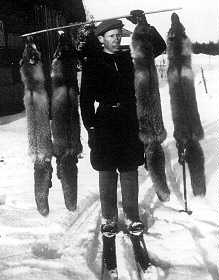
Simo Häyhä was a pretty typical Finnish farmer – the kind of guy you can find in any small town in rural Finland or, for that matter, the Iron Range.  He was born and grew up in Rautjärvi, a spot on the map off the west edge of Lake Ladoga, two miles west of the current Russo-Finnish border.  Like most Finns, he did his year of military service in the mid-twenties, and went back to his real life – farming in the summer, hunting moose in the winter.  He was, outwardly, a pretty unpreposessing man – he stood only 5’3, which is especially diminuitive among the statuesque Finns.

He was 34 when the Soviets invaded Finland.  Häyhä was recalled to service with the Finnish 12th Division.  The division held the Kollaa front, north of Lake Ladoga, and was quickly beset by four Soviet divisions and a tank brigade.

Kollaa was the Somme of the Winter War.  The Soviets would charge; they’d get through the Finnish lines; the Finns would cut them off and kill them, or drive them back. And so it went, back and forth, for three whole months – virtually the entire length of the war.

And one of the reasons was Häyhä.

Simo with rifle

Simo with rifle

Armed with a Moissin/Nagant M/28 – a World War 1-vintage Russian rifle that the Finns had reworked into a much more accurate piece (the Finns, a former Russian province, had retained the Russian-caliber, mostlhy Russian-surplus, weapons after independence) – and wearing homemade white camouflage, on his own cross-country skis, Häyhä stalked the forest.  Unlike most of history’s snipers, he used only his  rifle’s iron sights – he thought scopes forced the sniper to raise their heads too high, dangerously raising their profile.  He was thorough about concealment – when he had time to prepare a position, he would compact the snow in front of him to avoid raising a small blizzard with his muzzle blast.  He’d also keep snow in his mouth while stalking, to pre-cool his exhalation, avoiding the big clouds of steam that normally accompany heavy exertion in the extreme cold.

Did we mention the extreme cold?  The average temperature during the Battle of the Kollaa varied from “freaking cold” to “how the hell do humans live in this” – from -4 to -40, Fahrenheit.

In a three-month period – roughly 100 days – Häyhä had 505 confirmed kills.  542 if you count some unconfirmed ones.  Some Finnish sources say it was closer to 800.

And he wasn’t just a sniper; when the situation called for the Finns to close with with the Soviets, Häyhä would ski into hand-to-hand range with the rest of the troops for the close assault; he was credited with another 200 kills at point-blank range with his Suomi Model 31 submachine gun.

The Soviets called him “The White Death”.  They tried everything to get him; countersnipers (they didn’t last long), concentrated volleys of anti-tank rifle fire (gunnies will know what they are; to a non-gunny, think “really big rifle desigined to penetrate a quarter inch of armor”), and finally rolling artillery barrages.

A week before the war’s end, on March 6 1940, a lucky shot from a Soviet infantryman caught Häyhä in the jaw, wrecking it and blowing of his left cheek.  His comrades dragged him to the rear, where he began several years of recuperation.  He got one of the very few battlefield promotions ever issued in the Finnish army, from Corporal to Second Lieutenant, in honor of his achievements.

The Soviets suffered 8,000 dead in three months in Kollaa; Häyhä alone accounted for nearly 10% of the total (and at least one of Finland’s other great snipers,Sulo Kolkka, claimed another 400 at the Kollaa; the two men between them accounted for over 12% of the entire death toll).  On the list of the world’s greatest snipers, he’s not only the top of the list by a considerable margin, but he did it all in 100 days flat. 

Even John Woo or Quentin Tarantino couldn’t make him a bigger badass.

But Simo Häyhä was no movie action hero; he was a typical workadaddy hugamommy Finnish backwoodsman.  He survived the war, and lived until 2002 in rural Finland, hunting moose and breeding dogs.  He was bit of a national treasure in Finland.

Asked in the nineties what made him so successful as a sniper, he responded in Finnish “Pyytlikkonyykkeyynnkyypelaapetoonen“; “Practice”. [1]

This video tribute tells the story pretty well [2]

What can we take away from Häyhä’s story?  That a little guy with a rifle can make a disproportionate difference.  He stymied Stalin, just like a lot of American little guys with rifles (but whose preferred weapon is the ballot and the picket sign and the checkbook), outnumbered and outgunned and outspent, rhetorically stymie Nancy Pelosi and Richard Daley and the Democrats today. [3]

And so Simo Häyhä is every bit as much a hero for Real Americans for what he represents as he is for Finns for what he did.

Happy posthumous birthday, Simo Häyhä!

(more…)

It Was 65 Years Ago Today…

Wednesday, December 16th, 2009

…in weather a lot like this, that the Battle of the Bulge started.

I thought about that yesterday, as I wrestled with a cold car; “how much more fun would this be if I’d spent the night in a three foot deep foxhole, with no sleep, wrapped in an overcoat and old newspapers?

Here’s an old Army newsreel of the battle, in that classic forties newsreel style.

The Bulge was such a huge story – even 65 years later, it’s hard to know where to start.  So much of it is well-known – the 101st Airborne (and 7th Armored) at Bastogne; Patton’s epic counterattack; the story of thousands of Americans, cut off from higher authority and on their own in atrocious winter conditions, adapting and persisting and eventually prevailing against the Nazi onslaught.

But there are two stories I usually return to, over and over.

One of the great stories of the battle – one that was more or less untold until the eighties – was that of Lieutenant Lyle Bouck and the Intelligence and Reconaissance platoon of the 394th Infantry Regiment – eighteen guys with three machine guns and orders to hold an isolated hill near the Belgian village of Lanzerath, astride one of the huge gaps in the American lines. 

Lanzerath, and the monument to Boucks platoon, today

Lanzerath, and the monument to Bouck's platoon, today

An entire German airborne regiment was charged with clearing the hill to make way for the SS Panzergrenadiers of Colonel Joachim Peiper – the elite  stormtroopers who were going to be the tip of the spear that would drive all the way to Antwerp and, according to Hitler’s plan, divide the Allied armies and make victory over Germany impossible.

But the nineteen-man platoon held off the entire German regiment for 24 hours, killing hundreds of paratroopers, delaying Peiper’s breakthrough; not long enough to prevent Peiper from driving all the way to Dinant (the peak of the “bulge”), but long enough that the reinforcements that finally did arrive on the scene were able to hit Peiper’s flank rather than watch his dust (or blowing snow) disappearing in the west.

Bouck’s platoon were captured after they ran out of ammunition.  One man died; the rest spent four months in POW camps.  When released from the POW camp, Bouck was too ill to file an after-action report – and reportedly didn’t think they’d done anything especially notable anyway.  And so the events didn’t get formally commemorated until 1981.

Every single member of the platoon was decorated for their actions that day – making them the most-decorated platoon-sized unit of the entire war:

Another of the stories – more mixed, in this case – was that the Battle of the Bulge was the beginning of the end of segregation in the military and, in turn, the United States.  Theretofore, most African-Americans in the Army served in labor units, digging ditches and building airfields and burying the dead.  Much of the work was crucial; most of the supply trucks that supported Patton’s blitz through France in 1944 had black drivers.  But it was the considered opinion of many officers, from Eisenhower and Patton to the US Army’s personnel director, General Robert E. Lee (not making that up) that blacks lacked the courage and intelligence to serve as good combat soldiers.

Pressure from the Roosevelt adminstration knocked a few cracks into the system; the Army Air Force trained 1,000 black pilots, including the celebrated “Tuskeegee Airmen”; the Marines, two segregated combat battalions; the Army, a number of combat and combat support units along with some of the traditional black “Buffalo Soldier” units, dating back to the Civil War; the white-led 92dn Infantry Division led the way in Italy, and the 761st Tank Battalion (immortalized in a fantastic book by none other than Kareem Abdul-Jabbar) spearheaded Patton’s relief of Bastogne:

A Sherman of the 761st Black Panther Tank Battalion

A Sherman of the 761st "Black Panther" Tank Battalion

A black light-anti-aircraft battalion had the highest score of any AA gun unit in Europe.

But during the Bulge, the casualties spiked horribly; the replacement depots’ supplies of white replacement troops dried up.  The call went out to the labor, mechanics and truck units, looking for volunteers.  Thousands stepped up; while the plan was to keep them in segregated platoons.  But as the friction of combat ground the plans down, the platoons became squads mixed into white platoons, and soon black soldiers in squads with white troops.  By the end of the Battle, black and white troops were bunking together in confiscated houses. 

It’d be great to say the Army learned its lesson – but it wouldn’t be true.  Once the dust died down, the Army resegregated the troops; the white troops earned points for combat service, while the black ones plodded along through menial service jobs.  It took three more years before Truman desegregated the military. 

But the experience at the Bulge was one of the key experiences that discredited the institutional belief in the inferiority of blacks as soldiers.

Hartelijk Gefeliciteerd!

Thursday, December 10th, 2009

Today is the 234th birthday of the Royal Netherlands Marine Corps – one of the oldest military units in constistent existence in the history of the world.

“Dutch Marines?”

Siddown.

The Dutch Korps Marijniers were, like most Marine Corps of the sail era, initially soldiers who fought on ships.  Like the US and eventually British  (as well as French, Spanish, Portuguese and Italian) Marine corps, they gradually formed into a separate ground-combat unit specializing in amphibious warfare.

During the opening weeks of the German Blitzkrieg into the Low Countries in 1940, the Germans rated the Dutch Marines as the tougest opponents they faced; it was a unit of Marines in Rotterdam that kept the Panzers from linking up with the Paratroopers, which led the Germans to their infamous terror-bombing attack to break the stalemate. The Marines’ main theater of operation, though, was in the Dutch East Indies – today Indonesia – where their resistance to the Japanese, while effective, was doomed; their homeland conquered by the Nazis, they were fighting without supplies, spare parts or any kind of direction from the home office.

After the fall of the Netherlands, many Marijniers escaped to the UK and, eventually America, where US Marine Corps trained a brigade of Dutch. This unit became the core of the modern Nederlands Korps Marijniers, long one of NATO’s elite rapid deployment units.  They’ve spent most o the past forty years training to fight in Norway against the Soviets, alongside US and British Marines.

And at a time when the world seemed befuddled about what to do about terrorist attacks, in the seventies, it was the Korps’ special operations unit, the Bijzondere Bijstands Eenheid, a hostage-rescue unit equivalent to the British SAS, the US “Delta” and the German GSG9, carried out one of the first notable successful hostage rescues.

Iraq and Afghanistan?  Sure.

Anyway – happy birthday, Dutch Marine corps!

No Decision

Wednesday, December 2nd, 2009

In the book and miniseries Band of Brothers, “Easy ” Company (E Company/506th Airborne Infantry Regiment) is led through Normandy and Operation Market-Garden (the invasion of the Netherlands) by Dick Winters – the protagonist and real-life hero of the story.   After Market-Garden, Winters is promoted to battalion executive officer; he’s replaced by another excellent officer, who is shot and gravely wounded by a nervous sentry.  That officer, in turn, is replaced by a Lieutenant Dike.

In the book (and, as narrated in the movie by Dike’s first sergeant, Litman, in the miniseries), it’s revealed that “Lt. Dike’s biggest problem wasn’t that he made bad decisions.  It’s that he made no decisions at all”. 

During the Battle of the Bulge, at the defense of Bastogne, the competence of his platoon leaders and NCOs – the sergeants and corporals who do most of the moment-by-moment leadership – saved the company.

But after the Bulge, during the long series of counterattacks to drive the Germans back out of Belgium, Dike’s inadequacy as a combat leader led to a crisis.  In a counterattack to retake the town of Foy, Belgium, Dike’s led the company into an exposed positi0n, halfway between the shelter of the woods and the town full of Germans.  Raked by machine gun fire, pummeled by concealed artillery, and needled by snipers concealed in the town ahead who alone kill or wound six of the soldiers, the company was in a bad positi0n; to retreat would lead the company back across open ground and lead to needing to do the whole thing over again.  To advance would involve casualties and a very tough fight with some very skilled German defenders.  And to stay in place involved getting shot or blown up at the Germans’ leisure. 

Dike made one decision – an ineffective half-measure sending a platoon on a fruitless, pointless flanking maneuver that led to casualties and nothing much else – and then froze up.  Winters, watching from not far behind, ordered Lieutentant Speirs, the aggressive, Scottish-born platoon leader who would carry the company through the rest of the war, to take the company.  He made the tough but instant decision; attack.  Get into the town.  Root the Germans out and get the battle over.

It cost casualties – but fewer than the company lost as it floundered about in the field, waiting for a definitive decision.  It was a tough call, one that could have ended in disaster to be sure.  But it carried the day.

I have no idea whatsoever what prompted me to think of that.

Sisu

Monday, November 30th, 2009

Fans of underdogs should observe today as an international holiday.

It’s the 70th anniversary of the beginning of the Winter War.  It was 70 years ago today that Stalin’s Red Army invaded sprawling, cold, thinly-populated Finland.  His army of well over 200,000 troops, with hundreds of tanks and hundreds more artillery pieces, slammed into the Finnish defenses up and down the entire border – especially in the key strip of land, the Karelian Isthmus, betwen the eastern reaches of the Baltic and huge Lake Ladoga.  Karelia was the key to taking Helsinki and the rest of Finland’s small political and industrial base – although Finland was very predominantly rural and agricultural for another generation after the Winter War.

The attack ran into trouble right away.  Part of the Soviets’ problem was self-inflicted; Stalin had purged most of the best, most competent officers from the military in the three previous years, afraid that good officers would become big coup risks.  He”d also undercut the prestige and authority of the officer class – at one point even erasing the difference between officers’ and enlisted mens’ uniforms.  The surviving officers were largely toadies, selected for their political reliability more than their caliber as leaders.  Between the purges and the other turmoil facing the Red Army of the era, their troops – mostly conscripts – were badly led and badly equipped for any kind of fight in the sub-arctic wastes of Finland, even against an indifferent foe.

Finland was not an indifferent foe.  They had secured their freedom from Russia less than a generation before, and they guarded it jealously.  While their standing military was very small, most of the male population served in the “reserve”.  On the one hand, the reserve was less formal than we’d recognize; many didn’t have uniforms – only troops on active service got them – and so they provided their own winter clothing.  On the other, they knew the terrain – a maze of forests, swamps and lakes not terribly different from northern Minnesota, but much, much colder – like the backs of their hands.

Finnish infantry, stalking the enemy

Finnish infantry, stalking the enemy

Finnish snipers in particular distinguished themselves, with one – Simo Häyhä – becoming the single greatest sniper that ever lived.  More on him in a few weeks.

The Soviets attacked wearing their brown uniforms against the white snow, making easy targets in the bitter cold. They kept to the roads, ceding the woods to the Finns…

…who, on their skis and knowing the territory, opted to fight a guerrilla-style war in the snow.  Russian columns, led by tanks, stalled on roads through forests and swamps that were impenetrable to vehicles. The Finns attacked Soviet field kitchens – the Russians’ only source of hot food in the bitter, -40 cold – crushing the enemy’s morale before picking off the infantry protecting the tanks, who were then sitting ducks for a molotov cocktail.

Finns with knocked out Soviet tank

Finns with knocked out Soviet tank

This style of war was christened “Motti” tactics by non-Finnish military historians, unaware that “Motti” is nothing but a colloquialism for swamp; Finnish officers after the war expressed puzzlement at the term; paraphrasing one officer I read years ago,  it wasn’t as if the Finnish military academy offered a course in swamp warfare in the arctic.  They improvised.

The improvisation peaked at the epic battle of Suomussalmi, for a week in mid-December.  A Soviet column of two divisions – close to 35,000 men, with attached units – advanced across the border to the village of Suomussalmi, attempting a tank assault through the forests; the Finns cut the column up into many, isolated small detachments that the Finns destroyed piecemeal.  The Finns destroyed the two divisions, killing as many as 25,000 Soviet soldiers and capturing 2,000 more, as well as dozens of tanks and artillery pieces and thousands of rifles, machine guns and horses – all of which they turned against the invaders in short order.

There were dozens of such repulses; the Soviets suffered grievous casualties; .  The initial attack was repulsed in what was not only an upset, but one of the bloodiest upsets in military history.  The Soviets admitted to 126,000 dead (post-Soviet academics put the figure closer to 134,000), twice as many wounded, and the loss of over 3,000 tanks and as many as 500 aircraft.  This to a nation that started the war with 13 tanks, few serious antitank weapons, and an air force of maybe 100 planes against a Soviet air force with 20 times as many aircraft.

Stalin responded to the intital stalemate by mobilizing 600,000 men, lanching them into meatgrinder frontal attacks in immense force across the Karelian Ithsmus, which finally ground the Finns – who never had more than 250,000 troops to cover the whole country, and who started the war short on ammunition – down  enough to eke out a treaty at the cost of immense Soviet casualties.  In exchange for horrific losses, the Soviets gained a little territory and not a whole lot else.

The Winter War teaches us many lessons useful today.  Individuals with firearms and local knowledge can have a disproportionate impact on their enemies.  International diplomacy is fairly useless against an aggressor who has no interest in peace under any terms (the Winter War was one of the last nails in the coffin of the League of Nations).

At any rate, three cheers for those inscrutable Finns.

Lashing Back At The Waves Of Stupid

Monday, November 16th, 2009

Trafalgar Square in London is one of London’s great memorials.  The tribute to Lord Nelson and his epic naval victory at Trafalgar is one of the signature sites in one of the world’s great cities.

The square has a series of  “plinths” – the technical term for statue-stands.  Three of them are occupied by statues of King George IV, Henry Havelock and Sir Charles Napier. The fourth of the plinths, built in 1841, has never been permanently occupied by a statue.  Over the years, it’s been the scene of stunts, demonstrations, and often occupied by temporary statues, some of them debuting on the plinth before being put in their permanent locations.  Some of them were of genuine British heroes; others, during the reight of London’s longtime socialist wackjob mayor wackjob mayor Ken Livingstone, were more, er, unconventional.

But the latest occupant of the Fourth Plinth is a statue of a hero that is someone obscure to Britons, and even moreso to Americans – even though he played an absolutely crucial role in the survival of western civilization seventy years ago.

It’s Air Vice Marshal Keith Park, a New Zealander who commanded the Royal Air Force’s “11 Group”, the fighters responsible for defending London and southeast England during the Battle of Britain.   Had 11 Group failed in its mission, Hitler would have won air superiority over the English Channel and the southwest of the UK.  It would have cleared the way for an invasion of the UK which, given the British Army’s badly-depleted state after Dunkirk, would likely have led to a Nazi victory in World War II.

The picture shows him in a fairly typical pose, pulling on one of his flight gloves as he got ready to climb into his personal Hawker Hurricane to keep up the relentless schedule of touring his airfields, checking up on his men, the hundreds of 20-25 year old pilots that died by the score, but saved the day for the UK and, incidentally, all of us.

I don’t know if it’s accurate to call Mary Wakefield, columnist for the London Independent, any more or less knowledgeable about history than any other “journalist”, here or there.  I don’t know if her knowledge of history is any more addled than that of any other Briton or American.  I don’t know if her giggly, show-biz-centered “mind” is any more  or less acute than that of any of the other bobbleheads in our “gatekeeping” class.

But reading this column about the Park statue…:

So Air Chief Marshal Sir Keith Park has made it up on to the fourth plinth in Trafalgar Square at long last. Arise, Sir Keith, good job. I salute you as I cycle past, for without you (I’m told) the Battle of Britain would have been lost and the free world a goner. OK, I’m lying. The truth is, I’d never heard of Keith Park GCB, KBE, MC before the campaign to plinth him began, and I still can’t quite figure out what all the fuss is about.

…I got a bad feeling about the answer.

Being one of the western world’s elite gatekeepers, one might think an enquiring mind like Mary Wakefield’s could have figured it out.

The campaign was frighteningly well organised and well funded: field marshals, MPs, Tony Benn, the vice-chancellor of Oxford ? they’ve been at it for years, pushing for Park, but why? Surely there are other, better known and just as heroic or deserving candidates.

Other than millions of other British World War II veterans?  Or the millions of civilians that survived the German blitz, the firebombing of London?  Perhaps – but it’d get crowded on that little plinth.

What about the Queen? There are other questions too. What were the Parkies thinking when they chose to depict their hero pulling on what looks like a pre-op surgical glove?

{{facepalm}}

And why such intensity and lack of humour?

We can forgive Mary Wakefield.  While the Battle of Britain may have lacked the gravitas of, say, the Spice Girls breaking up, it may have slipped her mind.

Clive James, writing for the Beeb, has a long, excellent  response.

Veteran’s Day

Wednesday, November 11th, 2009

I got this email from a business associate yesterday that said a bunch of the things I was fumbling with trying to say:

I speak for myself. As a man that has not served in our military I am painfully aware of the sacrifices made by so many, that I may live the most comfortable and safe life in human history. I believe this country was founded by men with devine intervention from our creator to do good in this world. So many have sacrificed more than I can imagine allowing me the blessings I enjoy everyday of my life. My heart aches for the loss of them, and the pain and anguish of others and their families. On this day I know I owe my life to so many that I can never begin to express my gratitude to, lt alone repay:

May GOD continue to bless the Unied States of America.

What he said.  Thanks, veterans…

Das War Den Moment Andem Wir So Lange Gewartet Haben

Monday, November 9th, 2009

I started watching Youtube vids from twenty years ago tonight – and I couldn’t stop.

Here’s an excellent, contemporary report from the CBC that shows some of the immediate background – but still reports on the Deutsche Democratische Republic as a going concern.

More about the extended, but brief and dramatic, collapse of East Germany:

…including the delicious irony that the actual motivation for the crashing of the Wall was an on-camera flub by East German Politburo member Guenther Schabowski, who muffed the announcement of the opening of the border, causing immense confusion between the crowds and the East Germany border police.

In the above video, the part between three and four minutes in – about the first break in the dam, where the East German commander at the Bornholmerstrasse gate decided to disobey a direct order and opened the crossing – is almost too powerful to watch.  It’s the first video I’ve seen in twenty years of the very first group to be allowed to cross from the communist East to the free west, freely and without bureaucratic buncombe (much less dogs and machine guns chasing them).  As the gate opens, as the people stream past the confused border guards (East and West), they look like kids tiptoeing down the stairs on Christmas morning; the first ones through walk gingerly, as if they expect the whole thing to get yanked away from them.  And then the weight of numbers dispels all doubt.

Another documentary about the schwehrpunkt at Bornholmerstrasse:

If Obama wins in 2012, then I have a hunch election night 2016 will look a lot like that.

The Bundestag (West German Parliament) breaks into the German national anthem:

German TV’s report:

Margaret Thatcher

It was a great time to be alive.

I Saw The World Change In The Blink Of An Eye

Monday, November 9th, 2009

It was twenty years ago today that the Berlin Wall fell.

It’s hard to remember at twenty years remove that it, and the Communism it represented, didn’t just get swept away in a wave of small-l liberal euphoria. 

Dinesh D’Souza, in his excellent bio of Reagan, notes that between 1980 and 1983, the experts were united in their belief that the “Second World”, Communism, was here to stay.  Make no mistake, people had recovered from the spell of Walter Duranty long enough to know that the Soviet system was cruel and corrupt gangster-run autocracy even worse than Chicago.  The publication of The Gulag Archipelago and other releases from the samisdat media, and the flood of people who fled Germany from 1948 through 1961, popped the bubble of acceptability that had accompanied travesties like Stalin’s “Man of the Year” awards in 1939 and 1942, and Stalinism’s embrace by “intelligentsia” throughout the West (including the early version of the Minnesota Democratic Farmer/Labor Party).   The stories of the thousands of heroic Soviet-bloc citizens who risked death and imprisonment fleeing their foetid, starving, lumpen homelands inspired many a young patriot in the day.

But while the bloom was long off the rose of western acceptance of Communism, the number of western intellectuals who seriously believed in 1980 that the decade would see the fall of the Berlin Wall and, in short order, communism itself would have fit in a single room at a Ramada Inn. 

There had been resistance, of course; in Budapest and Gdansk in 1956, Prague in 1967, Gdansk again in ’71 – all put down with ruthless brutality by the authorities, including the Soviet military.

And so I’m not aware that anyone held out that much hope for change in 1979 – thirty years ago – when Lech Walesa, a young electrician in Gdansk, led a pro-democracy union strike in Gdansk.  The movement had traction, of course – it swept Poland, and threatened to spin out of control; the Polish Army under General Wojciech Jaruzelski staged what amounted to a last-ditch military coup to bring down the government and declare martial law to quell the strikes, siccing “ZOMO” thugs (no, it’s not Polish for SEIU) on the protesters and strikers.  Jaruzelski was reviled around the world for the action – although there is evidence that history has misjudged the General, that he acted as did many in the Polish Army, as a Polish patriot, to prevent a Soviet invasion, which would have been much, much worse).

And indeed, had the status quo ante held sway after 1980, nothing much would have happened.

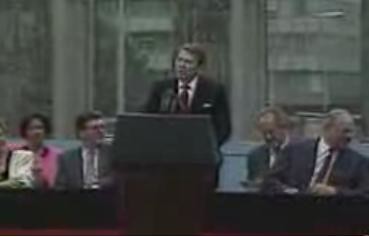
But in 1980, the election of Ronald Reagan signalled an end to detente – the diplomatic legitimazion of the Soviet gangster regime.  Reagan jacked up the rhetoric war, and the civil support for trade unionists behind the Iron Curtain (with considerable help from Margaret Thatcher, the Pope and, speaking of strange bedfellows, Lane Kirkland of the AFL-CIO), as well as building up the US military from its post-Vietnam nadir (although to be fair Jimmy Carter had realized the problem, and taken a few of the necessary high-level steps to start facilitating this).   The rhetorical confrontation peaked at Reagan’s classic Brandenburg Gate speech in 1987…

…but the diplomatic war had reached its Battle of Stalingrad at the Rejkjavik conference the year before, when Reagan called Gorbachev’s bluff on intermediate-range nukes.  Lily-livered pundits in the west flew into a panic, expecting mushroom clouds over London…

…but Gorbachev blinked.  He realized the communist East could not outlast the free West.  He accelerated the “liberalization” of the USSR and the Communist bloc – not to extinct it, initially, but to try to save it.

It was too late.  The Poles tossed aside the commies, followed by the Czechs. 

It didn’t go entirely without a fight, though.  As the Baltic States – Latvia, Lithuania and Estonia – tried to follow neighboring Poland’s suit, Soviet soldiers attacked some demonstrations.

But in dizzyingly short order, the Communist Bloc, which had killed tens of millions of people in the previous seventy years (estimates range from 20 to 60 million) and floated on a sea of blood that dwarved even Hitler’s monumental crimes against humanity, fell, kicked to the curb in a sea of ebullient humanity.

The left never got it.  Some of them had backed the wrong team.  Others were so invested in the idea that capitalism and western-style liberty were obsolete that they couldn’t wrap their arms around the new reality.

Some believe that if western-style democracy and liberty were so cool, the nations left in the wake of the fall of The Wall should have been able to get up and run from the get-go.  I distinctly remember Tom Brokaw, in 1992, describing Poland’s difficulties in changing from a command economy to free-enterprise.  “Et wrold sheem thut Eesturrrn Yurp’s ukspurramunt in Kapetelezm hez FEHLED” (“it would seem Eastern Europe’s experiment in capitalism has failed“), he said, with no further comment, apparently seeking his own Waltern Cronkite “this war can not be won” moment, writing off three whole years of effort on Poland’s part.  He was wrong, of course; Poland survived, and thrived.  And while the road to prosperity has been difficult for some former Soviet counties (indeed, for Russia itself, which may or may not be socially amenable to small-L liberal goverment), most of Eastern Europe thrives today, free of prowling Black Marias and windowless trains in the dark for long enough that people are starting to forget what they meant. 

Which must be an incredible blessing.

But Brokaw’s pronouncement, more than anything I can remember, started curing me of the habit of watching network news.

There are those who still say the whole fall of The Wall was Gorbachev’s idea – an idea that requires a preposterous suspension of disbelief, buying the notion that the Politburo – think Capi di Tutti Capi in Russian – would turn the Premiership over to anyone whose goal wasn’t the survival of the system. 

Whatever.

My many friends and acquaintances and neighbors and co-workers over the past twenty years who fled to the West tell me that they and their people back home remember who their real friends are.

So – Fröhliche Zwanzigste Jahre der Freiheit, Deutschland.  Und viele mehr.

May the rest of us remember.

At least better than our feckless current leadership does.  Obama blew off the observance, just as he blew off Poland’s observance, six weeks ago, of the beginning on its soil of the greatest single cataclysm of human history.

Just as well.  He’d probably deliver a heartfelt apology for the US having won.

Grenada

Sunday, October 25th, 2009

Today is the 26th anniversary of the invasion of Grenada.

The story itself is both mundane and, in a sense, not all that relevant:

Problems between the US and the Caribbean nation began in 1979 (while the Cold War was still in effect) when a bloodless coup placed the pro-Marxist Maurice Bishop as the Prime Minister, which led to strengthened ties between Grenada and communist nations like Cuba and the Soviet Union.
Bishop was eventually murdered in October of 1983 during a power struggle with hard-liners in his own movement, creating a breakdown in civil order that threatened the lives of American medical students who were living on the island.

Of course, the real issue was with the new landlords; with the Marxists came Cuban and Soviet money, equipment and help, much of which went into expanding Grenada’s main airport – which, according to the intelligence of the day, were intended for Soviet patrol planes.

Which brought up quite a few sensitive issues. Jimmy Carter had lost a fair amount of political capital with his fairly impotent reponse to the revelation that a Soviet infantry brigade had gotten stationed in Cuba.

The Reagan Administration was also aware that international law and custom – for example, the “Monroe Doctrine” – was a lot like copyright and trademark law; if you didn’t defend your brand, the courts’d assume you had let the whole thing lapse.

And in the wake of the Bishop murder and the overthrow of the sitting government, anarchy reigned on the island; the government instituted a “shoot on sight” curfew which was an obvious threat to the 800 American medical students attending school on the island.

Between the violence, the anarchy, the communists and their long-standing record of expansionism in the region brought not a few Caribbean governments to consult with Reagan.

Those were the motivations. The media and Reagan’s critics later claimed that the bombing of the US Marine barracks in Beirut, two days earlier, was a motivation too. However, all the relevant decisions had been made, and some of the troops and ships were already underway for the invasion when the news of the bombing impacted.

And so on October 25, the invasion went ahead. Marines landed along the beaches; the Rangers parachuted in to seize the airfields. SEALs and Deltas attempted surgical strikes against key Grenadian leaders.

It would seem to have been Goliath versus David, in many ways; over 7,000 US ground troops, backed by thousands and thousands more in the air and at sea, went ashore to tackle about 1,500 Grenadian militia and 700 Cuban military engineers.

But the fog of war, and some grave deficiencies in the US military, caused all sorts of problems. Boats carrying SEALs flipped in rough seas, killing several commandos even before they got into action.  Airborne Rangers dropped on the airfield got pinned down and had to fight a vicious pitched battle.  Delta commandos ran into stiff resistance.  It took US troops – Marines and a big chunk of the 82nd Airborne Division – weeks to finally mop up the island.

Since then, the left and many of Reagan’s critics have sought to portray Grenada as a trivial sideshow at best, a joke at worst.  But the battle led to three epochal changes.

The most trivial was the sense that the US was starting to shed the legacy of Vietnam and Desert One – that the US had the nerve to do what it needed to to safeguard its interests.  Along with the stiff (but largely unpublicized) reaction to Iran’s provocations in the Gulf that happened at about the same time, and the Gulf of Sidra incident and the bombing of Libya that happened three years later, the US got the sense that we were no longer a bunch of beaten dogs.  America got its confidence back.

But there were many effects that ran much deeper.  It had long-lasting, near-immediate (in bureaucratic terms) effects on the US military.  Grenada, its operational success notwithstanding, was not an especially successful operation.  It was marred by faulty intelligence on the one hand, and entrenched interservice rivalries on the other.  Coming hot on the heels of several other US military failures – Beirut, Desert One, the Mayaguez incident and Vietnam – Grenada was the tipping point that led to sweeping, comprehensive reforms of the US military.  These reforms led eventually to the Goldwater-Nichols legislation, which led to a major reorganization of the US military, whose major effect was to force the armed forces to operate more as a joint entity rather than four competing sets of interests.

Most important of all?  Notwithstanding the various critics who tried to paint the operation as a trifling diversion, the USSR got the message.  Soviet foreign minister Anatolii Dobrynin, as related in Dinesh D’Souza’s biography of Reagan, recounted after the fall of the USSR that the Grenada set the Politburo back on its heels.  Accustomed to nearly a decade of post-Vietnam demoralization and Carter-era dithering, Grenada served notice to the Soviets that the day of America the facile pushover had ended.

Anyway – kudos to all you Grenada veterans in the audience.

For Discussion’s Sake

Thursday, October 15th, 2009

I’ve been pondering lately; what if John F. Kerry had won the 2004 election?  Where would we be now?  What’d be going on in the world?

If you smell one of my self-indulgent multi-part series – well, give your nose a cookie. 

300 Million Responses

Friday, September 11th, 2009

Today is the eighth anniversary of the 9/11 attacks.

You’ve heard a bit about it today, no doubt.  You’ve read a bit about it on this blog over the years.  Along with the fall of the Berlin Wall, it’s the single most pivotal event of my adult lifetime.

And, as my radio colleague/partner Ed Morrissey notes over at Hot Air today, his as well:

While New York City and Washington DC (and Shanksville, PA) are far removed from the Minneapolis-St. Paul area, that really only mattered in our sense of impotence as the towers collapsed and the Pentagon burned.  We knew that the terrorists didn’t attack New York City for being New York City, or Washington DC for being Washington DC.  They had attacked America for being America — and that made it all local and personal.

Which is something some Americans – on all sides of our political “aisle” – have forgotten since then.  They didn’t attack cities, or coasts, or electoral blocs; they attacked America.  And all of America responded.

And continues to.

For me?  It wasn’t just an attack.  It was the world sinking back into some very bad habits.  I wrote this on March 11, 2002 – a month into this blog’s life, six months after the attacks.

I grew up in rural North Dakota, not far from the vast fields of Minuteman III missiles, close to the glide paths of the B-52 bombers,. all of which were on alert for my entire cognitive life. I was keenly aware of the presence of all of those first strike targets, forty miles away. And while I may have been one of a minority, growing up around all of that did affect me – there was a long-standing anxiety that my life and the entire world around me could be incinerated in seconds, or irradiated away, without warning.

The Berlin Wall fell about the time my oldest child was born. It would be easy and melodramatic to tell you that knowing my daughter would grow up in a world without that tension hanging over her was a wonderful, liberating sensation – but it’s the truth.

I was driving to work on September 11. I was on 394, by Xenia/Park Place. I’d just flipped over from KQRS’ interview with PJ O’Rourke to MPR’s live coverage of the attacks, without warning. And as the day wore on , and the shock sank in, that exhilaration – covered by the many other emotional layers of an adult’s life – sank away. The threat is different – but it’s still the same.So my kids are growing up in the same world I did, now. The threat is less omnipresent – I dont’ suspect the Twin Cities are high on any terrorist’s hit list – but more visceral. Maybe that’s a good thing – it’s harder for this threat to fade into the background of daily life.

Like Ed, I wanted to do something.  But I was a 38 year old newly-minted single father with a bum knee and a bad eye – not the kind of person the military was going to be bidding for.   I had no job skills the military needed, even as a civilian contractor (unless I got a PhD in usability and human factors – and that wasn’t going to happen). 

The blog was as close as I got to something remotely useful.  I started it five months after 9/11, the very day I learned what a “blog” was and how I could do one. 

But I changed some other things.  I’ve always loved shooting -and I got more diligent about it since 9/11.  I’ve come to believe it’s the duty of a law-abiding citizen to have the knowledge and means to defend themselves, their families, their communities and their freedom.  And while I don’t rationally believe there will be terrorists skulking through that shadows of Saint Paul, ever (even though “domestic terrorism” has bounced off the far corners of my life, once), the knowledge that I can pile a few of ’em up like cordwood if I need to helps with one of the most important things a human can do; replace fear with purpose.  It doesn’t matter if evil wears a turban, s**tkickers or anything in between; the ability to shoot it in the face equalizes a lot.  It’s not fear (I keep having to explain to lefties, who too often just don’t get it); it’s pre-empting fear.

I have also gotten more proactive about making sure government leads, follows or gets out of the way.  In the wake of 9/11, before the blog, I asked my kid’s principals, adminsitrators and other school officials “What would you do if, say, a tank car of anhydrous ammonia blew up at the Empire Builder yard, and a cloud of poison were heading toward the school?”  I was distinctly underwhelmed with their answers – but no moreso than those of the nameless bureaucrats at the World Trade Center who told everyone to stay in place.  I’ve marveled – and found immense comfort – in the stories that showed that Americans do maintain our tradition of not needing authority and officialdom to react properly to events, in ways big (United Flight 93’s passengers’ counterattack) and small but profound (the people in the WTC who organized their own orderly evacuation, long before the firemen got there; absent the thousands of office-dwellers who thought for themselves and took care of each other, the death toll would have been vastly higher). And as best I can, I’ve tried to bring my kids up with the idea that this nation,l it’s ideals, its people and its history, is something exceptional – even more worth defending than it is worth attacking.  Has it stuck?  We’ll see, I’m sure.

So on this eighth anniversary?  It’s a good time to remember. 

And head to the range.  And send the world’s scumbags a message. 

Actually a box of messages.

9/11 At The Capitol

Friday, September 11th, 2009

Ed Morrissey and I will be broadcasting live from the grounds of the Minnesota State Capitol this morning, live from 7-9AM at AM1280 The Patriot (also livestreaming at the Patriot website).

Blog posting will be zephyr light this morning.

Fall Weiss

Tuesday, September 1st, 2009

It was seventy years ago this morning that Germany invaded Poland, launching World War II in Europe – beginning what was, in a sense,the end of a war that’d begun 25 years earlier, taken a 21 year break, and then re-ignited, killing tens of millions of people directly on the battlefield and, in ways never before seen in human history, off of it.
In another sense, it began the final act of the Old World – the world of European dominance, of its kingdoms and alignments and customs defining “civilization” for the rest of the world – and was the beginning of the world we have today, a world who’s denouement is at this moment very much in play.

But that’s a story we’ll recap in seventy more years, God willing.

———-

In reading the story of the German Blitzkrieg into Poland most of my cognitive life, I became fascinated with the history of Poland – or, really, of all of the smaller European states that Hitler swallowed up.  A lot of legends sprang up around each of these nations and their record during the awful year that followed the invasion of Poland.

I would like to address some of them.

———-

Poland started the war with a couple of strikes against it.

For starters, its terrain is just not defendable.
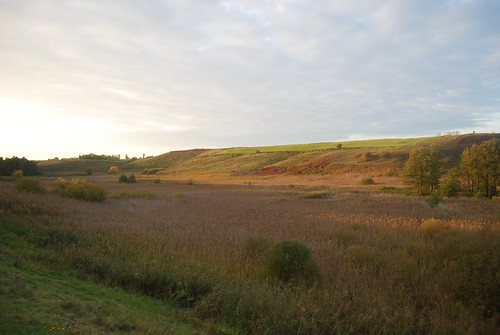
All of its major cities sit on a broad, flat plain, cut by few rivers (whose banks are, largely, not major obstacles to much of anything).  The road from the German or Russian border to the capitol in Warsaw, or its industrial heartland around Katowice/Sosnowiec, or its intellectual and cultural heart in Krakow has no more physical speed bumps than a drive from Fargo to Grand Forks.

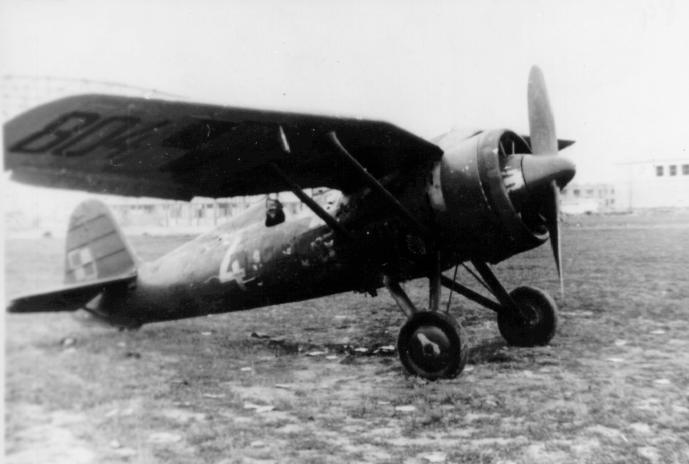
And while Poland knew very well that it was surrounded by a couple of rapacious dictatorships who, as they had through all of history, meant it nothing but ill, and they did their best to prepare for eventualities, they did something that’s all too familiar to modern IT executives; at a time in history when military technology was evolving at a pace that the world had never before seen (and in many respects hasn’t seen since), the Poles, like the French, laid their cards on the table early, standardizing and mass-producing equipment that turned out to be obsolete a mere 5-10 years after it rolled off the assembly line.  The Polish Air Force was mass-producing the Pzl fighter plane and the Karas fighter-bomber at a time when the Germans had just started developing the planes with which they’d launch the war, the Bf109 fighter, the Ju87 Stuka dive bomber, the He111/Do17/Ju88 bombers.

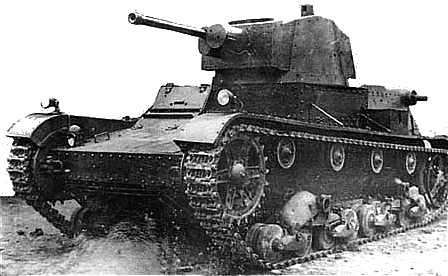
(The French military, like the British navy, likewise bet long on mid-thirties technology that served it less effectively than later designs). Likewise, they built thousands of tiny, two-man machine-gun armed “tankettes”, state of the art in 1933 but useless as anything but mobile machine guns in 1939 against the German tanks that were just going up on the drawing boards.

By 1939, Poland was just starting to produce the excellent “7TP” tanks – as good as any German Panzer

…but it was too little and too late.

To help make up for that, the Poles had a few advantages; the Air Force’s pilots were spectacularly well-trained; indeed, the Polish pilots who escaped after the Blitz to the UK, and got to fly first-rate modern fighters like the Hurricane and the Spitfire in 1940 turned out to be among the RAF’s highest scorers in the Battle of Britain.

In the days before radar, they were supported by a large, comprehensive ground observer network that did a surprisingly good job of detecting German air raids and vectoring Polish fighters onto the target.  The Polish Navy, in contrast (and as an ironic result of its relatively lower standing at budget time) standardized rather later, and went to war with some of the finest equipment in all of Europe; the Blyskawica-class destroyers and Orzel-class submarines (both built in Holland) were among the best anywhere, certainly outclassing anything in the German or British navies.  And, since they were standardized late and in dire  economic times, there were exactly two of each in service.

The Poles had one other thing; centuries of vassaldom to the Germans and Russians.  Other than the brief Republic of Krakow in the mid-1700’s, and the 21 years of independence (marked by a war for survival against the Soviets), Poland had been under one boot or another since the end of the Jagiellonian era. The Poles wanted their freedom.  And even though the government in 1939 was at least partly a dictatorship – a response to a paralyzing indecision in the face of both the Great Depression and the gathering threat from east and west – Poland was an outpost of small-“l” liberal sentiment.  It also built an intellgience service that, like that of many counteries surrounded by enemies (see Israel), disproportionally excellent; indeed, Polish Intelligence helped with one of the great coups of the war; it was the Poles that made the first inroads into breaking Germany’s “Enigma” encryption system.  The Polish mathematicians fled to the UK, and joined with the British thinkers at Bletchley Park to complete the job.  The fact that the Allies could read Germany’s “secret” transmissions in near-real-time (by cryptology standards) was one of the key factors in winning the war; without that, the U-Boat offensive in 1941-43 would have likely succeeded in starving Britain to the negotiating table with Hitler.

Unlike France – misconceptions about whom we’ll address on their own 70th anniversary, in about eight months – this gave Poland a deep will to fight.

It wasn’t enough, of course – but it came a lot closer to evening things up than contemporary propaganda credits them.
———-

Two myths grew up around the German invasion of Poland; that the Polish Air Force was destroyed on the ground in the opening minutes of the campaign, and that the Polish Army’s cavalry was such a medieval throwback, it resorted to charging at tanks with lances.

Both are propaganda myths spread by the Germans and parrotted, in a story all too familiar to modern consumers of news, by an incurious, uninformed Western news media.

———-

The Polish Air Force was not caught on the ground.  Far from it; they dispersed away from their major airfields, according to pre-war plans that recognized not only the Luftwaffe’s superiority in numbers and equipment – by this point, German bombers could outrun Polish fighter planes – but Poland’s few aces in the hole.

And when the German bomber streams started appearing over Poland, the observers saw and heard them, and phoned in the information to HQ, who vectored Poland’s old fighters into position to do the only thing they realistically could against planes that were faster than their own; wait in ambush over the targets, take the most direct approach they could to their targets, and fight like hell.

And they did.  The Polish Air Force shot down over 230 German planes during September of 1939, about 250 more were damaged, many of them beyond repair.  The Lotnictwo Wojskowe lost about 100 shot down or otherwise destroyed by enemy action, with about as many being lost as the pace of the German advance, and later the Russian invasion, made repairs impossible and swallowed up the warning network and, finally, teh airfields themselves.

Following the goverment’s instructions, as the fight in central Poland became impossible, they retreated to the mountains in the south, and after the surrender made their way, by air or car or foot, first to Romania, then through Africa or Iran or the Mediterranean, then to France (where many fought with the French air force) and finally Britain or the USSR.

———-

The other legend – the horse-cavalry charges with bugles blowing and lances waving – is more pernicious.  It’s a propaganda legend, of course, one started as a German reponse to a Polish tactical victory.

In the opening days of the war, Poland had plenty of horse cavalry; they were in the process of trying to retired horses in favor of tanks and armored cars, but the Depression had slowed the process (as it did, by the way, in the US, whose cavalry was still largely horse-mounted in 1939 as well).  They didn’t fight in the classic sense of the term; think of them as infantry on horses, using the greater mobility of being mounted to help cover more ground, but dismounting to fight on foot when the action started.  And while they had lances, they were for ceremonial occasions only; they weren’t carried in the field.  There was never an intention to fight the way cavalry had always fought – the saber charges, the bugles, the mounted dashes.

Usually.

In the opening days of the war, a squadron of Pomeranian cavalry under Colonel Julian Filipowicz, patrolling in the corridor below Gdansk (Danzig, at the time), encountered a German infantry battalion which, tired from advancing and from a brisk fight with a Polish infantry unit across some nearby railroad tracks, was resting in an open field.

Col. Filipowicz’ unit – about 300 cavalrymen – while scouting the area, found the Germans.  As is so often the deciding factor in modern war, they saw the Germans first, and were able to act accordingly.  They deployed some modern weapons – Browning M2 machine guns, first built in 1918 and still found on every US Army tank today – to back up a charge led by some very old weapons, the cavalry saber.  Filipowicz, seeing an unprepared foe, ordered a charge.

And it cut the German battalion to pieces, killing dozens, wounding hundreds, and leaving the battalion combat-ineffective for quite some time.

As the Poles completed several passes, a unit of German armored cars happened on the scene, and turned their cannon and machine guns on the Poles, causing heavy losses and sending them back into the woods, to fight another day.

German photographers, travelling with a group of tanks that responded to the debacle, photographed a number of the dead Polish troopers alongside the Panzers.  The German propagandists spread the report –  the Poles were stuck in the medieval era! – as a morale booster.  And the tall tale, rather than the story of the boundless courage of Filipowicz’ men, stuck.

———-

It wasn’t the last bloody nose the Poles gave the Germans.  When the Germans pushed the Poles back to Warsaw, they tried to storm the city using the same tanks that had led them across the North Polish Plain.  The Sixth Panzer Division was ordered to attack the city.

The tanks moved into the warren of streets that made up Warsaw’s western suburbs…

…and got swallowed in a morass of antitank guns, molotov cocktails (which wouldn’t earn their name until the following winter, from the Finns, about whom more in a couple of months) and booby traps.

The Sixth Panzers lost sixty tanks – about a third of its armored strength – in the first day of its assault, a catastrophic hit.

Warsaw would have to fall the old-fashioned way – through infantrymen advancing from house to house.

———-

Or through treachery.

Stalin, as part of his temporary alliance with Hitler, invaded Poland about this time, destroying whatever hope for resistance that the Poles might have had.  It was all she wrote.

Oh, they fought on anyway; tens of thousands of Poles went to the UK or the USSR to carry on the war; hundreds of thousands more fought with the various guerrilla groups, the Armia Krajowa (Home Army) which hampered German movements throughout the war and in 1944, as the Soviets approached, seized control of much of Warsaw (and were beaten down as the Soviets stopped in the city’s eastern suburbs and refused to cross the Vistula River).  The Poles, realizing their excellent but tiny navy had no chance, ordered their most modern ships – their destroyers and submarines to feel to the UK in the opening hours of the war; Orzel, brand new out of the shipyard, ran to Sweden, and was interned (placed under arrest, essentially).  The crew escaped, and stole the sub from the docks; the Swedes had seized all the boat’s charts and navigational gear, so it sailed across the Baltic, and through the treacherous Skagerrak, and across the North Sea by guess and by gosh.

The Poles had scant hope holding against Hitler from the west; against both of their hereditary enemies, they had none.  The clock ran out fast on the Poles.  The nation’s story was one of the great tragedies of the past 100 years; winning their freedom, having it seized, held hostage by one dictator and then another for two generations.

It’s also one of the great inspirations; after all that, they took their freedom back…

….and with it catalyzed a shot at freedom for the rest of the Second World.
Every Once In A While…

Monday, August 17th, 2009

…I get an email or comment related to this blog that just makes my day.

Two years ago, in conjunction with the dedication of the Minnesota World War II memorial, I wrote a piece about the 99th Infantry Battation (Independent), a unit of Norwegian-Americans and Norwegian immigrants from the upper Midwest recruited as the spearhead of a potential invasion of Norway.

This morning, a veteran of the 99th left a comment in the post.

Here’s part of it:

 I worked in 99th headquarters often as Company “A”s clerk, I am an expert on the 99th Viking Battalion.

Of course, you can’t get two Norwegians together without having one of these: 

Our Commander for most of our existance was Harold D. Hansen. NOT HANSON!

Sorry – it was misspelled in the source I copied.

Still…: 

He was Captain when we formed, promoted to Major and when the regular army Lt. Colonel Robert Turner was severly wounded after having come in above Hansen about 12 months earlier. Hansen was given field battle promotion to Lt. Colonel resuming command of the 99th.

Read the whole thing if you get a moment.

And thanks, Cpl. Hanson.

Mężczyźni Bez Narodu

Sunday, August 2nd, 2009

As we approach the seventieth anniversary of World War II, I’ve found myself more and more fascinated by the stories of the people who left their conquered homelands to carry on the fight.

I’ve tried to imagine what that must be like; to see your homeland being brutalized, and to pack up and not only leave your home, family and life…

…but to do so not as a refugee, but as a soldier or sailor, to carry on a fight in perpetuity against absolutely no guarantee that it’d ever be rewarded, to eternally face the soldier’s risks of dying in some foxhole or ship compartment far from home, all the while knowing that everything and everyone you know is back “home”, under the thumb of a hideous  tyrant, waiting and praying for you to return with a few thousand friends to kick occupier ass.

People from all of the conquered nations fled their homes to fight on; hundreds of thousands of French repudiated the reputation for “cowardice” that history has slapped on their nation (more on that next June) and fled to England or Canada or North Africa to carry on the fight; Norwegians and Danes and Dutch and Belgians, Czechs and Hungarians and, later on, Italians and even a few Germans risked all to not only fight on, to risk all the usual horrors that stalk soldiers and the additional risk of being murdered as a “traitor” if captured.

And the most poignant of all the stories was that of the Poles.  A nation that craved independence from Germany, Austro-Hungary and Russia for centuries, Poland was a nation for 21 years when the Germans and the Russians again swallowed it up with head-spinning brutality. Tens of thousands of Poles fled – via Romania to France,or via Russia through Iran through Africa to England.  They fought on for the next six years.

Among those refugees were the survivors of Poland’s small but highly-accomplished Air Force.  Poland from 1918 through 1939 was a bit like Israel from 1948-1968; surrounded by sworn enemies, it took fighting seriously, and it showed; Poland clobbered the Bolsheviks in 1920 – largely with the help of Poland’s fledgeling air force.  And so like the Israelis, the Polish Air Force was an elite; more highly-trained than any other pilots in Europe, the Poles gave the Luftwaffe worse than they got, even though they flew obsolete planes that should have been laughed from the skies (more next month, as we address the 70th anniversary of the invasion).  After Poland’s surrender, they fled to France – and then fled again as that nation collapsed, this time to the UK.

A Polish Air Force PZL fighter; the best in the world in 1932, a museum piece in 1939.

And, 69 years ago today, at the height of the Battle Of Britain, as Western civilization was pummeled against the ropes and hung on by the skin of its British teeth, the first dozen or so of these Polish refugee pilots were formed into 303 (Polish) Squadron of the Royal Air Force.

Pilots of 303 Sqn. and one of their Hurricanes during the Battle of Britain

These pilots – stone-cold killers who’d survived two debacles already – went into action at a time when the RAF was catastrophically short of pilots.  The Battle of France and the summer’s air battles over southern England had bled Fighter Command dry.  Replacement pilots were being thrown into combat straight out of flight school with less than a dozen hours of experience in their Spitfires and Hurricanes, and being mowed down in turn in droves; flying a fighter plane in combat is not a game for newcomers who get less training in their planes than kid gets on a shake machine at McDonald’s today.

A Polish pilot, a sergeant, climbs of of a Spitfire, later in the war.

So the Polish pilots, seasoned airmen and combat veterans that they were, were not only welcome, they were desperately needed.  And they delivered. They were credited during the Battle as the highest-scoring unit in the RAF, claiming 120 German aircraft destroyed in a 17 day rampage in September of 1940, the height of the Battle;

Battle-of-Britain-era endzone happy dance

The claims were lowered to 50-60 after the war, but that made them the fourth-highest-scoring squadron, and the best squadron flying the older Hawker Hurricane – and all in less than three weeks of furious fighting.  Used to flying obsolete Polish aircraft and, in some cases, underpowered and obsolescent French planes, they made the most of the modern, front-line Hurricanes they flew, pressing home attacks with a furious-but-professionally-precise ruthlessness that astounded their British comrades (as related by Squadron Leader Peter “Not The Guitar Player” Townsend in his classic personal history Duel of Eagles)

King George VI with pilots of 303 Sqn. immediately after the Battle.

And then they fought on throughout the war (ceding the title of “highest scoring squadron in the UK” to another exile unit, Norway’s 331 Squadron).

Shot of 303 Sqn. Spitfire with squadron mascot, “Misia”

But while the French, Norwegians, Dutch, Belgian, Danish and other western exiles got to go back to their homelands after the war, the Poles faced a communist dictatorship in their homeland. Some went back; many stayed in the UK (including the Polish Air Force exile who became the father of this guy) or moved to the US, Australia and Canada, where they waited 45 years for events (and, let’s be honest, Ronald Reagan, who is widely revered in Poland for his role in ending the Cold War and liberating Poland to an extent that’d amaze Americans  who’ve been duped by a generation of media disinformation on the subject) to finish the job they’d started in their youth.

Now, This Is Kinda Big

Friday, July 24th, 2009

While I’m always excited for the Northern Alliance broadcasts, in about a month we have what could be one of my favorites, ever.

“Doc” Pepping, one of the original “Toccoa Boys” from E Company of the 506th Airborne, immortalized in Steven Ambrose’s Band of Brothers, will be a guest on our August 22nd broadcast.  He’ll be in town for the Savage American Legion Corvette Club event, “Vettes for Vets”, which’ll be the next day (Sunday the 23rd). He’ll be on along with Dave Cruz, with Honor the Fallen.

Mark your calenders; this oughtta be good!

Two Small Steps For Man

Monday, July 20th, 2009

Why yes – I do remember sitting in the living room on a balmy July day and watching, like everyone else in the world, Neil Armstrong’s first steps on the moon. 


As I recall, Mom was there; Dad was (again, if I recall correctly – and I was six, for crying out loud) was off teaching summer school. 


It’s hard to explain to people who weren’t old enough to remember it – or who weren’t born yet – just how exciting that moment was.  Granted, I was very young, and I certainly couldn’t speak for all of society, but the nearest I can remember, there have been no similar events that brought pretty much the whole world together in excitement, worry and prayer like the first moon landing.  Maybe 9/11, although that was very different, obviously.  The whole world just doesn’t get behind much of anything anymore.

But there was a double-shot of excitement for me, that day.  When Dad came home, he brought…my first guitar!

It was a cheapo catalog model that some kid had left in his locker three or four years earlier; it was the kind of thing that’d cost maybe $69.99 at WalMart today, and probably under $20 at the time.  It was missing a string.  And after I banged on it a little, it went into the closet, coming out over the next seven years to serve as a boat, a fort, a rifle and any number of things, until that day in March of 1977 when I decided I had to be a guitar player, dragged it out, put two new tuning machines and six new strings on it, and started working my way through the Gene Leis chord book.

Kennedy’s Detritus

Thursday, July 9th, 2009

One of the left’s standard whacks at the right – especially at people like Ronald Reagan and Sarah Palin – is that they’re “dumb” and “uneducated” for eschewing the trappings of the Ivy League paper chase.

Leaving aside that an Ivy background is evidence of nothing more than having been either a very motivated junior high kid or legacy of another generation of Ivy Leagers, this reverence for “credentials” has always puzzled me (and it’s far from strictly a lefty thing; Hugh Hewitt also audibly slavers at the mention of Ivy League degrees).

Because the record of Ivy Leaguers in office is pretty dismal.

Not just presidents, of course.  A classic example – perhaps the last of its type before Obama – was the Kennedy Administration, which packed its offices with frothy youngish Ivy Leaguers.

One of those young deans was Robert McNamara, who served as Secretary of Defense while in his early forties.  Technocratic to a fault – he’d served in the Army Air Force as a statistician in World War II – he joined Ford as what we would today call a “TQM” geek. He ascended to the presidency in fifteen years,and was promptly appointed Secretary of Defense by Kennedy, where his main accomplishment was bringing “Systems Analysis” to the role.  McNamara tried to treat war as a set of repeatable business processes that could be improved using the same sort of “quality” methods that have screwed up so many American businesses.  It took the US military over 20 years to undo McNamara’s damage; Edwin Luttwak documented the dismal results of McNamara’s era (which, to be fair, built on and exacerbated some ill-fated “reforms” after World War II) in The Pentagon and the Art of War; the Goldwater-Nichols legislation in the late eighties started addressing some of the problems long after McNamara had left office, but after his system helped lead to the Vietnam debacle, the would-be-comical-if-it-weren’t-so-tragic Mayaguez incident, the Desert One disaster, the fiasco in Beirut, and an escalating series of screwups that made the victory on Grenada cost vastly more effort, money and lives than it should have.

His other “accomplishment”?  Being among the advisors who first recommended Vietnam to John F. Kennedy as a possible face-saving quick win after the Bay of Pigs fiasco – and then running the war into the ground, first under Kennedy, then throughout the entire Johnson Administration.

Joe Galloway – who, working as a war correspondent in Vietnam, saw McNamara’s work up close – isn’t mourning McNamara’s passing one bit:

Well, the aptly named Robert Strange McNamara has finally shuffled off to join LBJ and Dick Nixon in the 7th level of Hell.McNamara was the original bean-counter — a man who knew the cost of everything but the worth of nothing.

Back in 1990 I had a series of strange phone conversations with McMamara while doing research for my book We Were Soldiers Once And Young. McNamara prefaced every conversation with this: “I do not want to comment on the record for fear that I might distort history in the process.” Then he would proceed to talk for an hour, doing precisely that with answers that were disingenuous in the extreme — when they were not bald-faced lies.

Upon hanging up I would call Neil Sheehan and David Halberstam and run McNamara’s comments past them for deconstruction and the addition of the truth.

The only disagreement I ever had with Dave Halberstam was over the question of which of us hated him the most. In retrospect, it was Halberstam.

Read the whole thing and find out why.

Speaking Of Freedom

Thursday, July 2nd, 2009

On this date 160 years ago, the Amistad revolt took place

On June 28, 1839, 53 slaves recently captured in Africa left Havana, Cuba, aboard the Amistad schooner for a sugar plantation at Puerto Principe, Cuba. Three days later, Sengbe Pieh, a Membe African known as Cinque, freed himself and the other slaves and planned a mutiny. Early in the morning of July 2, in the midst of a storm, the Africans rose up against their captors and, using sugar-cane knives found in the hold, killed the captain of the vessel and a crewmember. Two other crewmembers were either thrown overboard or escaped, and Jose Ruiz and Pedro Montes, the two Cubans who had purchased the slaves, were captured. Cinque ordered the Cubans to sail the Amistad east back to Africa. During the day, Ruiz and Montes complied, but at night they would turn the vessel in a northerly direction, toward U.S. waters. After almost nearly two difficult months at sea, during which time more than a dozen Africans perished, what became known as the “black schooner” was first spotted by American vessels.

On August 26, the USS Washington, a U.S. Navy brig, seized the Amistad off the coast of Long Island and escorted it to New London, Connecticut. Ruiz and Montes were freed, and the Africans were imprisoned pending an investigation of the Amistad revolt. The two Cubans demanded the return of their supposedly Cuban-born slaves, while the Spanish government called for the Africans’ extradition to Cuba to stand trial for piracy and murder. In opposition to both groups, American abolitionists advocated the return of the illegally bought slaves to Africa.

Read, naturally, the whole thing.

The Last Time We Faced A Situation…

Monday, June 22nd, 2009

…like “we” face in Iran, I was in high school.  The people of Poland – Slavic, but very westernized; devoutly religious, but with a small-“l” liberal history; communist for a generation, but against the will of most of the people; a vassal state subservient to a nation most Poles hated with a viscerality that’d curl most Americans’ nose hair – were demonstrating, and eventually rioting, for freedom.

Like the Iranian people, the Poles were ruled with an iron fist by a despotic ruling clicque that was unpopular withthe people – but the people only had so much say in matters.  The candidates in their “elections” were carefully vetted by the rulers; those that stepped out of line – foreigners or domestics – were jailed and harassed.  Assemblies of dissidents were attacked by gangs of government goons; Iranians are besieged by Basiji, Poles were pummeled by the ZOMO.

Of course, historical parallels are an intoxicating mirage; they’re almost inevitably a small island of attention-getting, synchronous factors among a sea of differences.

One key difference:  There was, in Poland, one institution standing between the demonstrators and the Russians; one institution whose focus was more nationalistic than on the ideology (whether communist or western), that could step in to buffer the Polish state from suffering what the Czechs did in 1967, and the Hungarians in 1956 (and it seems hard to believe that more time has passed since the Solidarnosci era than passed between Budapest and Gdansk). The Polish Army – subservient to the Soviets, but with a long history of Polish nationalism – stepped in and ruled the country as a de facto military dictatorship until Communism started to crumble; like Franco’s rule in Spain, it arguably prevented a much worse Communist takeover, and – again, arguably – paved the way for Poland’s relatively stable democracy.

There is, to my knowledge, no such force in Iran today.  The Shah actually built the Iranian Army to fill that role, thirty-odd years ago; it seems likely the mullahs have purged any such impulses from the military.   Indeed, the Iran/Iraq war served much the same purposes for rulers on both sides; Hussein and Khomeini used the war to affirm their respective grips on power.

And on the other side?  After the 1980 elections, Ronald Reagan led an unlikely coalition to covertly smuggle aid to the Polish labor movement; Margaret Thatcher worked with NATO to set up the pipeline; Pope John Paul II, nee Karol Wojtyla, a Pole, openly used the Catholic Church (to which over 90% of Poles belong) to subvert the communists, and surreptitiously made it part of the underground railroad of covert aid; Layne Kirkland of the AFL-CIO – nominally a sworn political enemy of Reagan’s – made the union contacts that closed the circle and got the money through.

Aid came from all over, thirty years ago; foundations sprang up to scour for donations big (the AFL-CIO and the Teamsters) and small (I ponied up $20) to send to the Polish workers.

But George W. Bush, to the best of anyone’s knowledge, did no such thing (according to Michael Ledeen) to get aid to the Iranian labor movement, and Obama seems unlikely to start.  Indeed,what precious little Bush seems to have earmarked to support democracy in Iran may have been erased.
And when it was time for an American president to call the despots’ bluff?

One American president went to Communism’s front door and threw down:

Does anyone see Barack Obama calling a dictator’s bluff?

Don’t get me wrong; the time isn’t always right for all of the actions above.  Had Reagan given the same speech at the Brandenburg Gate in, say, 1981, it would have been a very different thing.

But can anyone imagine Barack Obama going to the Brandenburg Gate and saying anything other than “present”?

Can you imagine him challenging the mullahs like that?

Convince me.

This Great And Noble Undertaking

Saturday, June 6th, 2009

Today is the 65th anniversary of D-Day.

I’d have a hard time doing a better post than I did last year on the subject.

Except to get some voices from the era; in this case, my radio alma mater, KSTP-AM, and their live coverage (or as live as it got in those pre-satellite days) of the morning’s news.

Of course, the Army remembers its own.

--> Site Meter -->