Bob and Carol & Jane & Alice
By First Ringer
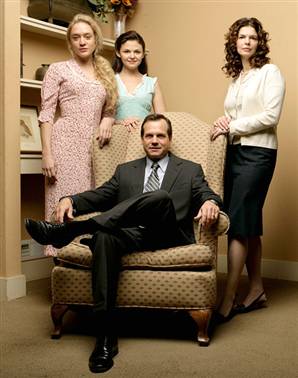
Two’s company; three’s potentially legal
A narrow national majority favors same-sex marriage. Will that majority favor a plurality?
When it comes to debating social issues, the “slippery slope” argument often holds the least amount of traction. As Minnesota was racked by contentious debate surrounding last year’s marriage amendment, one of the litany of debate volleys was that opening the door to same-sex marriage could inevitability lead to polygamy. Same-sex marriage supporters dismissed the notion, suggesting the argument was tangential at best, and a “scare tactic” at worst.
Boo:
Advocates for so-called plural marriages are applauding a ruling by a U.S. District Court judge that struck down key segments of Utah’s anti-polygamy law, saying they violated constitutional rights to privacy and religious freedom.
In a 91-page decision issued Friday, Judge Clark Waddoups effectively decriminalized polygamy in Utah, ruling that a central phrase in the state’s law forbidding cohabitation with another person violated the 1st and 14th amendments.
In all fairness, the lawsuit, brought about by the stars of the TLC reality show “Sister Wives”, depicting a Utah Mormon family with one legal wife and three “wives” who live with them, was more over striking down language that prevented religious cohabitation than actually allowing polygamy. Kody Brown, the “star” of “Sister Wives” remains only legally married to one woman. But proponents and opponents of polygamy alike agree that the ruling has opened the door to potentially allowing multiple partners in a marriage.
The debate reached the pages of the New York Times, and in true Gray Lady fashion, presented four arguments in favor of what is now being called “plural marriage” with only two dissenting points of view. To ape T.S. Eliot, this is how social convention dies, not with a bang, but with a series of op-eds.
If the contours of the New York Times‘ debate on polygamy looked familiar, they should – because they neatly conform to the same lines of argument that have defined the same-sex marriage debate. Laws against polygamy are discrimination. Plural marriage advocates deserve respect and dignity. Plural marriage makes us freer as a society. Heck, even the arguments against “scare tactics” make a triumphant return. Opponents can sight studies showing the negative effects of polygamy on women and children, but essentially are reduced to arguing that the move represents a further tumble down that ill-defined “slippery slope.”
So is polygamy, or “plural marriage”, something to fear – let alone continue to ban? From an anthropological standpoint, there’s ample statistical and historical evidence to explain why societies moved towards monogamy and away from polygamy:
“Monogamous marriage reduces crime,” [cultural anthropologist Joe] Henrich and colleagues write, pulling together studies showing that polygynous societies create large numbers of unmarried men, whose presence is correlated with increased rates of rape, theft, murder, and substance abuse. According to Henrich, the problem with unmarried men appears to come primarily from their lack of investment in family life and in children. Young men without futures tend to engage in riskier behaviors because they have less to lose.
Certainly in this area, the debate comparisons between same-sex marriage and polygamy significantly diverge. While historians can discuss aspects like Sapphic love in ancient Greece, to argue same-sex marriage has negative societal consequences is difficult when it hasn’t been widely historically practiced. Polygamy was, with various cultures and at various points in history, considered a societal norm – one that most societies consciously moved away from.
Our social debates rarely include anthropological analysis – that’s way too abstract for a society re-debating polygamy simply because the TV next-door neighbors to Honey Boo Boo have four wives. Indeed, the argument brought forth by Kody Brown and others has nothing to do with the merits of polygamy but merely the freedom to engage in it. In an era of increasing libertarianism, few will likely buy a meta answer to the question of who is harmed by someone choosing to have multiple spouses.
Indeed, the biggest hurdle polygamy may find is not social resistance but on practical grounds. Do plural marriage couples get additional tax breaks for filing jointly-jointly?


December 18th, 2013 at 11:52 am
I can’t wait to see the 1040 forms when plural spouses are allowed. Oy. Mark Twain was correct when he rebuked the Mormons in Salt Lake by quoting the first half of Matthew 6:24 in response to their question about where the Bible prohibited polygamy.
Seriously, one would hope that any serious student of history–even someone just moderately familiar with “fundamental Mormons” who force their own sons out on the streets to avoid competition for women–would figure out that polygamists have a nasty habit of killing or castrating their romantic rivals. There is a reason that western nations have banned it for centuries.
December 18th, 2013 at 1:35 pm
seems to me that there is another religion in which the practice of polygamy is well established.
December 18th, 2013 at 3:21 pm
I’m surprised that it took this long.
While I don’t support any religious right to practice of polygamy, I am more comfortable with it in a religious context, particularly among LDS practitioners, than I am of it among the David Crosby’s of the world.
The arguments for homosexual marriage equally apply to the practice of legally sanctioned polygamy. It will be amusing to watch supporters of the first trying to justify their condemnation of the second. Assuming, of course, that they will even try … or really do disagree with it …
December 18th, 2013 at 6:50 pm
What could possibly go wrong when you are defining cultural values by compromise, contingency, and consensus?
December 18th, 2013 at 10:16 pm
Wait until this gets to Minnesota. Islamic jurisprudence states that Muslims can have up to 4 wives. That’s a lot of Somalis and Arabs.
The DFL Stonewall Caucus will then discover what *real* diversity is, Insha”allah.
December 18th, 2013 at 10:19 pm
And the reason the State should be involved in any of this is….
December 19th, 2013 at 12:30 am
Can ‘o worms, folks.
I remember a case in Vermont where a father “married” his son to avoid inheritance taxes, and they were pretty open about why they did it. With this kind of a setup, it’ll be interesting to see how many parents marry their kids to keep the money in the family tax free.
December 19th, 2013 at 7:52 am
I can’t believe the hate, it’s just boiling off this site. Why are you such haters?
Don’t you know that marriage is about love? It’s about growing old with the one you choose? And freedom, something about freedom? Didn’t you watch any of the commercials last year? Vote NO!
Those of you thinking that marriage is about protecting women, raising children, or conserving wealth, you’re all fundamentalist religious fanatics. How DARE you try to impose your narrow Puritanical views on other people!
Every argument made in favor of gay marriage last year applies with equal vigor to plural marriage and you know it – – you admitted it at the time!
Haters. Bigots. Oppressors. Flabby middle-aged White men. Arrrrrggghhh!
December 19th, 2013 at 10:52 am
Mr. Doaks, you left “Duck Dynasty apparel-wearers and show-watchers” out of your last paragraph …
December 19th, 2013 at 2:48 pm
Turtles everywhere are shaking in their shells right now.
December 20th, 2013 at 10:21 am
Mr Doakes, that was a very good imitation of DogGone. Only one thing missing: multiple pages in length.